
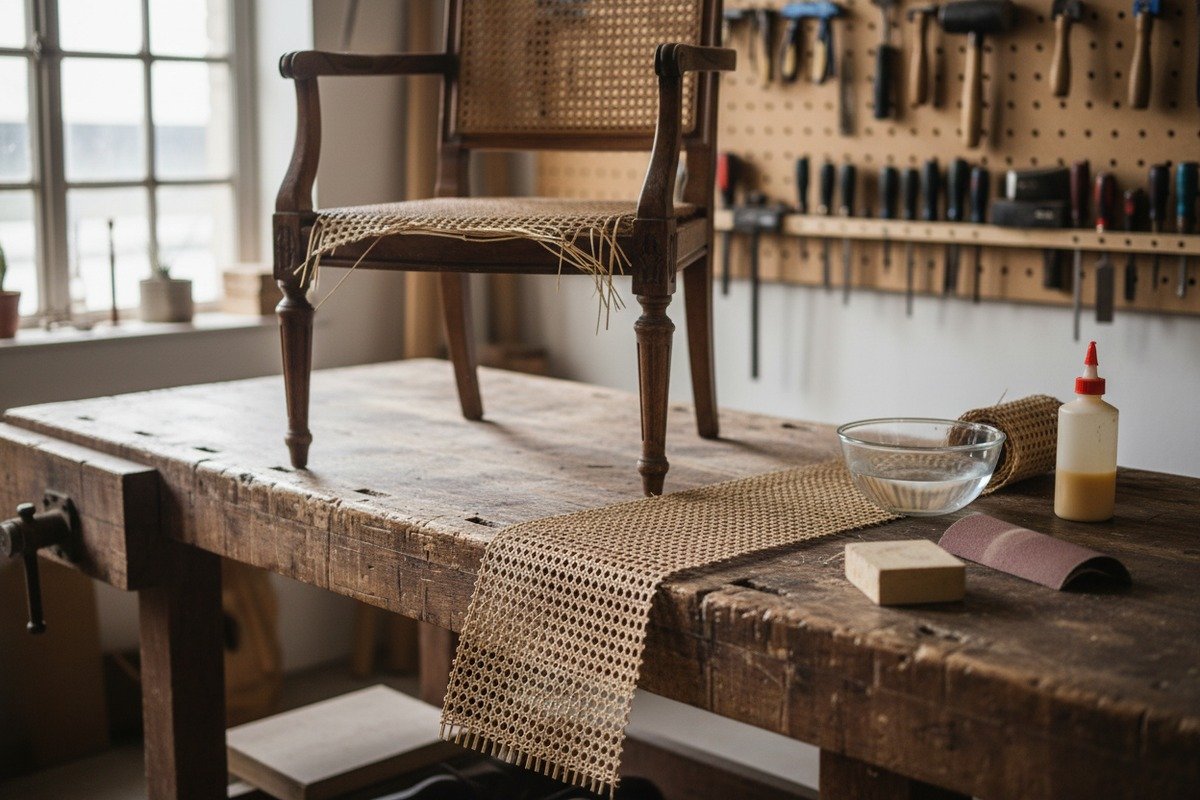
Every week, our customer service team fields calls from frustrated furniture owners whose beloved rattan pieces have fallen victim to curious cats and restless dogs fine-grit sanding 1. A single afternoon of unsupervised play can turn a beautiful cane chair seat into a shredded mess. The heartbreak is real — and so is the repair bill if you do not know what you are doing.
To repair natural rattan cane webbing damaged by pets, assess the damage first. Minor scratches can be sanded and sealed. For holes or torn sections, remove the old cane and spline, soak new pre-woven webbing in warm water for 20–30 minutes, press it into the groove, glue the spline, and let it dry for 24 hours.
This guide walks you through every step. From fixing small scratches to replacing entire panels, you will learn exactly how to bring your rattan furniture back to life — and how to keep your pets from ruining it again.
Can I repair minor pet scratches on my natural rattan cane webbing?
When we inspect returned samples at our warehouse in Foshan, we see many pieces with light surface damage that owners mistakenly assume is beyond saving. A few claw marks from a playful kitten do not mean the whole seat needs replacing. But ignoring small scratches lets moisture creep in and weakens the fibers over time.
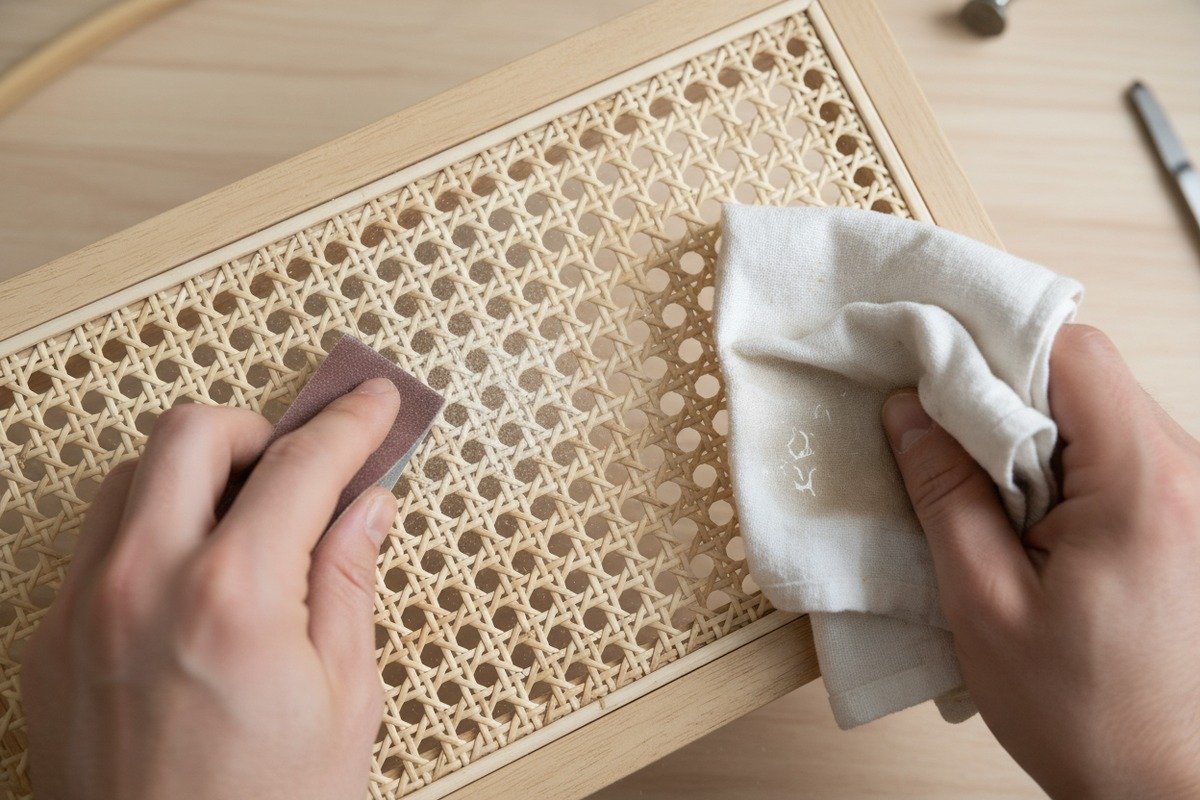
Yes, you can repair minor pet scratches on natural rattan cane webbing. Light scratches respond well to fine-grit sanding followed by a thin coat of shellac or clear lacquer. If fibers are only displaced but not broken, dampening the area with a wet cloth can help the rattan swell back into place.
How to Identify Minor vs. Major Damage
Before you pick up any tools, take a close look at the damage. Not all pet scratches are equal. A surface scratch only affects the outer skin of the rattan strand. A deep gouge cuts through the strand itself. And a full tear means the strand is broken and the weave pattern is compromised.
Here is a simple way to classify what you are dealing with:
| Damage Level | What It Looks Like | Can You Repair It? |
|---|---|---|
| Surface scratch | Light marks on the shiny side; fibers not broken | Yes — sand and seal |
| Deep gouge | Visible groove in the strand; fibers partially split | Yes — fill and seal, but monitor closely |
| Broken strand | One or more strands snapped; hole forming | Partial repair possible with individual strand weaving |
| Large hole or tear | Multiple strands broken; weave pattern destroyed | Full panel replacement needed |
Step-by-Step: Fixing Surface Scratches
Start by cleaning the area with a damp cloth. Remove any pet hair, dust, or debris. Let it dry completely.
Take a piece of 220-grit sandpaper. Gently sand the scratched area along the grain of the rattan. Do not press hard. You are just smoothing the raised fibers back down. After sanding, wipe the area with a slightly damp cloth to remove dust.
Now apply a thin coat of blonde shellac 2 using a small brush. Shellac works well because it dries fast and does not build up a thick film. One important rule: do not seal the entire underside of the cane webbing. Rattan needs to breathe. It absorbs and releases moisture from the air, and that is what keeps it flexible. Sealing it completely makes it brittle — the exact opposite of what you want.
When Dampening Works
If the scratch is very light and the fibers are just displaced, try this first. Lay a damp cloth over the scratched area for about 10 minutes. The moisture causes the rattan fibers to swell slightly, which can push displaced fibers back into position. Let it air dry completely. In many cases, this alone makes the scratch nearly invisible.
This technique works best on natural, unfinished rattan. If your webbing has a factory finish or stain, the moisture trick is less effective, and sanding followed by resealing is the better path.
A Word About Pet Claw Marks vs. Chew Marks
Claw scratches tend to be narrow and shallow. They run in parallel lines and rarely break through the strand. Chew marks are different. Teeth crush and split the rattan fibers, causing irregular damage that is harder to repair with sanding alone. If your pet has chewed on the rattan, you may need to move to the next level of repair — patching or full replacement.
How do I patch a hole in my cane furniture caused by my dog or cat?
From years of packing and shipping rattan webbing to furniture factories across the US and Europe, our production team has seen every kind of damage imaginable. A clean puncture from a dog's tooth is one thing. A ragged, chewed-out hole from a bored cat is another. Both are fixable — but the approach differs depending on the size and shape of the damage.
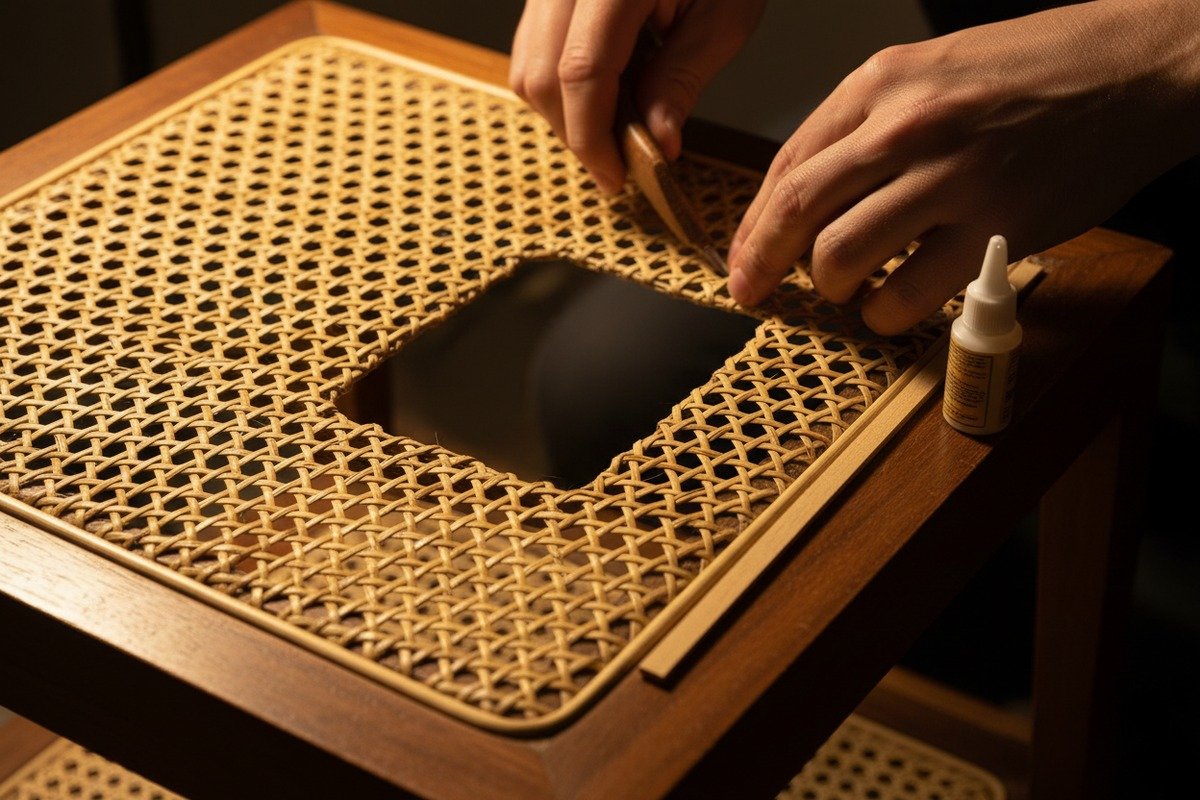
To patch a hole in cane furniture, remove the damaged section by cutting out the old spline and webbing. Clean the groove, soak new pre-woven cane webbing and spline in warm water for 20–30 minutes, center the new webbing over the opening, press it into the groove, apply PVA or hide glue, secure the spline, and let it dry for 24 hours before use.
First: Determine Your Cane Type
This matters more than most people realize. There are two main types of cane webbing:
| Cane Type | How to Identify | Repair Method |
|---|---|---|
| Hand-woven cane | Individual strands woven through drilled holes around the seat frame | Requires re-weaving individual strands — more skill needed |
| Pre-woven (pressed) cane | A sheet of woven cane held in a groove by a spline | Remove old sheet, install a new one — more DIY-friendly |
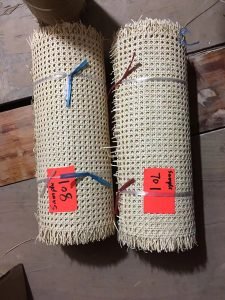
Most modern furniture uses pre-woven cane. This is good news. It means you can replace the entire panel yourself without advanced weaving skills.
Tools and Materials You Need
Gather everything before you start. Here is your checklist:
- New pre-woven cane webbing 4 (cut about one inch wider than the seat opening on all sides)
- New reed spline (matching the groove width)
- Utility knife with fresh blades
- Caning chisel or flathead screwdriver
- Rubber mallet or soft-faced hammer
- Cane webbing installation tool (preferred) or wooden wedges
- White PVA glue 5 or hide glue (do not use yellow wood glue)
- Bucket of warm water
- Clean cloths
- 220-grit sandpaper
Step-by-Step Replacement Process
Step 1: Remove the old cane. Use your utility knife to cut along both edges of the reed spline. If the spline is stubborn, drill small holes every one to two inches along its length. This breaks the glue bond. Use a caning chisel or flathead screwdriver to pry the spline out. Pull the old cane webbing free.
Step 2: Clean the groove. Scrape out all old glue and cane fragments with a flathead screwdriver. If the glue is especially hard, soak it with water for a few minutes to soften it. The groove must be completely clean. Any leftover debris will prevent the new spline from seating properly.
Step 3: Inspect the frame. This is the step most guides skip. If your dog chewed through the cane and into the wood, you need to fix the frame first. Fill any gouges with wood filler. Use wood glue and clamps for cracked sections. Let frame repairs dry fully before proceeding.
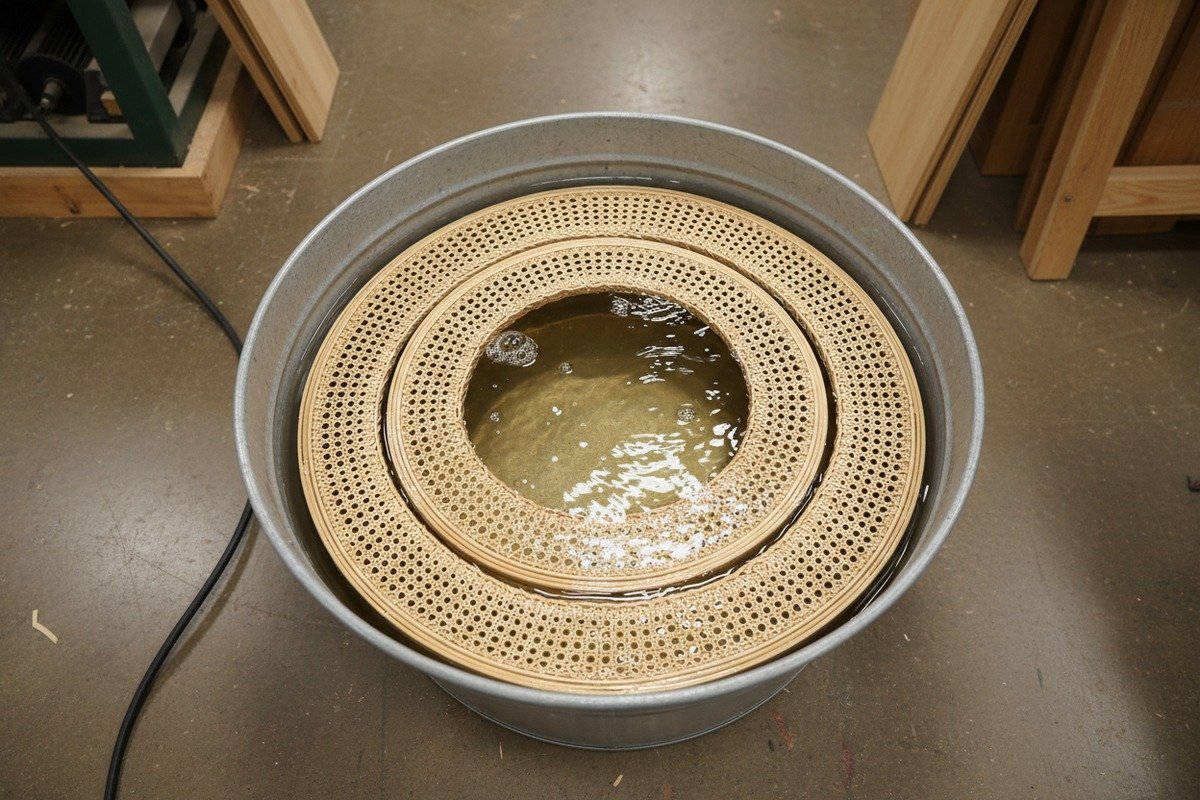
Step 4: Soak your materials. Place the new cane webbing and reed spline in warm water for 20 to 30 minutes. This makes them flexible and easy to work with. Do not soak longer than 30 minutes — oversaturated cane becomes too soft and can stretch unevenly.
Step 5: Install the new cane. Lay the soaked webbing over the seat with the shiny side facing up. Center it so there is roughly equal overhang on all sides. Start at the front of the seat. Use a cane webbing tool to press the cane into the groove about four inches at a time. Insert a small temporary piece of spline to hold it. Move to the back, then the sides. Keep the cane taut but not overly stretched.
Step 6: Glue and spline. Remove the temporary spline pieces. Run a thin bead of PVA or hide glue 6 along the groove. Cut your reed spline to length. At corners, miter the spline at 45-degree angles for a clean fit. Tap the spline into the groove with a rubber mallet. Wipe away any excess glue immediately.
Step 7: Trim and dry. Use a fresh utility knife blade to trim the excess cane from outside the groove. Let the chair dry for a full 24 hours before sitting on it. The cane will tighten as it dries, creating a firm, drum-like surface.
Hide Glue vs. PVA Glue
Hide glue gives you a longer working time. It is also water-soluble, which makes future repairs much easier. PVA (white glue like Elmer's) is more widely available and bonds quickly. Either works. Just never use yellow wood glue — it dries too rigid and makes future spline removal nearly impossible.
Where can I find high-quality replacement rattan to match my original material?
One of the most common questions we hear from our wholesale clients — whether they are furniture factories in the Netherlands or material suppliers in Australia — is how to source rattan webbing that matches existing pieces. The weave pattern, strand thickness, and color all need to align. A mismatch looks worse than the original damage.
High-quality replacement rattan cane webbing is available from specialized rattan wholesalers, furniture restoration supply shops, and online marketplaces. For the best match, bring a sample of your original webbing when ordering. Key factors to match include weave pattern, mesh size, strand width, and color tone. Direct sourcing from manufacturers ensures consistent quality and accurate grading.
Understanding Weave Patterns
Not all rattan webbing looks the same. At our facilities, we produce over a dozen standard weave patterns. Each creates a different visual effect and has different structural properties. Here are the most common ones you will encounter:
| Weave Pattern | Description | Common Use |
|---|---|---|
| Open hexagonal (classic cane) 7 | Six-way hand-woven look with open hexagonal cells | Traditional chair seats, cabinet doors |
| Close weave / tight basketweave | Dense, interlocking strands with minimal gaps | Modern furniture, headboards |
| Open square grid | Simple perpendicular strands forming square openings | Casual and coastal-style furniture |
| Diamond motif | Diagonal weave creating diamond-shaped patterns | Decorative panels, room dividers |
| Radio weave | Radiating pattern from center outward | Round chair seats, accent pieces |
How to Measure What You Need
Before you order, measure the groove-to-groove dimensions of your seat opening. Add one inch on each side. So if your seat opening is 16 inches by 16 inches, order a piece that is at least 18 inches by 18 inches.
Also measure the width of your groove. Spline comes in different diameters — typically ranging from 4mm to 8mm. Using the wrong spline size means it will not hold the cane securely. If you are unsure, take a small piece of your old spline to compare.
Matching Color and Finish
Natural rattan darkens over time. A brand-new piece of webbing will look lighter than your existing furniture. You have a few options:
You can let the new cane age naturally. Over a few months, exposure to air and light will darken it to match. If you need an immediate match, you can apply a light coat of stain before installation. Be aware that rattan has a factory finish on its shiny side that resists stain penetration. Lightly sanding the surface first helps the stain absorb evenly.
Blonde shellac is another option. It adds a warm amber tone without creating a heavy film. Garnet shellac gives a deeper, reddish-brown tone. Apply either sparingly — remember, the cane still needs to breathe.
Sourcing Tips
For small repair projects, online furniture restoration shops carry pre-cut sheets and spline. For larger orders or specific pattern matching, working directly with a rattan wholesaler gives you more control over quality and consistency. At our operation, we grade all webbing — Grade A material has uniform strand thickness, consistent weave tension, and no broken fibers. Lower grades may have slight irregularities that are fine for hidden applications but noticeable on visible furniture surfaces.
When sourcing, always request a sample before placing a large order. Compare it side by side with your original material in natural daylight, not under artificial lighting.
What are the best ways to protect my rattan furniture from future pet damage?
Through conversations with hundreds of our B2B clients who serve the residential furniture market, we have collected a long list of real-world strategies that homeowners use to keep rattan looking great in pet-friendly homes. Prevention is always cheaper than repair. And it is much less stressful.
The best ways to protect rattan furniture from pet damage include applying bitter apple spray as a deterrent, providing alternative chew toys, keeping rattan away from direct sunlight to prevent brittleness, using protective covers or cushions, maintaining indoor humidity between 40–60%, and training pets to stay off furniture. Combining multiple strategies gives the strongest protection.

Environmental Controls
Rattan's biggest enemy is dryness. When the material loses moisture, it becomes brittle. Brittle cane breaks much more easily under even light contact from pet claws. Keeping your indoor humidity between 40% and 60% 9 makes a significant difference.
Avoid placing rattan furniture in direct sunlight. UV exposure degrades the fibers and accelerates drying. If your rattan chair sits near a window, consider moving it to a shaded area or using UV-filtering curtains.
Pet Deterrent Strategies
Bitter apple spray 10 is widely recommended by veterinarians and pet trainers. It leaves a taste on the furniture that most dogs and cats find unpleasant. Reapply it weekly or after cleaning the furniture.
Provide your pets with attractive alternatives. A sturdy sisal scratching post near the rattan chair gives your cat a better target. Durable chew toys distract dogs from gnawing on furniture legs and seat panels.
Physical Protection
Seat cushions do double duty. They provide comfort and act as a barrier between claws and cane. Choose cushions that cover the entire cane panel and secure them with ties so they do not slide off.
For pieces that are especially vulnerable — like dining chairs that sit at pet height — consider using a fitted furniture cover during the hours when pets are most active and unsupervised.
Training and Supervision
Consistent training is the most effective long-term solution. Teach your pets the "off" command. Reward them for staying on their own beds or designated furniture. If you cannot supervise, close the room door or use a pet gate to restrict access.
Maintenance Routine
Regular maintenance keeps rattan strong and resistant to damage. Here is a simple schedule:
- Weekly: Dust with a soft brush or vacuum with a brush attachment. Wipe down with a lightly damp cloth.
- Monthly: Inspect for early signs of damage — small cracks, loose strands, or dry spots. Address them immediately before they worsen.
- Seasonally: Apply a light mist of water to the underside of the cane (not the top surface) in very dry climates. This helps maintain flexibility. Some owners use lemon oil on the wooden frame to keep it conditioned, but avoid getting oil on the cane itself.
When Repair Beats Replacement
It is worth considering the cost and effort involved in both options. For a single chair with minor damage, a DIY repair costs very little. For extensive damage across multiple pieces, or for high-value antique furniture, hiring a professional cane restorer may be the smarter choice. Professional re-caning typically costs between $100 and $300 per seat, depending on the size and pattern complexity.
The bottom line: a combination of deterrents, environmental controls, physical barriers, and training will dramatically reduce the chances of pet damage. No single method is foolproof, but layering them together creates a strong defense.
Conclusion
Repairing pet-damaged rattan cane webbing is straightforward when you understand the material and follow the right steps. Assess the damage, choose the correct repair method, source quality materials, and protect your furniture going forward.
Footnotes
1. Explains fine grit sandpaper uses for smoothing and finishing surfaces. ↩︎
2. Describes shellac properties and its use as a wood finish. ↩︎
3. Explains rattan’s hygroscopic nature and how moisture affects its properties. ↩︎
4. Defines cane webbing as a pre-woven sheet for chair repair. ↩︎
5. Explains PVA glue as a common wood adhesive for porous materials. ↩︎
6. Explains hide glue’s composition, reversibility, and traditional uses in woodworking. ↩︎
7. Describes the open hexagonal pattern as a classic and recognizable cane weave. ↩︎
8. Explains what cane is and its origin from the rattan palm. ↩︎
9. Highlights the ideal humidity range for rattan to prevent damage. ↩︎
10. Explains bitter apple spray as a non-toxic chew deterrent for pets. ↩︎

 English
  Español de México
  العربية
  Deutsch
  Français
  Русский