
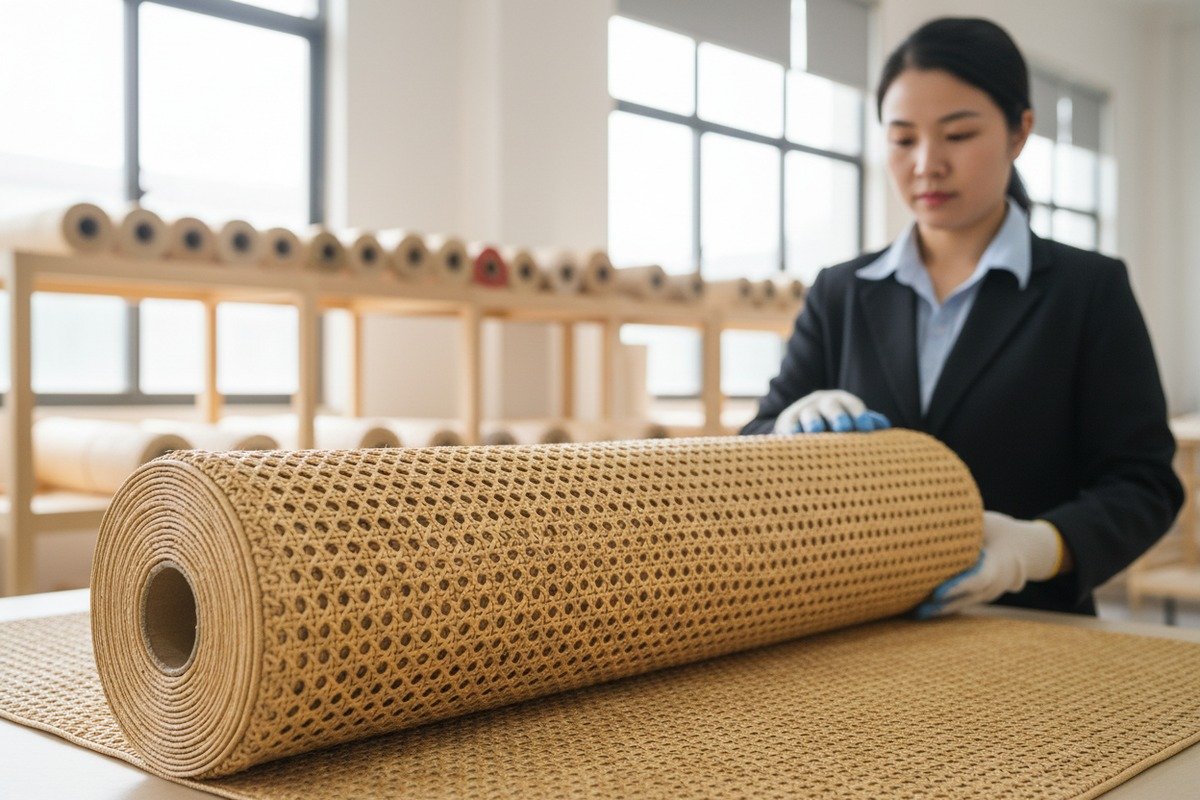
Every year, our quality control team 1 in Indonesia rejects roughly 15% of raw rattan peels before they even reach the weaving stage. The reason is simple: buyers who order Grade A expect perfection, and one cracked strand or uneven weave can turn a premium roll into a B-grade reject raw rattan peels 2. If you have ever received a bulk shipment only to find rough surfaces, color inconsistencies, or broken strands hidden deep in the roll, you know the frustration — and the cost — of unclear acceptance standards.
Grade A rattan cane webbing must meet strict criteria: a smooth, crack-free surface with uniform honey-golden color, consistent strand thickness, even weave tension, 8–12% moisture content, excellent elasticity, precise dimensional tolerances, and clean-cut edges with minimal fraying across every roll in the shipment.
This guide breaks down each acceptance criterion into clear, actionable checks you can apply at your warehouse or request from your supplier before shipment. Let’s walk through color, surface defects, dimensions, and packaging — one standard at a time.
How can I verify that my rattan cane webbing meets the color and smoothness standards of Grade A material?
When we peel and sort rattan at our processing facility in Kalimantan, color grading is the very first gate every strand must pass. Buyers often assume color is just cosmetic, but it actually signals the age of the rattan, the quality of the peel, and whether the material was stored properly before weaving.
To verify Grade A color and smoothness, inspect for a consistent honey-golden to light straw-yellow tone across the entire roll, ensure the surface feels smooth without raised fibers or rough patches, and confirm there is no excessive bleaching that masks underlying defects.
Understanding the Color Spectrum
Grade A rattan cane webbing sits within a narrow color window. The ideal shade ranges from light beige 3 to a warm honey-golden tone. A slight whiteness is acceptable — this often indicates a semi-bleached finish that many high-end furniture makers now prefer. However, the color should never look chalky, grey, or overly dark brown.
Here is a quick reference we share with our QC inspectors:
| Color Indicator | Grade A Acceptable | Reject / Downgrade |
|---|---|---|
| Honey-golden, even tone | ✔ Yes | — |
| Light straw-yellow | ✔ Yes | — |
| Semi-bleached (slight whiteness) | ✔ Yes | — |
| Dark brown patches | — | ✘ Downgrade to B or C |
| Grey or ashy streaks | — | ✘ Reject |
| Uneven bleach spots | — | ✘ Downgrade to B |
When you receive a shipment, pull three rolls at random. Unroll the first two meters of each and hold them side by side under natural daylight — not fluorescent light. Artificial lighting can mask yellow-to-grey shifts. The color across all three rolls should be virtually identical.
The Smoothness Test
Smoothness in Grade A webbing comes from two stages in production. First, the rattan peel is manually stripped and sorted. Then, after weaving, the surface is singed — a controlled flame pass that burns off tiny fibers sticking up from the strands. This singeing step is what separates Grade A from lower grades.
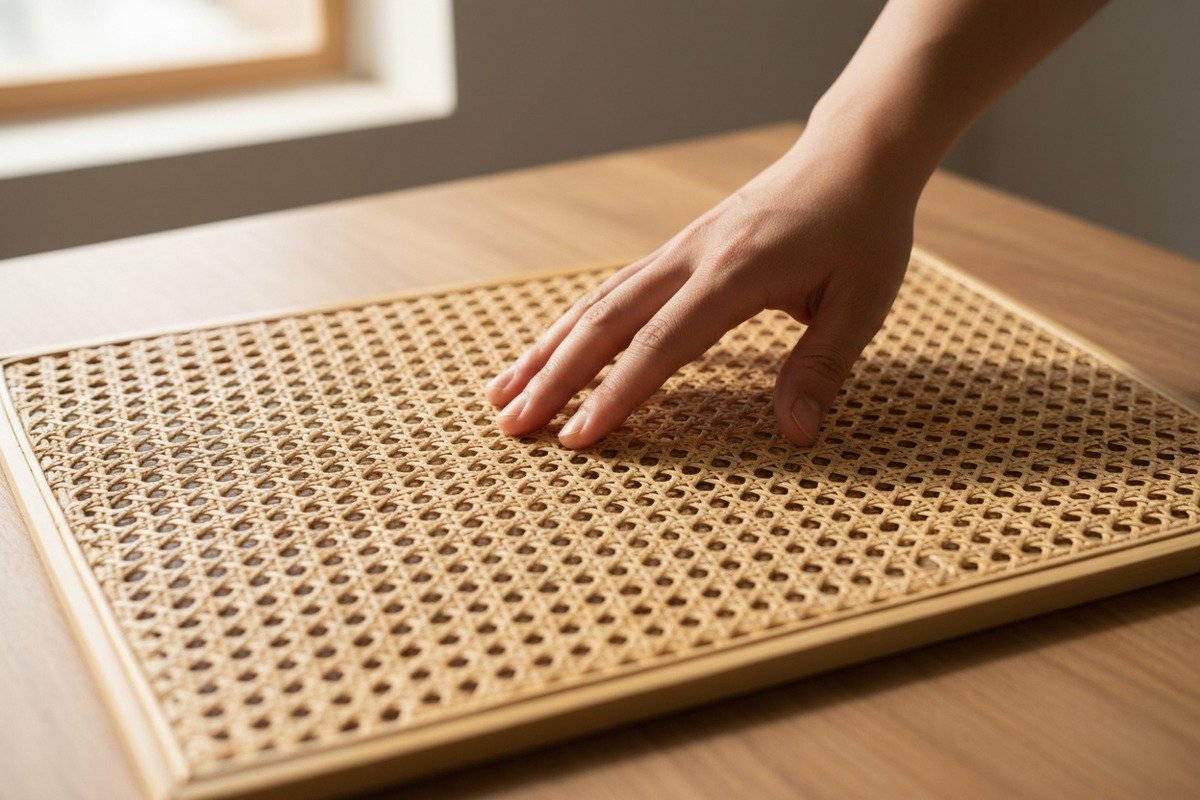
Run your palm flat across the surface of the webbing. Grade A material should feel silky, with no catching or snagging against your skin. If you feel raised fibers, bumps, or a gritty texture, the singeing was insufficient or the raw peel was too rough to begin with.
What About Natural Scent?
Grade A rattan should smell like clean, dry wood. A subtle woody scent is normal and even desirable — it confirms the material is natural and minimally processed. If you detect chemical odors 4, mildew, or a musty smell, this could indicate improper drying, over-bleaching, or poor storage conditions. We always recommend buyers request a sample roll before placing bulk orders so they can evaluate scent alongside color.
Semi-Bleached vs. Natural
The market has shifted noticeably in the past two years. Many European and American buyers 5 now request semi-bleached Grade A webbing. This process lightens the natural rattan slightly, giving it a cleaner, more contemporary look. The key is that semi-bleaching should not compromise the fiber integrity. If the bleach was too strong, the strands become brittle. You can test this by bending a single strand at a 90-degree angle. Grade A semi-bleached rattan should flex without snapping.
What specific surface defects should I look for when inspecting my bulk order for Grade A quality?
Our QC team uses a 12-point checklist before any roll leaves our warehouse in Foshan. Surface defects are the most common reason we downgrade material from Grade A to Grade B, and they are also the easiest defects for buyers to miss if they only inspect the outer layer of each roll.
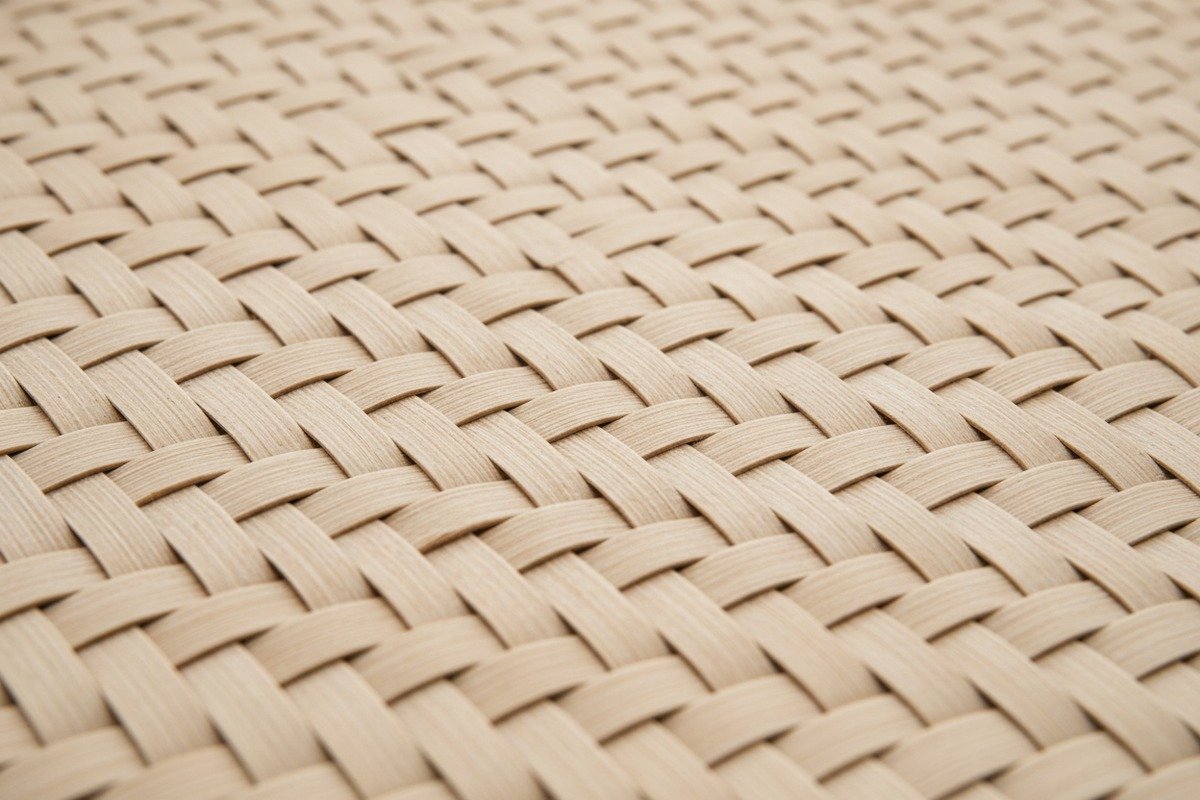
When inspecting for Grade A quality, look for cracks, knots, insect holes, broken strands, uneven strand widths, splicing points, discolored spots, mold traces, rough or unsanded edges, loose weave intersections, bark residue, and any signs of water damage throughout the roll — not just the visible surface.
The Most Common Defects
Not all defects carry equal weight. Some are cosmetic and may be acceptable on the back side of a furniture panel. Others compromise structural integrity and must trigger an immediate rejection. Here is how we categorize them:
| Defect Type | Severity for Grade A | Action |
|---|---|---|
| Hairline cracks on strands | High — reject | Remove affected section or downgrade roll |
| Small knots (< 2mm) | Medium — limit 1 per meter | Accept if isolated; reject if clustered |
| Insect pinholes | High — reject | Indicates infestation risk; reject entire roll |
| Broken strands in weave | High — reject | Cannot be repaired without visible patching |
| Strand width variation > 0.3mm | Medium — review | Accept minor variation; reject if visible pattern distortion |
| Bark residue on surface | Low — minor | Acceptable if minimal; wipe clean before shipping |
| Mold or mildew stains | High — reject | Indicates moisture damage; reject and isolate |
| Spliced strands | Medium — limit 2 per roll | Accept if splice is tight and invisible from front |
How Deep Should You Inspect?
This is where many purchasing managers get caught. Suppliers sometimes place the best material on the outside of a roll and bury lower-quality sections in the middle. We recommend unrolling at least 5 meters from the center of every fifth roll in a shipment. Compare the center section to the outer layer. If you see a noticeable drop in quality, this is a red flag.
Insect Damage Deserves Extra Attention
Rattan is a natural tropical palm. Insect larvae 7 can bore into the material during harvesting or storage. Tiny pinholes — sometimes as small as 0.5mm — indicate past or active infestation. Grade A material must be completely free of insect damage. At our Indonesian facility, we kiln-dry all rattan peels to kill any larvae before weaving. This step is essential, but not all suppliers do it.
The Bend Test for Structural Integrity
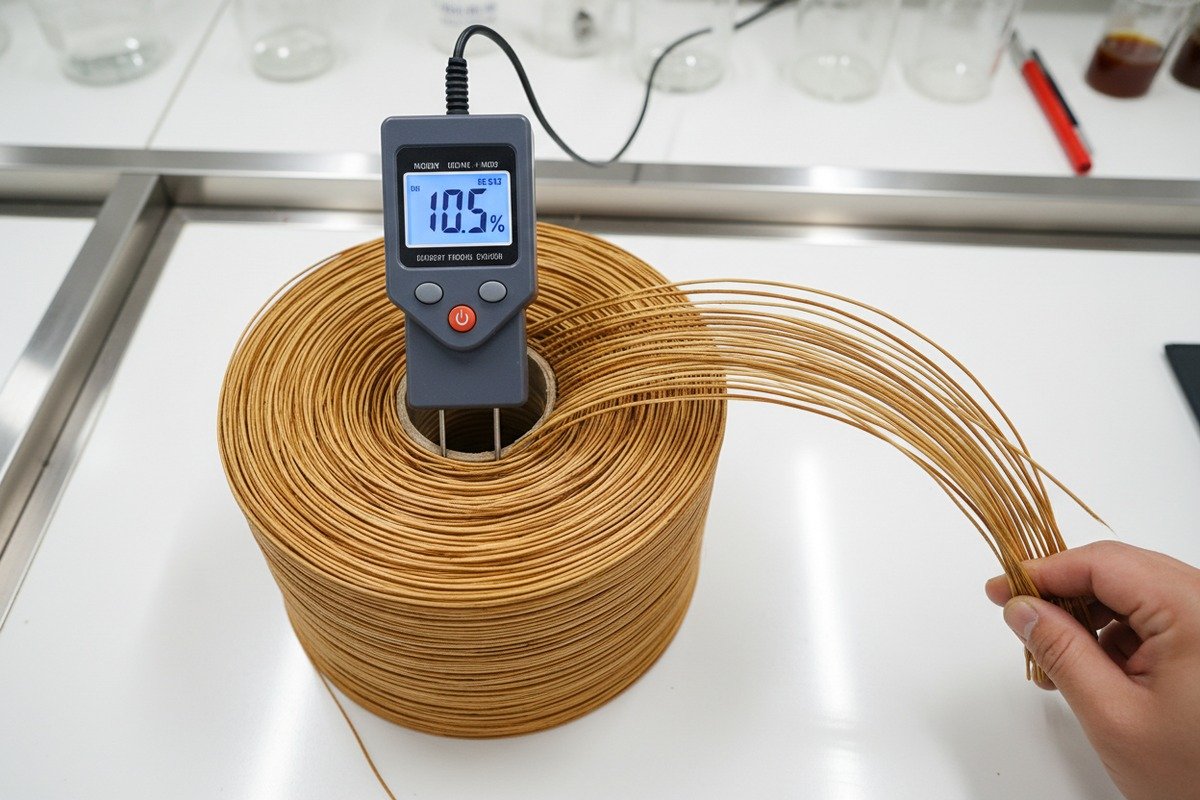
Beyond visual inspection, physically test the webbing. Cut a 10cm × 10cm sample and flex it in all directions. Grade A rattan should bend smoothly without any cracking sounds. If you hear snapping or see white stress lines appear along the strands, the material is too dry or too old to qualify as Grade A. Proper moisture content 8 — between 8% and 12% — is critical. You can verify this with a simple pin-type moisture meter pressed against the strand surface.
How do I ensure the dimensions and weaving tension of my rattan webbing are consistent across the entire shipment?
Dimensional accuracy is something we track obsessively across our three factories, because even a 2mm width deviation can cause fitting problems when a furniture maker tries to install a webbing panel into a routed groove. Inconsistent tension is even worse — it creates visible sag or puckering after the cane dries on the frame.
To ensure dimensional and tension consistency, measure roll width at three points per roll (start, middle, end), verify hole spacing with a calibrated gauge, check that weave tension is uniform by pressing the mesh center and confirming equal resistance, and cross-reference all measurements against the agreed specification sheet for every fifth roll.
Standard Dimensions You Should Specify
Before placing any order, your purchase specification must lock down four key dimensions: roll width, roll length, hole size (mesh opening), and strand width. Here are the most common specs in the market:
| Specification | Standard Options | Grade A Tolerance |
|---|---|---|
| Hole size (mesh opening) | 3/8", 7/16", 1/2", 5/8", 3/4", 1" | ± 1mm |
| Roll width | 35 cm, 45 cm, 60 cm, 90 cm, 120 cm (24" most popular) | ± 3mm |
| Roll length (natural) | 15 meters (approx. 50 feet) | ± 0.3 meters |
| Roll length (synthetic) | Up to 30 meters | ± 0.5 meters |
| Strand thickness | 0.4–0.6mm (varies by weave) | ± 0.1mm |
The 1/2-inch mesh opening remains the dominant choice globally. It offers the best balance of pliability for wet installation and visual proportion for most furniture applications — chairs, cabinet doors, headboards, and room dividers.
How to Check Weave Tension
Weave tension refers to how tightly the strands are pulled during the weaving process. If tension is too loose, the mesh will sag when installed. If tension is too tight, the webbing becomes rigid and difficult to work with during wet installation.
Here is a practical test we teach our wholesale clients:
- Lay the webbing flat on a table.
- Press one finger into the center of a mesh opening.
- The mesh should depress about 3–5mm before resisting.
- Repeat at five different spots across the width.
- All five spots should feel the same.
If one area is noticeably looser or tighter than others, the weaving machine was not calibrated properly, or the operator changed tension mid-run. This is a Grade A rejection point.
Hexagonal vs. Square Weaves
Different weave patterns have different tension characteristics. The classic hexagonal "radio weave" has a natural give in all directions, which makes it forgiving during installation. Square and octagonal weaves are stiffer by design. When specifying Grade A quality, your tolerance standards should account for the weave type. A square weave will naturally feel tighter than a hexagonal weave at the same strand thickness.
Edge-to-Edge Consistency
Width tapering is a subtle defect that shows up in lower-quality production. Measure the roll width at three points: the first meter, the midpoint, and the last meter. All three measurements should fall within ±3mm of each other. If the roll narrows toward the end, this indicates the weaving frame was not properly secured or the strand feed was inconsistent.
We also recommend checking that the edges are cleanly cut and bound. Grade A webbing should not fray when you run your thumb along the edge. Clean edges are a sign that the finishing step — trimming and sometimes sealing with a light adhesive — was done correctly.
What packaging standards should I require to protect my Grade A rattan materials from damage during international transit?
We learned this lesson the hard way in our early export years: a perfectly graded roll of Grade A rattan can arrive at your port crushed, moisture-damaged, or warped beyond use if the packaging was not designed for ocean freight. Packaging is not an afterthought — it is the final quality gate.
For international transit, require each Grade A roll to be individually wrapped in moisture-barrier plastic film, supported by rigid cardboard cores, placed in double-wall corrugated cartons with corner protectors, and palletized with stretch wrap and fumigation-compliant wooden pallets bearing ISPM-15 stamps.
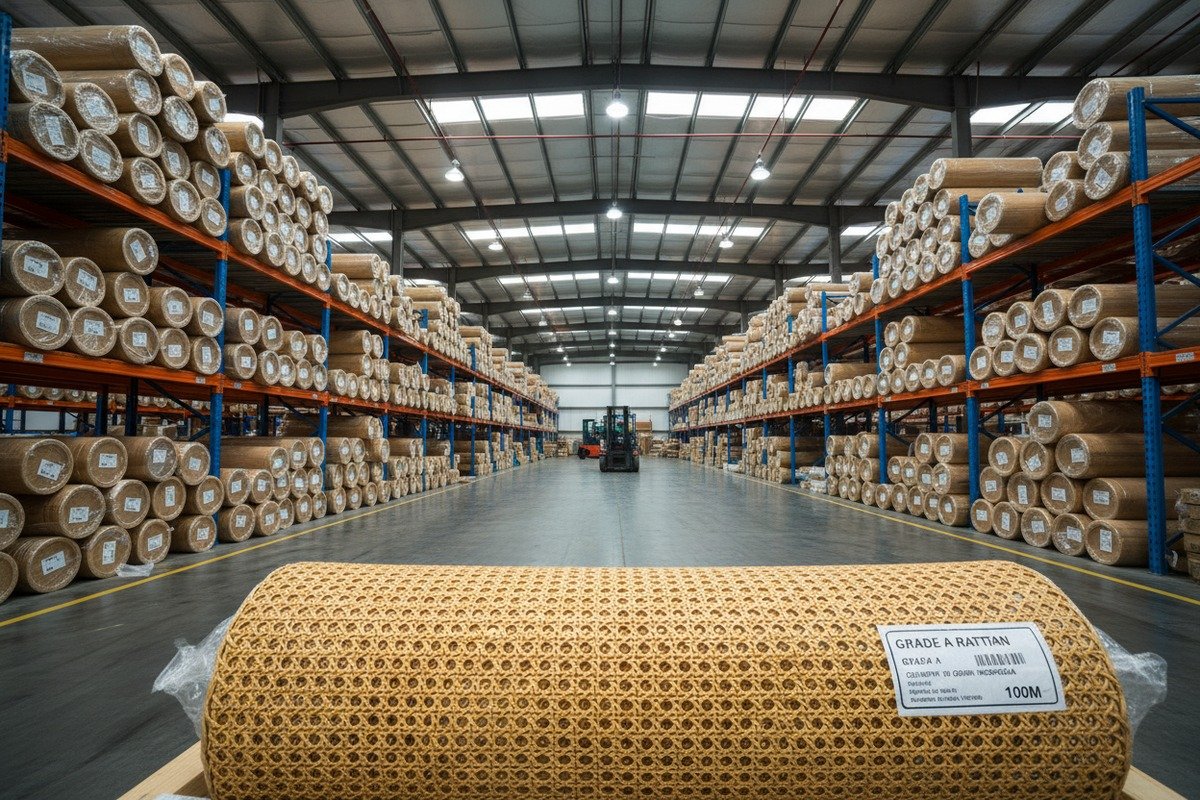
The Layers of Protection
Rattan is hygroscopic — it absorbs and releases moisture constantly. During a 25-day ocean crossing 9 from Southeast Asia to Europe or the US, container humidity can swing wildly. Without proper moisture barriers, Grade A webbing can develop mold, warp, or become brittle.
Here is the packaging standard we use for all Grade A export orders:
Layer 1: Inner wrap. Each roll is wrapped in polyethylene (PE) film. This creates a moisture barrier around the individual roll. We include a silica gel desiccant packet inside the wrap — typically 50 grams per roll — to absorb residual moisture.
Layer 2: Core support. Every roll is wound around a rigid cardboard or plastic tube core. This prevents the center of the roll from collapsing during stacking. The core diameter should match the roll's inner circumference tightly. Loose cores allow the roll to deform.
Layer 3: Outer carton. Rolls are placed into double-wall corrugated cartons. Single-wall boxes are not strong enough for ocean freight. Each carton should hold no more than 4–6 rolls depending on width, with foam dividers between rolls to prevent rubbing.
Layer 4: Palletizing. Cartons are stacked on heat-treated wooden pallets 10 that comply with ISPM-15 (International Standards for Phytosanitary Measures). This is mandatory for most importing countries. The pallet stack is then wrapped with stretch film — at least three passes — and secured with strapping bands.
Moisture Control Is Non-Negotiable
The ideal moisture content for Grade A rattan at the point of packing is 8–12%. If the rattan is packed too wet, mold will develop inside the PE wrap during transit. If it is too dry, the strands become brittle and crack under vibration. We measure moisture content with calibrated pin meters on every batch before wrapping.
Some buyers also request container desiccant bags — large calcium chloride bags hung inside the shipping container — for added protection during monsoon-season shipments. This is especially important for shipments originating from Indonesia between November and March.
Labeling and Documentation
Each carton should be clearly labeled with the following information: product grade (Grade A), weave pattern, mesh size, roll dimensions, roll count, gross and net weight, and a batch/lot number for traceability. Inside each carton, include a packing slip that matches the commercial invoice. This makes customs clearance faster and gives your receiving warehouse team a clear reference for quality spot-checks.
What to Request in Your Purchase Agreement
Spell out packaging requirements in your purchase contract. Do not assume your supplier will use Grade A packaging for Grade A product. Specify:
- PE film wrap with desiccant for each roll
- Rigid inner cores
- Double-wall corrugated cartons
- Foam or cardboard dividers between rolls
- ISPM-15 compliant pallets
- Stretch wrap and banding on pallets
- Container desiccant bags for ocean freight
If your supplier pushes back on any of these, consider it a warning sign. Proper packaging adds roughly $0.03–0.05 per square foot to the total cost — a tiny price compared to the cost of receiving a damaged shipment.
Conclusion
Grade A rattan cane webbing demands clear, measurable acceptance criteria at every stage — from color and surface quality to dimensional accuracy and packaging integrity. Define these standards in your purchase agreement, inspect rigorously at receiving, and partner with suppliers who welcome transparency. Your finished furniture will reflect the care you put into sourcing.
Footnotes
1. ISO 9001 is the international standard for quality management systems. ↩︎
2. Background information on rattan as a natural climbing palm used in furniture. ↩︎
3. Definition of the color standard used for grading rattan materials. ↩︎
4. EPA information on volatile organic compounds and chemical odors in products. ↩︎
5. International Trade Centre data on market trends for sustainable products. ↩︎
6. Technical properties and structural characteristics of rattan fibers. ↩︎
7. Principles for managing pest risks in natural raw materials. ↩︎
8. Scientific explanation of moisture balance in hygroscopic materials like rattan. ↩︎
9. Logistics performance data regarding international shipping and transit. ↩︎
10. International standards for phytosanitary measures regarding wood packaging. ↩︎

 English
  Español de México
  العربية
  Deutsch
  Français
  Русский