
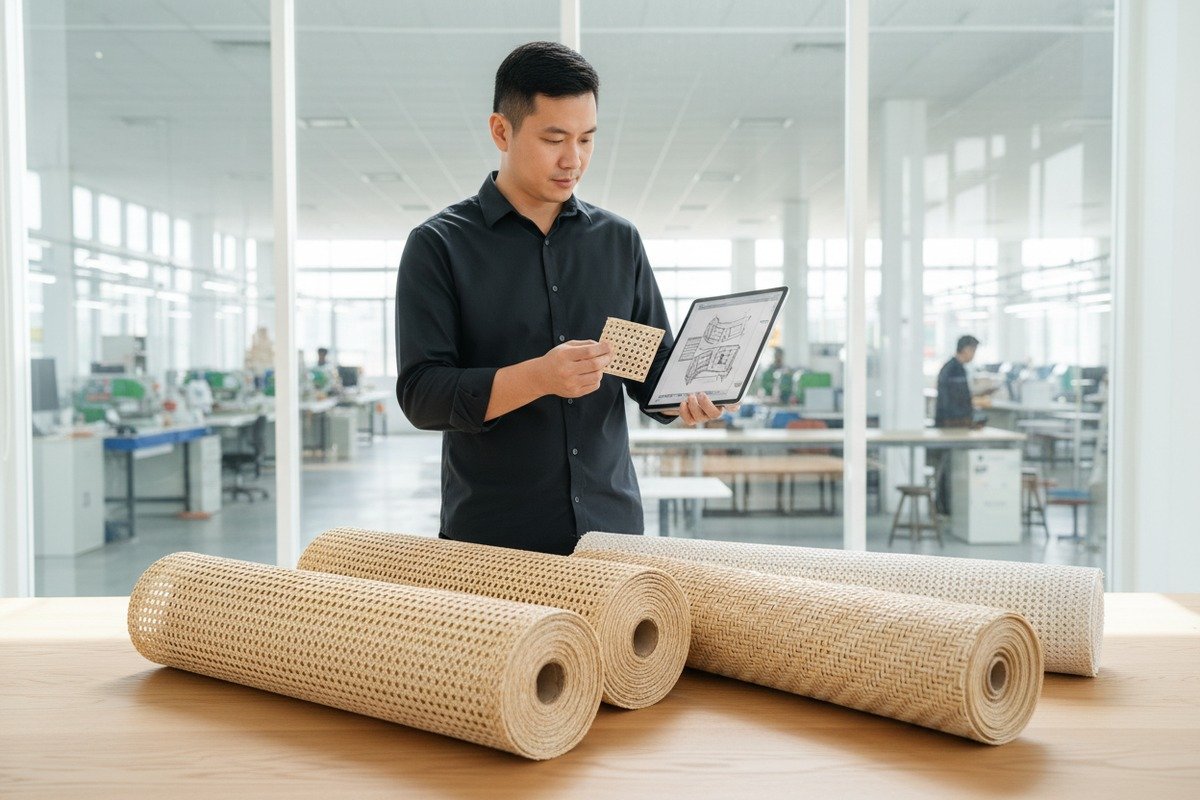
Every week, our sales team fields dozens of calls from furniture factories asking the same thing: “Can you make this pattern?” The truth is, most buyers don’t realize how many options exist — or how much control they can have over the final weave. That uncertainty leads to settling for generic patterns, missed design opportunities, and inconsistent quality across production runs.
Custom rattan cane webbing patterns available for sourcing include the classic “7” pattern, Herringbone, Close Weave, octagonal open-mesh, square radio weave, mixed-color weaving, and open grid designs. Factories like ours also accept fully bespoke pattern requests with custom sizing, color, and weave density specifications.
In this guide, we break down every major pattern type, explain how custom orders work from raw peel to finished roll, and show you exactly how to maintain Grade A quality at scale. Whether you run a furniture factory or wholesale operation, this is your complete sourcing roadmap.
What are the most popular custom weaving patterns available for my furniture factory?
Over the past decade, our Foshan production lines have woven millions of meters of rattan webbing. Through years of filling orders across Europe, the Middle East, and Southeast Asia, we have seen clear trends in what furniture makers actually need.
The most popular custom weaving patterns include the "7" pattern, Herringbone, Close Weave, octagonal (French Cane), square radio weave, and open grid. Each pattern serves a different aesthetic and structural purpose, from dense solid surfaces to airy decorative mesh designs.
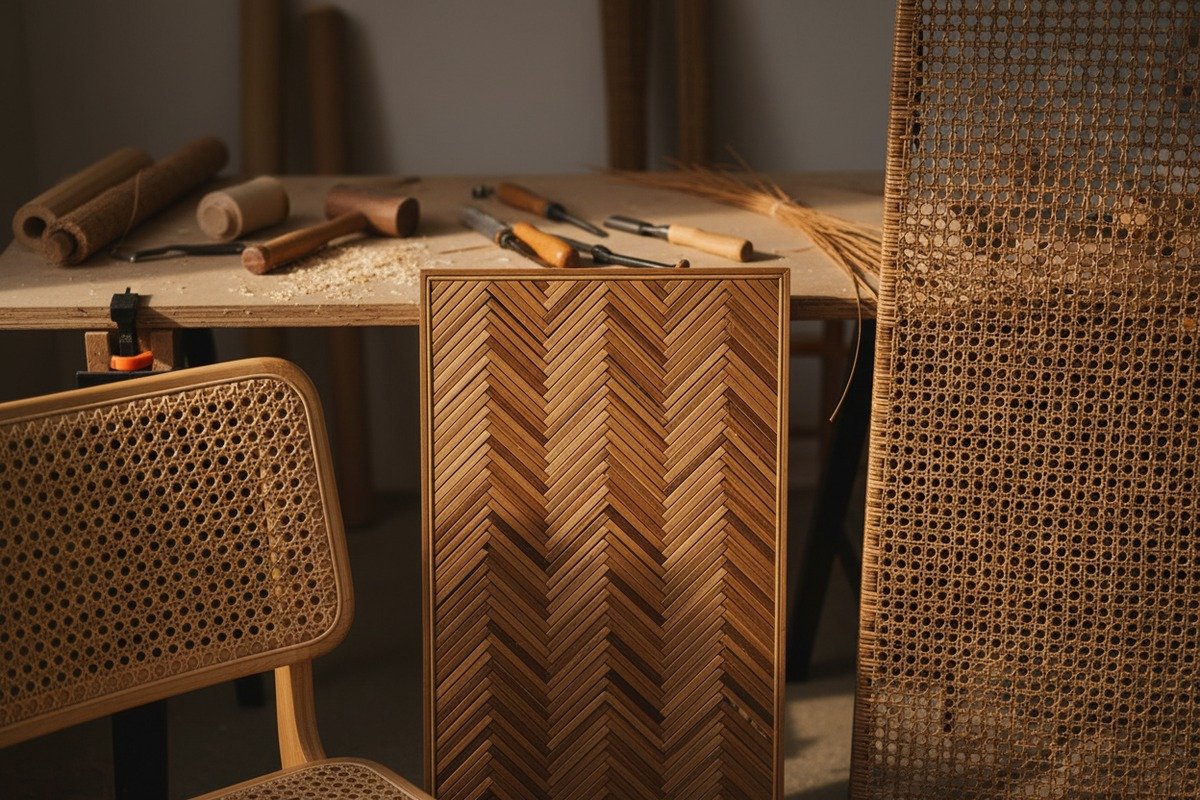
Let's walk through each pattern so you understand the visual effect, structural strength, and best use case for your factory.
The "7" Pattern
This pattern gets its name from the way the rattan strips cross at 90-degree angles, forming shapes that resemble the number "7." It is one of the most recognizable and traditional weaves. The "7" pattern offers moderate density. It works well for chair backs, cabinet doors, and decorative panels where you want a balanced look — not too open, not too tight.
Herringbone Weave
Herringbone features diagonal strips that zigzag across the surface. Herringbone Weave 1 It creates a strong visual texture and a modern aesthetic. Many European furniture brands request Herringbone for mid-century and contemporary collections. The weave is tighter than open-mesh options, which adds structural strength.
Close Weave (One-Over-One)
Close Weave 2 uses a one-over-one interlacing technique. It creates a solid, dense surface with no visible holes. This is the pattern to choose when you need visual uniformity and maximum strength. It is popular for seat panels, room dividers, and any application where light should not pass through.
Octagonal Open-Mesh (French Cane)
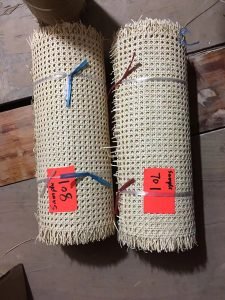
Often called the "gold standard" for restoration work, octagonal open-mesh 3 is the classic pattern found on vintage and mid-century chairs. Pre-woven sheets in this pattern — typically with 1/2-inch fine cane — are the most commonly stocked item in the global market. Our factory ships this pattern more than any other.
Square Radio Weave
Radio weave forms a grid of small square blocks. It has a clean, geometric look that fits well in minimalist and Scandinavian-inspired designs. It is also one of the easier patterns to cut and fit into custom furniture frames.
Open Grid Patterns
Open grid webbing uses perpendicular sets of rattan strips with larger gaps between them. DIY makers love this pattern for lampshades, planters, and wall hangings. For furniture factories, open grid works best in decorative inserts rather than load-bearing panels.
| Pattern Name | Visual Style | Density | Best Use Case |
|---|---|---|---|
| "7" Pattern | Traditional, angular | Medium | Chair backs, cabinet doors |
| Herringbone | Modern, diagonal zigzag | Medium-High | Contemporary furniture panels |
| Close Weave | Solid, uniform surface | High | Seat panels, room dividers |
| Octagonal (French Cane) | Classic open-mesh | Low-Medium | Restoration, vintage chairs |
| Square Radio Weave 4 | Geometric grid | Medium | Minimalist furniture inserts |
| Open Grid | Airy, open gaps | Low | Lampshades, decorative accents |
Mixed-Color Weaving
Beyond pattern shape, color mixing is a growing trend. Our factory can blend natural, bleached, and dyed rattan strips into any of the above patterns. This allows furniture brands to create unique two-tone or multi-tone effects without painting or staining after assembly. Mixed-color weaving 5 adds cost because it requires manual sorting and careful placement during the "LaHua" hand-finishing stage. But the visual result is worth it for brands targeting the premium boho-chic or coastal design market.
Can I provide my own design for a unique rattan cane webbing pattern?
When our team in Nanhai first started receiving custom design files from European buyers ten years ago, we had to adapt fast. Today, handling bespoke pattern requests is a core part of what we do — and the answer is yes, with some important caveats.
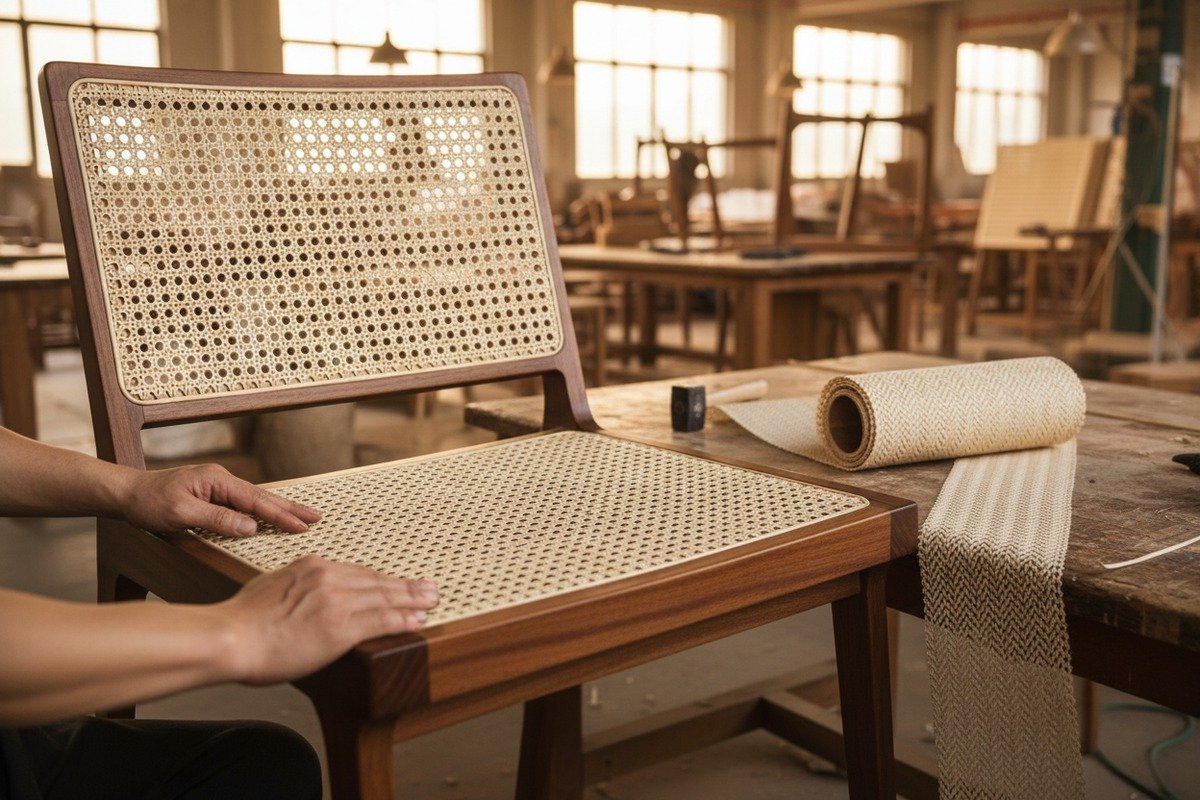
Yes, you can provide your own design for a unique rattan cane webbing pattern. Most specialized factories accept custom sketches, CAD files, or reference photos. However, feasibility depends on the rattan strip width, weave angle, and whether the pattern can be achieved through machine "Flying Thread" weaving combined with hand "LaHua" finishing.
How Custom Designs Move From Concept to Production
The process starts when you send us a reference. This can be a photo, a hand sketch, a digital file, or even a physical sample. Our weaving team evaluates the design against three key constraints:
- Strip width compatibility. Rattan peel comes in natural lengths and widths. If your design requires strips thinner than 2mm or wider than 12mm, we may need to adjust or source specialty material.
- Weave angle feasibility. Machine "Flying Thread" weaving handles straight perpendicular and standard diagonal patterns efficiently. Extreme angles or curved lines require more hand labor during the "LaHua" stage, which increases cost and production time.
- Repeat unit size. Every woven pattern has a repeat unit — the smallest section that tiles across the full sheet. Smaller repeat units are easier and faster to produce. Large or complex repeat units slow down production significantly.
What About Digital Design Tools?
Some factories now use CNC cutting technology 6 and digital design tools to prototype intricate patterns. This approach works best for creating cutting guides and jigs rather than controlling the weave itself. At our facility, we combine digital planning with skilled hand-weaving to achieve patterns that pure machine production cannot replicate.
Materials Beyond Natural Rattan
Custom designs can also incorporate mixed materials. Some of our clients request thin leather strips, fabric threads, or synthetic rattan blended with natural cane. These hybrid weaves create unique textures and visual contrasts. However, mixing materials changes the flexibility, durability, and care requirements of the finished webbing. We always recommend a sample run before committing to bulk production with mixed materials.
Realistic Expectations for Custom Orders
Here is a practical breakdown of what custom design orders typically involve:
| Factor | Standard Pattern | Custom Design |
|---|---|---|
| Sample Lead Time | 1–3 days | 5–14 days |
| Minimum Order Quantity | 100 sqm | 200–500 sqm |
| Unit Cost Increase | Baseline | +15% to +40% |
| Production Speed | 1 roll/day per weaver | 0.5–0.7 rolls/day per weaver |
| Design Revision Rounds | N/A | 1–3 rounds typical |
One thing to keep in mind: rattan is a natural material 7. Every strip has slight variations in color, thickness, and flexibility. Your custom design will look handcrafted — because it is. If you need pixel-perfect uniformity across thousands of sheets, synthetic rattan may be a better fit for your project.
How do I ensure the custom weave I source maintains Grade A quality consistency?
Quality complaints are the single biggest headache in the rattan webbing trade. We learned this early on when a Dutch wholesaler returned an entire container because the weave density shifted midway through a production run. That incident led us to rebuild our quality control process 9 from the ground up.
To ensure Grade A quality consistency, you need to control four areas: raw material grading at intake, strict splicing standards during peel preparation, real-time tension monitoring during machine weaving, and skilled hand inspection during the "LaHua" finishing stage. A documented QC checklist at each stage is essential.
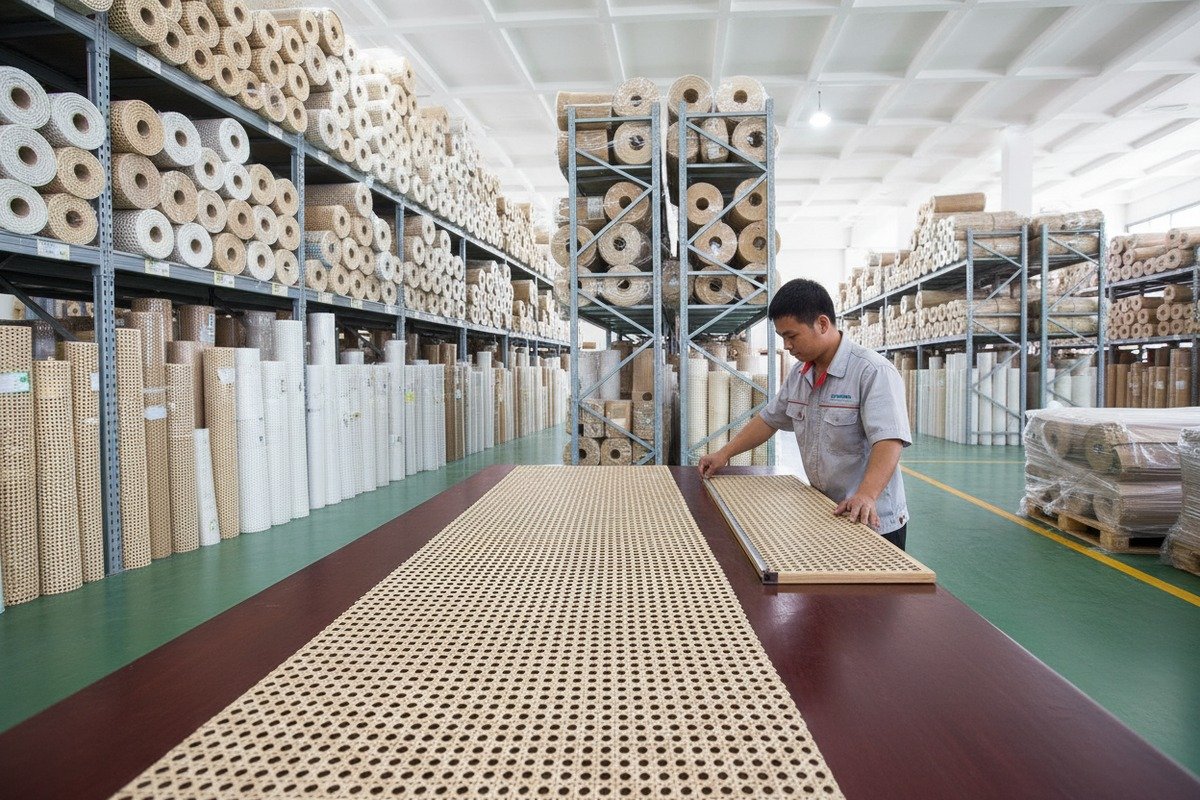
Understanding What "Grade A" Actually Means
Grade A rattan cane webbing has no visible knots, consistent strip width, uniform color tone, tight and even weave tension, and clean edges. It is free from cracks, splits, mold spots, and insect damage. Many buyers ask for Grade A but don't specify measurable criteria. That gap causes disputes later. Here is what we recommend defining upfront in your purchase agreement:
Key Quality Parameters to Specify
| Quality Parameter | Grade A Standard | Common Defect |
|---|---|---|
| Strip Width Variation | ±0.3mm | Strips too wide or narrow |
| Color Consistency | ≤10% tonal variation | Dark spots, bleach streaks |
| Weave Tension | Uniform across full sheet | Loose sections, sagging |
| Surface Finish | Smooth, no splinters | Rough edges, fiber lifting |
| Moisture Content | 8%–12% at packing | Too dry (cracking) or wet (mold) |
| Edge Trimming | Clean, straight cuts | Frayed or uneven borders |
The Four-Stage QC Process
Stage 1: Raw material intake. When rattan peels arrive from our Indonesian processing facility, every batch is graded. We sort by strip length, width, color, and flexibility. Short or damaged strips go to lower-grade production. Only strips meeting our length and width specs enter the Grade A production line.
Stage 2: Splicing control. Natural rattan strips are rarely long enough to span a full roll. Splicing — joining shorter strips end-to-end — is necessary. Poor splicing creates visible bumps or weak points. Our splicers are trained to taper joints so they blend invisibly into the weave. We reject any splice that creates a thickness increase of more than 0.5mm.
Stage 3: Machine "Flying Thread" weaving. During machine weaving, our operators monitor tension settings continuously. If the machine pulls too tight, the rattan cracks. Too loose, and the pattern gaps widen. We calibrate tension at the start of every roll and spot-check every 2 meters.
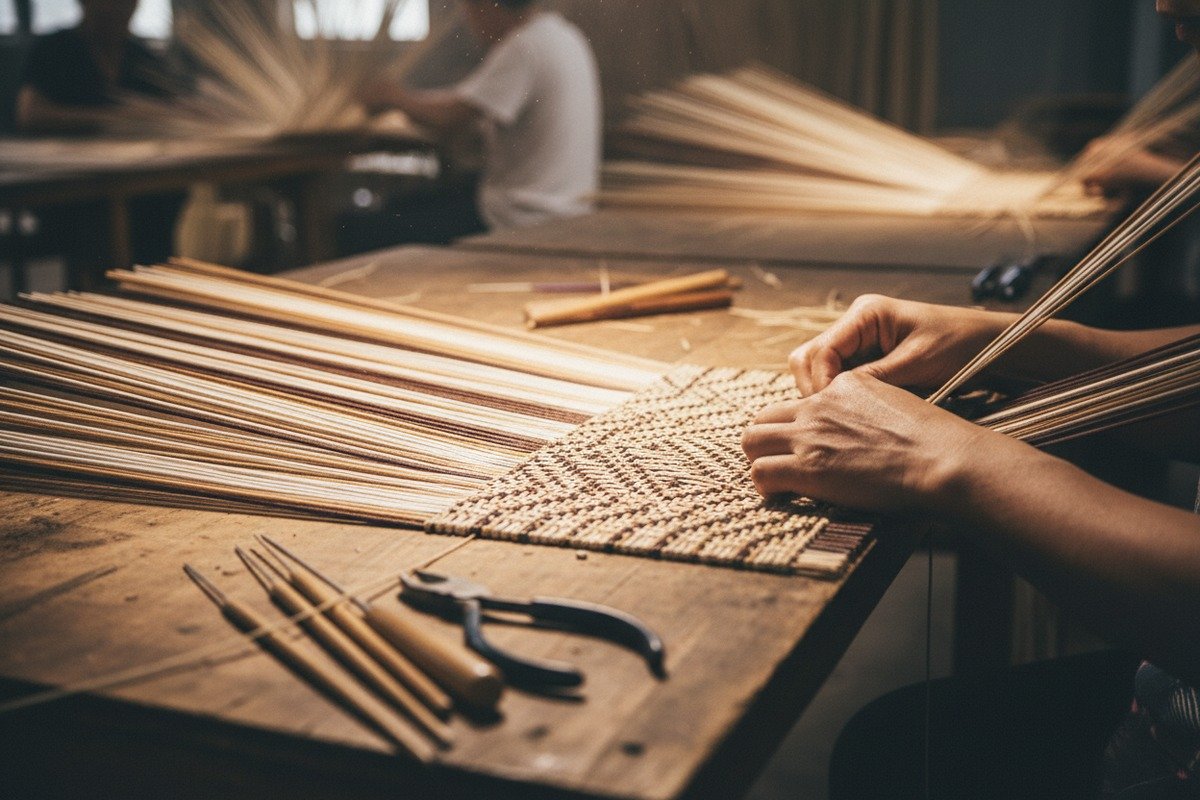
Stage 4: Hand "LaHua" finishing. This is where skilled workers pull strips diagonally through each square hole to complete the pattern. One experienced worker finishes about one 16-inch-wide roll per day. During this stage, the worker inspects every square for missed pulls, loose ends, and pattern alignment errors. This is the final — and most critical — quality gate.
Tips for Buyers
Request a pre-production sample from every new factory you trial. Approve it in writing before bulk production begins. Ask for photos at each QC stage. If possible, have a third-party inspector visit the factory during your first order. Once you establish a reliable relationship, remote QC via photo and video becomes practical.
Proper packaging also protects quality. We wrap every roll in moisture-barrier film, then pack in reinforced cardboard tubes to prevent crushing during transit. Packaging failures undo all the upstream QC work.
What is the process for ordering bulk custom-patterned rattan webbing directly from your factory?
Plenty of buyers have told us they hesitated before placing their first direct factory order. The process felt unclear. They worried about communication gaps, hidden fees, and long lead times. So here is exactly how it works when you order from our Foshan facility — step by step, with no surprises.
The bulk ordering process involves five steps: inquiry and pattern selection, sample production and approval, pricing and contract agreement, bulk manufacturing with staged QC, and final inspection before shipping. The entire cycle typically takes 30 to 60 days from first contact to delivery, depending on pattern complexity and order volume.
Step 1: Inquiry and Pattern Selection
You contact us via email, WhatsApp, or our website at www.rattanwholesaler.com. Tell us the pattern you want (standard or custom), the dimensions, the quantity, and any color or material preferences. If you have a reference image or CAD file, send it along. Our team responds within 24 hours with initial feasibility feedback.
Step 2: Sample Production and Approval
We produce a physical sample of your chosen pattern. For standard patterns like octagonal open-mesh or Herringbone, samples ship within 3 days. For custom designs, expect 5 to 14 days. We ship the sample via express courier. You inspect it, request any adjustments, and give written approval before we proceed. Most orders require one to two sample rounds.
Step 3: Pricing and Contract
Once the sample is approved, we issue a formal quotation. Pricing depends on pattern complexity, material grade, roll dimensions, and order volume. Here is a general pricing framework:
| Order Volume | Standard Pattern Price | Custom Pattern Price | Lead Time |
|---|---|---|---|
| 100–300 sqm | $1.20–$1.80/sqft | $1.60–$2.50/sqft | 15–25 days |
| 300–1,000 sqm | $0.95–$1.50/sqft | $1.30–$2.10/sqft | 25–40 days |
| 1,000+ sqm | $0.75–$1.20/sqft | $1.00–$1.80/sqft | 40–60 days |
Payment terms are typically 30% deposit with the order, 70% balance before shipping. We accept T/T bank transfer and L/C for large orders. The contract specifies pattern, dimensions, material grade, QC standards, packaging method, and delivery timeline.
Step 4: Bulk Manufacturing with Staged QC
Production begins at our Foshan facilities. Depending on the pattern and volume, we allocate the order across our own factories and trusted partner workshops. Our QC team follows the four-stage process described earlier — raw material grading, splicing control, machine weaving monitoring, and hand "LaHua" inspection. We send you progress photos and videos at key milestones.
Step 5: Final Inspection and Shipping
Before packing, our QC team conducts a final inspection of the entire order. We check pattern consistency, color uniformity, weave tension, and surface finish across a random sample of at least 10% of all rolls. After approval, we pack using moisture-barrier film and reinforced tubes. We arrange shipping via sea freight (FCL or LCL) or air freight for urgent orders. Full container loads to major ports typically take 15 to 30 days depending on destination.
Communication Throughout the Process
We assign a dedicated account manager to every order. Communication happens via WhatsApp, email, or WeChat — whichever you prefer. Many of our long-term clients, like purchasing managers in Thailand, the Netherlands, and Australia, use WhatsApp for quick updates and email for formal documentation.
After-Sales Support
If any quality issue arises after delivery, send us photos and a description. We investigate, compare against the approved sample and QC records, and resolve the issue — whether through credit, replacement, or adjustment on the next order. Building long-term relationships matters more to us than winning a single transaction.
Conclusion
Custom rattan cane webbing offers far more variety than most buyers realize. From classic octagonal mesh to fully bespoke designs, the right factory partner turns your vision into consistent, Grade A production — delivered on time and built to last.
Footnotes
1. Replaced with an authoritative Wikipedia article explaining Herringbone weave. ↩︎
2. Replaced with a working page from the original domain that describes Close Weave rattan webbing. ↩︎
3. Replaced with a working page that describes Natural Open Weave Octagonal Hole Rattan Core Webbing Roll. ↩︎
4. Replaced with a working product page from the original domain describing Radio Weave rattan. ↩︎
5. Replaced with a page discussing various rattan webbing materials and patterns, including ‘Mixed Weave’ under plastic rattan, which is the closest relevant match found. ↩︎
6. Replaced with an authoritative academic source (.edu) explaining CNC machining, which encompasses CNC cutting technology. ↩︎
7. Highlights rattan’s properties as a natural, durable, and flexible material for furniture. ↩︎
8. Replaced with a working guide on cane webbing from the original domain. ↩︎
9. Emphasizes the importance of quality control in manufacturing for efficiency and product quality. ↩︎
10. Replaced with a relevant article providing tips on preventing mold on rattan furniture, directly addressing moisture management. ↩︎
 English
  Español de México
  العربية
  Deutsch
  Français
  Русский