
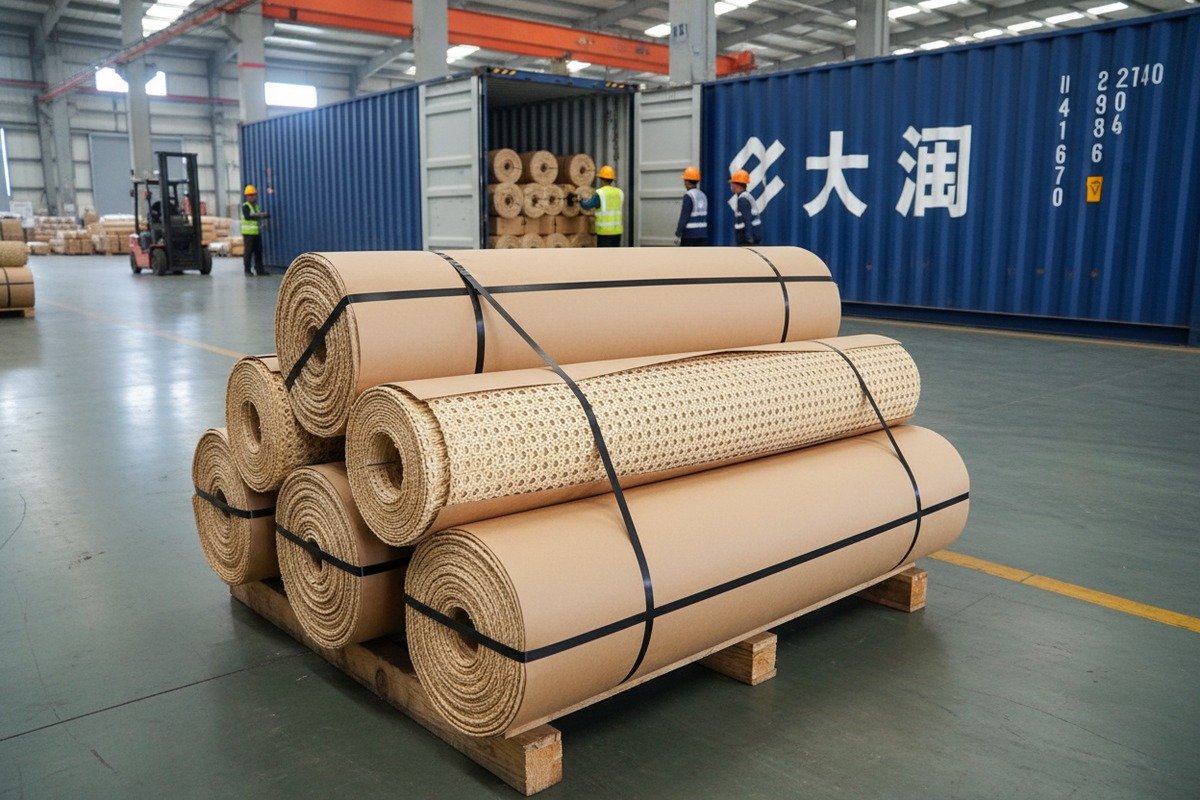
Every year, we handle hundreds of wholesale rattan shipments from our factories in Foshan and Indonesia—and the number one complaint we hear from first-time importers is damaged goods on arrival container utilization 1. Crushed weave patterns, mold spots from moisture, and rolls that unravel mid-transit are problems that cost buyers thousands. The root cause is almost always poor packaging. After years of refining our process, we have built a packaging system that protects every roll from factory floor to your warehouse door.
Rattan cane webbing for wholesale is packaged in tightly wound rolls, wrapped in moisture-proof kraft paper, reinforced with foam and corrugated cardboard layers, then secured with straps. This multi-layer method prevents moisture damage, crushing, and unraveling during long-distance container shipping from Asian ports.
Below, we break down every step of our packaging and shipping process. Whether you source natural Indonesian rattan, bleached cane webbing, or synthetic alternatives, this guide will help you understand exactly how your order gets protected—and how to save money on international freight.
How can I ensure my rattan cane webbing is rolled and wrapped securely for bulk shipping?
We have shipped rattan webbing to over 30 countries, and one lesson stands out: the way a roll is wound at the factory determines whether it arrives flat or deformed.
To ensure secure rolling and wrapping, each rattan cane webbing roll is wound tightly on a cardboard core, wrapped in moisture-proof kraft paper, padded with foam sheets, enclosed in thick corrugated cardboard, and strapped firmly. This five-layer system prevents unraveling, creasing, and transit damage.
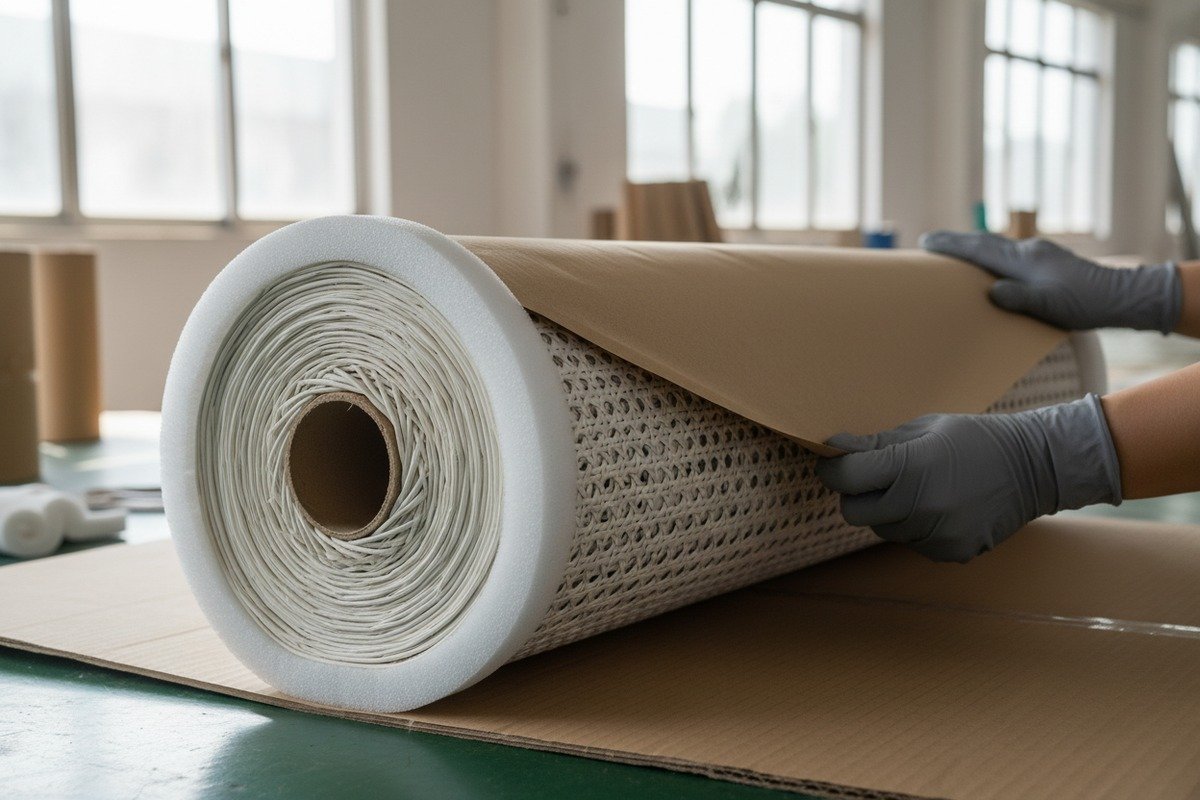
The Five-Layer Wrapping System
Our packaging line follows a strict sequence. Each layer serves a specific purpose. Skip one layer, and the risk of damage jumps significantly.
Layer 1: Cardboard Core. Every roll is wound around a rigid cardboard tube. This keeps the center hollow and prevents the innermost webbing from collapsing under the weight of the outer layers. For rolls longer than 15 meters, we use reinforced cores with thicker walls.
Layer 2: Moisture-Proof Kraft Paper. Once wound, the entire roll gets wrapped in kraft paper treated with a moisture-resistant coating. moisture-proof kraft paper 2 This is the first defense against humidity. Rattan is a natural fiber 3. It absorbs water fast. Without this barrier, mold can develop within days inside a sealed container.
Layer 3: Foam Padding. We apply thin foam sheets around the roll, focusing on the edges and ends. The ends of a roll are the most vulnerable point. They catch impacts during loading and unloading. Foam absorbs that shock.
Layer 4: Corrugated Cardboard Outer Shell. A thick, export-grade corrugated layer surrounds the foam. corrugated cardboard layers 4 This creates a rigid exterior that resists stacking pressure. In a container, rolls sit on top of each other. Without a hard outer shell, bottom rolls get crushed.
Layer 5: Securing Straps. Finally, PP straps go around the package in two directions. They hold all layers tight. They also prevent the roll from shifting during transit. We typically apply two horizontal and two vertical straps per roll.
Roll Specifications and Standards
Different buyers need different sizes. Here is a quick reference for our standard roll options:
| Parameter | Standard Option | Extended Option | Custom Option |
|---|---|---|---|
| Roll Width | 45 cm / 60 cm | 90 cm / 120 cm | 35–120 cm |
| Roll Length | 10 m | 15–30 m | Per buyer request |
| Mesh Pattern | Square (radio weave) | Hexagonal open-mesh | Herringbone, diamond, close weave |
| Core Diameter | 5 cm | 8 cm | Adjustable |
| Wrapping Layers | 5 layers (standard) | 5 layers (standard) | Up to 6 layers for fragile weaves |
Common Rolling Mistakes to Avoid
Not all suppliers follow these steps. Some shortcuts we have seen from competitors include winding rolls too loosely, skipping foam on the ends, or using single-wall corrugated instead of double-wall. If you are sourcing from a new supplier, ask for a cross-section photo of their packaging before you place a bulk order. It tells you everything.
One more tip: request that the supplier marks the roll direction on the outer packaging. This helps your warehouse team unroll the webbing correctly and avoids reverse-bend damage.
What steps do you take to protect my wholesale rattan rolls from moisture and damage during transit?
Moisture is the silent killer of rattan shipments. We once had a client in the Netherlands who lost an entire container because the previous supplier used regular paper instead of moisture-proof wrap.
We protect wholesale rattan rolls through moisture-proof kraft wrapping, silica gel desiccant packets inside each package, anti-mildew treatment during production, fumigation certification for natural rattan, and climate-aware container loading. These combined steps ensure your rattan arrives mold-free and structurally intact.
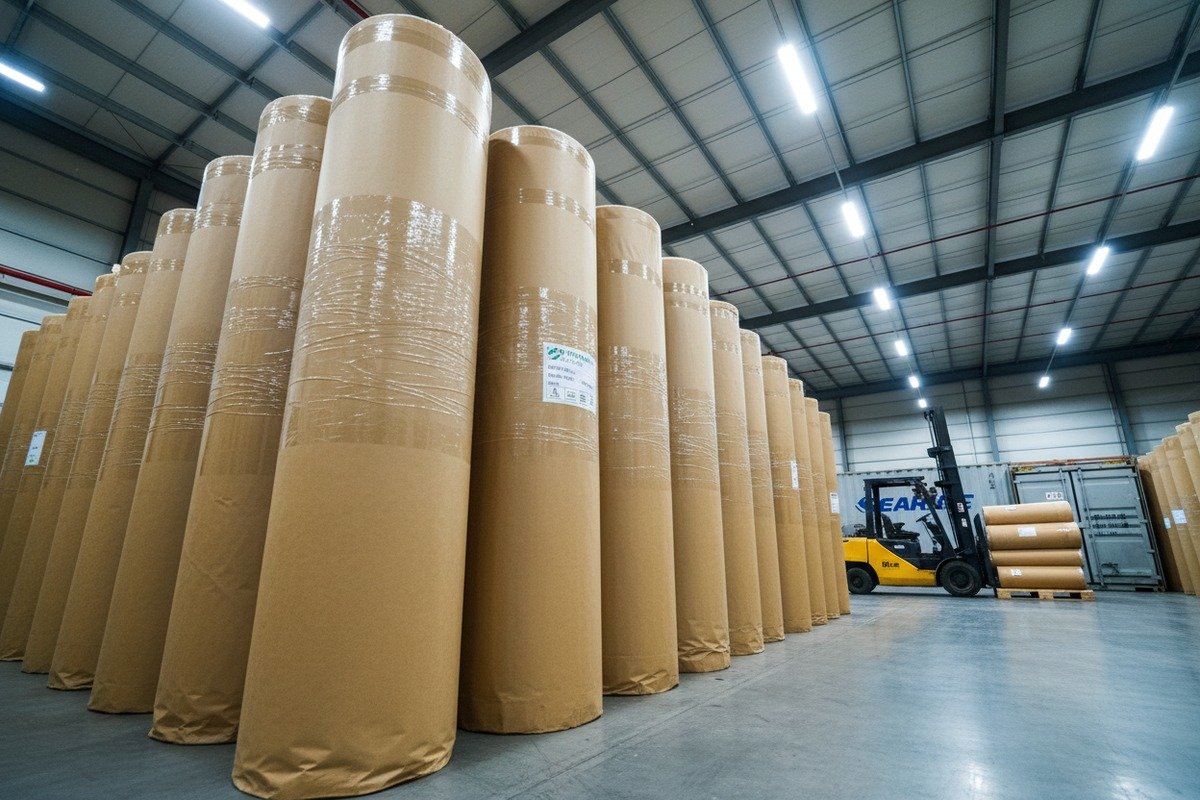
Pre-Shipping Treatment
Protection starts long before packaging. At our Indonesian processing facility, natural rattan cane goes through several treatments after weaving:
Boiling and Drying. Raw rattan vines are boiled to remove sap, then dried to reduce moisture content below 12%. This threshold is critical. Above 12%, mold spores can activate during shipping.
Bleaching. For bleached rattan webbing, we use a controlled chemical process that also sterilizes the fibers. This kills existing mold spores and bacteria.
Anti-Mildew Coating. A light anti-fungal spray is applied after drying. It forms an invisible barrier on the fibers. This treatment remains effective for 60–90 days—more than enough time for most shipping routes.
Salt Water Soaking. Some orders require extra pliability for furniture upholstery. We soak these rolls in salt water at 60–70°C for 30 minutes. This makes the webbing more flexible without weakening it. The salt also acts as a mild preservative.
In-Package Moisture Control
Inside each wrapped roll, we place silica gel desiccant packets 5. The number depends on roll size:
| Roll Size | Desiccant Packets | Total Absorption Capacity |
|---|---|---|
| 60 cm × 10 m | 2 packets (50g each) | 100g moisture |
| 90 cm × 15 m | 3 packets (50g each) | 150g moisture |
| 120 cm × 30 m | 5 packets (50g each) | 250g moisture |
| Custom large rolls | Calculated per volume | Scaled accordingly |
These packets absorb any residual moisture trapped inside the packaging. They are especially important for shipments to humid destinations like Southeast Asia or the Gulf region.
Fumigation and Certification
Natural rattan is a plant material. Many countries require fumigation certificates for plant-based imports. fumigation certification 6 We handle this in-house. Our fumigation process uses methyl bromide 7 or heat treatment, depending on the destination country's regulations. The certificate is included with every shipment of natural rattan cane webbing.
Synthetic and paper rattan alternatives do not require fumigation. This is one reason some buyers prefer them—it simplifies customs clearance 8 and saves 2–3 days in processing time.
Physical Damage Prevention
Beyond moisture, physical impacts are the second biggest risk. Container floors vibrate. Forklifts bump packages. Cargo shifts at sea. Our response is layered:
- Corner protectors on every pallet
- Stretch wrap over the entire pallet load
- Air dunnage bags placed between pallet stacks inside the container to prevent lateral movement
- Loading instructions printed on outer packaging in English and the destination language
We also photograph every container before sealing. These photos are shared with the buyer as proof of loading condition. If a damage claim arises, these images help resolve it quickly.
Can I request custom labeling and specific roll lengths for my private-label rattan orders?
Many of our long-term buyers—especially wholesalers in the US and Europe—sell rattan webbing under their own brand. Our production line supports full private-label customization 9 from day one.
Yes, we offer complete private-label customization including branded labels, custom roll lengths from 5 to 30 meters, specific width cuts from 35 to 120 cm, barcoded packaging, and OEM carton printing. Minimum order quantities for custom labeling start at just 200 rolls per specification.
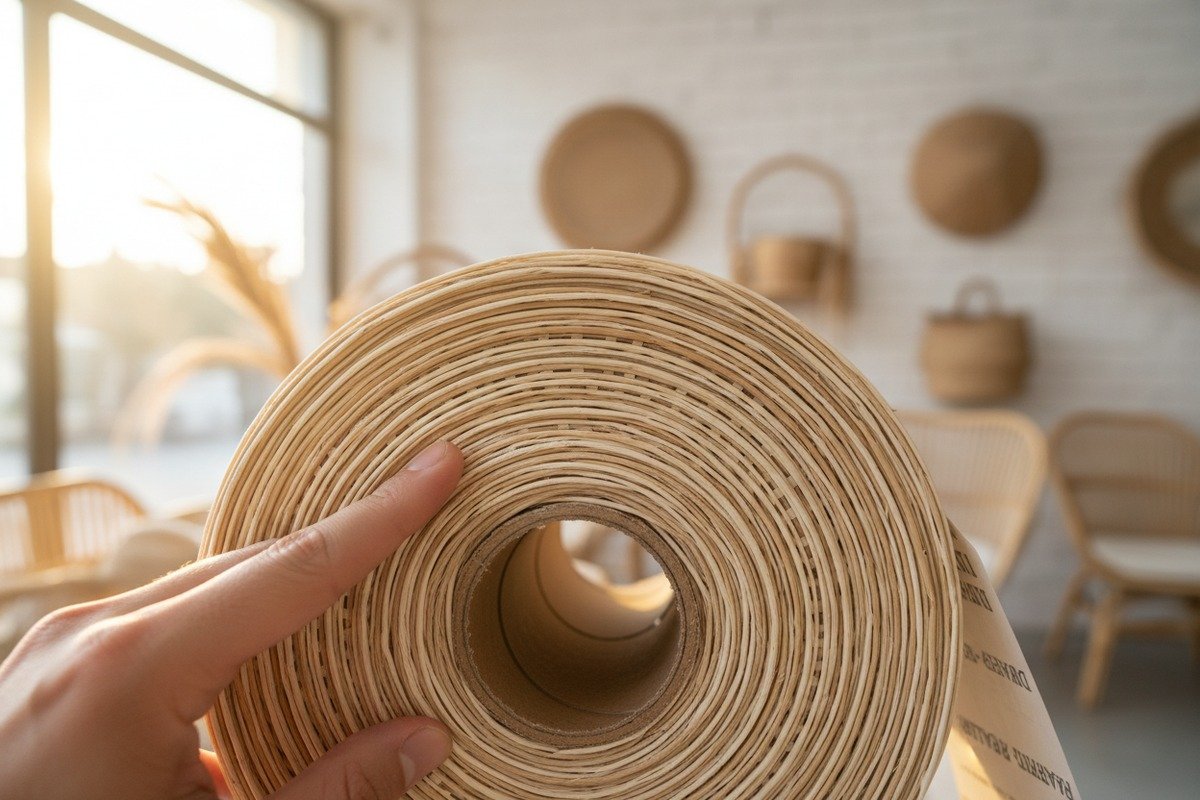
What Can Be Customized?
The short answer: almost everything. Here is a breakdown of the customization options we offer and the lead time each one adds to a standard order:
| Customization Type | Options Available | Additional Lead Time |
|---|---|---|
| Roll Length | 5 m, 10 m, 15 m, 20 m, 30 m, or custom | None (standard cutting) |
| Roll Width | 35 cm, 45 cm, 60 cm, 90 cm, 120 cm | None for standard widths |
| Weave Pattern | Square, hexagon, herringbone, diamond, close weave, octagonal | +3–5 days for non-stock patterns |
| Material Type | Natural rattan, bleached rattan, paper rattan, synthetic | Varies by stock |
| Label Printing | Buyer's logo, product name, care instructions, barcode | +2–3 days |
| Carton Printing | Full-color OEM carton with buyer branding | +5–7 days |
| Color | Natural, white, brown, coffee, custom dyed | +5–7 days for custom colors |
| Inner Packaging | Poly bag, tissue wrap, branded sleeve | +1–2 days |
Private-Label Process Step by Step
Step 1: Send us your brand guidelines. This includes your logo file (AI or PDF format preferred), color codes, and any text you want on the label or carton.
Step 2: We create a packaging mockup. Our design team produces a digital proof within 48 hours. You review and approve.
Step 3: Label and carton production. Once approved, printing takes 3–5 business days. We use waterproof adhesive labels that stay intact even in humid conditions.
Step 4: Integrated packing. Your labels go on during the packaging stage, not as an afterthought. Each roll gets its label before wrapping. This means the label sits directly on the product, visible the moment your customer opens the package.
Small Order Flexibility
Some buyers worry that private-label requires massive volumes. It does not—at least not with us. Our minimum for custom labeling is 200 rolls per SKU. For standard sizes with no custom carton printing, we can go as low as 100 rolls. We also offer free samples of your labeled product before mass production begins, so you can check quality and branding accuracy.
DIY and E-Commerce Packaging
The e-commerce boom has changed packaging expectations. Many of our European and Australian buyers resell rattan webbing in small quantities to end consumers. For these clients, we offer retail-ready packaging: individually wrapped rolls in branded sleeves with care instructions printed in the buyer's language. This eliminates the need for repackaging at the buyer's warehouse, saving time and labor costs.
We have also developed a compact roll format—60 cm × 5 m—specifically for the DIY and craft market. These smaller rolls fit standard postal boxes and reduce last-mile shipping costs for online sellers.
How does your packaging process help me optimize container space and reduce my international shipping costs?
Shipping costs eat into margins fast. When we first started exporting from our Foshan warehouse, we spent months testing different packing configurations to squeeze more product into each container.
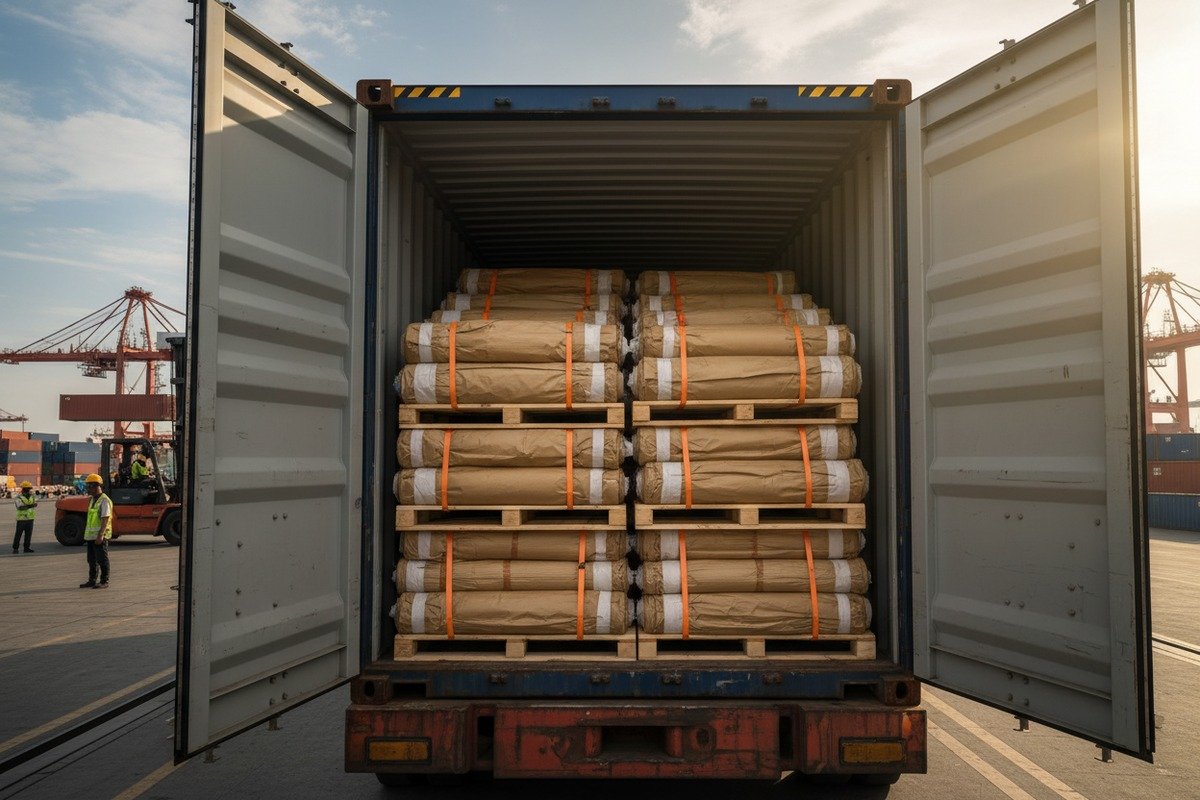
Our packaging process maximizes container utilization through uniform roll dimensions, stackable palletized loading, modular carton sizes designed for standard 20'GP and 40'HC containers, and mixed-product consolidation. This approach typically increases container fill rates by 15–20%, directly reducing your per-unit shipping cost.
Container Types and Capacity
We ship primarily from Guangzhou and Shenzhen ports. Most wholesale rattan orders travel by ocean freight in one of two container types:
20'GP (General Purpose): Internal dimensions roughly 5.9 m × 2.35 m × 2.39 m. Best for medium orders. Delivery to most global ports takes 10–20 days.
40'HC (High Cube): Internal dimensions roughly 12.03 m × 2.35 m × 2.69 m. The extra 30 cm of height makes a big difference for stacking rolls. Delivery typically takes 20–30 days depending on the route.
How We Pack a Container
Our loading team follows a detailed plan for each shipment. The goal is zero wasted space. Here is what that looks like in practice:
Bottom layer: Heaviest and widest rolls go first. They sit on wooden pallets raised slightly off the container floor. This air gap prevents moisture from the metal floor from reaching the product.
Middle layers: Standard rolls stack on top. Our uniform carton dimensions mean each layer locks into the one below like building blocks. No gaps, no shifting.
Top layer: Lighter items, smaller rolls, or sample boxes fill the remaining space. We use air dunnage bags 10 in any gaps between stacks and the container walls.
Door end: The last items loaded are secured with cargo nets or tension bars. This prevents the "avalanche effect" when container doors open at the destination.
Space Optimization Techniques
Here are specific tactics we use to get more product into each container:
Uniform carton sizing. We design carton dimensions as exact fractions of the container's internal width and length. For example, two cartons side by side equal the container width, and a row of cartons fits the container length with less than 5 cm gap.
Roll nesting. For smaller rolls (45 cm width and under), we nest rolls inside larger cartons rather than shipping them in individual boxes. This eliminates the wasted space between small packages.
Mixed-product consolidation. Many of our wholesale buyers order multiple products—natural rattan, bleached rattan, synthetic webbing, pre-cut sheets. Instead of shipping these separately, we consolidate everything into one container. Our logistics team creates a loading diagram that positions each product type for maximum space efficiency while keeping different SKUs accessible.
Compression without damage. Our corrugated outer shells are engineered to withstand stacking pressure. We test to a standard of 300 kg per square meter, which means we can safely stack five layers high without deforming the bottom rolls.
Real Cost Savings
A well-packed 40'HC container holds approximately 20–25% more rattan webbing rolls than a poorly packed one. For a typical order shipping to the US East Coast, that translates to a per-roll freight saving of $0.30–$0.50. On an order of 2,000 rolls, that is $600–$1,000 saved on shipping alone. Over a year of regular orders, the savings add up to tens of thousands of dollars.
We also provide a detailed packing list and loading plan before every shipment. This document tells you exactly how many rolls fit, how they are arranged, and what the total CBM (cubic meters) is. You can share it with your freight forwarder to compare quotes and avoid overpaying for container space you do not need.
Conclusion
Proper packaging is the difference between a profitable rattan import and a costly insurance claim. From five-layer roll wrapping and moisture control to private-label branding and container optimization, every detail matters. Visit www.rattanwholesaler.com to request free samples and a custom packing plan.
Footnotes
1. Discusses the importance and benefits of optimizing container load in logistics. ↩︎
2. Found a relevant article discussing kraft paper with polyethylene coating for waterproofing and barrier properties. ↩︎
3. Defines natural fibers and their classification by origin. ↩︎
4. Describes the composition and structure of corrugated fiberboard used in packaging. ↩︎
5. Explains how silica gel desiccants absorb moisture and their use in packaging. ↩︎
6. Explains the ISPM 15 standard for wood packaging material in international trade. ↩︎
7. Provides an overview of methyl bromide’s use as a fumigant and its environmental impact. ↩︎
8. Defines customs clearance and its importance in international trade. ↩︎
9. Defines private label products and their relationship with manufacturers and retailers. ↩︎
10. Explains the use of dunnage bags as part of cargo securement in shipping containers. ↩︎

 English
  Español de México
  العربية
  Deutsch
  Français
  Русский