

Every year, our procurement team in Indonesia walks through rattan forests and processing villages to inspect where our raw materials actually come from FSC or SVLK certifications 1. The reality is stark — not all rattan cane webbing 2 on the market comes from legal or sustainable sources. Many buyers unknowingly purchase webbing linked to overharvesting, illegal logging zones, or exploitative labor supply chain transparency 3. This is a problem that hurts forests, communities, and ultimately your brand reputation.
To choose sustainably sourced rattan cane webbing, verify FSC or SVLK certifications, demand full supply chain transparency from your supplier, confirm ethical labor practices, and prioritize first-layer rattan from managed forests. These steps protect both forest ecosystems and your long-term business interests.
This guide breaks down the exact steps you need to take ethical labor practices 4. We will cover legal verification, quality assurance, the right questions to ask wholesalers, and how sustainable sourcing affects your bottom line. Let’s get into it.
How do I verify if my rattan cane webbing is legally harvested in Indonesia?
When we first set up our own rattan processing facility in Indonesia, navigating the legal framework was the biggest challenge Indonesia's SVLK system 5. Indonesia is the world's largest rattan producer, but not every harvester operates within the law. Illegal harvesting still happens, and it ends up in global supply chains more often than buyers realize Grade A quality 6.
To verify legal harvesting, request your supplier's SVLK (Timber Legality Verification System) certificate, which is Indonesia's mandatory legality assurance for forest products including rattan. Cross-check the certificate number on Indonesia's Ministry of Environment database and ask for origin documentation tracing the rattan to a specific province.
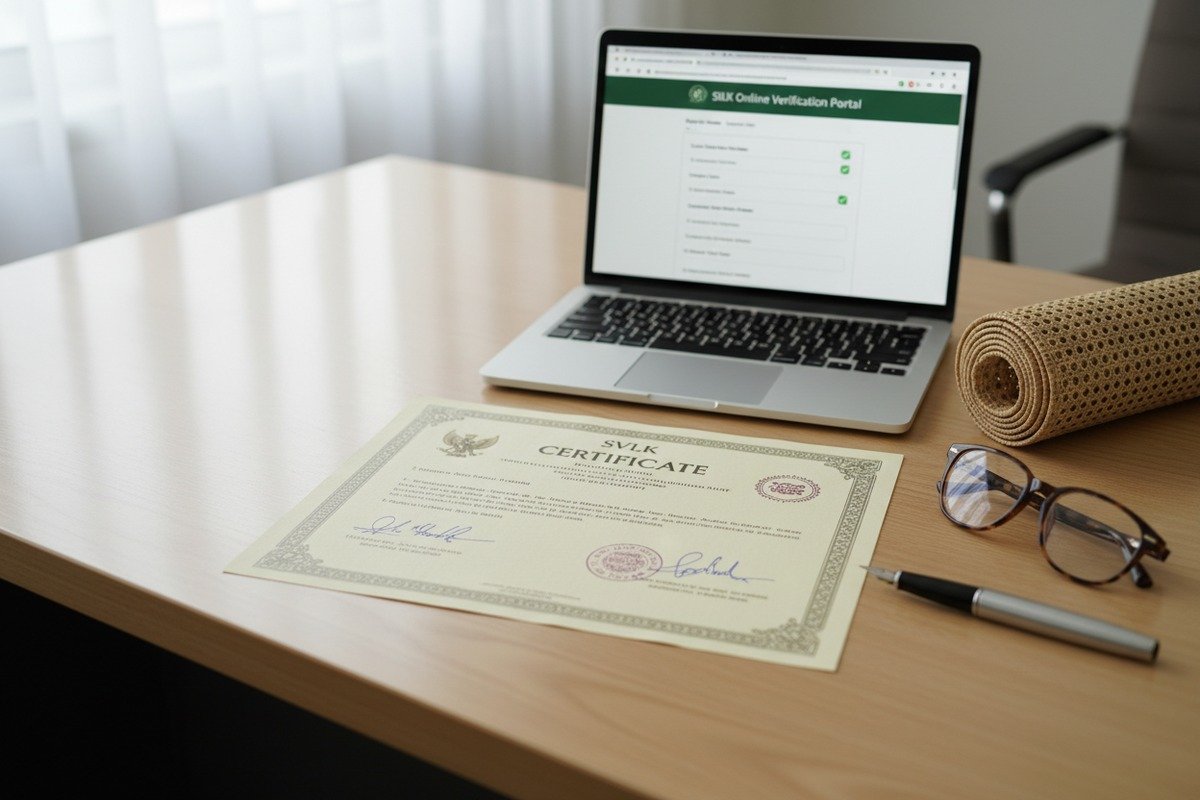
Understanding Indonesia's SVLK System
Indonesia introduced the SVLK system as a mandatory compliance framework. It covers rattan alongside timber products. Every legitimate exporter of Indonesian rattan must hold a valid SVLK certificate. This certificate confirms that the raw material was harvested from legally designated areas and processed through licensed facilities.
At our Indonesian facility, we renew this certification annually. The audit covers harvesting permits, transport documents, processing records, and export paperwork. If your supplier cannot produce a current SVLK certificate, that is a major red flag.
Key Documents to Request
Beyond the SVLK certificate, there are several supporting documents you should ask for. Here is a breakdown:
| Document | What It Proves | Who Issues It |
|---|---|---|
| SVLK Certificate | Legal harvesting and processing compliance | Independent SVLK auditor (accredited by KAN) |
| V-Legal Document | Legality of the specific export shipment | Licensed Verification Body |
| Harvesting Permit (IUPHHK) | Right to harvest rattan in a specific concession | Provincial Forestry Office |
| Transport Permit (SKSHH) | Legal transport of rattan from forest to factory | District Forestry Office |
| Packing List with Origin Code | Traceability to province and harvest area | Exporter |
How to Cross-Check Certificates
Do not just accept a PDF. Go to Indonesia's SILK (Sistem Informasi Legalitas Kayu) online portal 7. Enter the certificate number. It will show you the company name, validity dates, scope of certification, and the auditing body. If the certificate is expired or the company name does not match your supplier, walk away.
We have seen cases where traders use certificates from other companies. This is fraud. A legitimate supplier will welcome your verification efforts. In our experience exporting to markets in the Netherlands, Australia, and the USA, serious buyers always verify. It protects both parties.
Watch for These Red Flags
If your supplier offers rattan at prices significantly below market rate, ask why. Illegally harvested rattan skips permit fees, reforestation levies, and proper labor costs. That is how the price drops. Also watch for suppliers who cannot name the specific province or island where the rattan was harvested. Indonesia has over 17,000 islands. Vague answers like "from Kalimantan" without further detail suggest poor traceability.
Another red flag is resistance to factory visits. We welcome buyer visits to our Indonesian facility because transparency builds trust. If a supplier discourages or blocks visits, question what they are hiding.
Can I maintain Grade A quality standards while switching to sustainable rattan sources?
This is the question we hear most from purchasing managers — especially those buying rattan cane webbing for high-end furniture factories. The fear is that "sustainable" means compromise. That choosing eco-friendly sources will result in thinner strips, uneven weaves, or dull color. From running our own grading lines, we can tell you that fear is unfounded.
Yes, you can maintain Grade A quality with sustainable rattan. Sustainably managed forests produce mature, first-layer rattan palms that yield the highest-grade cane strips. Responsible harvesting cycles allow plants to reach optimal diameter and fiber density before cutting, which actually improves strip uniformity, color richness, and weave consistency.
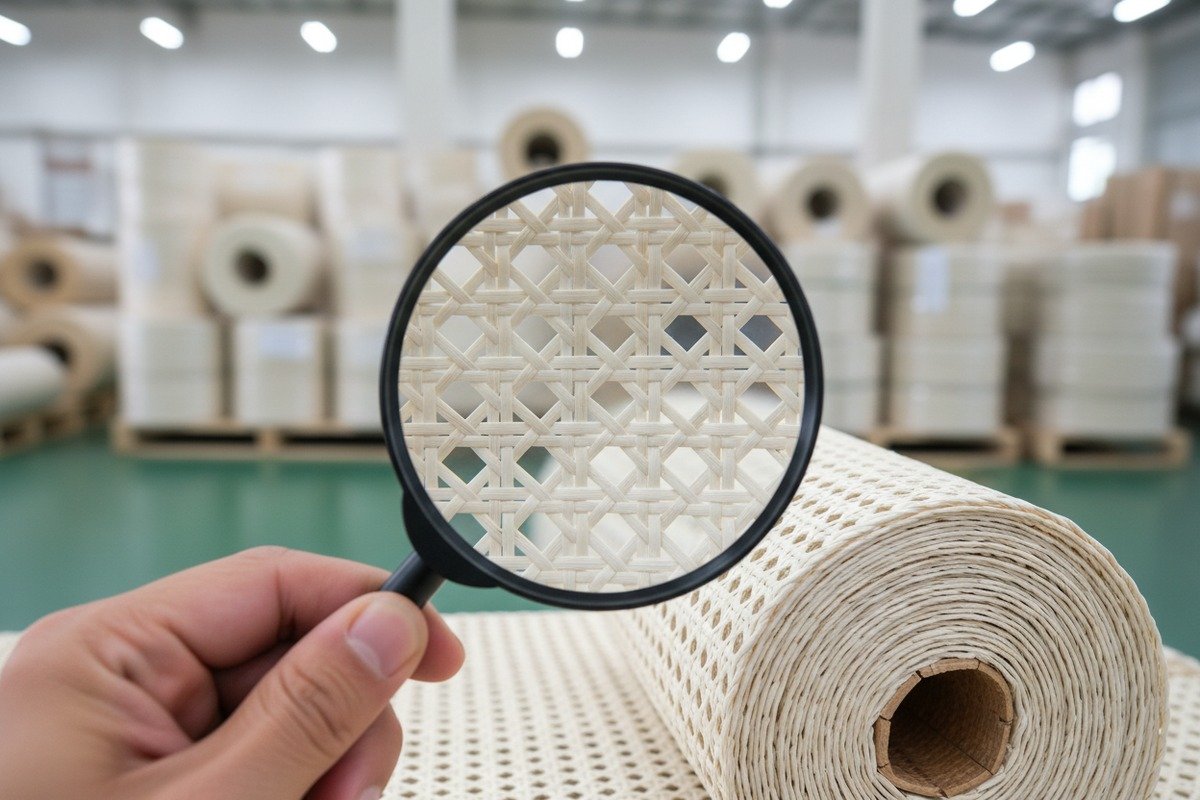
Why Sustainable Harvesting Improves Quality
Rattan is a climbing palm. It needs 7 to 10 years to reach harvestable maturity. In sustainably managed concessions, harvesters follow rotation schedules. They only cut mature stems. This means the cane skin — the outer layer used for webbing — is fully developed. It has tight grain, consistent thickness, and the rich golden-brown tone that defines premium quality.
Illegal or unmanaged harvesting often targets younger stems because mature ones have already been taken. Young rattan produces thin, brittle cane with pale color and weak fiber structure. That is how you end up with Grade B or C webbing.
Quality Grading: Sustainable vs. Conventional Sources
Here is what we see on our grading line when comparing sustainably sourced rattan against conventionally sourced material:
| Quality Parameter | Sustainable Source (Grade A) | Conventional/Unmanaged Source (Grade B-C) |
|---|---|---|
| Strip Width Consistency | ±0.3mm variance | ±1.0mm or more variance |
| Color Uniformity | Even golden-brown across roll | Patchy, mixed pale and dark spots |
| Surface Finish | Smooth, minimal scarring | Rough patches, knots, fungal marks |
| Moisture Content | 8–12% (kiln-dried, stable) | 14–20% (air-dried, risk of warping) |
| Flexibility | Pliable, bends without cracking | Brittle sections that snap under stress |
| Weave Tension | Tight and uniform | Loose spots, gaps in pattern |
| Lifespan (estimated) | 15–25 years with care | 5–10 years before degradation |
First-Layer Rattan: The Quality Difference
At our Indonesian facility, we process only first-layer rattan 8. This is the outermost skin of the mature rattan stem. It is the smoothest, strongest, and most visually appealing part. Some suppliers use second-layer or even leftover material from furniture frame production. This saves them cost, but the quality drops dramatically.
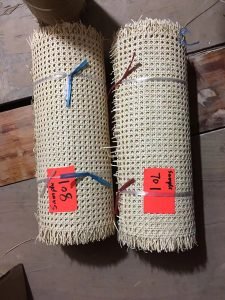
First-layer cane has a natural sheen. It takes bleaching and semi-bleaching treatments evenly. It holds its shape during weaving. When we produce our hexagonal open-mesh "radio weave" 9 or the classic 1/2-inch open weave patterns, the difference is visible immediately. The pattern lines are crisp. The intersections sit flat. There is no bunching or gapping.
Testing for Grade A Compliance
If you are a purchasing manager switching suppliers, request test samples before committing to a bulk order. Run these checks yourself:
- Bend test: Take a single strip and bend it 90 degrees. Grade A will flex smoothly. Grade B-C will crack or show white stress lines.
- Color swatch test: Lay five random strips from the same roll side by side. They should match within a narrow color range.
- Moisture meter reading: Use a pin-type moisture meter. Accept only 8–12%.
- Weave pull test: Tug gently on individual strips within the woven sheet. They should resist without pulling free.
We send sample sets to buyers in Thailand, Australia, and the Middle East before every new contract. This is standard practice for any supplier serious about Grade A consistency.
What questions should I ask my wholesaler to ensure their supply chain is eco-friendly?
Over the years, working with wholesalers across more than a dozen countries, we have learned that the questions you ask before signing a purchase order reveal everything about a supply chain. Many buyers focus only on price and MOQ. They skip the supply chain questions entirely. Then problems appear — inconsistent quality, shipments delayed by customs holds, or worse, a buyer's own client discovers the rattan was not ethically sourced.
Ask your wholesaler these core questions: Where exactly is the rattan harvested? Do you hold SVLK or FSC certification? Can you provide chain-of-custody documentation? What are your labor practices at the harvesting and weaving stages? Do you invest in reforestation or community programs? Transparent answers to these questions separate genuine eco-friendly suppliers from greenwashers.
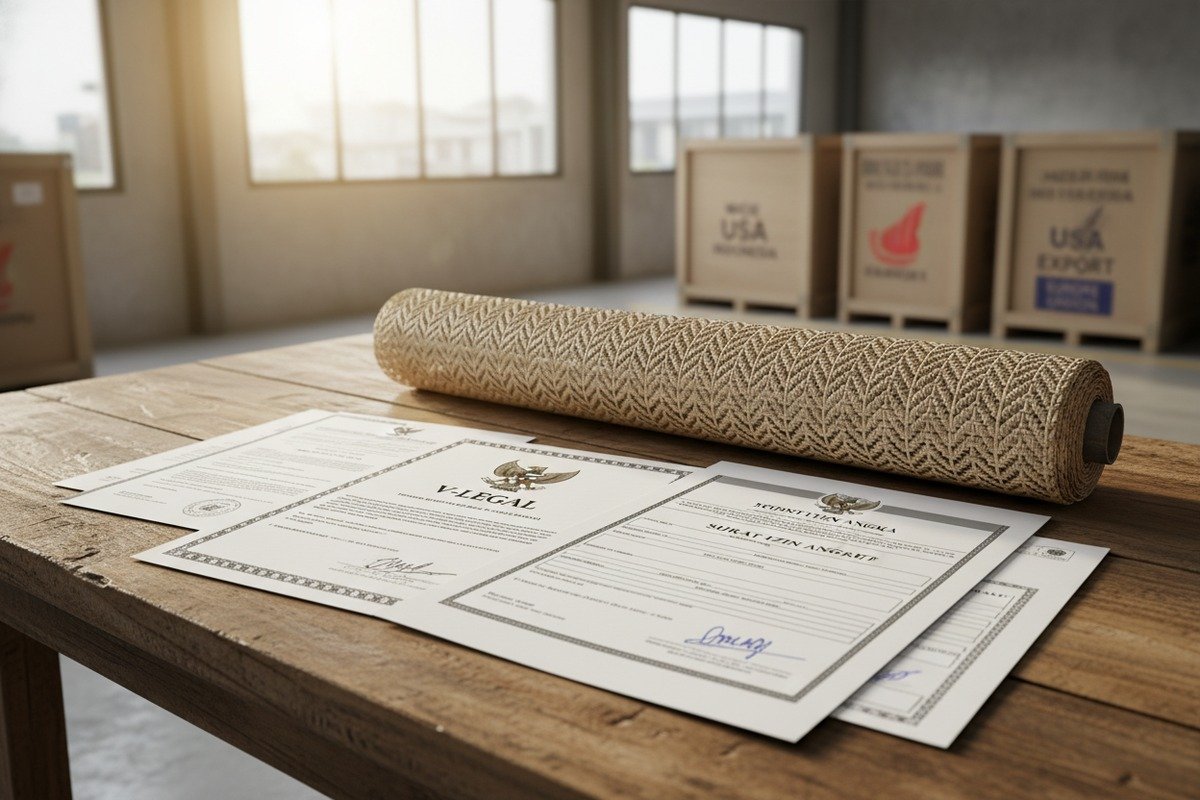
The Essential Question Checklist
Here is a structured list of questions organized by category. Use this as your pre-qualification tool when evaluating any rattan cane webbing wholesaler.
| Category | Question to Ask | What a Good Answer Looks Like |
|---|---|---|
| Origin & Traceability | Where is the rattan harvested? Can you name the province? | Specific location (e.g., "Central Kalimantan, Regency of Kapuas") |
| Certification | Do you hold SVLK, FSC, or equivalent certification? | Provides certificate number and invites verification |
| Chain of Custody | Can you show documentation from forest to finished product? | Shares harvest permits, transport docs, factory records |
| Labor Practices | How are your weavers compensated? What are working conditions? | Details on wages, working hours, safety measures |
| Environmental Impact | Do you contribute to reforestation? | Describes specific programs, hectares replanted, partnerships |
| Chemical Use | What finishes or treatments are applied to the webbing? | Lists specific products, confirms non-toxic and low-VOC |
| Waste Management | How do you handle production waste? | Describes recycling, composting, or biomass energy use |
| Community Engagement | Do you work with local artisan communities? | Names villages, number of artisan families involved |
Why "Where" Matters More Than "What"
Many wholesalers will tell you their rattan is "from Indonesia" or "from Southeast Asia." That is not enough. Indonesia alone has rattan-growing regions with very different management practices. Sulawesi, Kalimantan, and Sumatra each have distinct regulatory environments. A supplier who can pinpoint the exact regency or district demonstrates real supply chain control.
When we source for our three factories, every batch of raw rattan arrives with a transport permit that names the harvest district. We track this through processing, weaving, and packing. This level of traceability is what serious buyers in the Netherlands and Spain now demand.
Spotting Greenwashing
Greenwashing in the rattan industry is real. Some suppliers put "eco-friendly" or "sustainable" on their website without any certification to back it up. Here is how to spot it:
- They use vague language like "we care about the environment" without specifics.
- They cannot produce any third-party certification.
- They refuse to share supplier or factory addresses.
- Their pricing is unusually low, which often means corners are cut somewhere.
- They have no documented reforestation or community programs.
A genuine eco-friendly supplier will have receipts. Literal receipts — for reforestation programs, for artisan wages above local minimums, for certification audits. Ask for them.
Advanced Traceability: Blockchain and Digital Tools
Some forward-thinking suppliers are adopting blockchain-based traceability systems. These systems create an immutable digital record from the forest to the finished roll of webbing. Each step — harvesting, transport, processing, weaving, quality inspection, packing — gets logged with timestamps, GPS data, and responsible personnel.
We are exploring these technologies for our own operations. While not yet industry standard, asking your supplier about digital traceability signals that you are a sophisticated buyer. It pushes the industry toward greater accountability.
End-of-Life Considerations
Sustainability does not stop at sourcing. Ask your wholesaler about end-of-life solutions. Natural rattan cane webbing is fully biodegradable. It can be composted at the end of its useful life. Some suppliers also accept returns for recycling into composite materials. Synthetic rattan, while durable, creates different end-of-life challenges. Knowing this helps you market your finished products to eco-conscious consumers.
How will choosing sustainably sourced materials impact my long-term procurement costs?
When our sales team discusses sustainable sourcing with new clients — whether furniture material wholesalers in Turkey or building material suppliers in Australia — cost is always the first concern. The upfront price per roll of sustainably certified rattan cane webbing is typically 10–20% higher than uncertified alternatives. But looking only at the initial price is a mistake that costs more in the long run.
Sustainably sourced rattan cane webbing costs slightly more per unit upfront but reduces long-term procurement costs through higher material yield, fewer quality rejections, stronger customer retention, lower regulatory risk, and more stable pricing. Over a 3–5 year period, most buyers find that total cost of ownership is lower with certified sustainable materials.
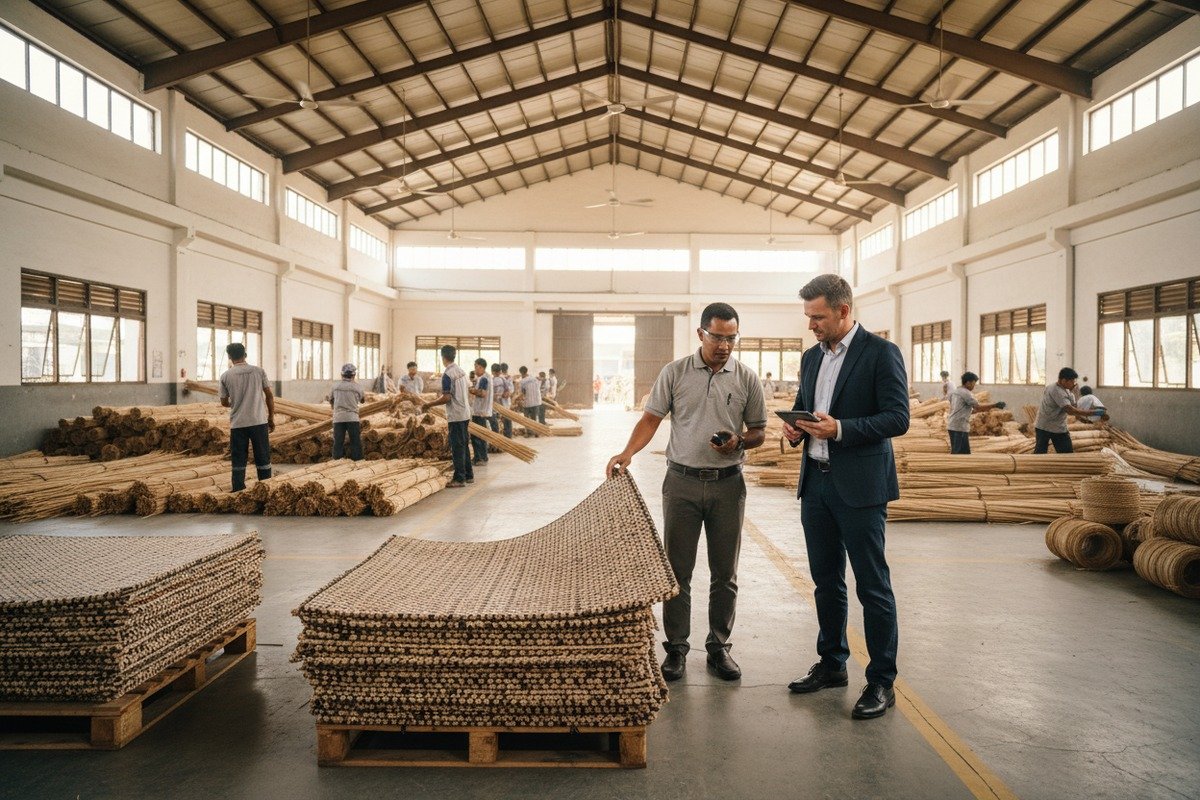
The True Cost Breakdown
Let's look at real numbers. We track cost data across our operations and share this transparently with our wholesale partners.
| Cost Factor | Conventional Sourcing | Sustainable Sourcing | Net Impact Over 3 Years |
|---|---|---|---|
| Unit Price (per roll, 24" wide) | $80–$95 | $95–$110 | +15% initial cost |
| Quality Rejection Rate | 8–15% of shipments | 2–4% of shipments | Saves $2,000–$5,000 annually |
| Customer Returns (end-product) | 5–8% | 1–2% | Saves replacement and shipping costs |
| Regulatory Compliance Risk | Moderate to high (potential seizures, fines) | Low (certified and documented) | Avoids $10,000+ in potential penalties |
| Price Volatility | High (supply disruptions from crackdowns) | Low (managed forests, predictable supply) | Stabilizes annual budgets |
| Brand Value Premium | None | 10–20% higher resale value for finished goods | Increases revenue margin |
| Supply Continuity | Uncertain (overharvested areas deplete) | Reliable (rotation cycles maintain stock) | Avoids emergency sourcing costs |
Why Rejection Rates Drop
Grade A rattan from sustainably managed sources has tighter quality tolerances. The strips are more uniform. The moisture content is controlled. The weave patterns are consistent. This means fewer rolls get rejected at your incoming quality inspection. For a buyer ordering 500 rolls per quarter, a drop from 12% rejection to 3% rejection saves dozens of rolls worth of wasted shipping costs, restocking fees, and production delays.
We see this pattern repeatedly with our long-term clients. Those who switched to our certified Indonesian rattan reduced their annual waste by significant margins within the first year.
Regulatory Risk Is Real
The European Union Deforestation Regulation (EUDR) 10 and similar frameworks in the USA and Australia are tightening controls on forest products. Rattan falls under these regulations. If your shipment arrives without proper legality documentation, it can be held at customs, fined, or confiscated. One seized container of rattan webbing can cost $15,000–$30,000 in lost goods, storage fees, and legal costs.
Investing in certified sustainable sourcing is insurance against regulatory disruption. It is not a luxury — it is risk management.
Price Stability Through Managed Supply
Unmanaged rattan forests get depleted. When they do, supply drops and prices spike. We have seen raw material prices jump 30–40% in a single season when key harvesting areas in Kalimantan were temporarily closed due to overharvesting.
Sustainably managed concessions operate on rotation cycles. They plant new rattan as they harvest mature stems. This creates a predictable, renewable supply. Predictable supply means predictable pricing. For procurement managers building annual budgets, this stability is worth the modest per-unit premium.
The Brand Value Multiplier
End consumers increasingly pay more for sustainably made products. Furniture brands using certified sustainable rattan webbing can command 10–20% price premiums in markets like the EU, North America, and Australia. If you are a furniture material wholesaler, your downstream customers — the furniture makers — are willing to pay more because their customers demand it.
This creates a value chain where the extra cost of sustainable sourcing gets absorbed and multiplied as brand value at each stage.
Bamboo as a Benchmark
It is worth noting that bamboo cane webbing has emerged as a competing sustainable material. Bamboo grows faster than rattan and has strong ecological credentials. However, rattan offers a distinct aesthetic — warmer tones, finer weave capability, and a heritage that bamboo cannot replicate. The two materials serve different design markets. For buyers committed to rattan, sustainability certification is the path forward, not switching to a different material entirely.
Conclusion
Choosing sustainably sourced rattan cane webbing is not just an ethical decision — it is a smarter business decision. Verify certifications, demand traceability, ask tough questions, and think beyond the per-unit price. Your forests, your customers, and your profit margins will all benefit.
Footnotes
1. Explains the importance of these certifications for sustainable sourcing. ↩︎
2. Provides a general overview of rattan cane webbing. ↩︎
3. Defines the concept of supply chain transparency. ↩︎
4. Explains the importance and components of ethical labor practices. ↩︎
5. Provides an overview of Indonesia’s Timber Legality Verification System. ↩︎
6. Replaced with an academic source that provides a detailed explanation of rattan grading, including ‘Grade A’ quality. ↩︎
7. Provides access to the official portal for verifying timber legality. ↩︎
8. Explains what first-layer rattan is and its quality. ↩︎
9. Replaced with a product page that clearly describes and displays ‘hexagonal open-mesh’ rattan cane webbing, matching the anchor text. ↩︎
10. Provides the official purpose of the EU Deforestation Regulation. ↩︎

 English
  Español de México
  العربية
  Deutsch
  Français
  Русский