
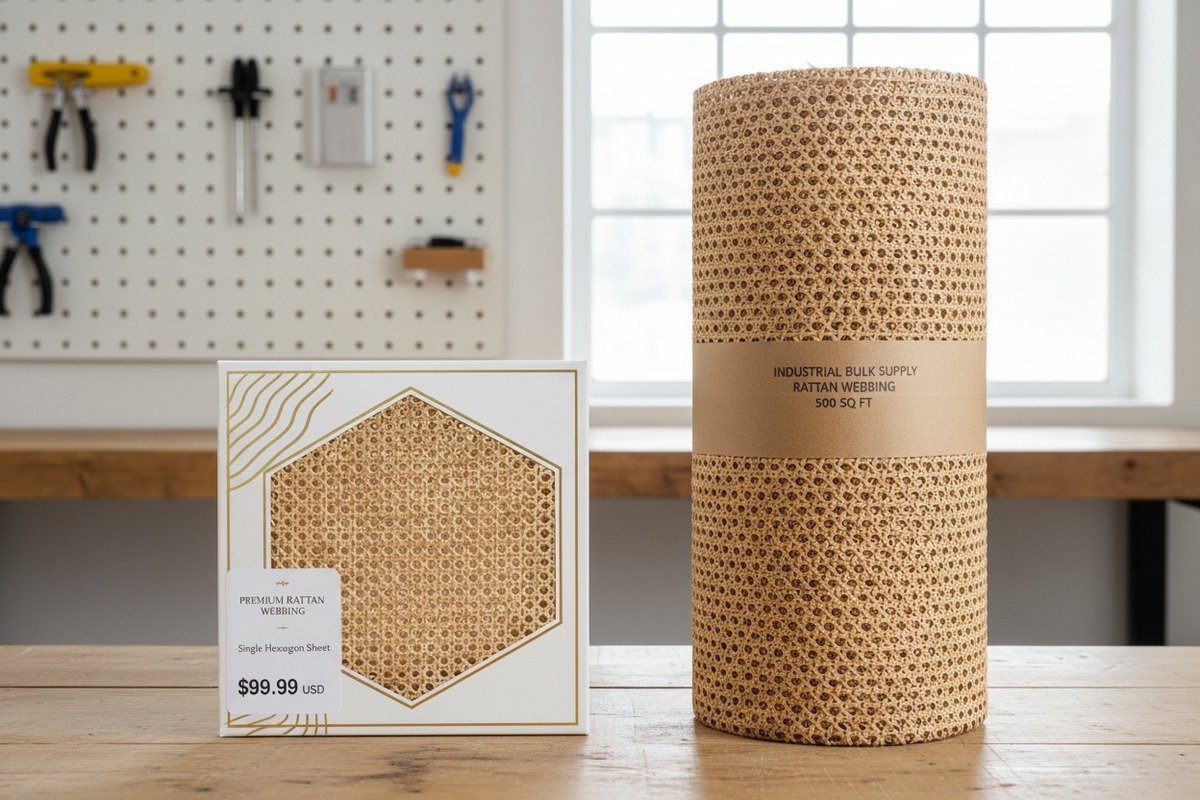
Every week, our sales team fields the same question from buyers around the world — “Why does the same rattan webbing cost three times more from my local supplier?”
Wholesale rattan cane webbing typically costs $5–$20 per meter in bulk, while retail prices range from $16–$40 per meter or $16–$100 per piece. This creates a markup of 2–10x depending on quantity, quality, weave pattern, and sourcing platform. Buying wholesale can cut material costs by 50–80%.
The gap between wholesale and retail rattan pricing is real, and it affects your bottom line more than you might think. Let’s break down every factor so you can make a smarter buying decision.
How much can I save on my furniture production by switching from retail to wholesale rattan cane webbing?
We see it all the time at our Foshan warehouses — a furniture factory owner realizes they've been overpaying for rattan webbing by 300% simply because they never explored wholesale sourcing 1.
Switching from retail to wholesale rattan cane webbing can save furniture producers 50–80% on material costs. For example, a 10-meter project may cost $170 at retail but only $50–$80 at wholesale, depending on weave type, width, and order volume.

The savings are not theoretical. They show up on every invoice. Let's look at the numbers side by side.
Real Price Comparison: Retail vs. Wholesale
When you buy rattan webbing from a platform like Etsy or Walmart, you pay for convenience. The seller has already bought in bulk, cut the material, repackaged it, and listed it with a markup. That markup covers their storage, labor, shipping, and profit. When you buy direct from a wholesale supplier — or better yet, a factory — you skip most of those layers.
| Source | Product | Price | Per Meter Cost |
|---|---|---|---|
| Etsy (Retail) | 36" wide radio weave, 3.3 ft roll | $10.25 | ~$30/m |
| Walmart (Retail) | 16" wide roll, 3.3 ft | $16.99 | ~$50/m |
| HH Perkins (Specialty Retail) | Fine 1/2" cane, per inch | $0.80–$0.95/in | ~$35/m |
| Alibaba (Wholesale) | 24" wide hexagonal, 15m roll | $75–$120/roll | ~$5–$8/m |
| Seafan Rattan (Factory) | Various widths, 10–15m rolls | $50–$200/roll | ~$5–$15/m |
That table tells the whole story. A furniture maker producing 20 chairs might need 40 meters of webbing. At retail prices of $30/m, that's $1,200. At wholesale prices of $8/m, that's $320. The difference — $880 — goes straight to your margin.
Where the Savings Stack Up
The biggest savings come from three areas. First, the per-meter unit cost drops dramatically with volume. Second, you avoid the "cutting fee" that specialty retailers charge for pre-cut panels. Third, shipping costs per meter fall when you order full rolls instead of small pieces.
For a mid-sized furniture factory producing 100–500 pieces a month, these savings compound fast. Over a year, switching to wholesale can free up tens of thousands of dollars in working capital 2.
A Word of Caution for Small Buyers
If you're a hobbyist making one chair, wholesale might not make sense. Most wholesale suppliers have minimum order quantities 3 — often 50–100 meters or more. But if you're a professional, even a small workshop, the math always favors bulk.
Why is the price per roll significantly lower when I source directly from a rattan factory?
Running three factory operations — including our own rattan processing facility in Indonesia — has given us a clear view of exactly where costs build up between the factory floor and the retail shelf.
Sourcing directly from a rattan factory eliminates 3–5 middlemen in the supply chain, each adding 15–30% markup. Factory-direct pricing removes distributor margins, platform fees, re-packaging costs, and regional warehousing expenses, resulting in per-roll prices that are 60–75% lower than retail equivalents.
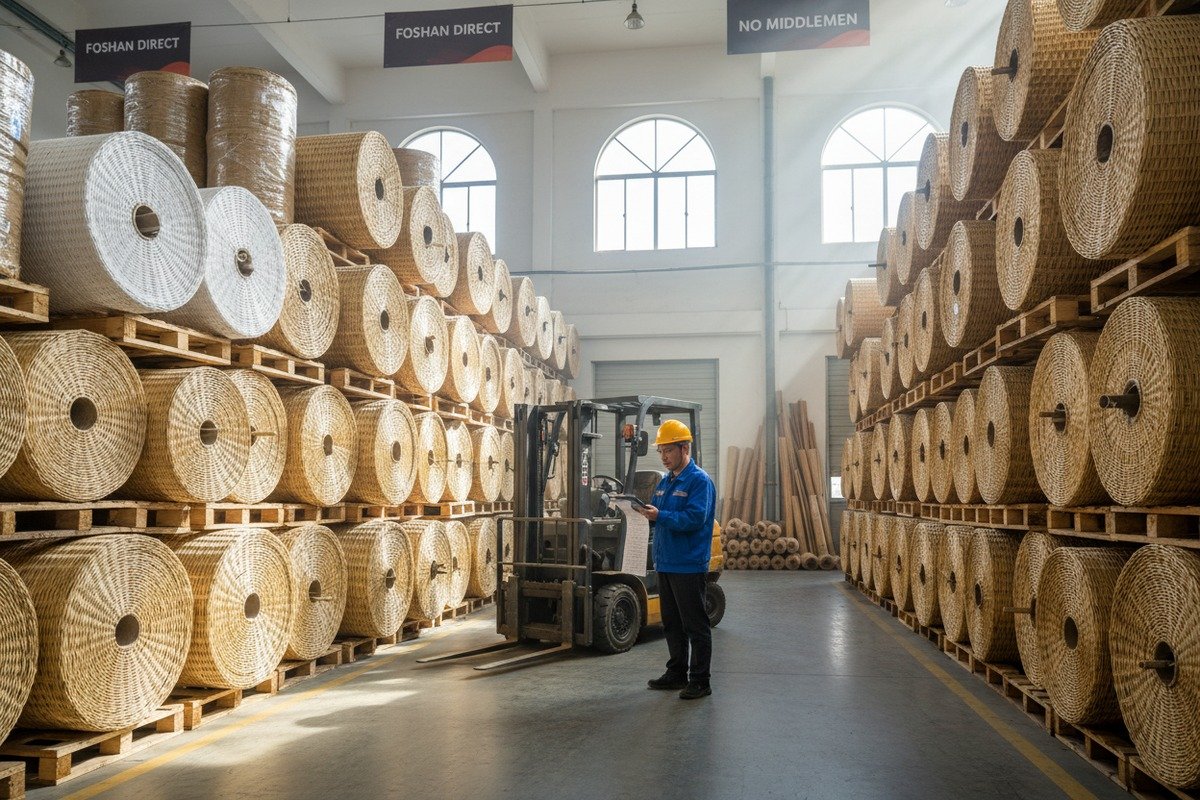
Understanding the supply chain 4 helps you see why factory-direct pricing is so different from what you find in stores or online marketplaces.
The Rattan Supply Chain: From Vine to Your Workshop
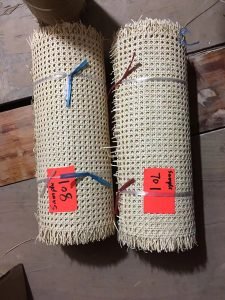
Natural rattan starts as a vine in tropical forests, primarily in Indonesia. It gets harvested, cleaned, split, and processed into cane strips. Those strips are then woven into sheets or rolls at a factory. From there, the product can take many paths before reaching you.
Here's a simplified breakdown of each step and its cost impact:
| Supply Chain Step | Typical Markup | Cumulative Price Effect |
|---|---|---|
| Raw rattan harvest (Indonesia) | Base cost | $2–$4/m |
| Factory processing & weaving | +30–50% | $5–$8/m |
| Export/wholesaler margin | +15–25% | $6–$10/m |
| Regional distributor | +20–30% | $8–$13/m |
| Online platform fees (Etsy, Amazon) | +15–20% | $10–$16/m |
| Retail cutting, packaging, listing | +30–50% | $16–$40/m |
When you buy from a factory like ours, you enter the chain at step two. You skip everything below it. That's why a roll that costs $8/m at the factory can cost $35/m on a retail platform.
Why Factories Offer Better Rates on Rolls
Factories operate on volume. Our weaving machines and hand-weavers produce rattan webbing in continuous rolls — typically 10 to 15 meters long, in widths from 30 cm to 100 cm. Selling full rolls is efficient. There's no waste from cutting, no extra packaging for small panels, and no need to photograph and list hundreds of individual pieces.
This efficiency translates to lower prices. A factory doesn't need to charge you for the labor of cutting a 15-meter roll into ten 1.5-meter panels. That labor, plus the wasted material from trimming, is exactly what retail sellers build into their pricing.
The Indonesian Sourcing Advantage
Indonesia produces the majority of the world's high-quality natural rattan. Having our own processing facility there means we control quality from the raw vine stage. We handle fumigation — a requirement for international shipping of natural plant products — in-house. Many retail suppliers pay a third party for fumigation certificates 5, and that cost gets passed to you.
Chinese wholesale factories like ours in Foshan also benefit from scale. With over 30 partner factories in the Foshan region, we consolidate production across a wide product range. This keeps fixed costs low and lets us offer competitive pricing across the full spectrum — from basic radio weave to premium handwoven diamond patterns.
Over the years of exporting to the Netherlands, the US, Australia, and dozens of other countries, we've learned that the sticker price on a quote is never the full picture — and our clients appreciate when we walk them through every line item upfront.
When comparing wholesale to retail rattan prices, account for shipping costs, fumigation certificates, customs duties, minimum order requirements, packaging specifications, and potential quality inspection fees. These hidden costs can add 15–40% to a wholesale quote, though the total still typically remains well below retail pricing.
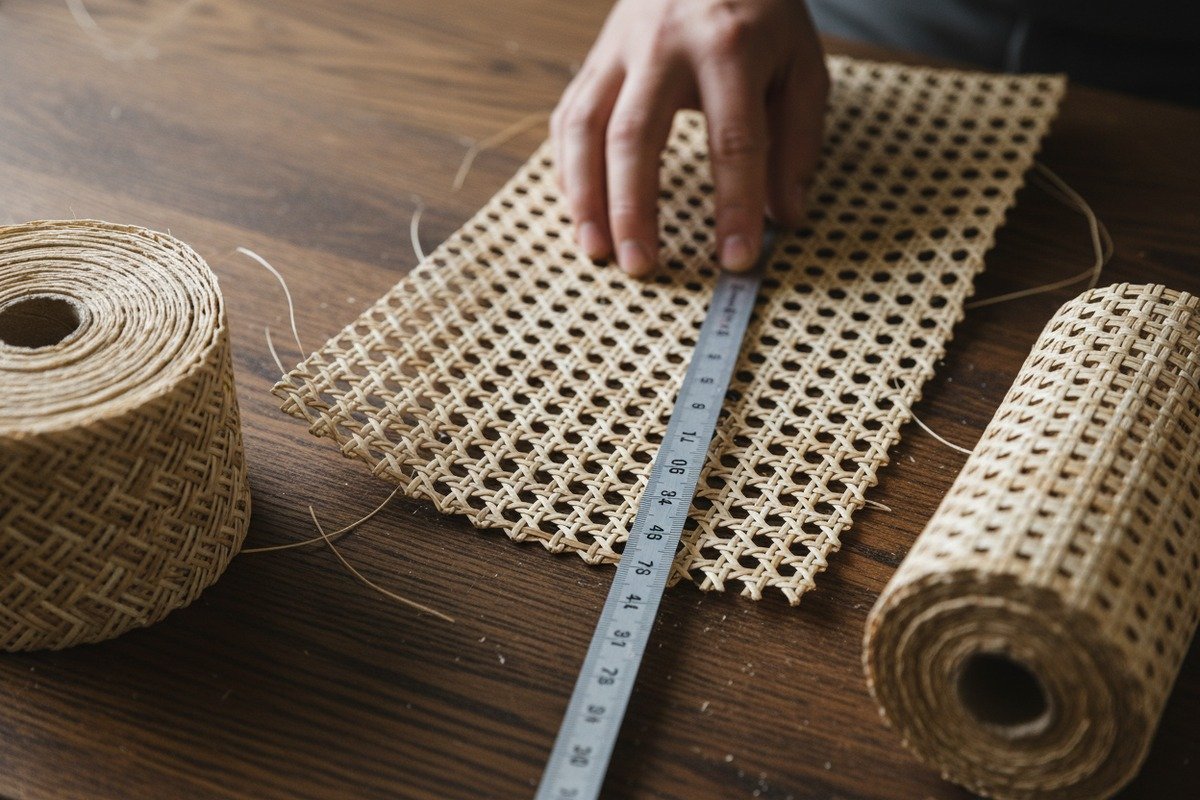
A wholesale price of $6/m looks incredible next to a retail price of $30/m. But if you don't factor in the full landed cost, you might be disappointed. Let's go through every hidden fee.
Shipping and Freight Costs
Rattan webbing is lightweight but bulky. Shipping costs depend on volume, destination, and method. Sea freight 6 is cheapest for large orders. Air freight is faster but can double or triple the shipping cost per meter. For a typical order of 200–500 meters shipped by sea from China to the US, expect to add $1–$3 per meter in freight costs.
Fumigation and Compliance
Natural rattan is a plant product. Most importing countries require a fumigation certificate to prove the material is free of pests. In our Indonesian facility, we handle this process as part of production. But if your supplier doesn't include it, you'll pay $200–$500 per shipment for a third-party fumigation service. Synthetic rattan webbing 7 skips this requirement entirely, which is one reason it's cheaper to import.
Customs Duties and Import Taxes
Tariff rates vary by country and product classification. In the US, rattan products may face duties of 3–8% depending on HS code classification 8. The EU has its own rates. Always check your country's tariff schedule before comparing wholesale quotes to local retail prices.
The Complete Hidden Cost Breakdown
| Hidden Cost | Typical Range | Applies To |
|---|---|---|
| Sea freight (China to US) | $1–$3/m | All wholesale |
| Fumigation certificate | $200–$500/shipment | Natural rattan only |
| Customs duty | 3–8% of value | All imports |
| Quality inspection (third-party) | $200–$400/inspection | Optional |
| Packaging upgrade (export-grade) | $0.20–$0.50/m | If required |
| Currency conversion fees | 1–3% of payment | Wire transfers |
| Minimum order shortfall surcharge | 5–15% | Small orders below MOQ |
Why It's Still Worth It
Even after adding every hidden cost, wholesale pricing almost always beats retail. Let's say your wholesale base price is $8/m for Grade A hexagonal webbing. Add $2/m for shipping, $0.50 for fumigation allocation, and 5% for duties. Your landed cost is roughly $11/m. Compare that to $30–$40/m at retail. You're still saving 60–70%.
The key is to get a complete quote from your supplier. A good wholesale partner will itemize everything. If a supplier only gives you a vague FOB price with no mention of fumigation, packaging, or MOQ — that's a red flag.
Retail's "Hidden" Advantage
One thing retail does well: it bundles everything. When you buy a $17 roll from Walmart, the price includes shipping to the store, packaging, and compliance. There's no customs paperwork. For a single small project, that simplicity has real value. But for ongoing production, the per-unit premium is hard to justify.
How does the quality of Grade A rattan webbing vary between bulk wholesale and small retail orders?
When we grade rattan webbing at our facilities, every roll goes through the same quality check — whether it's bound for a 5,000-meter wholesale order or a 50-meter sample shipment.
Grade A rattan webbing quality should not vary between wholesale and retail channels if sourced from the same factory and grading standard. However, retail sellers sometimes mix grades, repackage lower-tier material, or lack transparency about origin, making quality inconsistent compared to direct wholesale sourcing with clear specifications.
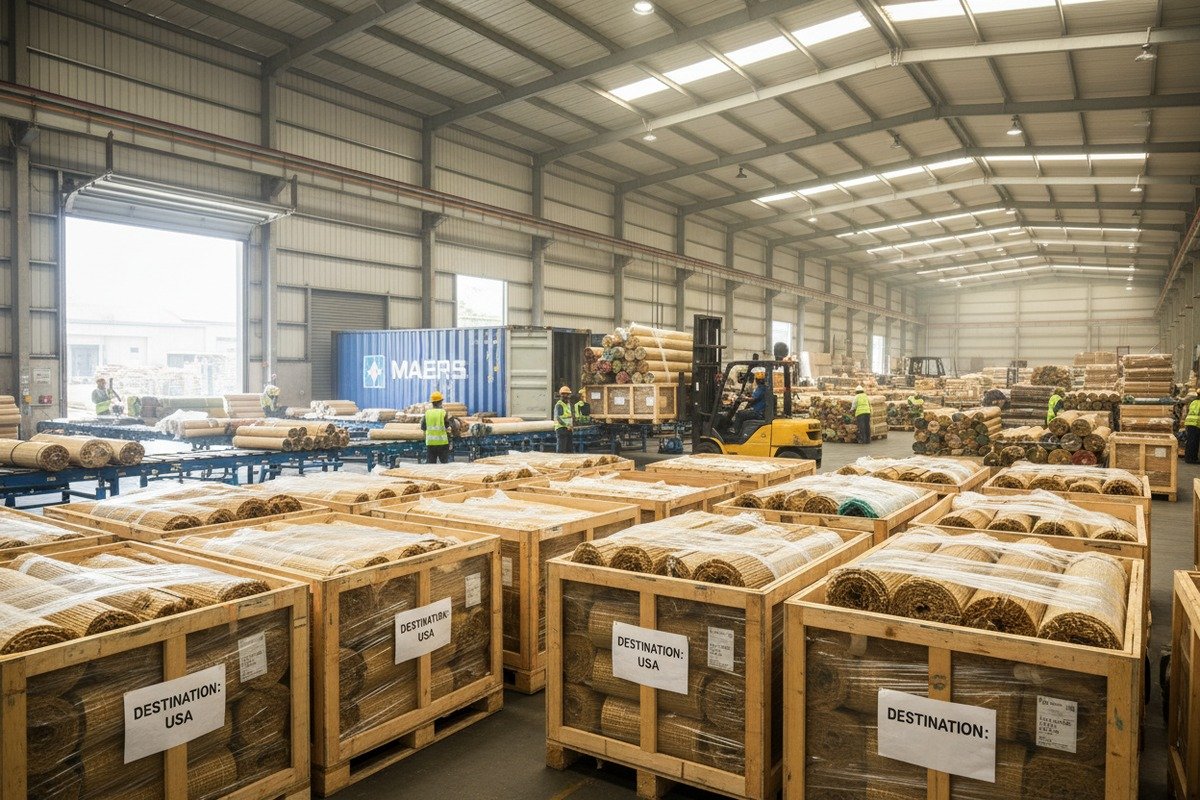
Quality is the biggest concern for professional buyers. Price savings mean nothing if the rattan cracks, discolors, or breaks during installation. Here's what you need to know about maintaining quality when buying in bulk.
What Defines Grade A Rattan Webbing?
Grade A means the highest tier of rattan cane material. The strands are uniform in thickness. The color is consistent — light beige to straw yellow, with minimal dark spots or blemishes. The weave is tight and even, with no gaps or loose strands. The material is flexible without being brittle.
Lower grades — often called Grade B or "commercial grade" — have more color variation, occasional broken strands, and less uniform weave tension. They work fine for hidden applications or budget projects but fall short for visible furniture surfaces.
Why Wholesale Quality Can Actually Be Better
This surprises many buyers. When you order 500 meters from a factory, the production run is continuous. The same batch of raw rattan, processed the same way, woven on the same machines or by the same team of weavers. Consistency is high because the variables are controlled.
Retail sellers, on the other hand, often buy from multiple batches. A small shop might source 20 meters here, 30 meters there. Different batches mean different color tones, different strand thicknesses, and different weave tensions. When you open three retail packages for the same project, the pieces might not match.
Natural vs. Synthetic: Quality Considerations
Natural rattan is handwoven from real vine. It has organic beauty — warm tones, subtle texture variations, a matte fibrous finish. But it requires more care. It can be affected by humidity and needs proper fumigation for export. Grade A natural rattan commands a premium of 20–50% over synthetic alternatives.
Synthetic rattan — made from plastic or resin — is engineered for consistency. Every meter looks the same. It resists water, UV exposure, and insects. For outdoor furniture, it's the practical choice. New colors and textures have entered the market since 2025, making synthetic options more aesthetically versatile than ever.
Quality Tier Pricing Guide
| Quality Tier | Description | Wholesale Price/m | Retail Price/m |
|---|---|---|---|
| Basic / Grade B | Minor imperfections, color variation, thinner strands | $5–$8 | $15–$20 |
| Standard / Grade A | Uniform color, consistent weave, good flexibility | $10–$15 | $25–$35 |
| Premium Handwoven | Artisan quality, complex patterns (diamond, octagonal), thicker cane | $20–$40 | $40–$80+ |
| Synthetic Standard | Uniform plastic weave, weather-resistant, multiple colors | $4–$10 | $12–$25 |
How to Verify Quality Before Ordering in Bulk
Always request samples before placing a large wholesale order. At our operation, we send sample swatches at minimal or no cost so buyers can check color, texture, and weave quality before committing. Ask for photos of the actual production batch, not just catalog images. Confirm the grading standard in writing. And if possible, arrange a third-party quality inspection — especially for first-time orders exceeding $5,000.
The sustainable sourcing trend has also pushed quality standards higher across the industry. Indonesian-sourced natural rattan is in growing demand for eco-friendly furniture restoration and bohemian home decor. Buyers increasingly require documentation of origin and sustainable harvesting practices 9, which reputable wholesale suppliers are happy to provide.
Bleached and Treated Options
Bleached rattan cane webbing 10 — lighter in color with a more refined, uniform appearance — goes through an additional processing step. This adds cost but delivers a cleaner aesthetic for modern furniture designs. Bleaching must be done carefully to avoid weakening the fibers. Factory-processed bleached webbing tends to be more reliable than retail versions, where the treatment process is unknown.
Conclusion
The price gap between wholesale and retail rattan cane webbing is substantial — often 2–10x. For professional buyers, sourcing factory-direct delivers the best value, quality consistency, and long-term savings.
Footnotes
1. Explains the wholesale business model and its benefits for retailers. ↩︎
2. Provides a clear definition and explains the importance of working capital for business operations. ↩︎
3. Replaced with a working URL from an authoritative source (Shopify) that defines and explains minimum order quantities. ↩︎
4. Offers a clear definition of supply chain and outlines its key elements and coordination. ↩︎
5. Explains what fumigation certificates are, why they are required, and the details they must contain for international shipping. ↩︎
6. Defines ocean freight as a primary method for transporting large volumes of goods internationally, highlighting its global reach. ↩︎
7. Describes synthetic rattan’s composition, properties, and advantages for outdoor use compared to natural rattan. ↩︎
8. Replaced with a working URL from a highly authoritative government (.gov) source that explains HS codes and their classification. ↩︎
9. Replaced with a working URL from a highly authoritative source (Food and Agriculture Organization of the United Nations) that discusses sustainable harvesting practices. ↩︎
10. Compares bleached and natural rattan webbing, detailing the aesthetic and processing of bleached rattan. ↩︎

 English
  Español de México
  العربية
  Deutsch
  Français
  Русский