

Every week, our production team watches customers turn simple rattan cane webbing 1 rolls into beautiful storage baskets. Yet many first-timers struggle with loose weaves, cracked cane, and baskets that fall apart within weeks.
To make a storage basket with rattan cane webbing, soak natural cane in water for 10–20 minutes, cut it to size, attach it to a wooden or wire frame using glue or staples, weave or wrap the panels tightly, and finish the edges with binding strips for a clean, durable result.
This guide breaks down everything you need to know—from picking the right grade of webbing to finding a reliable wholesale supplier PE plastic 2. Whether you are a DIY hobbyist or a small-batch producer, each section below gives you clear, actionable steps. Let’s get started.
How do I choose the right grade of rattan cane webbing for my storage basket project?
When we grade and sort cane webbing at our processing facility in Indonesia, we see firsthand how much the grade affects the final product. Choosing the wrong grade can mean a basket that looks rough, cracks early, or costs more than it should.
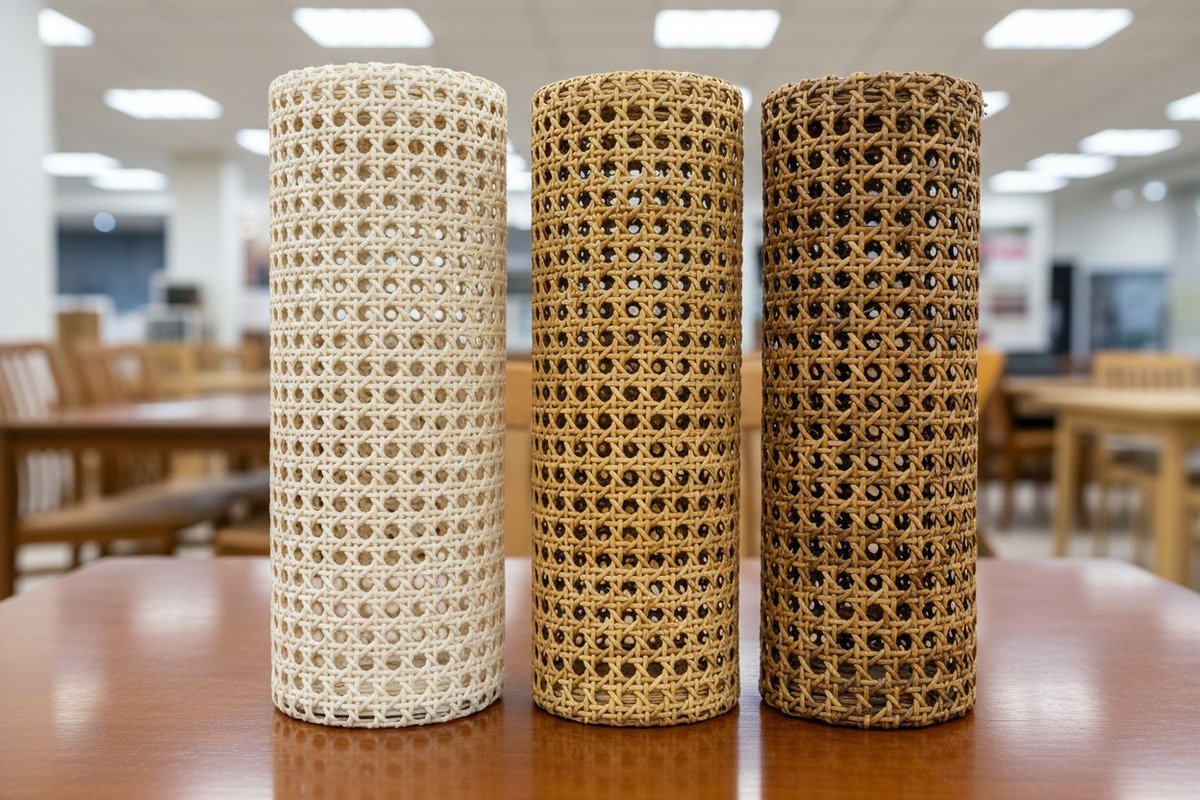
The right grade depends on your basket's purpose: Grade A (bleached, uniform) suits premium decorative baskets, Grade B works well for everyday storage, and Grade C is best for practice projects or hidden structural layers where appearance matters less.
Understanding Rattan Cane Webbing Grades
Rattan cane webbing is made from the outer skin of the rattan palm 3. The skin is peeled, dried, and woven into sheets. The quality of these sheets varies based on several factors: the age of the rattan plant, the harvest method, the processing technique, and the final bleaching or dyeing treatment.
At our factory, we classify webbing into three main grades. Grade A webbing has a smooth, consistent surface. The strands are uniform in width and color. There are no dark spots, knots, or broken fibers. This grade is ideal for baskets that will be on display—think living room organizers, shelf baskets, or gift items.
Grade B webbing has minor imperfections. You might see slight color variations or a few small knots. It is still strong and flexible. For everyday kitchen baskets, laundry hampers, or closet organizers, Grade B offers a great balance between cost and quality.
Grade C webbing has visible flaws—uneven strands, more knots, and rougher texture. It is significantly cheaper. Many of our customers use Grade C for inner layers or for projects where the webbing will be painted or covered with fabric liners.
Natural vs. Synthetic Webbing
Another key choice is between natural rattan and synthetic alternatives. Synthetic rattan 4 (often made from PE plastic) does not need soaking, resists moisture, and holds up outdoors. But it lacks the organic warmth of real cane. Here is a quick comparison:
| Feature | Natural Rattan Cane | Synthetic (PE) Rattan |
|---|---|---|
| Soaking required | Yes, 10–20 minutes | No |
| Flexibility | Excellent when wet | Moderate, always consistent |
| Durability outdoors | Low (moisture damage) | High (UV and water resistant) |
| Aesthetic feel | Warm, organic texture | Uniform, slightly plastic |
| Price range | Mid to high | Low to mid |
| Best use | Indoor decorative baskets | Outdoor or high-traffic items |
Weave Pattern Matters Too
Beyond the grade, you should also consider the weave pattern. Open hexagonal mesh (sometimes called "radio weave") creates airy, decorative baskets. Tight basketweave patterns offer more structure and can hold small items without them poking through. Diamond lattice and herringbone patterns sit somewhere in between—they look striking and provide decent coverage.
For a storage basket, we usually recommend a close or medium weave. Open mesh works better for lampshades or decorative panels where you want light to pass through.
Quick Selection Checklist
Ask yourself these questions before buying:
- Will the basket be decorative or functional?
- Will it be used indoors or outdoors?
- Do I need a tight weave to hold small objects?
- What is my budget per basket?
- Am I willing to soak and prep natural cane?
Your answers will point you to the right grade and material every time.
What are the essential steps I should follow to attach cane webbing to a wooden basket frame?
Over the years, our team has helped hundreds of furniture factories and DIY makers troubleshoot their webbing attachment process. The most common complaint? The webbing peels off or sags after a few weeks.
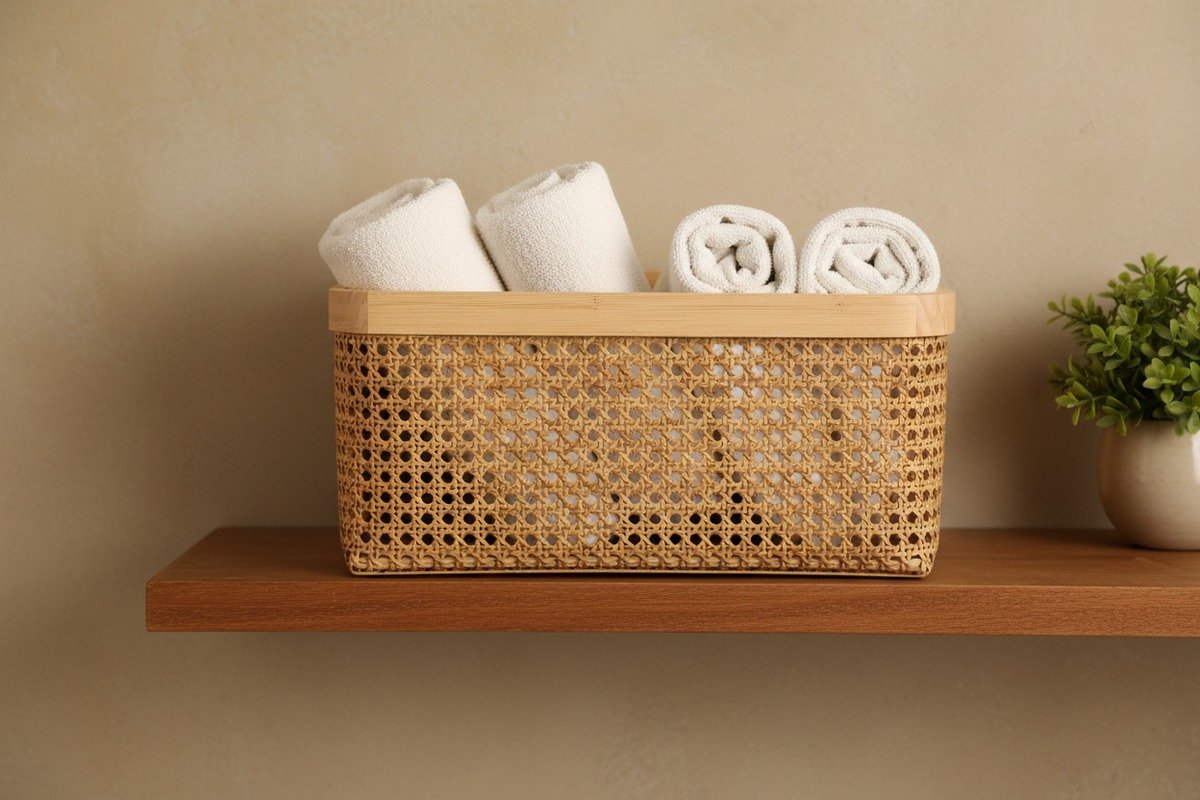
To attach cane webbing to a wooden basket frame, first soak natural cane for 10–20 minutes, then cut panels slightly larger than each frame face, apply wood glue or hot glue evenly along the edges, press the webbing firmly onto the frame, secure with staples or pins, and trim excess material once dry.
Step 1: Prepare Your Materials
Before you start, gather everything you need. Lay it out on a clean workspace. Here is a basic materials list:
| Item | Purpose | Notes |
|---|---|---|
| Rattan cane webbing sheet | Main basket covering | Cut slightly oversized |
| Wooden box or frame | Basket structure | Sand smooth before use |
| Wood glue 5 or hot glue gun | Adhesion | Wood glue for permanent bond |
| Staple gun 6 or small nails | Extra hold | Use stainless steel to avoid rust |
| Sharp scissors or craft knife | Cutting webbing | Cut while damp for clean edges |
| Spray bottle with water | Keep cane pliable | Mist if cane dries during work |
| Sandpaper (120–220 grit) | Smooth frame edges | Prevents cane from snagging |
| Spray paint (optional) | Frame finishing | Apply before attaching webbing |
If you plan to paint the wooden frame, do it first. Let the paint dry fully—at least 24 hours—before you attach any webbing.
Step 2: Soak the Cane Webbing
Natural rattan cane is stiff when dry. If you try to bend or wrap it without soaking, it will crack. Submerge your cut webbing panels in lukewarm water for 10 to 15 minutes. For thicker weaves, go up to 20 minutes. Once the cane feels pliable and slightly rubbery, remove it from the water and pat it dry with a clean towel.
Do not over-soak. If you leave natural cane in water for more than 30 minutes, the fibers can swell too much and weaken. Synthetic webbing does not need soaking at all—you can cut and attach it right away.
Step 3: Measure and Cut
Lay the damp webbing flat on your work surface. Place the wooden frame face-down on the webbing and trace around each panel with a pencil. Add about 1 to 1.5 centimeters of extra material on each side. This overlap gives you room to fold the edges behind the frame and glue them securely.
Cut along your marked lines using sharp scissors. A craft knife works too, but scissors give you more control with woven material.
Step 4: Attach the Webbing
Apply a thin, even line of wood glue along one edge of the frame panel. Press the webbing into the glue firmly. Hold it in place for 20 to 30 seconds. Then move to the opposite edge—pull the webbing taut across the frame and glue that side. Repeat for the remaining two edges.
For extra strength, use a staple gun to secure the webbing every 2 to 3 centimeters along each edge. This is especially important for larger baskets or baskets that will hold heavy items. Some professionals prefer to rout a groove into the wooden frame and press the cane into it with a spline (a thin strip of reed). This method hides the raw edge completely and creates a very clean finish.
Step 5: Trim and Finish
Once the glue has set—give it at least 2 hours—trim any excess webbing with a craft knife. Run the blade close to the frame edge for a tidy look. If you used staples, you can cover them with a thin strip of rattan reed glued along the border.
Let the finished basket dry completely in a well-ventilated area for 24 hours. As the cane dries, it will tighten slightly on the frame, creating a drum-like tension. This is exactly what you want.
Common Mistakes to Avoid
- Applying too much glue creates bumps under the webbing. Use a thin, even layer.
- Not pulling the cane taut before gluing the opposite side leads to sag.
- Skipping the soaking step with natural cane almost always causes cracking.
- Using regular craft scissors instead of sharp ones frays the woven edges.
How can I ensure the rattan webbing on my DIY basket stays tight and durable over time?
We hear this question constantly from our wholesale clients who resell finished rattan products. They need baskets that survive shipping, shelf life, and daily household use without warping or loosening.
To keep rattan webbing tight and durable, allow freshly attached cane to dry completely under tension, apply a coat of clear lacquer or natural oil for moisture protection, store baskets away from direct sunlight and heat sources, and recondition dry cane periodically with a light mist of water and oil.
Why Rattan Webbing Loosens
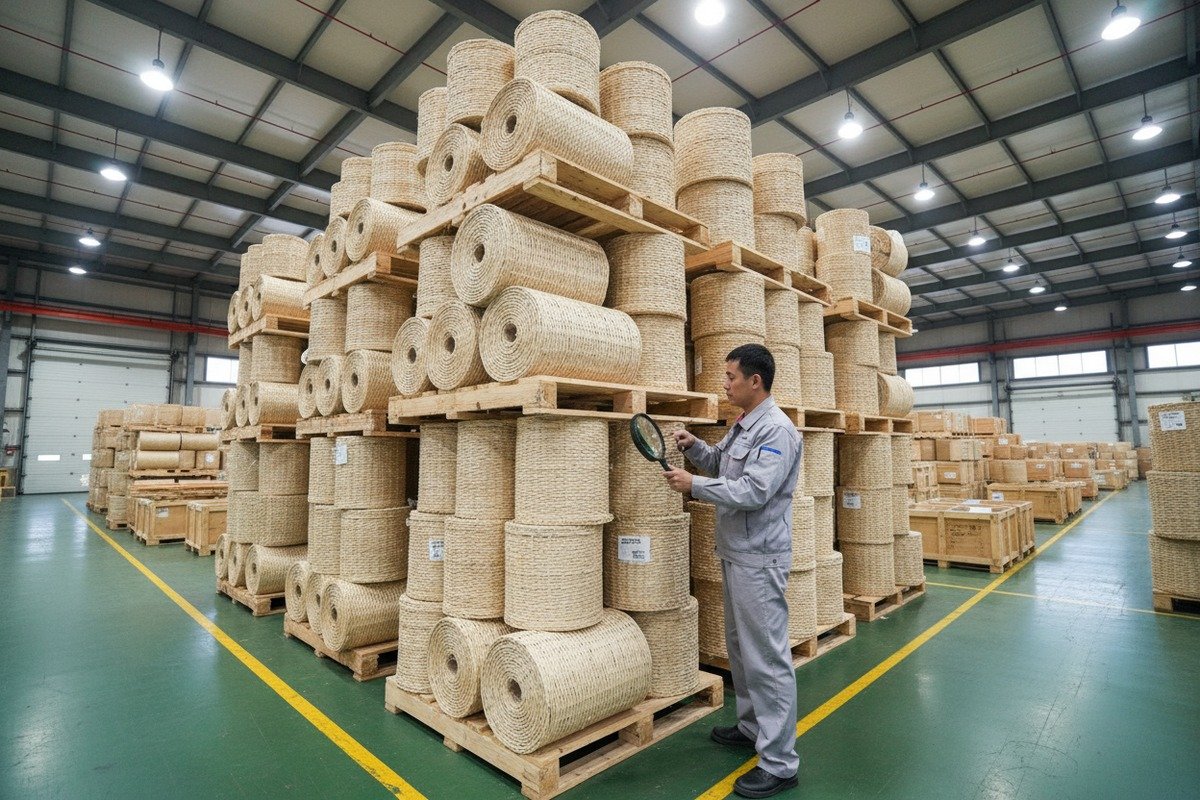
Rattan is a natural plant fiber. Like wood, it expands when it absorbs moisture and contracts when it dries. If your environment swings between very humid and very dry conditions, the cane will cycle between loose and tight. Over time, this repeated expansion and contraction weakens the fibers and loosens the attachment points.
Direct sunlight is another enemy. UV rays break down the lignin in natural rattan, making it brittle and pale. A basket left near a window can start cracking within a few months.
Drying Under Tension
The single most important step for long-term tightness happens right after you attach the webbing. You must let the cane dry completely while it is stretched across the frame. Do not move or use the basket during this drying period. If possible, place the basket in a room with moderate humidity—around 40 to 60 percent—and good air circulation.
For shaped baskets (round or oval), wrap the wet woven cane around a form—a bottle, tube, or bowl—and secure it with elastic bands or clips. Leave it for at least 24 hours. When you remove the form, the cane will hold its shape.
Protective Finishes
A finish coat does two things: it seals the fibers against moisture and adds a subtle sheen. Here are the most common options:
| Finish Type | Pros | Cons | Best For |
|---|---|---|---|
| Clear lacquer 7 spray | Easy application, glossy look | Can yellow over time | Decorative indoor baskets |
| Tung oil 8 | Natural, food-safe, matte finish | Needs reapplication yearly | Kitchen and pantry baskets |
| Polyurethane | Very durable, water-resistant | Thicker coat, can look plastic | High-use storage baskets |
| Beeswax polish | Eco-friendly, pleasant scent | Minimal water protection | Light-duty decorative items |
Apply the finish in thin coats. Two light coats are better than one heavy coat. Let each coat dry fully before applying the next.
Ongoing Care Tips
Even with a good finish, rattan benefits from occasional attention. Here are some practical maintenance habits:
- Dust regularly. Use a soft brush or vacuum with a brush attachment. Dust buildup traps moisture.
- Avoid prolonged sun exposure. Move baskets away from windows or use UV-filtering curtains.
- Recondition once a year. Lightly mist the cane with water, then wipe with a cloth dampened with lemon oil or tung oil. This restores flexibility.
- Do not overload. Distribute weight evenly. A heavily loaded side will stretch the webbing unevenly over time.
- Use fabric liners. A cotton or linen liner inside the basket reduces direct wear on the cane and catches small items that could poke through the weave.
Repairing Small Damage
If a strand breaks or a small area sags, you do not need to redo the entire panel. Soak a replacement strand in water, weave it into the damaged area, and glue the ends to the back of the frame. For sagging, mist the area lightly with water, press it flat, and let it dry under a weight. The cane will tighten again as it dries.
Synthetic rattan, by contrast, requires almost no maintenance. It does not absorb water, does not crack in sunlight (most PE rattan is UV-stabilized), and can be cleaned with a damp cloth. If durability is your top priority and you are okay with a slightly less organic feel, synthetic is a strong choice.
Where can I find a reliable wholesaler to supply the rattan materials I need for my production?
Running our own rattan supply chain—from raw harvesting in Indonesia to finished webbing in our Foshan warehouses—has shown us exactly what separates a dependable wholesaler from a risky one. Many buyers learn this the hard way after a bad first order.
To find a reliable rattan wholesaler, look for suppliers who own or directly manage their processing facilities, offer multiple grades and weave patterns, provide samples before bulk orders, maintain transparent pricing, and have verified export experience to your target market.

Where to Start Your Search
Most buyers begin on Google, Alibaba, or trade show directories. Each channel has strengths. Google lets you find specialized suppliers with their own websites—these tend to be more established. Alibaba gives you quick access to hundreds of options with built-in trade assurance. Trade shows (like the Canton Fair 9 or CIFF in Guangzhou) let you see and touch materials in person.
However, quantity does not equal quality. A supplier with a flashy listing might be a trading company reselling someone else's product. That extra middleman adds cost and reduces your control over quality.
Key Qualities of a Reliable Wholesaler
Here is what to look for when evaluating potential suppliers:
Direct factory access. A wholesaler who owns or invests in their own processing facilities can control quality at every stage. They can also customize weave patterns, widths, and colors more easily. At our operation, for example, we run three self-invested factories, including a rattan processing plant in Indonesia. This gives us direct oversight from raw material to finished roll.
Full product range. A one-stop supplier saves you time and shipping costs. Instead of ordering webbing from one factory, reed from another, and binding strips from a third, you get everything on one invoice and one shipment. Look for wholesalers who carry cane webbing sheets, rattan core, flat reed, binding cane, and related accessories.
Sample policy. Never place a bulk order without seeing a sample first. A reliable wholesaler will send you sample swatches—sometimes free, sometimes at a small charge. Check the weave density, strand uniformity, color consistency, and flexibility. Compare it to the grade they claim.
Transparent pricing. Pricing should be clear and broken down. Ask for FOB or CIF quotes. Clarify what is included—packaging, labeling, palletizing. Beware of quotes that seem too good. Very low prices often mean lower-grade material or thinner strands that will not hold up.
Export documentation. If you are importing, your supplier should handle commercial invoices, packing lists, certificates of origin, and phytosanitary certificates 10 (required for natural plant materials entering many countries). Ask to see examples of past export documents.
Red Flags to Watch For
- The supplier cannot provide photos of their own factory or warehouse.
- They refuse to send samples or charge excessively for them.
- Communication is slow or evasive when you ask specific technical questions.
- They have no references or reviews from previous international buyers.
- Minimum order quantities are unusually low (this may indicate a trading company, not a factory).
Building a Long-Term Relationship
Once you find a good wholesaler, invest in the relationship. Share your quality expectations clearly. Provide feedback after every shipment. Consistent orders—even smaller ones—build trust and often lead to better pricing and priority production slots.
Many of our long-term clients started with a single trial order of two or three rolls. After confirming the quality, they scaled up to container loads. That first small order is your lowest-risk way to test a new supplier.
Questions to Ask Before Your First Order
- Do you own or manage your own rattan processing facility?
- What grades do you offer, and how do you classify them?
- Can I order a sample set of different weave patterns and grades?
- What is your standard lead time for a 20-foot container?
- Which countries have you exported to, and can you provide references?
- How do you handle quality complaints or damaged goods?
The answers to these questions will tell you a lot about a supplier's professionalism and reliability.
Conclusion
Making a storage basket with rattan cane webbing is a rewarding project when you choose the right grade, follow proper attachment steps, maintain the finished piece, and source materials from a trusted wholesaler like Seafan Rattan.
Footnotes
1. Explains the material used for baskets and its characteristics. ↩︎
2. Identifies the material composition and properties of polyethylene plastic. ↩︎
3. Provides information on the source plant of rattan. ↩︎
4. Details an alternative material to natural rattan and its benefits. ↩︎
5. Replaced HTTP unknown link with an authoritative Wikipedia page on wood glue. ↩︎
6. Provides general information about the tool used for securing materials. ↩︎
7. Replaced HTTP 404 link with an authoritative Wikipedia page on lacquer. ↩︎
8. Explains the characteristics and application of tung oil as a natural finish. ↩︎
9. Provides information on a major international trade exhibition. ↩︎
10. Details the official documentation required for importing plant materials. ↩︎

 English
  Español de México
  العربية
  Deutsch
  Français
  Русский