
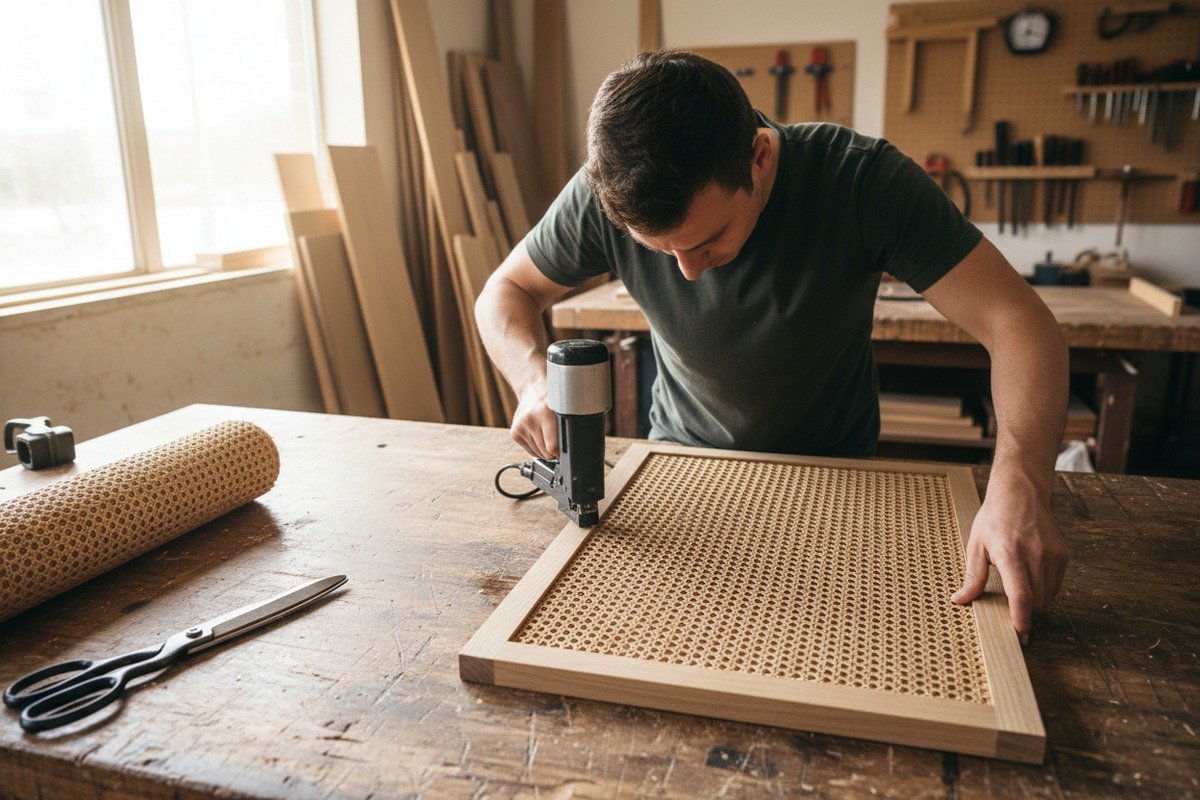
Unzählige Möbelhersteller kontaktieren uns jeden Monat mit der gleichen Frage: Ihre Kunden lieben den Rattan-Look, aber sie kämpfen mit welligen Paneelen, rissigem Rohr und inkonsistenter Webqualität, die das Endprodukt ruinieren.
Um natürliche Rattan-Rohrgeflechte zur Dekoration von Schranktüren zu verwenden, weichen Sie das Geflecht zur besseren Formbarkeit ein, schneiden Sie es etwas überdimensioniert zu, heften oder klemmen Sie es im nassen Zustand in Ihren Türrahmen und lassen Sie es trocknen, damit es sich natürlich strafft. Anschließend können Sie die Kanten mit einer Zierleiste oder Farbe für ein sauberes, professionelles Aussehen veredeln.
Dieser Leitfaden führt Sie durch jeden Schritt. Wir behandeln, wie Sie die richtige Qualität auswählen, sie richtig installieren, sie jahrelang gut aussehen lassen und wo Sie zuverlässige Großlieferungen finden. gleichmäßige Strangdicke 1. Legen wir los.
Wie wähle ich die richtige Qualität von natürlicher Rattan-Geflecht für meine Schranktüren aus?
Im Laufe der Jahre hat unser Produktionsteam Tausende von Rollen für Möbelfabriken in ganz Europa, dem Nahen Osten und Südostasien sortiert und versandt. Die häufigste Beschwerde, die wir von Neukäufern hören? Sie haben die falsche Qualität gewählt und am Ende ein Geflecht erhalten, das entweder zu spröde oder zu locker für Schrankarbeiten war.
Wählen Sie natürliche Rattan-Gewebe der Güteklasse A oder AA für Schranktüren – diese Güten bieten eine gleichmäßige Strangdicke, eine straffe Webspannung, minimale Knoten und eine einheitliche Farbe, die sicherstellt, dass Ihre fertigen Türen sauber und professionell aussehen, ohne zusätzliche Sortierung oder Abfall.
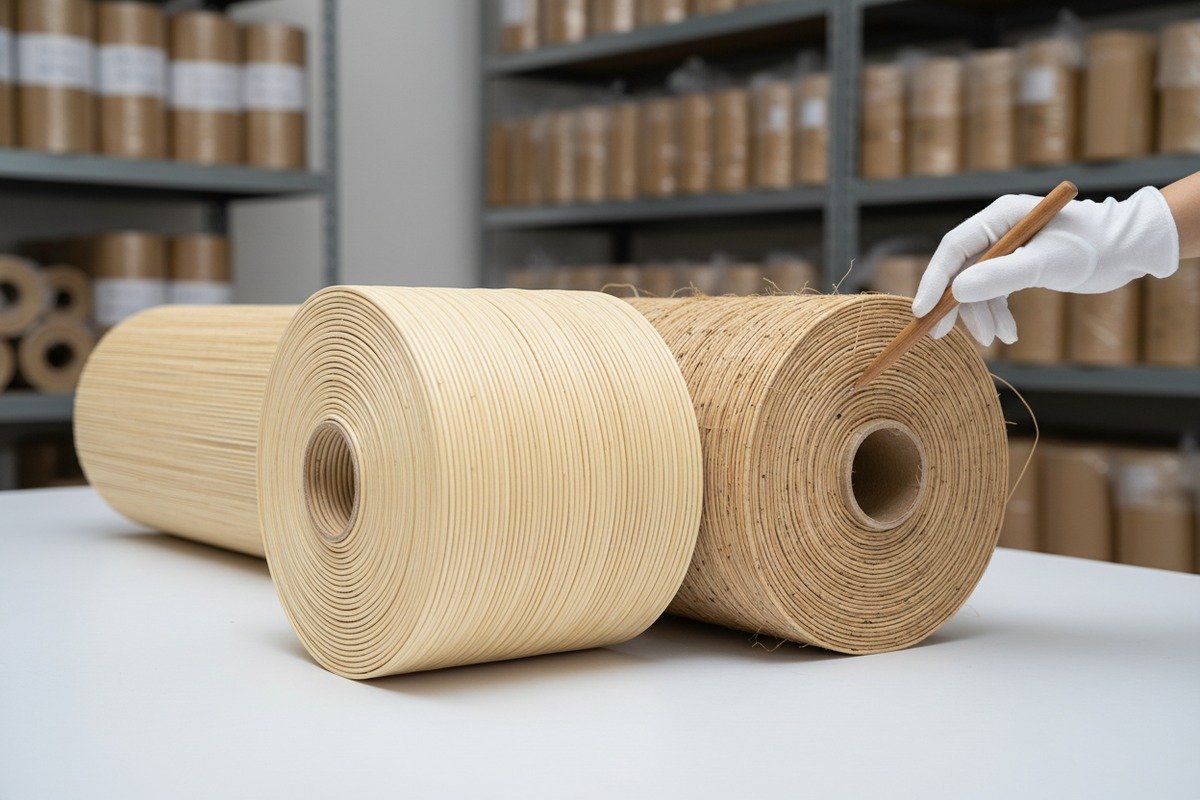
Was bedeuten Rattan-Qualitäten eigentlich?
Rattan-Klassifizierung 2 ist weltweit nicht standardisiert. Aber im Handel spiegeln die Qualitäten die Strangqualität, die Farbgleichmäßigkeit und die Webdichte wider. Hier ist eine einfache Aufschlüsselung.
- Qualität AA (Premium): Sehr wenige Knoten. Gleichmäßige Farbe. Dichtes, gleichmäßiges Geflecht. Am besten für sichtbare, hochwertige Möbel.
- Qualität A (Standard): Geringfügige Farbabweichungen. Gelegentliche kleine Knoten. Ideal für die meisten Schranktüren.
- Qualität B (Economy): Deutliche Knoten und Farbverschiebungen. Geeignet für verdeckte Paneele oder Budgetprojekte.
- Qualität C (Utility): Unregelmäßige Stränge. Nur für Rückwände oder Übungsstücke geeignet.
Wenn wir Rattan in unserer Anlage in Indonesien verarbeiten, durchläuft jede Rolle vor dem Verpacken eine Sichtprüfung. Qualität A und höher bedeutet weniger Ausschuss auf Ihrem Fabrikboden.
Auswahl des Webmusters
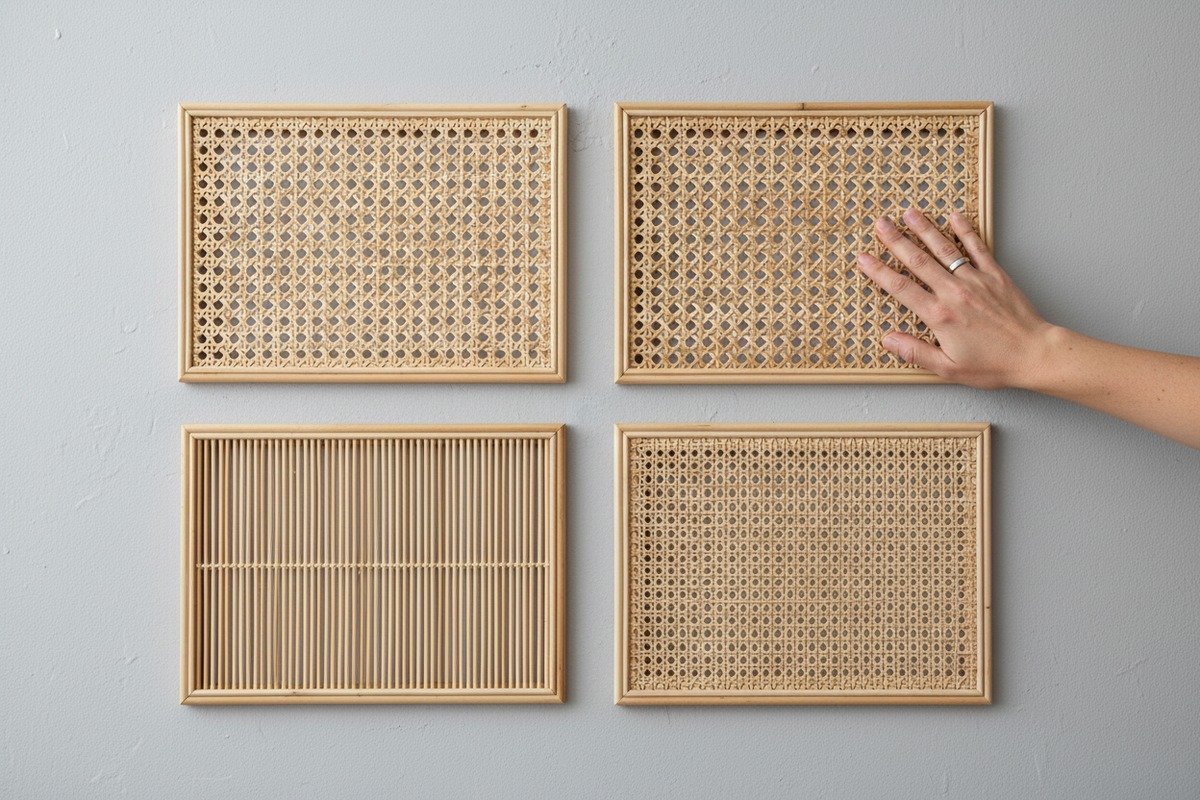
Das von Ihnen gewählte Webmuster beeinflusst sowohl das Aussehen als auch die Funktion Ihrer Schranktüren. Offene Gewebe lassen mehr Luft durch – ideal für Wäscheschränke oder Badezimmermöbel. Geschlossene Gewebe bieten mehr Privatsphäre und eine dichtere visuelle Textur.
| Webmuster | Airflow Level | Visuelle Privatsphäre | Bester Anwendungsfall |
|---|---|---|---|
| Offen Sechseckig 3 (Klassische Rohrgeflecht) | Hoch | Niedrig | Küchenschränke, Wäscheschränke |
| Radio Weave (Quadratisches Gitter) | Mittel | Mittel | Wohnzimmer Sideboards, Bartische |
| Dichtes Diamantgeflecht | Niedrig | Hoch | Bedroom wardrobes, bathroom vanities |
| Enges Korbflechtmuster | Sehr gering | Sehr hoch | Akzentpaneele, dekorative Sichtschutzwände |
Farb- und Breitenüberlegungen
Natürliches Rattan gibt es in Farbtönen von blassem Stroh bis zu warmem Honig. Gebleichte Optionen bieten einen helleren, weißeren Look. Für Schranktüren decken Breiten von 18 bis 25,5 Zoll die meisten Standardöffnungen ab.
Ein schneller Tipp von unserem Lagerteam: Bestellen Sie immer 10–15% mehr als Ihr gemessener Bedarf. Schnittabfälle, Teststücke und gelegentliche Mängel verringern Ihren Vorrat schneller als erwartet.
Echtes Rattan vs. Synthetik
Einige Käufer fragen nach synthetischen Alternativen. Synthetische Rattanmatte 4 ist billiger und feuchtigkeitsbeständig. Aber es fehlt die organische Textur, der natürliche Duft und die Atmungsaktivität, die echtes Rattan besonders machen. Für hochwertige Schranktüren ist echtes Rattan immer die beste Wahl. Es altert schön und verleiht Wärme, die Kunststoff einfach nicht nachahmen kann.
Wenn Ihre Endkunden ein authentisches, umweltfreundliches Produkt schätzen, bleiben Sie bei natürlichem Rohrgeflecht. Wenn Sie extreme Luftfeuchtigkeitsbeständigkeit benötigen – zum Beispiel für Außenschränke – dann kann Synthetik ein praktischer Ersatz sein.
Was ist der beste Weg, Rattan-Rohrgeflecht für meine Möbelprojekte zu installieren?
Wenn wir Rattangeflecht an Möbelfabriken in den Niederlanden und Spanien versenden, legen wir immer eine Handhabungsanleitung bei. Warum? Denn selbst das beste Material kann schlecht aussehen, wenn es falsch verarbeitet wird. Trockene Installation, ungleichmäßiges Nageln oder das Überspringen des Einweichens führt zu Durchhängen, Wellenbildung und Materialverschwendung.
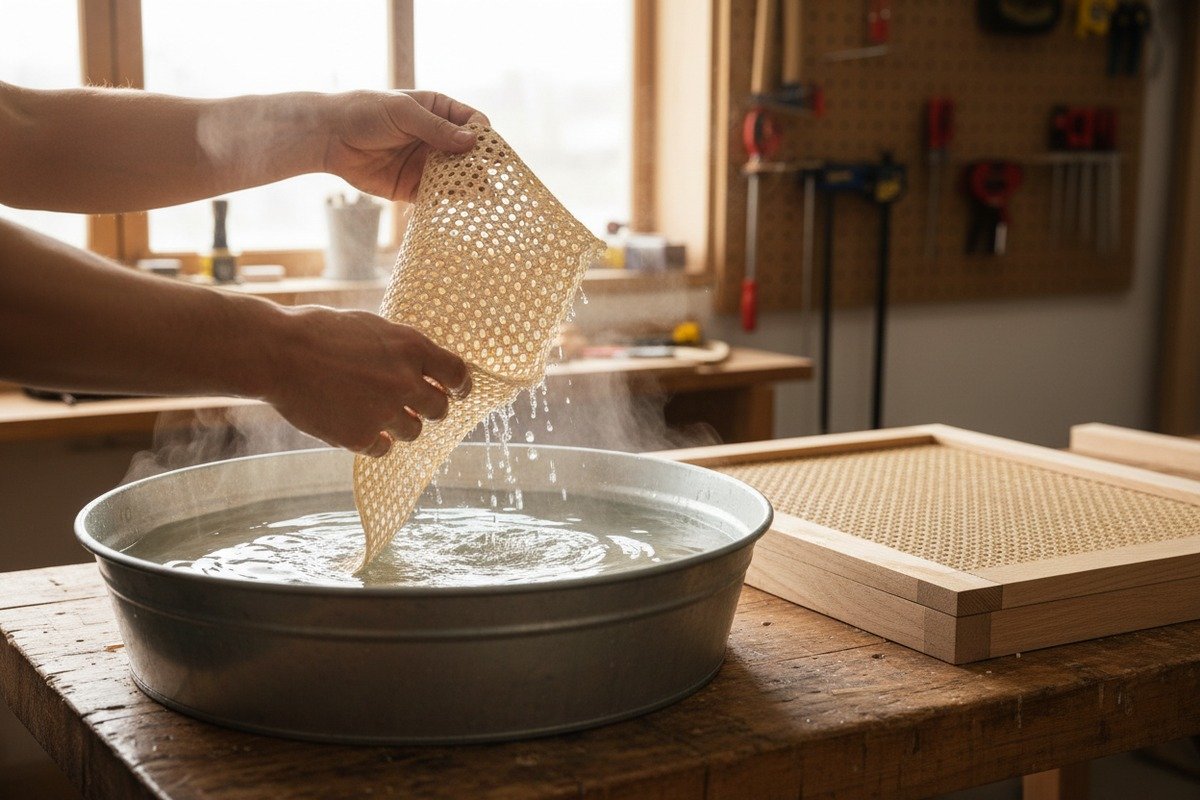
Die beste Installationsmethode ist, das Rattan-Gewebe 30 Minuten bis 3 Stunden in warmem Wasser einzuweichen, es noch feucht fest am Innenrahmen der Schranktür zu befestigen und es dann vollständig an der Luft trocknen zu lassen – es strafft sich wie eine Trommel für ein glattes, professionelles Finish.
Benötigte Werkzeuge und Materialien
Bevor Sie beginnen, sammeln Sie alles. Wenn Sie während der Installation anhalten, um ein Werkzeug zu suchen, trocknet das Geflecht ungleichmäßig.
| Werkzeug / Material | Zweck | Anmerkungen |
|---|---|---|
| Maßband | Türöffnung messen | Zweimal messen, einmal schneiden |
| Sharp scissors or utility knife | Geflecht auf Größe schneiden | 1–2 Zoll größer als die Öffnung schneiden |
| Warmwasserbecken oder Badewanne | Geflecht einweichen | Groß genug, um das ganze Stück einzutauchen |
| Tacker (manuell oder pneumatisch) | Geflecht am Rahmen befestigen | 1/4-Zoll-Klammern verwenden |
| Spitzzange | Falsch platzierte Klammern entfernen | Praktisch für Korrekturen |
| Malerkrepp | Positionen markieren | Hält die Ausrichtung ordentlich |
| Dünne Holzleiste oder Kantenband | Rohe Kanten abdecken | Für ein poliertes Finish |
| Holzleim (optional) | Kanten verstärken | Empfohlen für stark beanspruchte Türen |
| Grundierung und Farbe | Den Rahmen fertigstellen | Vor dem Anbringen des Gewebes auftragen |
Schritt-für-Schritt-Installationsprozess
Schritt 1: Vorhandene Paneele entfernen. Nehmen Sie Glas, Sperrholz oder alte Paneele aus Ihrer Schranktür. Reinigen Sie den Rahmen. Schleifen Sie raue Stellen ab.
Schritt 2: Zuerst den Rahmen streichen oder beizen. Fertigen Sie den Rahmen immer fertig, bevor Sie das Gewebe anbringen. Farbspritzer auf Rohr ist fast unmöglich zu reinigen. Wir empfehlen eine Schicht Grundierung und zwei Decklacke. Lassen Sie jede Schicht mindestens 30 Minuten trocknen.
Schritt 3: Das Gewebe messen und schneiden. Messen Sie die innere Öffnung des Türrahmens. Fügen Sie auf jeder Seite 1 bis 2 Zoll hinzu. Schneiden Sie das Gewebe mit einer scharfen Schere, um Ausfransen zu vermeiden.
Schritt 4: Das Gewebe einweichen. Tauchen Sie das geschnittene Stück für mindestens 30 Minuten in warmes Wasser. Bei dickeren Geweben sind bis zu 3 Stunden besser. Das Wasser macht das Rattan weich und biegsam. Dies ist der wichtigste Schritt. Überspringen Sie ihn, und Sie werden mit dem Material kämpfen.
Schritt 5: Im nassen Zustand heften. Legen Sie das feuchte Gewebe über die Rückseite der Rahmenöffnung. Beginnen Sie in einer Ecke. Ziehen Sie es straff. Heften Sie es fest. Gehen Sie zur gegenüberliegenden Ecke. Heften Sie es fest. Dann machen Sie die restlichen beiden Ecken. Arbeiten Sie sich nun entlang jeder Seite vor und heften Sie alle Zoll oder so. Halten Sie eine gleichmäßige Spannung.
Schritt 6: Überschüssiges abschneiden. Sobald alles geheftet ist, schneiden Sie mit einer Schere das überschüssige Gewebe nahe der Heftlinie ab.
Schritt 7: Vollständig trocknen lassen. Beeilen Sie sich nicht damit. Das Gewebe wird anfangs wellig erscheinen. Während es über mehrere Stunden trocknet, schrumpft und strafft es sich. Am nächsten Morgen sollte es glatt und straff wie eine Trommel sein.
Schritt 8: Kanten fertigstellen. Kleben und nageln Sie dünne Holzleisten über die gehefteten Kanten für ein sauberes Aussehen. Alternativ können Sie auch Klebeband oder dekorative Leisten verwenden.
Schritt 9: Beschläge wieder anbringen und aufhängen. Montieren Sie Ihre Scharniere und Griffe. Hängen Sie die Tür wieder ein. Treten Sie zurück und bewundern Sie Ihre Arbeit.
Anfänger vs. Fortgeschrittene Methoden
Anfänger kommen gut mit der Heftmethode 7 zurecht, die oben beschrieben ist. Keine spezielle Verbindung erforderlich. Fortgeschrittene Holzhandwerker können individuelle Rahmen mit 1x3 Kiefernholzbrettern, Taschenlochschrauben oder sogar Fingerzinkenverbindungen bauen. Einige Profis fräsen eine Nut in den Rahmen und pressen das Gewebe mit einer Leiste und Klebstoff ein – ähnlich wie Fenstergitter installiert werden. Diese Methode ist haltbarer, erfordert aber eine Oberfräse und Leistenmaterial.
Für Produktionsumgebungen haben wir gesehen, dass Fabriken pneumatische Tacker und Vorrichtungen verwenden, um den Prozess zu beschleunigen. Konsistenz ist wichtig, wenn Sie 200 Türen pro Woche herstellen.
Wie kann ich die Qualität und Haltbarkeit meiner Rattan-Schrankeinsätze erhalten?
Wir hatten Langzeitkunden in Australien und Saudi-Arabien – zwei sehr unterschiedliche Klimazonen –, die uns die gleiche Frage stellten. Wie halten wir unser Rattan nach einem Jahr gut aussehend? Nach fünf Jahren? Die Antwort sind einfache Pflegemaßnahmen. Rattan ist von Natur aus haltbar, aber Vernachlässigung verkürzt seine Lebensdauer.
Pflegen Sie Rattan-Schrankeinsätze, indem Sie sie regelmäßig mit einem trockenen, weichen Tuch abstauben, direkte Sonneneinstrahlung und übermäßige Feuchtigkeit oder aggressive Chemikalien vermeiden, in trockenen Klimazonen gelegentlich leicht besprühen, um Versprödung zu verhindern, und in feuchten Umgebungen mit einer klaren Versiegelung behandeln, um Schimmel vorzubeugen.
Tägliche und wöchentliche Pflege
Staub ist der Hauptfeind von gewebten Materialien. Er setzt sich in den Webzwischenräumen ab und sammelt sich mit der Zeit an. Ein schnelles Abwischen mit einem trockenen Mikrofasertuch einmal pro Woche hält die Oberfläche sauber. Für eine tiefere Reinigung verwenden Sie einen weichen Bürstenaufsatz Ihres Staubsaugers bei geringer Saugkraft.
Sprühen Sie niemals Wasser direkt auf installierte Rattanpaneele. Ein leichter Nebel aus einem Pflanzensprüher – etwa 30 cm entfernt gehalten – reicht aus, um die Fasern in sehr trockenen Umgebungen wieder mit Feuchtigkeit zu versorgen. Tun Sie dies höchstens einmal im Monat.
Umgang mit Luftfeuchtigkeit
Hohe Luftfeuchtigkeit kann dazu führen, dass natürliches Rattan Feuchtigkeit aufnimmt und schließlich Schimmel 8. entwickelt. In Badezimmern oder tropischen Klimazonen tragen Sie vor der Installation eine dünne Schicht klaren Polyurethanlacks oder Lacks 9 auf. Dies versiegelt die Fasern, ohne die natürliche Textur zu verbergen.
Gute Belüftung hilft ebenfalls. Wenn Ihr Schrank in einem feuchten Raum steht, lassen Sie die Türen gelegentlich leicht geöffnet, um die Luftzirkulation zu ermöglichen.
Reparatur und Austausch
One big advantage of rattan webbing inserts: they are replaceable. If a panel gets damaged — say, a pet claws through it or something heavy punctures it — you can remove the trim, pull out the old webbing, and install a fresh piece. The frame stays intact.
For small tears, a dab of wood glue on the broken strand can hold things together temporarily. But for visible damage, full replacement looks better and takes under an hour per door.
Was zu vermeiden ist
| Vermeiden Sie dies | Warum | What to Do Instead |
|---|---|---|
| Harsh chemical cleaners | Strips natural oils, causes brittleness | Use a damp cloth with mild soap if needed |
| Direct sunlight for prolonged periods | Fades color and dries fibers | Position cabinets away from windows or use curtains |
| Soaking installed panels | Loosens staples, risks mildew | Light misting only |
| Hanging heavy items on cane panels | Stretches and tears the weave | Use frame-mounted hooks instead |
| Ignoring dust buildup | Verstopfungen weben, zieht Insekten an | Wöchentliche Staubroutine |
Langlebigkeitserwartungen
Gut gepflegtes Naturrattan-Geflecht hält 5 bis 10 Jahre bei Innenschranktüren. Nach unserer Erfahrung bei der Belieferung europäischer Möbelhersteller halten die Stücke am längsten, die mit richtiger Einweichung installiert, leicht versiegelt und in klimatisierten Räumen aufbewahrt werden. Rattan ist ein Naturmaterial. Behandeln Sie es mit etwas Respekt, und es belohnt Sie mit Jahren warmer, schöner Textur.
Wo kann ich hochwertige Rattan-Geflechte in großen Mengen für meine Produktionsanforderungen beziehen?
Der Betrieb von drei Fabriken und die Koordination mit über 30 Partnerwerkstätten in Foshan haben uns etwas Wertvolles gelehrt – die Zuverlässigkeit der Lieferkette ist wichtiger als der niedrigste Preis. Eine verpasste Lieferung oder eine inkonsistente Charge kann eine Produktionslinie zum Stillstand bringen. Wir haben Großhändlern von Möbelmaterialien und Einkaufsmanagern von Fabriken in mehr als einem Dutzend Ländern geholfen, genau dieses Problem zu lösen.
Beziehen Sie hochwertiges Rattan-Gewebe in großen Mengen von etablierten Großhändlern mit eigenen Verarbeitungsanlagen, nachgewiesener Exportbilanz und der Fähigkeit, mehrere Webmuster, Qualitäten und Breiten konstant zu liefern – bevorzugen Sie Lieferanten, die Qualitätskontrolle, kundenspezifische Größen und zuverlässige Verpackung für den internationalen Versand anbieten.
Wo Käufer typischerweise suchen
Die meisten B2B-Käufer finden Lieferanten von Rattan-Geflecht über einige Hauptkanäle:
- Google-Suche — Schlüsselwörter wie "Rattan-Geflecht Großhandel" oder "Rattan-Rohrlieferant Bulk" führen zu Herstellerwebsites und Verzeichnissen.
- Alibaba und Handelsplattformen — Nützlich zum Vergleichen von Preisen, aber die Qualitätsprüfung erfordert Muster.
- Messen — Veranstaltungen wie die CIFF (China International Furniture Fair) in Guangzhou ermöglichen es Ihnen, das Material persönlich zu sehen und zu fühlen.
- Empfehlungen — Mundpropaganda von anderen Fabrikbesitzern bleibt die vertrauenswürdigste Quelle.
Worauf Sie bei einem Lieferanten achten sollten
Not all rattan suppliers are equal. Here is what separates a reliable partner from a risky one.
Eigene Verarbeitungsanlage. Suppliers who process their own rattan — from raw cane to finished webbing — control quality at every step. We operate our own rattan processing facility in Indonesia, which means we manage strand selection, weaving, grading, and packing under one roof.
Vollständiges Produktsortiment. A one-stop supplier saves you time. Look for a partner who offers open hexagonal, radio weave, basketweave, diamond weave, bleached options, and various widths. This way, you do not need multiple vendors for one project.
Consistent grading. Ask for grade definitions. Request samples of Grade A and Grade B so you can see the difference. A good supplier will be transparent about what each grade includes.
Exporterfahrung. Shipping rattan internationally requires proper packaging to prevent moisture damage, crushing, and insect contamination. Experienced exporters know how to roll, wrap, and palletize for safe transit to the Netherlands, the USA, Thailand, or anywhere else.
Custom sizing. Standard widths like 25.5 inches work for many projects. But if your cabinet doors need 18-inch or 30-inch widths, your supplier should accommodate custom cuts without enormous minimum orders.
Pricing Realities
Rattan webbing pricing depends on grade, weave complexity, width, and order volume. Here is a general reference.
| Faktor | Auswirkung auf den Preis | Anmerkungen |
|---|---|---|
| Grade (AA vs. B) | Higher grade = higher price | Grade AA can cost 30–50% more than Grade B |
| Webart | Complex patterns cost more | Dense diamond weave is pricier than open hexagonal |
| Width | Wider rolls cost more per meter | 25,5-Zoll-Rollen sind am gebräuchlichsten und kostengünstigsten |
| Order volume | Größere Bestellungen reduzieren die Kosten pro Einheit | MOQ-Rabatte beginnen normalerweise bei 500+ Metern |
| Bleichen oder Färben | Erhöht die Verarbeitungskosten | Gebleichtes Rattan kostet 10–20 % mehr als natürliches |
| Verpackungsspezifikation | Exportverpackungen kosten mehr | Aber es verhindert Schadensmeldungen und Rücksendungen |
Für Produktionskäufer ist der Schlüssel die Gesamtkosten des Besitzes – nicht nur der Rollenpreis. Günstiges Gurtband mit 15 % Ausschuss durch Mängel kostet mehr als Premium-Gurtband mit 2 % Ausschuss. Wir haben dies bei Dutzenden von Kunden erlebt.
Verpackungs- und Versandtipps
Rattan ist organisch. Es kann während des Transports Feuchtigkeit aufnehmen und bei schlechter Verpackung schimmeln. Wir empfehlen immer:
- Plastikfolie um jede Rolle, um Feuchtigkeit abzudichten.
- Papphülsen in den Rollen, um ein Zerdrücken zu verhindern.
- Palettierte Lieferung mit Begasungszertifikate 10 für die Zollabfertigung.
- Silicagel-Päckchen in Kartons für lange Seereisen.
Fragen Sie Ihren Lieferanten nach seinem Verpackungsprozess. Wenn er ihn nicht klar erklären kann, ist das ein Warnsignal.
Aufbau einer langfristigen Lieferbeziehung
Die besten Einkaufsmanager, mit denen wir zusammenarbeiten, springen nicht wegen ein paar Cent pro Meter zwischen Lieferanten hin und her. Sie investieren in eine Beziehung. Sie besuchen die Fabrik. Sie einigen sich im Voraus auf Qualitätsstandards. Sie bestellen Muster, bevor sie sich zu Großaufträgen verpflichten. Und sie kommunizieren konsequent – oft über WhatsApp, was der schnellste Weg ist, um Probleme über Zeitzonen hinweg zu lösen.
Wenn Sie Rattan-Geflecht für die Möbelproduktion, den Baustoffhandel oder den Weiterverkauf unter Eigenmarke beschaffen, suchen Sie einen Lieferanten, der Ihr Endprodukt und Ihre Kundenerwartungen versteht. Diese Ausrichtung macht alles einfacher.
Conclusion
Natürliches Rattan-Rohrgeflecht verwandelt gewöhnliche Schranktüren in atemberaubende Designelemente. Wählen Sie die richtige Qualität, installieren Sie es nass, pflegen Sie es einfach und beziehen Sie es von einem zuverlässigen Partner, um jedes Mal die besten Ergebnisse zu erzielen.
Fußnoten
1. Erklärt, wie Strangdicke und Gleichmäßigkeit zur Qualität von Rattan beitragen. ↩︎
2. Bietet einen umfassenden Überblick über Rattan-Bewertungssysteme und wichtige Bewertungsfaktoren. ↩︎
3. Beschreibt das klassische sechseckige Offenmaschenmuster und seine Anwendungen. ↩︎
4. Erklärt die Zusammensetzung und Eigenschaften von synthetischem Rattan als alternatives Material. ↩︎
5. Beschreibt die Kriterien und Merkmale verschiedener Rattan-Qualitätsstufen. ↩︎
6. Erklärt das Material und seine gängigen Verwendungszwecke in der Möbelherstellung. ↩︎
7. Fand einen umfassenden Leitfaden zur Installation von Rohrgeflecht mit einer Tackermethode von einem seriösen Lieferanten. ↩︎
8. Erklärt, was Schimmel und Mehltau verursacht, und bietet Tipps zur Vorbeugung und Bekämpfung. ↩︎
9. Vergleicht Haltbarkeit, Anwendung und Verwendung von Lack- und Polyurethan-Oberflächen. ↩︎
10. Definiert Begasungszertifikate und deren Bedeutung für die Einhaltung internationaler Versandvorschriften. ↩︎


 English
  Español de México
  العربية
  Deutsch
  Français
  Русский