
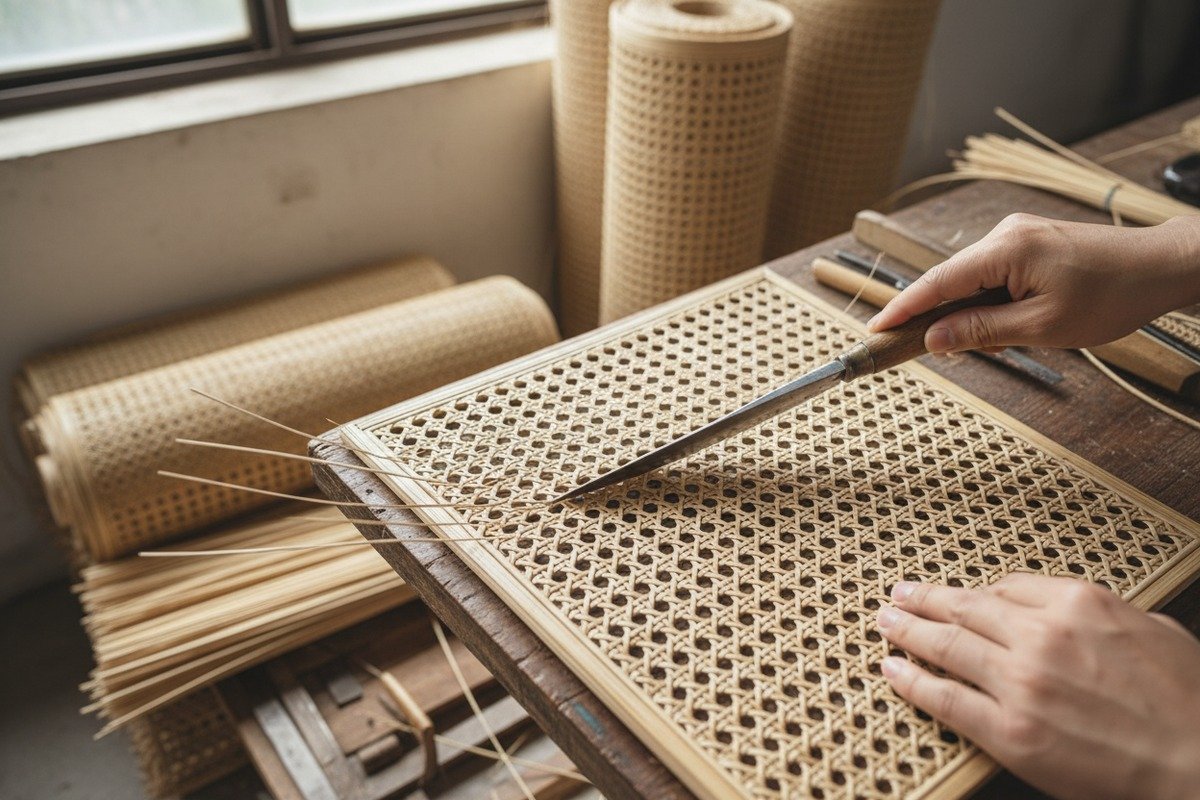
Cada semana en nuestra planta de producción en Foshan, vemos a tejedores expertos convertir cáscaras de ratán crudas cáscaras de ratán 1 en perfectos patrones de panal de abejas, y cada semana, los compradores nos hacen la misma pregunta: ¿cómo se hace exactamente?
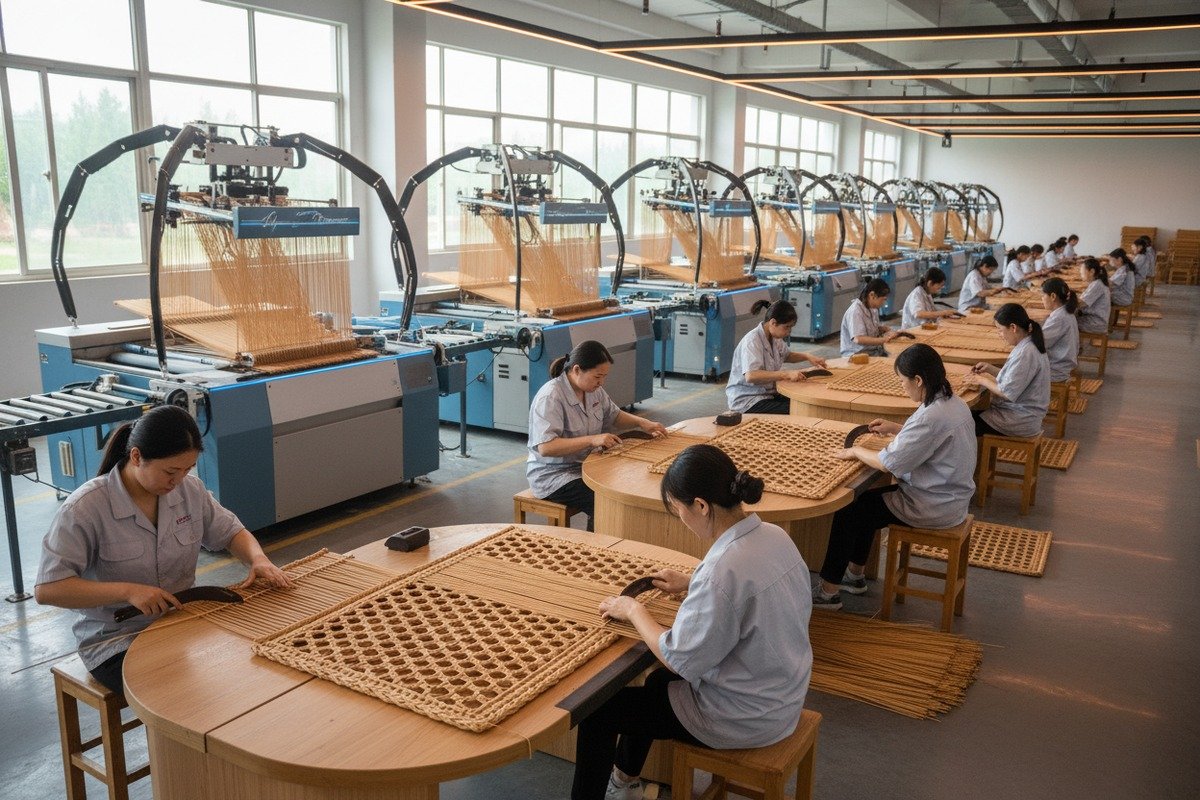
La rejilla hexagonal de ratán natural se teje primero preparando finas cáscaras de ratán de palmeras trepadoras tropicales, formando una base de cuadrícula cuadrada utilizando métodos de “hilo volante” asistidos por máquina, y luego tejiendo a mano tiras de ratán diagonales en cada celda cuadrada utilizando la técnica tradicional del cuchillo “LaHua” para crear el distintivo patrón de panal de abejas de seis lados.
Comprender este proceso es importante, ya seas propietario de una fábrica de muebles que adquiere rollos a granel o un mayorista que ajusta las especificaciones para tus clientes palmeras trepadoras tropicales 2. A continuación, desglosamos cada paso, desde la identificación de los métodos de tejido a mano auténticos hasta la selección del tamaño de malla adecuado para tu línea de producción.
¿Cómo identifico el proceso tradicional de tejido a mano utilizado en mi malla de ratán hexagonal?
Cuando capacitamos a nuevos inspectores de calidad 3 en nuestras instalaciones de Nanhai, lo primero que aprenden es a distinguir entre un tejido puramente a máquina y un patrón hexagonal verdaderamente acabado a mano. Muchos compradores tienen dificultades con esto, y conduce a errores costosos.
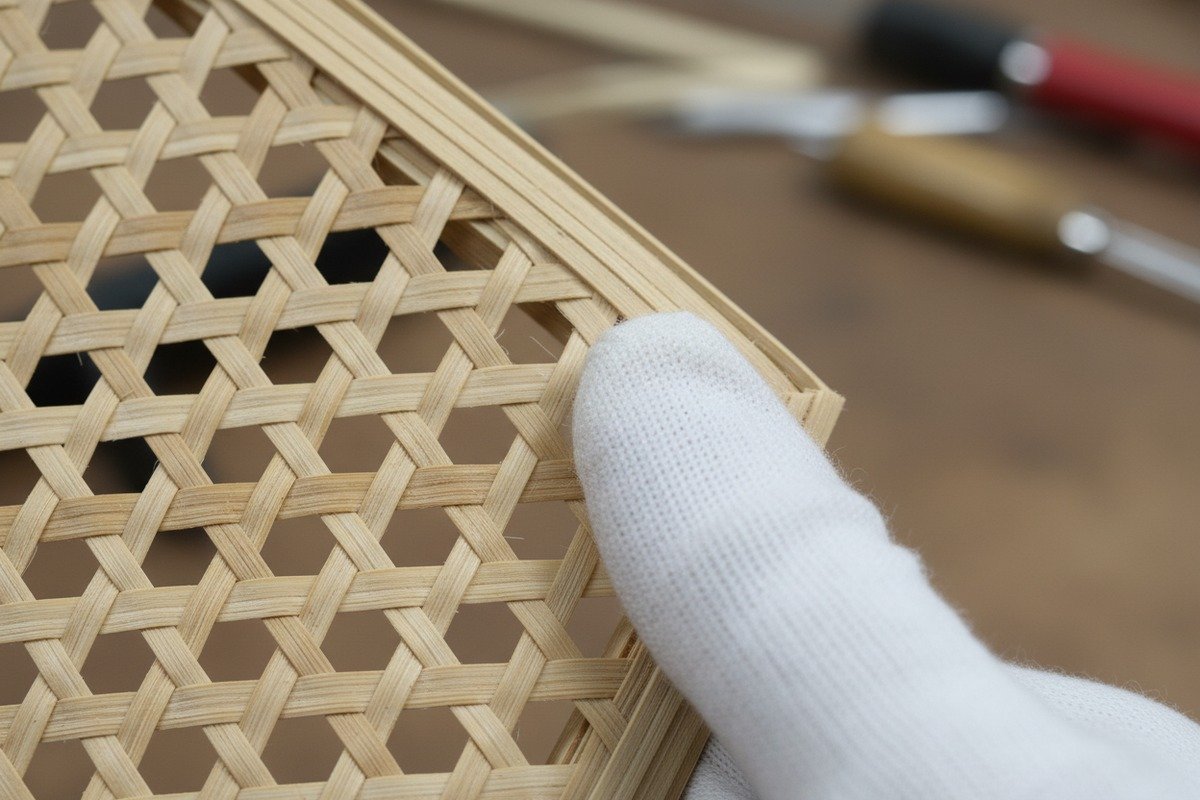
Puedes identificar el tejido tradicional a mano examinando las intersecciones de las tiras diagonales dentro de cada celda hexagonal. El tejido auténtico "LaHua" muestra ligeras irregularidades naturales en cada unión donde un artesano utilizó un cuchillo plano para tirar y fijar las tiras de ratán en ángulos precisos, a diferencia de la rigidez uniforme de la rejilla completamente hecha a máquina.
El viaje de producción en cinco etapas
El tejido de la rejilla hexagonal de ratán no es una acción única. Es una cadena de cinco etapas distintas. Cada una afecta la calidad final. Así es como lo gestionamos desde la vid cruda hasta el rollo terminado.
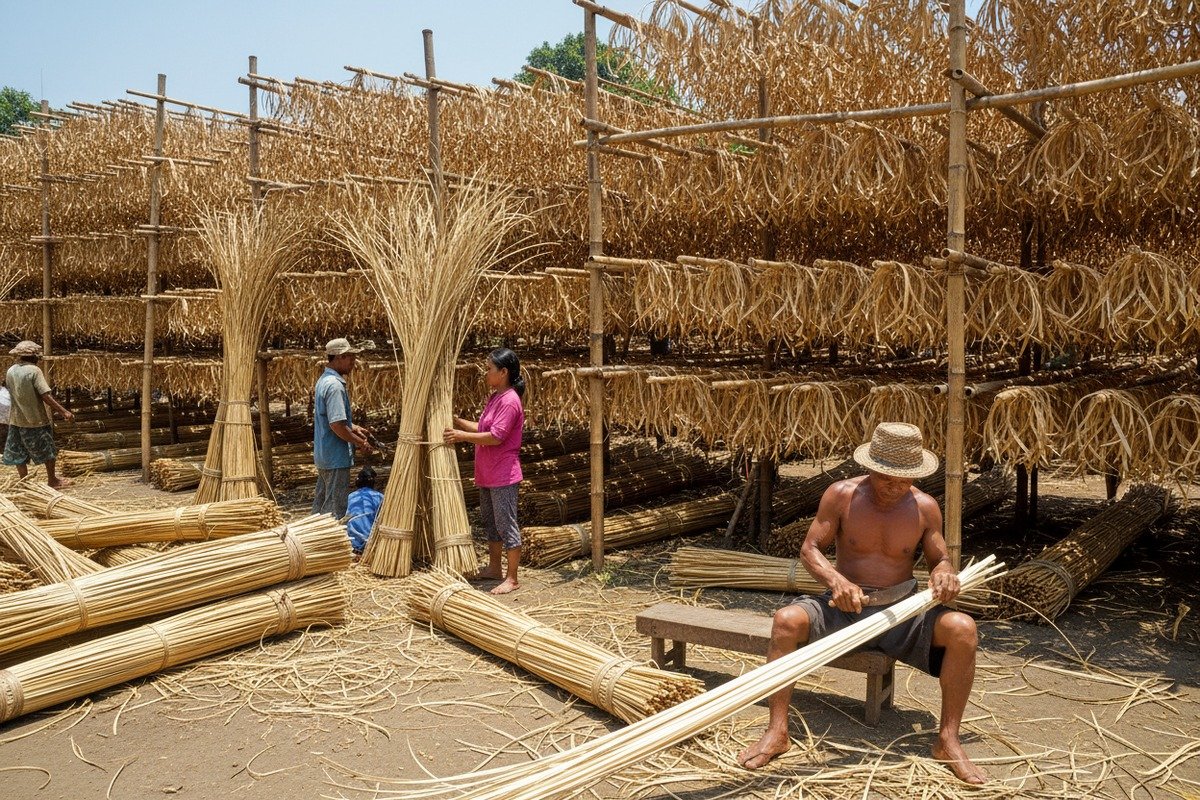
Etapa 1: Procesamiento de Materias Primas. Las palmeras trepadoras de ratán se cosechan en bosques tropicales 4, principalmente en Indonesia. En nuestra propia planta de procesamiento en Indonesia, las vides crudas pasan por clasificación, pulido, pelado y secado. Los trabajadores retiran la piel exterior de los núcleos de ratán. Los núcleos se reutilizan para otros productos como palillos de perfume 5 y marcos decorativos. Las tiras deben lijarse hasta obtener un grosor uniforme. Cualquier variación aquí conduce a un tejido desigual más adelante.
Etapa 2: Empalme y Preparación. Las tiras de ratán vienen en longitudes naturales variables. Los trabajadores empalman manualmente tiras cortas en hebras continuas. Este es un trabajo manual minucioso. Un empalme deficiente creará un punto débil en la malla terminada. Nuestro equipo de empalme inspecciona cada unión bajo buena luz para asegurar una unión perfecta.
Etapa 3: Formación de Base Asistida por Máquina. Aquí es donde entra el método "Hilo Volador". Las hebras de ratán preparadas se cargan en una máquina de moldear 6. La máquina las entrelaza en una base de cuadrícula cuadrada, lo que llamamos el "embrión de tejido". Los operadores verifican la tensión a intervalos regulares. Si la base está demasiado floja, el patrón hexagonal construido sobre ella se hundirá. Si está demasiado apretada, las tiras de caña se agrietarán durante la siguiente etapa.
Etapa 4: Técnica de Tejido Manual "LaHua". Este es el corazón del tejido hexagonal. Los trabajadores colocan el embrión de cuadrícula cuadrada plano sobre una mesa. Usando un cuchillo delgado y plano, tiran de nuevas tiras de caña diagonalmente a través de cada celda cuadrada. Estas inserciones diagonales transforman cada cuadrado en una forma hexagonal. Un trabajador hábil puede completar un rollo de 16 pulgadas de ancho en un día completo de trabajo. La técnica del cuchillo requiere años de entrenamiento. El ángulo debe ser constante. La tensión debe ser firme pero no forzada.
Etapa 5: Acabado. Se recortan el exceso de caña. Las costuras se refuerzan con adhesivo. El tejido terminado puede remojarse y moldearse alrededor de formas si se necesita una curva específica. Luego, los rollos se secan, se inspeccionan y se empaquetan para su envío.
Cómo distinguir el tejido a mano del tejido solo a máquina
Muchos compradores no pueden notar la diferencia a primera vista. Aquí están los marcadores clave.
| Característica | Tejido a mano tradicional (LaHua) | Completamente hecho a máquina |
|---|---|---|
| Ángulos de las tiras diagonales | Ligera variación natural (±2°) | Perfectamente uniforme |
| Sensación de unión | Ligeramente elevado donde la tira de bloqueo del cuchillo | Plano y liso |
| Consistencia del patrón | Pequeñas irregularidades orgánicas | Unidades idénticas que se repiten |
| Extremos de los hilos | Escondidos y a veces visibles en los bordes | Ocultos o sellados al calor |
| Rango de precios | Mayor debido a la intensidad de la mano de obra | Menor, producción más rápida |
Si pasas la yema del dedo por la superficie y sientes pequeñas crestas en las intersecciones de las tiras diagonales, es probable que estés sosteniendo una pieza acabada a mano. La red hexagonal solo a máquina se siente uniformemente plana. Ambas tienen su lugar. Pero si sus clientes finales valoran la calidad artesanal, la versión tejida a mano exige un precio superior.
El debate máquina vs. hecho a mano
Hay un debate en curso en nuestra industria. Las máquinas industriales de "hilo volador" garantizan uniformidad y velocidad. Pero no pueden replicar los tirones diagonales precisos de la técnica LaHua sin supervisión humana. La producción puramente artesanal ofrece una precisión hexagonal superior, pero limita la escala: un día por rollo es un verdadero cuello de botella. Nuestro enfoque en Seafan Rattan utiliza un modelo híbrido: bases formadas a máquina combinadas con patrones hexagonales acabados a mano. Esto brinda a nuestros clientes consistencia en volumen sin sacrificar el carácter artesanal que define la caña de alta calidad.
¿Qué debo buscar para asegurarme de que mi tejido de ratán hexagonal esté tejido con ratán de Grado A?
Hemos enviado mallas de ratán a más de una docena de países, y la queja número uno de los compradores primerizos es la inconsistencia en el grado del material. Saber cómo se ve el ratán de Grado A antes de realizar un pedido le ahorra tiempo, dinero y reputación.
La rejilla de ratán de grado A presenta peladuras de grosor uniforme (0,4–0,6 mm), una superficie lisa y satinada libre de manchas oscuras o grietas, un color amarillo pajizo pálido y hebras flexibles que se doblan sin romperse. Estos indicadores confirman que el ratán se cosechó en su madurez óptima, se secó correctamente y se clasificó cuidadosamente.
Comprendiendo la Calificación del Ratán
No todo el ratán es igual. La especie, el momento de la cosecha, el cuidado del procesamiento y las condiciones de almacenamiento afectan el grado final. En nuestras instalaciones de procesamiento en Indonesia, clasificamos el ratán en tres categorías antes de que llegue al área de tejido.
| Grade | Calidad de la superficie | Color Uniformity | Flexibilidad | Uso típico |
|---|---|---|---|---|
| Grado A | Liso, sin imperfecciones | Amarillo pálido de paja consistente | Se dobla 180° sin agrietarse | Muebles de primera calidad, mallas de calidad de exportación |
| Grado B | Marcas superficiales menores | Ligera variación de color | Se dobla con mínima resistencia | Muebles de gama media, paneles interiores |
| Grado C | Manchas visibles, parches ásperos | Rayas oscuras notables | Rígido, puede agrietarse en curvas cerradas | Productos económicos, capas de respaldo |
Puntos clave de inspección para compradores
Cuando reciba una muestra o un envío, revise estas cinco cosas:
1. Uniformidad del grosor. Utilice un calibrador. Las cáscaras de Grado A deben medir entre 0,4 mm y 0,6 mm en toda la tira. Una variación más allá de este rango significa que los pasos de lijado y pulido se hicieron a la carrera.
2. Textura de la superficie. Pase el dedo por la cáscara. Debe sentirse suave, casi sedosa. Las zonas ásperas indican que la corteza exterior no se eliminó por completo o que el proceso de secado fue desigual.
3. Color. El ratán de Grado A tiene un tono uniforme de amarillo pálido pajizo. Las manchas oscuras sugieren exposición a hongos durante el secado. Los tintes verdosos significan que el ratán se cosechó demasiado pronto. Los tonos demasiado marrones indican secado excesivo o existencias antiguas.
4. Prueba de flexibilidad. Tome una sola hebra y dóblela en forma de U. El ratán de Grado A se dobla suavemente y vuelve a su forma. Si se agrieta o se astilla, el material está demasiado seco, demasiado viejo o es de menor calidad.
5. Olor. El ratán fresco y procesado correctamente tiene un aroma suave y terroso. Un olor a moho o agrio indica daños por humedad o moho, una señal de alerta importante para pedidos a granel.
La especie importa
Diferentes especies de ratán producen cañas con diferentes diámetros, flexibilidad y resistencia a la tracción. La especie más comúnmente utilizada para la tela de ratán hexagonal es Calamus manan 7 para hebras estructurales más gruesas y Calamus caesius para cáscaras de tejido fino. Suministramos principalmente de Kalimantan y Sulawesi, donde estas especies crecen abundantemente. Preguntar a su proveedor qué especies utilizan, y verificarlo, es una comprobación de calidad simple pero poderosa.
Tratamientos Post-Procesamiento
Después del tejido, la tela de Grado A se beneficia de tratamientos específicos. Frotar con aceite de linaza hervido 8 o aceite de naranja nutre las fibras. Previene la fragilidad en climas secos y mantiene la flexibilidad en condiciones de humedad. Recomendamos este paso para cualquier tela destinada a muebles que se utilizarán en ambientes con aire acondicionado, que tienden a secar el ratán rápidamente.
¿Cómo puedo asegurar que la tensión del tejido sea consistente en todo mi pedido a granel?
Uno de nuestros clientes a largo plazo en Tailandia, un gerente de compras que abastecía a una importante cadena de muebles, una vez rechazó un envío de 500 rollos porque el 15% de los rollos tenía celdas hexagonales visiblemente más sueltas en el centro. Ese incidente único nos enseñó a implementar controles de tensión en cada etapa.
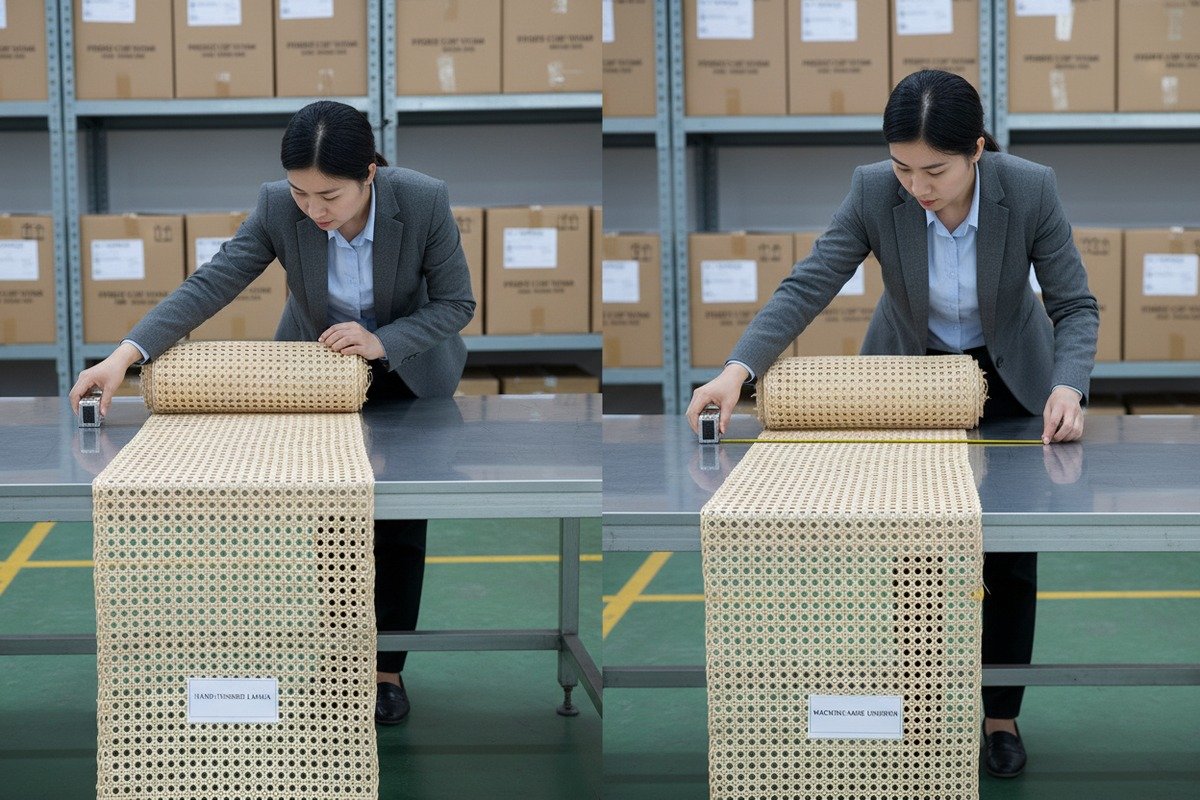
Para garantizar una tensión de tejido constante en pedidos grandes, solicite a su proveedor que utilice máquinas de moldeo calibradas para la rejilla base, emplee controles de tensión en línea durante el tejido a mano y realice muestreos aleatorios de rollos con un medidor de tensión estandarizado antes del embalaje. Especifique las tolerancias de tensión aceptables en su acuerdo de compra.
Por qué ocurre la inconsistencia de tensión
Los problemas de tensión tienen tres causas raíz comunes. Primero, la deriva de la calibración de la máquina. Las máquinas de moldeo "Flying Thread" que forman la base de rejilla cuadrada pueden perder la calibración durante largos ciclos de producción. Si los rodillos de alimentación se desgastan de manera desigual, un lado de la rejilla base estará más apretado que el otro. Segundo, fatiga del tejedor. Los tejedores a mano que realizan la técnica LaHua tiran de las tiras con las manos y un cuchillo. Durante un turno de ocho horas, la fuerza de tracción disminuye naturalmente. Los rollos de primera hora de la mañana tienden a ser más apretados que los rollos de la tarde. Tercero, inconsistencia del material. Si las cáscaras de ratán varían en contenido de humedad 9 — algunas más secas, otras más flexibles — la misma fuerza de tracción produce diferentes resultados de tensión.
Nuestro sistema de control de tensión de tres puntos
En Seafan Rattan, abordamos cada causa raíz con un control específico.
Verificaciones de calibración de la máquina. Nuestros técnicos calibran las máquinas de moldeo al comienzo de cada turno y nuevamente después de cada 50 rollos. Utilizan un simple medidor con resorte para medir la tensión de la rejilla base en cinco puntos a lo ancho. medidor de tensión 10
Horarios de rotación de tejedores. Rotamos a los tejedores a mano cada cuatro horas. Las manos frescas mantienen una fuerza de tracción constante. También emparejamos a tejedores experimentados con aprendices para que la supervisión de la calidad sea continua.
Muestreo aleatorio previo al embalaje. Antes de que se empaque un rollo, nuestro equipo de control de calidad saca un rollo de cada 20 y mide la tensión en nueve puntos: tres en la parte superior, tres en el medio, tres en la parte inferior. Si algún punto cae fuera de la tolerancia acordada, todo el lote regresa para su inspección.
Qué Especificar en su Orden de Compra
Al realizar un pedido a granel, incluya estas especificaciones relacionadas con la tensión en su contrato:
| Especificación | Valor recomendado | Por qué importa |
|---|---|---|
| Tolerancia de tensión de la rejilla base | ±5% del objetivo | Previene cimientos flojos o demasiado apretados |
| Variación del tamaño de la celda hexagonal | ±1 mm del tamaño de malla indicado | Asegura la uniformidad visual en todos los rollos |
| Tasa de muestreo | 1 rollo por cada 20 | Detecta problemas a nivel de lote de forma temprana |
| Puntos de medición por rollo | Mínimo 9 (rejilla de 3×3) | Cubre los bordes y el centro donde la deriva es peor |
| Umbral de rechazo | >10% de rollos fuera de especificación activa la retención del lote | Protege su producción posterior |
Comuníquese temprano y con frecuencia
No espere a que llegue el envío para verificar la tensión. Pida a su proveedor fotos de inspección pre-embarque que muestren las lecturas del manómetro. Mejor aún, contrate a un inspector externo si el valor del pedido lo justifica. Damos la bienvenida a las inspecciones de terceros en nuestras instalaciones de Foshan: genera confianza y detecta problemas antes de que se conviertan en devoluciones costosas.
La consistencia de la tensión no es solo una métrica de calidad. Afecta directamente cómo se comporta el tejido cuando su fábrica de muebles lo grapa o lo ajusta a los marcos. El tejido suelto se hunde después de la instalación. El tejido demasiado apretado se separa de los bordes del marco con el calor. Hacerlo bien en la etapa de tejido evita problemas en toda la línea.
¿Cómo elijo el tamaño de malla adecuado para mis necesidades específicas de fabricación de muebles?
Nuestro equipo de ventas responde a esta pregunta casi a diario. Un ebanista en los Países Bajos necesita una malla apretada para paneles de puertas. Una fábrica de sillas en Australia quiere un tejido abierto para inserciones de asientos transpirables. Un diseñador de iluminación en Dubai busca algo intermedio. El tamaño de malla adecuado depende de tres factores: función, estética y soporte estructural.
Elija el tamaño de su malla hexagonal según la aplicación: malla de 6 mm para paneles densos y semitransparentes como puertas de armarios; malla de 9 mm (la más popular) para asientos de sillas, cabeceros y muebles en general; y malla de 12-15 mm para pantallas decorativas, pantallas de lámparas y elementos arquitectónicos donde se desee el máximo flujo de luz y aire.
Explicación del tamaño de malla
El tamaño de malla en el tejido de ratán hexagonal se refiere a la distancia entre los centros de dos celdas hexagonales adyacentes. Un número más pequeño significa un tejido más apretado con más material por metro cuadrado. Un número más grande significa un patrón más abierto. Ambos tienen compensaciones.
Malla más apretada (6 mm) utiliza más ratán por rollo. Es más pesado, menos flexible y cuesta más por metro cuadrado. Pero proporciona un mejor soporte estructural y una apariencia más opaca. Funciona bien para puertas de gabinetes, divisores de habitaciones y cualquier aplicación donde desee un aspecto "relleno" sin opacidad total.
Malla estándar (9 mm) es el caballo de batalla de la industria. Equilibra resistencia, transpirabilidad y atractivo visual. La mayoría de los trabajos de cañería de sillas, paneles de cabeceros e inserciones de aparadores utilizan este tamaño. Es el más fácil de obtener y el más rentable para pedidos grandes. Cuando los compradores nos piden una recomendación y no están seguros, sugerimos comenzar con 9 mm.
Malla abierta (12–15 mm) crea un dramático efecto de panal. La luz pasa fácilmente. El aire circula libremente. Se ve impresionante en pantallas de lámparas, paneles decorativos y acentos de muebles contemporáneos. Sin embargo, ofrece menos soporte estructural. No debe usarse para superficies de asientos sin un sub-marco sólido debajo.
Combinación del tamaño de la malla con la aplicación
Aquí hay una referencia rápida que compartimos con nuestros clientes durante el proceso de pedido:
| Application | Tamaño de malla recomendado | Razón clave |
|---|---|---|
| Asientos y respaldos de sillas | 9 mm | Equilibrio entre resistencia y transpirabilidad |
| Puertas de armarios y aparadores | 6 mm | Apariencia semi-opaca, estructura apretada |
| Cabeceros | 9 mm | Calidez visual, lo suficientemente ligero para manipular |
| Divisores de ambientes / paneles | 6–9 mm | Privacidad sin bloqueo total |
| Pantallas de lámparas | 12–15 mm | Máxima transmisión de luz |
| Paneles arquitectónicos | 12–15 mm | Impacto decorativo, flujo de aire |
| Marcos de cama | 9 mm | Durabilidad bajo carga moderada |
Considere el marco y el método de instalación
El tamaño de la malla también afecta la instalación. Las mallas más apretadas son más rígidas y difíciles de curvar. Si el diseño de sus muebles tiene bordes redondeados o superficies cóncavas, una malla más abierta se adapta mejor después de remojarla. El tiempo de remojo también importa: 20 a 30 minutos en agua tibia hace que la caña sea flexible. Vuelva a remojar antes de darle la forma final si el tejido comienza a secarse durante la instalación.
Para la instalación profesional, la mayoría de las fábricas utilizan uno de dos métodos. Engrapado con rebajes funciona bien para paneles planos. El tejido se estira sobre la abertura del marco, se grapa a un canal empotrado y se cubre con una tira de moldura. Ajuste con junquillo es el método preferido para piezas curvas o de alta gama. Se fresa una ranura en el marco. El borde del tejido se presiona en la ranura y se bloquea con un junquillo flexible.
Ambos métodos funcionan con todos los tamaños de malla. Pero los tamaños de malla más grandes (12-15 mm) requieren más cuidado durante el estiramiento para evitar distorsionar el patrón hexagonal. Recomendamos usar una plantilla de rejilla durante la instalación para mantener el patrón alineado.
Personalización y Pedidos Mínimos
En Seafan Rattan, ofrecemos tamaños de malla estándar en rollos en stock. Los tamaños de malla personalizados están disponibles con cantidades mínimas de pedido, generalmente 200 rollos para una especificación no estándar. Si necesita un tamaño personalizado, planifique con anticipación. El tiempo de entrega para el tejido personalizado suele ser de 3 a 4 semanas más que para los artículos en stock. Proporcionamos muestras de preproducción sin cargo para que pueda verificar que el tamaño de la malla funciona con el diseño de su marco antes de comprometerse con un pedido completo.
La tendencia creciente que vemos en nuestros mercados de exportación —Países Bajos, Australia, EE. UU. y Oriente Medio— es un movimiento hacia la malla hexagonal de 9 mm para muebles convencionales y de 12-15 mm para piezas de diseño llamativas. La sostenibilidad también está impulsando la demanda. El ratán natural es renovable, biodegradable y cada vez más preferido sobre las alternativas sintéticas por marcas y consumidores conscientes del medio ambiente.
Conclusión
Desde las cáscaras de ratán crudas hasta los rollos de panal terminados, la malla de ratán hexagonal es un producto donde la calidad del material, la técnica de tejido, el control de tensión y la selección de la malla determinan el resultado final que recibe su fábrica.
Notas al pie
1. Explica cómo se procesa el ratán en cáscaras para tejer y otros productos. ↩︎
2. Proporciona una visión general completa del ratán como grupo de palmeras trepadoras tropicales. ↩︎
3. Describe las funciones y responsabilidades de los inspectores de control de calidad en la fabricación. ↩︎
4. Proporciona una visión general de los bosques tropicales y su importancia ecológica. ↩︎
5. Describe el uso del ratán natural como material para varillas difusoras. ↩︎
6. Wikipedia proporciona una visión general autorizada y completa de las máquinas de moldeo por inyección, un tipo común de máquina de moldeo. ↩︎
7. Proporciona información detallada sobre la especie Calamus manan, sus características y usos. ↩︎
8. Explica las propiedades y la aplicación del aceite de linaza hervido para el tratamiento de la madera. ↩︎
9. Wikipedia ofrece una definición autorizada y amplia de contenido de agua, también conocido como contenido de humedad, aplicable en diversas áreas científicas y técnicas. ↩︎
10. Describe las herramientas, incluidos los calibres, utilizadas por los inspectores de control de calidad en la fabricación. ↩︎


 English
  Español de México
  العربية
  Deutsch
  Français
  Русский