
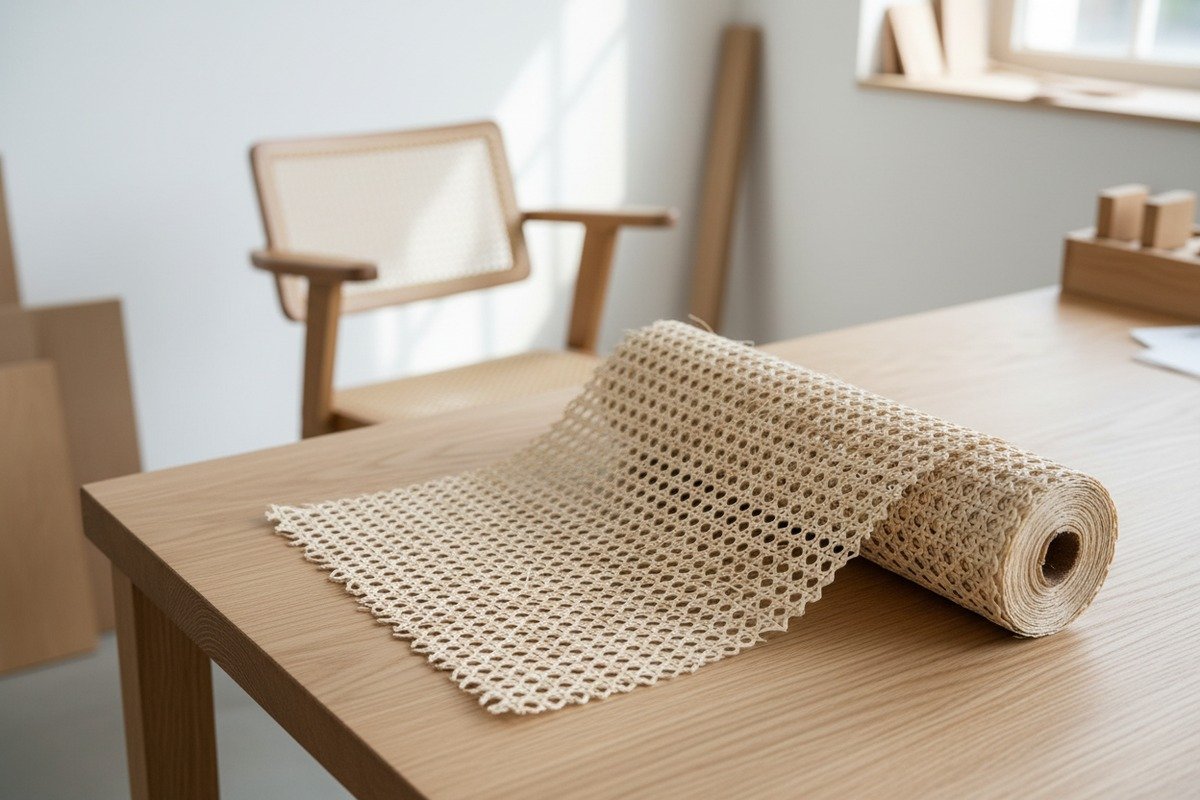
¿Alguna vez has mirado la hoja de especificaciones de un proveedor y te has sentido perdido en el momento en que viste “malla de 1/2”? No estás solo. Enviamos tejido de caña de ratán 1 a más de una docena de países desde nuestras fábricas, y esta pregunta surge semanalmente de nuevos compradores.
En el tejido de ratán, 1/2 malla significa que la distancia del centro de un agujero al centro del agujero adyacente mide exactamente 1/2 pulgada. Esto crea un patrón de rejilla de tejido abierto fino y uniforme, ideal para asientos de sillas, inserciones de gabinetes, cabeceros y paneles decorativos en muebles tanto tradicionales como modernos.
Comprender esta única medida puede evitarle costosos errores de pedido. A continuación, detallamos cómo medirla, cómo juzgar la calidad, cómo elegir la malla adecuada para su proyecto y cómo encontrar un proveedor en el que pueda confiar.
¿Cómo mido con precisión 1/2 malla para asegurar que se ajuste a los diseños de mis muebles?
Cuando nuestro equipo de control de calidad 2 inspecciona un rollo recién salido del telar, lo primero que comprueban es el espaciado de la malla. Si se equivoca en esto, toda su producción se verá afectada.
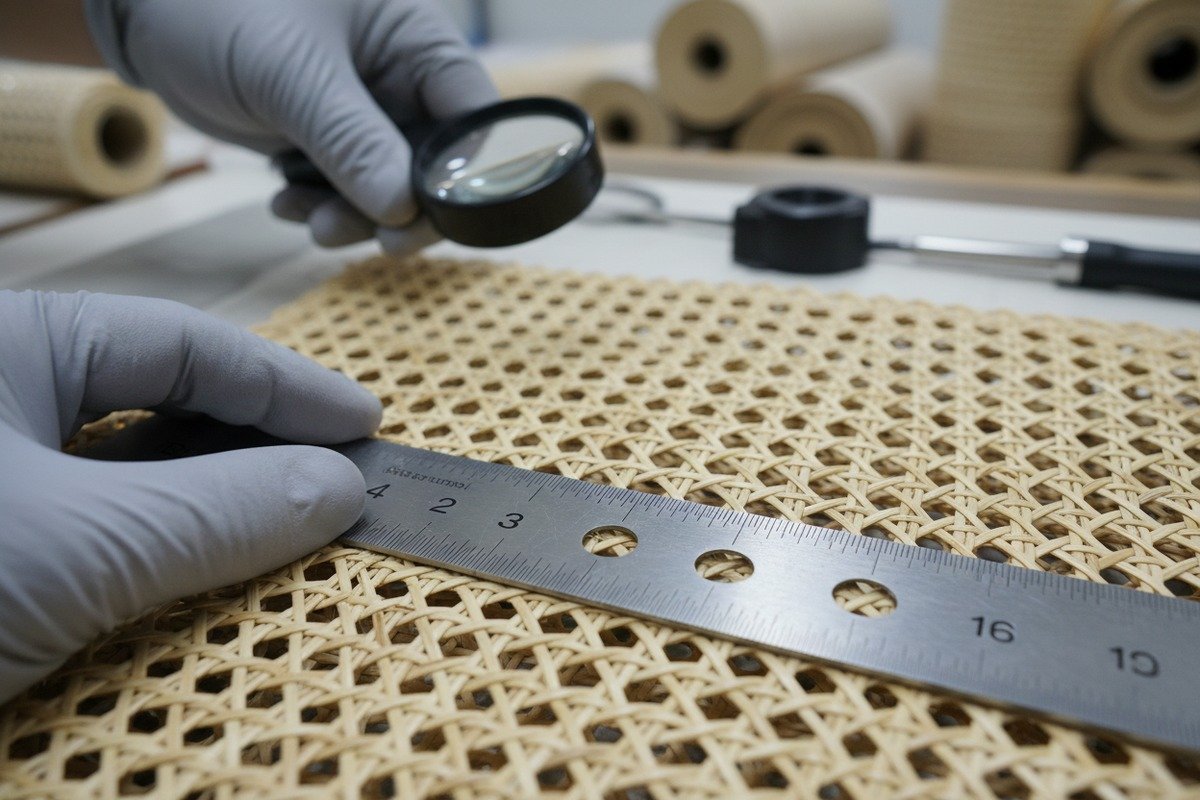
Para medir con precisión 1/2 malla, coloque una regla sobre la cincha y mida desde el centro de un orificio tejido hasta el centro del siguiente. La distancia debe ser exactamente 1/2 pulgada (12.7 mm). Siempre mida a través de al menos cinco orificios consecutivos y promedie el resultado para confirmar la consistencia.
Por qué importa el centro a centro
Muchos compradores primerizos cometen el error de medir el espacio entre las tiras de caña en lugar de la distancia entre los centros de los agujeros. Estos son dos números diferentes. El espacio es el espacio abierto. La distancia de centro a centro incluye la mitad de una tira a cada lado más el espacio. Si solo mide el espacio, subestimará el tamaño de la malla y posiblemente pedirá la especificación incorrecta.
Herramientas que necesita
No necesita equipo costoso. Una regla metálica estándar o un calibrador digital 3 funciona bien. Para pedidos grandes, recomendamos una superposición de cuadrícula transparente impresa a escala. Colóquela sobre la cincha y confirme la alineación en un tramo de 6 pulgadas. Si más de un agujero se desvía de la cuadrícula, el rollo tiene una tensión de tejido inconsistente.
Proceso de medición paso a paso
- Coloque la cincha plana sobre una mesa limpia.
- Elija cualquier agujero cerca del centro de la hoja. Evite los bordes, ya que pueden estar ligeramente comprimidos por el enrollado.
- Coloque su regla de modo que el cero se alinee con el centro de ese agujero.
- Lea la medida en el centro del quinto agujero. Debería ser de 2 pulgadas (5 × 0.5").
- Divida por cinco. Si el resultado es 0.50" ± 0.02", la malla está dentro de la tolerancia aceptable.
Tamaños de malla comunes comparados
| Tamaño de la malla | Distancia de centro a centro | Mejor para |
|---|---|---|
| 1/2 pulgada (Fina) | 12.7 mm | Asientos de silla, puertas de armario, paneles decorativos |
| 3/4 pulgada (Medio) | 19 mm | Cabeceros, separadores de ambientes, cubiertas de radiador |
| 1 pulgada (Grueso) | 25.4 mm | Paneles grandes, tratamientos de techo, paredes de acento |
Cálculo de las necesidades de material
Una fórmula sencilla evita que pida demasiado o muy poco. Mida las dimensiones de ranura a ranura de su mueble. Añada 4 pulgadas tanto al largo como al ancho. Este material adicional le permite presionar la caña en la ranura con un ranura 4. Luego divida por 12 para convertir pulgadas a pies.
Por ejemplo, un asiento de silla que mide 12" × 16" necesita una pieza de cincha de al menos 16" × 20". Eso se traduce en aproximadamente 1.33 pies × 1.67 pies. Dado que los rollos vienen en anchos estándar —típicamente 18", 24" o 36"—, pediría al menos 1.67 pies lineales de un rollo de 18" de ancho.
¿Pide al por mayor? Nuestra fábrica envía rollos de hasta 15 metros de largo en anchos de 0.40 m a 0.90 m. Conocer las medidas exactas antes de realizar un pedido evita desperdicios y ahorra dinero.
¿Cómo puedo saber si el ratán de malla 1/2 que estoy importando es de calidad Grado A?
Nuestra planta de procesamiento de ratán de Indonesia clasifica cada lote antes de enviarlo. Aun así, escuchamos a compradores que recibieron material de calidad inferior de otros proveedores y no tenían idea de qué buscar. Aquí está lo que diferencia lo premium de lo pobre.
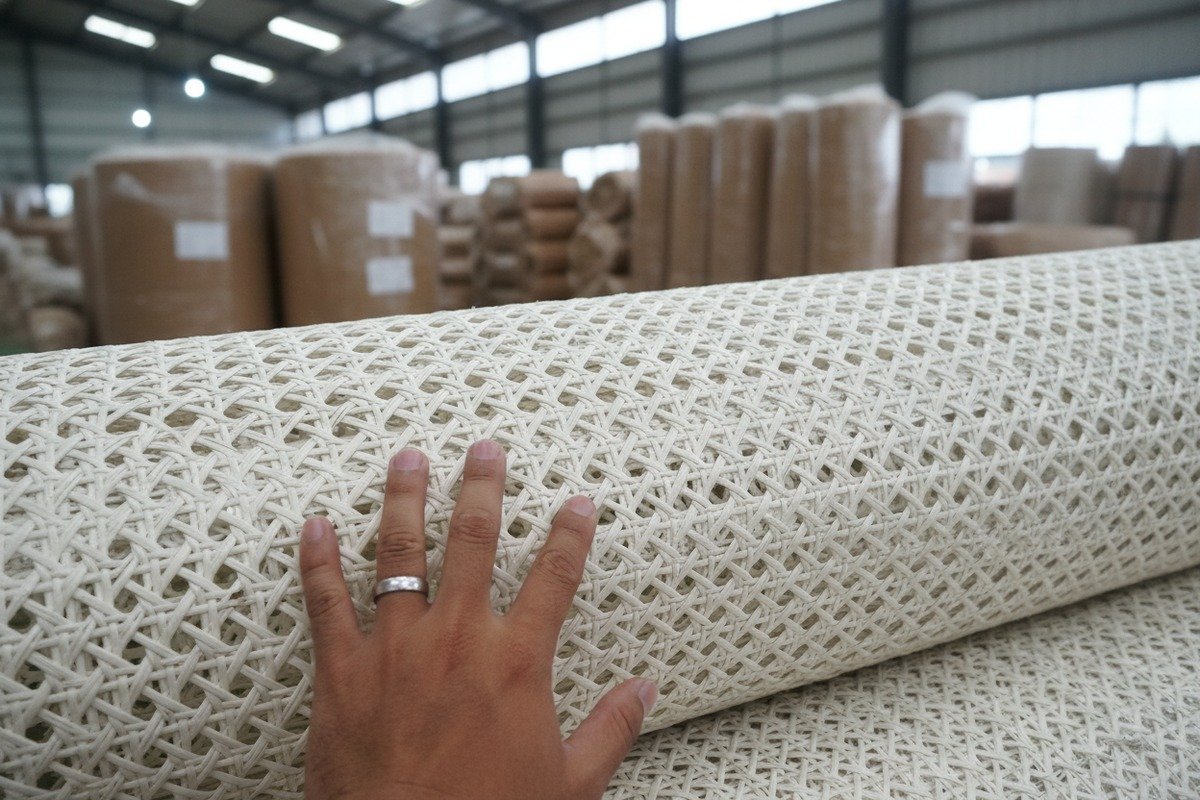
El ratán de malla 1/2 de grado A presenta tiras lisas y uniformes sin grietas visibles, un patrón de tejido apretado y consistente, un sonido sólido de "golpe" al golpearlo, un contenido de humedad entre 8–12% y un aroma terroso limpio. Los grados inferiores muestran grano grueso, tejido suelto, manchas de hongos y fragilidad que conduce a la división durante la instalación.
La verificación de calidad de cinco puntos
Cuando una muestra llegue a su almacén, revise esta lista de verificación antes de aprobar el envío completo.
1. Inspección visual. Sostenga la lámina a la luz. La cincha de Grado A tiene un color uniforme: miel cálida para natural, blanco consistente para blanqueada. Manchas oscuras o puntos grises sugieren crecimiento fúngico o secado inadecuado.
2. Prueba táctil. Pase los dedos por las tiras. Deben sentirse suaves y ligeramente cerosas. Si las tiras se sienten ásperas o astilladas, la corteza de la caña no se peló correctamente.
3. Prueba de golpe. Golpee la cincha con la uña. Un sonido nítido y sólido indica fibras densas y secado adecuado. Un sonido apagado y suave significa que el material está demasiado húmedo o que las fibras son débiles.
4. Prueba de flexión. Doble suavemente una tira en un ángulo de 90 grados. La caña de Grado A se flexiona sin agrietarse. Si se rompe o muestra líneas de estrés blancas, el ratán está demasiado seco o es de baja calidad.
5. Prueba de olor. El ratán auténtico y bien procesado tiene un aroma suave, terroso y ligeramente dulce. Un olor a moho o químico indica moho o agentes blanqueadores agresivos.
Tabla de Comparación de Grados
| Característica | Grado A (Premium) | Grado B (Gama media) | Grado C (Económico) |
|---|---|---|---|
| Uniformidad de las tiras | Altamente uniforme, mismo ancho en toda la longitud | Variaciones menores de ancho | Tiras notablemente desiguales |
| Acabado de la superficie | Suave, ligero brillo | Mayormente liso, con puntos ásperos ocasionales | Áspero, astillado en algunos lugares |
| Consistencia del color | Tono uniforme de miel o blanco limpio | Ligera variación de color | Manchado, posibles puntos oscuros |
| Moisture content 5 | 8–12% | 12–15% | Por encima de 15% o por debajo de 6% |
| Tensión del tejido | Ajustado, sin huecos en las intersecciones | Ligera holgura en algunas juntas | Tejido visiblemente suelto |
| Sonido de golpe | Crujiente, sólido | Resonancia moderada | Sordo, suave |
| Vida útil (estimada) | Más de 10 años con cuidado | 5–8 años | 2–4 years |
Natural vs. Blanqueado: Implicaciones de calidad
El ratán natural conserva su color original y es generalmente más fuerte porque las fibras de caña no han sido tratadas. El ratán blanqueado se ve más limpio y claro, lo que se adapta a interiores escandinavos y modernos. Sin embargo, el blanqueamiento implica un procesamiento químico que puede debilitar las fibras si se hace descuidadamente.
De nuestra experiencia de producción, el ratán de Grado A bien blanqueado pierde solo alrededor del 5% de su resistencia a la tracción 6 en comparación con el natural. El material mal blanqueado, a menudo de pequeños talleres no verificados, puede perder entre el 20% y el 30% y volverse quebradizo en un año.
El contenido de humedad importa
Secamos nuestro ratán hasta un 8-12% de humedad utilizando hornos controlados 7. Este rango previene deformaciones, crecimiento de moho y grietas. Los compradores en climas húmedos como el sudeste asiático deben almacenar la malla en espacios con aire acondicionado o deshumidificados después de la entrega. Los compradores en regiones secas como el Medio Oriente deben evitar que la humedad descienda por debajo del 6%, lo que hace que la caña se agriete.
Un simple medidor de humedad tipo pin 8—disponible por menos de 30 €— puede verificar esto al llegar. Inserte los pines en varias tiras de caña a lo largo del rollo. Si las lecturas varían drásticamente, el lote se secó de manera desigual.
¿Debo usar malla de 1/2 o un tamaño de orificio diferente para las puertas de mi gabinete específicas?
Cuando nuestro equipo de ventas trabaja con fábricas de muebles en nuevos proyectos de gabinetes, la selección de la malla es una de las primeras decisiones de diseño. El tamaño de malla incorrecto puede arruinar la apariencia, o peor aún, comprometer la función.
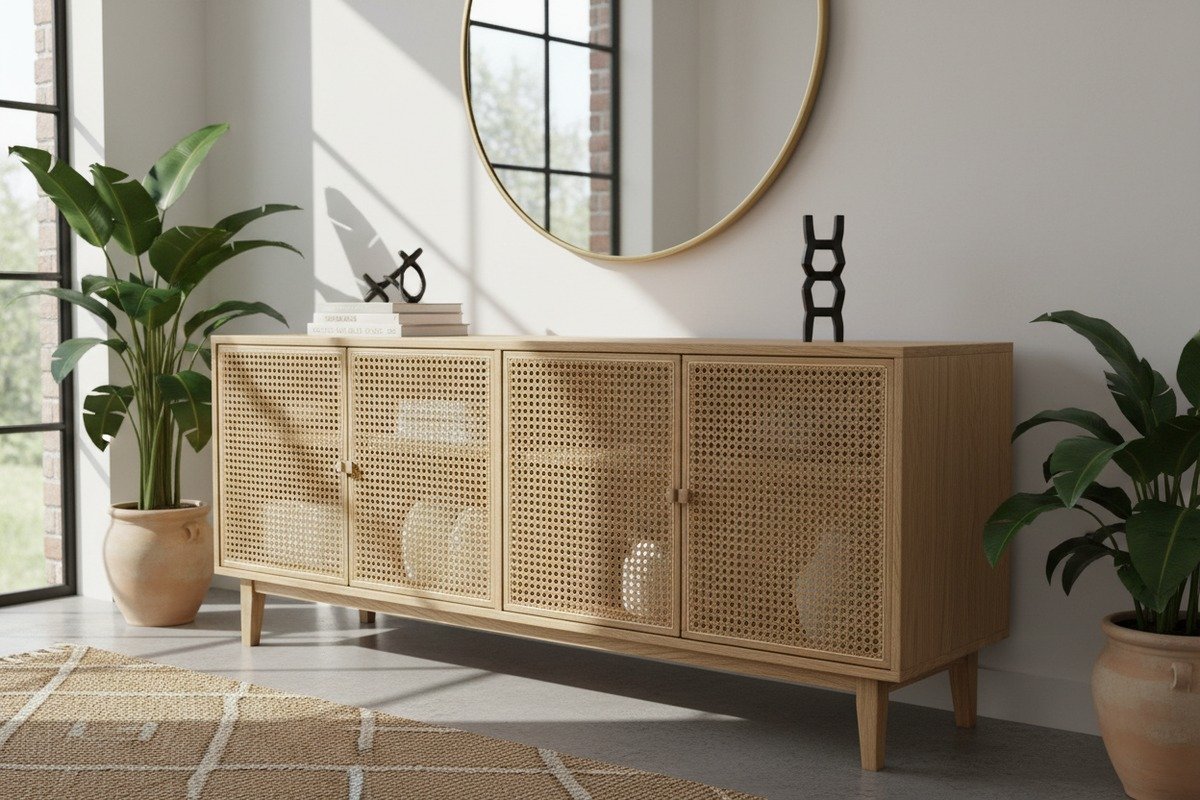
Para la mayoría de las puertas de gabinetes, la malla de 1/2 pulgada es la opción ideal. Su rejilla fina proporciona un aspecto elegante y equilibrado que permite la circulación del aire sin exponer demasiado el contenido. Sin embargo, si su diseño requiere una textura más audaz o el gabinete cumple una función de ventilación, como una cubierta de radiador, una malla más gruesa de 3/4 o 1 pulgada puede funcionar mejor.
Combinar la malla con el propósito
La función del gabinete importa más de lo que la mayoría de la gente piensa. Una puerta de despensa de cocina necesita ventilación pero debe mantener alejados a los insectos; la malla de 1/2" cumple ambas funciones. Una puerta de tocador de baño en un clima húmedo necesita máxima ventilación; la malla de 3/4" podría ser mejor. Un gabinete de exhibición decorativo en una sala de estar se beneficia del aspecto fino y refinado de la malla de 1/2".
Consideraciones estéticas de diseño
Los interiores modernos minimalistas se inclinan hacia la malla de 1/2" porque se percibe como una textura sutil desde la distancia. El patrón apretado se integra en la puerta en lugar de dominarla. Los diseños modernos de mediados de siglo también prefieren la malla de 1/2", especialmente en ratán natural o de tonos oscuros, para complementar los tonos de madera cálidos como la teca y la nuez.
Los estilos bohemio o costero, por otro lado, a veces prefieren tejidos más gruesos o patrones hexagonales (de estrella). El patrón hexagonal añade profundidad visual y un toque artesanal. Pero cuesta más porque las franjas diagonales requieren mano de obra adicional durante el tejido.
Matriz de decisión de tamaño de malla
| Factor | Malla de 1/2 (Fina) | Malla de 3/4 (Mediana) | Malla de 1 pulgada (Gruesa) |
|---|---|---|---|
| Apertura visual | Baja: textura sutil | Moderada: patrón visible | Alta: audaz, aireado |
| Nivel de privacidad | Más alto | Moderada | Más bajo |
| Flujo de aire | Bueno | Mejor | Óptimo |
| Resistencia estructural | Más fuerte (más material) | Moderada | Más débil (menos material) |
| Mejor combinación de estilo | Moderno, minimalista, de mediados de siglo | Transicional, costero | Bohemio, tropical, industrial |
| Costo de producción | Estándar | Estándar | Estándar |
| Tolerancia de instalación | El más indulgente | Moderada | El menos indulgente (el desalineamiento se nota) |
Tejido cuadrado vs. Tejido hexagonal
La malla estándar de 1/2 utiliza un patrón de tejido cuadrado, a veces llamado "tejido de radio" porque era popular en las cubiertas de altavoces de radio a mediados del siglo XX. Es simple, limpio y asequible.
El tejido hexagonal añade tiras diagonales para crear una forma de estrella o panal. Queda impresionante en superficies grandes como cabeceros o separadores de ambientes. Para puertas de armarios pequeñas, el tejido hexagonal puede resultar visualmente recargado. Nuestra recomendación para puertas de menos de 18 pulgadas de ancho es ceñirse al patrón de malla cuadrada de 1/2. Para paneles más anchos, el hexagonal añade carácter sin abrumar.
Consejos prácticos para instalaciones de armarios
Remoje la cincha en agua tibia durante 20-30 minutos antes de la instalación. Esto hace que la caña sea flexible y más fácil de presionar en la ranura con una lengüeta. A medida que se seca, la cincha se tensa y crea una tensión similar a la de un tambor. Utilice una lengüeta en forma de cuña que coincida con el ancho de la ranura. Aplique una línea fina de pegamento para madera en la ranura antes de presionar la lengüeta. Recorte el exceso de caña con un cúter afilado después de que el pegamento se seque.
Un error que vemos en los clientes de bricolaje es cortar la cincha demasiado pequeña. Siempre añada al menos 2 pulgadas en cada lado más allá de los bordes de la ranura. Es mucho más fácil recortar el exceso que estirar una pieza demasiado pequeña.
¿Cómo encuentro un mayorista confiable que ofrezca precios competitivos en ratán de malla 1/2?
Nuestra empresa ha estado exportando esterilla de ratán a mercados de toda Europa, Oriente Medio, el Sudeste Asiático y América durante años. Hemos visto buenos y malos proveedores. Aquí es lo que separa a unos de otros, y cómo puede protegerse.
Para encontrar un mayorista confiable, solicite muestras físicas antes de comprometerse con pedidos al por mayor, verifique las credenciales de su fábrica a través de videollamadas o auditorías de terceros, compare precios entre al menos tres proveedores, verifique los estándares de clasificación consistentes y confirme la calidad del embalaje para evitar daños durante el envío internacional.
Dónde Empezar Tu Búsqueda
La mayoría de los compradores B2B comienzan en Google, Alibaba 9, o ferias comerciales de la industria. Google le ayuda a encontrar proveedores con sus propios sitios web y presencia de marca; esto a menudo indica una operación más establecida. Alibaba proporciona garantía comercial y distintivos de proveedor verificado. Ferias comerciales como la Feria de Cantón 10 o la CIFM en Guangzhou le permiten tocar el material y conocer a los proveedores cara a cara.
Siempre decimos a los nuevos clientes: no confíe solo en las fotos. Solicite un rollo de muestra, al menos un metro, y realice la comprobación de calidad de cinco puntos que describimos anteriormente.
Señales de Alerta a Tener en Cuenta
- Sin fotos ni vídeos de fábrica. Un fabricante legítimo estará encantado de mostrarle sus telares y su almacén de materias primas.
- Precios muy por debajo de la media del mercado. Si un rollo natural de 0,90 m de ancho cuesta 67 € de fuentes reputadas y alguien lo ofrece por 30 €, el material es casi seguro de Grado C o de grado mixto.
- Lenguaje vago sobre la calidad. Términos como "buena calidad" o "calidad de exportación" no significan nada sin grados específicos (AAA, A, B, C). Pida sus criterios de clasificación por escrito.
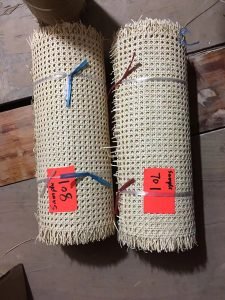
- Embalaje deficiente. El ratán enviado en una fina envoltura de plástico sin tubos de núcleo de cartón llegará aplastado y arrugado. El embalaje adecuado utiliza tubos de cartón, película barrera contra la humedad y cajas exteriores rígidas.
Puntos de referencia de precios
Comprender los precios típicos del mercado le ayuda a negociar de manera justa. Estas cifras reflejan los rangos mayoristas de mediados de 2024 para esterilla de ratán natural de malla 1/2 de Grado A.
| Ancho del Rollo | Longitud del rollo | Rango de precios aproximado (USD) | Peso por rollo |
|---|---|---|---|
| 0.40 m (16") | 15 m | $22–$30 | ~0.30 kg |
| 0.50 m (20") | 15 m | $28–$38 | ~0.40 kg |
| 0.60 m (24") | 15 m | $35–$48 | ~0.50 kg |
| 0.90 m (36") | 15 m | $55–$75 | ~0.70 kg |
Las opciones blanqueadas suelen costar entre un 10 y un 20 % más debido al paso de procesamiento adicional. Los anchos o patrones personalizados pueden añadir un recargo adicional.
Preguntas para hacer a cada proveedor
Antes de realizar su primer pedido, envíe esta lista:
- ¿Qué grado tiene su tejido de caña de malla 1/2? ¿Puede proporcionar una hoja de especificaciones de grado?
- ¿Cuál es el contenido de humedad en el momento del embalaje?
- ¿Cuál es su ancho y largo de rollo estándar? ¿Ofrecen tamaños personalizados?
- How do you package rolls for ocean freight?
- ¿Cuál es su MOQ y tiempo de entrega?
- ¿Puede proporcionar referencias de compradores existentes en mi región?
- ¿Ofrecen rollos de muestra antes del compromiso a granel?
Construyendo una Relación a Largo Plazo
El proveedor más barato rara vez es el mejor proveedor. En nuestra experiencia trabajando con fábricas de muebles en Europa y Oriente Medio, los compradores que priorizan la calidad constante y los tiempos de entrega fiables sobre el precio más bajo terminan gastando menos a largo plazo. Las devoluciones, los retrasos en la producción y las quejas de los clientes por material defectuoso cuestan mucho más que los pocos céntimos por metro que se ahorran al optar por lo barato.
Busque un mayorista que ofrezca una gama completa de productos. Si empieza con malla de 1/2 pero más tarde necesita tejido hexagonal, postes de ratán macizo o esterilla de ratán sintético, un proveedor integral le ahorra la molestia de calificar nuevos proveedores para cada producto.
En nuestra sede de Foshan, mantenemos alianzas con más de 30 fábricas y operamos nuestra propia planta de procesamiento de ratán en Indonesia. Esta integración vertical nos permite controlar la calidad desde la materia prima hasta el rollo terminado. También significa que podemos ofrecer precios competitivos porque eliminamos intermediarios.
Conclusión
Comprender el tejido de caña de ratán de malla 1/2, desde la medición precisa hasta la clasificación de calidad, la selección del diseño y el abastecimiento fiable, le permite tomar decisiones de compra más inteligentes y ofrecer mejores productos a sus clientes.
Notas al pie
1. Proporciona información general y contexto sobre el ratán, la materia prima para el tejido de caña. ↩︎
2. Explica los principios y las mejores prácticas de control de calidad en la fabricación. ↩︎
3. Ofrece una definición y explicación completa de los calibradores, incluidos los tipos digitales. ↩︎
4. Ofrece una guía detallada sobre las juntas estriadas en carpintería y en contextos de ingeniería mecánica. ↩︎
5. Reemplazó el HTTP 404 con una página autorizada de Wikipedia que define el contenido de humedad. ↩︎
6. Proporciona una definición clara y autorizada de la resistencia a la tracción como propiedad del material. ↩︎
7. Explica el proceso y los beneficios del secado en horno para la madera, relevante para el procesamiento del ratán. ↩︎
8. Describe cómo funcionan los medidores de humedad de tipo pin para medir la humedad en los materiales. ↩︎
9. Sitio web oficial de Alibaba Group, una importante plataforma de comercio electrónico B2B. ↩︎
10. Sitio web oficial de la Feria de Cantón, una destacada exposición comercial internacional. ↩︎
 English
  Español de México
  العربية
  Deutsch
  Français
  Русский