
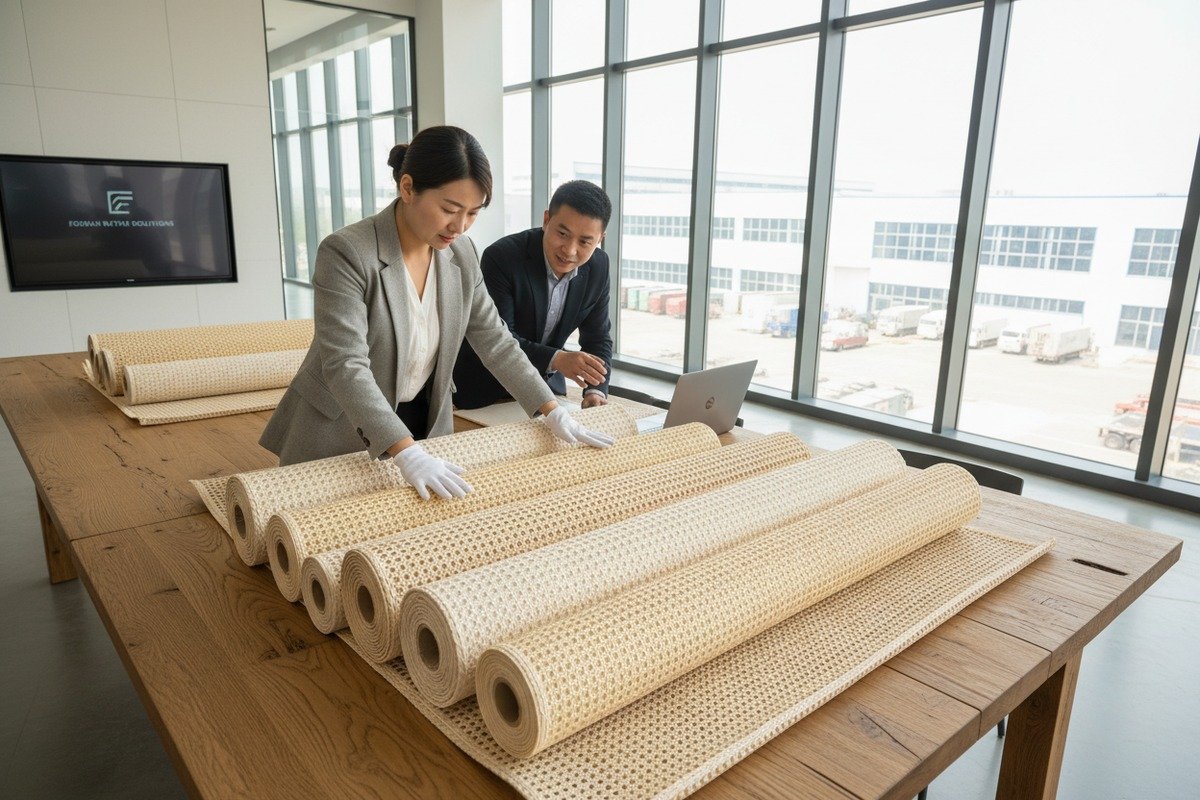
Cada semana, nuestro equipo de ventas en Foshan recibe la misma pregunta de los gerentes de compras de todo el mundo: ¿por qué un rollo de tejido de caña de ratán 1 cuesta el doble que otro que parece casi idéntico? La frustración es real. Compara cotizaciones de tres proveedores y los precios son muy diferentes malla abierta hexagonal 2. Sin entender qué impulsa esas cifras, corres el riesgo de pagar de más por material que no necesitas, o de comprar cincha barata que se deshace en la producción.
Los precios de la estera de ratán varían según el grado de calidad, la especie de ratán, el patrón de tejido, el ancho del material, el origen geográfico y el método de procesamiento. La estera de grado A puede costar entre un 25 y un 50 % más que los grados estándar debido a una clasificación más estricta, un color uniforme y un grosor de hebra consistente. El abastecimiento directo de regiones de fábrica como Indonesia o China influye aún más en el costo de llegada.
A continuación, desglosamos cada factor de precios para que puedas tomar decisiones de compra más inteligentes. Ya sea que dirijas una fábrica de muebles o vendas materiales de ratán al por mayor, esta guía te brinda la claridad que necesitas.
¿Cuánto más debo esperar pagar por la rejilla de ratán de grado A en comparación con los grados estándar?
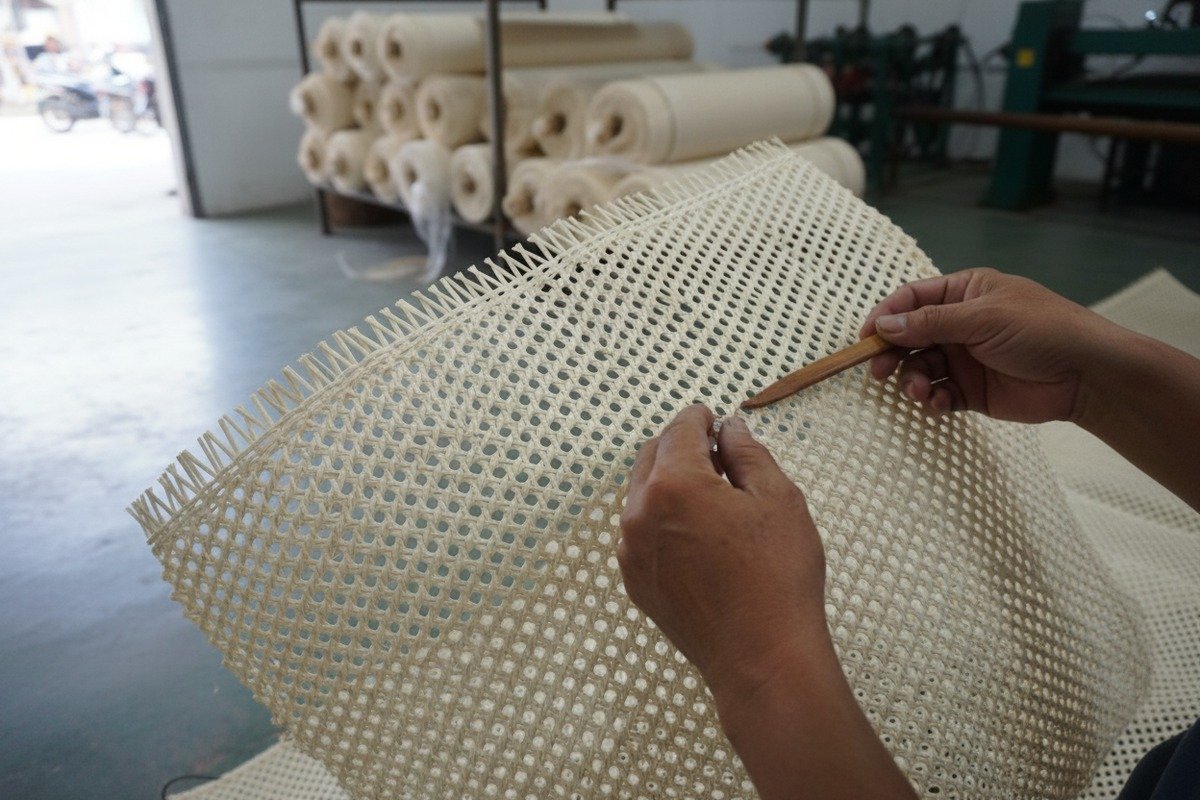
Cuando clasificamos la cincha en nuestra instalación de procesamiento en Indonesia 3, la diferencia entre un rollo de grado A y un rollo de grado C es visible desde el otro lado de la habitación. Sin embargo, muchos compradores no se dan cuenta de cuánto se traduce esa diferencia visible en cantidades reales de dólares en sus facturas.
La rejilla de ratán de grado A típicamente cuesta 25–50% más que la de grado B y puede ser 60–100% más cara que la de grado C o D. Esta prima refleja un control de calidad más estricto, un color de hebra más uniforme, una tensión de tejido consistente y costos laborales significativamente más altos durante la clasificación e inspección manual.
¿Qué Define Cada Grado?
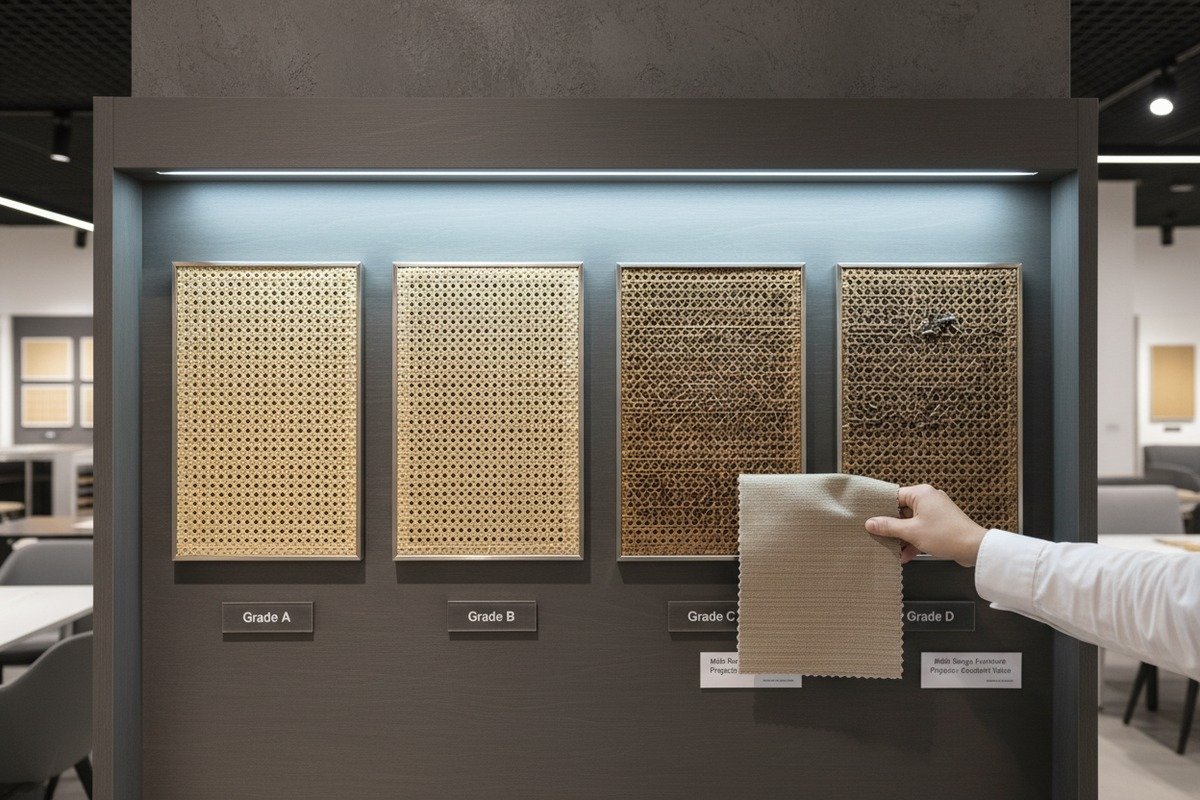
El sistema de clasificación 4 para cincha de ratán utiliza cuatro niveles: A, B, C y D. Después de secar la corteza de ratán, los trabajadores inspeccionan cada pieza a mano. Retiran hebras con impurezas, grietas o grosor desigual. El material restante se clasifica en grados según criterios estrictos.
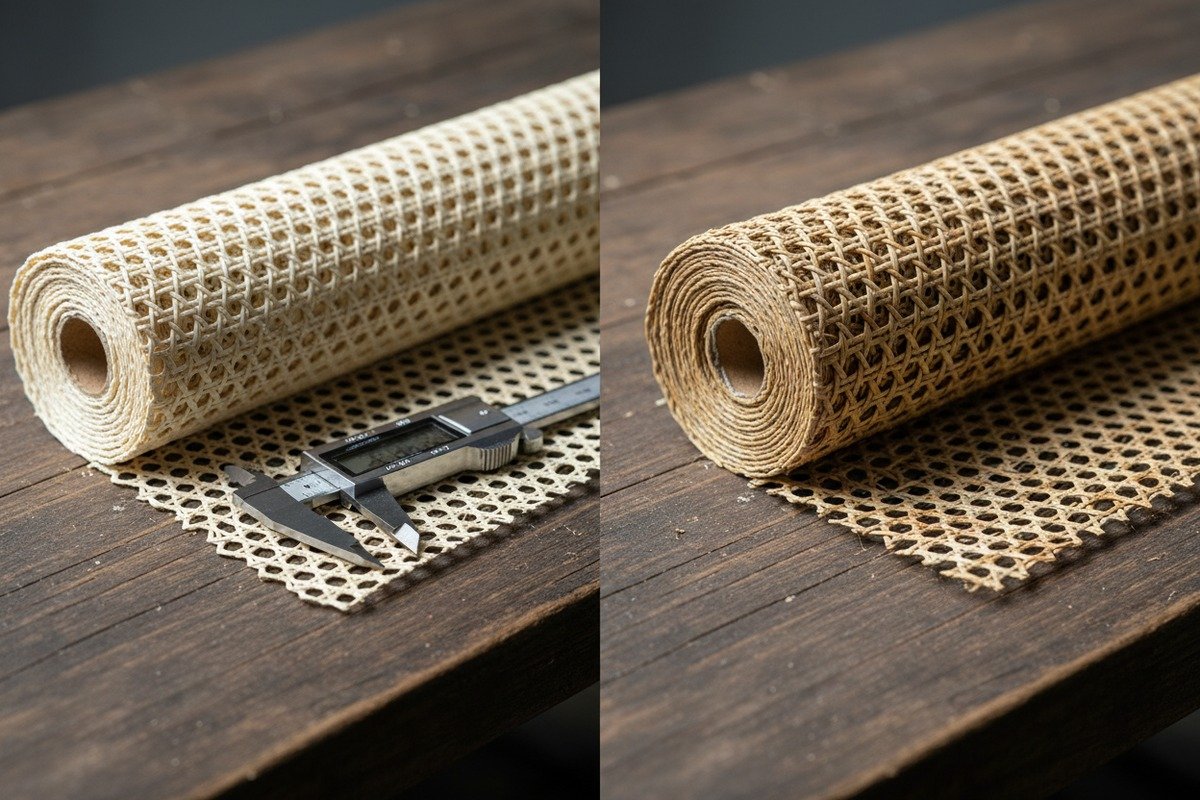
La cincha de grado A tiene la apariencia más uniforme. Cada hebra es similar en color, generalmente un beige claro o amarillo paja consistente. La tensión del tejido es uniforme. Las aberturas en la malla son simétricas. No se ven hebras sueltas ni nudos rotos. Este nivel de perfección requiere desechar un gran porcentaje de materia prima, lo que aumenta el costo.
El grado B está cerca del grado A, pero permite pequeñas variaciones de color entre las hebras. Es posible que notes una tira ligeramente más oscura aquí o allá. El tejido sigue siendo apretado, pero pueden aparecer pequeñas irregularidades bajo una inspección minuciosa.
La cincha de grado C y D muestra diferencias más obvias. La inconsistencia del color es común. Algunas hebras pueden ser más gruesas que otras. El patrón de tejido puede tener pequeñas aberturas. Estos grados funcionan bien para aplicaciones donde la cincha se pintará, teñirá o se ocultará parcialmente detrás de la tela.
Comparación de precios por grado
| Grade | Color Uniformity | Consistencia del tejido | Prima de precio típica frente al grado D | Mejor caso de uso |
|---|---|---|---|---|
| A | Excelente – variación mínima | Aberturas muy apretadas y simétricas | +60–100% | Muebles de alta gama, paneles visibles |
| B | Bueno – variaciones menores | Ajustado con raras irregularidades | +30–50% | Muebles de gama media, gabinetes |
| C | Moderado – diferencias notables | Aceptable con huecos ocasionales | +10–20% | Muebles económicos, piezas pintadas |
| D | Variable – cambios de color drásticos | Suelto en algunas partes, aberturas desiguales | Base | Aplicaciones ocultas, proyectos de manualidades |
Por qué la diferencia de precio es mayor de lo que crees
Muchos compradores asumen que el Grado A es simplemente "ratán crudo mejor". Esa es solo una parte de la historia. El verdadero impulsor del costo es la mano de obra. costos de mano de obra 5 En nuestra fábrica, clasificar la corteza de ratán para el Grado A requiere que los trabajadores rechacen hasta el 40% del material utilizable. Esas tiras rechazadas no desaparecen, se convierten en material de Grado B, C o D. Pero el tiempo dedicado a inspeccionar, clasificar y volver a inspeccionar el material de Grado A añade horas de mano de obra por rollo.
La clasificación por color es especialmente costosa. El ratán natural tiene variaciones causadas por la exposición al sol, la edad de la planta e incluso la posición de la corteza en la caña. Producir un rollo de cincha con hebras consistentemente claras y doradas significa extraer material de un lote mucho más grande. Los paneles de caña de tono amarillento, por ejemplo, requieren la eliminación meticulosa de cualquier tira verdosa, lo que añade otra capa de costo de mano de obra.
Por nuestra experiencia enviando a fábricas de muebles en toda Europa y el Sudeste Asiático, la mayoría de los compradores de grado de producción encuentran que el Grado B ofrece el mejor valor. Se ve excelente en muebles terminados mientras ahorra un 20–30% en comparación con el Grado A. El Grado A solo tiene sentido cuando la cincha estará prominentemente expuesta y será inspeccionada de cerca por los consumidores finales, piense en sillas de estilo escandinavo de primera calidad o gabinetes de diseño.
¿Puedo reducir mis costos de adquisición obteniendo mimbre de ratán directamente de una fábrica en Indonesia?
Nuestra empresa tomó la decisión hace años de invertir en nuestras propias instalaciones de procesamiento de ratán en Indonesia, y aprendimos de primera mano que "directo de fábrica" no siempre significa el menor costo total. La promesa suena simple: eliminar a los intermediarios, pagar menos. La realidad es más matizada.
Sí, obtener productos directamente de una fábrica indonesia puede reducir los costos de materiales entre un 15 y un 35 % en comparación con la compra a través de intermediarios. Sin embargo, los ahorros totales dependen de su volumen de pedido, logística de envío, capacidades de control de calidad y capacidad para gestionar la comunicación transfronteriza. Los pedidos pequeños pueden no justificar los gastos generales que implica la obtención directa de la fábrica.
La estructura de costos real del abastecimiento directo
Indonesia es el mayor productor de ratán del mundo. Las fábricas vietnamitas también producen volúmenes significativos a precios más bajos. Pero al abastecerse directamente de Indonesia, se accede a materia prima de mayor calidad: más clara, de textura más suave y más flexible para tejidos complejos.
Los ahorros del abastecimiento directo provienen de la eliminación de los márgenes de las empresas comerciales, que normalmente añaden un 15-25% al precio de fábrica. Pero debe tener en cuenta los costos que las empresas comerciales normalmente absorben.
Costos ocultos a tener en cuenta
El envío es el primer factor importante. logística de envío 6 La rejilla de ratán es ligera pero voluminosa. La utilización del contenedor es importante. Si no puede llenar un contenedor de 20 pies, paga por el espacio desperdiciado, o envía LCL (carga inferior a contenedor), que tiene costos de flete por unidad más altos.
La inspección de calidad es otro costo. Sin un equipo local o un agente de confianza en Indonesia, corre el riesgo de recibir material que no coincide con la muestra. Hemos visto a compradores perder miles de dólares porque omitieron la inspección previa al envío. Contratar a un inspector de control de calidad externo añade entre 200 y 500 dólares por visita, pero protege contra devoluciones costosas.
Las brechas de comunicación también pueden generar costos ocultos. Las diferencias horarias, las barreras del idioma y las diferentes costumbres comerciales pueden ralentizar el procesamiento de los pedidos. Los retrasos significan perder los cronogramas de producción, lo que cuesta dinero aguas abajo.
Comparación de costos de abastecimiento directo
| Factor de costo | Abastecimiento directo de fábrica | A través de una empresa comercial | A través de un mayorista integral |
|---|---|---|---|
| Precio unitario del material | El más bajo | +15–25% de margen | +10–15% de margen |
| Control de calidad | Responsabilidad del comprador | Cobertura parcial | Incluido |
| Coordinación de envío | El comprador se encarga | A menudo incluido | Incluido |
| Cantidad mínima de pedido | Más alto (a menudo 500+ rollos) | Flexible | Moderada |
| Tiempo de entrega | 3–6 semanas | 2–4 semanas | 2–4 semanas |
| Facilidad de comunicación | Desafiante (idioma, zona horaria) | Moderada | Optimizado |
| Riesgo de problemas de calidad | Más alto sin equipo de control de calidad | Moderada | Más bajo |
Cuándo la adquisición directa tiene sentido
Si su consumo mensual supera los 300-500 rollos de mimbre, la adquisición directa de fábrica desde Indonesia se vuelve muy atractiva. Genera suficiente volumen para llenar contenedores, justificar visitas de control de calidad y negociar descuentos significativos.
Para compradores más pequeños, un modelo de mayorista integral, como el que ofrecemos desde nuestra sede en Foshan, puede ofrecer un mejor valor total. Consolidamos pedidos de nuestras tres fábricas y más de 30 instalaciones asociadas. Los compradores obtienen ratán de origen indonesio procesado y con control de calidad antes de que salga de nuestro almacén. El precio por unidad es ligeramente superior al de la fábrica directa, pero el costo total, incluido el control de calidad, la logística y la gestión de riesgos, suele ser menor.
Tenemos clientes en Tailandia, los Países Bajos y Australia que cambiaron de la adquisición directa de Indonesia a nuestro modelo consolidado y reportaron ahorros del 10-15% en sus costo total de llegada 7. La clave: el costo de adquisición no es solo el precio en la factura. Es el costo total de obtener material utilizable en su línea de producción.
¿Cómo impactan los diferentes patrones y anchos de tejido en el precio final de mi pedido de material de ratán?
Algo que explicamos a casi todos los clientes nuevos es que el mimbre de ratán no es un solo producto, es una familia de productos. El patrón que elija y el ancho que pida pueden variar su costo en un 30% o más en cualquier dirección. Ignorar esta variable durante la etapa de cotización conduce a sorpresas presupuestarias posteriores.
Los intrincados patrones de tejido como el tejido de radio o la malla abierta hexagonal cuestan entre un 15 y un 40 % más que el tejido de cesta cuadrado simple debido a los mayores requisitos de mano de obra y materiales. Los rollos de cincha más anchos suelen ofrecer un mejor precio por pie cuadrado, mientras que los anchos personalizados y los patrones no estándar conllevan recargos por herramientas y ajustes de configuración.
Comprensión de los patrones de tejido comunes
Los patrones de mimbre de ratán más populares se dividen en algunas categorías. Cada uno tiene diferente complejidad de producción, consumo de material y, por lo tanto, precios.
Tejido de cesta cuadrado es el patrón más simple. Las hebras se cruzan por encima y por debajo en una cuadrícula básica. La producción es rápida. El desperdicio de material es bajo. Esta es su opción más asequible.
Malla abierta hexagonal (tejido de radio) presenta aberturas hexagonales creadas tejiendo hebras en ángulos. Este patrón clásico es icónico en el diseño de mediados de siglo y bohemio. Requiere mano de obra más calificada y un control cuidadoso de la tensión. El tejido en ángulo crea más desperdicio en los bordes de cada rollo.
Motivo de diamante los patrones implican arreglos geométricos complejos. Estos son los más laboriosos y, por lo tanto, los más caros. El tejedor debe cambiar constantemente de dirección y mantener un espaciado preciso para mantener el patrón simétrico.
Diseño de Chevron (Onda) es común en esteras de ratán sintético. El patrón en forma de V requiere una configuración especializada. Las versiones sintéticas son más consistentes pero aún así tienen un precio superior a los tejidos sencillos.
Impacto del precio por patrón y ancho
| Tipo de Patrón | Intensidad de Mano de Obra | Desperdicio de material | Precio típico frente a tejido de cesta sencillo | Aplicaciones comunes |
|---|---|---|---|---|
| Tejido de cesta cuadrado | Bajo | Bajo (5–8%) | Base | Puertas de armarios, frentes de cajones |
| Hexagonal Radio Weave | Medio | Medio (10–15%) | +15–25% | Respaldo de sillas, separadores de ambientes |
| Geométrico de diamante | Alto | Alto (15–20%) | +30–40% | Muebles llamativos, paneles de pared |
| Onda de Chevron | Medio-Alto | Medio (10–12%) | +20–30% | Muebles de exterior, pantallas decorativas |
| Malla SuperFina de ⅜" | Alto | Bajo (5–8%) | +20–35% | Muebles delicados, pantallas de lámparas |
Cómo el ancho afecta su resultado final
El tejido de ratán estándar viene en anchos que van desde 18 pulgadas hasta 36 pulgadas, siendo 24 pulgadas el más común. Los rollos más anchos cuestan más por rollo pero menos por pie cuadrado. Esto se debe a que el tiempo de preparación para el proceso de tejido es similar independientemente del ancho.
Si su producción de muebles requiere cortar el tejido a tamaños específicos, los rollos más anchos reducen el desperdicio. Un rollo de 36 pulgadas cortado en dos paneles de 17 pulgadas desperdicia solo 2 pulgadas. Un rollo de 24 pulgadas cortado al mismo tamaño desperdicia 7 pulgadas, casi 30% del material.
Los anchos personalizados fuera del rango estándar requieren ajustes de herramientas. La mayoría de las fábricas cobran una tarifa de configuración de $50–$150 por ancho personalizado, más un recargo del 5–10% sobre el material en sí. Para pedidos grandes, este recargo se vuelve insignificante por unidad. Para pedidos pequeños, puede aumentar significativamente su costo efectivo.
Tamaño y espaciado de la caña
La finura de las tiras de caña también importa. La caña SuperFine de 2.0 mm utilizada para un espaciado de centro a centro de ⅜ de pulgada cuesta más que la caña Standard de 2.5 mm para un espaciado de ½ pulgada. La caña más fina requiere tiras más delgadas y cuidadosamente seleccionadas y un tejido más apretado, ambos añaden costo.
Según nuestros datos de producción, cambiar de una malla estándar de ½ pulgada a una malla superfina de ⅜ de pulgada aumenta el costo aproximadamente entre un 20 y un 35%. La mayoría de los clientes que piden paneles de gabinetes y cómodas encuentran que la malla estándar de ½ pulgada ofrece una estética excelente a un precio razonable. La malla superfina se reserva mejor para piezas premium donde la apariencia delicada justifica la inversión.
A lo largo de los años, nuestro equipo de control de calidad ha desarrollado una lista de verificación que compartimos con cada nuevo cliente. Pagar un precio premium solo tiene sentido cuando el producto realmente ofrece un rendimiento premium. Sin puntos de referencia claros, simplemente confía en la palabra del proveedor, y esa es una estrategia de adquisición arriesgada.
Para verificar la calidad de la ratán premium, compruebe el color uniforme de las hebras con mínima variación, un grosor de hebra consistente dentro de una tolerancia de 0,2 mm, una tensión de tejido uniforme con aberturas simétricas, un contenido de humedad entre 8 y 12%, flexibilidad sin agrietarse al doblarse 90 grados y una colocación limpia de los nudos que no interrumpa el patrón de tejido.
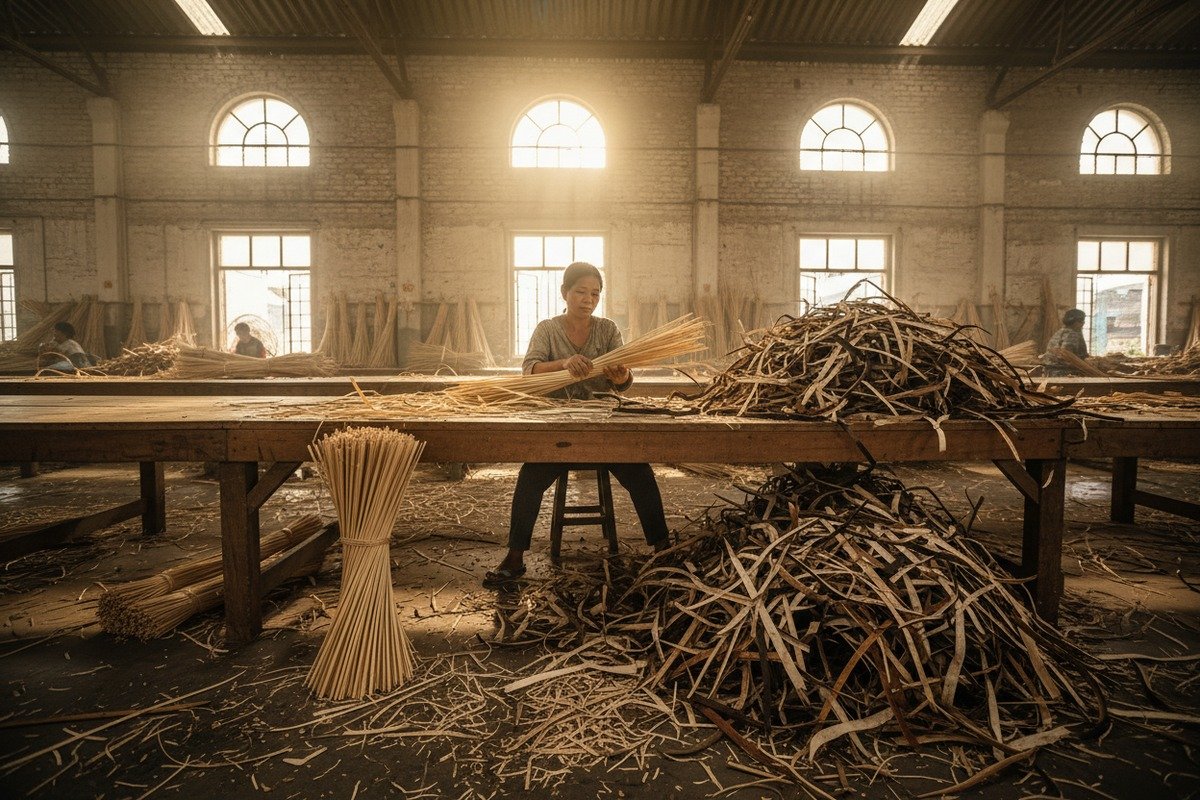
Los seis puntos de referencia de calidad clave
Repasemos cada punto de referencia en detalle para que sepa exactamente qué verificar, ya sea que inspeccione en la fábrica, en su almacén o a través de un agente externo.
1. Uniformidad del color
Sostenga la cincha a la luz natural. La cincha de grado A premium debe mostrar un tono consistente de beige claro o dorado pajizo en toda la lámina. Se aceptan pequeñas variaciones naturales: la rata es un material orgánico. Pero si ve cambios drásticos de blanco pálido a marrón oscuro dentro de un solo rollo, la clasificación no fue lo suficientemente estricta.
La cincha blanqueada debe ser uniformemente blanca sin manchas amarillas. El material semiblanqueado debe tener un tono crema uniforme. Cualquier parche sugiere un tratamiento químico inconsistente o una clasificación de baja calidad antes del blanqueo.
2. Consistencia del grosor de las hebras
Utilice un calibrador digital para medir el grosor de las hebras en cinco puntos aleatorios del rollo. La cincha premium debe mantener el grosor dentro de una tolerancia de 0,2 mm. Por ejemplo, si el grosor especificado es de 2,0 mm, todas las mediciones deben estar entre 1,9 mm y 2,1 mm. Una variación más amplia indica una clasificación deficiente durante el procesamiento.
3. Tensión y simetría del tejido
Presione suavemente el centro de la cincha con la palma de la mano. La cincha premium recupera su forma de manera uniforme. Si un área se hunde más que otra, la tensión del tejido es desigual. Observe las aberturas en el patrón de malla: deben ser uniformes en tamaño y forma en todo el rollo. Las aberturas irregulares sugieren que el tejedor no mantuvo una tensión constante.
4. Contenido de humedad
Este es un punto de referencia que muchos compradores pasan por alto. La cincha de rata con contenido de humedad 8 por encima de 14% es propensa a moho durante el envío, especialmente en contenedores sellados que cruzan aguas tropicales. Por debajo de 6%, el material se vuelve quebradizo y se agrieta durante la instalación. El rango ideal es 8–12%. Solicite a su proveedor informes de pruebas de contenido de humedad o utilice un medidor de humedad portátil para verificar.
5. Prueba de flexibilidad
Tome una sola hebra del borde del rollo y dóblela 90 grados. La rata premium se dobla suavemente sin agrietarse ni astillarse. Si la hebra se rompe o muestra marcas de estrés blancas, el material está demasiado seco, mal procesado o hecho de un material inferior. especies de ratán 9.
6. Calidad del nudo
Las cañas de rata tienen nudos naturales: las uniones a lo largo de la planta. En la cincha premium, estos nudos son pequeños, planos y distribuidos uniformemente. No deben crear bultos en el tejido ni interrumpir el patrón. Los nudos grandes y prominentes son un signo de material de menor calidad.
Diferencias de calidad entre natural y sintético
Para los compradores que consideran la cincha de rata sintética, los puntos de referencia cambian. El material sintético debe exhibir Resistencia a los rayos UV 10—solicite resultados de pruebas de estabilidad UV que muestren una mínima decoloración después de más de 500 horas de exposición. También debe resistir la humedad sin deformarse. El patrón de tejido debe ser preciso a máquina sin hebras sueltas.
La cincha natural ofrece una calidez orgánica que la sintética no puede replicar. Pero el material natural requiere un almacenamiento y manipulación más cuidadosos. Es sensible a la humedad y la temperatura. Para aplicaciones en exteriores, la cincha sintética es casi siempre la inversión más inteligente a pesar del mayor costo inicial, porque dura de tres a cinco veces más en condiciones expuestas.
Certificaciones de Sostenibilidad
La cincha de ratán de primera calidad viene cada vez más con credenciales de sostenibilidad. La certificación FSC (Forest Stewardship Council) confirma que el ratán se cosechó de bosques gestionados de forma responsable. Esta certificación añade un 5-10% al precio, pero abre puertas a los mercados europeos y norteamericanos, donde el cumplimiento de la sostenibilidad es obligatorio para muchos minoristas.
En nuestras instalaciones, todo el proceso de producción, desde la materia prima hasta la cincha terminada, no implica contaminación química ni produce olores penetrantes. Este posicionamiento ecológico no es solo marketing. Es una propuesta de valor tangible para los compradores cuyos clientes finales se preocupan por el impacto ambiental.
Tratamientos Post-Procesamiento y su Valor
Algunas cinchas de primera calidad se someten a tratamientos adicionales: recubrimientos ignífugos, aplicaciones antimohos o aerosoles protectores contra rayos UV. Cada tratamiento añade 0,50-2,00 por metro cuadrado al costo. Si estos tratamientos valen la prima depende completamente de la aplicación final. Los muebles de hostelería a menudo requieren el cumplimiento de la normativa contra incendios. Los gabinetes de baño o cocina se benefician del tratamiento antimohos. Los muebles de sala de estar en general rara vez necesitan alguno de los dos.
Conclusión
Comprender cómo los grados, los canales de abastecimiento, los patrones de tejido y los puntos de referencia de calidad afectan los precios de la cincha de caña de ratán le permite tomar decisiones de adquisición que equilibren el costo con el rendimiento. Elija sabiamente, inspeccione a fondo y haga coincidir la calidad del material con sus necesidades de aplicación reales.
Notas al pie
1. Proporciona una comprensión fundamental de la cincha de caña de ratán como material. ↩︎
2. Describe un patrón de tejido específico y común utilizado para la cincha de caña de ratán. ↩︎
3. Proporciona contexto sobre la producción y el procesamiento de ratán en Indonesia, una fuente global importante. ↩︎
4. Explica el concepto de un método estructurado para clasificar materiales y garantizar estándares. ↩︎
5. Explica cómo los gastos de mano de obra influyen en los costos de fabricación y las estrategias de precios. ↩︎
6. Proporciona información sobre las complejidades y desafíos asociados con el envío internacional. ↩︎
7. Define el costo integral de un producto desde su origen hasta su destino final. ↩︎
8. Explica el papel fundamental de los niveles de humedad en la calidad, estabilidad y conservación del material. ↩︎
9. Wikipedia proporciona una visión general completa y autorizada de las especies de ratán. ↩︎
10. Explica la propiedad de los materiales para resistir la degradación de la radiación ultravioleta. ↩︎
 English
  Español de México
  العربية
  Deutsch
  Français
  Русский