

Elegir el ancho de cincha incorrecto puede convertir un proyecto de restauración sencillo en un dolor de cabeza costoso costos de mantenimiento de inventario 1. Lo vemos suceder cada semana en nuestro almacén de Foshan: los compradores piden rollos que son demasiado estrechos, dejando costuras antiestéticas, o demasiado anchos, desperdiciando material y dinero en cada corte.
El mejor ancho de tejido de ratán depende de su aplicación específica: 18–24 pulgadas funciona bien para asientos de sillas y paneles pequeños, 24–36 pulgadas es adecuado para puertas de gabinetes y respaldos de sillas, y 48–72 pulgadas es ideal para proyectos más grandes como separadores de ambientes y biombos decorativos.
Esta guía desglosa cada ancho común, lo relaciona con aplicaciones del mundo real y te ayuda a evitar costosos errores de pedido. Ya sea que dirijas un fábrica de muebles 2, almacenes un almacén mayorista o gestiones la adquisición de materiales de construcción, encontrarás tu respuesta a continuación.
¿Cómo determino el ancho ideal de la cincha de ratán para mi producción de muebles específica?
Cada lote de producción que enviamos desde nuestras tres fábricas comienza con una pregunta: ¿cuál es el tamaño del marco terminado? Equivocarse en el ancho incluso por dos pulgadas puede ralentizar tu línea de montaje y disparar tu tasa de desperdicio 3.
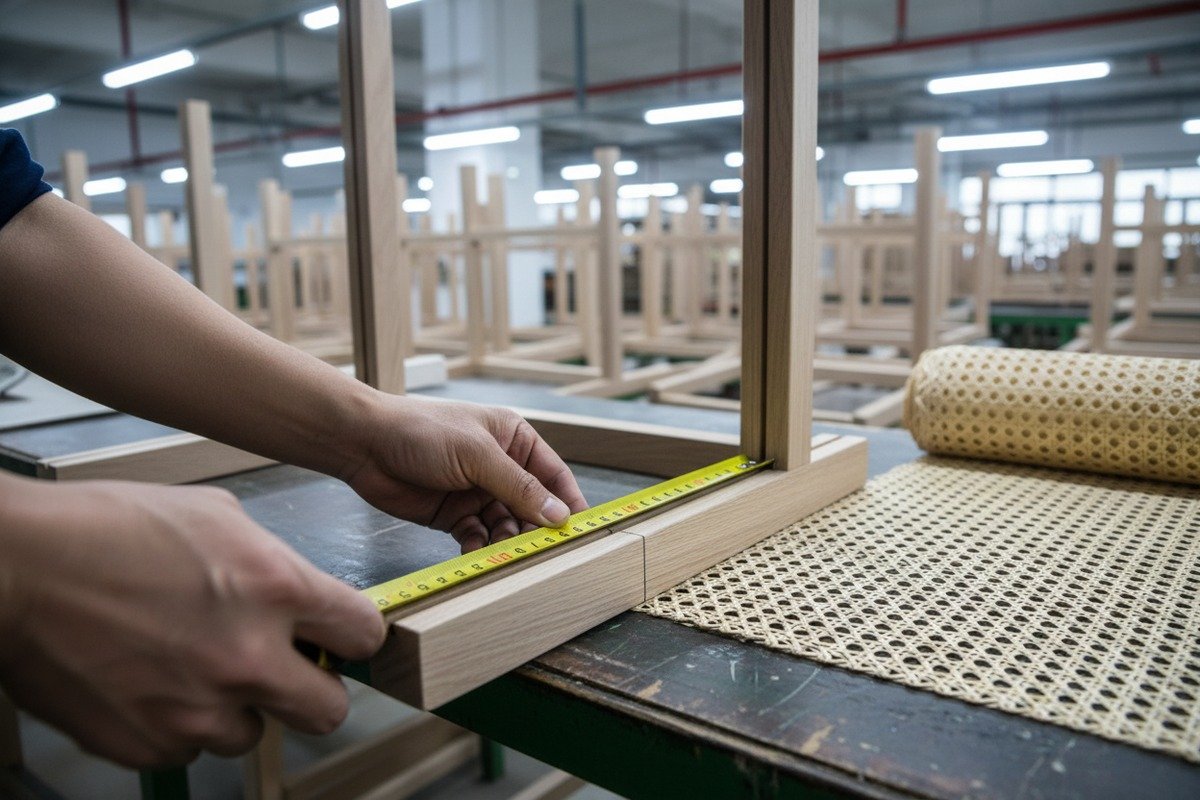
Para determinar el ancho ideal de la cincha de ratán, mida la dimensión de ranura a ranura de su marco y agregue 2–4 pulgadas para el solapamiento en cada lado. Luego, seleccione el ancho de rollo estándar más cercano que cubra esta medida total sin desperdicio excesivo ni necesidad de costuras.
Comienza con las dimensiones de tu marco
El método más fiable es sencillo. Mide el interior de tu marco de muebles de ranura a ranura, o de borde de agujero a borde de agujero si utilizas marcos perforados. Anota tanto el ancho como la profundidad. Luego, añade tu margen de solapamiento.
Para instalaciones con ranura (lámina pretejida), añade 1-2 pulgadas en cada lado. Para instalaciones con agujeros perforados, añade 2-4 pulgadas porque necesitas suficiente material para envolver y clavar a través de cada agujero.
Aquí hay una referencia rápida:
| Apertura del marco (pulgadas) | Solapamiento necesario | Ancho mínimo del rollo a pedir |
|---|---|---|
| 12 × 12 | +2" cada lado | ancho de rollo de 16" |
| 14 × 16 | +2" cada lado | Ancho de rollo de 18" |
| 18 × 20 | +2" cada lado | Ancho de rollo de 24" |
| 22 × 24 | +2" cada lado | Ancho de rollo de 28" o 30" |
| 30 × 36 | +2" cada lado | Ancho de rollo de 36" |
Considere su tipo de tejido
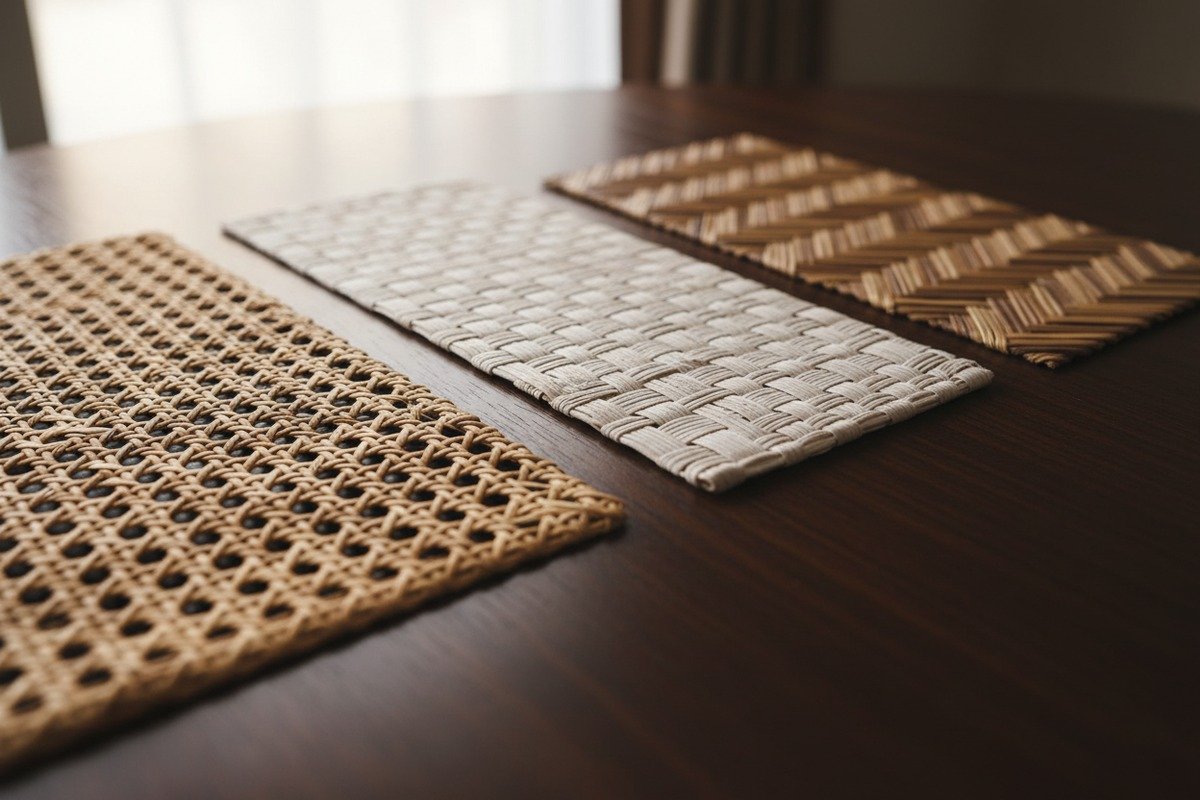
No todos los tejidos se comportan de la misma manera durante la instalación. Un tejido cerrado 4 — tejido apretado con huecos mínimos — tiene menos elasticidad y mantiene bien su forma. Es excelente para asientos que soportan el peso corporal. Un tejido hexagonal abierto 5 se estira un poco más y es más adecuado para respaldos de sillas, frentes de gabinetes y paneles decorativos donde la transpirabilidad es importante.
Tejido de radio 6, que presenta un patrón de base cuadrada con inserciones diagonales, ofrece un punto intermedio. Proporciona una resistencia moderada con un atractivo aspecto texturizado que muchos compradores europeos y americanos solicitan para muebles modernos de mediados de siglo 7 líneas.
Haga coincidir el ancho con el volumen de producción
Si su fábrica produce el mismo modelo de silla en grandes lotes, comprar el ancho de rollo exacto que coincida con el tamaño de su marco reduce la mano de obra. Los trabajadores no necesitan recortar el exceso de material de cada pieza. Cuando consultamos con nuestros clientes de fábricas de muebles en los Países Bajos y Australia, a menudo recomendamos pedir anchos personalizados en rollos de 50 pies. Esto elimina el recorte por pieza y puede reducir el desperdicio de material en un 10-15% en una corrida de producción.
Para fábricas que producen estilos de muebles variados, tener en stock dos o tres anchos estándar —típicamente 18", 24" y 36"— cubre la mayoría de las necesidades de producción sin inmovilizar efectivo en inventario de uso poco frecuente.
¿Qué anchos debo priorizar al almacenar rollos de ratán para mi negocio mayorista?
Cuando empacamos contenedores para nuestros socios mayoristas en los EE. UU., España y el Medio Oriente, los mismos anchos aparecen en las órdenes de compra. Tener en stock los tamaños incorrectos inmoviliza el espacio de su almacén y deja esperando a sus mejores clientes.
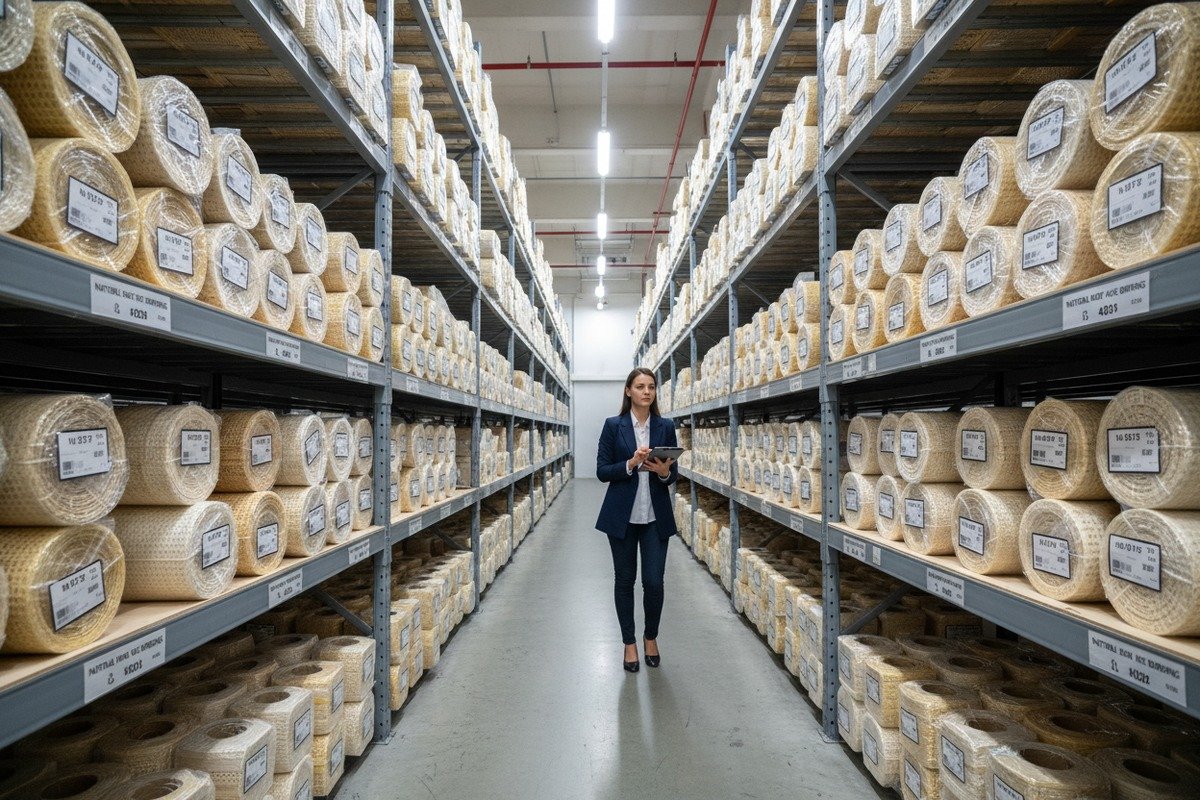
Las empresas mayoristas deben priorizar el tener en stock anchos de 18", 24" y 36" en ratán natural, ya que estos tres tamaños cubren aproximadamente el 80% de la demanda del mercado de restauradores de muebles, ebanistas y consumidores de bricolaje. Agregue rollos de 48" para clientes que trabajan en proyectos decorativos más grandes.
Los Tres Anchos Principales
Según nuestros registros de envío en docenas de mercados de exportación, los tres anchos que se venden más rápido son 18 pulgadas, 24 pulgadas y 36 pulgadas. Aquí le explicamos por qué cada uno es importante:
Rollos de 18 pulgadas sirven al segmento de mercado individual más grande: reparaciones de asientos y respaldos de sillas. La restauración de sillas vintage y antiguas está en auge, y la mayoría de las sillas de comedor tradicionales tienen aberturas de marco entre 14 y 16 pulgadas. Un rollo de 18 pulgadas les da a los restauradores el solapamiento exacto que necesitan.
Rollos de 24 pulgadas cierran la brecha entre el trabajo en sillas pequeñas y paneles de tamaño mediano. Los insertos de puertas de gabinetes, los acentos de estanterías y los respaldos de sillas más anchos entran en este rango. Muchos vendedores de Etsy y pequeños talleres de muebles prefieren este ancho porque maneja una variedad de proyectos.
Rollos de 36 pulgadas se dirigen a ebanistas, fabricantes de cabeceros y clientes que construyen paneles más grandes. Este ancho cubre la mayoría de las puertas de gabinetes de cocina estándar y frentes de aparadores sin costuras.
Ampliando su rango estratégicamente
Una vez que tenga cubiertas las tres principales, considere agregar estos anchos según su perfil de cliente:
| Ancho | Cliente objetivo | Longitud típica del rollo | Nivel de demanda |
|---|---|---|---|
| 12"–14" | Restauradores de antigüedades finas | 10–50 pies | Nicho pero estable |
| 18" | Talleres de reparación de sillas, bricolaje | 50 pies | Alto |
| 20" | Paneles de tamaño mediano, aficionados al tejido de radio | 50 pies | Moderada |
| 24" | Ebanistas, talleres | 50 pies | Alto |
| 30" | Fábricas de muebles de tamaño mediano | 15 m (49 pies) | Moderada |
| 36" | Gabinetes grandes, cabeceros | 15 m o cortado a medida | Alto |
| 48" | Divisores de ambientes, biombos | 10–15 m | Creciente |
| 60"–72" | Biombos comerciales, instalaciones personalizadas | 10 m (33 pies) | Especialidad |
Natural vs. Sintético: Ten ambos en stock
Ratán natural 8 sigue siendo el más vendido para muebles de interior y trabajos de restauración. La mayoría de los compradores quieren rollos sin blanquear o ligeramente blanqueados en longitudes de 50 pies. Pero ratán sintético 9 está creciendo rápidamente, especialmente para muebles de patio exteriores y proyectos comerciales de hostelería. Los rollos sintéticos a menudo vienen en longitudes más largas de 100 pies y anchos mayores (hasta 120 cm). Tener un surtido básico de sintéticos junto con su inventario natural lo posiciona para capturar ambos mercados.
Nuestros clientes mayoristas en Turquía y Dubái, por ejemplo, dividen sus pedidos aproximadamente 70/30 entre natural y sintético. En Australia y EE. UU., se inclina más hacia 80/20 a favor del natural para los mercados de restauración de interiores y decoración boho.
Consideraciones de precios para mayoristas
El ratán natural de primera calidad de caña indonesia de calidad suele tener un precio de entre 0,07 y 0,09 por pulgada cuadrada al por menor. Su costo mayorista debe dejar espacio para márgenes saludables. Los rollos más anchos generalmente ofrecen un mejor valor por pulgada cuadrada porque el proceso de tejido es más eficiente. Anime a sus clientes a comprar rollos más anchos mostrándoles el ahorro de costos: un rollo de 36 pulgadas a menudo cuesta menos por pulgada cuadrada que un rollo de 18 pulgadas del mismo patrón de tejido.
¿Cuáles son los anchos de cincha más adecuados para las aplicaciones de mi puerta de armario y respaldo de silla?
Nuestro equipo de producción en Nanhai trabaja a diario con ebanistas y fábricas de sillas en toda Europa y Oriente Medio. Las dos preguntas más comunes que escuchamos son: "¿Qué ancho cabe en una puerta de gabinete estándar?" y "¿Funcionará este mismo rollo para los respaldos de mis sillas?"
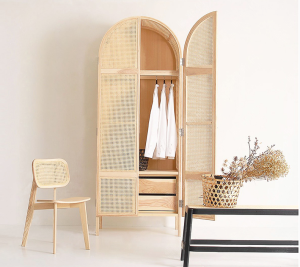
Para insertos de puertas de gabinetes, anchos de 20 a 36 pulgadas en tejido hexagonal abierto o cerrado funcionan mejor, dependiendo del tamaño de la puerta. Para respaldos de sillas, anchos de 18 a 24 pulgadas en tejido abierto o de radio brindan el equilibrio ideal de cobertura, transpirabilidad y atractivo visual sin requerir costuras.
Aplicaciones de puertas de gabinete
Las puertas de gabinetes de cocina estándar varían de 12 a 18 pulgadas de ancho. Las puertas de tocador de baño suelen tener de 14 a 16 pulgadas. Los aparadores y credenzas pueden tener paneles de hasta 30 pulgadas de ancho. Para cada uno de estos, desea un ancho de rollo que cubra la abertura más el solapamiento, sin una costura que atraviese el medio del panel.
Aquí hay una guía práctica de emparejamiento:
| Tipo de gabinete | Ancho típico del panel | Ancho de Rollo Recomendado | Mejor estilo de tejido |
|---|---|---|---|
| Gabinete superior de cocina | 12"–15" | 18"–20" | Hexagonal abierto, tejido cerrado |
| Gabinete inferior de cocina | 15"–18" | 20"–24" | Tejido cerrado para mayor durabilidad |
| Tocador de baño | 14"–16" | 18"–20" | Hexagonal abierto para ventilación |
| Aparador / aparador | 18"–28" | 24"–36" | Hexagonal abierto, tejido de radio |
| Puerta de librería | 10"–14" | 14"–18" | Tejido fino y cerrado |
El tejido hexagonal abierto es la opción más popular para puertas de armarios en este momento. Las tendencias bohemia y de mediados de siglo moderno han impulsado una demanda masiva de este patrón. Permite el flujo de aire dentro de los gabinetes cerrados, lo que ayuda a prevenir la acumulación de humedad y los olores a humedad. El tejido cerrado funciona cuando se desea más opacidad, por ejemplo, para ocultar estantes desordenados detrás de un panel texturizado pero no transparente.
Aplicaciones para respaldos de sillas
Los respaldos de las sillas suelen tener un ancho de 14 a 20 pulgadas. Las sillas de comedor tienden a tener respaldos más estrechos (14-16 pulgadas), mientras que las sillas de salón y las sillas decorativas pueden tener hasta 22 pulgadas o más.
Los patrones de tejido abierto dominan las aplicaciones de respaldos de sillas por una buena razón. Son más ligeros, más transpirables contra la espalda de una persona y visualmente elegantes. La clásica malla hexagonal de 1/2 pulgada sigue siendo el patrón más solicitado entre nuestros clientes de fábricas de muebles.
El tejido de radio está ganando terreno para los respaldos de sillas en líneas de muebles de alta gama. El patrón cuadrado y diagonal añade complejidad visual y una sensación ligeramente más moderna en comparación con la malla hexagonal tradicional.
Selección de tejido: abierto vs. cerrado
Aquí es donde muchos compradores cometen errores. El tejido abierto (hexagonal, con agujeros de 3/8" a 1") es hermoso y transpirable. Pero no es lo suficientemente resistente para asientos de sillas por sí solo, al menos no para un uso diario intenso. El tejido cerrado es más apretado, más resistente y más adecuado para asientos.
Para respaldos de sillas, el tejido abierto gana en comodidad y estética. Para puertas de gabinetes, depende de tu intención de diseño. Si quieres ver una pista de lo que hay dentro del gabinete, opta por abierto. Si quieres ocultación total con textura, opta por cerrado.
Una técnica creativa que gana popularidad es superponer dos láminas de tejido abierto fino para un efecto semiopaco. Esto funciona especialmente bien en paneles de aparador más grandes donde deseas profundidad y textura sin transparencia total. Aumenta el costo del material, así que tenlo en cuenta en tus precios.
Consejos de remojo e instalación
El ratán natural necesita remojarse antes de la instalación. Sumerge la pieza cortada en agua tibia durante 30 minutos a 2 horas, dependiendo del grosor. Esto hace que la caña sea lo suficientemente flexible como para presionarla en las ranuras sin agrietarse. Una vez instalada y seca, se encoge ligeramente y se tensa, dándote un acabado tenso como un tambor.
Para paneles insertados en ranuras, usa una lengüeta de calidad (junco o goma) y pegamento para madera para fijar la cincha en su lugar. Para marcos con agujeros perforados, clava cada hebra individualmente. El método de ranura es más rápido y preferido para entornos de producción. El método de agujeros perforados da un aspecto más auténtico y funciona mejor en marcos irregulares o antiguos.
¿Cómo puedo optimizar los costos de mis materiales eligiendo los anchos de rollo adecuados para mi fábrica?
Dirigir nuestra propia planta de procesamiento de ratán en Indonesia nos dio un asiento de primera fila para ver cómo las elecciones de materia prima impactan los costos de producción final. La diferencia entre un ancho de rollo bien elegido y uno mal elegido puede significar un 15-20% más de desperdicio en cada pieza que produces.
Para optimizar los costos de material, haga coincidir el ancho de su rollo lo más cerca posible con las dimensiones de su marco más el solapamiento, compre en rollos estándar de 50 pies para obtener descuentos por volumen y consolide su línea de productos en torno a dos o tres anchos estándar para reducir los costos de inventario y las complicaciones de los pedidos mínimos de los proveedores.
Calcula tu uso real de material
Las matemáticas son sencillas pero a menudo se pasan por alto. Toma el ancho de ranura a ranura de tu marco, agrega 4 pulgadas en total para el solapamiento (2 pulgadas por lado), y eso te da el ancho mínimo de cincha que necesitas. Ahora compara ese número con los anchos de rollo disponibles.
Si tu marco necesita 20 pulgadas de cincha y compras rollos de 24 pulgadas, desperdicias 4 pulgadas en cada corte, lo que equivale a aproximadamente un 17% de pérdida de material. En una producción de 1000 sillas, esas 4 pulgadas se suman a un costo significativo.
Aquí hay una comparación de desperdicio para un escenario común:
| Ancho de marco necesario (con solapamiento) | Ancho de rollo pedido | Desperdicio por corte | Residuos de más de 1,000 unidades |
|---|---|---|---|
| 20" | 20" | 0" (0%) | 0 pies cuadrados |
| 20" | 24" | 4" (17%) | ~333 pies cuadrados |
| 20" | 30" | 10" (33%) | ~833 pies cuadrados |
| 20" | 36" | 16" (44%) | ~1,333 pies cuadrados |
La diferencia entre pedir rollos de 20 pulgadas y rollos de 36 pulgadas para este trabajo es de más de 1,300 pies cuadrados de ratán desperdiciado. Con precios premium de $0.07–$0.09 por pulgada cuadrada, ese desperdicio puede costar miles de dólares en una sola tirada de producción.
Negocie anchos personalizados para pedidos grandes
La mayoría de los proveedores de calidad, incluida nuestra operación, pueden producir anchos de rollo personalizados para pedidos superiores a ciertos mínimos. Si su producción utiliza consistentemente un marco de 22 pulgadas, pedir rollos personalizados de 26 pulgadas es mucho más rentable que recortar material de 30 o 36 pulgadas.
Los anchos personalizados suelen requerir un pedido mínimo de 200 a 500 pies lineales, dependiendo del proveedor y el patrón de tejido. Pero el ahorro de material suele justificar el compromiso, especialmente para las fábricas que ejecutan programas de producción repetidos.
Consolide su línea de productos
Si su fábrica fabrica cinco modelos de sillas diferentes con anchos de marco de 15", 16", 17", 18" y 19", no necesita cinco anchos de rollo diferentes. Un rollo de 18 pulgadas cubre los primeros cuatro marcos. Un rollo de 24 pulgadas cubre el último con un desperdicio aceptable. Dos SKUs en lugar de cinco simplifican sus compras, reducen la complejidad del almacén y le brindan un mejor poder de negociación para precios por volumen.
Compre rollos más largos cuando sea posible
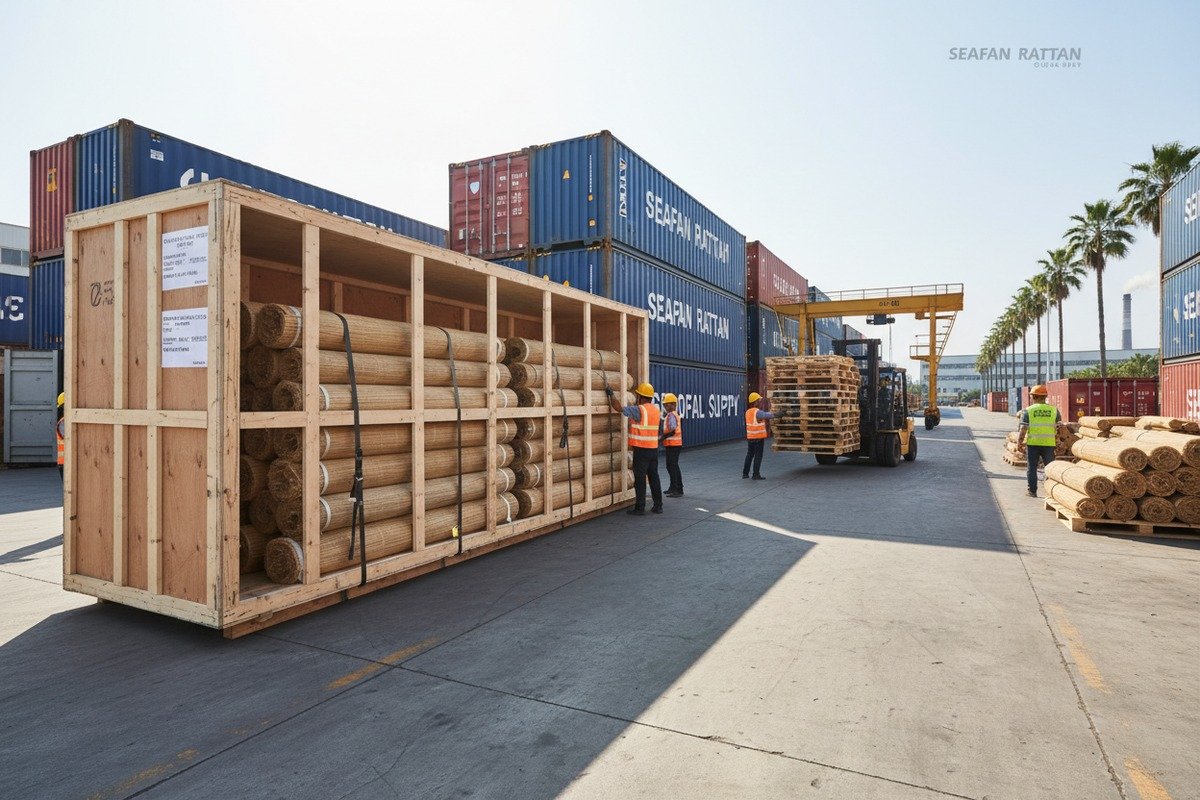
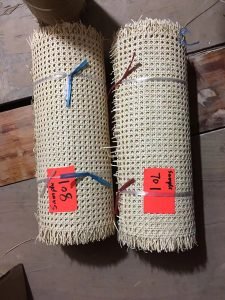
Los rollos estándar de ratán natural vienen en longitudes de 50 pies. Algunos proveedores ofrecen rollos de 100 pies, especialmente para ratán sintético. Los rollos más largos significan menos cambios de rollo en su línea de producción, menos material perdido en los extremos de los rollos y, por lo general, precios por pie más bajos. Vemos consistentemente una reducción de costos del 5-8% para los clientes que cambian de formatos de rollo de 50 pies a formatos más largos.
Rastrea tu tasa de desperdicio
Finalmente, mide lo que desperdicias. Muchas fábricas con las que trabajamos nunca rastrean su tasa de desperdicio de ratán. Una vez que comienzan a medir, descubren victorias fáciles. Las soluciones comunes incluyen ajustar los patrones de corte para anidar las piezas de manera más eficiente, cambiar a un ancho de rollo más ajustado o reutilizar los recortes para componentes más pequeños como tiradores de cajones, posavasos o muestras.
Una fábrica en Filipinas a la que suministramos redujo sus costos de material de ratán en un 12% simplemente al cambiar de rollos de 36 pulgadas a rollos de 24 pulgadas para su línea de sillas de comedor. El marco solo necesitaba 22 pulgadas de cobertura. Ese único cambio les ahorró más de $4,000 en el primer trimestre solamente.
Conclusión
Elegir el tejido de caña de ratán 10 ancho correcto ahorra material, reduce dolores de cabeza en la producción y ofrece productos terminados de mejor calidad. Adapta el ancho de tu rollo a tu marco, almacena inteligentemente y tu balance final te lo agradecerá.
`
Notas al pie
1. Define los costos de mantenimiento de inventario y su importancia en las operaciones comerciales. ↩︎
2. Ofrece estadísticas y perspectivas sobre la industria de fabricación de muebles. ↩︎
3. Define la tasa de desperdicio de fabricación y sus implicaciones para la producción. ↩︎
4. Explica las características y aplicaciones de los patrones de ratán de tejido cerrado. ↩︎
5. Describe las propiedades y usos comunes del tejido de ratán hexagonal abierto. ↩︎
6. Detalla el patrón único y las aplicaciones adecuadas para el ratán de tejido radio. ↩︎
7. Reemplazado con una fuente autorizada .edu que proporciona una descripción general del diseño moderno de mediados de siglo. ↩︎
8. Proporciona información sobre el ratán natural como materia prima para muebles. ↩︎
9. Se encontró un artículo completo que define el ratán sintético y sus propiedades. ↩︎
10. Proporciona una descripción general completa del ratán y sus usos. ↩︎
 English
  Español de México
  العربية
  Deutsch
  Français
  Русский