
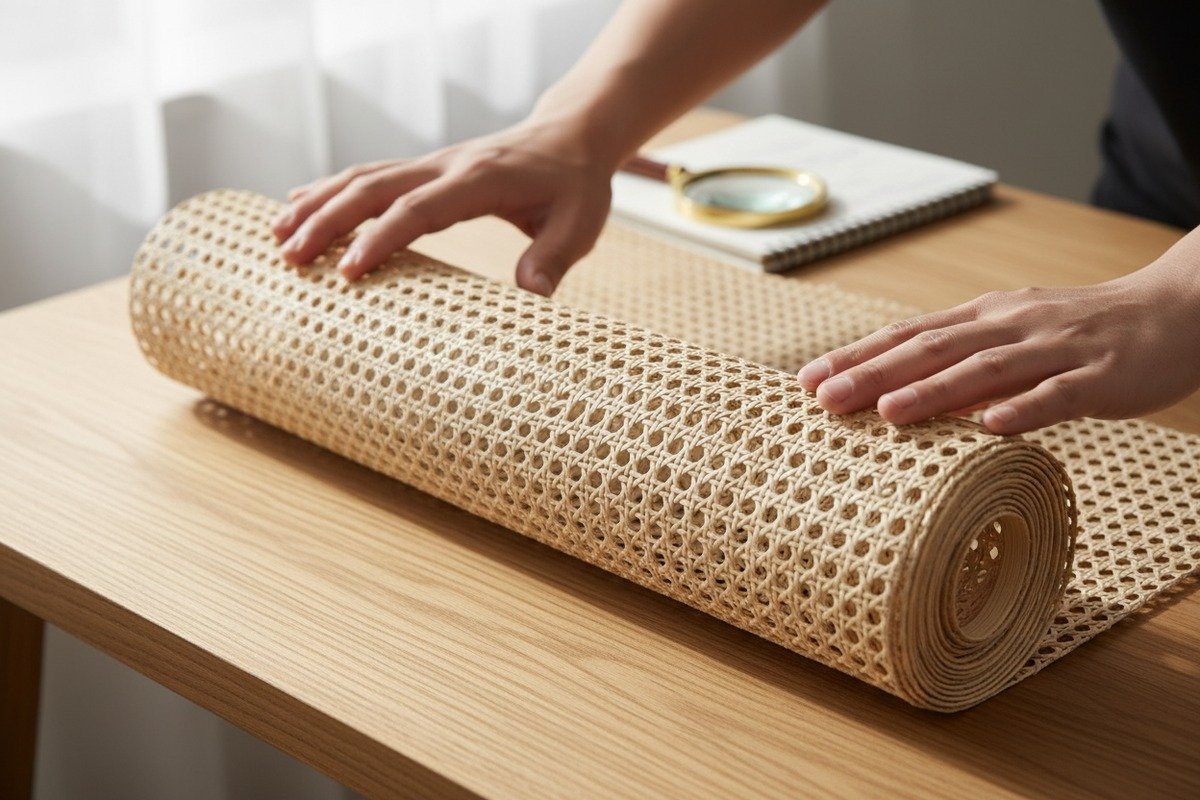
Cada semana, nuestro equipo de atención al cliente recibe fotos de compradores que recibieron mimbre de ratán que no se parecía en nada a lo que pidieron. Las tiras se agrietan al llegar. Los huecos del tejido son irregulares. El color grita sintético. Para los gerentes de compras que adquieren miles de metros a la vez, un mal envío puede detener toda una línea de producción de muebles y dañar las relaciones con los clientes.
Para identificar el mimbre de ratán auténtico y de alta calidad, examine cinco áreas clave: el brillo natural en el lado de la corteza exterior, el grosor uniforme de las hebras, los patrones de tejido apretados y consistentes, la flexibilidad después de remojarlo y un aroma terroso suave. Estos indicadores separan el ratán genuino de Grado A de las imitaciones sintéticas y los materiales de menor calidad.
En esta guía, desglosamos cada prueba, verificación visual y pregunta al proveedor que necesita para proteger su inversión. Ya sea que dirija una fábrica de muebles o venda materiales de construcción al por mayor, estos pasos le ahorrarán tiempo, dinero y dolores de cabeza. Permítanos recorrer cada área crítica.
Hemos procesado ratán en nuestras propias instalaciones en Indonesia durante años, y la diferencia entre lo natural y lo sintético es obvia para manos entrenadas, pero complicada para compradores primerizos que piden en línea.
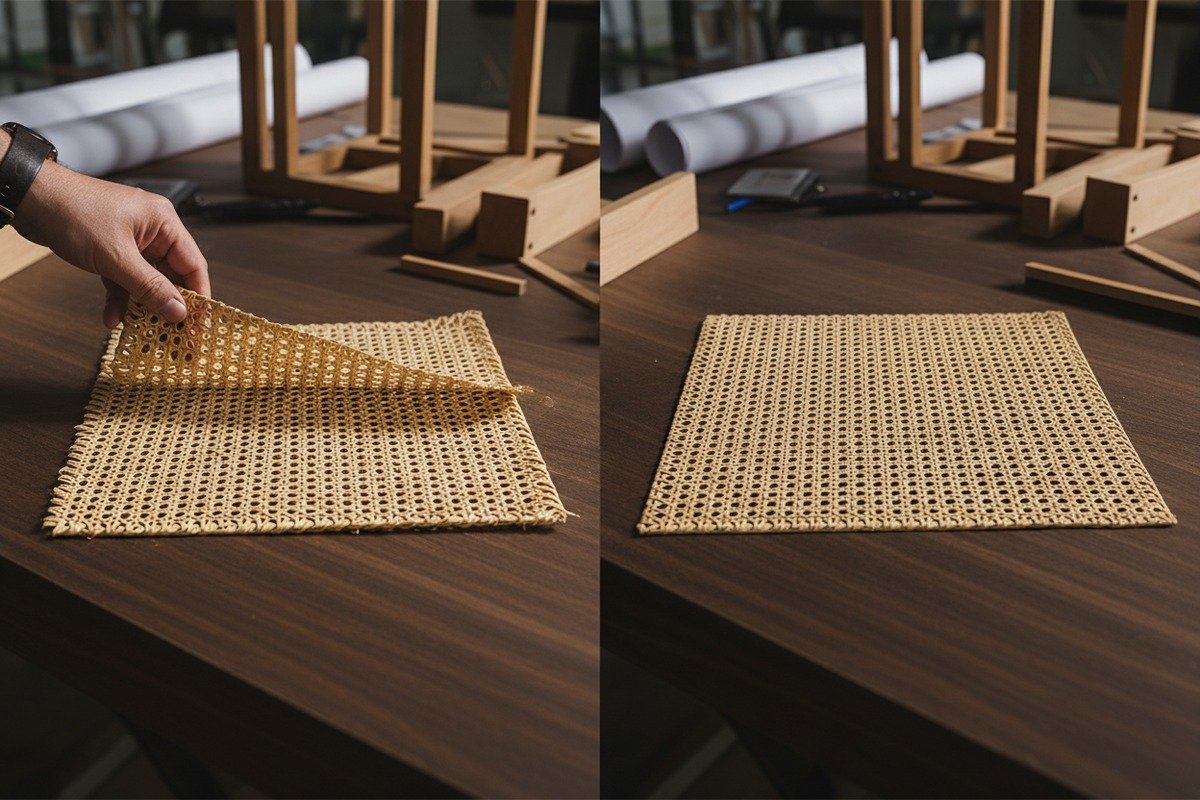
La rejilla de ratán natural premium proviene de la corteza exterior de la palmera de ratán (género Calamus). Presenta un lado visible brillante, un lado inverso poroso, sutiles variaciones de color y un suave aroma terroso. Las imitaciones sintéticas son a base de plástico, de color uniforme y carecen de porosidad natural o aroma orgánico.
El origen marca toda la diferencia
Natural tejido de caña de ratán 1 se pela del tallo de la palmera de ratán. Debajo de una superficie exterior espinosa se encuentra una corteza lisa y brillante. Esta corteza es el "lado correcto" del mimbre auténtico. El lado interior, la superficie más rugosa y porosa, se coloca hacia abajo en las aplicaciones de muebles. El núcleo de ratán 2 se separa y se utiliza para otros productos como varillas difusoras de perfume 3.
El ratán sintético, por otro lado, es plástico extruido. Los fabricantes lo moldean para que parezca fibras naturales. Algunas versiones son bastante convincentes a primera vista. Pero fallan bajo una inspección más cercana.
Comparación lado a lado
| Característica | Ratán natural | Ratán Sintético 4 |
|---|---|---|
| Fuente del material | Corteza exterior de palmera de ratán 5 | Plástico (PE, PVC o resina) |
| Brillo de la superficie | Brillo natural y cálido en el lado exterior | Brillo uniforme de plástico |
| Variación de color | Ligeros cambios de verdoso a pajizo | Color consistente, fijado de fábrica |
| Sensación de textura | Ligeramente áspero, orgánico, cálido | Suave, frío, similar al plástico |
| Olor | Aroma suave a tierra o madera | Sin olor o leve olor químico |
| Porosidad | Poroso en el reverso | No poroso en ambos lados |
| Comportamiento del envejecimiento | Se oscurece a tono miel con el tiempo | Se desvanece o decolora de manera desigual |
La trampa de fibra de papel de mimbre
Una de las falsificaciones más comunes es la fibra de papel de mimbre artificial. Inventada en 1904 para imitar el mimbre victoriano, presenta un distintivo patrón de torsión de barbería. Las hebras son perfectamente uniformes en diámetro, una pista definitiva. Las tiras de ratán natural tienen ligeras variaciones orgánicas en ancho y textura superficial. Si cada hebra parece idéntica bajo magnificación, cuestione su autenticidad.
Pruebas rápidas de tacto y olfato
Tome una hebra y presiónela entre sus dedos. El ratán natural se siente cálido y ligeramente fibroso. El sintético se siente frío y resbaladizo. Ahora huela. La caña genuina tiene un sutil aroma a hierba o madera. Si no detecta nada, o peor aún, un olor químico, es probable que esté sosteniendo un producto sintético.
Otra prueba confiable: doble el material suavemente. El ratán natural seco es algo quebradizo y puede romperse si se fuerza. El sintético se dobla fácilmente sin agrietarse. Esta fragilidad no es un defecto, es una señal de autenticidad. Una vez empapado, el ratán natural se vuelve flexible y trabajable nuevamente.
Por qué importa para su línea de producción
Para las fábricas de muebles, usar sintético cuando se especifica natural genera quejas y devoluciones de clientes. Para los mayoristas, el producto mal etiquetado daña la reputación. Cuando enviamos desde nuestros almacenes de Foshan, cada rollo incluye documentación del origen del material. Insista en lo mismo de cualquier proveedor.
¿Cuáles son los indicadores visuales clave que debo verificar para asegurar la calidad de Grado A en mi envío?
Cuando nuestro equipo de control de calidad inspecciona la rejilla de ratán antes del envío, sigue una lista de verificación estricta. Más del 30% de la materia prima que llega a nuestras instalaciones de procesamiento en Indonesia se degrada durante la clasificación manual. El Grado A no es solo una etiqueta, se gana tira a tira.
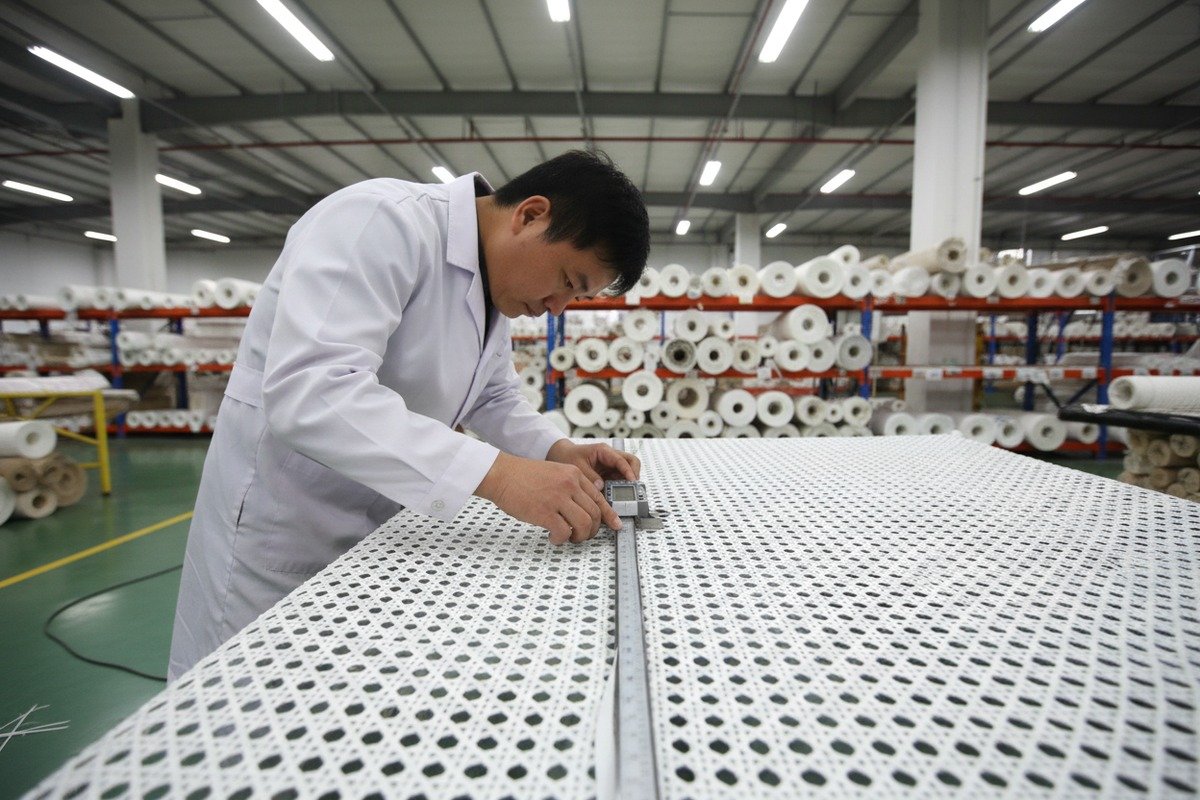
La rejilla de ratán de grado A muestra una uniformidad impecable en el grosor de las hebras, una superficie lisa lijada libre de protuberancias de nudos, una tensión de tejido apretada y uniforme, un color natural consistente sin manchas oscuras ni impurezas, y bordes cortados limpios con astillado mínimo. Cualquier defecto visible mueve el material a grado B o inferior.
Comprensión del sistema de clasificación
La rejilla de ratán se clasifica de la A a la D después de un proceso de varios pasos: pelado, secado, lijado, inspección manual y empalme. El Grado A representa el nivel superior: tiras sin defectos visibles. El Grado B tiene imperfecciones menores. Los Grados C y D muestran defectos crecientes como grosor desigual, decoloración o aspereza superficial.
No existe un sistema de clasificación global estandarizado. Cada productor establece sus propios criterios. Es por eso que confiar en su proveedor importa más que confiar solo en la etiqueta.
Lista de verificación de inspección visual
Esto es lo que debe buscar cuando llegue su envío:
| Indicador | Estándar de Grado A | Señal de alerta |
|---|---|---|
| Grosor de la hebra | Uniforme en toda la longitud | Varía notablemente a lo largo de una sola hebra |
| Acabado de la superficie | Liso, lijado, sin nódulos elevados | Parches ásperos, bultos visibles |
| Tejer tensión | Ajustado, uniforme en toda la lámina | Áreas sueltas, caídas, huecos |
| Consistencia del color | Paja/beige natural, variación orgánica menor | Manchas oscuras, parches, blanqueamiento desigual |
| Calidad del borde | Corte limpio, deshilachado mínimo | Astillado excesivo, bordes irregulares |
| Visibilidad del empalme | Uniones sutiles, casi invisibles | Bultos o solapamientos obvios en las uniones |
| Defectos/impurezas | No visible | Marcas de insectos, manchas de moho, partículas extrañas |
Calidad de la superficie y los nódulos
Los tallos de ratán tienen nódulos naturales — los bultos donde una vez crecieron las hojas. En material de Grado A, estos nódulos se lijan completamente lisos. No deberías sentirlos al pasar los dedos por una tira. Si sientes bultos elevados, el lijado fue insuficiente y el grado debería ser menor.
Integridad del patrón de tejido
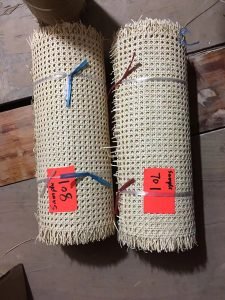
El patrón de tejido en sí cuenta una historia. En un tejido cuadrado (radio), cada intersección debe mostrar un entrelazado consistente de uno por encima de uno. En patrones hexagonales, las tiras diagonales adicionales insertadas a 45 grados deben estar espaciadas uniformemente. Los huecos entre las tiras deben ser uniformes en toda la lámina.
Sostén la lámina a la luz. En un tejido cuadrado denso, deberías ver muy poca luz pasar. En un tejido hexagonal abierto, las aberturas deben ser idénticas en tamaño y forma. Las aberturas irregulares significan un tejido descuidado o grosores de tira inconsistentes.
Expectativas de color y envejecimiento
El ratán fresco de Grado A típicamente varía de un color verde-marrón claro a un paja pálido. Con el tiempo, se oscurece naturalmente a un tono miel cálido. Esto es normal y deseable. Sin embargo, si notas parches que ya están significativamente más oscuros en el momento de la entrega, esto puede indicar daños por humedad durante el almacenamiento o el envío. El ratán blanqueado debe mostrar un tono blanco o crema uniforme y consistente sin vetas amarillas.
Qué hacer cuando detectas problemas
Documenta todo con fotos inmediatamente al abrir el envío. Mide áreas problemáticas específicas. Contacta a tu proveedor dentro de la ventana de inspección acordada. En nuestras instalaciones, animamos a los compradores a enviar fotos dentro de las 48 horas posteriores a la entrega para que podamos resolver los problemas rápidamente.
¿Cómo pruebo la durabilidad y flexibilidad de la cincha para mis necesidades de producción de muebles?
Nuestros socios de producción en Foshan prueban cada lote antes de que se incorpore a puertas de gabinetes, cabeceros y paneles de sillas. Aprendimos desde el principio que omitir este paso conduce a paneles agrietados y mano de obra desperdiciada. Unas pocas pruebas sencillas pueden salvar una línea de producción completa.
Prueba la durabilidad de la rejilla de ratán sumergiendo una muestra durante 15-30 minutos; el material de calidad se vuelve flexible sin rasgarse. Comprueba la flexibilidad en seco doblando suavemente las tiras; el Grado A resiste el agrietamiento. Realiza una prueba de tracción en hebras individuales para evaluar la resistencia a la tracción e inspecciona las uniones tejidas para un entrelazado seguro bajo tensión.
La Prueba de Remojo
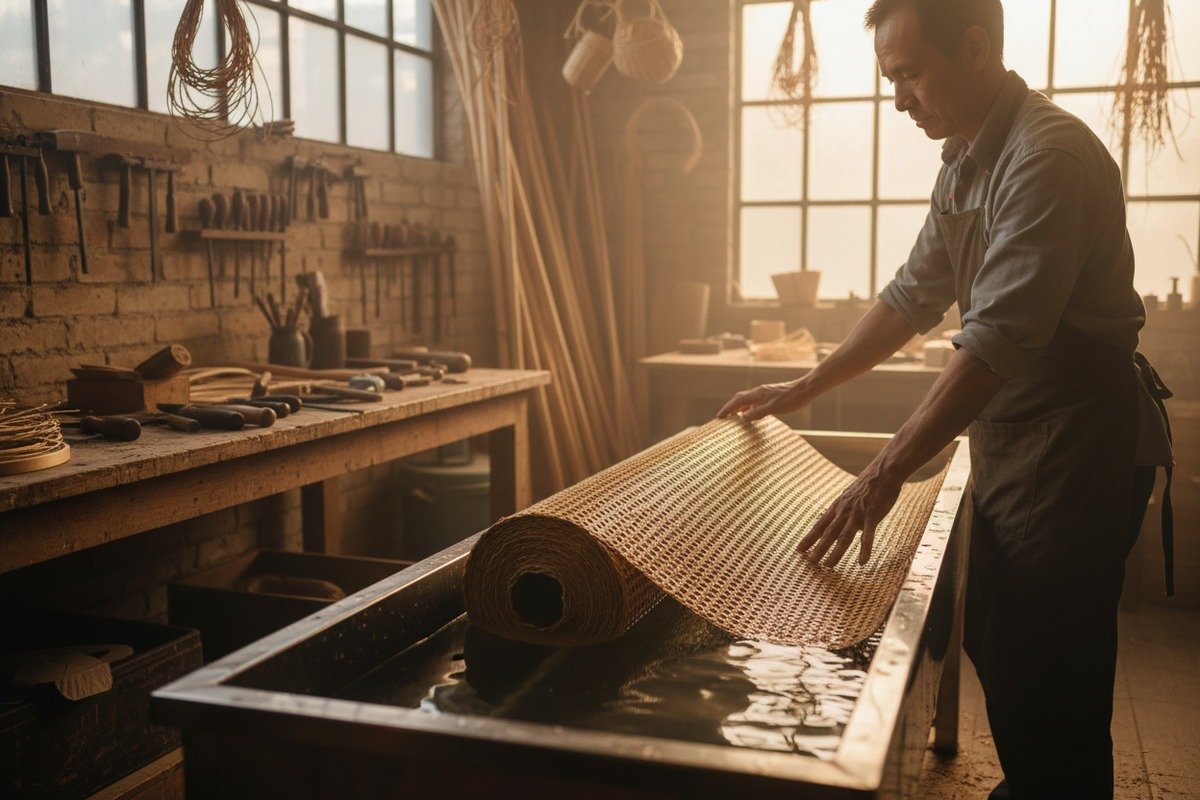
Esta es la prueba práctica más importante para cualquier fábrica de muebles. El ratán natural debe remojarse antes de la instalación. Corte una pequeña muestra de su envío y sumérjala en agua a temperatura ambiente durante 15 a 30 minutos. Después del remojo, la estera debe sentirse flexible y fácil de doblar. No debe rasgarse al tirar suavemente. No debe desintegrarse ni dejar residuos de fibra excesivos en el agua.
Si la estera permanece rígida después del remojo, el material puede estar demasiado seco o ser de mala calidad. Si se vuelve blanda o se desmorona, las fibras están degradadas, posiblemente por un almacenamiento inadecuado o por stock antiguo.
La prueba de flexión
Tome una tira seca de ratán y dóblela lentamente en forma de U. El material de Grado A resistirá la flexión pero no se romperá inmediatamente. Mostrará flexibilidad antes de alcanzar su punto de ruptura. El material de menor grado o degradado se rompe rápidamente con un crujido seco y quebradizo.
Después del remojo, repita la prueba. La tira remojada debe doblarse fácilmente en una curva cerrada sin agrietarse. Esta flexibilidad es esencial para envolver marcos de muebles curvos y presionar en ranuras de sellado.
La prueba de tracción
Agarre una sola hebra por ambos extremos y tire firmemente. El ratán de calidad tiene buena resistencia a la tracción 6 — debe estirarse ligeramente y resistir la rotura. Si se rompe con un esfuerzo mínimo, las fibras son débiles. Esto podría deberse a una mala selección de especies, sobreprocesamiento o envejecimiento.
Prueba de Estrés de Tejido
Aplique una presión moderada en el centro de un panel tejido con la palma de la mano. El tejido debe flexionarse ligeramente y volver a su posición. No debe desplazarse, separarse ni mostrar deformación permanente. Verifique los bordes del panel: ¿se están saliendo las hebras? Si es así, la tensión del tejido era demasiado floja durante la fabricación.
Consideraciones de Durabilidad Ambiental
| Prueba | Método | Resultado Esperado (Grado A) | Señal de advertencia |
|---|---|---|---|
| Prueba de remojo | Sumergir en agua 15–30 min | Flexible, sin roturas, residuo mínimo | Residuo blando, desintegrado y pesado |
| Doblado en seco | Doblar la tira en forma de U | Resiste pero no se rompe inmediatamente | Se rompe con un crujido quebradizo |
| Doblado en húmedo | Doblar la tira empapada firmemente | Se curva fácilmente, sin agrietarse | Se agrieta o se astilla a pesar de estar empapada |
| Prueba de tracción | Tirar firmemente de una sola hebra | Se estira ligeramente, aguanta | Se rompe con fuerza mínima |
| Presión de tejido | Presionar la palma en el centro del panel | Se flexiona y vuelve a su posición original | Se forman huecos, deformación permanente |
| Comprobación del borde | Tire de los hilos del borde | Los hilos permanecen bloqueados en el tejido | Los hilos se sueltan fácilmente |
Sensibilidad a la humedad
El ratán natural es sensible a la humedad. Esto no es un defecto, es una característica del material orgánico. Para muebles de interior, esto rara vez es un problema. Pero si sus clientes utilizan tejido de ratán en baños, patios cubiertos o climas húmedos, debe comunicar claramente estas limitaciones. Con el tiempo, el exceso de humedad provoca moho, deformación y descomposición de las fibras. Existe ratán natural tratado o recubierto, pero los puristas prefieren la versión sin tratar y transpirable por su autenticidad y apariencia.
Lo que recomendamos a nuestros socios de fábrica
Solicite un rollo de muestra antes de comprometerse con un pedido grande. Realice las cinco pruebas anteriores. Compare los resultados entre proveedores. Los pocos días y el pequeño costo involucrados lo protegerán de miles de dólares en productos defectuosos. Cuando trabajamos con nuevos socios, siempre enviamos muestras de prueba primero y los guiamos a través de estas comprobaciones exactas.
¿Qué preguntas específicas debo hacerle a mi mayorista para verificar el origen y el procesamiento del ratán?
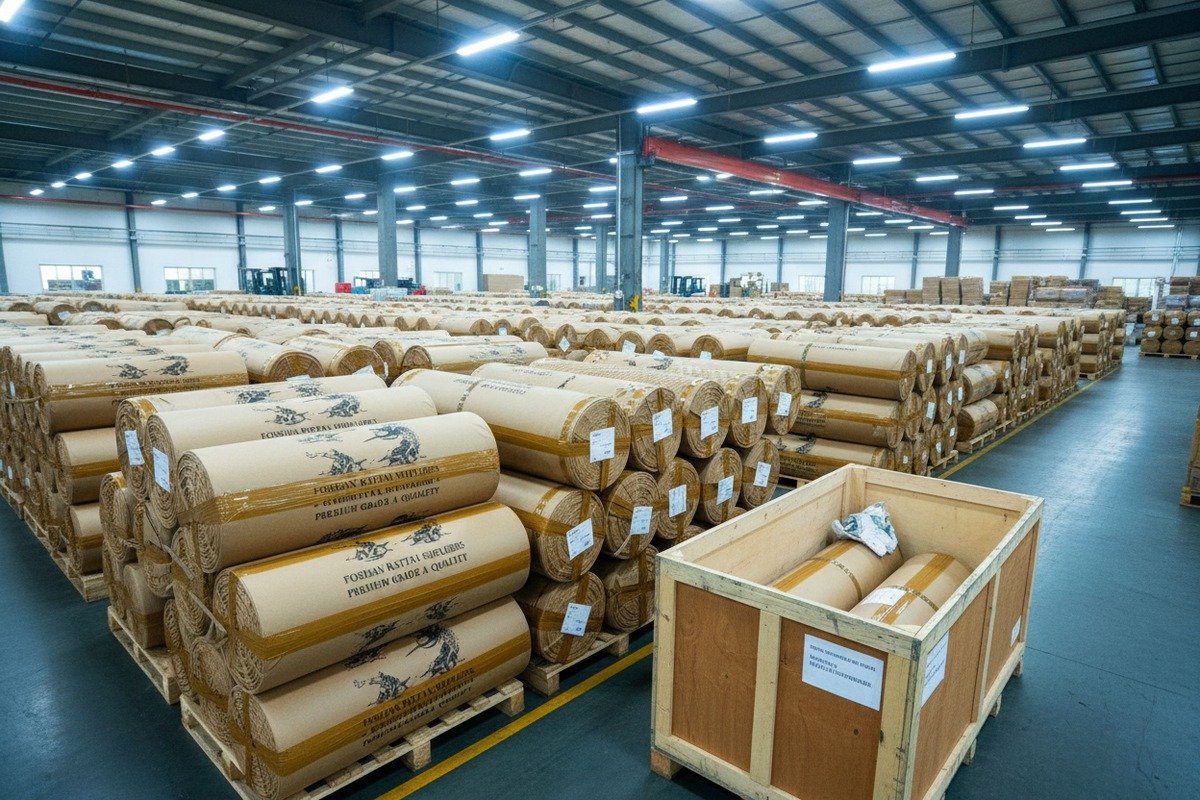
En nuestros años de exportación de tejido de caña de ratán a más de una docena de países, hemos visto a compradores aceptar respuestas vagas de los proveedores y pagar el precio más tarde. Las preguntas correctas exponen rápidamente a los vendedores poco fiables. Las preguntas incorrectas, o ninguna pregunta en absoluto, lo dejan adivinando hasta que llega el contenedor.
Pregunte a su mayorista estas preguntas críticas: ¿Qué especie de ratán se utiliza? ¿De dónde se obtienen y procesan las materias primas? ¿Qué criterios de clasificación definen su Grado A? ¿Puede proporcionar documentación y fotos del procesamiento? ¿Cuál es su tasa de defectos y cuál es su política de devolución por problemas de calidad? Las respuestas verificadas revelan proveedores confiables.
Empiece por la especie y el origen
No todo el ratán es igual. Existen cientos de especies en el género Calamus 7, pero solo un puñado produce tiras adecuadas para tejer de calidad para muebles. Pregunte a su proveedor qué especies utilizan y dónde se cosechan. El ratán crece principalmente en Sudeste asiático 8 — Indonesia, Vietnam, Filipinas y Malasia son las principales fuentes.
Si un proveedor no puede nombrar la especie o el país de origen, eso es una señal de alerta. En nuestras instalaciones de procesamiento en Indonesia, trabajamos con especies específicas seleccionadas por su densidad de fibra, ancho de tira y rendimiento de tejido. Esta no es información propietaria; un proveedor confiable debería compartirla abiertamente.
Pregunte sobre los pasos de procesamiento
El viaje desde el tallo de ratán crudo hasta la cincha terminada implica múltiples pasos: pelado, clasificación, lijado, secado, graduación, empalme y tejido. Pida a su mayorista que describa su proceso. Mejor aún, solicite fotos o videos de la fábrica. Los proveedores modernos a menudo documentan sus líneas de producción para la transparencia del comprador.
Las preguntas clave de procesamiento incluyen:
- ¿Cómo se seca el ratán? ¿Secado al sol o secado en horno?
- ¿Se lija la superficie a máquina o a mano?
- ¿Cómo se unen las tiras cortas? ¿Se inspeccionan las uniones?
- ¿Qué método de tejido se utiliza? ¿Se controla la tensión durante el tejido?
Inmersión profunda en los criterios de graduación
Cuando un proveedor dice "Grado A", pregúnteles qué significa específicamente. Solicite sus criterios de graduación por escrito. ¿Cómo definen el límite entre el Grado A y el Grado B? ¿Qué tolerancia a defectos existe?
Estas son las preguntas que más importan:
| Pregunta | Por qué importa | Respuesta aceptable |
|---|---|---|
| ¿Qué especies de ratán utilizan? | No todas las especies son adecuadas para tejer | Nombre específico de la especie, por ejemplo, Calamus Rotan |
| ¿Dónde se cosecha el ratán? | El origen afecta la calidad y la sostenibilidad | Región o país específico (por ejemplo, Kalimantan, Indonesia) |
| ¿Puede compartir sus criterios de calificación? | "Grado A" varía según el proveedor | Documento escrito con tolerancias de defectos específicas |
| ¿Cuál es su tasa de defectos típica? | Revela honestidad y rigor de control de calidad | Porcentaje honesto (por ejemplo, 2–5% para lotes de Grado A) |
| ¿Ofrecen inspección previa al envío? | Garantiza la responsabilidad | Sí, con documentación fotográfica/videográfica |
| ¿Cuál es su política de devoluciones/reclamaciones? | Protege su inversión | Términos claros con ventana de inspección definida |
| ¿El ratán está tratado con productos químicos? | Importante para las afirmaciones de "100% natural" | Divulgación de cualquier tratamiento, recubrimiento o blanqueo |
| ¿Puede enviar una muestra antes de un pedido a granel? | Permite pruebas prácticas | Sí, a un costo mínimo o nulo |
Sostenibilidad y Abastecimiento Ético
El industria del ratán 9 enfrenta verdaderos desafíos de sostenibilidad. La sobreexplotación en los bosques del sudeste asiático es una preocupación legítima. Pregunte a su proveedor si su ratán proviene de plantaciones gestionadas o de recolección silvestre. La certificación aún es limitada en esta industria, pero los proveedores responsables pueden al menos describir sus prácticas de abastecimiento.
Trabajamos directamente con cultivadores de plantaciones cerca de nuestras instalaciones en Indonesia. Esto nos da trazabilidad desde el bosque hasta el rollo terminado. No todos los proveedores pueden ofrecer esto, pero aquellos que invierten en sus cadena de suministro 10 deberían poder proporcionar algún nivel de verificación de origen.
Tratamientos Químicos y Afirmaciones de "Natural"
Algunos ratanes etiquetados como "100% natural" han sido blanqueados, fumigados o recubiertos con acabados protectores. Estos tratamientos no son necesariamente malos: el blanqueo crea el popular aspecto de ratán blanco y la fumigación antimoho protege el material durante el envío. Pero los compradores merecen saber. Pregunte directamente: ¿se ha tratado este material con algún producto químico? Si es así, ¿cuáles?
Esto es especialmente importante para mercados con regulaciones de importación estrictas, como la UE y Australia, donde ciertos fumigantes están restringidos.
Señales de Alerta a Tener en Cuenta
Tenga cuidado si un proveedor no puede responder preguntas básicas de origen, se niega a enviar muestras, no tiene estándares de clasificación escritos u ofrece precios significativamente por debajo del promedio del mercado. Los precios extremadamente bajos generalmente significan grados inferiores que se venden como premium, material sintético mezclado o atajos tomados durante el procesamiento.
La confianza se construye a través de la transparencia. Las mejores relaciones con los proveedores que tenemos, ya sea enviando a los Países Bajos, a los EE. UU. o a Australia, se basan en la comunicación abierta y los estándares de calidad documentados.
Conclusión
Identificar la auténtica y de alta calidad malla de ratán se reduce a saber qué buscar, qué tocar y qué preguntar. Utilice las comprobaciones visuales, las pruebas prácticas y las preguntas al proveedor de esta guía para proteger cada pedido que realice.
Notas al pie
1. Reemplazado con un artículo informativo que explica la malla de ratán y su producción desde la perspectiva de un proveedor de la industria. ↩︎
2. Explica qué es el alma de ratán y sus diversas aplicaciones en muebles y artesanías. ↩︎
3. Describe cómo funcionan los difusores de varillas y el papel de las varillas de ratán en la difusión de aromas. ↩︎
4. Detalla la composición y fabricación del ratán sintético como material alternativo. ↩︎
5. Describe la planta de palma de ratán, su origen y cómo se cosecha. ↩︎
6. Proporciona una definición científica de la resistencia a la tracción y su importancia en los materiales. ↩︎
7. Reemplazado con una página de Wikipedia que ofrece una visión general autorizada del género Calamus (palma). ↩︎
8. Identifica el sudeste asiático como la principal región de crecimiento y producción de ratán. ↩︎
9. Analiza la industria mundial del ratán, su potencial y los desafíos de sostenibilidad. ↩︎
10. Explica la gestión sostenible de la cadena de suministro y su importancia para las empresas. ↩︎
 English
  Español de México
  العربية
  Deutsch
  Français
  Русский