
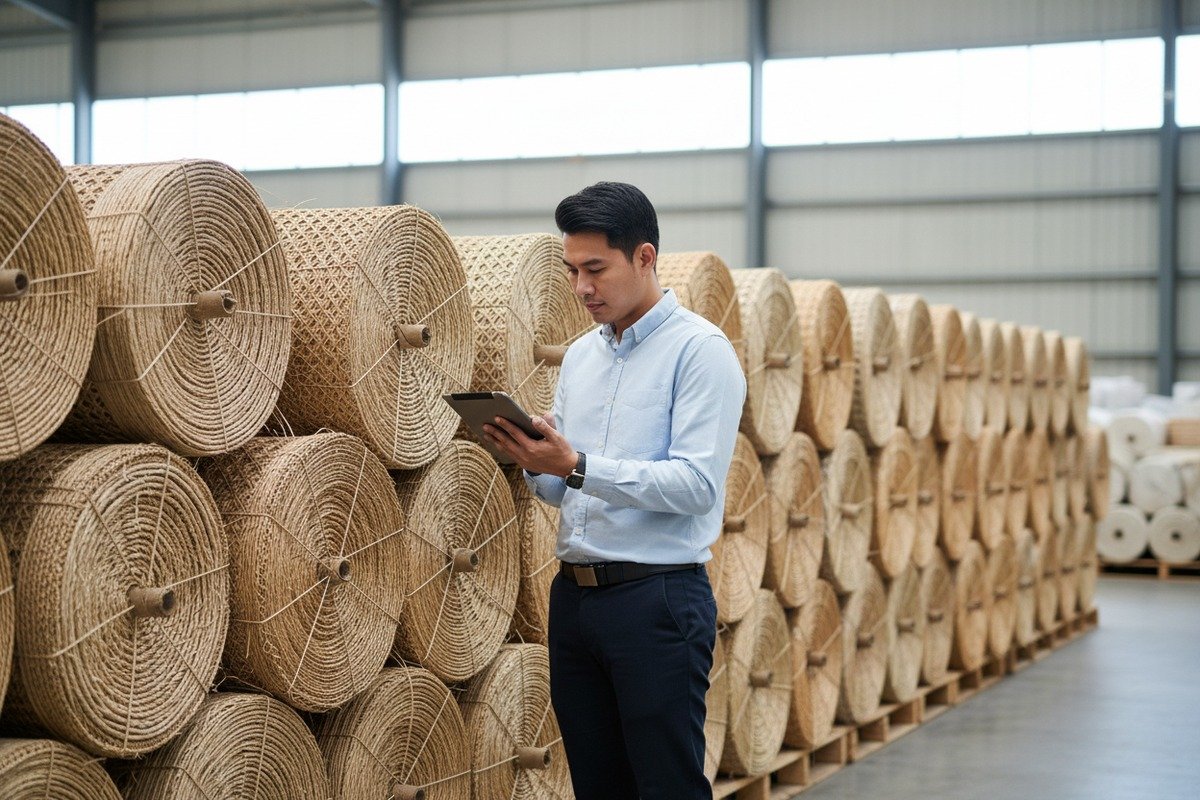
Cada año, vemos a los gerentes de compras dejar miles de dólares sobre la mesa simplemente porque no saben dónde o cómo comprar tejido de caña de ratán 1 al por mayor. El margen de los intermediarios, el material desperdiciado por tamaños de rollo incorrectos y las tarifas de envío que se disparan fuera de control: estos problemas merman rápidamente los márgenes.
Para ahorrar dinero al comprar al por mayor rejilla de ratán natural, obtenga directamente de fabricantes en Indonesia o Vietnam, elija el grado de material adecuado para su proyecto, consolide envíos para reducir los costos de flete y solicite dimensiones de rollo personalizadas para minimizar el desperdicio de corte. Estos pasos pueden reducir su gasto total en un 20-40%.
Hemos pasado más de una década ayudando a fábricas de muebles, mayoristas de materiales y proveedores de construcción en más de 15 países a optimizar su adquisición de ratán 2. A continuación, desglosamos cuatro estrategias probadas que nuestros clientes utilizan a diario para obtener más valor de cada pedido.
¿Cómo puedo encontrar un fabricante directo de ratán para reducir mis costos mayoristas?
La mayoría de los compradores comienzan su búsqueda en Google o Alibaba 3. Pero encontrar un fabricante real, no un empresa comercial 4 que usa una máscara de fábrica, requiere un poco más de investigación. Operamos nuestra propia instalación de procesamiento de ratán 5 en Indonesia, y sabemos de primera mano cuántas capas se interponen entre la caña cruda y el almacén del comprador.
Para encontrar un fabricante directo de ratán, busca en plataformas como Alibaba proveedores verificados con certificaciones de fábrica, solicita recorridos en video de las líneas de producción, asiste a ferias comerciales como CIFF o Canton Fair, y prioriza proveedores ubicados en regiones productoras de ratán como Indonesia, Vietnam o el área de Foshan en China.
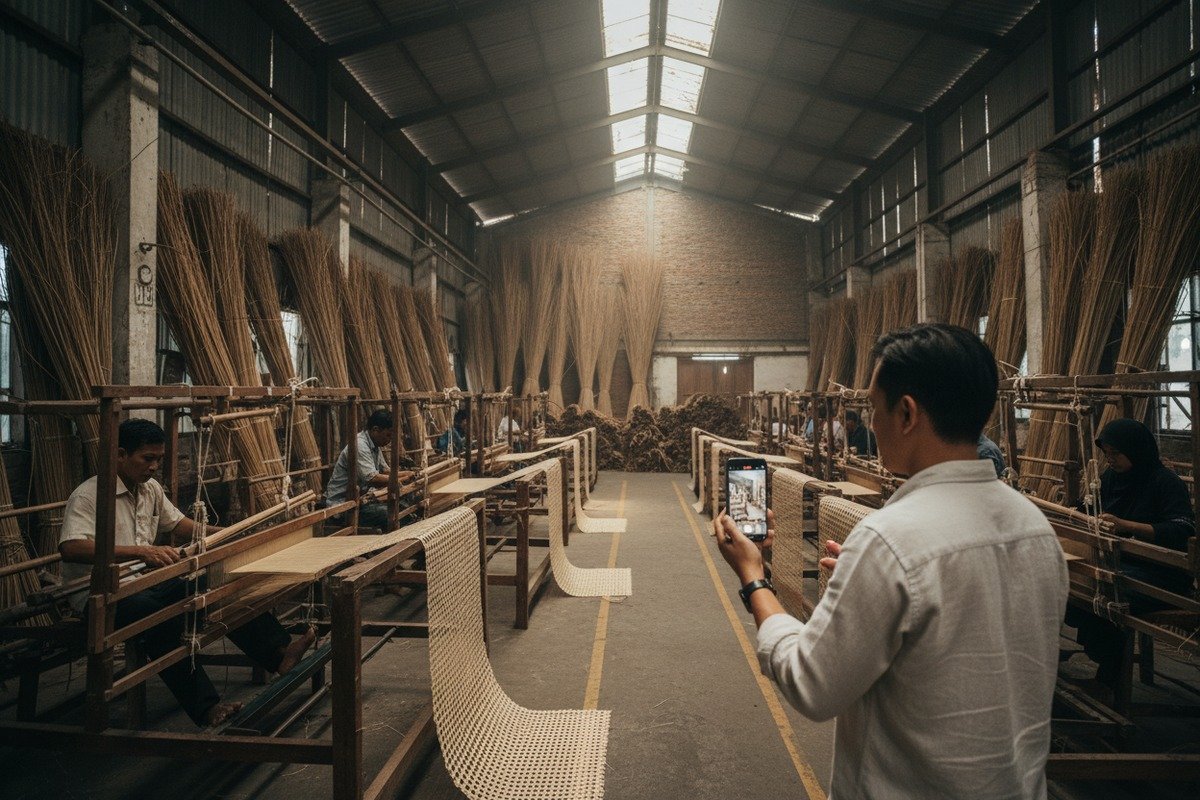
Por qué la adquisición directa es importante
Cuando compra a una empresa comercial, normalmente paga un margen del 15-30%. Ese intermediario no agrega valor al producto. Simplemente realiza el pedido con la misma fábrica que usted podría contactar. La adquisición directa elimina por completo esa capa de costo.
En nuestra experiencia exportando a EE. UU., Australia y Europa, los clientes que cambian de intermediarios a asociaciones directas con fábricas ahorran un promedio del 20% en su primer pedido. A lo largo de un año de pedidos repetidos, esos ahorros se acumulan.
Cómo identificar a un fabricante real
No todas las "fábricas" en Alibaba poseen realmente equipos de producción. Aquí hay señales de que está tratando con un fabricante real:
- Pueden mostrarle inventario de materia prima (troncos de ratán sin procesar).
- Ofrecen recorridos virtuales de fábrica, no solo fotos de salas de exposición.
- Tienen plazos de entrega constantes ligados a la capacidad de producción.
- Poseen certificaciones como ISO, BSCI o FSC para abastecimiento sostenible 6.
- Pueden personalizar patrones de tejido, anchos y largos.
Una empresa comercial, por otro lado, a menudo enumera cientos de categorías de productos no relacionadas. Si un proveedor vende cincha de ratán, luces LED y fundas para teléfonos, eso es una señal de alerta.
Dónde Buscar Proveedores
| Plataforma | Mejor para | Pros | Contras |
|---|---|---|---|
| Alibaba | Pedidos a granel B2B | Proveedores verificados, garantía comercial, filtros de MOQ | Muchos comerciantes disfrazados de fábricas |
| Feria de Cantón 7 | Asociaciones de alto valor | Conocer a los proveedores cara a cara, inspeccionar muestras | Costo de viaje, se celebra solo dos veces al año |
| Búsqueda en Google | Sitios web de fábricas especializadas | Encuentra especialistas como rattanwholesaler.com | Requiere más esfuerzo de verificación |
| Referencias de la industria | Conexiones de confianza | Calidad y fiabilidad pre-verificadas | Limitado a tu red existente |
| Directorios comerciales de Vietnam/Indonesia | Abastecimiento de origen | Acceso a procesadores de materias primas | Barreras lingüísticas, plazos de entrega más largos |
Construir una relación a largo plazo
Un pedido no te dará el mejor precio. Las fábricas recompensan la lealtad. Después de dos o tres pedidos, solicita un nivel de precios de asociación. Muchos fabricantes —incluidos nosotros— ofrecen descuentos por lealtad del 5–10% para clientes que se comprometen a volúmenes de compra trimestrales o anuales. Este enfoque funciona mucho mejor que regatear en cada factura.
Además, considera solicitar un gestor de cuentas dedicado. Cuando tu proveedor conoce tus preferencias, los pedidos repetidos se vuelven más rápidos y los errores disminuyen. Eso solo ahorra dinero en devoluciones y reemplazos.
¿Qué grado de cincha de ratán natural ofrece la mejor relación calidad-precio para mis proyectos de muebles específicos?
Elegir el grado incorrecto es uno de los errores más costosos que vemos. Un cliente una vez pidió premium Ratán indonesio de grado A 8 para una línea de muebles de cafetería económica: material hermoso, pero el proyecto no lo necesitaba. Ese gasto excesivo podría haber financiado un envío adicional completo del grado correcto.
El grado de tejido de ratán de mejor valor depende de tu proyecto. El Grado A (premium) es adecuado para muebles de alta gama y restauraciones de reliquias familiares. El Grado B ofrece una calidad sólida a un costo 20-30% menor para producción de gama media. Los rollos económicos o de Grado B con pequeños defectos cosméticos funcionan perfectamente para aplicaciones pintadas, cubiertas o ocultas.
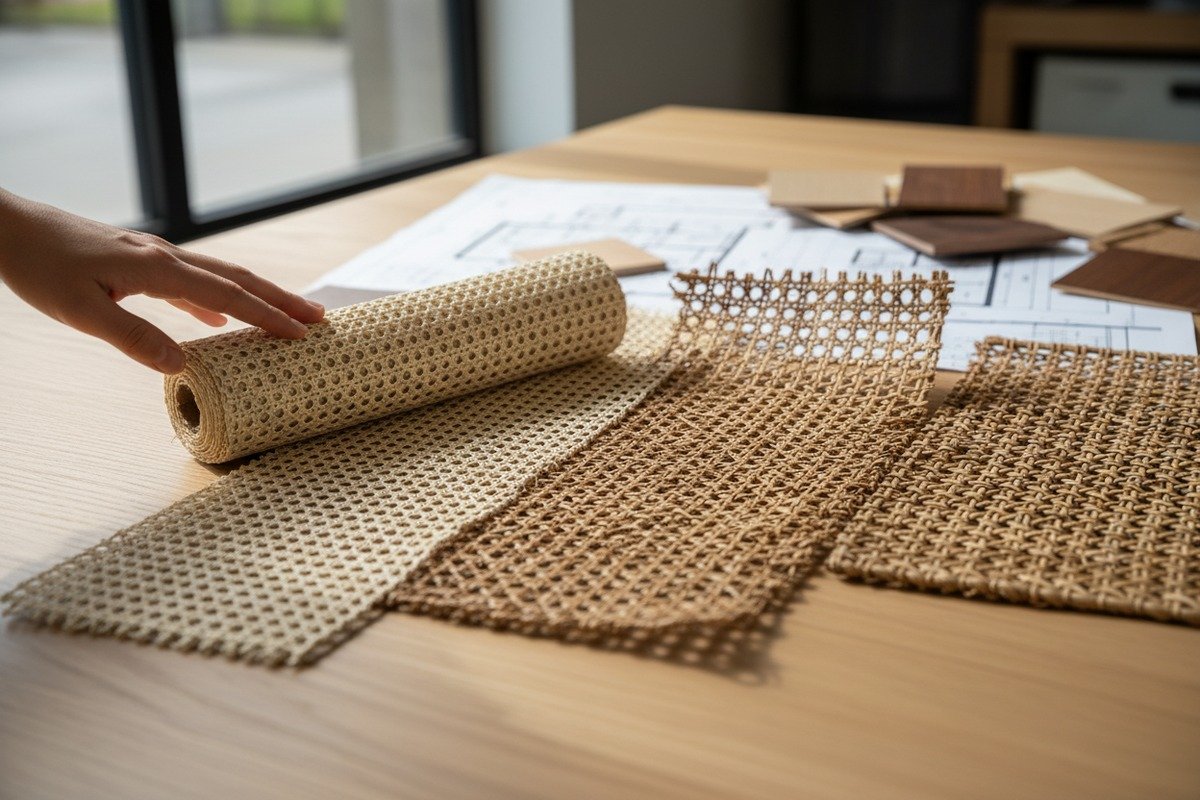
Comprendiendo los Grados de Ratán
No toda la rejilla de ratán es igual. El grado refleja la uniformidad del tejido, el grosor y la consistencia del color de las hebras de ratán, y la presencia de imperfecciones naturales. Así es como los grados suelen desglosarse:
| Grade | Características | Mejores casos de uso | Rango de precios (por rollo, 15 m) |
|---|---|---|---|
| Grado A (Premium) | Color uniforme, tejido apretado y consistente, sin nudos ni roturas visibles | Muebles de alta gama, exhibición en tiendas, restauración de reliquias familiares | $90–$122 |
| Grado B (Estándar) | Ligera variación de color, irregularidades menores en el tejido, nudos pequeños ocasionales | Producción de muebles de gama media, proyectos de hostelería | $60–$85 |
| Grado B / Fuera de especificación | Parches de color notables, hebras sueltas, defectos cosméticos | Muebles pintados, paneles de respaldo, inserciones ocultas, prototipos | $35–$55 |
Adapta el grado a la aplicación
Cuando nuestro equipo de producción procesa ratán de nuestras instalaciones en Indonesia, cada lote se clasifica por grado. Siempre les decimos a los clientes: no paguen por una perfección que no verán.
Si está construyendo paneles de caña para sillas que se teñirán de nogal oscuro, las pequeñas variaciones de color en el Grado B se vuelven invisibles después del acabado. Si está haciendo biombos decorativos donde cada hebra está a la vista, el Grado A vale la inversión.
Para prototipos y muestras, los rollos de grado B ahorran un 40-50% en comparación con los premium. Muchas fábricas de muebles que suministramos en los Países Bajos y España utilizan el grado B exclusivamente para sus muestras de producción antes de comprometer material de grado A para las piezas finales.
Natural vs. Sintético: Una consideración de costo
Algunos proyectos no requieren ratán natural en absoluto. Para muebles de exterior o ambientes de alta humedad, la mimbre de ratán sintético de PE 9 dura más y cuesta menos con el tiempo. El ratán natural tiene una vida útil interior de más de 5 años, pero puede degradarse rápidamente cuando se expone a la lluvia y al sol directo.
Aquí hay una comparación rápida para ayudarle a decidir:
| Factor | Ratán natural | Ratán Sintético (PE) |
|---|---|---|
| Estética | Textura cálida, orgánica y auténtica | Imita el aspecto natural, menos calidez |
| Indoor Lifespan | 5–10 años | 8–15 años |
| Idoneidad para exteriores | Pobre — se degrada con la humedad/UV | Excelente — resistente a la intemperie |
| Precio (rollo de 30m) | 75–122 € | 4.90–21.90 € |
| Ecológico | Renovable, biodegradable | A base de plástico, no biodegradable |
| Mantenimiento | Necesita acondicionamiento ocasional | Limpiar con un paño, cuidado mínimo |
La conclusión clave: elija según la función, no por costumbre. Si su cliente final necesita durabilidad para exteriores, el ratán natural es el material incorrecto independientemente del precio.
No pase por alto la economía del patrón de tejido
Los diferentes patrones de tejido utilizan diferentes cantidades de caña cruda por metro cuadrado. Un tejido de cesta apretado consume más material que un patrón de caña hexagonal abierto. Esa diferencia de material se refleja en el precio.
Para paneles decorativos donde el patrón es el punto focal, un tejido hexagonal abierto o de radio le da un aspecto impresionante a un menor costo por rollo. Para aplicaciones estructurales —paneles de asiento que soportan peso— un tejido más denso vale el gasto adicional porque agrega resistencia y longevidad.
¿Cómo puedo optimizar el volumen de mi pedido a granel para ahorrar en tarifas de envío y embalaje internacionales?
Los costos de envío han sorprendido a más de un cliente. Una vez tuvimos un comprador en Turquía que pidió 20 rollos de cincha de ratán de 24 pulgadas. El costo del producto era competitivo. Pero el envío era demasiado pequeño para un contenedor completo y demasiado grande para un mensajero exprés: aterrizó en la peor zona de precios para el transporte marítimo. Un pequeño ajuste en el volumen del pedido habría ahorrado más de 600 $.
Para optimizar el volumen de pedidos a granel para ahorrar en envíos, consolide los pedidos para llenar un contenedor completo (FCL), combine varios SKU en un solo envío, negocie términos FOB o CIF con su proveedor y programe sus pedidos para evitar las temporadas altas de flete. Alcanzar los umbrales de volumen de contenedores puede reducir los costos de envío por unidad en un 30-50%.
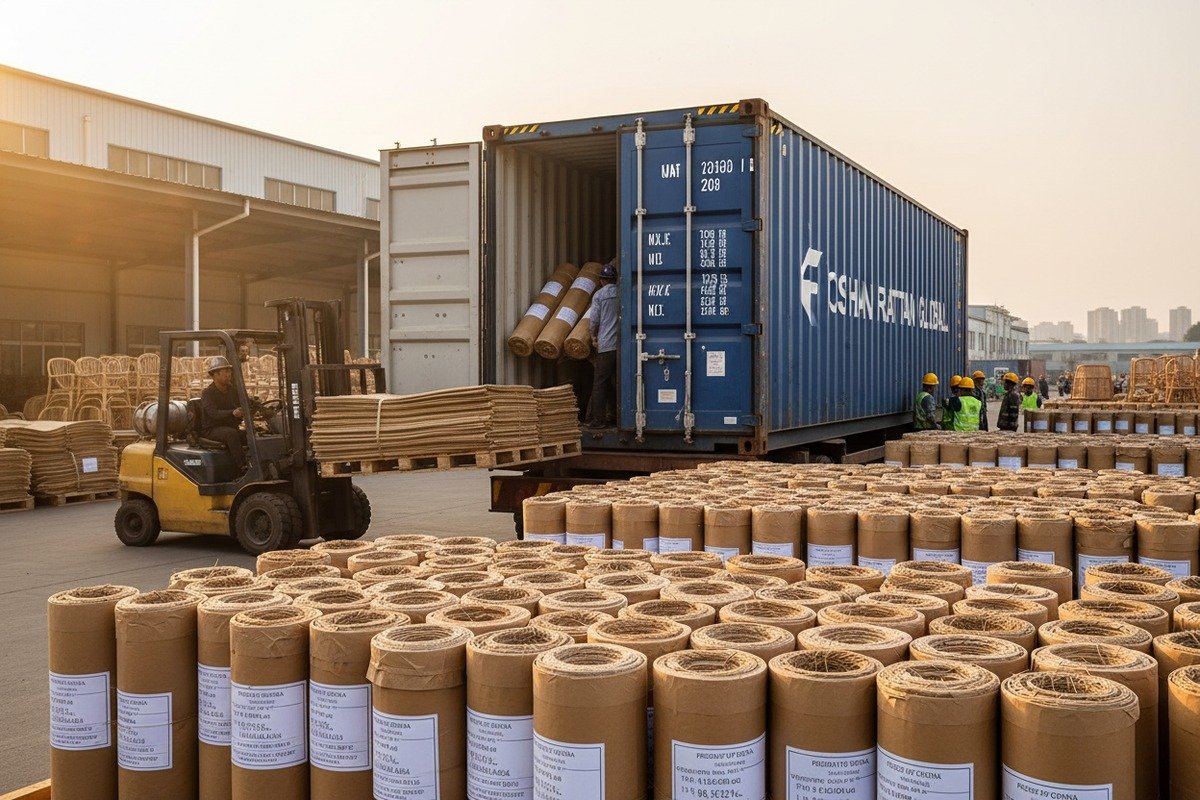
Comprenda la economía de los contenedores
El transporte marítimo internacional 10 funciona según un principio simple: usted paga por el espacio, no por el peso (para la mayoría de los productos de ratán). Un contenedor de 20 pies (20GP) y un contenedor de 40 pies (40GP) tienen costos fijos, independientemente de si están medio llenos o llenos hasta la capacidad.
Cuando enviamos desde nuestro almacén de Foshan, así es como se ven las cargas típicas de contenedores para cincha de ratán:
| Tipo de contenedor | Volumen interno | Capacidad de cincha de ratán | Costo de flete típico (a la costa oeste de EE. UU.) |
|---|---|---|---|
| 20GP | 33 metros cúbicos | ~400–500 rollos (15m, 24" de ancho) | $1,800–$2,500 |
| 40GP | 67 metros cúbicos | ~800–1,000 rollos | $2,800–$3,800 |
| 40HQ | 76 metros cúbicos | ~900–1,100 rollos | $3,000–$4,200 |
| LCL (compartido) | Variable | 1–100 rollos | $150–$800+ (cobrado por CBM) |
LCL (Carga Menor que un Contenedor) los cargos por metro cúbico y las tarifas por unidad son mucho más altas. Si su pedido es 60% de un 20GP, a menudo tiene más sentido financiero agregar inventario adicional y llenar el contenedor. El costo marginal del producto es mucho menor que la prima LCL por CBM.
Combinar SKUs en un solo envío
Muchos de nuestros clientes piden más que solo esterilla de ratán. También necesitan médula de ratán, caña de atar, postes de ratán o paneles tejidos. Combinar estos en un solo envío es una de las formas más rápidas de llenar un contenedor y reducir su costo de envío efectivo por producto.
Aquí es donde trabajar con un mayorista de ratán integral vale la pena. En lugar de coordinar tres envíos de tres proveedores —cada uno con su propia factura de flete, declaración de aduanas y calendario de entrega—, usted consolida todo en un contenedor de un solo origen.
Programación de sus pedidos
Las tarifas de flete fluctúan a lo largo del año. Las tarifas suelen aumentar de agosto a octubre, ya que los minoristas se abastecen para la temporada navideña. De enero a marzo (justo después del Año Nuevo chino) a menudo se ven tarifas más bajas porque la demanda disminuye.
Planifique sus compras a granel en torno a estos ciclos. Si puede realizar su pedido más grande en el primer trimestre o a principios del segundo trimestre, se beneficiará de tarifas de flete más bajas y una mayor rapidez en la fábrica, ya que la mayoría de las fábricas tienen menos trabajo durante ese período.
Empaquetado que protege y ahorra espacio
Un embalaje deficiente desperdicia espacio en el contenedor. Los rollos de esterilla de ratán deben envolverse firmemente en film plástico y luego colocarse en cajas de cartón reforzadas o agruparse en paletas. El embalaje suelto crea espacios de aire que merman su asignación de metros cúbicos.
Desde nuestras instalaciones, utilizamos técnicas de compresión que reducen el diámetro del rollo en un 10-15% sin dañar el tejido. Esto significa más rollos por contenedor y un menor costo de flete por unidad. Siempre pregunte a su proveedor sobre su método de embalaje y solicite fotos de los productos empaquetados antes del envío.
Negocie los Incoterms sabiamente
FOB (Libre a bordo) significa que usted controla al transitario y puede buscar la mejor tarifa. CIF (Costo, Seguro y Flete) significa que el proveedor organiza el envío; es conveniente, pero usted pierde la transparencia de precios. Para pedidos a granel grandes, FOB generalmente le brinda más control y mejores ahorros, especialmente si tiene un socio de flete establecido.
¿Puedo solicitar dimensiones de rollo personalizadas para minimizar el desperdicio de material y reducir mi gasto total?
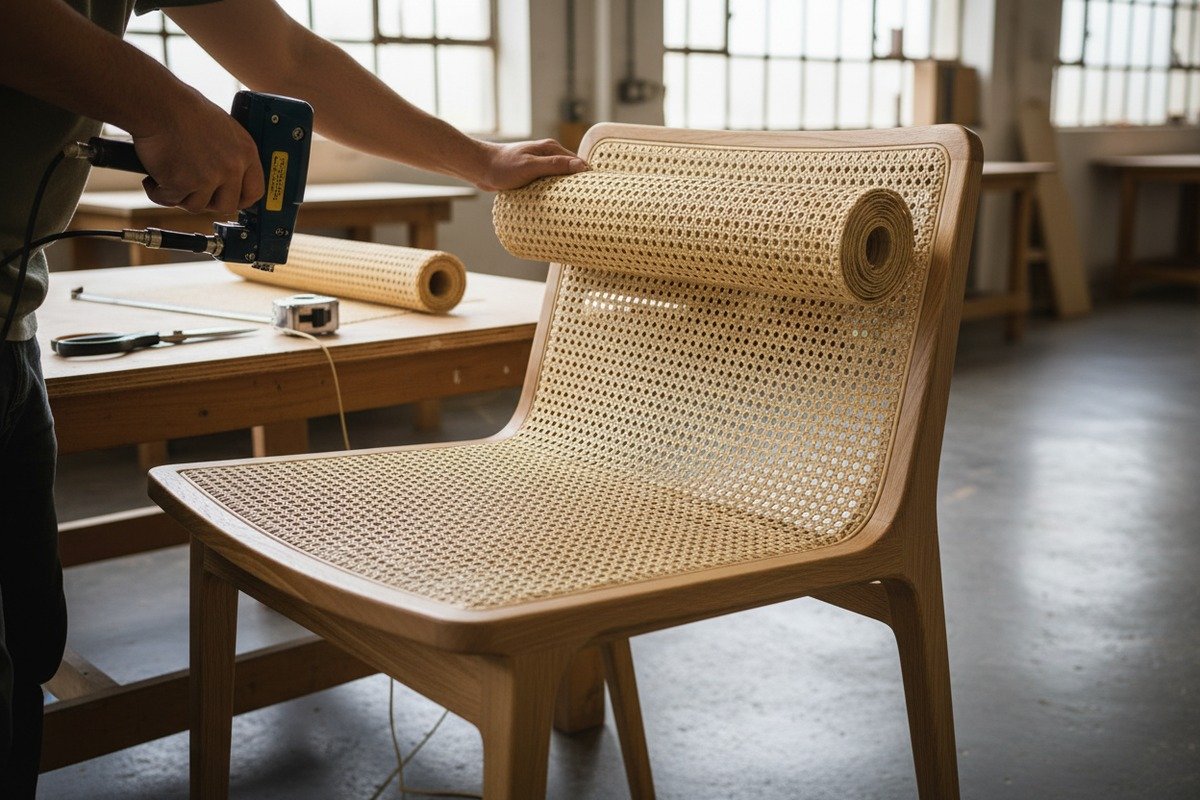
Uno de los ahorros de costos más pasados por alto en nuestra industria se encuentra dentro de las dimensiones del rollo. Trabajamos con una fábrica de muebles en Australia que pedía rollos estándar de 24 pulgadas de ancho y los cortaba a 20 pulgadas para sus paneles de sillas. Eso significaba 4 pulgadas de desperdicio en cada corte, aproximadamente el 17% del material iba directamente al contenedor de chatarra.
Sí, la mayoría de los fabricantes de ratán establecidos ofrecen anchos y largos de rollo personalizados. Al especificar dimensiones que se ajusten a las necesidades de su proyecto —como anchos exactos de panel o dimensiones de asiento—, puede eliminar entre un 10 y un 20% de desperdicio de material, reducir la mano de obra de recorte y disminuir su costo total por pieza terminada.
Por qué los rollos estándar crean desperdicio
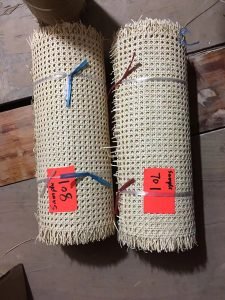
Los rollos de cincha de ratán estándar vienen en anchos comunes: 18 pulgadas, 24 pulgadas, 36 pulgadas y, a veces, 39.5 pulgadas. Las longitudes suelen ser de 15 metros o 30 metros. Estas dimensiones funcionan bien para compradores de uso general. Pero la producción de muebles no es de uso general.
Si el panel del asiento de su silla necesita un ancho de 21 pulgadas, un rollo de 24 pulgadas desperdicia 3 pulgadas por corte. En más de 500 sillas, eso son 125 pies de cincha desperdiciada, aproximadamente 2.5 rollos adicionales que pagó pero tiró.
Cómo funcionan las dimensiones personalizadas
En nuestras instalaciones de procesamiento, podemos ajustar los anchos de los rollos en incrementos tan pequeños como media pulgada. Las longitudes personalizadas son aún más fáciles: simplemente cortamos el rollo en la marca de metro especificada. Aquí hay algunos aspectos a considerar al solicitar dimensiones personalizadas:
Combinar rollos con su lista de cortes
Antes de realizar un pedido, cree una lista de cortes para su producción. Planifique cada pieza que necesite:
- Paneles de asiento: ancho × profundidad
- Paneles traseros: ancho × alto
- Inserciones decorativas: dimensiones exactas
- Paneles de puertas o frentes de gabinetes: medidas de apertura del marco
Luego trabaje hacia atrás. Elija un ancho de rollo que se divida uniformemente en sus dimensiones de corte con un mínimo de desperdicio. Por ejemplo, si necesita tiras de 10 pulgadas de ancho, pida rollos de 20 pulgadas: obtendrá dos tiras por corte sin desperdicio.
Consideraciones para pedidos personalizados
| Factor | Rollos estándar | Rollos personalizados |
|---|---|---|
| Tiempo de entrega | Inmediato / 3–5 días | Producción de 7–15 días |
| MOQ | A menudo 1 rollo (15m) | Típicamente 10–30 rollos por especificación |
| Opciones de ancho | Fijo: 18", 24", 36" | Flexible: 11.5" a 39.5" en incrementos de 0.5" |
| Opciones de longitud | Fijo: 15m o 30m | Personalizado: 5m a 50m+ |
| Reducción de residuos | Promedio de 10–20% de desperdicio | Casi cero si se planifica correctamente |
| Precio unitario | Precios estándar | Puede ser 3–5% más alto por rollo, pero ahorros netos por reducción de desperdicio |
La ligera prima en los rollos personalizados — generalmente 3–5% — casi siempre se compensa con el material que no se desecha. Para tiradas de producción de 200+ piezas, las matemáticas favorecen fuertemente las dimensiones personalizadas.
Pedir por pulgada para proyectos pequeños
Algunos proveedores, especialmente minoristas con sede en EE. UU. como HH Perkins, venden mimbre de ratán por pulgada. Esto funciona para restauración de lotes pequeños o proyectos de bricolaje. A partir de 10 pies, comienzas a desbloquear descuentos por volumen. A 120 pulgadas (10 pies), algunos proveedores ofrecen descuentos automáticos de precio.
Pero para la producción a escala de fábrica, pedir por pulgada no es rentable. El precio por unidad es 3–5 veces mayor que los rollos a granel. El valor de la compra por pulgada es la precisión para trabajos pequeños, no la economía para los grandes.
Comunícate claramente con tu proveedor
Al solicitar dimensiones personalizadas, proporcione:
- Ancho exacto en pulgadas o centímetros (especifique la unidad).
- Longitud exacta en metros o pies.
- Nombre del patrón de tejido (hexagonal, radio, octogonal, tejido de cesta).
- Requisito de grado (A, B o fuera de especificación).
- Cantidad por especificación.
- Uso previsto: esto ayuda a la fábrica a recomendar la mejor densidad de tejido.
Las especificaciones claras evitan malentendidos, reducen las rondas de muestras y aceleran la producción. En nuestra experiencia, los pedidos con especificaciones detalladas se envían un 30% más rápido que las solicitudes vagas que requieren aclaraciones de ida y vuelta.
Agrupe las especificaciones personalizadas con los rollos estándar
Aquí tienes un consejo profesional de años de gestión de pedidos de clientes: si necesitas anchos personalizados para una línea de productos, pero los anchos estándar funcionan para otra, agrúpalos en una sola orden de compra. El volumen combinado te ayuda a alcanzar mejores niveles de precios, y los rollos estándar llenan el espacio del contenedor de manera eficiente junto con tus cortes personalizados.
Conclusión
Ahorrar dinero en correas de ratán a granel se reduce a cuatro acciones: obtener directamente de los fabricantes, igualar el grado de tu material con tu proyecto, llenar tus contenedores de envío y pedir dimensiones personalizadas que reduzcan el desperdicio.
Notas al pie
1. Explica el material discutido en el artículo. ↩︎
2. Reemplazado con un artículo que detalla las cualidades de un fabricante fiable de muebles de ratán indonesio, incluyendo el abastecimiento sostenible y las certificaciones, lo cual es muy relevante para la adquisición de ratán. ↩︎
3. Proporciona una visión general oficial del Grupo Alibaba y sus operaciones B2B. ↩︎
4. Define el modelo de negocio y el papel de una empresa comercial. ↩︎
5. Reemplazado con un artículo completo que describe el proceso completo de fabricación de muebles de ratán, desde la materia prima hasta el producto terminado, abordando directamente el concepto de una instalación de procesamiento. ↩︎
6. Explica la importancia de la certificación Forest Stewardship Council para el abastecimiento sostenible. ↩︎
7. Fuente oficial de información sobre la reconocida Feria de Importación y Exportación de China. ↩︎
8. Reemplazado con un artículo que explica específicamente la clasificación del ratán y la calidad del material, incluyendo las características del ratán de Grado A (Premium), lo cual es muy relevante para el texto ancla. ↩︎
9. Explica la composición y las propiedades del ratán sintético de polietileno. ↩︎
10. Proporciona información sobre métodos de envío y logística globales. ↩︎
 English
  Español de México
  العربية
  Deutsch
  Français
  Русский