
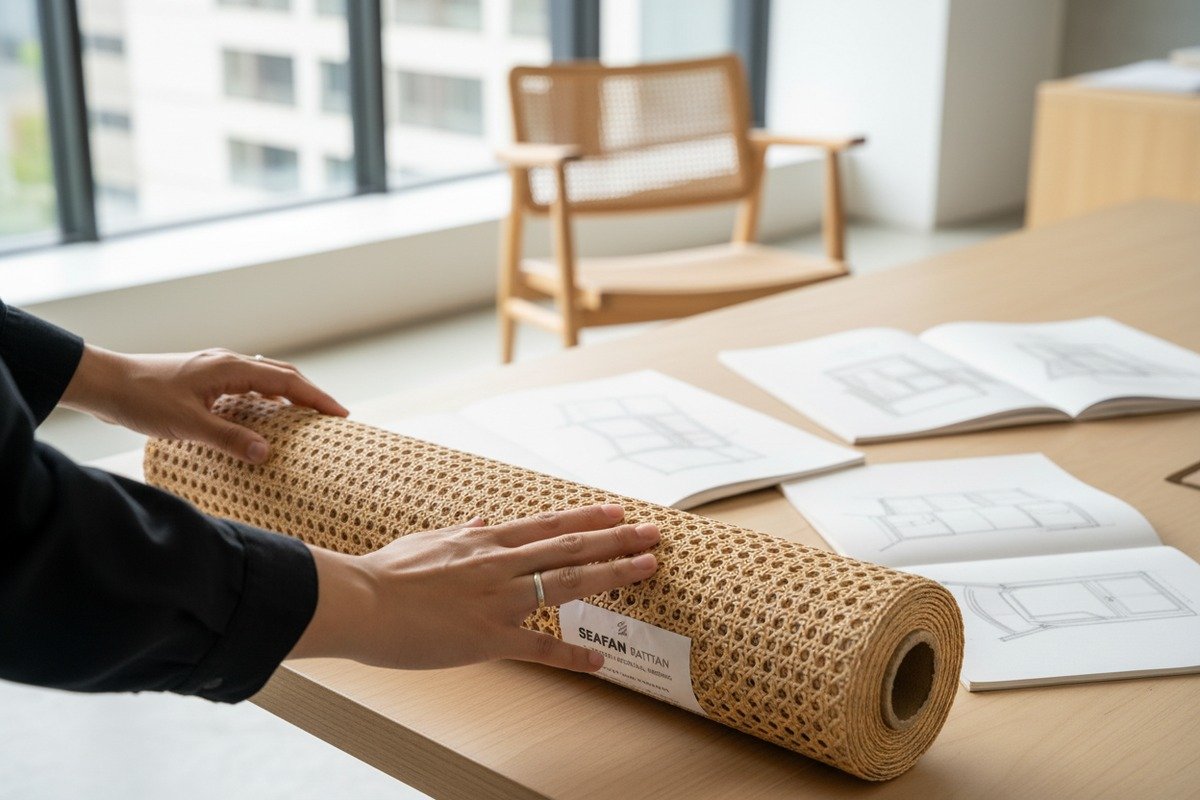
Cada año, nuestra planta de producción en Indonesia procesa miles de rollos de rejilla de ratán, y la pregunta más común que escuchamos de los compradores es simple: ¿cuánto durará? Luz UV 1? La respuesta nunca es sencilla. Hemos visto paneles de ratán bellamente tejidos durar más de dos décadas en muebles de interior, pero material idéntico degradarse en una sola temporada de monzones cuando se deja al aire libre sin protección. Esta brecha frustra a los gerentes de compras que necesitan cifras confiables para las garantías de sus productos y las afirmaciones de marketing.
La vida útil del mimbre de ratán natural depende de cinco factores principales: la exposición ambiental (UV, humedad, temperatura), el grado de calidad del material, la densidad del tejido, las rutinas de mantenimiento y si se utiliza en interiores o exteriores. Con el cuidado adecuado en interiores, el mimbre de ratán de alta calidad puede durar de 20 a 30 años, mientras que el uso en exteriores sin protección puede reducirlo a solo 3 a 5 años.
A continuación, desglosamos cada factor importante para que pueda tomar decisiones de abastecimiento más inteligentes y brindar a sus propios clientes una orientación clara. Empecemos por el entorno.
¿Cómo impactan la humedad y la luz solar en mi región en la durabilidad de mi ratán natural?
Cuando enviamos rejilla de ratán a compradores en los Países Bajos frente a Arabia Saudita, ya sabemos que el material enfrentará desafíos completamente diferentes. Una región trae humedad implacable; la otra trae UV intenso. Ambos entornos pueden reducir a la mitad la vida útil del mismo rollo de rejilla si el usuario final no está preparado.
La alta humedad promueve el moho, el mildiú y la putrefacción de las fibras en el ratán natural, mientras que la exposición prolongada a la luz solar causa decoloración, sequedad y fragilidad. Las regiones con climas interiores estables y moderados conservan mejor el ratán. La humedad extrema o los rayos UV pueden reducir la vida útil del tejido de décadas a solo unos pocos años sin medidas de protección.
Cómo la luz UV descompone las fibras de ratán
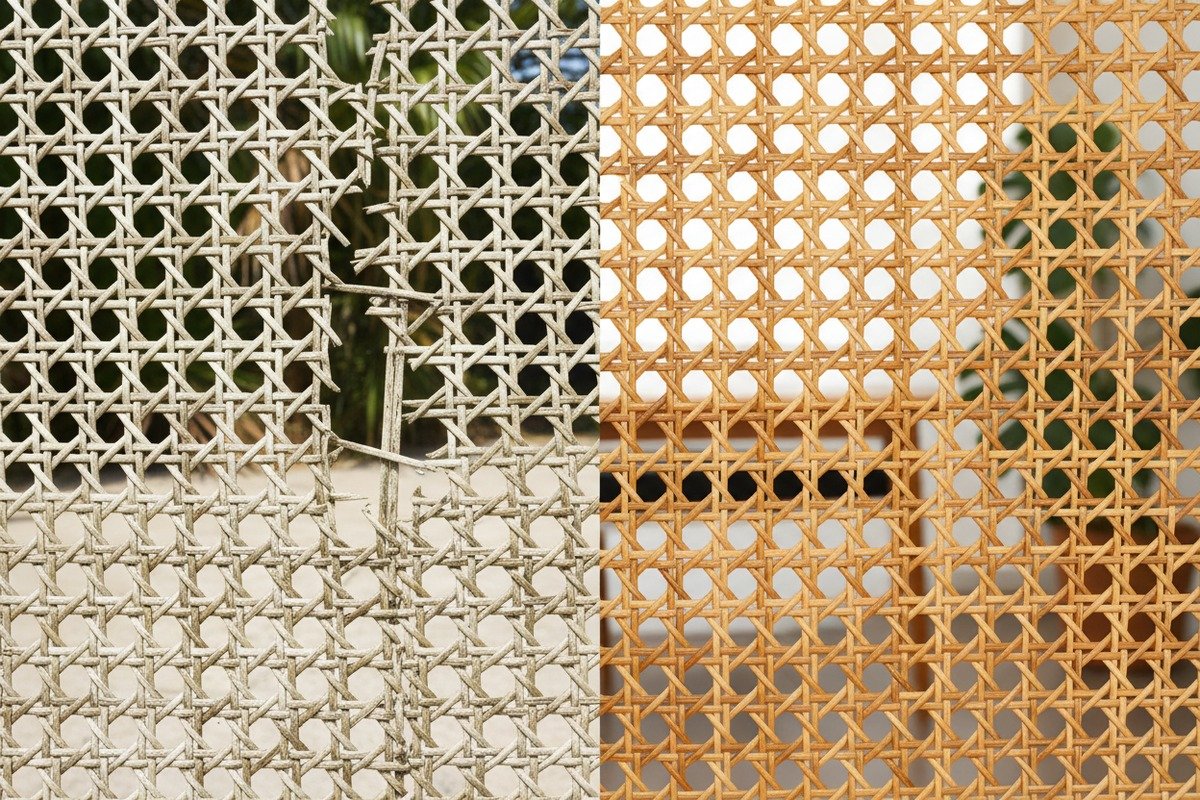
La luz solar es uno de los enemigos más agresivos del rejilla de ratán natural 2. Los rayos UV penetran la superficie delgada y porosa del ratán y descomponen la lignina que une las fibras de la planta. Durante semanas y meses, la rejilla se desvanece de un tono miel cálido a un color pálido y descolorido. Más importante aún, las fibras pierden flexibilidad. Se vuelven rígidas y quebradizas. Primero aparecen pequeñas grietas. Luego, la trama comienza a romperse bajo estrés normal.
En nuestras pruebas en la instalación de Foshan, las muestras dejadas bajo la luz solar tropical directa durante 90 días mostraron una reducción del 40% en resistencia a la tracción 3. Las muestras de interior en el mismo edificio, protegidas de las ventanas, mostraron menos del 5% de cambio. La diferencia es dramática.
Cómo la humedad y la humedad causan descomposición
El ratán es un material vegetal natural. Absorbe agua. En regiones con humedad relativa 4 consistentemente por encima del 70%, las fibras se hinchan. Cuando la humedad baja, se contraen. Este ciclo de expansión y contracción afloja la trama con el tiempo. Peor aún, el ratán húmedo es un caldo de cultivo para moho y mildiú 5. Estos hongos se alimentan de las fibras y causan manchas oscuras, olores desagradables y debilidad estructural.
Hemos recibido comentarios de compradores en el sudeste asiático que almacenan rollos de ratán en almacenes mal ventilados. En unos pocos meses, lotes enteros desarrollaron manchas de moho negro. El material no se pudo salvar.
Comparación del impacto regional
| Tipo de clima | Riesgo principal | Vida útil estimada (Interior, sin cuidado) | Vida útil estimada (Interior, con cuidado) |
|---|---|---|---|
| Tropical (alta humedad + UV fuerte) | Moho, decoloración, fragilidad | 5–8 años | 12–18 años |
| Árido / Desierto (baja humedad + UV intenso) | Secado, agrietamiento, decoloración | 4–7 años | 10–15 años |
| Templado (humedad moderada + UV suave) | Secado gradual | 10–15 años | 20–30 años |
| Frío / Continental (baja humedad + extremos estacionales) | Agrietamiento por cambios de temperatura | 8–12 años | 15–25 años |
Pasos prácticos para diferentes regiones
Si su mercado se encuentra en una zona tropical húmeda, aconseje a sus clientes finales que mantengan los muebles de ratán en habitaciones con aire acondicionado o bien ventiladas. Un deshumidificador cerca ayuda. Para regiones áridas, la nebulización ligera periódica y el aceitado evitan que las fibras se sequen por completo. En climas templados, la principal preocupación es la luz solar directa ocasional a través de las ventanas. Cortinas sencillas o reposicionar los muebles lejos del vidrio orientado al sur marca una diferencia significativa.
Los cambios de temperatura también importan. Las fibras de ratán se expanden y contraen con el calor y el frío. Si su comprador almacena muebles de ratán en un garaje sin calefacción durante el invierno, espere grietas. Las temperaturas interiores estables entre 15 °C y 30 °C son ideales.
¿Qué rutinas de mantenimiento debo seguir para evitar que mi tejido de ratán se vuelva quebradizo con el tiempo?
We often tell our wholesale buyers that selling rattan is only half the job. The other half is educating their customers on care. Our after-sales team tracks the most common complaints, and brittleness ranks at the top. The good news is that preventing it takes very little effort once you know the routine.
Para prevenir la fragilidad, limpie la rejilla de ratán regularmente con un cepillo suave o aspiradora, límpiela con un paño ligeramente húmedo mensualmente y aplique aceite de linaza o aceite mineral cada 6 a 12 meses. Evite empapar, productos químicos agresivos y sequedad prolongada. Una rutina de cuidado constante mantiene las fibras flexibles y puede extender la vida útil de la rejilla a 20-30 años en interiores.
Step-by-Step Cleaning
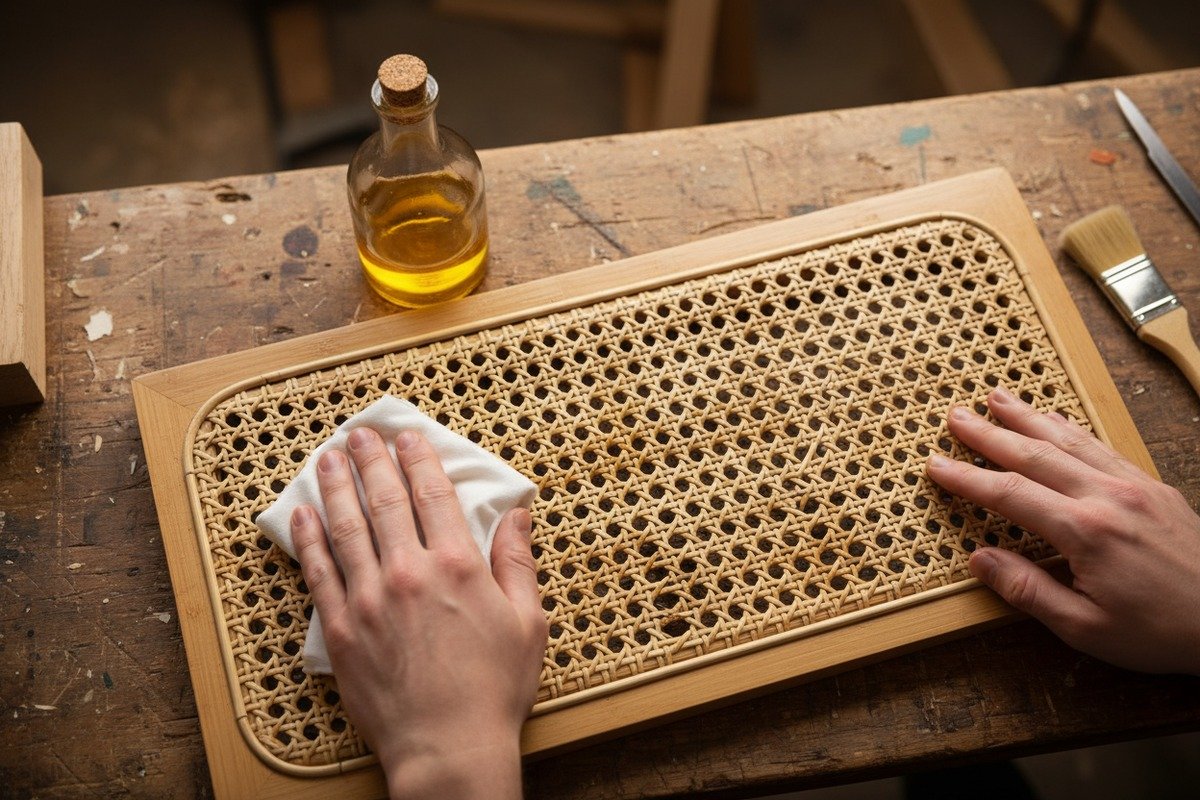
Dust is the silent enemy of rattan webbing. Fine particles settle into the weave and act like sandpaper when the furniture flexes. Over time, this abrasion weakens the fibers at every crossing point. A weekly pass with a soft-bristle brush or a vacuum with a brush attachment removes most surface dust. For deeper cleaning once a month, use a lightly dampened cloth. Wring it out thoroughly. You want the cloth barely moist, not wet. Wipe along the direction of the weave, not against it.
Never soak rattan webbing in water. Submerging it causes the fibers to swell unevenly, which loosens the weave structure and invites mold as it dries. If you need to remove a stubborn stain, a solution of mild soap and warm water applied with a soft cloth works well. Rinse the cloth, wipe again, and let the piece air-dry in a well-ventilated area.
Conditioning and Oiling
Dry fibers crack. It is that simple. Natural rattan loses its internal moisture content over time, especially in air-conditioned or heated rooms. Conditioning replaces that lost moisture and keeps the cane pliable.
Aceite de linaza 6 is the most traditional option. It penetrates the fibers, adds a subtle warm glow, and provides mild protection against insects. Aceite mineral 7 is a lighter alternative that does not darken the rattan as much. Murphy's Oil Soap, diluted according to directions, is another popular choice among our European buyers.
Apply oil with a soft cloth. Use a thin, even coat. Let it absorb for 15 to 20 minutes. Then wipe off any excess. Over-oiling can make the surface sticky and attract more dust. Less is more.
Recommended Maintenance Schedule
| Task | Frequency | Tools Needed | Time Required |
|---|---|---|---|
| Dust removal (brush/vacuum) | Semanalmente | Cepillo suave o aspiradora con accesorio de cepillo | 5 minutos |
| Damp cloth wipe | Mensualmente | Slightly damp lint-free cloth | 10 minutos |
| Acondicionamiento con aceite | Cada 6–12 meses | Linseed oil, mineral oil, or Murphy's Oil Soap; soft cloth | 20–30 minutos |
| Inspección de moho o grietas | Trimestralmente | Revisión visual; linterna para áreas ocultas | 5 minutos |
| Limpieza profunda (eliminación de manchas) | Según sea necesario | Solución de jabón suave, paño suave, área de secado ventilada | 30–45 minutos |
Qué evitar
Los limpiadores químicos agresivos son un error común. La lejía, los aerosoles a base de amoníaco y los productos a base de disolventes eliminan los aceites naturales del ratán y debilitan las fibras a nivel molecular. Hemos visto muestras tratadas con lejía volverse tan quebradizas que se rompieron bajo la presión de los dedos después de solo dos semanas.
También evite colocar muebles de mimbre de ratán cerca de rejillas de ventilación, radiadores o chimeneas. El calor seco constante acelera la pérdida de humedad en las fibras más rápido que cualquier otro factor. Si debe colocar ratán cerca de una fuente de calor, aumente la frecuencia de lubricación a cada tres o cuatro meses.
Una nota sobre el agua salada
Una técnica antigua de los artesanos del sudeste asiático es limpiar el ratán con una solución de agua ligeramente salada una o dos veces al año. La sal ayuda a disuadir insectos perforadores de madera 8 y añade una ligera rigidez que algunos usuarios prefieren. Recomendamos disolver una cucharada de sal en un litro de agua tibia, aplicarla con un paño y dejar que se seque al aire por completo. Esto funciona mejor en climas tropicales donde la actividad de insectos es alta.
¿Cómo afecta el grado de calidad del ratán que obtengo a la vida útil general de mis productos terminados?
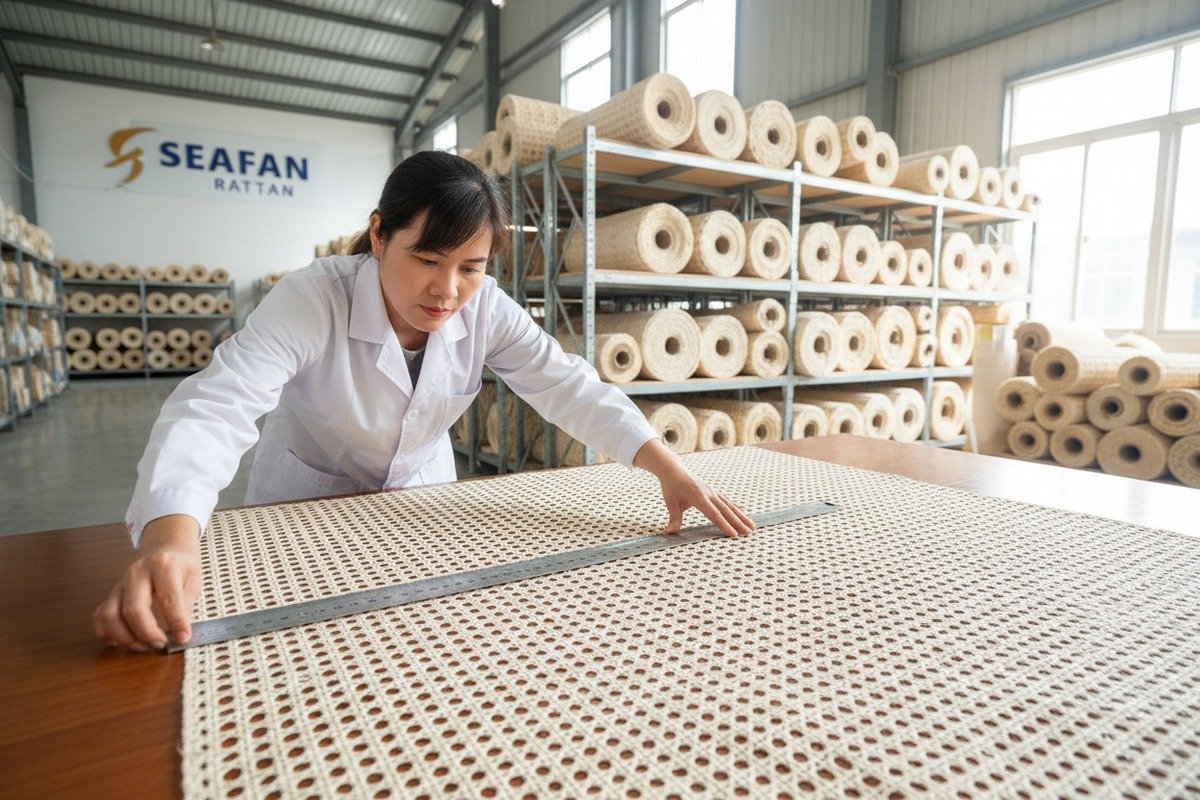
Nuestro equipo de clasificación en Indonesia inspecciona cada lote de ratán crudo antes de que entre en el proceso de tejido. La diferencia entre el Grado A y un grado inferior no es solo cosmética. Determina cómo se comportará ese mimbre dentro de cinco, diez o veinte años. Cuando los compradores presionan por el precio más bajo, siempre les recordamos que el material más barato a menudo se convierte en el error más caro.
La rejilla de ratán de mayor calidad presenta un grosor de fibra uniforme, patrones de tejido apretados y consistentes, y tratamientos adecuados como fumigación y recubrimiento de preservación. Estos factores extienden directamente la vida útil del producto a 20-30 años en interiores. Los grados inferiores con uniones sueltas, fibras irregulares y sin tratamiento pueden degradarse en tan solo 3-5 años, incluso con buen cuidado.
¿Qué define el grado de calidad en el mimbre de ratán?
No todo el ratán es igual. El palmera de ratán 9 crece en bosques tropicales del sudeste asiático, y la edad, la especie y el método de cosecha afectan la calidad final de la fibra. Las vides de ratán jóvenes producen núcleos más blandos y porosos. Las vides maduras producen fibras más densas y resistentes. En nuestras instalaciones de procesamiento, clasificamos la caña cruda por consistencia del diámetro, suavidad de la superficie y uniformidad del color natural antes de que comience el tejido.
El tejido en sí mismo importa enormemente. Un tejido apretado y uniforme distribuye el estrés en más puntos de contacto. Cuando alguien se sienta en una silla con respaldo de ratán, la carga se distribuye uniformemente. Un tejido suelto o desigual concentra la fuerza en menos uniones, que es donde comienza la rotura. Hemos visto que las correas mal tejidas se hunden a los seis meses de la instalación, mientras que nuestros paneles de grado A, tejidos apretadamente, mantienen su forma durante años.
Tratamiento y Procesamiento
El tratamiento posterior al tejido separa las correas premium del producto básico. Nuestro proceso estándar incluye:
- Fumigación — Elimina larvas y huevos de insectos incrustados en las fibras naturales. Sin este paso, los escarabajos barrenadores de madera pueden vaciar la caña desde adentro, causando fallas repentinas.
- Recubrimiento de preservación — Una fina aplicación de agente antifúngico y antihumedad que protege contra el moho sin cambiar la apariencia natural.
- Estabilización del color — Procesamiento ligero que uniformiza las variaciones naturales de color y ralentiza el proceso de oscurecimiento que ocurre con la edad.
El ratán sin tratar puede parecer idéntico al ratán tratado el día de la entrega. La diferencia se nota meses o años después, cuando el lote sin tratar desarrolla agujeros de insectos, manchas de moho o fragilidad prematura.
Tabla de Comparación de Grados
| Característica | Grado A (Premium) | Grado B (Estándar) | Grado C (Económico) |
|---|---|---|---|
| Uniformidad de la fibra | Diámetro y color muy consistentes | Variaciones menores en el grosor | Irregularidades notables |
| Tensión del tejido | Ajustado, sin separaciones visibles | Mayormente apretado, ocasionalmente suelto | Suelto en varias áreas |
| Acabado de la superficie | Nodos lisos y mínimos | Algunos parches ásperos | Nudos ásperos y frecuentes |
| Fumigación 10 | Sí, certificado | A veces | Raramente |
| Recubrimiento de preservación | Sí | Opcional | No |
| Vida útil interior esperada | 20–30 años | 10–18 años | 3–8 años |
| Caso de uso típico | Muebles de alta gama, mercado de exportación | Muebles domésticos de gama media | Decoración desechable, uso a corto plazo |
Cómo detectar cinchas de primera calidad
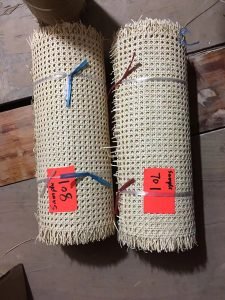
Al evaluar una muestra del proveedor, pase los dedos por la superficie. Las cinchas de primera calidad se sienten suaves y ligeramente cerosas por los aceites naturales o los recubrimientos de tratamiento. El tejido debe ser lo suficientemente apretado como para que no pueda mover fácilmente las hebras individuales hacia los lados. Sosténgalo a la luz. Los huecos uniformes en el patrón del tejido indican precisión de la máquina y una buena clasificación de la materia prima. Los huecos irregulares o de gran tamaño sugieren una producción apresurada o caña de baja calidad.
Compruebe los bordes del rollo. El deshilachado es normal en un grado pequeño, pero el exceso de fibras sueltas en los bordes indica una caña de mala calidad o un corte inadecuado. Solicite al proveedor certificados de fumigación y documentación de tratamiento. Los proveedores de buena reputación los proporcionan sin dudarlo.
La realidad del costo-beneficio
Sí, el grado A cuesta más por metro cuadrado. Pero considere el panorama completo. Una fábrica de muebles que utiliza cinchas de grado C se enfrentará a reclamaciones de garantía más altas, más reseñas negativas y ciclos de reemplazo de productos más rápidos. Los ahorros iniciales desaparecen rápidamente. Según nuestra experiencia suministrando a mercados en EE. UU., Australia y Europa, los compradores que invierten en cinchas de grado A informan significativamente menos quejas de calidad y un negocio repetido más sólido por parte de sus propios clientes.
¿Por qué es fundamental la elección entre aplicación interior y exterior para la longevidad de mis materiales de ratán?
Procesamos ratán natural y sintético en nuestras instalaciones, y el factor más importante que determina qué tipo debe elegir un comprador es dónde vivirá el producto terminado. Nuestro equipo de exportación ha manejado casos en los que hermosas sillas de ratán natural se colocaron en un patio abierto en Grecia. En una temporada de lluvias, las correas se arruinaron. Ese escenario es completamente evitable con la orientación adecuada en la etapa de abastecimiento.
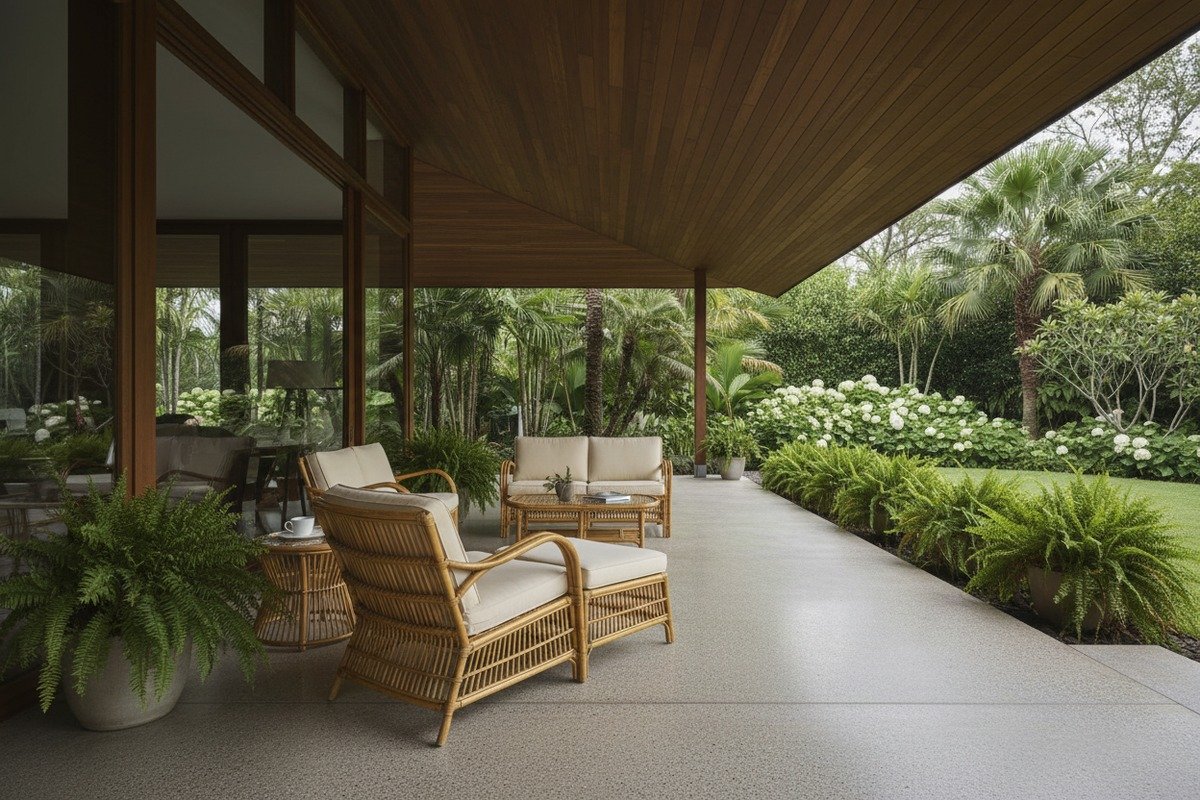
El uso en interiores es fundamental para la longevidad de la rejilla de ratán natural porque los entornos controlados la protegen de la lluvia, los rayos UV directos y los extremos de temperatura. En interiores, el ratán natural bien mantenido puede durar de 20 a 30 años. La exposición al aire libre la somete a la humedad, el sol, el viento y las plagas simultáneamente, lo que a menudo reduce su vida útil a 2 o 5 años sin una intervención protectora intensiva.
Por qué el exterior es tan destructivo
Los entornos exteriores combinan todas las amenazas para el ratán natural a la vez. La lluvia empapa las fibras porosas. El sol las seca al día siguiente. La humedad aumenta por la noche. El viento transporta polvo abrasivo. Los insectos están más activos. La temperatura puede oscilar 20 °C o más en un solo día. Cada uno de estos factores por sí solo es manejable. Juntos, crean un ciclo de daño que se acelera exponencialmente.
Un panel de ratán natural en un porche cubierto puede sobrevivir unos años con aceitado regular y cubierta estacional. El mismo panel en una terraza abierta en un clima costero podría no durar un solo año. El aire salado añade otra capa de corrosión a las fibras.
Natural vs. Sintético para uso en exteriores
Aquí es donde el debate se vuelve práctico. El ratán sintético de PE fue diseñado específicamente para uso en exteriores. Resiste los rayos UV, no absorbe la humedad y es inmune a insectos y moho. En pruebas de terceros, el ratán de PE de alta calidad no mostró crecimiento de moho después de 28 días en cámaras de alta humedad y mantuvo la integridad estructural a -20 °C bajo cargas de nieve de 5 kg/m². El ratán natural no puede igualar estas cifras en exteriores.
Sin embargo, el ratán sintético carece de la calidez orgánica, la transpirabilidad y el carácter artesanal que proporciona el ratán natural. Para muchas marcas de muebles dirigidas al segmento premium, no hay sustituto para lo real. La solución no es evitar el ratán natural, sino usarlo donde mejor funciona: en interiores.
El Enfoque Híbrido
Una tendencia creciente que vemos entre nuestros compradores europeos y australianos es la construcción híbrida. Combinan correas de caña de ratán natural con marcos de aluminio o acero inoxidable diseñados para espacios semi-exteriores como patios cubiertos, solárium y conservatorios. El marco metálico soporta la carga estructural y resiste la corrosión. El ratán natural proporciona el atractivo visual. Un panel de correas extraíble o reemplazable significa que el propietario puede cambiar el ratán fresco cada pocos años sin reemplazar la pieza completa.
Este enfoque equilibra la estética, la durabilidad y el costo. También se alinea con la narrativa de sostenibilidad que impulsa gran parte del mercado actual de ratán, ya que el ratán natural es un recurso renovable cosechado de bosques gestionados.
Cuándo el ratán natural puede funcionar en exteriores
Hay escenarios limitados en los que el ratán natural funciona de manera aceptable en exteriores. Las áreas completamente cubiertas sin exposición directa a la lluvia o al sol, como una veranda profunda en un clima templado, pueden extender la vida útil de las correas a 5-8 años con un cuidado diligente. El uso estacional es otra opción. Algunos de nuestros compradores en Rusia y el norte de Europa utilizan muebles de ratán natural en patios solo durante los meses de verano y los almacenan en interiores de octubre a abril. Esto reduce a la mitad la exposición ambiental y extiende significativamente la vida útil.
Pero si un producto va a estar afuera todo el año sin protección, siempre recomendamos alternativas sintéticas. Es mejor establecer expectativas honestas que lidiar con reclamaciones de garantía y la pérdida de la confianza del cliente.
Mejores prácticas en interiores para una vida útil máxima
Incluso en interiores, la ubicación importa. Mantenga las correas de ratán alejadas de las ventanas que reciben sol fuerte por la tarde. Use cortinas, persianas o películas para ventanas con filtro UV. Mantenga la humedad relativa entre 40% y 60%. Evite colocar el ratán directamente contra las paredes exteriores en climas fríos, donde se puede formar condensación. Estos pequeños ajustes se acumulan a lo largo de los años para ofrecer la vida útil de 20 a 30 años que el ratán natural de primera calidad es capaz de lograr.
Conclusión
La malla de ratán natural es un material notable, pero su vida útil depende completamente de las decisiones tomadas durante la obtención, instalación y el cuidado continuo. Elija malla de alta calidad y tratada adecuadamente. Úsela en interiores siempre que sea posible. Siga una rutina de mantenimiento sencilla. Estas tres decisiones por sí solas pueden convertir un producto de 5 años en una inversión de 25 años.
Notas al pie
1. Explica cómo la radiación UV degrada la lignina en las fibras naturales, lo que provoca decoloración y pérdida de resistencia. ↩︎
2. Proporciona una visión general completa del ratán, sus especies y usos. ↩︎
3. Proporciona datos científicos sobre las propiedades de tracción de las tiras de ratán utilizadas en muebles. ↩︎
4. Proporciona una definición clara y autorizada de la humedad relativa. ↩︎
5. Explica cómo la alta humedad, las temperaturas cálidas y la mala ventilación fomentan el crecimiento de moho en las fibras naturales. ↩︎
6. Proporciona una visión general completa del aceite de linaza, su composición, propiedades y aplicaciones en el acabado de madera. ↩︎
7. Analiza el uso del aceite mineral como acabado de madera no tóxico y seguro para alimentos que acondiciona y protege. ↩︎
8. Detalla el impacto de los escarabajos barrenadores (Bostrichid Powderpost Beetles) en los muebles de ratán y los métodos de prevención. ↩︎
9. Proporciona información sobre el ratán como palmeras trepadoras, sus especies y distribución geográfica. ↩︎
10. Explica los tratamientos de fumigación aprobados para madera y productos de madera para mitigar los riesgos de plagas. ↩︎
 English
  Español de México
  العربية
  Deutsch
  Français
  Русский