
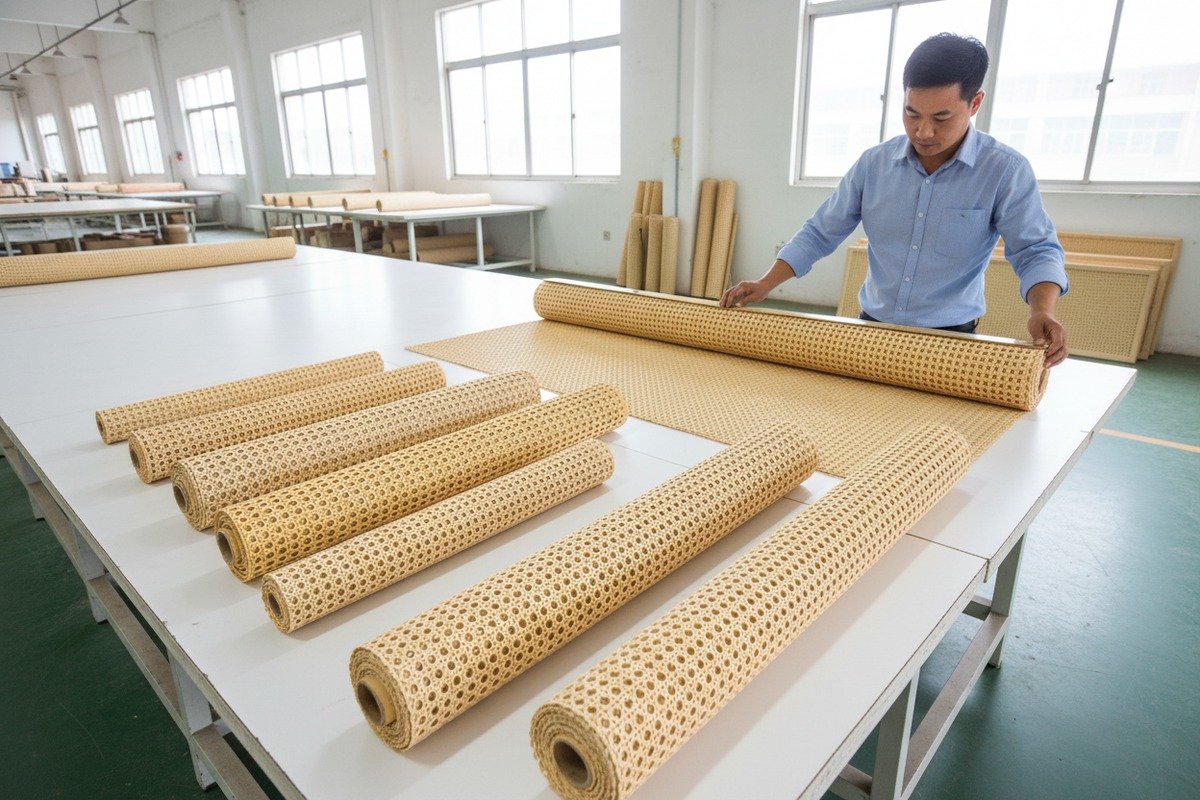
Las preguntas sobre precios surgen en casi todas las conversaciones que tenemos con compradores extranjeros ratán crudo 1. Cuando nuestro equipo en Foshan cotiza tejido de caña de ratán 2, el ancho es una de las primeras variables que cambia el número en la factura, y confunde a muchos gerentes de compras 3.
Los precios unitarios del mimbre de ratán varían considerablemente según el ancho. Los rollos más estrechos (12-18 pulgadas) suelen costar 0,20-1,00 € por pie lineal, mientras que los rollos más anchos (24-36 pulgadas) oscilan entre 1,50-4,00 € o más por pie. Sin embargo, el costo por pie cuadrado a menudo disminuye para los rollos más anchos comprados a granel debido a las eficiencias de fabricación.
A continuación, desglosamos exactamente cómo el ancho influye en los precios, dónde puede ahorrar y qué otros factores debe tener en cuenta eficiencia de fabricación 4. Ya sea que dirija una fábrica de muebles o venda al por mayor materiales de construcción, esta guía le ayudará a comprar de manera más inteligente.
¿Cómo afecta el ancho de la caña de ratán a mi precio unitario por rollo?
Cada semana, nuestro equipo de ventas recibe llamadas de compradores confundidos por cotizaciones muy diferentes descuentos por volumen 5. El mismo patrón de tejido puede mostrar una oscilación de precio de 300% solo por el ancho y el tamaño del pedido. Comprender las matemáticas detrás de los precios basados en el ancho evita sorpresas costosas.
El ancho impacta directamente el precio unitario del rollo de mimbre de ratán porque el material más ancho utiliza más ratán crudo por pie lineal. Un rollo de 36 pulgadas cuesta aproximadamente de dos a cuatro veces más por pie lineal que un rollo de 16 pulgadas, aunque las tarifas por pie cuadrado a menudo disminuyen en dimensiones más anchas cuando se piden al por mayor.
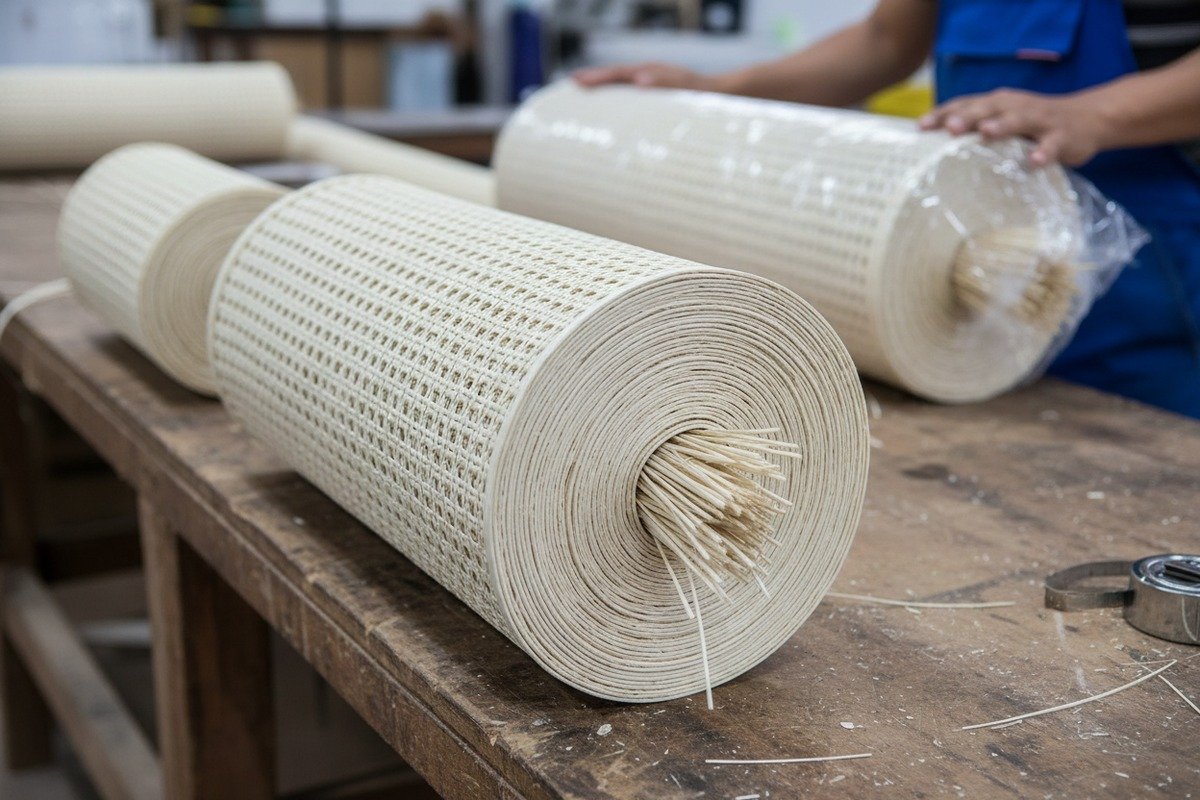
Las matemáticas básicas detrás de los precios por ancho
La lógica es simple. Un rollo de 36 pulgadas de ancho contiene aproximadamente el doble de material de ratán que un rollo de 18 pulgadas de la misma longitud. Más material significa un precio más alto por pie lineal. Pero la relación no es perfectamente lineal. Los costos de configuración de producción, la eficiencia del telar y el rendimiento de la materia prima juegan un papel.
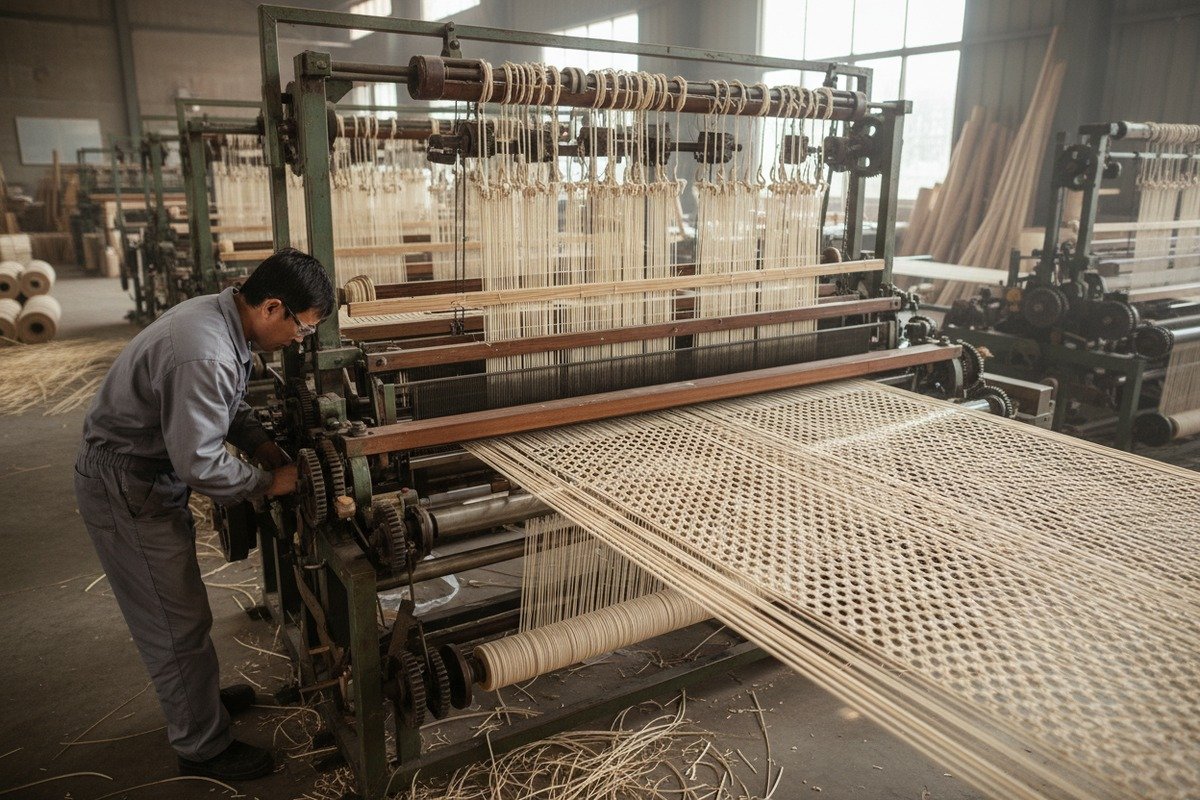
En nuestra planta de procesamiento en Indonesia, los telares más anchos funcionan con un costo laboral casi igual que los más estrechos. Por lo tanto, el componente laboral por pie cuadrado en realidad disminuye cuando producimos cinchas más anchas. Sin embargo, el costo del material aumenta casi directamente con el ancho.
Rangos de precios por categoría de ancho
Aquí hay un desglose práctico basado en datos actuales del mercado y nuestra propia experiencia en precios de exportación:
| Rango de Ancho | Precio por pie lineal (USD) | Precio por pie cuadrado (USD) | Uso común |
|---|---|---|---|
| 12–16 pulgadas | $0.20–$1.00 | $0.20–$0.75 | Asientos de silla pequeños, inserciones de gabinete |
| 18–20 pulgadas | $0.80–$4.00 | $0.50–$2.40 | Sillas de comedor estándar, paneles laterales |
| 24 pulgadas | $1.50–$5.00 | $0.75–$2.50 | Respaldos de silla anchos, paneles de cabecero |
| 36 pulgadas | $2.50–$8.00+ | $0.80–$2.70 | Cabeceros, divisores de habitaciones, puertas |
Observe cómo el precio por pie cuadrado no se duplica cuando el ancho se duplica. Aquí es donde los compradores a granel encuentran valor. Un rollo de 36 pulgadas a $3.00 por pie lineal equivale a $1.00 por pie cuadrado. Un rollo de 18 pulgadas a $2.00 por pie lineal equivale a $1.33 por pie cuadrado. El rollo más ancho es en realidad más barato por unidad de área utilizable.
Por qué los precios minoristas parecen tan diferentes
Si navega por Etsy o Walmart, las cifras parecen salvajes. Un rollo de 16 pulgadas por 3.3 pies podría costar 16.99 dólares. Eso es aproximadamente 5.15 dólares por pie lineal, muy por encima de las tarifas mayoristas. Estos rollos minoristas precortados están dirigidos a aficionados al bricolaje, no a compradores de producción.
Nuestros clientes mayoristas que compran rollos de 50 pies o 15 metros en anchos de 18 pulgadas pagan una fracción de esos precios minoristas. La lección es clara: la longitud del pedido importa tanto como el ancho. Los precios minoristas de corte corto inflan drásticamente los costos por pie.
El tipo de malla añade otra capa
El ancho por sí solo no cuenta toda la historia. Una malla abierta fina de 1/2 pulgada en ancho de 18 pulgadas tiene un recargo del 10-20% sobre un tejido de radio estándar en el mismo ancho. Cuanto más fina es la malla, más hebras de ratán por pulgada y mayor es el consumo de material. Por lo tanto, al comparar cotizaciones basadas en el ancho, confirme siempre que el patrón de tejido sea idéntico.
Los proveedores europeos como Rotin-file estructuran los precios por rollo completo en euros. Un rollo de 0.40 metros (aproximadamente 16 pulgadas) podría costar 25.50 € por rollo de 15 metros, mientras que un rollo de 0.90 metros (aproximadamente 36 pulgadas) podría costar entre 28.90 € y 76.00 €. Al convertir a dólares por pie, los rollos europeos más estrechos a veces parecen desproporcionadamente caros porque sus longitudes de rollo son fijas y los pedidos más pequeños conllevan mayores gastos generales.
¿Por qué los rollos de cincha de ratán más anchos suelen costar más para la producción de mis muebles?
Cuando nuestra fábrica cotiza un rollo de 36 pulgadas de ancho, algunos compradores se preguntan por qué el aumento de precio parece tan pronunciado. La respuesta va más allá de "más material". La complejidad de la producción, las tasas de desperdicio y los factores de la cadena de suministro impulsan los rollos más anchos al alza.
Los rollos de cincha de ratán más anchos cuestan más porque consumen significativamente más caña cruda por metro, requieren telares más grandes con mayores costos operativos y generan más residuos durante la cosecha y el procesamiento. Un rollo de 36 pulgadas puede usar 2.5 veces más material que un rollo de 16 pulgadas mientras solo cubre el doble de ancho.
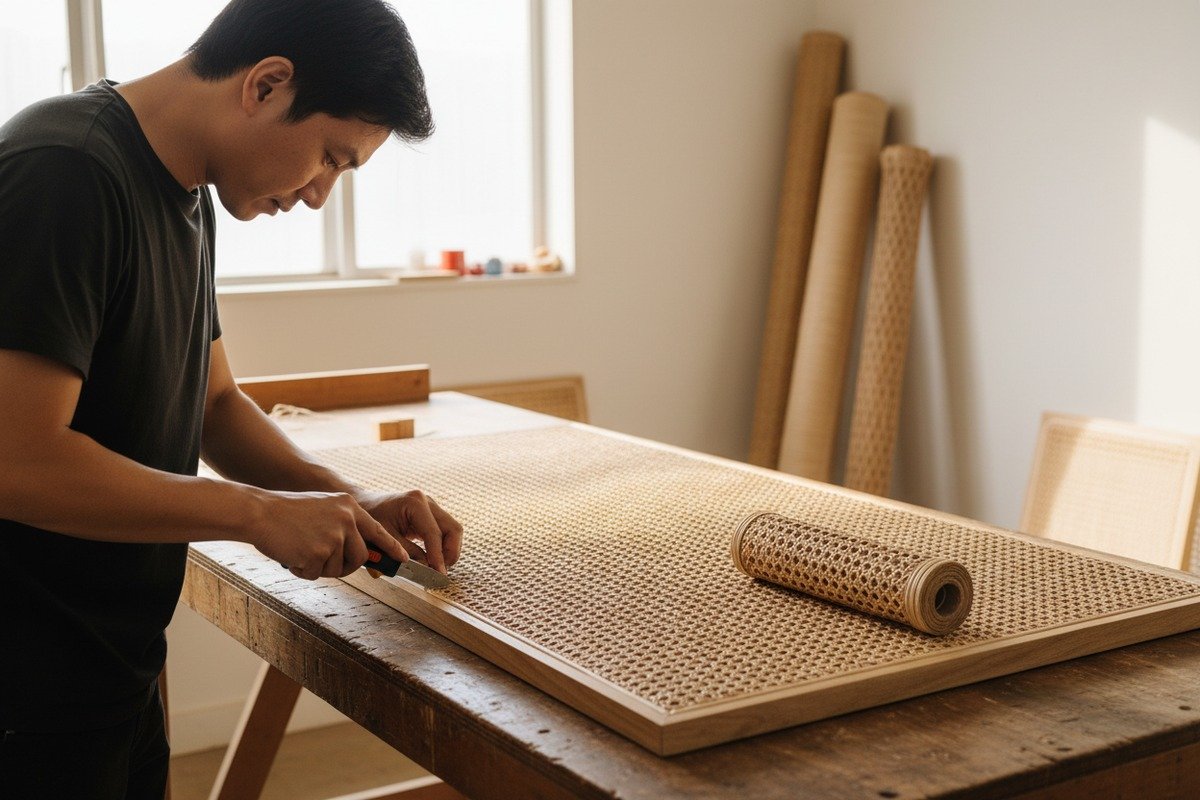
Consumo de materia prima
La caña de ratán proviene de palmeras trepadoras cosechadas en bosques del sudeste asiático 6, principalmente en Indonesia, Vietnam y Filipinas. La caña se divide, se raspa y se clasifica antes de tejerla. Las cinchas más anchas requieren hebras de caña más largas y rectas. Las hebras más cortas o ligeramente curvas, perfectamente válidas para anchos de 16 pulgadas, no pueden abarcar un telar de 36 pulgadas sin uniones o roturas.
Esta presión de selección significa que las cinchas más anchas provienen de un grupo más pequeño de caña de Grado A 7. In our Indonesian facility, roughly 70% of harvested cane meets the length requirement for 18-inch widths. Only about 45% qualifies for 36-inch production. The rest gets diverted to narrower products or lower-grade lines.
Loom and Labor Costs
Wider looms are not just bigger versions of narrow ones. They need stronger frames, more tension points, and additional operator attention. A single defect in a 36-inch weave ruins more material than the same flaw in a 16-inch piece.
| Factor de costo | 16-Inch Production | 36-Inch Production | Impacto en el precio |
|---|---|---|---|
| Cane selection rate | ~70% usable | ~45% usable | +15–25% material cost |
| Loom setup time | 30 minutos | 50 minutes | +8–12% labor overhead |
| Defect waste rate | 3–5% | 6–10% | +5–10% waste cost |
| Packaging complexity | Rollo estándar | Núcleo reforzado necesario | +3–5% costo de embalaje |
| Volumen de envío | Compacto | Voluminoso, más pesado | +5–8% costo de flete |
Recargos por color y tratamiento
Más allá del ancho, el color añade costo. El ratán marrón natural es el grado base. Ratán blanqueado 8 requiere tratamiento químico y tiempo de secado adicional, lo que añade un 20–30% al precio unitario independientemente del ancho. Cuando combinas un ancho de 36 pulgadas con un acabado blanqueado, el recargo se suma a una base ya más alta.
Nuestros datos de exportación a los Países Bajos y España muestran que aproximadamente el 60% de los pedidos europeos especifican marrón natural en anchos de 24 pulgadas. El 40% restante se divide entre opciones blanqueadas y teñidas a medida, generalmente en anchos de 18 o 36 pulgadas. Los colores personalizados — nogal oscuro, lavado gris o carbón — pueden añadir otro 15–25% más allá del precio del blanqueado.
Presiones en la cadena de suministro en 2025–2026
El abastecimiento de ratán enfrenta desafíos reales. Indonesia controla la mayor parte del suministro mundial de ratán. Regulaciones ambientales, cuotas de cosecha y interrupciones de envío 9 desde el sudeste asiático han aumentado los costos de las materias primas un 10–20% año tras año. Estos aumentos afectan más a los productos más anchos porque consumen más caña por unidad.
En Seafan Rattan, mitigamos esto a través de nuestra propia planta de procesamiento en Indonesia, lo que nos da acceso directo a la caña a precios de cosecha. Pero muchos competidores sin integración vertical 10 pasar el marcado completo de la cadena de suministro a los compradores.
¿Puedo ahorrar dinero eligiendo anchos estándar para mis pedidos de ratán a granel?
Una de las primeras cosas que nuestro equipo de exportación pregunta a los nuevos compradores es: ¿puede su diseño funcionar con un ancho estándar? La respuesta generalmente determina si el proyecto se mantiene dentro del presupuesto o se dispara a territorio de precios personalizados.
Sí, elegir anchos estándar como 16, 18, 24 o 36 pulgadas para pedidos a granel de ratán puede ahorrar entre un 15 y un 30 % en comparación con los anchos personalizados. Los tamaños estándar se ejecutan en configuraciones de telar existentes sin necesidad de reajustes, reducen el desperdicio de material y califican para descuentos por volumen a los que los pedidos personalizados normalmente no pueden acceder.
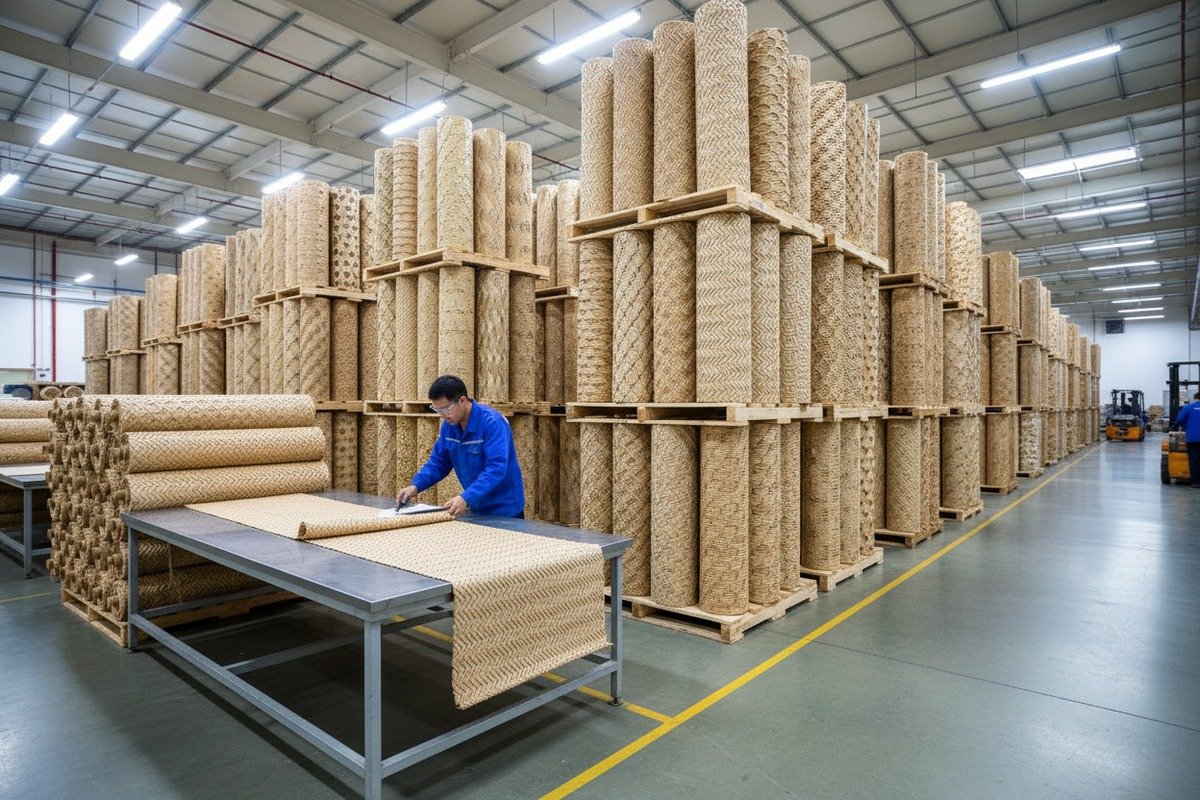
¿Qué se considera un ancho "estándar"?
Los anchos estándar son los tamaños que las fábricas mantienen en producción regular. Coinciden con las dimensiones de muebles más comunes en todo el mundo. Aquí están los anchos que producimos con más frecuencia en nuestras tres fábricas:
- 12 pulgadas (30 cm)
- 16 pulgadas (40 cm)
- 18 pulgadas (45 cm)
- 24 pulgadas (60 cm)
- 36 pulgadas (90 cm)
Cualquier ancho fuera de estos incrementos — digamos 22 pulgadas o 30 pulgadas — requiere un ajuste del telar. Eso significa tiempo de inactividad, recalibración y pruebas antes de que la calidad de la producción se estabilice. Todo ese costo se traslada al comprador.
Precios de Ancho Personalizado vs. Estándar
| Tipo de pedido | Ancho | MOQ | Precio por Pie Corriente | Tiempo de entrega |
|---|---|---|---|---|
| Estándar a granel | 18 pulgadas | 100 metros | 0,85–1,20 € | 7–10 días |
| Estándar a granel | 24 pulgadas | 100 metros | 1,30–1,80 € | 7–10 días |
| Ancho personalizado | 22 pulgadas | 200 metros | 1,60–2,40 € | 14–21 días |
| Ancho personalizado | 30 pulgadas | 200 metros | 2,20–3,50 € | 14–21 días |
El patrón es claro. Los anchos personalizados cuestan entre 30 y 50 % más y tardan el doble en entregarse. Para los gerentes de compras con plazos ajustados, los anchos estándar son la opción más segura.
Descuentos por volumen en anchos estándar
Nuestro modelo de precios recompensa el volumen en tamaños estándar. Un comprador que pide 50 pies lineales de cincha de 18 pulgadas paga significativamente más por pie que uno que pide 500 pies. Esto no es exclusivo de nosotros, es el estándar de la industria.
En Etsy, la diferencia es aún más drástica. Un precorte de 1 pie de cincha de 18 pulgadas puede venderse por 7,58–15,40 €. Pero un rollo de 49 pies del mismo producto se reduce a aproximadamente 2–4 € por pie. Eso es una reducción del 50–75 % solo por comprar rollos más largos.
Para nuestros clientes B2B, los ahorros se componen aún más. Una fábrica de muebles en Tailandia que pide 1.000 metros de tejido de radio de 24 pulgadas obtiene una tarifa por pie que los compradores minoristas nunca verían. La clave es comprometerse con un ancho estándar y una cantidad significativa.
El costo oculto de pedir demasiado
Algo que siempre recordamos a los compradores: mida con cuidado y agregue una holgura. Los especialistas en cestería recomiendan agregar 2 pulgadas por lado para la instalación de ranuras o espigas. Por lo tanto, una abertura de asiento de silla de 18 pulgadas en realidad necesita un corte de 22 pulgadas de su cincha. Si pide rollos de 18 pulgadas para una abertura de 18 pulgadas, no tendrá suficiente material para meter en las ranuras.
Aquí es donde los anchos estándar vuelven a brillar. Una abertura de 18 pulgadas necesita 22 pulgadas de material. Un rollo estándar de 24 pulgadas lo cubre perfectamente con un desperdicio mínimo. Pedir un rollo personalizado de 22 pulgadas costaría más y tardaría más en entregarse, sin ninguna ventaja real.
Estrategias inteligentes para compradores conscientes del presupuesto
Aquí tienes algunos consejos prácticos de nuestra experiencia en exportación:
- Diseña en torno a anchos estándar. Ajusta las dimensiones de tus muebles entre 1 y 2 pulgadas para que se adapten a los tamaños estándar de las correas.
- Consolida pedidos. Combina varias líneas de productos en un solo pedido a granel con un solo ancho estándar.
- Pida rollos completos. Los rollos parciales o las longitudes cortadas siempre cuestan más por pie que los rollos sin cortar.
- Elige el marrón natural. Evita el recargo por blanqueo o color personalizado a menos que tu mercado lo exija.
- Planifica con antelación. Los pedidos urgentes de anchos personalizados conllevan un recargo. Los anchos estándar se envían desde stock.
¿Cómo impactan los diferentes anchos en la calidad general y el desperdicio en mi proceso de fabricación?
A través de años de suministro a fábricas en toda Europa, Oriente Medio y el Sudeste Asiático, nuestro equipo ha visto de primera mano cómo elegir el ancho incorrecto genera dolores de cabeza en la producción. Los problemas de calidad y el desperdicio de material merman los márgenes más rápido de lo que la mayoría de los compradores esperan.
La selección del ancho impacta directamente en la calidad de fabricación y el desperdicio. Usar un ancho demasiado estrecho para su aplicación obliga a empalmar, lo que debilita el producto final y crea uniones visibles. Usar un ancho demasiado ancho genera un desperdicio de recorte excesivo del 10-20%, aumentando el costo del material sin agregar valor a la pieza terminada.
Coincidencia de Ancho con Aplicación
El problema de calidad más común que vemos es el ancho incorrecto. Una fábrica compra cincha de 18 pulgadas para un panel de gabinete de 20 pulgadas. La falta de ancho las obliga a superponer dos piezas (creando una cresta visible) o a estirar el material (causando distorsión del tejido). Ambos resultados disminuyen la calidad del producto terminado.
Aquí hay una guía de coincidencia basada en aplicaciones comunes de muebles:
| Aplicación de Muebles | Ancho Recomendado | Tolerancia Necesaria | Ancho de Rollo Ideal |
|---|---|---|---|
| Asiento de silla de comedor | 14–16 pulgadas | +2 pulgadas por lado | 18–20 pulgadas |
| Panel trasero de silla lateral | 12–14 pulgadas | +2 pulgadas por lado | 16–18 pulgadas |
| Inserto de puerta de armario | 10–18 pulgadas | +1.5 pulgadas por lado | 14–22 pulgadas (usar el siguiente estándar superior) |
| Panel de cabecero | 28–34 pulgadas | +2 pulgadas por lado | 36 pulgadas |
| Biombo | 18–24 pulgadas por panel | +2 pulgadas por lado | 24–36 pulgadas |
Cómo se acumula el desperdicio
El desperdicio en la fabricación de correas de ratán proviene de tres fuentes principales:
- Recorte de bordes. Cada pieza necesita ser recortada para encajar en el canal de la ranura. Los rollos más anchos crean tiras de recorte más anchas.
- Corte por defecto. Si aparece un defecto en el tejido en un rollo ancho, todo el ancho se desecha en ese punto. En un rollo de 36 pulgadas, eso es el doble del área desperdiciada en comparación con un rollo de 18 pulgadas.
- Restos de fin de rollo. Los últimos 2–3 pies de cualquier rollo son a menudo demasiado cortos para su uso en producción. En un rollo de 50 pies, eso es un 4–6% de desperdicio independientemente del ancho.
Nuestros datos de producción muestran que anchos bien combinados mantienen el desperdicio total por debajo del 8%. Anchos mal combinados elevan el desperdicio al 15–20%. En una gran tirada de producción de 5,000 asientos de silla, esa diferencia se traduce en cientos de dólares en material perdido.
Grados de Calidad e Interacción de Ancho
No toda la correa de ratán es igual. La caña de Grado A es uniforme en color, libre de grietas y consistente en el diámetro de la hebra. La caña de Grado B tiene variaciones menores de color y puntos delgados ocasionales.
Los rollos más anchos amplifican las inconsistencias de calidad. Una sola hebra descolorida en una pieza de 18 pulgadas podría pasar desapercibida. La misma hebra en un panel de cabecero de 36 pulgadas se convierte en un defecto visible que los compradores rechazan. Es por eso que nuestro equipo de control de calidad aplica estándares de calificación más estrictos a los rollos más anchos, y por qué la correa de Grado A más ancha tiene un precio superior.
Para los compradores que priorizan la consistencia de la calidad, recomendamos ceñirse a anchos de 18–24 pulgadas a menos que la aplicación requiera absolutamente 36 pulgadas. Los anchos más estrechos tienen tasas de rendimiento de primera pasada más altas y menos rechazos de calidad.
Sintético vs. Natural en Diferentes Anchos
Algunos compradores consideran el ratán sintético (plástico o resina tejido para imitar el mimbre natural) como una alternativa económica. La cincha sintética está disponible en anchos más amplios a precios más bajos porque no enfrenta las mismas restricciones de materia prima.
Sin embargo, la cincha sintética carece de la textura y calidez del ratán natural. También se comporta de manera diferente durante la instalación: no absorbe agua para ablandarse y puede agrietarse al doblarse con fuerza. Para aplicaciones donde la autenticidad importa, el ratán natural sigue siendo el estándar a pesar de los precios más altos basados en el ancho.
Nuestra recomendación para compradores de producción: utilice ratán natural en áreas visibles (asientos de sillas, frentes de gabinetes) y considere el sintético solo para paneles estructurales ocultos o muebles de exterior donde la resistencia a la intemperie sea más importante que la estética.
Reducción de residuos mediante pedidos inteligentes
Aquí hay estrategias probadas de nuestros socios de fábrica:
- Anide sus cortes. Planifique los diseños de corte antes de realizar el pedido para determinar el ancho más eficiente.
- Solicite rollos de muestra. Pruebe una muestra de 5 metros en su línea de producción antes de comprometerse con la compra a granel.
- Comunique la profundidad de la ranura. Indique a su proveedor exactamente cuánta holgura necesita para que puedan recomendarle el ancho estándar adecuado.
- Almacene correctamente. El ratán almacenado en condiciones secas y frescas mantiene su flexibilidad. El mimbre quebradizo por un almacenamiento inadecuado aumenta los residuos por rotura durante la instalación.
Conclusión
El ancho es uno de los mayores impulsores del precio unitario en la tela de ratán. Elija anchos estándar, pida al por mayor y ajuste su ancho a la aplicación. Estos tres pasos mantienen los costos bajos y la calidad alta en cada lote de producción.
Notas al pie
1. Encontré una página que detalla la materia prima de ratán y su procesamiento. ↩︎
2. Explica qué es la tela de ratán y su uso común. ↩︎
3. Define el rol y las responsabilidades de los gerentes de compras en la adquisición. ↩︎
4. Explica un factor clave en la optimización de los procesos de producción y los costos. ↩︎
5. Encontré una definición y explicación autorizada de los descuentos por volumen. ↩︎
6. Identifica el origen geográfico del ratán. ↩︎
7. Describe las clasificaciones de calidad para el ratán según diversas características. ↩︎
8. Detalla el proceso y las características del ratán blanqueado. ↩︎
9. Explica los factores externos que impactan el flujo de bienes y los costos de las materias primas. ↩︎
10. Describe una estrategia comercial para controlar múltiples etapas de la cadena de suministro. ↩︎

 English
  Español de México
  العربية
  Deutsch
  Français
  Русский