
Cada semana, nuestro equipo de atención al cliente responde la misma pregunta urgente de fábricas de muebles y mayoristas de todo el mundo: ¿puedo simplemente enjuagar mi tejido de ratán natural bajo un grifo o manguera para limpiarlo rápidamente?
No, no debes enjuagar el tejido de ratán natural directamente con agua. El exceso de humedad hace que las fibras orgánicas se hinchen, se deformen, se agrieten y desarrollen moho. En su lugar, utiliza un paño ligeramente húmedo con jabón suave o una solución de agua y vinagre, y seca inmediatamente para preservar la integridad estructural y la apariencia del material.
Este tema es más importante de lo que la mayoría de la gente cree fibras orgánicas 1. Un solo enjuague descuidado puede arruinar un rollo entero de tejido de primera calidad. A continuación, detallamos los métodos de limpieza más seguros, las técnicas de secado y las estrategias de mantenimiento a largo plazo para que puedas proteger tu inversión de ratán desde el primer día.
¿Cómo debo limpiar mi tejido de ratán natural sin causar daños por agua?
Lo hemos visto suceder en nuestro taller de producción en Foshan: un trabajador nuevo agarra una manguera para limpiar el polvo de una pila de rejilla de ratán natural 2, y en cuestión de horas las fibras comienzan a hincharse y curvarse en los bordes.
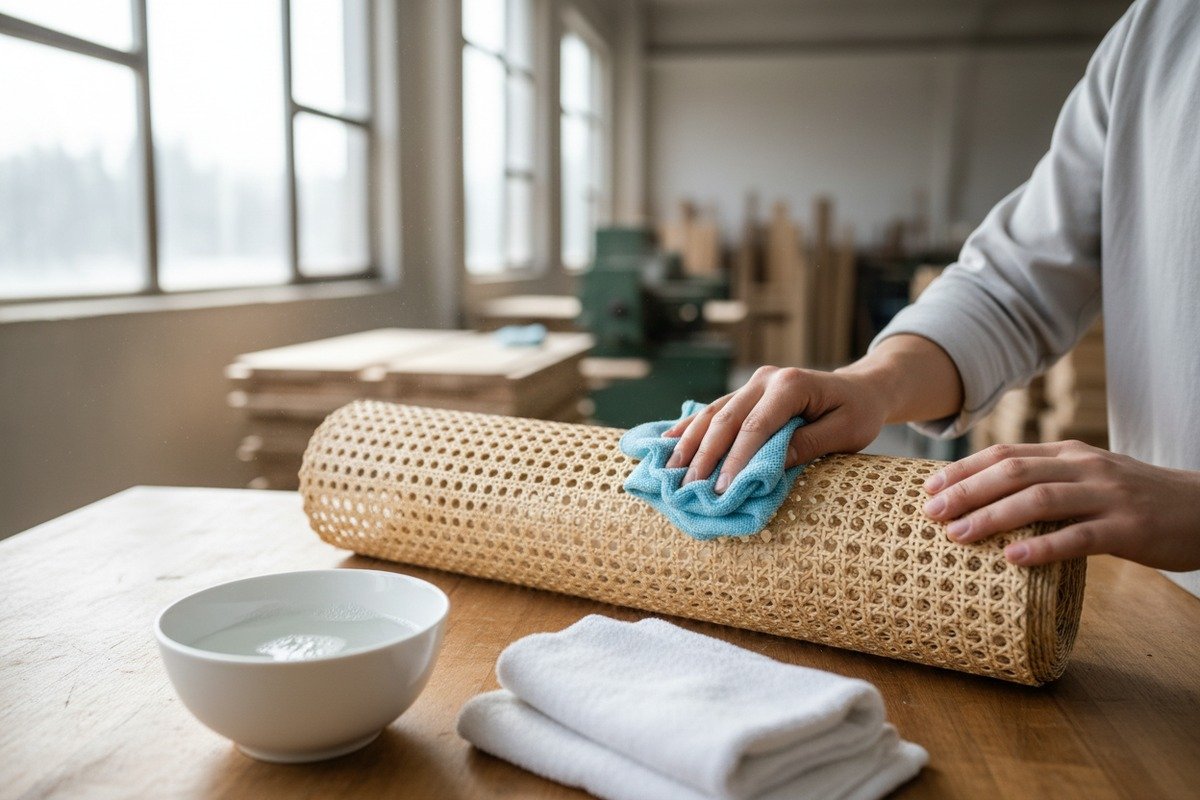
Para limpiar de forma segura la rejilla de ratán natural, primero quítale el polvo con un cepillo suave o un accesorio de aspiradora. Luego, límpiala suavemente con un paño húmedo bien escurrido usando jabón suave o una solución de vinagre diluido. Nunca empapes, rocíes o sumerjas el material. Seca siempre la superficie inmediatamente después de limpiarla.
Por qué el agua es el enemigo del ratán natural
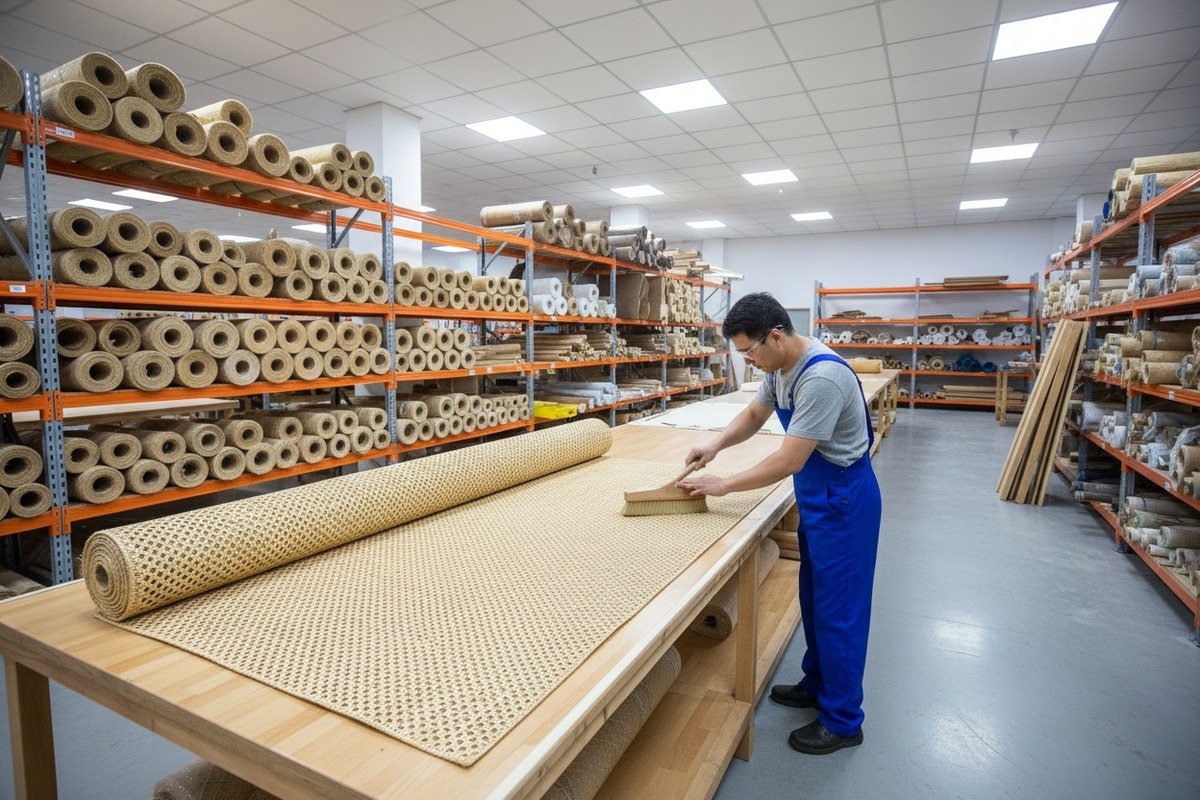
El ratán natural es un material higroscópico 3. Eso significa que absorbe la humedad de su entorno. Cuando lo enjuagas directamente, las fibras absorben agua rápidamente. Se expanden. Pierden su forma original. Una vez que eso sucede, el tejido rara vez recupera su tensión y forma anteriores. Esta es la razón principal por la que todas las fuentes importantes de cuidado del ratán, desde especialistas en muebles hasta artesanos experimentados, advierten contra el enjuague directo.
Ratán sintético 4, por otro lado, está hecho de resina o plástico. Puedes enjuagarlo sin ninguna preocupación. Esta diferencia causa mucha confusión, especialmente entre los compradores que han utilizado ambos tipos. Si no estás seguro de qué tipo tienes, prueba la prueba del olfato. El ratán natural tiene un aroma suave y terroso. El ratán sintético huele a plástico.
La forma correcta de limpiar: paso a paso
Aquí está la rutina de limpieza más segura que recomendamos a nuestros clientes mayoristas:
- Elimina el polvo suelto. Usa un cepillo de cerdas suaves, un plumero o una aspiradora con un accesorio de cepillo. Trabaja en la dirección del tejido.
- Prepara una solución suave. Mezcla unas gotas de jabón para platos en agua tibia, o combina partes iguales de vinagre blanco y agua. solución suave 5
- Humedece un paño. Sumerge un paño suave de microfibra en la solución. Escúrrelo bien. El paño debe sentirse apenas húmedo, no mojado.
- Limpia suavemente. Sigue la veta del tejido. No presiones con fuerza. No dejes que el agua se acumule en ninguna grieta.
- Secar inmediatamente. Usa un paño seco aparte para absorber cualquier humedad restante. Luego deja que la pieza se seque al aire en un área bien ventilada.
Métodos de limpieza comparados
| Método | ¿Apto para ratán natural? | Nivel de riesgo | Notas |
|---|---|---|---|
| Manguera o enjuague directo | No | Alto | Causa deformaciones, moho, daño a las fibras |
| Remojo en agua | No | Muy Alto | Conduce a la putrefacción y al fallo estructural |
| Paño húmedo con jabón suave | Sí | Bajo | Escurre bien el paño primero |
| Limpieza con paño húmedo de vinagre y agua | Sí | Bajo | Bueno para manchas leves y olores |
| Cepillar en seco o aspirar | Sí | Ninguna | Lo mejor para la eliminación rutinaria de polvo |
| Hidrolimpiadora | No | Extremo | Destruye la estructura del tejido al instante |
Cómo tratar las manchas difíciles
Para las manchas más difíciles, haz una pasta con bicarbonato de sodio 6 y una pequeña cantidad de agua. Aplícala sobre la mancha con un paño suave. Déjala actuar no más de 5 minutos. Luego, retírala con un paño apenas húmedo y seca la zona inmediatamente. Evita la lejía en el ratán natural: descompone las fibras y decolora la superficie.
Una solución diluida de vinagre también funciona bien para las manchas de moho. Aplícala con un paño, déjala actuar hasta 15 minutos, luego limpia y seca. Este es el tiempo de contacto máximo que recomendamos. Cualquier tiempo mayor aumenta el riesgo de humedad.
¿El enjuague directo de mi ratán provocará moho o deformación estructural?
Cuando nuestra fábrica en Indonesia procesa los postes de ratán en bruto, controlar la humedad es uno de los pasos más críticos de todo el flujo de trabajo, porque hemos aprendido de primera mano lo que sucede cuando el ratán permanece húmedo demasiado tiempo.
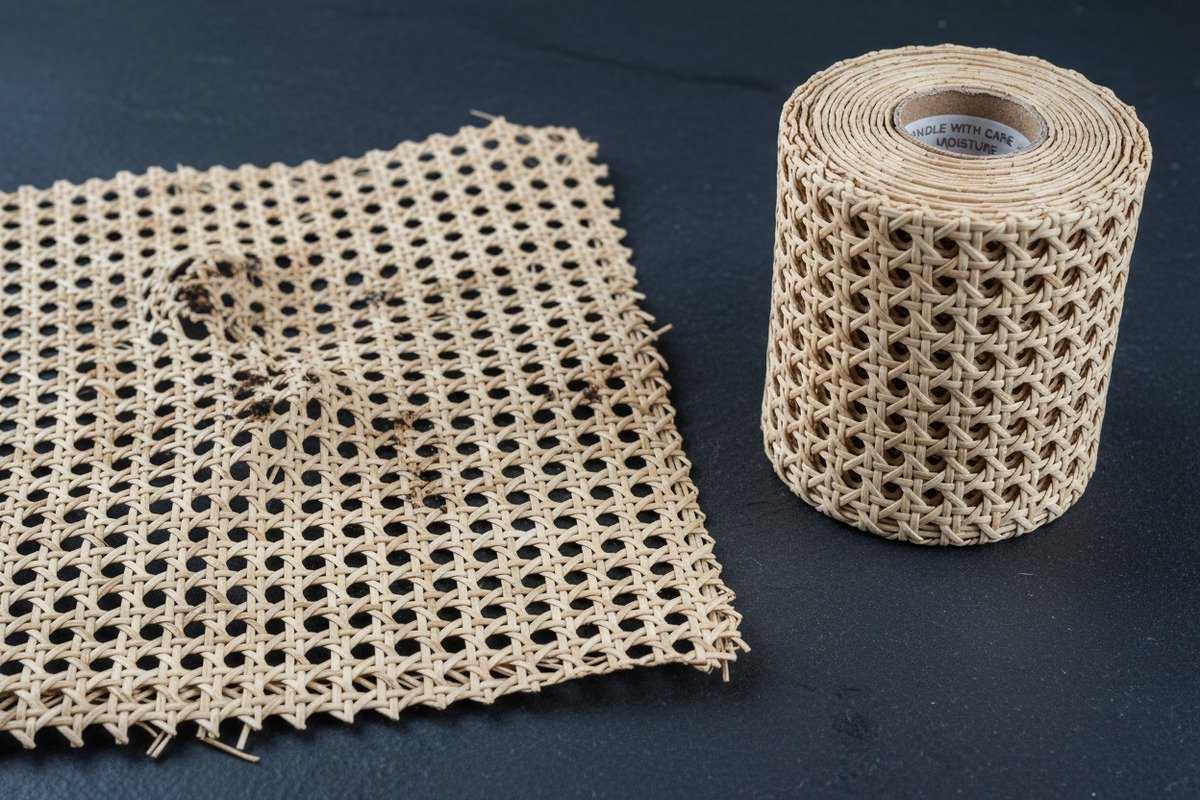
Sí, enjuagar el ratán directamente con agua con frecuencia provoca moho y deformación estructural. Las fibras naturales de ratán absorben el agua rápidamente y se expanden de manera desigual, lo que hace que el tejido se distorsione. La humedad atrapada en patrones de tejido apretados crea condiciones ideales para el moho y el mildiú, especialmente en ambientes cálidos o húmedos.
Cómo el agua daña el ratán a nivel de fibra
El ratán es esencialmente una liana de palma. Su estructura interna es porosa y fibrosa. Cuando el agua entra en estos poros, las fibras se hinchan. Diferentes partes del tejido absorben el agua a diferentes velocidades, lo que crea una tensión desigual. El resultado es la deformación: la malla se abomba, se levanta o se separa de su marco.
Si la humedad no se elimina rápidamente, ocurre algo peor. Esporas de moho 7, que están presentes en casi todos los ambientes interiores y exteriores, comienzan a colonizar las fibras húmedas. Al moho le encantan los materiales orgánicos cálidos, húmedos y tibios. El ratán natural proporciona las tres condiciones a la vez.
El cronograma de daños por agua
Comprender la rapidez con la que ocurren los daños puede ayudarle a actuar rápidamente si su ratán se moja accidentalmente.
| Tiempo después de mojarse | Qué sucede | ¿Reversible? |
|---|---|---|
| 0–30 minutos | La humedad superficial se asienta sobre las fibras | Sí, si se seca inmediatamente |
| 30 minutos – 2 horas | Las fibras comienzan a absorber agua, ligera hinchazón | Mayormente sí, con secado rápido |
| 2–6 horas | Hinchazón notable, cambios en la tensión del tejido | Parcialmente — puede quedar algo de distorsión |
| 6–24 horas | Comienza la deformación, puede aparecer olor a humedad | Difícil — puede ser necesaria una reparación profesional |
| 24–72 horas | Las esporas de moho se activan, manchas visibles de moho | Difícil de revertir por completo; probable compromiso estructural |
| 72+ horas | Comienza la putrefacción, las fibras se debilitan permanentemente | Irreversible — generalmente se requiere reemplazo |
¿Qué pasa con el remojo intencional para la instalación?
Aquí es donde las cosas se vuelven matizadas. La caña de ratán natural es se remoja intencionalmente en agua — típicamente durante 15 a 30 minutos — antes de la instalación. Esto hace que el material sea flexible para que los artesanos puedan estirarlo y tensarlo adecuadamente en un marco. Una vez instalado, el ratán se seca y se contrae, tensándose.
Este es un proceso controlado. Las diferencias clave entre el remojo para la instalación y el enjuague descuidado son:
- La duración es limitada. El remojo es de 15 a 30 minutos. No horas.
- Solo agua fría o tibia. El agua caliente puede debilitar las fibras prematuramente.
- La tensión y el secado inmediatos siguen. El ratán se estira en un marco y se seca al aire libre.
- Sucede una vez. No repetidamente.
Enjuagar con fines de limpieza, especialmente sin un plan de secado, es una situación completamente diferente. El agua se asienta en el tejido sin adónde ir. No hay tensión que lo apriete. El riesgo de moho se dispara.
Factores de Clima y Almacenamiento
Dónde almacena el ratán importa tanto como cómo lo limpia. En nuestra experiencia enviando a mercados húmedos como Tailandia, Filipinas y partes de EE. UU., siempre aconsejamos a los clientes que mantengan los materiales de ratán en almacenamiento con clima controlado. Las condiciones ideales son 40–60% humedad relativa 8 y lejos de la luz solar directa.
La alta humedad acelera el moho. La baja humedad causa agrietamiento y fragilidad. La luz solar directa desvanece el color natural y seca las fibras. El equilibrio lo es todo.
¿Cuáles son las mejores maneras de secar la rejilla de ratán si se moja durante la producción?
En nuestras líneas de producción en Foshan y en nuestra planta de procesamiento de ratán en Indonesia, ocurren humedades accidentales: un techo con goteras durante la temporada de monzones, un derrame cerca del almacenamiento o exceso de humedad del proceso de remojo durante el ensamblaje de sillas de caña.
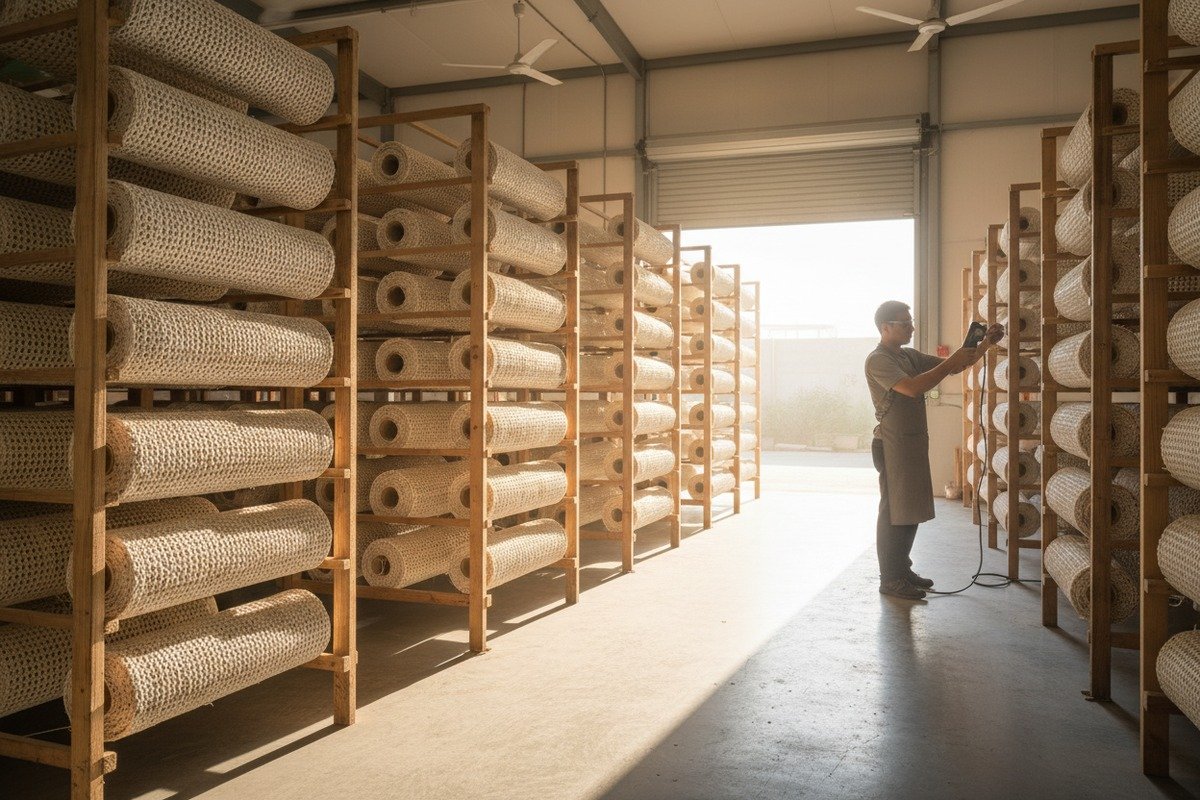
Si la rejilla de ratán se moja durante la producción, seque inmediatamente el exceso de agua con toallas absorbentes y luego seque al aire el material en un área bien ventilada con buena circulación de aire. Evite fuentes de calor directas como secadores de pelo o calentadores, que causan grietas. Coloque el ratán plano o bajo una tensión suave para evitar que se deforme mientras se seca.
Respuesta Inmediata: Los Primeros 30 Minutos
La velocidad es tu mayor aliada. En el momento en que el ratán se moje más de lo previsto, haz lo siguiente:
- Secar con toques, no frotar. Use toallas o paños limpios y absorbentes. Presione firmemente para extraer la humedad del tejido. Frotar puede deshilachar las fibras, especialmente cuando están mojadas y blandas.
- Inclinar y escurrir. Si está secando una lámina o panel, inclínelo en un ángulo para que la gravedad extraiga el agua de las intersecciones del tejido.
- Separar las piezas mojadas. No apile láminas de ratán mojadas unas encima de otras. Apilarlas atrapa la humedad entre las capas y duplica el riesgo de moho.
Métodos de secado clasificados
No todos los métodos de secado son iguales. Aquí hay una comparación basada en lo que funciona mejor en entornos de producción reales.
| Método de Secado | Efectividad | Riesgo para el ratán | Mejor caso de uso |
|---|---|---|---|
| Secado al aire libre (a la sombra, ventilado) | Excelente | Muy bajo | Secado estándar posterior a la inmersión para la instalación |
| Secado al aire asistido por ventilador | Excelente | Muy bajo | Producción en interiores cuando el secado en exteriores no es posible |
| Secado al sol al aire libre | Bueno | Bajo–Medio | Limpiezas profundas anuales; supervise para evitar daños por rayos UV |
| Sala con deshumidificador | Bueno | Bajo | Climas húmedos donde el secado al aire es lento |
| Secador de pelo (calor bajo) | Justo | Medio | Secado de manchas pequeñas solamente; manténgalo en movimiento, sin calor concentrado |
| Horno o calentador de espacio | Pobre | Alto | Nunca recomendado — causa grietas y deformaciones |
| Dejar mojado en almacenamiento | Ninguna | Extremo | Garantiza moho y pudrición |
Mantener la tensión durante el secado
Un detalle crítico que muchas personas pasan por alto: el ratán debe secarse bajo cierto grado de tensión o en posición plana. Si cuelga el ratán mojado sobre una barra o lo deja caer, se secará en esa forma caída. Una vez seco, el ratán mantiene su forma. No se puede reformar fácilmente sin volver a remojarlo, lo que reinicia todo el ciclo de riesgo.
En nuestra fábrica, utilizamos rejillas de secado planas con abrazaderas en los bordes. Esto mantiene la cincha tensa y plana a medida que se contrae durante el secado. Para los fabricantes de muebles que instalan cincha de caña en asientos de sillas, el propio marco proporciona la tensión, pero aún así debe asegurarse de que el aire pueda circular por ambos lados del panel.
¿Qué pasa si ya ha comenzado el moho?
Si detecta moho temprano — manchas pequeñas blancas o grisáceas — actúe rápido. Mezcle partes iguales de vinagre blanco y agua. Humedezca un paño con esta solución y limpie el área afectada. Deje que el vinagre actúe no más de 10-15 minutos. Luego limpie y seque inmediatamente. La suave acidez del vinagre mata la mayoría del moho superficial sin dañar el ratán.
Para el moho más rebelde, una pasta de bicarbonato de sodio puede ayudar. Aplíquela, déjela reposar brevemente y luego cepíllela con un cepillo de cerdas suaves. Continúe con la limpieza con vinagre. Si el moho ha penetrado profundamente en las fibras y el ratán huele fuertemente a moho, el material puede no tener salvación.
¿Cómo puedo mantener el acabado de alta calidad de mis materiales de ratán con el tiempo?
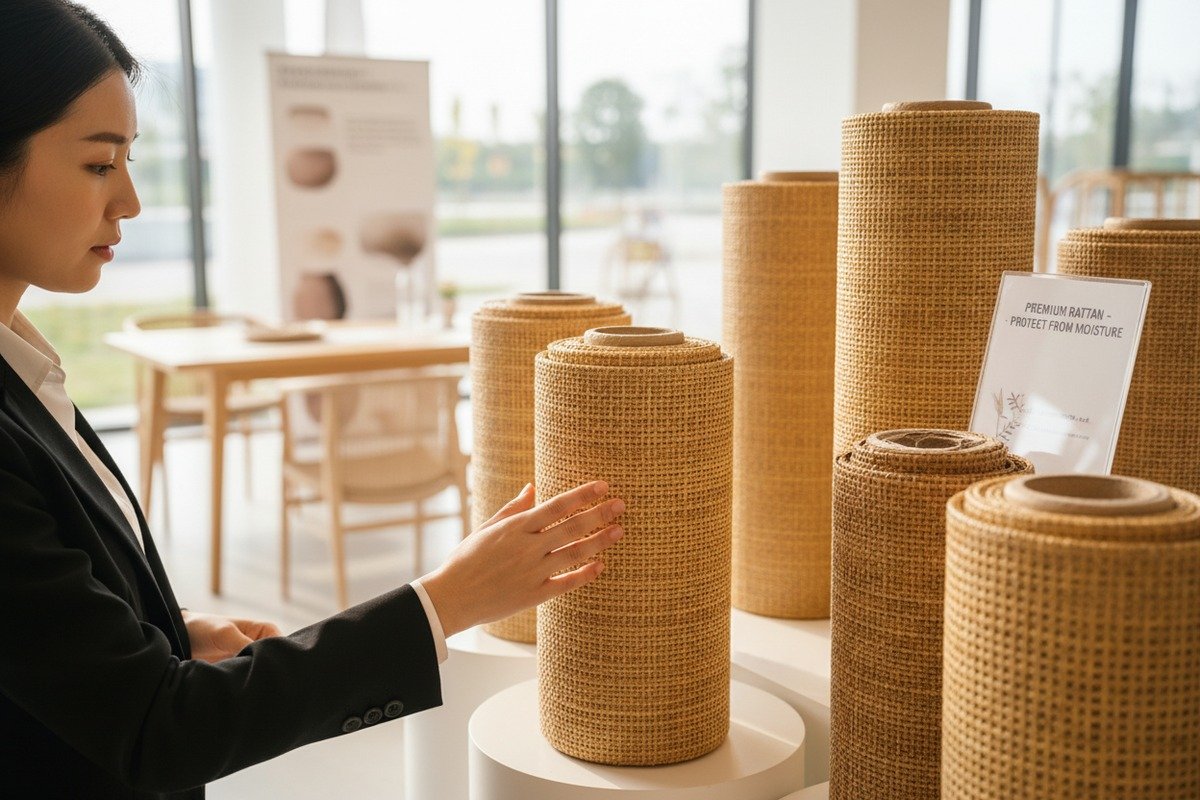
A través de años de suministro de mimbre de ratán a mercados de toda Europa, Oriente Medio y el Sudeste Asiático, nuestro equipo ha recopilado comentarios de cientos de compradores sobre lo que mantiene el ratán hermoso durante décadas, y lo que hace que se deteriore en cuestión de meses.
Para mantener el ratán de alta calidad con el tiempo, aplique un aceite natural como el de linaza o el mineral una o dos veces al año para prevenir la fragilidad. Mantenga el ratán en interiores o en espacios con clima controlado, lejos de la luz solar directa y la humedad extrema. Desempolve regularmente y limpie solo con un paño apenas húmedo para preservar el acabado y la integridad del tejido.
El papel de los aceites y el acondicionamiento
Las fibras de ratán pierden naturalmente humedad con el tiempo. Sin una rehidratación periódica, se vuelven secas, quebradizas y propensas a agrietarse. Aquí es donde entran los aceites naturales. Penetran en las fibras y restauran la flexibilidad sin introducir los riesgos que conlleva el agua.
Aquí están los aceites acondicionadores más comúnmente utilizados y sus características:
- Aceite de linaza. La elección clásica. Penetra profundamente y se seca con un ligero brillo. Use hervido aceite de linaza 9 para un secado más rápido.
- Aceite mineral. Seguro para alimentos e inodoro. Una buena opción para el ratán utilizado en muebles de cocina o comedor.
- Aceite de limón. Añade un aroma agradable y un ligero acondicionamiento. Mejor como suplemento que como acondicionador principal.
- Aceite de tung. Proporciona un acabado más duradero y resistente al agua. Tarda más en curar.
- Jabón de aceite de Murphy (diluido). Un limpiador suave y un acondicionador ligero en uno. Bueno para el mantenimiento de rutina.
Aplique aceite con un paño suave. Trabájelo en la trama. Déjelo absorber durante 15-20 minutos. Luego, elimine el exceso con un paño limpio y seco. Haga esto una o dos veces al año, dependiendo de su clima.
Acabados protectores y selladores
El acabado de su ratán marca una diferencia significativa en su resistencia al agua. El ratán sin acabado es el más vulnerable. Una capa ligera de poliuretano 10, laca o sellador de cera añade una barrera que protege contra la humedad ocasional, las manchas y la decoloración por rayos UV.
En nuestras instalaciones, ofrecemos a los clientes varias opciones de acabado dependiendo de su uso final. Aquí hay una guía rápida:
| Tipo de acabado | Resistencia al agua | Protección UV | ¿Se conserva el aspecto natural? | Frecuencia de Reaplicación |
|---|---|---|---|---|
| Sin acabado (crudo) | Muy bajo | Ninguna | Sí — completamente natural | N/A (se recomienda sellar) |
| Aceite de linaza | Bajo–Medio | Mínimo | Sí — ligero brillo | Cada 6–12 meses |
| Sellador de cera | Medio | Bajo | Sí — mate a satinado | Cada 12 meses |
| Poliuretano (transparente) | Alto | Moderada | Mayormente — ligero brillo | Cada 2-3 años |
| Laca en aerosol | Alto | Moderado–Alto | Depende del nivel de brillo | Cada 2-3 años |
Mejores prácticas para el almacenamiento a largo plazo
Si usted es un mayorista o gerente de compras que almacena grandes cantidades de ratán, el almacenamiento adecuado es innegociable. Estas son las reglas que compartimos con cada cliente:
- Almacenar en interiores. Nunca deje el ratán natural al aire libre durante períodos prolongados.
- Controle la humedad. Apunte a una humedad relativa del 40-60%. Use deshumidificadores en climas tropicales.
- Evite la luz solar directa. Los rayos UV decoloran y secan las fibras de ratán. Use cortinas o cubiertas con filtro UV.
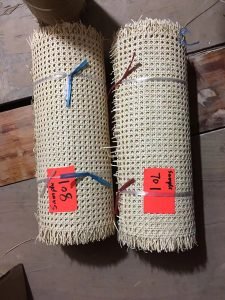
- Mantenga los rollos en posición vertical o plana. No cuelgue los rollos, ya que la gravedad causa estiramiento y deformación con el tiempo.
- Inspeccionar periódicamente. Busque signos tempranos de moho, actividad de plagas o sequedad. Detectar problemas a tiempo salva envíos completos.
El envejecimiento natural del ratán
Una cosa a tener en cuenta: el ratán natural se oscurece con el tiempo. Esto es normal. La pátina cálida y dorada que se desarrolla es en realidad deseable para muchos diseñadores de muebles y decoradores de interiores. Los aceites ayudan a mantener una transición de color uniforme. El agua, irónicamente, puede causar decoloración irregular que interrumpe este proceso de envejecimiento natural.
Los clientes que aceptan esta pátina natural e invierten en rutinas de cuidado simples y consistentes a menudo informan que sus piezas de ratán duran 15-20 años o más. Las piezas descuidadas rara vez sobreviven más de 3-5 años, especialmente en climas difíciles.
Sostenibilidad y el panorama general
Existe una tendencia creciente hacia el cuidado ecológico del ratán. Muchos de nuestros compradores europeos, particularmente en los Países Bajos y España, solicitan específicamente instrucciones de cuidado que eviten los limpiadores químicos. El vinagre, el bicarbonato de sodio y los aceites de origen vegetal no solo son más suaves para el ratán, sino que también son mejores para el medio ambiente. El uso de estos productos simples y naturales extiende la vida útil de su ratán, reduce el desperdicio por reemplazo prematuro y se alinea con los valores de sostenibilidad que impulsan gran parte de la demanda actual del mercado de materiales naturales.
Conclusión
El tejido de ratán natural prospera con un cuidado suave y seco, nunca con enjuagues directos. Quita el polvo regularmente, limpia con paños apenas húmedos, acondiciona con aceites naturales anualmente y almacena sabiamente para disfrutar de un ratán hermoso y duradero durante años.
Notas al pie
1. Explica cómo los materiales orgánicos como las fibras de madera reaccionan a los cambios de humedad. ↩︎
2. Proporciona una definición y comparación claras del ratán natural. ↩︎
3. Wikipedia proporciona una definición completa y accesible de higroscopia. ↩︎
4. Explica la composición y las propiedades del ratán sintético como alternativa artificial. ↩︎
5. Define los detergentes suaves y su idoneidad para limpiar materiales delicados de forma segura. ↩︎
6. Proporciona información sobre el uso de bicarbonato de sodio para la limpieza de una marca relevante. ↩︎
7. Detalla las condiciones requeridas para que las esporas de moho crezcan y colonicen las superficies. ↩︎
8. Discute los niveles ideales de humedad relativa para preservar los muebles de madera y prevenir daños. ↩︎
9. Describe las propiedades y beneficios del aceite de linaza para proteger y nutrir la madera. ↩︎
10. Explica la durabilidad y las cualidades protectoras del poliuretano como acabado para madera. ↩︎
 English
  Español de México
  العربية
  Deutsch
  Français
  Русский