
Cada semana, nuestro equipo de atención al cliente recibe llamadas de compradores que acaban de instalar una hermosa rejilla de ratán, solo para verla caer en pocos días. Es frustrante y se siente como dinero desperdiciado.
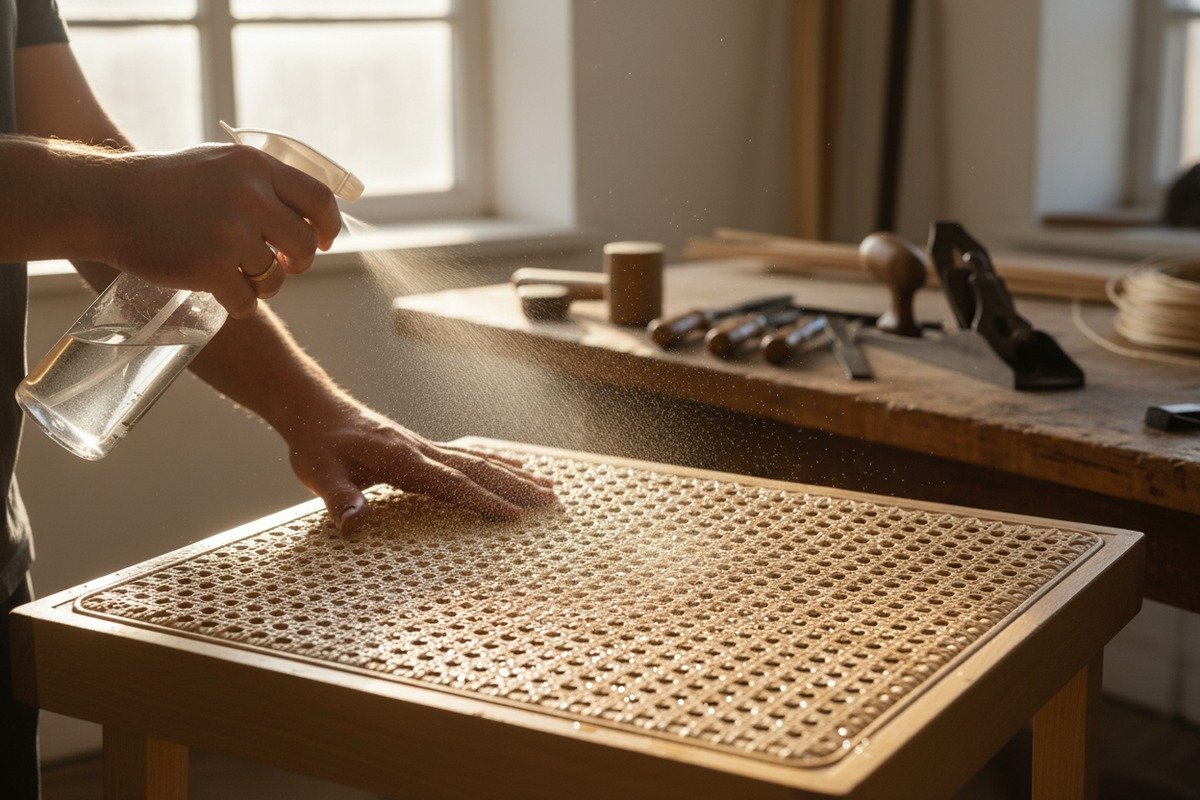
Para arreglar el mimbre de ratán natural caído, humedece toda la superficie con agua tibia usando una esponja o un atomizador, luego déjalo secar al aire durante 24 horas. Las fibras se hinchan al mojarse y se encogen al secarse, tensando de nuevo el mimbre. Para una caída persistente, refuerza el marco o reemplaza el mimbre por completo.
A continuación, desglosamos cada causa, cada solución y cada método de prevención para que sus proyectos de ratán se mantengan tensos y hermosos durante años. Repasemos los detalles paso a paso.
¿Por qué mi tejido de ratán natural se está hundiendo justo después de instalarlo?
Vemos esta pregunta constantemente de fábricas de muebles y mayoristas que compran en nuestras líneas de producción. La rejilla se veía perfecta al entregarla, pero una vez instalada, cuelga floja. El pánico es real, pero la solución suele ser sencilla.
La rejilla de ratán natural se hunde después de la instalación principalmente porque las fibras absorben la humedad ambiental y se expanden. Si la rejilla no se remojó previamente antes de la instalación o si la humedad interior es alta, el material se afloja en lugar de tensarse. El remojo adecuado y el secado controlado resuelven este problema en la mayoría de los casos.
Comprendiendo la naturaleza higroscópica del ratán
El ratán es un material vivo, incluso después de procesarlo. Absorbe y libera humedad del aire circundante. Esto se llama comportamiento higroscópico 1. Cuando la humedad aumenta, las fibras de ratán se hinchan y se alargan. Cuando la humedad disminuye, se encogen y se tensan. Este ciclo natural es en realidad lo que hace que el ratán sea tan duradero y reparable en comparación con las alternativas sintéticas.
El problema aparece cuando este ciclo juega en su contra. Si instala rejilla de ratán seca en una habitación húmeda, las fibras absorben la humedad del aire, se expanden y se caen. Si instala rejilla pre-remojada y la deja secar en un ambiente controlado, ocurre lo contrario: se tensa maravillosamente.
Errores comunes de instalación
Por nuestra experiencia enviando rejilla de ratán a fábricas de muebles en más de 15 países, hemos identificado los errores de instalación más frecuentes:
| Error | Qué sucede | Cómo evitar |
|---|---|---|
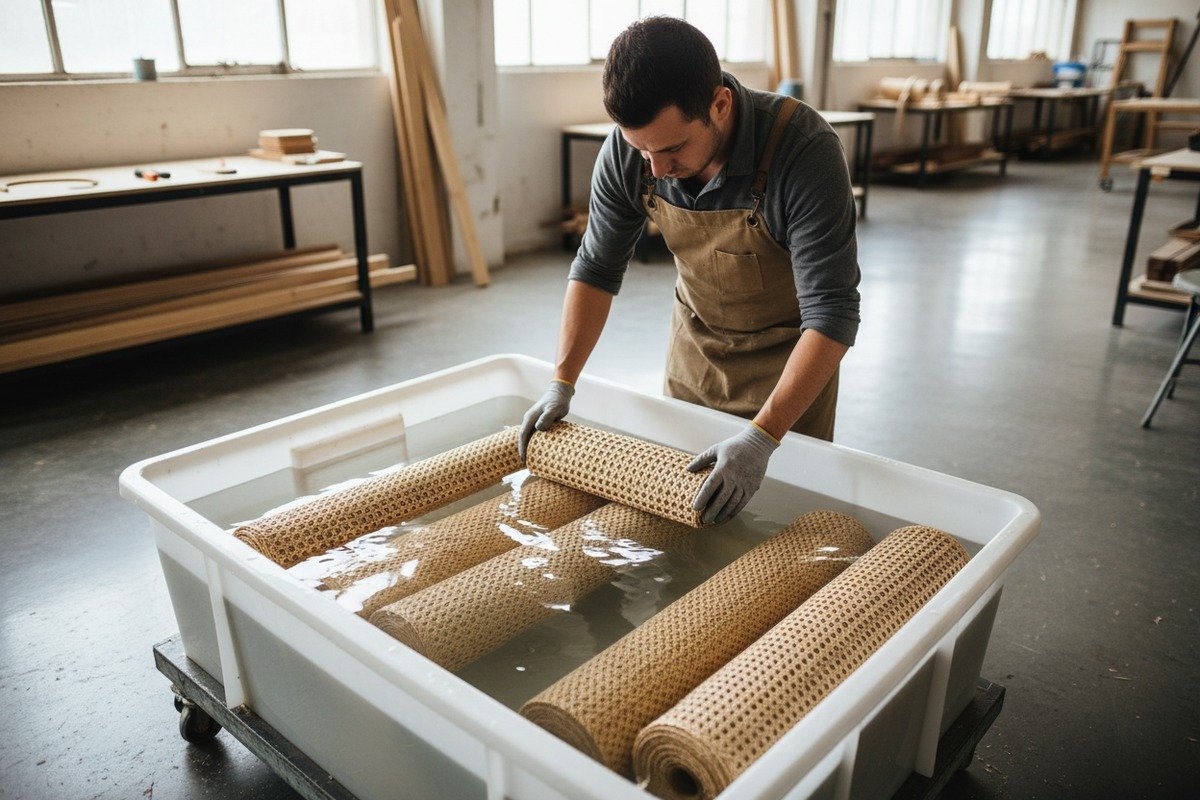
| Omitir el pre-remojo | La rejilla permanece con su tensión actual y se cae con los cambios de humedad | Remoje la rejilla en agua tibia durante 30-60 minutos antes de la instalación |
| Remojo excesivo más allá de 4 horas | Las fibras se vuelven demasiado blandas, el tejido se distorsiona y la rejilla se estira permanentemente | Limite el remojo a 30 minutos para cinchas estándar, hasta un máximo de 4 horas para grados gruesos |
| Instalación en una habitación húmeda | Las fibras se expanden después de la instalación y crean una caída visible | Instalar en una habitación con 40–60% de humedad humedad relativa 2, o usar un deshumidificador |
| Usar el tamaño de ranura incorrecto | La cincha no se sujeta de forma segura en la ranura, lo que permite el movimiento lateral | Haga coincidir el ancho de la ranura con el ancho de la ranura; los tamaños comunes son 1/8", 1/4" y 3/8" tamaño de la ranura 3 |
| Aplicar barniz o laca inmediatamente | Sella la humedad dentro de las fibras, evitando el endurecimiento natural | Espere al menos 48 horas antes de aplicar cualquier acabado y use solo opciones transpirables |
La regla del pre-remojo
Aquí está el punto crítico que mucha gente se pierde. Cuando remojas la cincha de ratán antes de la instalación, las fibras están en su máxima expansión. Las instalas en este estado expandido. Luego, a medida que la cincha se seca durante 24 horas, las fibras se encogen. Esta contracción crea la superficie tensa y similar a un tambor que deseas.
Si omites el pre-remojo, instalas la cincha en su tamaño seco y contraído. Cualquier humedad que absorba después causa expansión, y la expansión significa caída. Esta es la razón más común de la caída posterior a la instalación.
Inspección del marco y la ranura
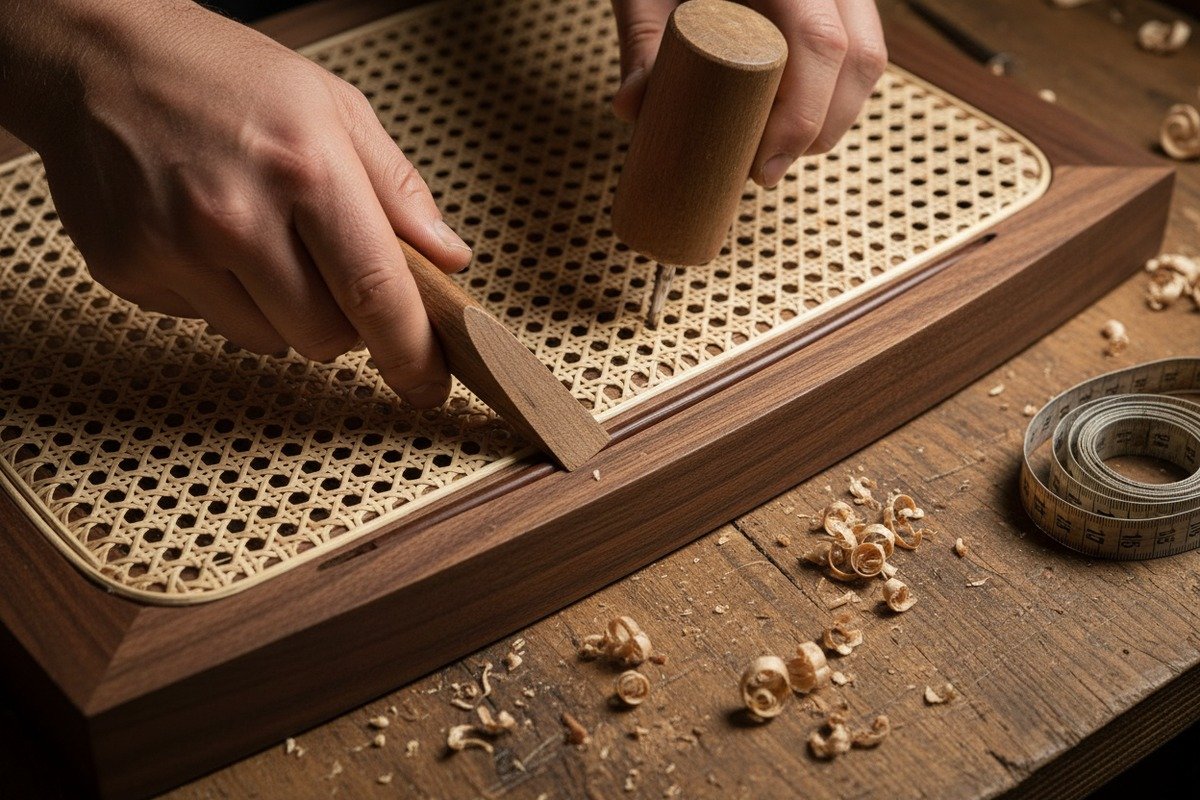
Antes de culpar a la tela, revise el marco del mueble. Una ranura deformada o irregular no sujetará la lengüeta de manera uniforme. Si una sección de la ranura es más ancha que otra, la tela puede resbalar y crear hundimientos localizados. Pase el dedo por la ranura antes de la instalación. Debe ser uniforme en ancho y profundidad. Lije cualquier punto áspero.
¿Puedo usar agua o calor para tensar mi ratán suelto?
Cuando nuestros clientes en los Países Bajos y Australia informan de hundimientos meses después de la instalación, lo primero que recomendamos es la solución más sencilla. No necesita herramientas especiales. No necesita quitar la tela. Solo necesita agua y paciencia.
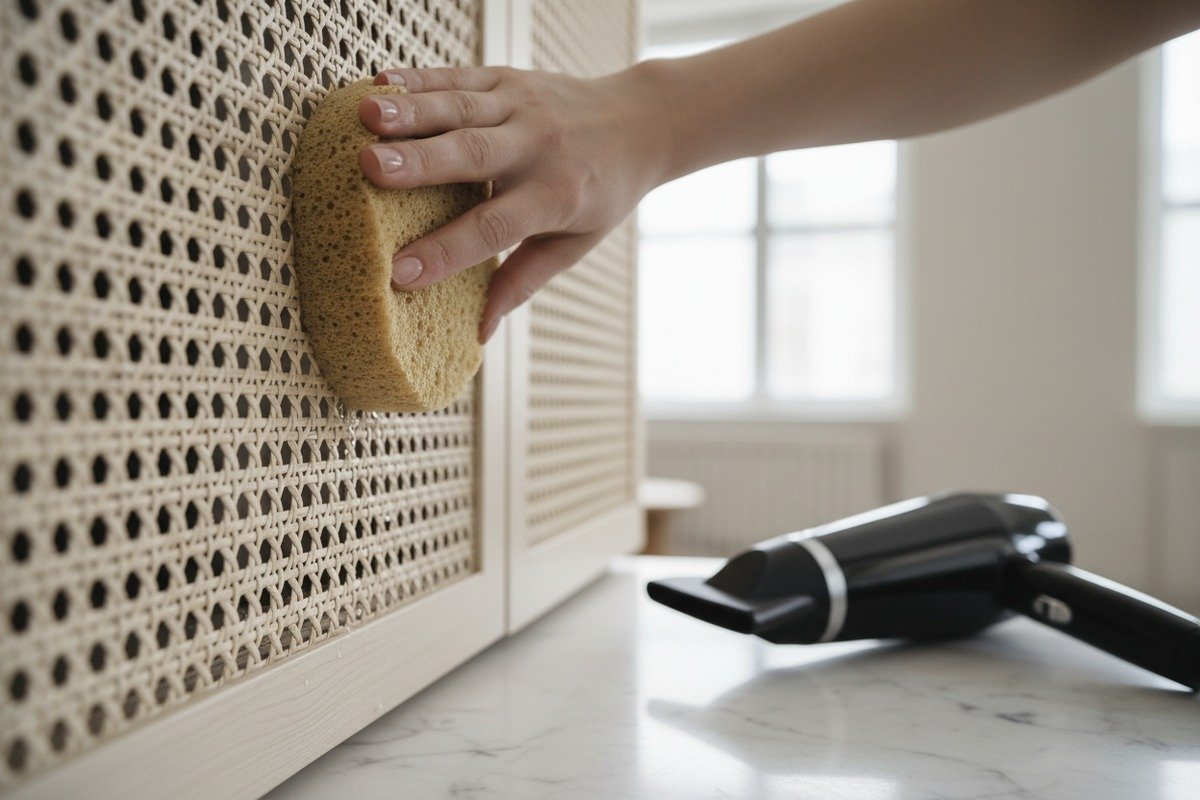
Sí, puedes tensar la ratán suelta utilizando agua tibia y secado al aire natural. Moja toda la superficie de la ratán, por delante y por detrás, con una esponja o un pulverizador, y luego deja 24 horas para que se seque por completo. Un secador de pelo sostenido a 10 centímetros de distancia puede acelerar el proceso, pero el secado natural produce los resultados más consistentes.
El Método del Agua: Paso a Paso
Esta es la reparación ideal para hundimientos leves a moderados. Aquí le explicamos cómo hacerlo correctamente:
- Voltee el mueble boca abajo si es posible. La parte inferior de la tela de ratán está menos desgastada y es más porosa, por lo que absorbe el agua de manera más efectiva.
- Use una esponja limpia empapada en agua tibia. No agua caliente, tibia. El agua caliente puede dañar las fibras y debilitar la estructura del tejido.
- Empape toda la superficie de la tela de manera uniforme. No moje solo las zonas hundidas. El mojado desigual crea tensión desigual, lo que causa nuevos problemas.
- Voltee el mueble y moje también la superficie superior.
- Coloque el mueble en un área bien ventilada, lejos de la luz solar directa.
- Espere 24 horas. No se siente sobre él. No coloque nada sobre él. Deje que las fibras hagan su trabajo.
El Método del Calor: Cuándo Usarlo
Un secador de pelo puede acelerar el secado, pero es una herramienta secundaria. Úselo solo después de que la tela esté completamente saturada de agua. Sostenga el secador a unos 10 centímetros de la superficie. Muévalo constantemente, nunca se concentre en un solo punto. Aproximadamente 10 minutos de aplicación de calor uniforme pueden producir un endurecimiento notable.
Sin embargo, existe un riesgo. El calor excesivo o concentrado puede volver quebradizo el ratán. También puede causar un secado desigual, lo que provoca deformaciones. Recomendamos el método del calor solo cuando necesite resultados más rápidos y no pueda esperar las 24 horas completas.
Comparación de métodos: agua, calor y combinados
| Método | Tiempo de secado | Efectividad del tensado | Nivel de riesgo | Mejor para |
|---|---|---|---|---|
| Solo agua (secar al aire) | 24 horas | Alto | Muy bajo | Todos los niveles de hundimiento, mantenimiento de rutina |
| Solo secador de pelo (sin pre-humedecer) | 10–15 minutos | Muy bajo | Medio | No recomendado solo |
| Agua + secador de pelo | 2–4 horas | Medio-alto | Bajo-medio | Cuando el tiempo es limitado |
| Agua + objeto plano con peso encima | 24–36 horas | Muy alto | Muy bajo | Hundimiento persistente o recurrente |
¿Y el vapor?
Algunas personas preguntan sobre el uso de una plancha de vapor para ropa. El vapor puede funcionar, pero es más difícil de controlar. El calor y la humedad concentrados pueden saturar en exceso áreas específicas. Si debe usar vapor, mantenga la plancha en movimiento y sujétela al menos a 15 centímetros de la superficie. Generalmente no recomendamos el vapor para principiantes.
Una palabra de advertencia sobre los acabados
Si su tejido de ratán ha sido recubierto con goma laca, barniz o cualquier acabado no transpirable, el método del agua no funcionará bien. Estos acabados bloquean la absorción de humedad. Las fibras no pueden hincharse, por lo que no pueden encogerse y tensarse durante el secado. Esta es una de las razones por las que siempre aconsejamos a nuestros compradores que dejen rejilla de ratán natural 4 sin recubrimiento, o que utilicen solo acondicionadores ligeros y transpirables.
Si el tejido ya está sellado, es posible que necesite lijar suavemente la superficie para romper el sello antes de aplicar agua. Este es un trabajo delicado; proceda con cuidado para evitar dañar el patrón de tejido 5.
¿Cómo me aseguro de que el grado de ratán que compré no se deformará bajo un uso intensivo?
Dirigir tres fábricas, incluida nuestra propia planta de procesamiento de ratán en Indonesia, nos ha enseñado que no todo el ratán es igual. El grado, la densidad del tejido y el grosor de la fibra determinan cómo se comporta el tejido bajo tensión. grado de ratán 6 Elegir el grado incorrecto para su aplicación es como usar cartón donde necesita contrachapado.
Para prevenir el pandeo bajo un uso intensivo, seleccione una rejilla de ratán natural de Grado A con patrones de tejido apretados y diámetros de fibra más gruesos. El ratán de Grado A tiene menos imperfecciones, una densidad de fibra más consistente y una mejor integridad estructural. Combine su elección con el patrón de tejido correcto para la aplicación de carga prevista.
Comprendiendo los Grados de Ratán
La clasificación del ratán se basa en la calidad de la fibra, la consistencia y la apariencia visual. Esto es lo que cada grado significa típicamente en la práctica:
| Grade | Calidad de la fibra | Consistencia del color | Resistencia estructural | Mejor aplicación |
|---|---|---|---|---|
| Grado A (Premium) | Grosor uniforme, sin grietas ni nudos | Rubio natural uniforme a tostado claro | Alto: soporta peso sostenido | Asientos de silla, cabeceros, muebles de uso intensivo |
| Grado B (Estándar) | Pequeñas variaciones de grosor, nudos pequeños ocasionales | Mayormente consistente con ligera variación de color | Medio — adecuado para cargas moderadas | Puertas de armario, paneles decorativos, asientos ligeros |
| Grado C (Económico) | Imperfecciones visibles, fibras más finas en algunos lugares | Variación de color notable | Bajo — mejor solo para uso decorativo | Paneles de pared, separadores de ambientes, proyectos de manualidades |
El patrón de tejido importa
El patrón de tejido es tan importante como el grado. Los tejidos más apretados distribuyen el peso entre más fibras, reduciendo la carga en cualquier hebra individual. Los patrones hexagonales abiertos lucen hermosos pero no son ideales para asientos de silla que soportarán entre 70 y 100 kg diarios.
Para asientos de uso intensivo, recomendamos patrones de tejido cerrado como el denso motivo de diamante o el tejido de cesta apretado. Estos patrones tienen más puntos de contacto por centímetro cuadrado, lo que significa una mejor distribución de la carga y menos hundimiento con el tiempo.
Diámetro de la fibra y procesamiento
Las fibras más gruesas resisten el estiramiento mejor que las finas. diámetro de la fibra 7 Cuando nuestra planta de procesamiento en Indonesia prepara el ratán crudo, la caña se divide, se raspa y se calibra a grosores específicos. Una esterilla hecha de tiras de caña de 2,5 mm de ancho superará a una hecha de tiras de 1,5 mm en cualquier escenario de carga.
Pregunte a su proveedor sobre el ancho de la tira de caña antes de comprar. Si no pueden decirle, eso es una señal de alerta. Los fabricantes de renombre rastrean estas especificaciones porque afectan directamente el rendimiento.
Emparejar el grado con la aplicación
Aquí es donde muchos compradores se equivocan. Eligen Grado B o C porque el precio es más bajo, luego lo usan para sillas de comedor en las que se sientan tres veces al día. En cuestión de meses, la cincha se hunde. La solución no es más tratamientos de agua, sino elegir el grado correcto desde el principio.
Si su proyecto implica asientos o cualquier superficie que soporte peso regularmente, invierta en Grado A. La diferencia de costo inicial es pequeña en comparación con el costo de mano de obra de volver a tejer una silla seis meses después. Para aplicaciones decorativas, como incrustaciones de gabinetes o arte de pared, los Grados B y C funcionan perfectamente bien y ofrecen un mejor valor.
Pruebas antes de la compra a granel
Si usted es un mayorista o fabricante de muebles, siempre solicite muestras antes de comprometerse con un pedido grande. Pruebe la muestra empapándola, instalándola en un marco de prueba y aplicando peso durante unos días. Observe cómo responde a los cambios de humedad en su entorno local. Esta simple prueba puede ahorrar miles en devoluciones y retrabajos.
¿Cuáles son las mejores maneras de mantener la tensión en mis proyectos de muebles de ratán?
A lo largo de los años de suministro de materiales de ratán a mercados desde España hasta Arabia Saudita, hemos visto que productos idénticos duran cinco años en un clima y quince en otro. La diferencia casi siempre se debe al mantenimiento continuo, no a la calidad inicial.
Las mejores maneras de mantener la tensión en los muebles de ratán incluyen rociar mensualmente con agua para mantener las fibras hidratadas, mantener la humedad interior entre 40–60%, usar cojines para distribuir el peso de manera uniforme, evitar la luz solar directa y las fuentes de calor, e inspeccionar regularmente en busca de hebras sueltas que deben volver a pegarse antes de que empeoren.
Programa de nebulización mensual
El hábito de mantenimiento más simple y efectivo es la nebulización mensual. Use un atomizador de plantas estándar lleno de agua limpia a temperatura ambiente. Rocíe ligeramente la cincha de ratán por ambos lados. No necesita empaparla; una fina niebla es suficiente para mantener las fibras hidratadas y flexibles.
En climas áridos, como Oriente Medio o el interior de Australia, rocíe cada dos semanas. En regiones naturalmente húmedas, como el sudeste asiático costero, una vez al mes o incluso menos es suficiente. El objetivo es evitar que las fibras se sequen por completo, lo que las vuelve quebradizas y pierde su capacidad de volver a la tensión.
Control de humedad en interiores
Si sus muebles de ratán permanecen en interiores, un higrómetro 8 es una inversión que vale la pena. Estos sencillos dispositivos miden la humedad interior. Mantenga la lectura entre 40% y 60%. Por debajo del 40%, el ratán se seca y se vuelve quebradizo. Por encima del 60%, absorbe el exceso de humedad y se hunde.
En invierno, los sistemas de calefacción reducen drásticamente la humedad interior. Un pequeño humidificador en la habitación con sus muebles de ratán puede marcar una diferencia significativa. En verano, el aire acondicionado también puede secar el aire en exceso. Monitorear y ajustar.
Estrategias de distribución del peso
El peso concentrado es el enemigo del tejido de ratán. Una persona de 80 kg sentada en una silla de comedor pone todo su peso en un área pequeña. Con el tiempo, esto estira las fibras en esa zona. Los cojines ayudan enormemente, no solo para la comodidad, sino porque distribuyen la carga sobre una superficie más amplia.
Para bancos y sofás, fomente un asiento uniforme en lugar de sentarse siempre en el mismo lugar. Rotar la colocación de los cojines también ayuda a distribuir el desgaste de manera uniforme en el tejido.
Inspección y reparación temprana
Revise su tejido de ratán cada pocos meses en busca de hebras sueltas o rotas. Una sola hebra suelta puede deshacerse en un problema mucho mayor si no se aborda. Cuando encuentre una hebra suelta, aplique una pequeña cantidad de Pegamento de madera PVA 9 o pegamento tradicional para piel en el punto de conexión. Presione suavemente la hebra de nuevo en su posición y déjela secar durante unas horas antes de usar.
Lista de verificación de protección a largo plazo
Aquí están los hábitos clave que protegen el tejido de ratán a largo plazo:
- Nunca coloque muebles de ratán a la luz solar directa durante períodos prolongados. Rayos UV 10 degradan las fibras naturales.
- Mantenga el ratán alejado de fuentes de calor como radiadores, chimeneas y rejillas de ventilación.
- No apile objetos pesados sobre superficies de ratán cuando no estén en uso.
- Limpie con un cepillo suave o una aspiradora con succión baja para eliminar el polvo del tejido.
- Aplique un acondicionador natural para caña una o dos veces al año para una protección adicional de las fibras.
- Evite los pulimentos sintéticos o a base de petróleo, que pueden obstruir las fibras e impedir el intercambio de humedad.
Cuándo Llamar a un Profesional
Si su tejido de ratán se ha hundido severamente y varios tratamientos con agua no han restaurado la tensión, o si ve grietas y fragilidad junto con el hundimiento, puede ser necesario un re-tejido profesional. Un trabajador de caña hábil puede quitar el tejido y la ranura viejos, limpiar la ranura e instalar material nuevo en unas pocas horas. Esto es especialmente valioso para muebles antiguos o de alto valor donde el marco en sí mismo vale la pena preservar.
Para fabricantes y mayoristas de muebles, tener rollos de repuesto de cincha y junquillo a juego a mano elimina los retrasos cuando se necesitan reparaciones. Suministramos longitudes cortadas a medida para este propósito exacto, para que nuestros clientes puedan responder rápidamente a las reclamaciones de garantía o a los proyectos de restauración sin esperar semanas por nuevo stock.
Conclusión
La cincha de caña de ratán caída es reparable y, a menudo, prevenible. Elija el grado correcto, instálela húmeda y manténgala con pulverizaciones regulares. Sus muebles de ratán le recompensarán con décadas de uso.
Notas al pie
1. Define el comportamiento higroscópico y cómo los materiales atraen y retienen la humedad. ↩︎
2. Se reemplazó HTTP 404 con una fuente gubernamental autorizada sobre humedad relativa. ↩︎
3. Se reemplazó HTTP 404 con una guía dedicada al dimensionamiento de junquillos. ↩︎
4. Explica qué es la cincha de caña de ratán y sus propiedades materiales. ↩︎
5. Se reemplazó HTTP 403 con un artículo que detalla los tipos de tejidos de caña para muebles. ↩︎
6. Detalla el sistema de clasificación del ratán basado en la calidad y las características. ↩︎
7. Explora cómo el diámetro de la fibra influye en las propiedades mecánicas del ratán. ↩︎
8. Explica qué es un higrómetro y su uso en la medición de los niveles de humedad. ↩︎
9. Explica qué es el pegamento PVA y sus aplicaciones comunes en carpintería. ↩︎
10. Describe cómo la radiación UV degrada las fibras y materiales naturales con el tiempo. ↩︎

 English
  Español de México
  العربية
  Deutsch
  Français
  Русский