
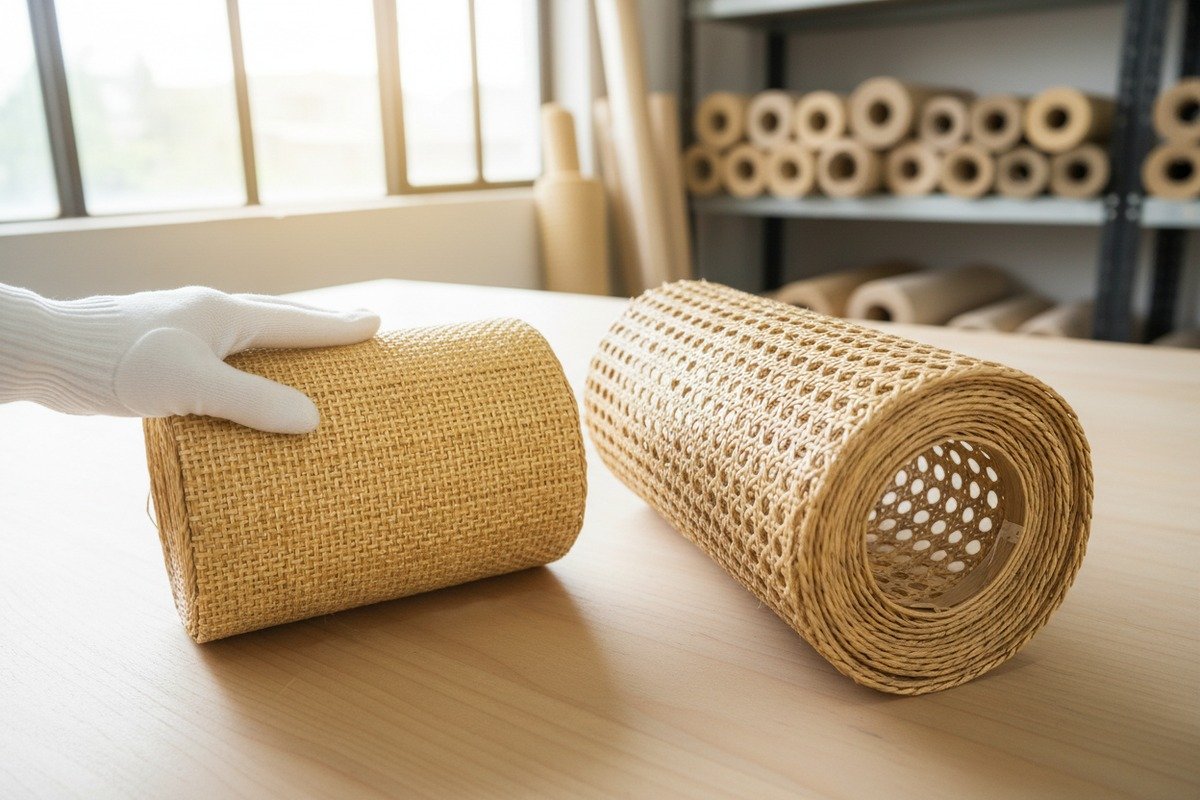
Every week, our sales team fields the same question from furniture factories and wholesalers around the world: “Which densidad de malla 1 is right for my project?” It sounds simple, but choosing the wrong density can lead to sagging seats, cracked panels, and costly product returns. We have seen it happen across orders shipping to the Netherlands, Australia, and Thailand alike—and the root cause almost always traces back to a mismatch between mesh density and intended use.
Mesh density—the number of woven rattan strands per unit area—directly determines a webbing’s strength, flexibility, airflow, and visual texture. Higher-density weaves offer greater load-bearing capacity and durability, while lower-density weaves provide better ventilation and a lighter aesthetic, making density the single most important specification to match to your application.
In this guide, we break down exactly how mesh density affects performance across different use cases capacidad de carga 2. Whether you are building dining chairs, designing cabinet doors, or comparing supplier quotes, the sections below will help you make a confident, informed choice.
How will a higher mesh density affect the long-term durability and weight capacity of my rattan furniture?
When we test sample batches at our Foshan facility, the difference between a 13×6 close weave and a standard open mesh is immediately obvious under stress resistencia a la abrasión 3. Furniture factories that skip this evaluation often face warranty claims within the first year. The frustration is real—and preventable.
A higher mesh density significantly increases both durability and weight capacity. Close weave patterns with more strands per square inch distribute weight more evenly, resist sagging, and can last 8–10 years under normal use, while low-density weaves in the same application may fail within 2–3 years.
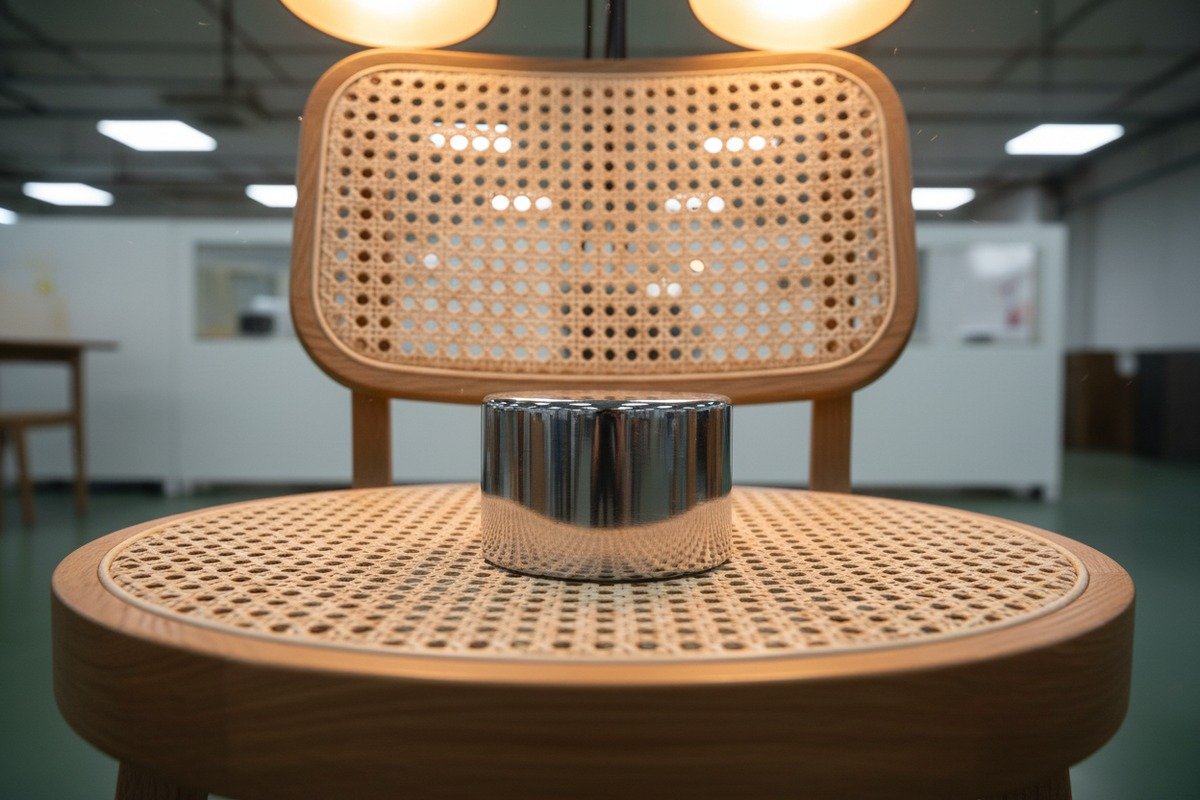
How Strand Count Changes Load Distribution
Think of mesh density like the slats on a bed frame. More slats mean each one carries less weight. The same principle applies to rattan webbing. In a high-density weave, each strand shares the load with many neighbors. This reduces the stress on any single strand and prevents the localized stretching that causes permanent sag.
For a standard dining chair seat, we generally recommend a close weave or a tight square mesh. These patterns have strand counts high enough to handle repeated sitting and standing cycles from adults weighing up to 100 kg without visible deformation over several years.
Durability Over Time
Density also affects how webbing ages. In low-density weaves, individual strands flex more with each use. Over thousands of cycles, this extra movement accelerates fiber fatigue 4. High-density weaves limit individual strand movement because the tight structure locks strands in place. The result is slower wear and a longer functional lifespan.
From our production records and customer feedback across markets like Spain, the USA, and Saudi Arabia, here is what we typically observe:
| Density Level | Typical Pattern | Vida útil esperada (uso en interiores) | Max Recommended Load |
|---|---|---|---|
| Low (open mesh) | Tejido de radio 5, hexagonal | 2–4 years on seating | 40–60 kg static |
| Medium (standard mesh) | Square mesh (1/2" openings) | 5–7 years on seating | 60–85 kg static |
| High (close weave) | Close weave, tight basketweave | 8–10+ years on seating | 85–120 kg static |
Material Quality Still Matters
It is worth noting that density alone does not guarantee durability. We process our own rattan at our Indonesian facility, and we know firsthand that raw material grade interacts with density. A high-density weave made from immature or poorly dried cane will still crack and break prematurely. Ratán de Grado A 6—harvested at the right maturity and properly treated—combined with high density is the formula for long-lasting furniture.
Our workers, many with over a decade of weaving experience, maintain consistent strand tension throughout every roll. Inconsistent tension in a dense weave creates weak spots that are invisible to the eye but fail under load. This is why manufacturing skill and quality control are just as critical as the density number on a spec sheet.
What mesh density should I choose to achieve the right balance of privacy and airflow for my cabinet designs?
Our clients in the building materials sector—especially those supplying European and Middle Eastern markets—often want cabinet doors that look elegant while still letting air circulate inside. Getting this balance wrong means either a stuffy cabinet that traps moisture or a panel so open it hides nothing inside.
For cabinet doors, a medium-density square mesh or radio weave offers the best compromise between privacy and airflow. These patterns allow gentle air circulation to prevent mold and odor buildup while partially concealing cabinet contents, unlike close weaves that block airflow or wide-open meshes that expose everything inside.
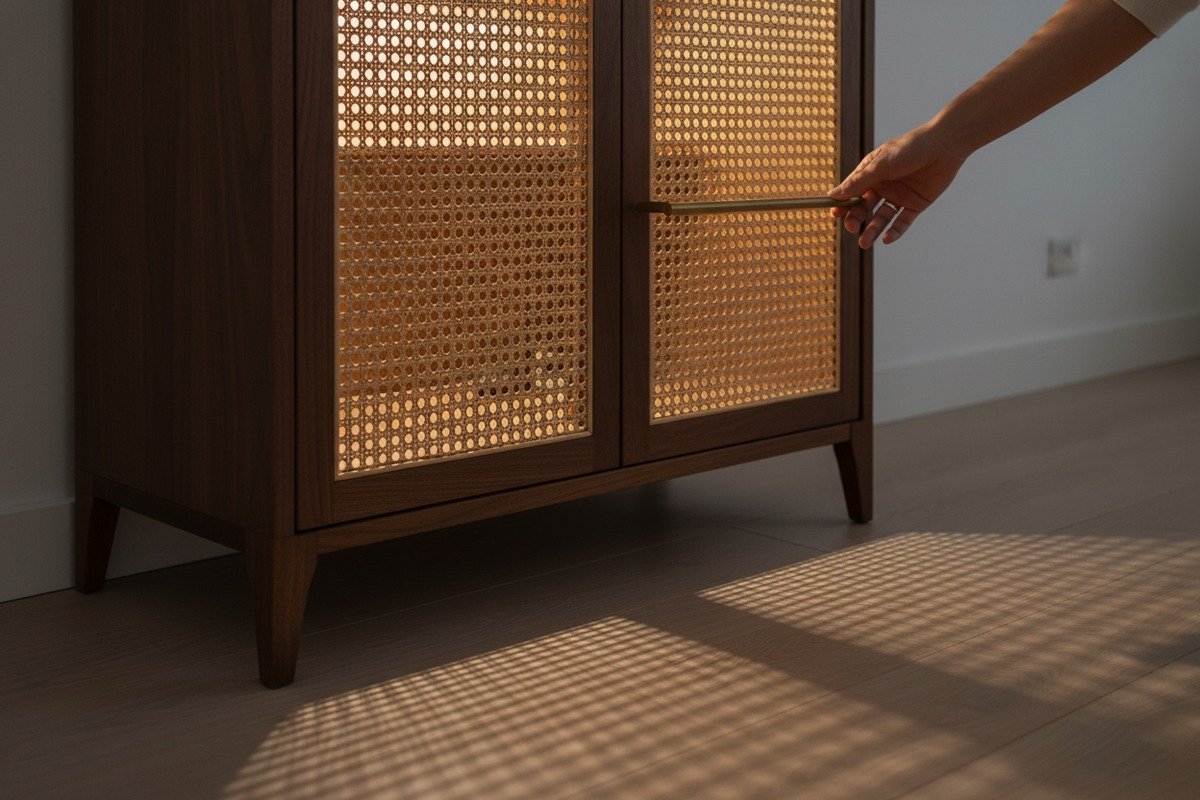
Why Airflow Matters Inside Cabinets
Cabinets in kitchens, bathrooms, and humid climates need ventilation. Without it, trapped moisture leads to mold, mildew, and musty smells. Open weave rattan naturally solves this problem. Air passes through the gaps between strands, keeping the interior dry. But too much openness defeats the purpose of a cabinet door—you want some visual screening.
Matching Density to Privacy Needs
Privacy is subjective. Some designers want a barely-there veil effect. Others want near-complete concealment. Here is how different densities perform in cabinet applications:
| Density / Pattern | Airflow Rating | Nivel de privacidad | Best Cabinet Use |
|---|---|---|---|
| Low density (wide hexagonal) | Excelente | Low—contents clearly visible | Open display shelving, shoe cabinets |
| Medium density (radio weave) | Bueno | Moderate—contents partially obscured | Kitchen pantry, bathroom storage |
| Medium-high (1/2" square mesh) | Moderada | Moderate-high—outlines visible only | Bedroom wardrobes, living room consoles |
| High density (close weave) | Bajo | High—contents fully hidden | Paneles decorativos, separadores de ambientes |
Thermal and Acoustic Side Benefits
An often overlooked benefit of medium-density rattan on cabinets is subtle climate control. In warm climates, the airflow through an open weave prevents heat buildup inside enclosed furniture. Conversely, a tighter weave on a cabinet near a window can provide marginal thermal insulation 7, keeping stored items slightly cooler in direct sun.
There is also a minor acoustic advantage. Denser weaves can dampen sound transmission slightly. For cabinets that house smart speakers or media equipment, however, an open mesh is preferable because it allows better sound and signal transmission. Several of our clients supplying smart home furniture manufacturers have specifically requested radio weave panels for this reason.
Practical Selection Tips
When advising our wholesale buyers, we suggest starting with the room environment. High humidity? Go with medium density for airflow. Display-focused design? Low density works. Storage-focused cabinet in a living area? Medium-high density keeps things neat. We always recommend ordering trade samples in two or three densities to hold them up against actual cabinet frames before committing to a bulk order.
How do I determine the best mesh density for my high-traffic seating projects versus decorative wall panels?
Running three factories and coordinating with over 30 partner workshops in Foshan has taught us one clear lesson: the density that works perfectly for a restaurant chair will fail completely as a decorative wall panel—and vice versa. Mixing up these requirements is one of the most expensive mistakes our first-time buyers make.
High-traffic seating demands high-density close weave or tight square mesh for maximum load-bearing strength and abrasion resistance, while decorative wall panels perform best with low to medium-density open weaves that prioritize visual texture, light play, and easy installation over structural strength.
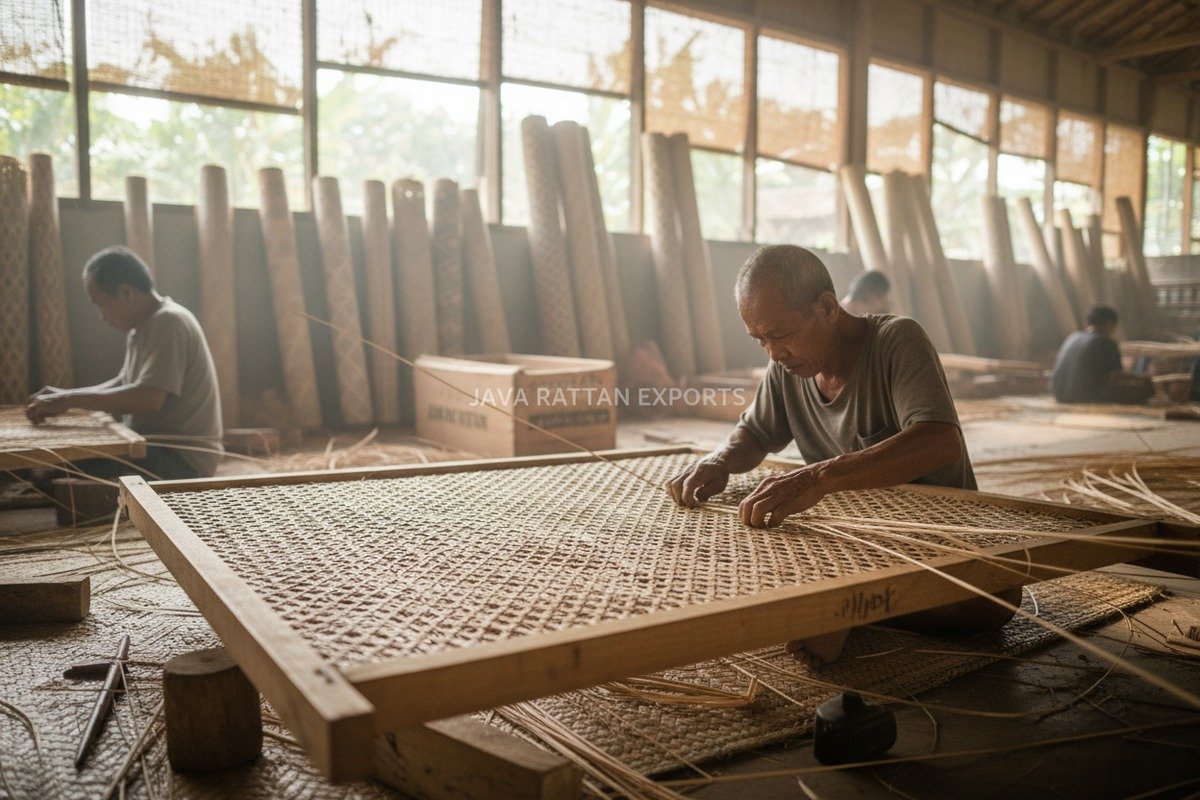
The Stress Profile Is Completely Different
A restaurant chair seat endures thousands of sitting cycles per year. Each cycle applies concentrated downward force, lateral shifting, and occasional impact. The webbing must resist all three without stretching or tearing. This requires the highest strand density available, combined with Grade A natural cane or reinforced synthetic rattan.
A decorative wall panel, by contrast, hangs flat and supports only its own weight. It faces no dynamic loading. Its job is purely visual—creating texture, shadow, and warmth on a surface. For this role, a low-density hexagonal or radio weave is not just acceptable—it is actually superior. The open pattern catches light beautifully and creates depth that a solid close weave cannot match.
Elección por Aplicación
Here is a practical breakdown we share with our purchasing managers and furniture factory clients:
| Application | Traffic Level | Recommended Density | Razón clave |
|---|---|---|---|
| Restaurant / café chairs | Muy alto | High (close weave) | Repeated heavy use, abrasion |
| Residential dining chairs | Moderada | Medium-high (tight square mesh) | Daily family use, moderate loads |
| Lounge chair backs | Low-moderate | Medium (standard square mesh) | Light loads, comfort flex needed |
| Paneles de cabecero | Muy bajo | Low-medium (radio weave) | Decorative, minimal contact |
| Wall art / accent panels | Ninguna | Low (open hexagonal) | Visual texture, light play |
| Paneles divisores de habitaciones | None-low | Medium (radio or diamond weave) | Partial privacy, aesthetic focus |
Flexibility and Installation Differences
Density also affects how easy the webbing is to work with during installation. Lower-density weaves are more pliable. They wrap around curves smoothly and cut cleanly with basic tools. This is why DIY restorers and small workshops prefer open mesh for decorative projects—it installs faster and forgives minor measurement errors.
High-density weaves are stiffer. They require pre-soaking to gain enough flexibility for tight seat frames. Cutting them demands sharper tools and more careful handling to avoid fraying at the edges. For factory-scale production, our team pre-conditions close weave rolls to the right moisture level before shipping, which reduces installation rejects at our clients' assembly lines.
Synthetic Options for Extreme Conditions
For outdoor high-traffic seating—hotel pool decks, resort terraces—we often recommend cincha de ratán sintético 8 in high density. These materials resist UV radiation, rain, and temperature swings that would destroy natural cane within a single season. The density still needs to be high for structural reasons, but the material composition shifts to weather-resistant polymers that mimic the look of natural rattan.
For outdoor decorative panels, synthetic low-density weaves work well. They hold their shape and color without the maintenance natural rattan requires in exposed environments.
Why does mesh density play such a critical role when I am comparing the quality and pricing of different rattan suppliers?
Over the years, we have watched new buyers compare supplier quotes side by side and choose the cheapest option—only to discover that the "same product" from two suppliers can perform very differently. The root cause is almost always hidden in the density specification. Understanding this saves our clients thousands of dollars in rejected goods and lost business.
Mesh density is the most reliable indicator for comparing rattan suppliers because it directly reflects material usage, weaving labor, and finished product performance. Suppliers offering lower prices often achieve cost savings by reducing strand count per unit area, which lowers both raw material consumption and weaving time but results in weaker, less durable webbing.
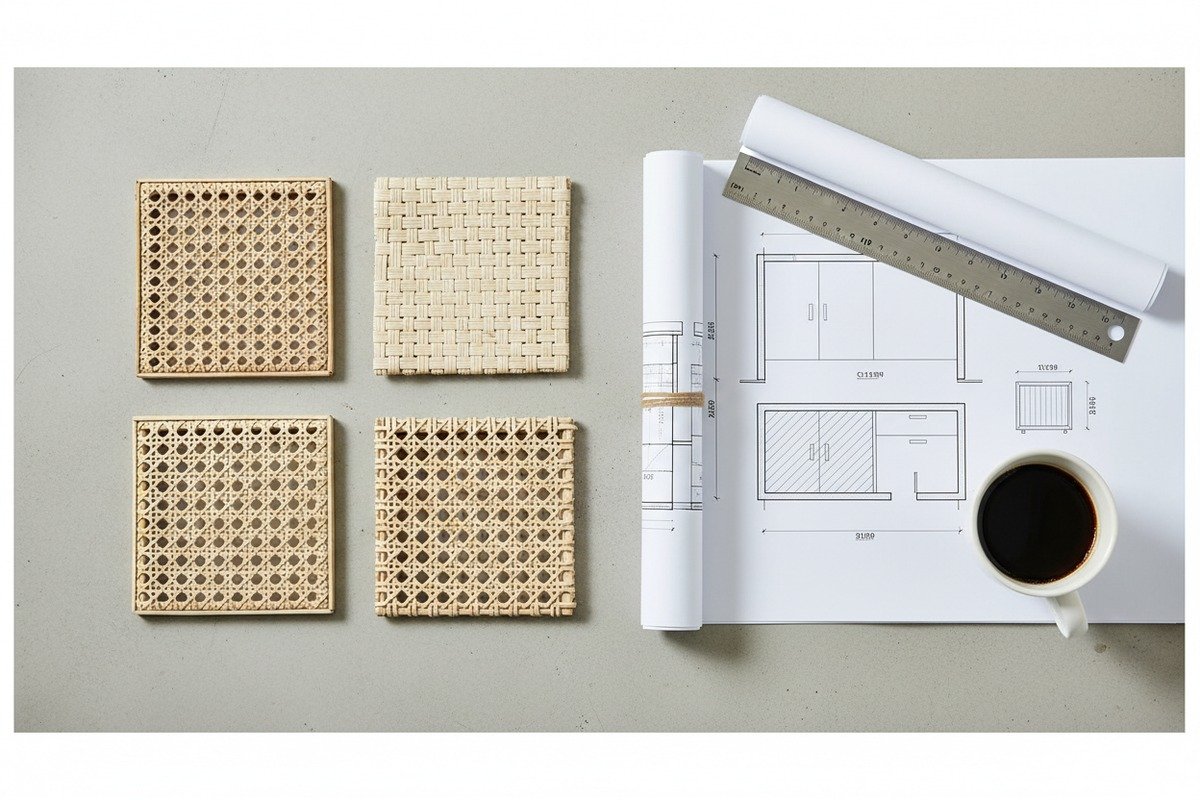
Why Cheaper Quotes Often Mean Lower Density
Rattan cane is sold by weight. A roll of close weave uses significantly more raw cane per square meter than a roll of open mesh. More material means higher cost. On top of that, denser weaves take longer to produce. Our weavers—whether at our Indonesian processing facility or our Foshan partner workshops—spend roughly 40% more time on a close weave roll compared to a standard open mesh of the same dimensions.
When a competing supplier undercuts the market price by a large margin, the most common explanation is a looser weave with fewer strands. The product photographs may look similar, especially on a screen. But once the rolls arrive at your factory, the difference in weight, stiffness, and strand count becomes obvious.
How to Verify Density Before Ordering
We always encourage buyers to request trade samples and check three things:
- Strand count per inch — Count the horizontal and vertical strands within a one-inch square. Compare this number across suppliers.
- Roll weight per square meter — A denser weave will weigh more. If one supplier's roll is noticeably lighter, the density is lower.
- Light test — Hold the webbing up to a light source. More light passing through means lower density.
The True Cost of Low-Density Substitution
Saving 15–20% on webbing procurement by accepting a lower density might look good on a purchase order. But in practice, it often triggers a chain of expensive problems:
- Furniture fails quality inspection at the end customer's facility.
- Return shipping costs eat into margins.
- Brand reputation suffers, and reorders drop.
- Replacement webbing must be sourced urgently at premium prices.
We have seen this cycle play out with clients in Turkey, India, and the Philippines. In each case, switching to properly specified high-density webbing from a reliable supplier actually lowered their total cost per unit over a 12-month period because rejection rates dropped to near zero.
Pricing Transparency and Specification Sheets
A trustworthy supplier provides detailed specification sheets that include mesh pattern, strand count, material grade, roll dimensions, and weight. At our company, every product listing on rattanwholesaler.com includes these details. We also offer OEM packaging and flexible MOQs so that buyers can test specific densities in small batches before scaling up.
When comparing quotes, always normalize the price to the same density specification. A quote for close weave should only be compared against another close weave quote—not against an open mesh price. This single step eliminates most of the confusion in supplier evaluation.
Conclusión
Mesh density is the foundation of every tejido de caña de ratán 9 decision. Match it correctly to your application, verify it with samples, and you will build products that last and customers who return.
Notas al pie
1. Explains thread count, a measure of fabric density relevant to woven materials. ↩︎
2. Replaced with a working page from the same authoritative domain, providing a clear definition of load-bearing capacity. ↩︎
3. Replaced with a working definition page from the original domain, providing a clear explanation of abrasion resistance. ↩︎
4. Explains fiber fatigue in composite materials and its mechanisms. ↩︎
5. Describes the radio weave pattern and its characteristics in rattan webbing. ↩︎
6. Details grading rules for rattan, including quality categories. ↩︎
7. Replaced with the Wikipedia page for ‘Thermal insulation’, offering a comprehensive and authoritative overview of the topic. ↩︎
8. Explains what synthetic rattan webbing is and its properties for outdoor use. ↩︎
9. Defines rattan cane webbing, its origins, and applications in furniture. ↩︎
 English
  Español de México
  العربية
  Deutsch
  Français
  Русский