
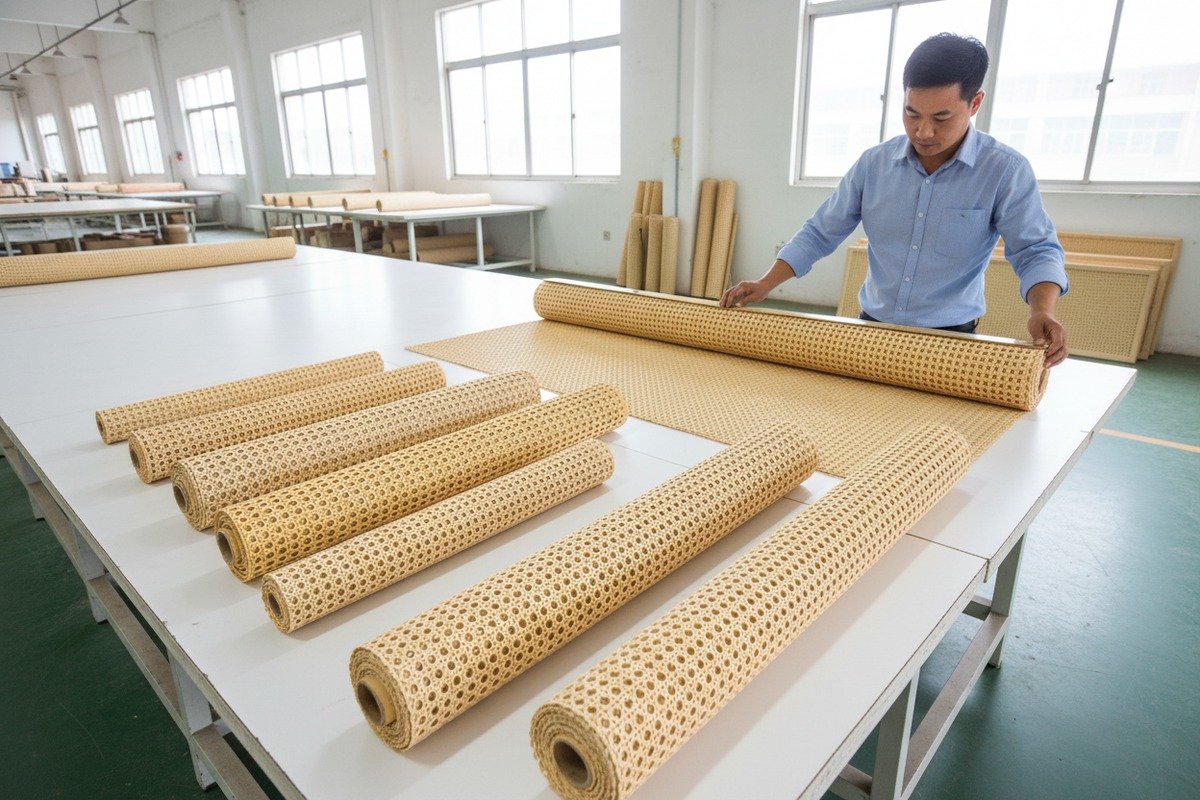
Pricing questions come up in nearly every conversation we have with overseas buyers ratán crudo 1. When our team in Foshan quotes tejido de caña de ratán 2, width is one of the first variables that shifts the number on the invoice — and it confuses a lot of purchasing managers 3.
Rattan cane webbing unit prices vary considerably by width. Narrower rolls (12–18 inches) typically cost $0.20–$1.00 per running foot, while wider rolls (24–36 inches) range from $1.50–$4.00 or more per foot. However, the cost per square foot often drops for wider rolls purchased in bulk due to manufacturing efficiencies.
Below, we break down exactly how width drives pricing, where you can save, and what other factors you need to watch manufacturing efficiency 4. Whether you run a furniture factory or wholesale building materials, this guide will help you buy smarter.
How does the width of rattan cane webbing affect my unit price per roll?
Every week, our sales team fields calls from buyers confused by wildly different quotes descuentos por volumen 5. The same weave pattern can show a 300% price swing just because of width and order size. Understanding the math behind width-based pricing prevents costly surprises.
Width directly impacts rattan cane webbing unit price per roll because wider material uses more raw rattan per linear foot. A 36-inch roll costs roughly two to four times more per running foot than a 16-inch roll, though per-square-foot rates often decrease at wider dimensions when ordered in bulk.
The Basic Math Behind Width Pricing
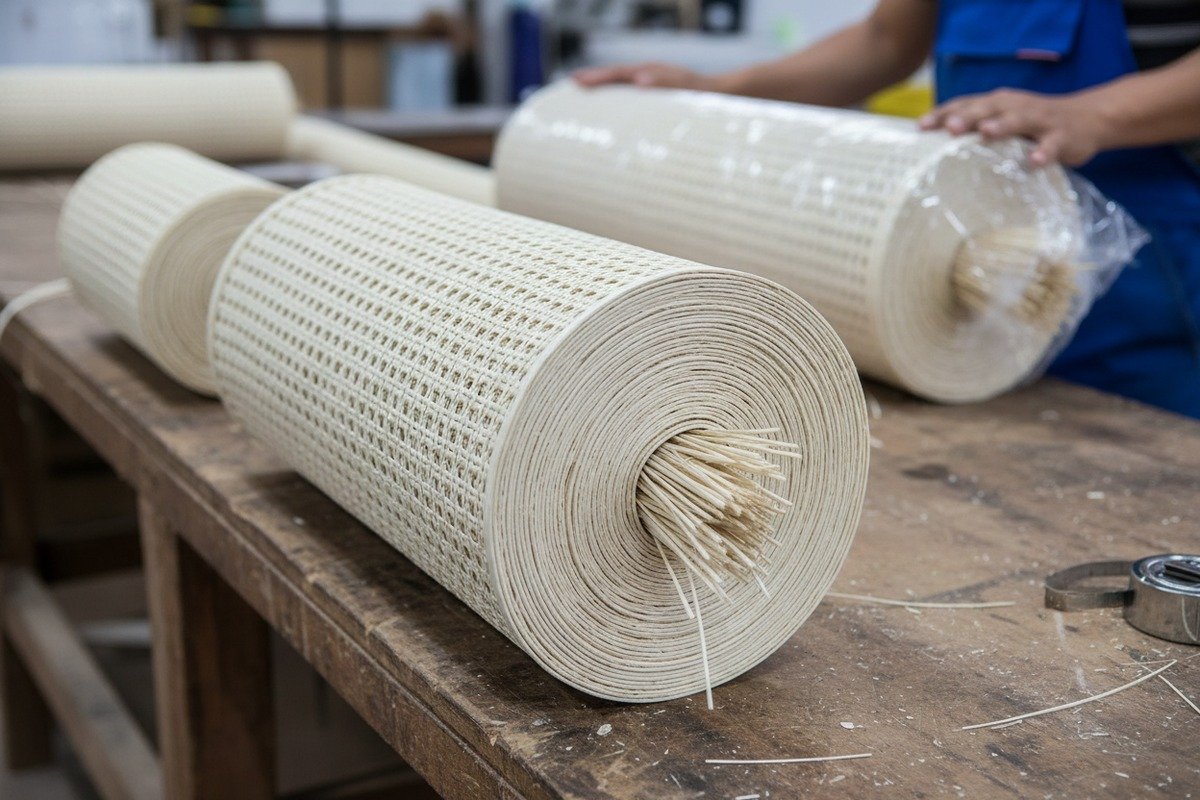
The logic is simple. A 36-inch-wide roll contains roughly twice the rattan material of an 18-inch roll for the same length. More material means a higher price per linear foot. But the relationship is not perfectly linear. Production setup costs, loom efficiency, and raw material yield all play a role.
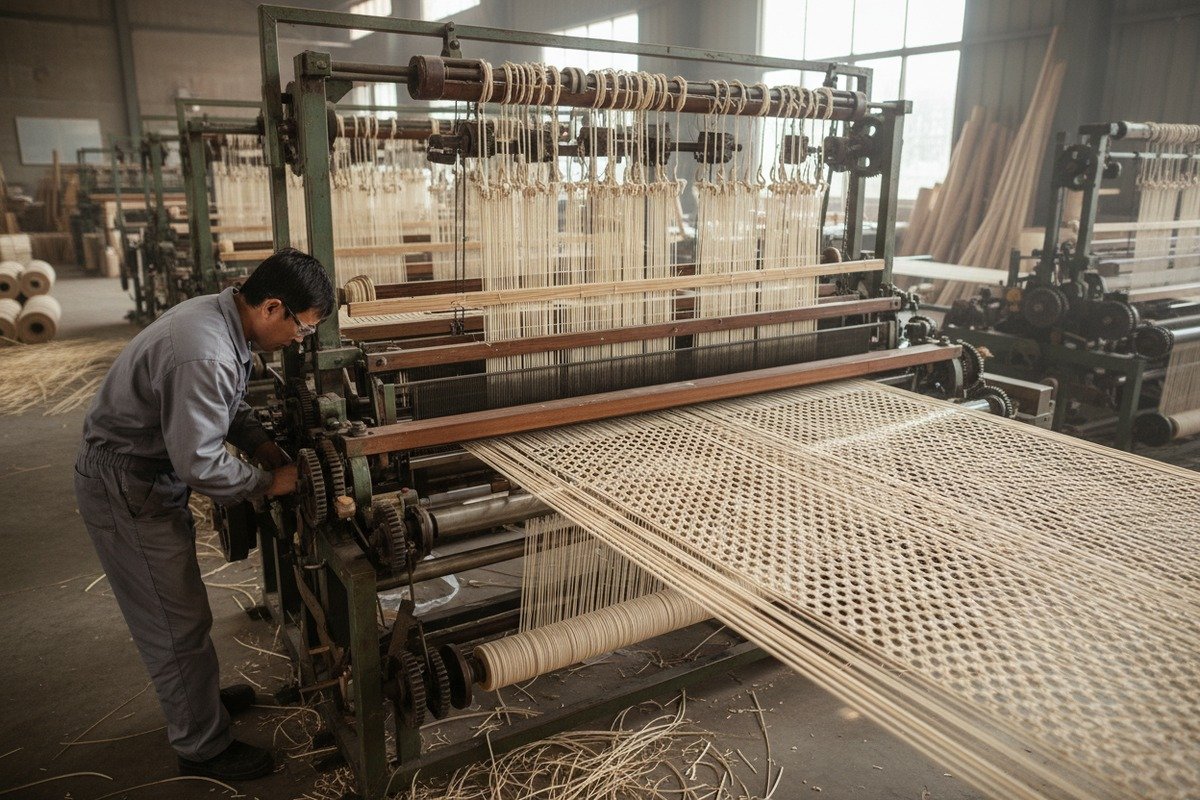
At our processing facility in Indonesia, wider looms run at nearly the same labor cost as narrower ones. So the labor component per square foot actually drops when we produce wider webbing. The material cost, however, scales almost directly with width.
Price Ranges by Width Category
Here is a practical breakdown based on current market data and our own export pricing experience:
| Rango de Ancho | Price per Running Foot (USD) | Price per Square Foot (USD) | Uso común |
|---|---|---|---|
| 12–16 inches | $0.20–$1.00 | $0.20–$0.75 | Small chair seats, cabinet inserts |
| 18–20 inches | $0.80–$4.00 | $0.50–$2.40 | Standard dining chairs, side panels |
| 24 pulgadas | $1.50–$5.00 | $0.75–$2.50 | Wide chair backs, headboard panels |
| 36 pulgadas | $2.50–$8.00+ | $0.80–$2.70 | Headboards, room dividers, doors |
Notice how the per-square-foot price does not double when the width doubles. This is where bulk buyers find value. A 36-inch roll at $3.00 per running foot works out to $1.00 per square foot. An 18-inch roll at $2.00 per running foot equals $1.33 per square foot. The wider roll is actually cheaper per unit of usable area.
Why Retail Prices Look So Different
If you browse Etsy or Walmart, the numbers look wild. A 16-inch by 3.3-foot roll might list at $16.99. That is about $5.15 per running foot — far above wholesale rates. These precut retail rolls target DIY hobbyists, not production buyers.
Our wholesale clients buying 50-foot or 15-meter rolls in 18-inch widths pay a fraction of those retail prices. The lesson is clear: order length matters as much as width. Short-cut retail pricing inflates per-foot costs dramatically.
Mesh Type Adds Another Layer
Width alone does not tell the whole story. A fine 1/2-inch open mesh in 18-inch width commands a 10–20% premium over a standard radio weave in the same width. The finer the weave, the more rattan strands per inch, and the higher the material consumption. So when comparing width-based quotes, always confirm the weave pattern is identical.
European suppliers like Rotin-file structure pricing per full roll in euros. A 0.40-meter roll (about 16 inches) might cost €25.50 per 15-meter roll, while a 0.90-meter roll (about 36 inches) could run €28.90–€76.00. Converting to per-foot USD, narrower European rolls sometimes appear disproportionately expensive because their roll lengths are fixed and smaller orders carry higher overhead.
Why do wider rattan webbing rolls typically cost more for my furniture production?
When our factory quotes a 36-inch-wide roll, some buyers wonder why the price jump feels steep. The answer goes beyond just "more material." Production complexity, waste rates, and supply chain factors all push wider rolls higher.
Wider rattan webbing rolls cost more because they consume significantly more raw cane per meter, require larger looms with higher operating costs, and generate greater waste during harvesting and processing. A 36-inch roll may use 2.5 times the material of a 16-inch roll while only covering twice the width.
Raw Material Consumption
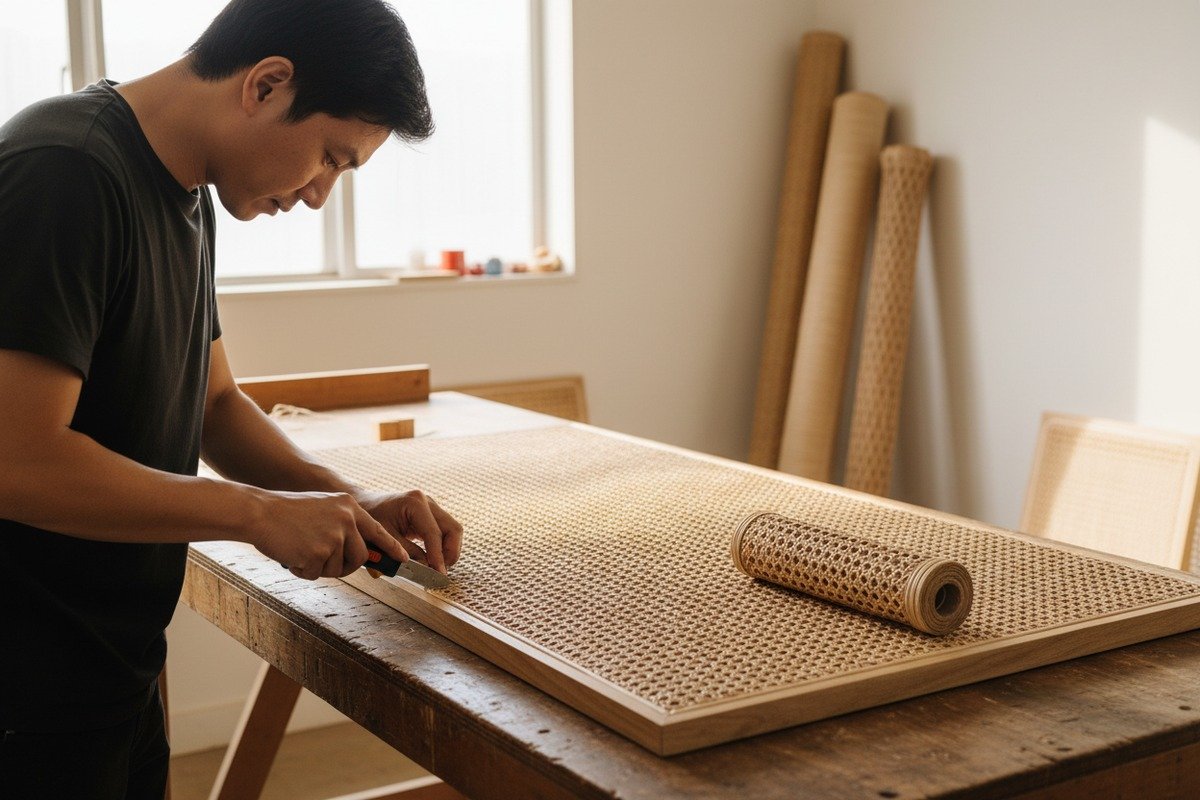
Rattan cane comes from climbing palms harvested in Southeast Asian forests 6, primarily in Indonesia, Vietnam, and the Philippines. The cane is split, shaved, and graded before weaving. Wider webbing requires longer, straighter cane strands. Shorter or slightly curved strands — perfectly fine for 16-inch widths — cannot span a 36-inch loom without joints or breaks.
This selection pressure means wider webbing draws from a smaller pool of Grade-A cane 7. In our Indonesian facility, roughly 70% of harvested cane meets the length requirement for 18-inch widths. Only about 45% qualifies for 36-inch production. The rest gets diverted to narrower products or lower-grade lines.
Loom and Labor Costs
Wider looms are not just bigger versions of narrow ones. They need stronger frames, more tension points, and additional operator attention. A single defect in a 36-inch weave ruins more material than the same flaw in a 16-inch piece.
| Factor de costo | 16-Inch Production | 36-Inch Production | Impacto en el precio |
|---|---|---|---|
| Cane selection rate | ~70% usable | ~45% usable | +15–25% material cost |
| Loom setup time | 30 minutos | 50 minutes | +8–12% labor overhead |
| Defect waste rate | 3–5% | 6–10% | +5–10% waste cost |
| Packaging complexity | Standard roll | Reinforced core needed | +3–5% packaging cost |
| Shipping volume | Compact | Bulky, heavier | +5–8% freight cost |
Color and Treatment Premiums
Beyond width, color adds cost. Natural brown rattan is the base grade. Ratán blanqueado 8 requires chemical treatment and additional drying time, adding 20–30% to the unit price regardless of width. When you combine a 36-inch width with a bleached finish, the premium stacks on top of an already higher base.
Our export data to the Netherlands and Spain shows that about 60% of European orders specify natural brown in 24-inch widths. The remaining 40% split between bleached and custom-stained options, usually in 18-inch or 36-inch widths. Custom colors — dark walnut, grey wash, or charcoal — can add another 15–25% beyond bleached pricing.
Supply Chain Pressures in 2025–2026
Rattan sourcing faces real challenges. Indonesia controls most of the world's rattan supply. Environmental regulations, harvest quotas, and shipping disruptions 9 from Southeast Asia have pushed raw material costs up 10–20% year over year. These increases hit wider products harder because they consume more cane per unit.
At Seafan Rattan, we mitigate this through our own Indonesian processing facility, which gives us direct access to cane at harvest-level pricing. But many competitors without integración vertical 10 pass the full supply chain markup to buyers.
Can I save money by choosing standard widths for my bulk rattan orders?
One of the first things our export team asks new buyers is this: can your design work with a standard width? The answer usually determines whether the project stays on budget or spirals into custom-pricing territory.
Yes, choosing standard widths like 16, 18, 24, or 36 inches for bulk rattan orders can save 15–30% compared to custom widths. Standard sizes run on existing loom setups without retooling, reduce material waste, and qualify for volume discounts that custom orders typically cannot access.
What Counts as a "Standard" Width?
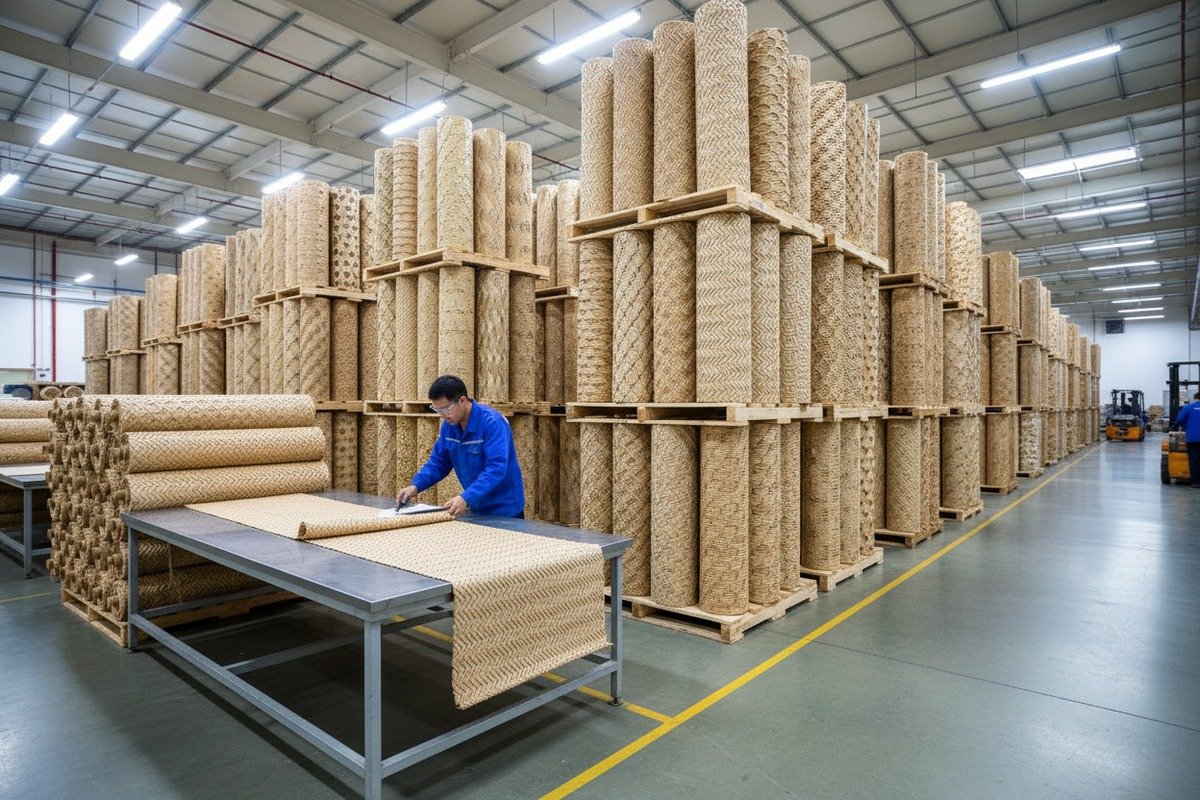
Standard widths are the sizes that factories keep in regular production. They match the most common furniture dimensions worldwide. Here are the widths we run most frequently across our three factories:
- 12 inches (30 cm)
- 16 inches (40 cm)
- 18 inches (45 cm)
- 24 inches (60 cm)
- 36 inches (90 cm)
Any width outside these increments — say 22 inches or 30 inches — requires a loom adjustment. That means downtime, recalibration, and test runs before production quality stabilizes. All of that cost gets passed to the buyer.
Custom Width Pricing vs. Standard
| Tipo de pedido | Ancho | MOQ | Price per Running Foot | Tiempo de entrega |
|---|---|---|---|---|
| Standard bulk | 18 inches | 100 meters | $0.85–$1.20 | 7–10 días |
| Standard bulk | 24 pulgadas | 100 meters | $1.30–$1.80 | 7–10 días |
| Ancho personalizado | 22 inches | 200 metros | $1.60–$2.40 | 14–21 días |
| Ancho personalizado | 30 inches | 200 metros | $2.20–$3.50 | 14–21 días |
The pattern is clear. Custom widths cost 30–50% more and take twice as long to deliver. For purchasing managers under deadline pressure, standard widths are the safer choice.
Volume Discounts on Standard Widths
Our pricing model rewards volume on standard sizes. A buyer ordering 50 running feet of 18-inch webbing pays significantly more per foot than one ordering 500 feet. This is not unique to us — it is industry standard.
On Etsy, the difference is even more dramatic. A 1-foot precut of 18-inch webbing might sell for $7.58–$15.40. But a 49-foot roll of the same product drops to roughly $2–$4 per foot. That is a 50–75% reduction just from buying longer rolls.
For our B2B clients, the savings compound further. A furniture factory in Thailand ordering 1,000 meters of 24-inch radio weave gets a per-foot rate that retail buyers would never see. The key is committing to a standard width and a meaningful quantity.
The Hidden Cost of Over-Ordering
One thing we always remind buyers: measure carefully and add allowance. Basketweaving specialists recommend adding 2 inches per side for groove or spline installation. So an 18-inch chair seat opening actually needs a 22-inch cut from your webbing. If you order 18-inch rolls for an 18-inch opening, you will not have enough material to tuck into the grooves.
This is where standard widths shine again. An 18-inch opening needs 22 inches of material. A standard 24-inch roll covers it perfectly with minimal waste. Ordering a custom 22-inch roll would cost more and deliver slower — with no real advantage.
Smart Strategies for Budget-Conscious Buyers
Here are some practical tips from our export experience:
- Design around standard widths. Adjust your furniture dimensions by 1–2 inches to fit standard webbing sizes.
- Consolidate orders. Combine multiple product lines into one bulk order at a single standard width.
- Pida rollos completos. Partial rolls or cut lengths always cost more per foot than uncut rolls.
- Choose natural brown. Skip the bleached or custom color premium unless your market demands it.
- Plan ahead. Rush orders on custom widths carry a surcharge. Standard widths ship from stock.
How do different widths impact the overall quality and waste in my manufacturing process?
Through years of supplying factories across Europe, the Middle East, and Southeast Asia, our team has seen firsthand how choosing the wrong width leads to production headaches. Quality issues and material waste eat into margins faster than most buyers expect.
Width selection directly impacts manufacturing quality and waste. Using a width too narrow for your application forces splicing, which weakens the final product and creates visible seams. Using a width too wide generates excess trim waste of 10–20%, increasing material cost without adding value to the finished piece.
Width-to-Application Matching
The most common quality problem we see is mismatched width. A factory buys 18-inch webbing for a 20-inch cabinet panel. The shortfall forces them to either overlap two pieces (creating a visible ridge) or stretch the material (causing weave distortion). Both outcomes lower the finished product's grade.
Here is a matching guide based on common furniture applications:
| Aplicación de Muebles | Recommended Width | Allowance Needed | Ideal Roll Width |
|---|---|---|---|
| Asiento de silla de comedor | 14–16 inches | +2 inches per side | 18–20 inches |
| Side chair back panel | 12–14 inches | +2 inches per side | 16–18 inches |
| Inserto de puerta de armario | 10–18 inches | +1.5 inches per side | 14–22 inches (use next standard up) |
| Panel de cabecero | 28–34 inches | +2 inches per side | 36 pulgadas |
| Biombo | 18–24 inches per panel | +2 inches per side | 24–36 inches |
How Waste Accumulates
Waste in rattan webbing manufacturing comes from three main sources:
- Edge trimming. Every piece needs trimming to fit the groove channel. Wider rolls create wider trim strips.
- Defect cutting. If a weave flaw appears in a wide roll, the entire width gets scrapped at that point. In a 36-inch roll, that is twice the wasted area compared to an 18-inch roll.
- End-of-roll remnants. The last 2–3 feet of any roll are often too short for production use. On a 50-foot roll, that is 4–6% waste regardless of width.
Our production data shows that well-matched widths keep total waste under 8%. Poorly matched widths push waste to 15–20%. On a large production run of 5,000 chair seats, that difference translates to hundreds of dollars in lost material.
Quality Grades and Width Interaction
Not all rattan webbing is created equal. Grade-A cane is uniform in color, free of splits, and consistent in strand diameter. Grade-B cane has minor color variations and occasional thin spots.
Wider rolls amplify quality inconsistencies. A single discolored strand in an 18-inch piece might go unnoticed. The same strand in a 36-inch headboard panel becomes a visible flaw that buyers reject. This is why our quality control team applies stricter grading standards to wider rolls — and why wider Grade-A webbing carries a premium.
For buyers who prioritize quality consistency, we recommend sticking with 18–24-inch widths unless the application absolutely requires 36 inches. The narrower widths have higher first-pass yield rates and fewer quality rejections.
Synthetic vs. Natural at Different Widths
Some buyers consider synthetic rattan (plastic or resin woven to mimic natural cane) as a cost-saving alternative. Synthetic webbing is available in wider widths at lower prices because it does not face the same raw material constraints.
However, synthetic webbing lacks the texture and warmth of natural rattan. It also behaves differently during installation — it does not absorb water for softening, and it can crack under tight bending. For applications where authenticity matters, natural rattan remains the standard despite the higher width-based pricing.
Our recommendation for production buyers: use natural rattan in visible areas (chair seats, cabinet fronts) and consider synthetic only for hidden structural panels or outdoor furniture where weather resistance matters more than aesthetics.
Reducing Waste Through Smart Ordering
Here are proven strategies from our factory partners:
- Nest your cuts. Plan cutting layouts before ordering to determine the most efficient width.
- Order sample rolls. Test a 5-meter sample in your production line before committing to bulk.
- Communicate groove depth. Tell your supplier exactly how much allowance you need so they can recommend the right standard width.
- Store properly. Rattan stored in dry, cool conditions keeps its flexibility. Brittle cane from poor storage increases breakage waste during installation.
Conclusión
Width is one of the biggest unit price drivers in rattan cane webbing. Choose standard widths, order in bulk, and match your width to the application. These three steps keep costs low and quality high across every production run.
Notas al pie
1. Found a page detailing raw rattan material and its processing. ↩︎
2. Explains what rattan cane webbing is and its common use. ↩︎
3. Defines the role and responsibilities of purchasing managers in procurement. ↩︎
4. Explains a key factor in optimizing production processes and costs. ↩︎
5. Found an authoritative definition and explanation of volume discounts. ↩︎
6. Identifies the geographical origin of rattan cane. ↩︎
7. Describes quality classifications for rattan cane based on various characteristics. ↩︎
8. Details the process and characteristics of bleached rattan. ↩︎
9. Explains external factors impacting the flow of goods and raw material costs. ↩︎
10. Describes a business strategy for controlling multiple stages of the supply chain. ↩︎

 English
  Español de México
  العربية
  Deutsch
  Français
  Русский