
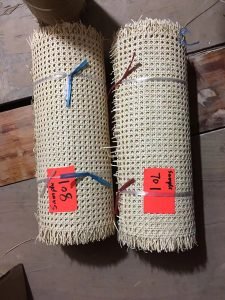
Every week, our customer service team fields dozens of calls from buyers whose installers cracked or split their tejido de caña de ratán 1 during fitting. The frustration is real. Damaged material means wasted money, delayed production, and unhappy end customers. The root cause, almost every time, comes down to one overlooked step: soaking.
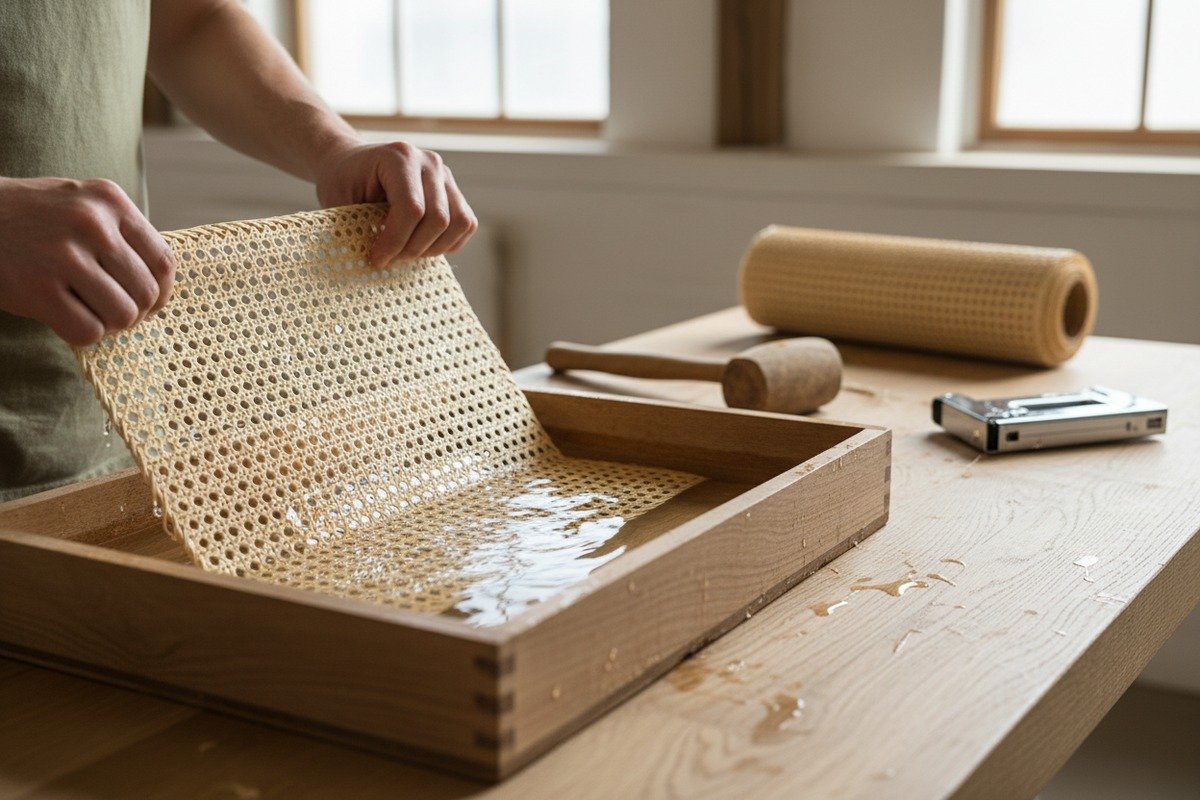
Yes, you should soak natural rattan cane webbing before installation. Soaking in warm water for approximately 30 minutes softens the fibers, making the material pliable enough to stretch and secure without cracking. However, synthetic rattan webbing does not require soaking and can be installed directly from the roll.
This guide breaks down exactly how to soak, how long to soak, what mistakes to avoid, and when you can skip the step entirely. Whether you run a furniture factory or you are a material wholesaler advising your clients, the details below will help you get a flawless finish every time.
How long should I soak my rattan cane webbing to ensure it becomes pliable?
From our production floor in Foshan to our partner factories in Indonesia, we have tested hundreds of rattan batches for soaking response. The difference between a perfect soak and a rushed one is stark. Installers who guess at timing often end up with webbing that is either too stiff or too fragile.
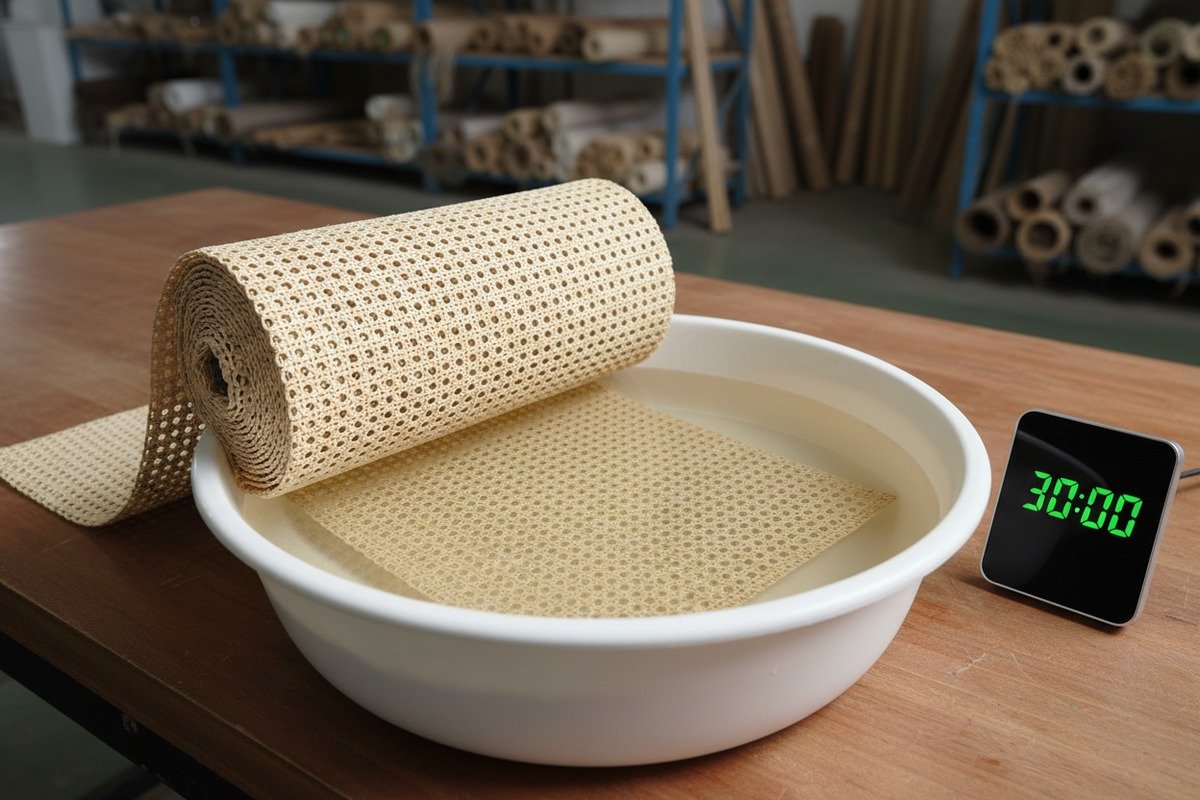
Soak natural rattan cane webbing in warm water for 30 minutes to achieve optimal pliability. Thicker weaves may need up to 60 minutes. Never exceed 4 hours, as prolonged soaking weakens fibers, darkens the color, and risks structural damage that compromises installation quality.
Why 30 Minutes Is the Sweet Spot
Ratán natural 2 is a plant-based material. Its fibers are rigid when dry. Water penetrates the cell walls and temporarily loosens the bonds between fibers. This makes the webbing flexible enough to bend, stretch, and conform to furniture frames.
At 30 minutes, most standard-weight rattan cane webbing reaches the ideal balance. The material is soft but still has integridad estructural 3. You can pull it taut, fold it around edges, and staple or spline it without splitting.
If you pull the webbing out too early—say after 10 minutes—the outer surface may feel damp, but the inner fibers remain stiff. This leads to micro-cracks 4 that become visible after drying.
Soaking Time by Webbing Type
Not all rattan cane webbing is the same. The patrón de tejido 5, strand thickness, and grade all affect how quickly water penetrates.
| Tipo de tela | Tiempo de remojo recomendado | Tiempo máximo de remojo | Notas |
|---|---|---|---|
| Malla hexagonal abierta (tejido de radio) | 20–30 minutos | 2 horas | Thin strands absorb water quickly |
| Tejido de cesta cuadrado denso | 30–45 minutos | 3 horas | Tight weave slows water penetration |
| Patrón geométrico de diamantes | 30–60 minutos | 4 horas | Complex patterns need even saturation |
| Correas de ratán blanqueadas | 20–30 minutos | 1.5 horas | Bleaching thins fibers; soak less |
| Pre-stained or colored webbing | 15–20 minutes (test first) | 1 hour | Risk of dye bleed; test an offcut |
Best Soaking Methods
When we ship large rolls to our wholesale clients in the Netherlands or Australia, we always include handling instructions. Here are the methods we recommend:
Bathtub method. Roll the webbing loosely and submerge it in a bathtub filled with warm water. This works well for sheets up to 24 inches wide.
PVC pipe method. For longer pieces, slide the rolled webbing into a PVC pipe. Cap both ends and fill with warm water. This keeps the material fully submerged without kinking.
Wallpaper tray method. For small projects, a long wallpaper tray lets you soak strips without needing a large container.
Water Temperature and Quality
Use warm water, not hot. Water between 75°F and 95°F (24°C–35°C) is ideal. Hot water above 120°F can damage the fibers and cause premature darkening.
In areas with hard tap water 6, consider using filtered or distilled water. Mineral deposits from hard water can leave white spots or a chalky residue on the webbing surface. We have seen this issue reported by clients in parts of Spain and the Middle East.
After soaking, gently pat the webbing dry with a clean towel. Remove surface moisture, but do not wring or twist. The webbing should feel damp and flexible—not dripping wet.
Will soaking help my rattan webbing achieve a tight, professional finish once it dries?
We have supplied rattan cane webbing to furniture factories across more than 15 countries. The single most common complaint from first-time buyers is sagging webbing after installation. In nearly every case, the solution is simple: proper soaking combined with correct tension during fitting.
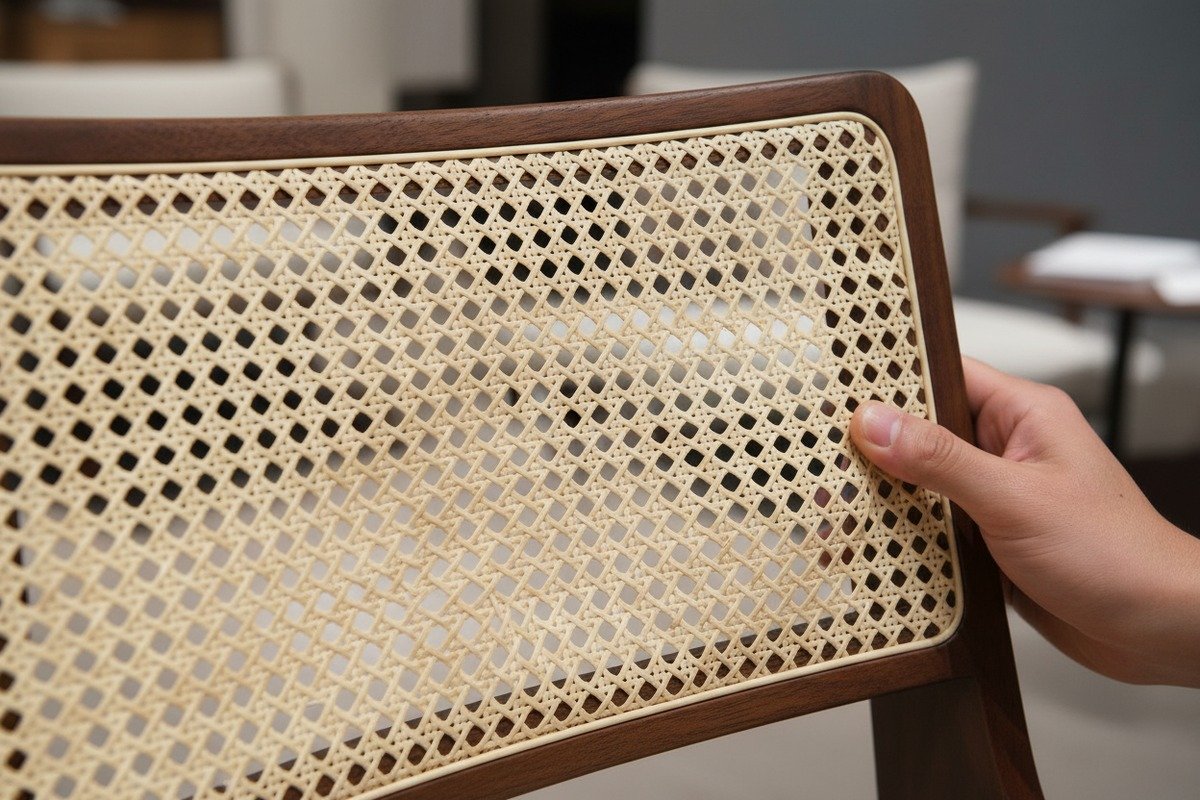
Soaking is the key to a tight, professional finish. When natural rattan webbing is installed while damp, it naturally shrinks as it dries, pulling itself taut across the frame. This contraction eliminates sag and creates a drum-tight surface that looks clean and lasts for years.
How Shrinkage Creates Tension
Think of natural rattan like a sponge. When wet, it expands. When it dries, it contracts. This shrinkage is not a defect—it is a feature. Skilled installers use this natural property to their advantage.
Here is what happens step by step:
- You soak the webbing for 30 minutes.
- You install it on the frame while it is still damp, applying light tension.
- Over the next 12–24 hours, the webbing dries and shrinks.
- The shrinkage pulls the webbing tighter than you could achieve by hand.
The result is a perfectly taut surface with no ripples, waves, or sag.
The Critical Mistake: Pulling Too Tight While Wet
This is where many installers go wrong. Because the wet webbing feels loose, they over-stretch it during installation. When the material then shrinks during drying, the combined tension becomes too much. The webbing can tear at staple points, pull away from spline grooves, or distort the weave pattern.
Our recommendation: apply only light to moderate tension while the webbing is wet. Let the drying process do the heavy lifting.
Installation Method and Tension Control
| Método de instalación | Tension Applied During Fitting | ¿Se requiere remojo? | Mejor para |
|---|---|---|---|
| Stapling method | Light to moderate stretch | Sí | Chair backs, cabinet panels |
| Spline and groove method | Moderate (pressed into groove) | Sí | Chair seats, door inserts |
| Contact adhesive method | None (laid flat) | No (use dry) | Flat panels, decorative walls |
| Clip-in frame method | Ligero | Sí | Modular furniture, screens |
Post-Installation Drying
After fitting, let the webbing dry naturally in a cool, well-ventilated room. Do not use a heat gun, hair dryer, or place the piece in direct sunlight. Rapid or uneven drying causes the webbing to shrink unevenly, which creates wrinkles or warping.
Drying typically takes 12–24 hours depending on humidity and airflow. In humid environments like those in Southeast Asia, it can take up to 36 hours. In dry climates like parts of Saudi Arabia or Australia, drying may happen in as little as 8 hours.
The back (porous side) of the webbing should remain unsealed. This allows airflow through the material and prevents moisture from being trapped, which can lead to mold over time. If you need to apply a finish, use a light coat of lacquer or sealant on the visible front side only.
Why Ambient Humidity Matters Long-Term
Rattan is hygroscopic 7. It absorbs and releases moisture from the surrounding air. In very dry environments, the webbing may become overly taut and brittle. In very humid environments, it may loosen slightly. This is normal behavior for natural materials.
For furniture factories producing for export, we always recommend testing the webbing in conditions that simulate the destination climate. A piece built in tropical Foshan but shipped to dry Nevada will behave differently than one installed locally.
Can I skip the soaking process if I am using high-quality Grade A rattan?
Our grading team in Indonesia hand-selects Grade A rattan for its smooth surface, consistent color, and minimal imperfections. Some of our wholesale clients assume that this premium quality means the material is already flexible enough to skip soaking. Unfortunately, that is not the case.
No, you cannot skip soaking even with Grade A rattan. Grade refers to the visual quality and consistency of the material—not its flexibility. All natural rattan cane webbing, regardless of grade, is rigid when dry and must be soaked in warm water before installation to prevent cracking and ensure proper fitting.
¿Qué significa realmente "Grado A"?
Grade A is an industry classification for the visual and structural quality of rattan. It does not describe the moisture content or pliability of the material. Here is how grading typically works:
| Grade | Visual Quality | Consistencia de las hebras | Color | ¿Se requiere remojo? |
|---|---|---|---|---|
| Grado A | No visible defects, smooth surface | Uniform thickness | Tono uniforme, natural | Sí |
| Grado B | Minor imperfections, slight roughness | Mayormente uniforme | Ligera variación de color | Sí |
| Grado C | Visible knots, rough patches | Variable thickness | Diferencias de color notables | Sí |
As you can see, soaking is required across all grades. The difference between grades is aesthetic and structural, not functional in terms of installation preparation.
The Only Exception: Synthetic Rattan Webbing
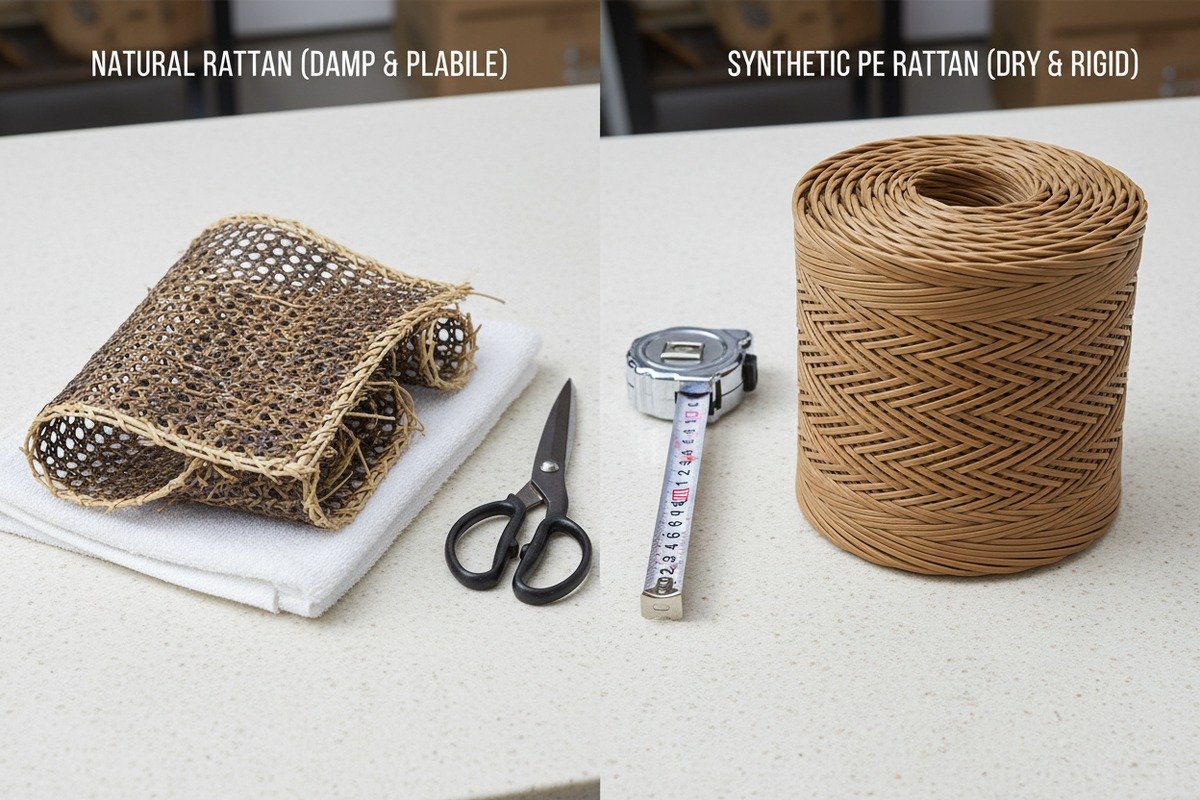
The only scenario where you can skip soaking entirely is when you use cincha de ratán sintético 8. Our PE plastic rattan alternatives are engineered to mimic the look of natural cane but are manufactured flat and flexible from the start. They do not absorb water, do not shrink, and do not require any moisture treatment.
For buyers who need speed and convenience—especially in high-volume furniture production—synthetic webbing eliminates the soaking step and the associated drying time. However, many of our clients in the European and North American markets still prefer natural rattan for its authentic look and feel. The organic texture and warmth of real cane is difficult to replicate perfectly with synthetics.
Natural vs. Sintético: Una Comparación Práctica
Here is a breakdown we share with our wholesale partners to help them advise their own customers:
Rejilla de ratán natural requires soaking, careful handling, and proper drying. It offers unmatched aesthetics, warmth, and a premium feel. It is biodegradable and sustainable 9. It responds to humidity changes over time.
Tejido de ratán sintético de PE requires no soaking, resists moisture and UV, and holds its shape indefinitely. It is ideal for outdoor furniture or high-humidity environments. It is more forgiving of installer error.
Both have their place. The choice depends on the project, the market, and the buyer's priorities. But if you choose natural rattan—regardless of grade—soaking is non-negotiable.
A Common Costly Mistake
We once had a furniture factory client in Turkey who ordered 500 meters of Grade A radio weave. Their production team assumed that because the material was premium quality, they could install it dry. Within two weeks, we received photos of cracked panels across an entire production run. The webbing had split at staple points and along fold lines.
After discussing the issue, we learned they had skipped soaking completely. We sent a replacement shipment along with detailed soaking instructions. The second batch, properly soaked and installed, performed perfectly.
The lesson is clear: Grade A quality protects you from visual defects and inconsistencies. It does not protect you from dry installation failures.
How do I avoid over-soaking my rattan material to prevent mold and damage?
In our years of exporting rattan to humid markets like Thailand, the Philippines, and India, we have learned that over-soaking is almost as damaging as not soaking at all. Buyers who leave rattan submerged for hours—or even overnight—often end up with darkened, weakened webbing that molds within weeks of installation.
Avoid over-soaking by limiting your soak time to 30–60 minutes and never exceeding 4 hours. Remove the webbing promptly, pat it dry with a clean towel, and install it immediately. Store unused soaked webbing in a cool, ventilated area and never leave wet rattan sealed in plastic packaging.

Signs of Over-Soaked Rattan
Over-soaking does not always show immediate damage. Sometimes the problems only appear days or weeks later. Here are the warning signs:
Darkening. Natural rattan has a light beige or straw-yellow color. If the webbing turns noticeably darker after soaking, you have left it in the water too long. The excess moisture causes the tannins in the rattan 10 to leach, permanently staining the material.
Softness without spring-back. Properly soaked rattan is pliable but still has some resistance. Over-soaked rattan feels limp and does not spring back when bent. This means the fibers have broken down too much to hold tension.
Musty smell. If your rattan smells musty or earthy after soaking, mold spores may already be developing. This is especially common in warm environments where the water was not changed or was too warm.
A Step-by-Step Anti-Mold Protocol
Based on the handling procedures we use in our own warehouses and recommend to our factory partners, here is a reliable process:
- Set a timer. Do not rely on guesswork. Set a 30-minute timer when the webbing goes into the water.
- Use clean, warm water. Dirty water or water that has been sitting promotes bacterial growth. Change the water for each new batch.
- Remove promptly. When the timer goes off, remove the webbing immediately. Do not let it sit "just a few more minutes."
- Pat dry. Use a clean, dry towel to remove surface moisture. Do not wring or twist the material.
- Install within 1 hour. Once removed from water, you have a window of about 60 minutes before the webbing starts to dry unevenly. Work efficiently.
- Dry the finished piece naturally. Place the installed piece in a cool, well-ventilated room. Avoid enclosed spaces, direct sunlight, or heaters.
Qué Hacer Si Sospecha de Moho
If you notice mold spots on installed rattan—small black or green dots, usually on the back side—act quickly.
First, move the piece to a dry, well-ventilated area. Use a soft brush to gently remove surface mold. Then wipe the affected area with a solution of one part white vinegar to four parts water. Allow it to dry completely. If the mold has penetrated deeply, the panel may need to be replaced.
Prevention is always better than treatment. Proper soak timing and thorough drying eliminate nearly all mold risk.
Environmental Factors That Increase Mold Risk
Mold thrives in warm, humid, stagnant air. If your installation environment has any of these conditions, take extra precautions:
- Workshops in tropical climates without air conditioning
- Furniture stored in sealed containers during shipping
- End-use locations with poor ventilation (e.g., enclosed bathrooms)
For our clients shipping to humid destinations, we recommend including a silica gel desiccant packet inside the packaging and advising end users to allow airflow around the rattan surfaces.
For Colored or Pre-Stained Webbing
One additional concern with soaking is dye bleed. If you are working with colored or pre-stained rattan cane webbing, always perform a test soak on a small offcut before committing the full piece. Soak the offcut for 30 minutes and check for color transfer to the water or fading on the material. If dye bleed occurs, reduce soak time to 15–20 minutes and work quickly during installation.
We have seen cases where colored webbing bled onto light-colored wooden frames, creating stains that were impossible to remove. A simple test soak prevents this entirely.
Conclusión
Soaking natural rattan cane webbing is not optional—it is essential for a successful, professional installation. Follow the guidelines above, respect the timing, and let the drying process create the perfect tension.
Notas al pie
1. Explains what rattan cane webbing is and its production. ↩︎
2. Replaced with Wikipedia page on Rattan, an authoritative source for general information about the plant material. ↩︎
3. Defines structural integrity in the context of materials and structures. ↩︎
4. Defines micro-crack formation and its impact on material properties. ↩︎
5. Replaced with Wikipedia page on Woven fabric, which includes a section on weaving and different weave patterns. ↩︎
6. Defines hard water and explains its chemical composition. ↩︎
7. Replaced with Wikipedia page on Hygroscopy, offering a comprehensive definition and examples of hygroscopic substances. ↩︎
8. Replaced with Wikipedia page on Resin wicker, which is synonymous with synthetic rattan and provides information on its material and uses. ↩︎
9. Replaced with the U.S. Environmental Protection Agency (EPA) Glossary of Sustainable Manufacturing Terms, which defines both ‘biodegradability’ (as an environmental attribute) and ‘sustainability’. ↩︎
10. Replaced with Wikipedia page on Tannin, an authoritative source for the definition and properties of tannins in plants. ↩︎

 English
  Español de México
  العربية
  Deutsch
  Français
  Русский