
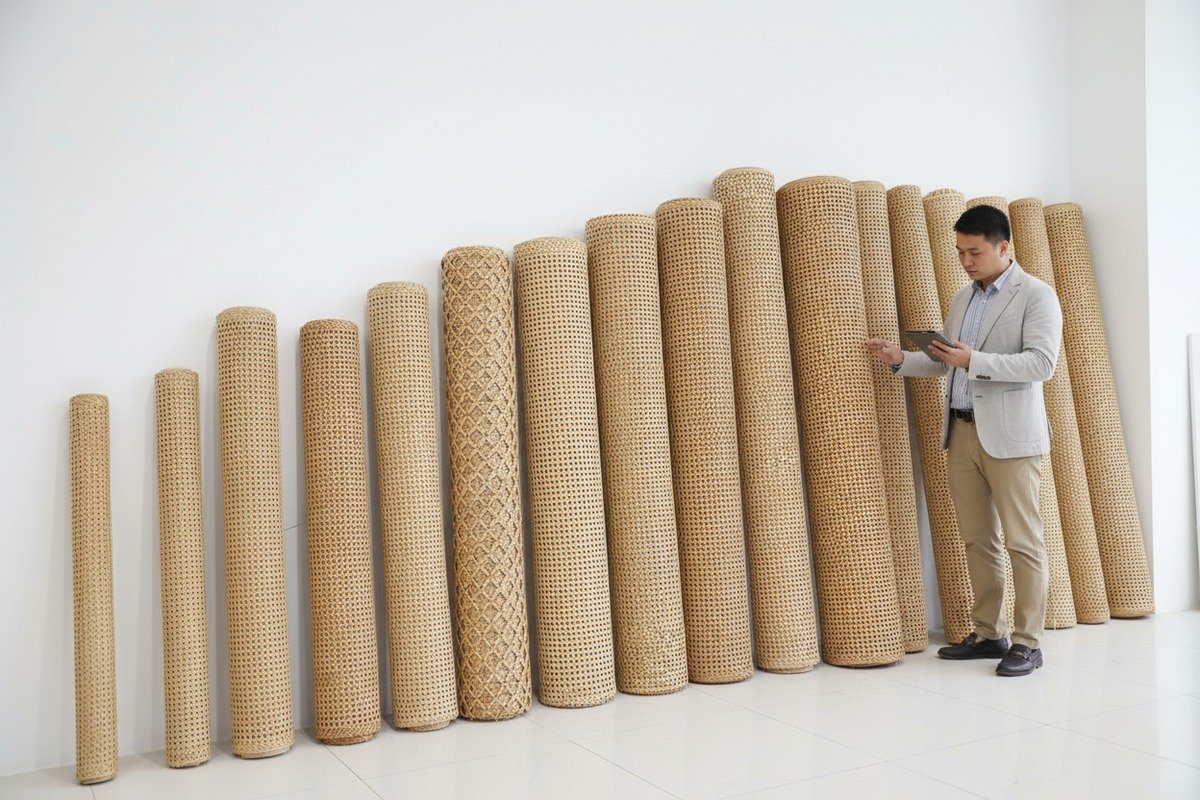
Every week, our sales team fields the same question from furniture factories and wholesalers placing bulk orders: “How much area does one roll actually cover?” It sounds simple, but wrong estimates lead to costly overbuying or frustrating project delays. From our production floor in Foshan to our instalación de procesamiento de ratán 1 in Indonesia, we see the confusion firsthand.
Natural rattan cane webbing square footage per roll depends on width. A standard 50-foot roll ranges from roughly 67 square feet at 16 inches wide to 167 square feet at 40 inches wide. Wider rolls over 40 inches come on shorter 32.8-foot rolls, yielding 120 to 197 square feet per roll.
Below, we break down the exact numbers by width, walk through the math, and share practical tips for ordering the right amount. Let’s get into it.
How do I calculate the total square footage for different rattan roll widths?
Many buyers assume all rolls give the same coverage. That assumption leads to wasted material or half-finished projects. In our experience shipping to over a dozen countries, we have seen even seasoned purchasing managers miscalculate because they overlook the width-to-length relationship.
To calculate square footage for a rattan roll, convert the width from inches to feet, then multiply by the roll length in feet. For example, a 24-inch-wide roll that is 50 feet long equals 2 feet × 50 feet = 100 square feet. The formula is always: Width (ft) × Length (ft) = Square Feet.
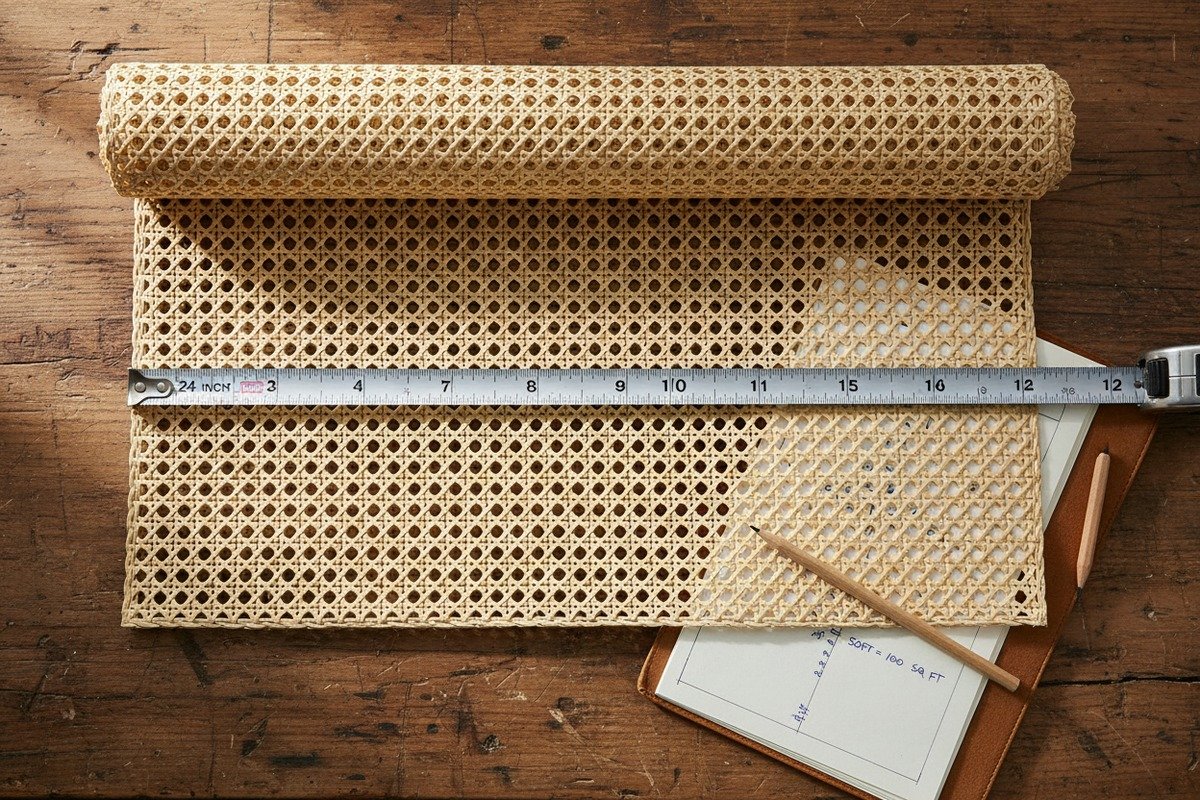
The Basic Formula
The math is straightforward. You only need two numbers:
- Ancho of the roll (convert inches to feet by dividing by 12).
- Longitud of the roll (in feet).
Multiply them together. That gives you total square footage 2.
For instance, a 36-inch roll is 3 feet wide. If it runs 50 feet long, that is 3 × 50 = 150 square feet.
Why Width Matters More Than You Think
La mayoría rejilla de ratán natural 3 rolls come in a standard length of about 15 meters, which is roughly 49.2 feet. We round to 50 feet for easier math. This length holds true for widths up to 40 inches (100 cm). Once you go wider than 40 inches, the roll length 4 drops to about 10 meters (32.8 feet). This is because wider sheets of natural rattan are harder to weave and handle in long runs.
So the width does not just change coverage proportionally. It also changes the roll length, which impacts total square footage in a non-obvious way.
Quick Reference Table: Square Footage by Width
Here is the core data our team uses when quoting orders:
| Ancho (pulgadas) | Width (feet) | Roll Length (feet) | Square Feet per Roll |
|---|---|---|---|
| 16 | 1.33 | 50 | 66.7 |
| 18 | 1.50 | 50 | 75.0 |
| 20 | 1.67 | 50 | 83.3 |
| 22 | 1.83 | 50 | 91.7 |
| 24 | 2.00 | 50 | 100.0 |
| 26 | 2.17 | 50 | 108.3 |
| 28 | 2.33 | 50 | 116.7 |
| 30 | 2.50 | 50 | 125.0 |
| 32 | 2.67 | 50 | 133.3 |
| 36 | 3.00 | 50 | 150.0 |
| 40 | 3.33 | 50 | 166.7 |
| 44 | 3.67 | 32.8 | 120.3 |
| 48 | 4.00 | 32.8 | 131.1 |
| 60 | 5.00 | 32.8 | 163.9 |
| 72 | 6.00 | 32.8 | 196.7 |
Don't Forget the Waste Factor
Raw calculation gives you the theoretical maximum. Real projects always need extra material. Edges get trimmed. Patterns need alignment. We typically advise adding 10% to 20% waste to your total. add 10% to 20% waste 5 If your project calls for 100 square feet, order at least 110 to 120 square feet of webbing.
This is especially true for cabinet door panels 6 and headboards where clean edges matter. Curved furniture pieces can push waste even higher.
How many square feet will I get from a standard 50-foot roll of cane webbing?
This is the question we hear most from our wholesale clients in the US, Australia, and Europe. They need a quick answer before placing a orden de compra 7. The problem is that "standard" means different things to different suppliers, so the number can surprise you.
A standard 50-foot natural rattan cane webbing roll yields between 66.7 and 166.7 square feet, depending entirely on the width you select. A 16-inch-wide roll provides about 67 square feet, a 24-inch-wide roll provides 100 square feet, and a 40-inch-wide roll provides roughly 167 square feet.
What Counts as a "Standard" Roll?
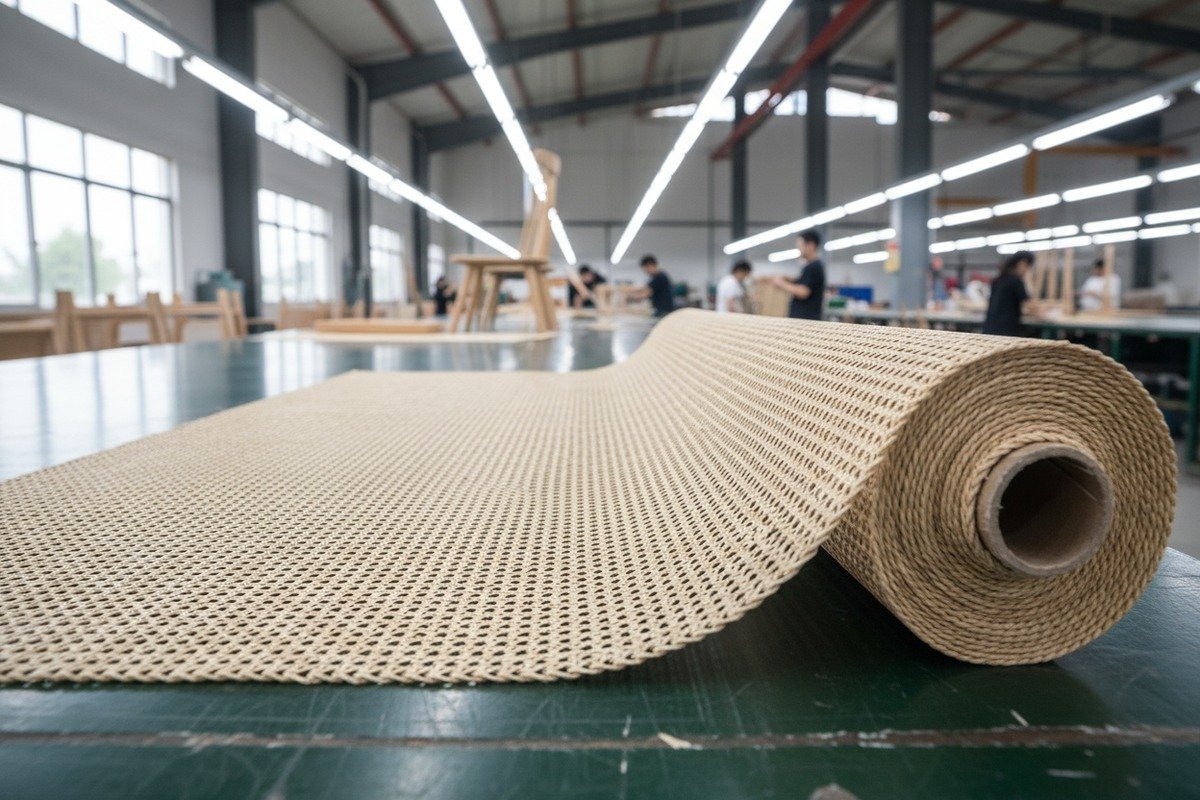
In the industria del ratán 8, a standard roll of natural cane webbing is 15 meters long. That converts to 49.2 feet, but most suppliers round up to 50 feet for simplicity. This length applies to rolls up to 40 inches wide.
When our factory in Indonesia weaves rolls wider than 100 cm (about 40 inches), we cut them to 10-meter lengths. The rattan strands become harder to manage at wider dimensions, and the risk of weaving defects increases with length. So "standard" depends on the width you need.
50-Foot Roll Coverage Breakdown
Here is a focused table for the most popular widths on 50-foot rolls:
| Ancho (pulgadas) | Square Feet per Roll | Caso de uso común |
|---|---|---|
| 16 | 66.7 | Small cabinet doors, drawer fronts |
| 18 | 75.0 | Chair seat panels, small screens |
| 20 | 83.3 | Chair backs, side table wraps |
| 24 | 100.0 | Headboards, room dividers, large panels |
| 28 | 116.7 | Wide cabinet fronts, radiator covers |
| 36 | 150.0 | Wall panels, large furniture pieces |
| 40 | 166.7 | Full wall installations, large partitions |
Comparing Roll Sizes to Common Projects
A single dining chair seat typically needs about 2 to 4 square feet. A king-size headboard panel might require 12 to 20 square feet. A set of four cabinet doors could use 8 to 16 square feet.
So a single 24-inch by 50-foot roll (100 sq ft) can cover:
- About 25 to 50 chair seats
- About 5 to 8 headboard panels
- About 6 to 12 sets of cabinet doors
These numbers help you see how far one roll really goes. For bulk furniture production, most of our factory clients order multiple rolls in the same width. We ship them on pallets, stacked horizontally to prevent creasing.
The Retail vs. Wholesale Difference
On platforms like Etsy or Walmart, you often see rattan webbing sold by the foot. A listing might offer 24-inch-wide webbing in 3-foot or 5-foot pieces. That gives you only 10 to 12.5 square feet. You pay a premium per square foot this way.
Full 50-foot rolls are wholesale items. The cost per square foot drops significantly. If you are running a furniture workshop or reselling materials, buying full rolls saves money and ensures consistency across your batch.
How should I estimate my bulk order volume based on these square foot measurements?
When we prepare quotes for purchasing managers like our long-term client Ranoo in Thailand, the conversation always starts with project scope. Getting the volume right saves money, avoids delays, and prevents warehouse headaches. Yet many buyers still guess instead of calculate.
To estimate bulk order volume, first calculate total project square footage by measuring every piece that needs rattan coverage. Then add a 10–20% waste buffer. Finally, divide by the square footage per roll for your chosen width to determine total rolls needed. Always round up to whole rolls.
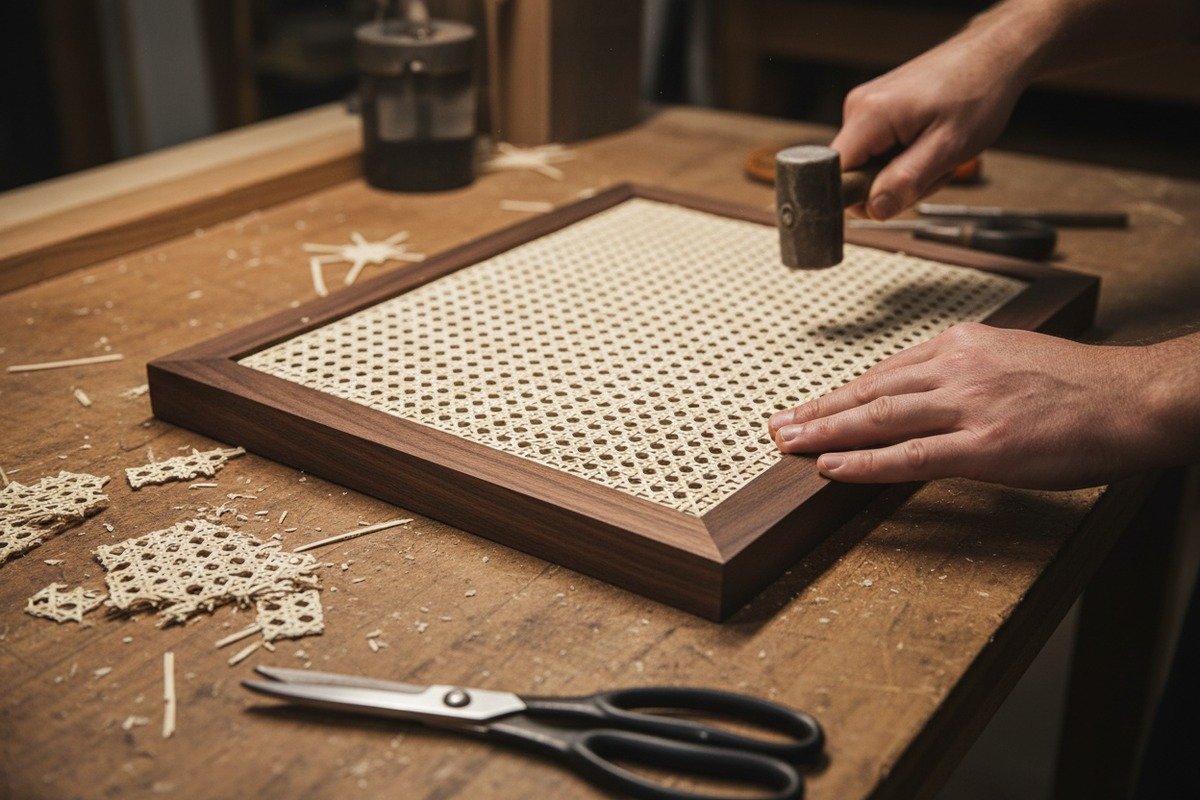
Step-by-Step Bulk Estimation Method
Here is the process we walk our clients through:
Step 1: List every piece. Write down each furniture component or panel that needs rattan webbing. Measure the width and height of each piece in inches.
Step 2: Calculate area per piece. Multiply width by height. Convert to square feet (divide by 144 since there are 144 square inches in a square foot).
Step 3: Multiply by quantity. If you need 200 identical chair seats, multiply the area of one seat by 200.
Step 4: Add waste. Add 10% for simple rectangular cuts. Add 15–20% for curved or irregular shapes.
Step 5: Pick your roll width. Choose a width that matches or slightly exceeds the widest dimension of your pieces. This minimizes trimming.
Step 6: Divide total square feet by square feet per roll. Round up to the nearest whole roll.
Worked Example: Ordering for a Furniture Factory
Imagine a factory needs rattan webbing for two products:
- Dining chair seat panels: 18 inches × 18 inches each. Quantity: 500 pieces.
- Sideboard door panels: 14 inches × 30 inches each. Quantity: 200 pieces.
| Producto | Dimensions (in) | Area per Piece (sq ft) | Cantidad | Total Area (sq ft) |
|---|---|---|---|---|
| Chair seat panel | 18 × 18 | 2.25 | 500 | 1,125 |
| Sideboard door panel | 14 × 30 | 2.92 | 200 | 583 |
| Subtotal | 1,708 | |||
| Waste buffer (15%) | 256 | |||
| Grand Total | 1,964 |
For the chair seats, an 18-inch-wide roll makes sense. Each 50-foot roll gives 75 square feet. The chairs need 1,125 + 169 (15% waste) = 1,294 sq ft. That is 1,294 ÷ 75 = 17.3 rolls. Round up to 18 rolls.
For the sideboard doors, a 16-inch-wide roll works since the panels are 14 inches wide. Each roll gives 66.7 sq ft. The doors need 583 + 87 = 670 sq ft. That is 670 ÷ 66.7 = 10.04 rolls. Round up to 11 rolls.
Choosing the Right Width to Minimize Waste
Width selection is strategic. If your piece is 22 inches wide, you might choose between a 24-inch roll and a 28-inch roll. A 24-inch roll leaves 2 inches of trim waste per cut. A 28-inch roll leaves 6 inches. Over hundreds of cuts, that adds up fast.
We always recommend choosing the narrowest roll that still covers your piece with at least half an inch of overlap on each side for tucking or stapling.
Communicate Clearly with Your Supplier
When you send a purchase order, include:
- Total rolls needed per width
- Desired weave pattern (square weave, open mesh, etc.)
- Grade preference (A, B, or mixed)
- Delivery timeline
Our logistics team can then consolidate your order, optimize pallet loading, and provide accurate shipping costs. Clear communication prevents errors and speeds up delivery.
Does the square footage per roll vary based on the rattan grade I choose for my project?
One of the most common points of confusion among our wholesale clients is whether picking a different grade changes the coverage they get. This matters because grade affects price, and nobody wants to pay more without getting more material. From our rattan processing facility in Indonesia, we can explain exactly what changes and what stays the same.
The square footage per roll does not change based on rattan grade. A Grade A roll and a Grade B roll of the same width and length provide identical square footage. Grade affects the visual quality, strand consistency, and durability of the weave, but the physical dimensions of the roll remain the same.
What Rattan Grades Actually Mean
Rattan cane webbing grades 9 refer to the quality of the rattan strands and the consistency of the weave. Here is how we classify them at our factory:
- Grado A (Premium): Uniform color, minimal knots, tight and even weave. Strands are selected from the best sections of the rattan pole. Ideal for visible furniture surfaces.
- Grado B (Estándar): Slight color variation, occasional small knots. Weave is still structurally sound. Good for projects where the rattan is partially covered or stained.
- Grado C (Económico): Noticeable color differences, more knots, some uneven spots in the weave. Suitable for backing panels, hidden surfaces, or budget products.
Grade vs. Dimensions: What Changes and What Doesn't
| Factor | Grado A | Grado B | Grado C |
|---|---|---|---|
| Ancho del rollo | Same | Same | Same |
| Longitud del rollo | Same | Same | Same |
| Square footage per roll | Same | Same | Same |
| Uniformidad del hilo | Alto | Medio | Bajo |
| Consistencia del color | Excelente | Bueno | Variable |
| Price per roll | Más alto | Gama media | El más bajo |
| Tensión del tejido | Muy apretado | Tight | Slightly loose |
As you can see, the dimensional output is identical across grades. The difference is entirely in appearance and craftsmanship.
When Grade Does Affect Your Project Planning
While square footage stays the same, grade can indirectly affect how much material you use. Here is why:
Defect trimming. Lower grades may have sections with visible flaws. If your end product demands flawless panels, you might cut around defects in Grade B or C material. This increases effective waste from 10% to as much as 25%.
Client rejection. If you supply finished furniture to retailers who inspect quality closely, using a lower grade could result in rejected pieces. That means rework and additional material consumption.
Staining and finishing. Grade C webbing absorbs stain unevenly due to color variation. Some workshops discard pieces that do not take the finish well.
So while the roll itself covers the same area regardless of grade, the usable area may shrink with lower grades. Our advice to wholesale clients is simple: match the grade to the application. Use Grade A where it shows, and Grade B or C where it does not.
Natural vs. Synthetic: A Related Consideration
Some buyers also ask whether synthetic (PE) rattan webbing 10 gives more square footage. Synthetic rolls are often 30 meters (about 100 feet) long instead of 15 meters. So a 24-inch synthetic roll gives roughly 200 square feet compared to 100 square feet for natural. However, synthetic lacks the authentic texture, eco-friendly appeal, and breathability of natural rattan. For indoor furniture and premium products, natural rattan remains the preferred choice among our clients in the Netherlands, Spain, and Australia.
Weave Pattern and Its Impact
The weave pattern—square weave, open hexagon, or diamond—does not change the roll dimensions either. A 24-inch by 50-foot roll of square weave and a 24-inch by 50-foot roll of open hexagon weave both give 100 square feet. The pattern affects aesthetics and slightly affects the material density within that area, but not the area itself.
That said, open weave patterns use less rattan per square foot and may feel lighter. Dense square weave uses more material and feels sturdier. Neither changes the coverage number on your order sheet.
Conclusión
Getting square footage right saves you time, money, and frustration on every rattan order. Use the tables and formulas in this guide to plan your next project with confidence.
Notas al pie
1. Describes the steps involved in processing rattan into webbing. ↩︎
2. Explains the basic formula for calculating area for common shapes. ↩︎
3. Explains what cane webbing is and its origin from rattan palm. ↩︎
4. Explains how roll width and length are related in material calculation and handling. ↩︎
5. Explains the importance of adding a waste buffer to material estimates. ↩︎
6. Discusses the use of cane webbing for cabinet doors in furniture restoration and modern design. ↩︎
7. Found a real, working, authoritative URL from Wikipedia providing a comprehensive definition and explanation of a purchase order. ↩︎
8. Found a real, working, authoritative URL from the Food and Agriculture Organization of the United Nations (FAO) providing an overview of the rattan industry. ↩︎
9. Explains how rattan grades classify quality, consistency, and durability. ↩︎
10. Explains what synthetic rattan is, its composition (PE), and how it differs from natural rattan. ↩︎

 English
  Español de México
  العربية
  Deutsch
  Français
  Русский