
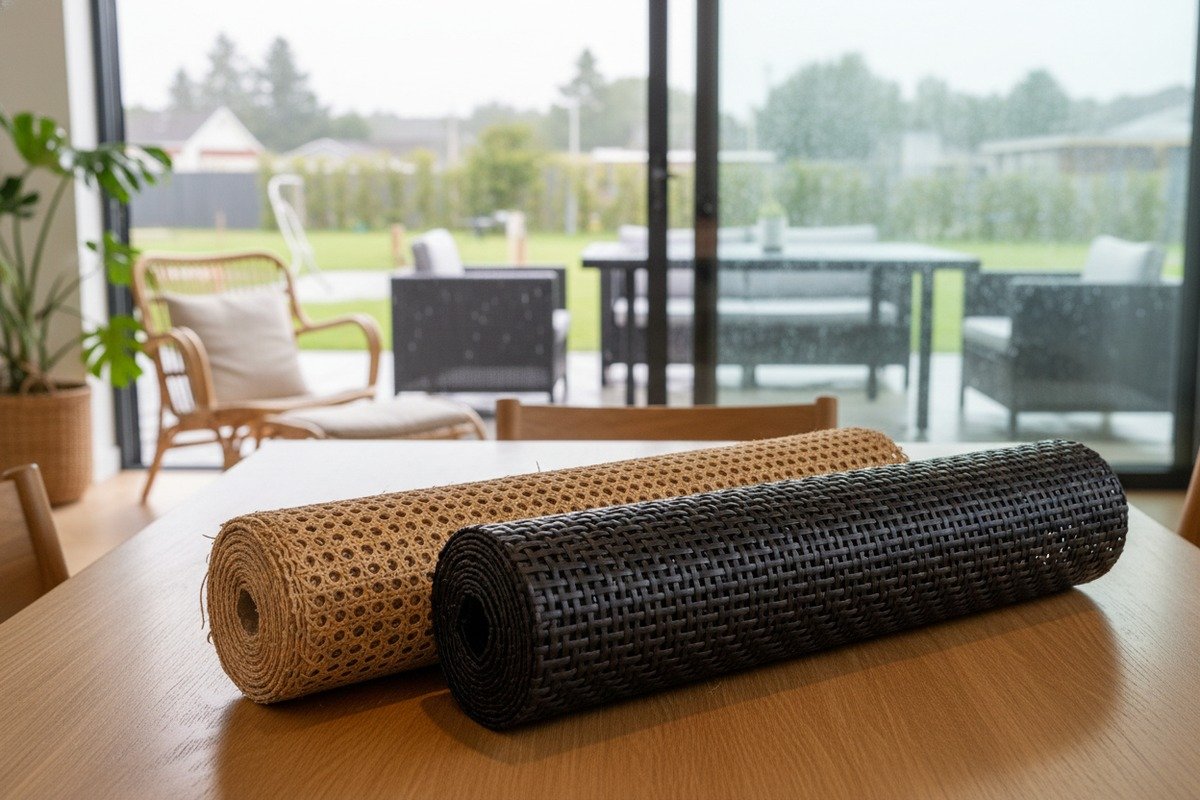
Every week, our sales team fields the same question from furniture factories and wholesalers across three continents: should I go natural or synthetic for my next rattan project?
Choose natural rattan cane webbing for indoor furniture that demands authentic, warm, handcrafted character and eco-friendly appeal. Choose plastic rattan mesh for outdoor or high-humidity projects where weather resistance, color stability, and low maintenance matter most. Your final decision depends on the end-use environment, budget horizon, and client expectations.
Both materials have clear strengths. Neither is universally better. The right choice depends on where the furniture lives, who buys it, and how much upkeep is realistic rattan palms 1. Let me walk you through the key factors we discuss daily with our B2B clients so you can make a confident decision.
Which material should I choose to ensure the longest lifespan for my outdoor furniture projects?
We have shipped rattan materials to over a dozen countries, and the lifespan question always comes up first — especially from buyers sourcing for outdoor restaurant or patio lines high-density PE 2.
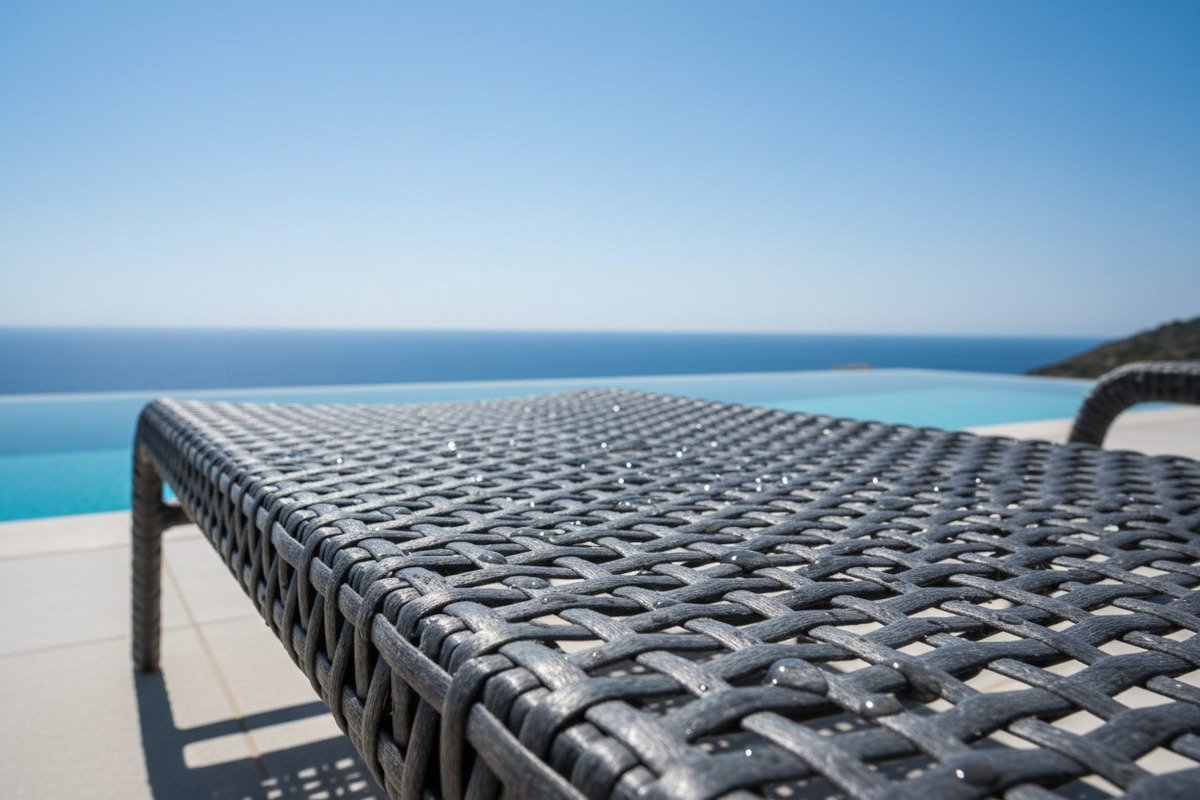
For outdoor furniture projects, plastic rattan mesh made from high-density PE is the best choice for maximum lifespan. It resists UV rays, rain, humidity, and temperature swings without cracking, fading, or molding. Natural rattan cane webbing degrades quickly outdoors unless heavily treated, making it unsuitable for exposed environments.
Why Natural Rattan Struggles Outdoors
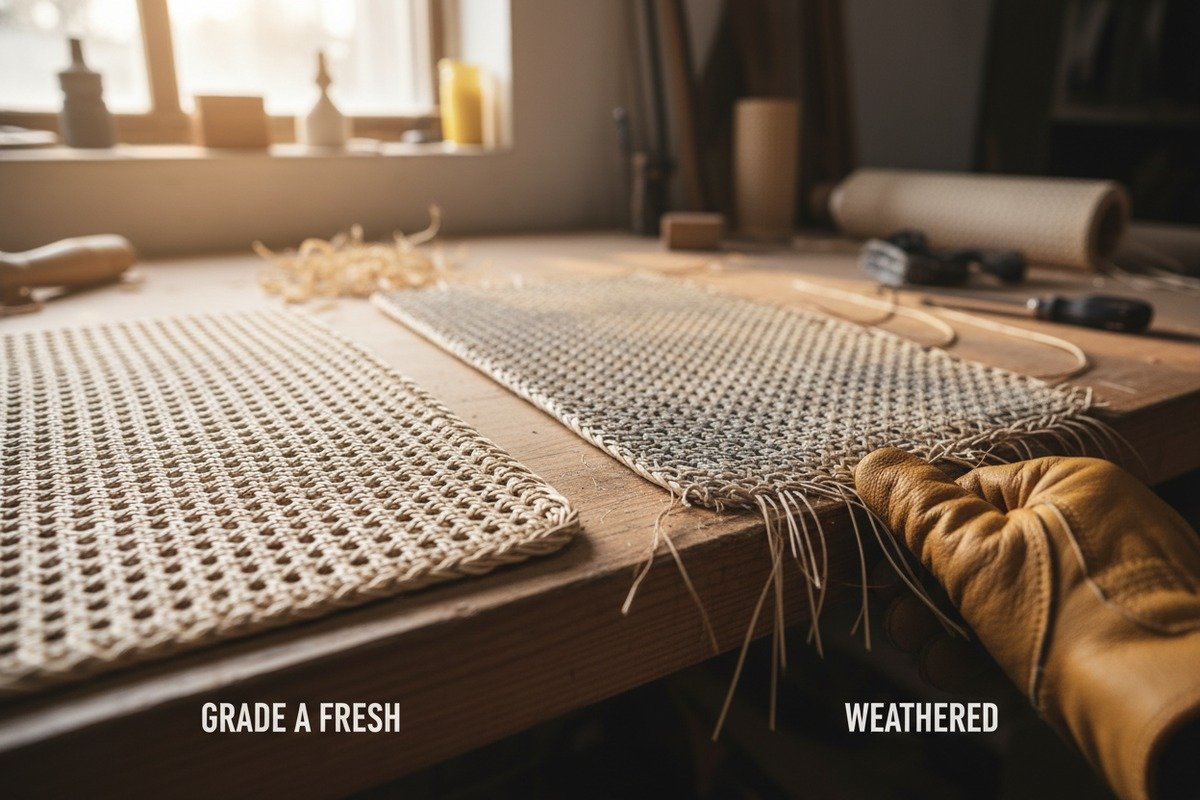
Natural rattan cane webbing 3 comes from the outer bark of rattan palms. It is strong, flexible, and beautiful. But it is also organic. Moisture is its enemy. When exposed to rain, dew, or persistent humidity, untreated natural rattan absorbs water polyvinyl chloride (PVC) 4. Over time, this causes swelling, warping, and mold growth. UV exposure adds another layer of damage. UV rays 5 Sunlight breaks down the fibers and causes yellowing or bleaching.
Even with varnish or lacquer coatings, natural rattan in a fully outdoor setting will need re-coating every 6–12 months open hexagonal cane 6. In tropical climates — where many of our clients in Thailand, the Philippines, and India operate — the combination of heat, moisture, and sun can cut an untreated natural rattan panel's life to just 1–2 years outdoors.
Where Plastic Rattan Excels
Plastic rattan mesh, typically made from polyethylene (PE) 7 or polyvinyl chloride (PVC), is engineered for the outdoors. Quality PE rattan resists UV degradation 8 for years. It does not absorb water, so mold and mildew are non-issues. It holds its color. It does not crack in cold weather or soften in extreme heat.
From our factory testing and client feedback, here is a general lifespan comparison:
| Environment | Natural Rattan Cane Webbing | Plastic Rattan Mesh (PE) |
|---|---|---|
| Indoor, climate-controlled | 15–30+ years | 20–30+ years |
| Semi-outdoor (covered patio) | 3–7 years with treatment | 10–15+ years |
| Fully outdoor, exposed | 1–3 years | 8–15 years |
| High-humidity indoor (bathroom, kitchen) | 2–5 years | 10–15+ years |
A Practical Rule of Thumb
If the furniture will sit under a roof and away from direct weather, natural rattan can last decades. Our clients who supply hotel lobby furniture or residential living room pieces report excellent longevity with natural cane webbing — some pieces are still in service after 20 years.
But for balcony chairs, poolside loungers, restaurant terraces, or any piece that sees rain or prolonged sun, plastic rattan mesh is the safer investment. One of our Dutch wholesale clients switched their entire outdoor line to PE rattan after two seasons of replacing cracked natural panels. Their warranty claims dropped to nearly zero.
The Repair Factor
One advantage natural rattan holds: repairability. A damaged section of natural cane webbing can be re-woven strand by strand by a skilled craftsman. Plastic rattan mesh, once torn or broken, usually requires a full panel replacement. For high-end indoor pieces, this repairability extends the practical lifespan even further.
How do the wholesale costs of natural cane webbing compare to plastic rattan for my budget?
Budget planning is something we discuss at length with procurement managers, because the sticker price on a roll of webbing only tells half the story.
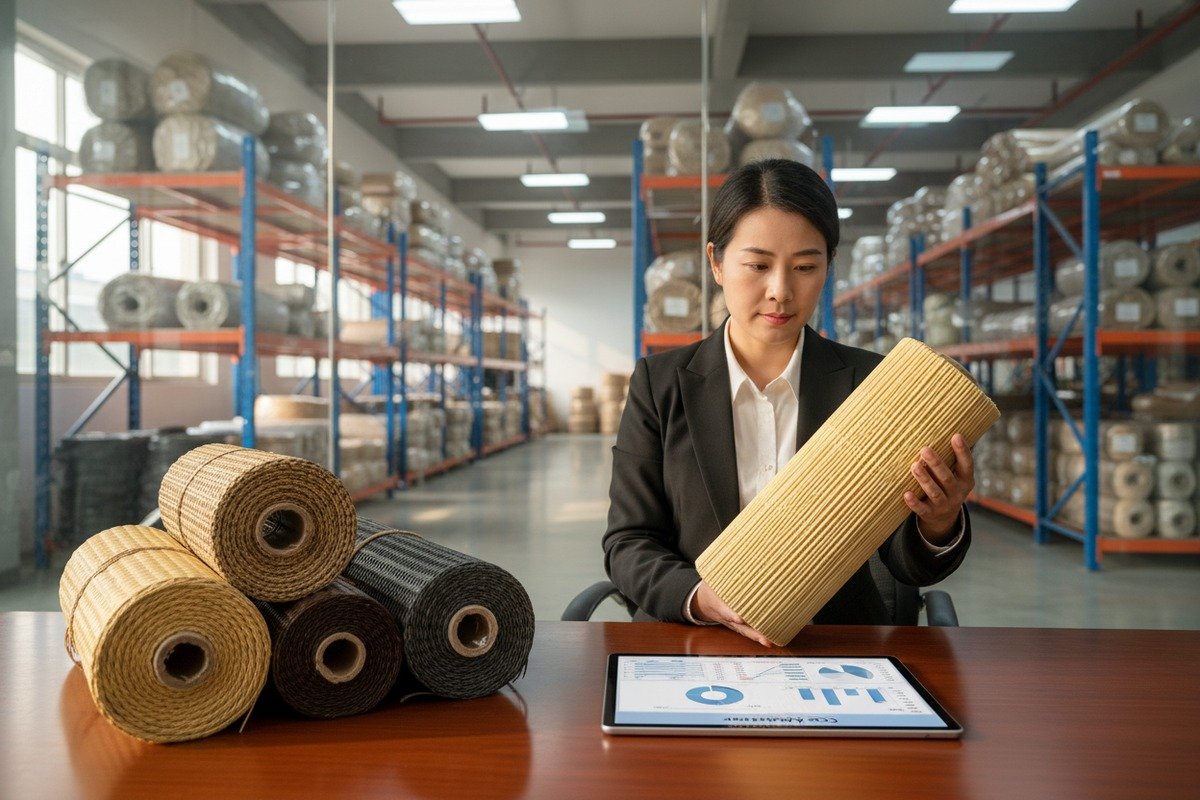
Natural rattan cane webbing generally costs less per square meter upfront than high-quality PE plastic rattan mesh. However, plastic rattan's lower maintenance costs, longer replacement cycles, and reduced labor for upkeep make it more cost-effective over a 5–10 year horizon, especially for outdoor applications.
Upfront Material Cost
Raw material prices fluctuate based on grade, origin, weave pattern, and order volume. At our facilities, we process natural rattan from our own Indonesian factory and produce synthetic rattan at our Foshan operations. Here is a general wholesale pricing framework based on current market conditions:
| Cost Factor | Natural Rattan Cane Webbing | Plastic Rattan Mesh (PE/PVC) |
|---|---|---|
| Raw material cost per sq. meter | Lower (varies by grade) | Moderate to higher |
| Minimum order flexibility | Moderate | Higher (tooling for patterns) |
| Shipping weight | Lighter | Slightly heavier |
| Packaging requirements | Careful (fragile, moisture-sensitive) | Standard (durable, flexible) |
| Import duties (varies by country) | Often lower tariff codes | May attract higher plastics tariffs |
Hidden Costs of Natural Rattan
The initial price advantage of natural rattan often narrows or disappears when you factor in the full supply chain:
- Packaging: Natural cane webbing is sensitive to moisture during shipping. We use moisture-barrier wrapping and silica gel packets for ocean freight. This adds to packaging costs. Plastic rattan ships with standard wrapping.
- Damage rate: Natural rolls can arrive with minor cracks or brittle spots if humidity shifts during transit. Our quality control catches most issues, but replacement costs are real. Plastic rattan has nearly zero transit damage.
- Treatment: Many furniture factories apply lacquer, varnish, or sealant to natural rattan before installation. This adds labor and material cost per unit.
- Replacement frequency: For outdoor use, natural rattan panels may need replacement every 2–3 years. Plastic rattan lasts 3–5x longer in the same setting.
Long-Term Cost Modeling
A furniture factory owner in Turkey shared these numbers with us after switching part of his outdoor line to PE rattan. Over five years, his cost per chair (materials + maintenance + replacements) was 40% lower with synthetic compared to natural. For his indoor dining chairs, natural rattan remained cheaper overall because no replacements were needed.
When Natural Rattan Wins on Price
For indoor-only projects, natural rattan cane webbing is almost always the more budget-friendly option. It needs no special treatment beyond a light sealant. It ships lighter. And its lower per-meter cost adds up across large orders. If you supply residential furniture or decorative panels for cabinets and room dividers, natural rattan delivers excellent value.
Budget Tip for Wholesalers
We often recommend clients split their orders: natural cane webbing for indoor product lines, plastic rattan mesh for outdoor collections. This approach optimizes material cost without compromising product quality in either environment. It also simplifies inventory — you stock the right material for the right application.
What are the key maintenance requirements I need to know before selecting a rattan material?
When our team trains new wholesale partners on product care, we always stress that maintenance knowledge helps them serve their own customers better — and reduces warranty headaches.
Natural rattan cane webbing requires regular dusting, occasional moisture conditioning in dry climates, varnish or lacquer re-application, and strict protection from prolonged water exposure. Plastic rattan mesh needs only periodic wiping with soap and water. Choosing the right material starts with understanding how much maintenance your end-user is willing to commit to.
Caring for Natural Rattan Cane Webbing
Natural rattan is a living material — or rather, it was. The fibers retain their organic structure, which means they respond to environmental changes. Here is what every furniture maker and retailer should know:
Humidity Control
Natural rattan needs a balanced environment. Too dry, and the fibers become brittle and crack. Too humid, and mold can form. The sweet spot is 40–60% relative humidity 9. In arid climates like parts of Saudi Arabia or inland Australia (both markets we supply), clients mist their rattan furniture lightly every few weeks or keep a humidifier nearby.
Cleaning Protocol
Dust regularly with a soft brush or vacuum with a brush attachment. For deeper cleaning, use a damp (not wet) cloth. Never soak natural rattan. If spills happen, blot immediately. Stubborn stains can be treated with mild soap and water, but the area must be dried thoroughly afterward.
Protective Finishing
A coat of clear lacquer or polyurethane varnish is the best defense. This seals the fibers against minor moisture and slows UV yellowing. We recommend re-applying every 1–2 years for pieces in active daily use. For display or low-traffic pieces, every 3–5 years is sufficient.
Pre-Installation Soaking
Before weaving or installing natural cane webbing on a frame, soak it in warm water for 15–30 minutes. This makes the material pliable and prevents cracking during stretching and stapling. Once installed, it dries taut and firm. Skip this step, and you risk splitting the cane.
Caring for Plastic Rattan Mesh
Synthetic rattan is dramatically simpler. Here is the full care guide:
- Wipe with a damp cloth and mild soap.
- Rinse with a garden hose for outdoor pieces.
- No varnish needed. No humidity control needed.
- Avoid harsh chemical solvents that could degrade the plastic surface.
That is essentially it. This low-maintenance profile is a major selling point for commercial clients. Restaurant chains and hotel groups prefer plastic rattan precisely because cleaning staff need no special training.
Maintenance Comparison at a Glance
| Maintenance Task | Natural Rattan Cane Webbing | Plastic Rattan Mesh |
|---|---|---|
| Regular dusting | Weekly (soft brush) | Weekly (damp cloth) |
| Deep cleaning | Damp cloth, mild soap, dry immediately | Soap and water, hose rinse |
| Humidity management | Required (40–60% RH ideal) | Not required |
| Protective coating | Lacquer/varnish every 1–2 years | None needed |
| Pre-installation prep | Soaking in warm water (15–30 min) | None — cut and install |
| Mold prevention | Keep dry, ensure air circulation | Naturally mold-resistant |
| UV protection | Move away from direct sun or use UV-blocking finish | Built-in UV stabilizers |
The PVC Off-Gassing Consideration
One maintenance-adjacent concern worth mentioning: some lower-grade PVC-based rattan mesh can off-gas volatile organic compounds (VOCs) 10, particularly when new. This matters for enclosed indoor spaces. We advise clients who use PVC rattan indoors to air out materials for 48–72 hours before installation. Our PE-based rattan products do not carry this concern, as PE is chemically inert at room temperature.
Matching Maintenance to Your Market
If your end customers are homeowners who enjoy caring for their furniture, natural rattan is rewarding. It develops a warm patina and a richer tone over time. If your market is hospitality, commercial, or cost-conscious consumers who want zero hassle, plastic rattan is the obvious fit. Knowing your buyer's lifestyle helps you pick the right material before the first order ships.
How can I tell which rattan mesh style will best appeal to my high-end furniture clients?
Our design consultants work closely with furniture brands across Europe, the Middle East, and Southeast Asia, so we see firsthand which styles land with premium buyers and which fall flat.
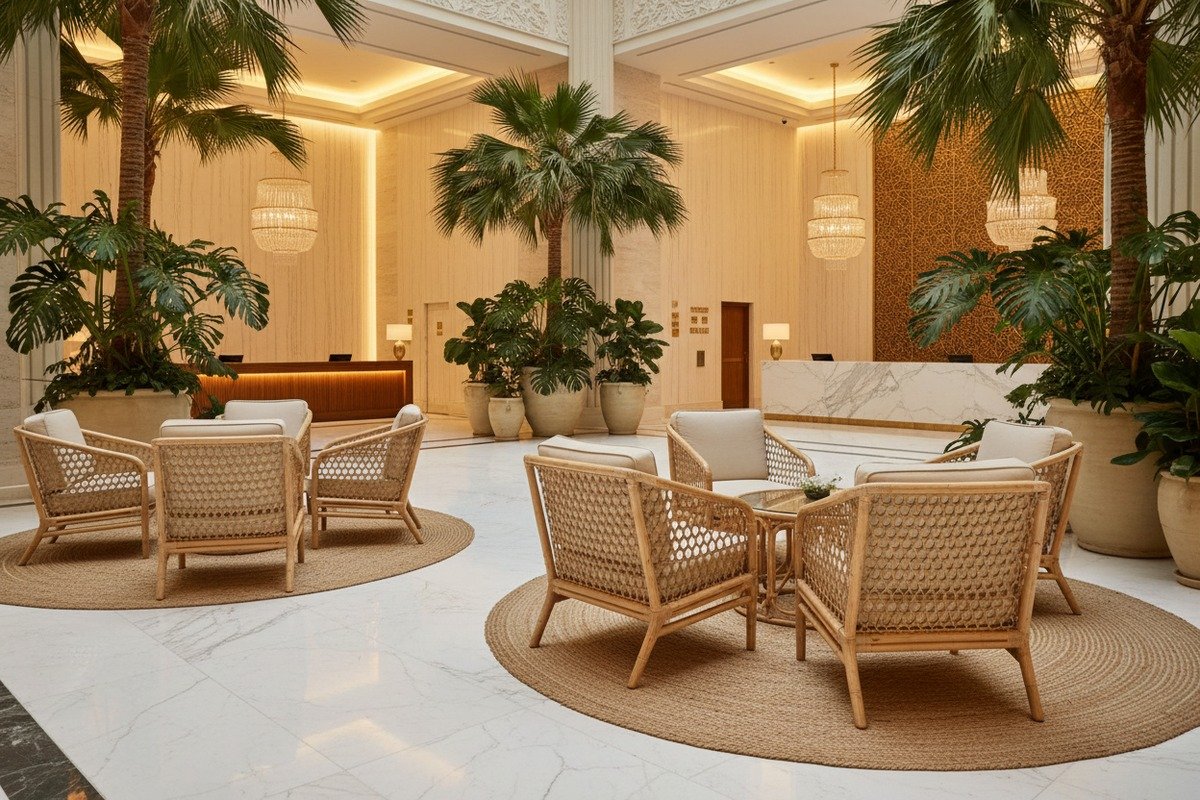
High-end furniture clients typically favor natural rattan cane webbing for its organic warmth, handcrafted character, and unique tonal variations — especially in open hexagonal or intricate diamond weave patterns. For luxury outdoor lines, premium PE rattan in refined earth tones with tight, uniform weaves satisfies clients who want elegance with all-weather performance.
Understanding the Aesthetic Divide
The choice between natural and plastic rattan is not just functional. It is deeply aesthetic. And in the high-end market, aesthetics drive purchasing decisions more than price.
Natural rattan cane webbing has an irreplaceable quality: each roll is slightly different. The color varies from warm straw yellow to subtle green tints. The weave has minor irregularities that signal handmade craftsmanship. These "imperfections" are exactly what luxury interior designers seek. They add soul.
Plastic rattan mesh, by contrast, offers precision. Every strand is identical in width, color, and texture. The weave is mathematically consistent. For modern and minimalist furniture lines, this uniformity reads as refined and intentional. It suits clean-lined outdoor sofas, contemporary dining sets, and commercial hospitality pieces.
Popular Patterns and Their Markets
Here is what we see trending across our export markets:
Natural Rattan Patterns
- Open hexagonal cane (classic six-way): The most iconic rattan look. Popular for chair backs, cabinet doors, and headboards. Strong demand from Scandinavian and American interior brands.
- Diamond motif weave: A denser, more intricate pattern. Appeals to bohemian and artisan-style furniture makers.
- Tight basketweave: A solid, close-knit weave for panels and room dividers. Warm and substantial.
- Bleached variants: Semi-bleached and full-bleached natural cane webbing gives a lighter, more modern palette. Trending in European markets. Note: bleached rattan can yellow slightly over time, which some clients view as character and others see as a flaw.
Plastic Rattan Patterns
- Flat-strand weave: Clean lines, smooth surface. Ideal for contemporary outdoor furniture.
- Semi-circle or half-round strand: Adds subtle dimension and shadow play. Popular for resort-style pieces.
- Textured round strand: Mimics natural rattan's organic feel. Used in premium outdoor collections that want a "natural look" without natural limitations.
Color Trends and Client Expectations
In our experience, high-end indoor clients gravitate toward the natural tonal range: warm honey, sandy beige, and muted straw. Bleached whites are rising but remain niche.
For outdoor luxury, earth tones dominate — think espresso, walnut, slate grey, and olive. These colors are easy to achieve with PE rattan and remain stable for years. Natural rattan cannot match this color range without staining, and stained natural rattan requires more maintenance.
The "Touch Test" That Sells
One of our Spanish wholesale partners told us something that stuck: "My showroom clients always touch the material first." Natural rattan wins the touch test almost every time for indoor pieces. The texture is warm, slightly rough, and organic. It feels alive.
Plastic rattan feels cooler and smoother. Some high-end buyers describe it as "too perfect." But for outdoor applications, that smooth, consistent feel signals durability and quality engineering — which is exactly the reassurance a buyer spending premium prices on patio furniture needs.
Hybrid Strategies for Premium Brands
Several of our European furniture factory clients now offer hybrid collections. They use natural rattan cane webbing for indoor seating and decorative panels, and color-matched PE rattan for the same design language extended to outdoor terraces. This consistent design thread — natural indoors, synthetic outdoors — is a strong selling proposition for hospitality projects where hotels want visual continuity from lobby to poolside.
Customization Options
Natural rattan can be stained or painted, but this obscures the grain that makes it special. A light tinted lacquer preserves the texture while shifting the hue. Plastic rattan comes in virtually any color from the factory and can be produced in custom shades for large orders. We regularly produce custom-color PE rattan runs for brand-specific collections — minimum order quantities apply, but the design freedom is significant.
Conclusion
Choosing between natural rattan cane webbing and plastic rattan mesh comes down to environment, budget timeline, maintenance commitment, and client taste. Match the material to the application, and both deliver excellent results.
Footnotes
1. Describes rattan as a group of climbing palms. ↩︎
2. Replaced HTTP 403 with authoritative Wikipedia page on High-density polyethylene. ↩︎
3. Explains the craft of caning and the material used. ↩︎
4. Offers a detailed definition and overview of polyvinyl chloride. ↩︎
5. Describes how UV light affects materials and causes degradation. ↩︎
6. Describes different cane weave patterns, including hexagonal. ↩︎
7. Provides a comprehensive overview of polyethylene as a polymer. ↩︎
8. Replaced HTTP 405 with authoritative Wikipedia page on Photo-oxidation of polymers, which explains UV degradation. ↩︎
9. Provides a clear and authoritative definition of relative humidity. ↩︎
10. Defines volatile organic compounds and their sources. ↩︎

 English
  Español de México
  العربية
  Deutsch
  Français
  Русский