

Every year, our sales team handles hundreds of custom rattan webbing 1 orders—and the biggest headaches almost always trace back to one root cause: unclear specs from day one. A buyer asks for “hexagonal rattan webbing” without specifying mesh size, strip width, or material type 2, and what arrives at their factory looks nothing like what they imagined. The gap between expectation and delivery is where money, time, and trust get lost.
To communicate custom rattan cane webbing requirements effectively, you should prepare a detailed specification sheet that covers material type, weave pattern, dimensions, strip thickness, mesh size, color, finish, quantity, packaging, and delivery terms—supplemented with visual aids such as photos, drawings, or physical samples sent to the supplier before production begins.
This guide breaks down the entire communication process into clear, actionable steps. Whether you source natural cane or synthetic rattan 3, the sections below will help you avoid costly misunderstandings and get exactly what your production line needs.
How can I ensure my supplier maintains consistent Grade A quality for my custom order?
Quality inconsistency is the number-one complaint we hear from furniture factories switching suppliers. One roll looks flawless; the next has uneven strand thickness and loose weave tension. Without a shared quality benchmark, both sides end up frustrated.
To ensure consistent Grade A quality, define your grading criteria in writing—covering strand uniformity, weave tension, color consistency, moisture content, and defect tolerance—then require pre-shipment samples and third-party inspection before each batch ships.
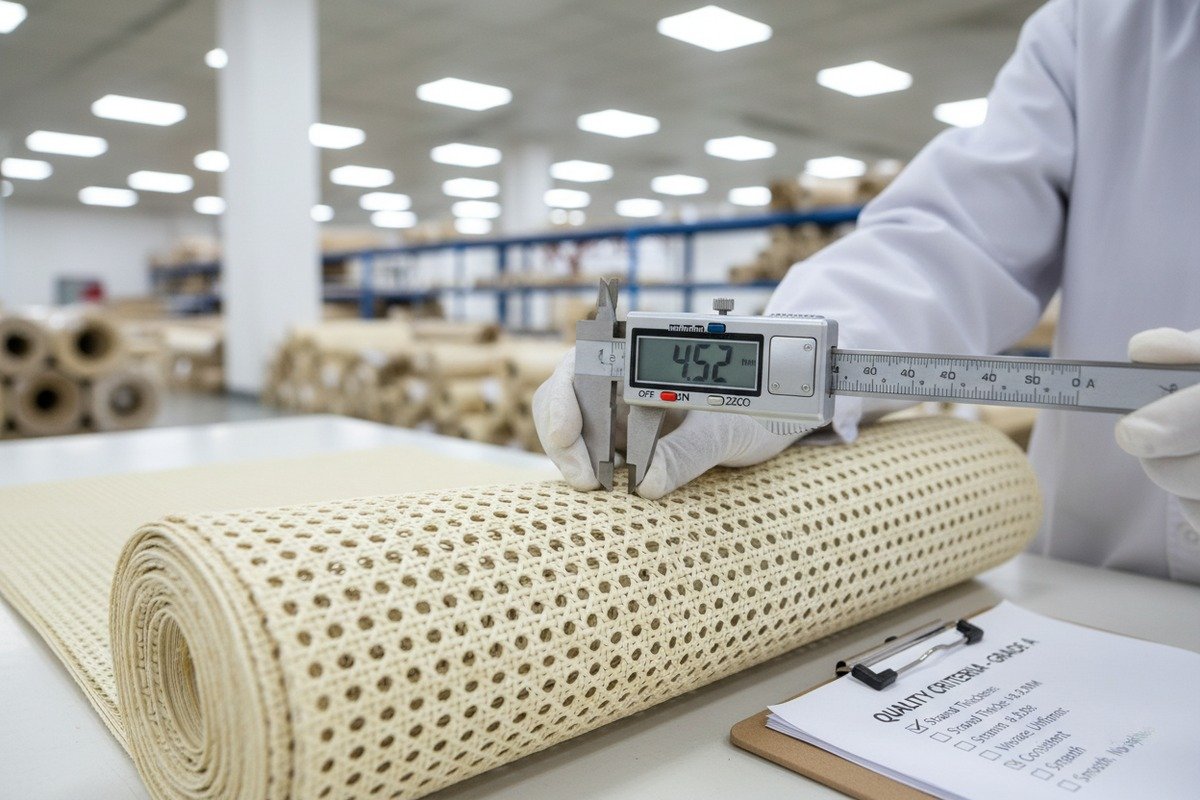
Define What "Grade A" Means in Your Context
The term "Grade A" has no universal standard across rattan suppliers. What one factory in Indonesia considers Grade A may be Grade B for a European furniture maker. You need to create your own grading document. At our facilities, we help buyers build a simple quality matrix. Here is an example:
| Quality Parameter | Grade A Requirement | Common Defect to Reject |
|---|---|---|
| Strand Thickness | Uniform 2–4 mm, ±0.3 mm tolerance | Variation exceeding ±0.5 mm |
| Weave Tension | Tight, no sagging when held vertically | Loose loops or gaps in pattern |
| Color Consistency | Even tone across entire roll | Dark spots, unbleached patches |
| Moisture Content 4 | 8–12% for natural rattan | Above 14% (risk of mold) |
| Surface Finish | Smooth, no splinters | Rough edges, cracking strands |
| Defect Rate | Below 1% per roll | Broken strands, missing weave nodes |
Share this table with your supplier before the first order. It removes ambiguity. When we receive such a document from a buyer, our quality control team 5 prints it and posts it right next to the weaving line.
Request Pre-Production Samples
Never skip the sample step. Ask for 30 cm × 30 cm swatches of the exact webbing you plan to order. Check the weave pattern 6 under natural light. Bend the sample gently—Grade A natural rattan should flex without cracking. If it snaps, the drying process was too aggressive or the raw material was low quality.
Set Up Inspection Checkpoints
For orders above 200 rolls, we recommend at least three inspection points: raw material check, mid-production weave audit, and final pre-shipment inspection. You can hire a third-party inspector 7 in China or Indonesia for roughly $200–$350 per visit. This small cost prevents thousands of dollars in rejected goods.
Agree on a Defect Resolution Protocol
Before production starts, agree in writing on what happens if a batch fails inspection. Options include rework, replacement, or partial refund. Having this in your purchase contract protects both parties.
Moisture content is especially critical. If your factory is in a dry climate like the Middle East or inland Australia, specify 8–10% moisture. For tropical destinations like Thailand, 10–12% is acceptable. Mismatched moisture causes warping and mold—two problems that destroy rattan furniture after it reaches end consumers.
What technical specifications should I include to get an accurate quote for custom patterns?
When our quoting team receives a vague inquiry—"I need hexagonal rattan webbing, please quote"—we have to ask 8–10 follow-up questions. That back-and-forth wastes days. A complete spec sheet on the first email cuts quoting time from a week to 24 hours.
Include material type (natural or synthetic), roll dimensions (width × length), strip thickness, weave pattern name with mesh opening size, color or finish treatment, quantity, packaging preference, and delivery terms in your initial request to receive an accurate quote without delays.
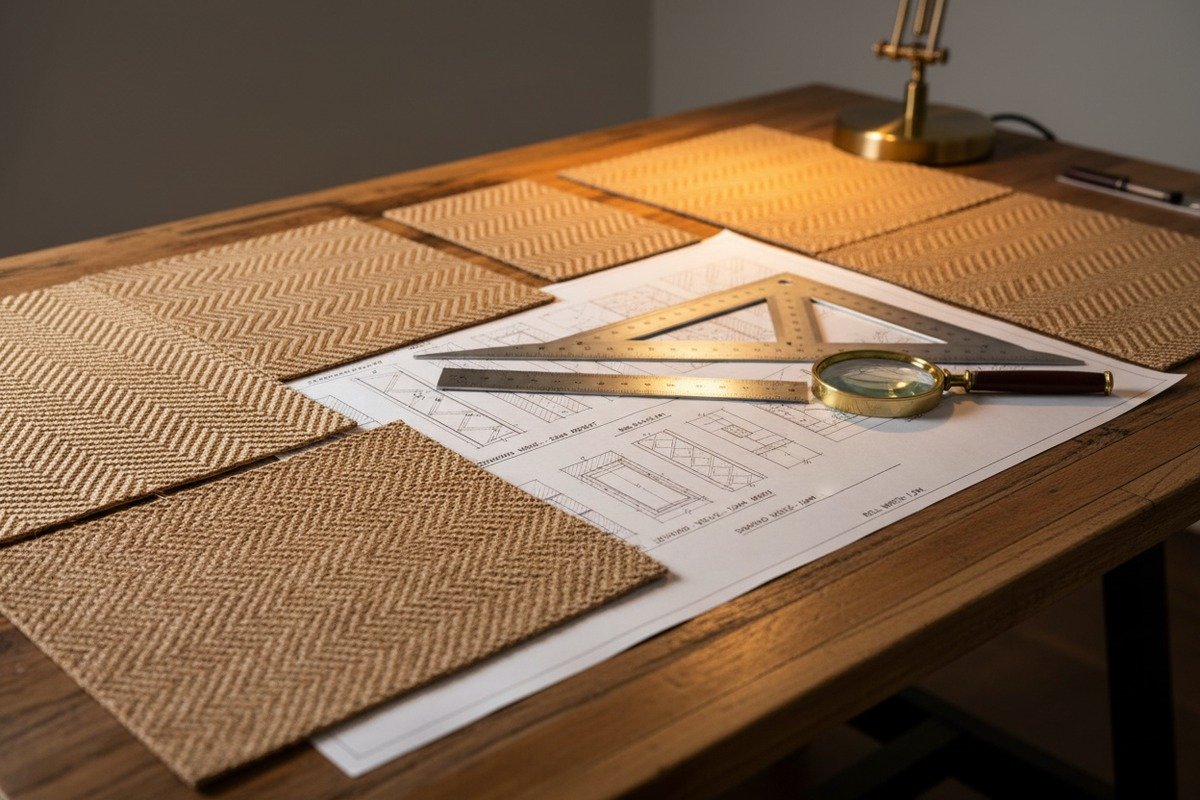
The Complete Specification Template
Below is the template we recommend to every new buyer who contacts us through our website or Alibaba. Fill it out before reaching out to any supplier.
| Specification | Details to Provide | Example |
|---|---|---|
| Material | Natural rattan cane or synthetic (HDPE/LDPE) | Natural rattan cane, peeled |
| Roll Width | Standard: 40 cm, 60 cm, 90 cm, 122 cm, 183 cm | 60 cm |
| Roll Length | Typically 5 m, 10 m, 15 m, or custom | 15 m per roll |
| Strip Width | 2 mm, 3 mm, 4 mm, 5 mm, 6 mm | 3 mm |
| Weave Pattern | Square, radio/hexagonal, octagonal, open/star, diamond | Hexagonal (radio weave) |
| Mesh Opening Size | Distance between nodes, e.g., 12 mm, 15 mm, 20 mm | 15 mm |
| Color / Finish | Natural, bleached white, stained, anti-mildew treated | Bleached white, anti-mildew |
| Quantity | Number of rolls or total square meters | 300 rolls |
| Packaging | Standard roll wrap, custom private-label box | Kraft paper wrap, branded sticker |
| Delivery Terms 8 | FOB, CIF, or DDP; port name | FOB Foshan |
| Lead Time | Desired production + shipping window | 25 days production + sea freight |
Natural vs. Synthetic: Why Material Choice Changes Everything
Material type is the single most important specification. It affects price, lead time, customization options, and end-use performance. Here is a quick comparison:
| Factor | Natural Rattan Cane | Synthetic Rattan (HDPE/LDPE) |
|---|---|---|
| Source | Rattan palm outer skin | Plastic resin pellets |
| Manufacturing | Hand-woven or semi-machine | Extruded, molded, embossed |
| Custom Colors | Limited (bleach, stain) | Unlimited via masterbatch |
| Flexibility | Needs soaking before install | Ready to use, no soaking |
| Durability | Vulnerable to moisture, fungi | UV-resistant, waterproof |
| Typical Use | Indoor furniture, caning | Outdoor furniture, panels |
| MOQ Range | 100–300 rolls | 200–500 rolls |
| Price Range | Mid to high | Budget to mid |
If you want a traditional hexagonal weave for indoor dining chairs, natural cane is the right call. If you need webbing for outdoor garden furniture exposed to rain and sun, synthetic is the better investment.
Pattern Communication Tips
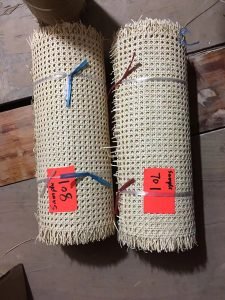
Weave patterns are where most miscommunications happen. "Hexagonal" can mean different things to different factories. Always send a reference photo. Better yet, send a physical sample via courier. When we work with buyers like Ranoo in Thailand, we share close-up photos over WhatsApp, then ship 3–4 sample swatches by DHL before locking the pattern.
Use these pattern names consistently:
- Radio weave (hexagonal): Six-sided open mesh, the most popular for chair caning.
- Square basketweave: Dense, tight grid pattern for cabinet doors.
- Octagonal with cane inserts: Eight-sided openings with 45-degree diagonal canes.
- Open star weave: Large openings with star-shaped nodes, decorative use.
- Diamond motif: Diagonal crosshatch creating diamond shapes.
If your pattern is custom or hybrid, provide a CAD drawing or hand-sketch with exact measurements for each opening. Mark the angles. Note the strand direction. These details save weeks of sampling.
Installation Margin Reminder
Always add 3–5 cm excess width and length beyond your frame dimension. This margin allows for stapling, tucking, or gluing during furniture assembly. Mention this in your spec sheet so the supplier cuts rolls with the right allowance.
How do I communicate my private-label packaging requirements to prevent shipping damage?
Packaging seems like an afterthought—until a container of 400 rattan rolls arrives with crushed edges and mold stains. In our warehouse in Foshan, we have seen buyers lose entire shipments because the packaging discussion happened too late, or not at all.
Communicate packaging requirements by specifying roll wrapping material, inner and outer box dimensions, moisture barriers, stacking limits, and any private-label branding elements such as logos, stickers, or printed boxes—all confirmed with a packaging sample before mass production begins.
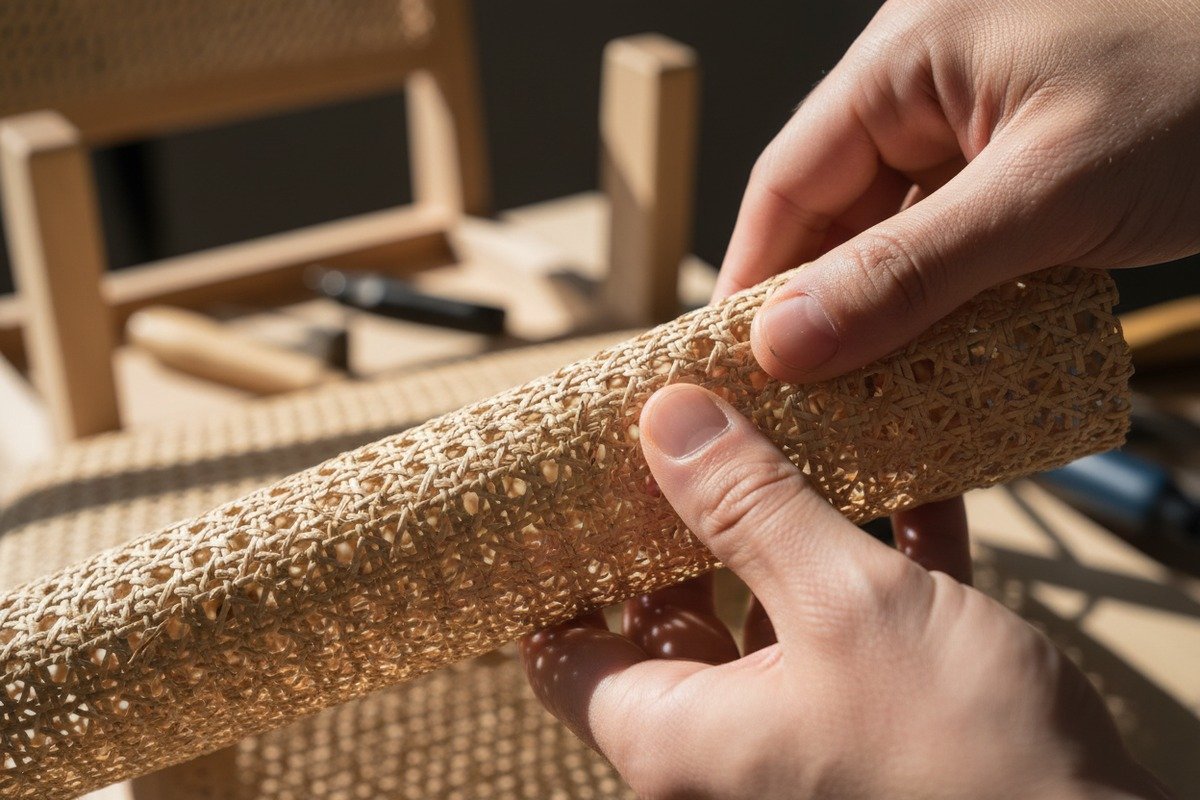
Why Rattan Webbing Packaging Matters More Than You Think
Natural rattan is hygroscopic. It absorbs moisture from the air. A 30-day sea freight journey from Foshan to Rotterdam means your webbing sits in a metal container that can reach 60°C during the day and drop to 15°C at night. That temperature swing creates condensation. Without proper moisture barriers, mold grows in as little as five days.
Synthetic rattan is more forgiving but still suffers from edge crushing and surface scratching if rolls are not properly secured.
The Packaging Spec Checklist
Here is what to include in your packaging instructions:
Inner wrapping: Each roll should be wrapped in plastic shrink film or PE bags. For natural rattan, include silica gel desiccant packets 9 (2–3 per roll) inside the wrap.
Outer protection: Rolls should be placed in corrugated cardboard boxes or kraft paper tubes. Specify wall thickness—single-wall cartons are fine for light rolls, but double-wall is necessary for rolls over 5 kg.
Stacking and palletizing: Tell the supplier the maximum stacking height per pallet. For natural webbing, we recommend no more than 4 layers high to prevent crushing the weave pattern.
Moisture barrier: For long sea freight, request a container desiccant strip or moisture-absorbing blanket placed inside the shipping container. This costs around $50–$80 per container but can save thousands in spoiled goods.
Private-label branding: If you resell under your own brand, provide print-ready artwork files (PDF or AI format, CMYK color mode) for box labels, stickers, or printed cartons. Include your logo, product name, barcode, and any regulatory markings. Specify sticker size, placement position on the box, and language.
Confirm with a Packaging Mock-Up
Before the first bulk shipment, ask for a photo of the actual packaged roll—not a 3D rendering, but the real thing sitting on the factory floor. Check that the label is centered, the shrink wrap is tight, and the box is sturdy. We routinely send packaging photos to our buyers via WeChat or WhatsApp for approval 48 hours before loading.
Shipping Term Alignment
Packaging cost depends on your Incoterm. Under FOB terms, the supplier bears packaging cost to the port. Under CIF or DDP, insurance covers some transit damage—but prevention is always cheaper than claims. State your preferred Incoterm early so the supplier factors proper packaging into the price.
One more detail: if your rolls are non-standard width (say, 45 cm instead of the usual 60 cm), the supplier may need to source custom box sizes. Flag this early. Custom boxes add 5–7 days to the lead time and a small cost increase.
What steps should I take to verify that my custom rattan samples meet my factory's standards?
We always tell first-time buyers the same thing: spend two weeks on samples now, or spend two months dealing with rejected goods later. Sample verification is your last line of defense before committing real money to a full production run.
Verify custom rattan samples by testing weave pattern accuracy against your spec sheet, measuring strip dimensions with calipers, checking moisture content with a pin meter, assessing flexibility through manual bending, and comparing color under daylight against your approved reference swatch.
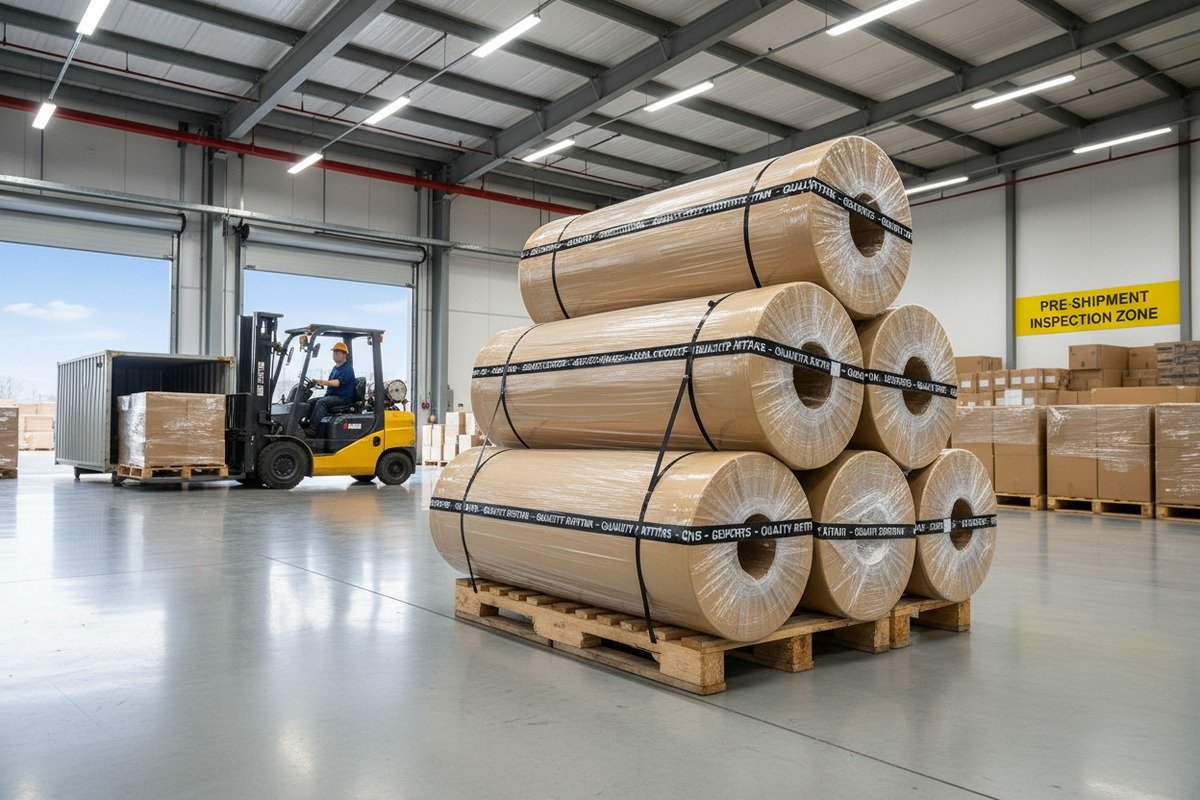
A Step-by-Step Verification Process
Follow these steps every time you receive a sample—whether it is your first order or your fiftieth.
Step 1: Visual Inspection
Lay the sample flat on a clean, well-lit table. Use natural daylight or a 5000K LED lamp. Check the weave pattern against your original drawing or reference photo. Count the mesh openings per 10 cm to confirm mesh size. Look for broken strands, loose nodes, or irregular spacing.
Step 2: Dimensional Measurement
Use a digital caliper 10 to measure strip width and thickness at five random points across the sample. All readings should fall within your stated tolerance—typically ±0.3 mm for Grade A natural cane. Measure the overall sample dimensions (width and length) to confirm they match the ordered roll size.
Step 3: Moisture Content Test
For natural rattan, use a pin-type moisture meter. Insert the pins into the cane strand and read the percentage. Your target range should be 8–12%. Readings above 14% signal inadequate drying and high mold risk. Synthetic webbing does not require this test.
Step 4: Flexibility and Strength Test
For natural cane, soak a small piece in warm water for 10 minutes. It should become pliable without breaking. Dry rattan should bend up to 30 degrees without cracking. For synthetic, bend it cold—it should flex and return to shape with no permanent crease.
Step 5: Color Comparison
Hold the sample next to your approved color swatch under the same lighting. Natural rattan will have slight organic variation—that is normal. But overall tone (bleached white, straw yellow, etc.) should match. Reject samples with dark stains or uneven bleaching.
Step 6: Finish and Treatment Check
If you specified anti-mildew treatment, rub a damp cloth over the surface. There should be no slippery residue or chemical smell beyond a mild treatment scent. If you requested UV-resistant coating on synthetic, check for uniform gloss—patchy coating indicates poor quality control.
What to Do If the Sample Fails
Do not panic. Send clear photos of the specific defects to your supplier with written notes. Circle the problem areas. State which parameter from your spec sheet was violated. Ask for a revised sample with a specific deadline. Most reputable suppliers—including our team at Seafan Rattan—will produce a corrected sample within 5–7 days at no extra charge.
Keep an Approved Sample Archive
Once you approve a sample, keep one piece in a sealed bag with a label showing the order number, date, and key specs. This becomes your "golden sample" for all future orders. When the next batch arrives, compare it directly. This simple habit prevents the slow drift in quality that happens when standards exist only on paper.
If you source from multiple suppliers, maintain a separate golden sample for each one. Store them in a cool, dry place away from direct sunlight—natural rattan samples will darken and dry out if left exposed.
Conclusion
Clear communication with your rattan webbing supplier starts with a detailed spec sheet, visual references, quality grading criteria, packaging instructions, and a disciplined sample verification process before any bulk commitment.
Footnotes
1. Provides general information about rattan, its uses, and processing. ↩︎
2. Replaced HTTP 404 with an authoritative Wikipedia page on rattan as a material and plant. ↩︎
3. Describes polyethylene, the base material for synthetic rattan, and its properties. ↩︎
4. Details the importance of moisture content in wood products and its impact on quality. ↩︎
5. Explains the fundamental principles and importance of quality control in manufacturing processes. ↩︎
6. Defines weaving and explains how different interlacing methods affect cloth characteristics. ↩︎
7. Defines third-party inspection and its role in ensuring product quality and compliance. ↩︎
8. Official source for Incoterms rules, defining responsibilities, costs, and risks in international trade. ↩︎
9. Explains the scientific principles and applications of desiccants, including silica gel, for moisture absorption. ↩︎
10. Provides guidance on the proper usage and precision of digital calipers for accurate measurements. ↩︎

 English
  Español de México
  العربية
  Deutsch
  Français
  Русский