
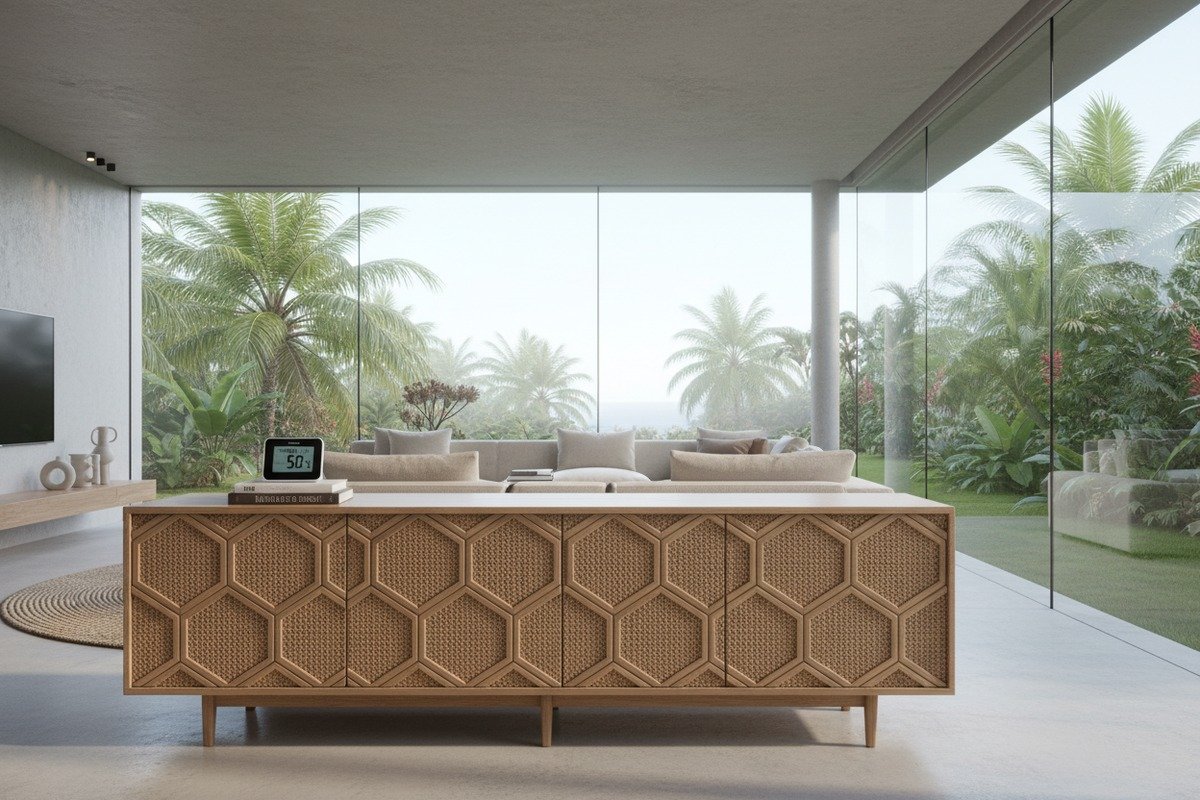
Every year, our production team in Indonesia fields the same worried question from buyers in tropical regions: will this rattan webbing survive their climate?
Natural rattan cane webbing offers moderate durability in humid environments when properly maintained. Without proactive care, excess moisture causes mold growth, fiber expansion, sagging, and structural weakening. Indoor use with humidity control between 40% and 60% significantly extends its lifespan, while synthetic alternatives perform better outdoors.
Below, we break down exactly how humidity affects rattan cane webbing, what you can do to protect it, and which material grades give you the best results. Let’s get into the details.
How long will my natural rattan cane webbing last if I use it in a high-humidity region?
When we ship our rattan webbing to buyers in Florida, the Netherlands, or Southeast Asia, we always include care guidance because climate makes a real difference.
In a high-humidity region, well-maintained natural rattan cane webbing can last 5 to 15 years indoors. Without proper care, its lifespan drops to 2 to 5 years. Archaeological evidence shows rattan pieces surviving centuries under controlled conditions, proving the material's baseline durability is strong.
Why Humidity Shortens Rattan's Life
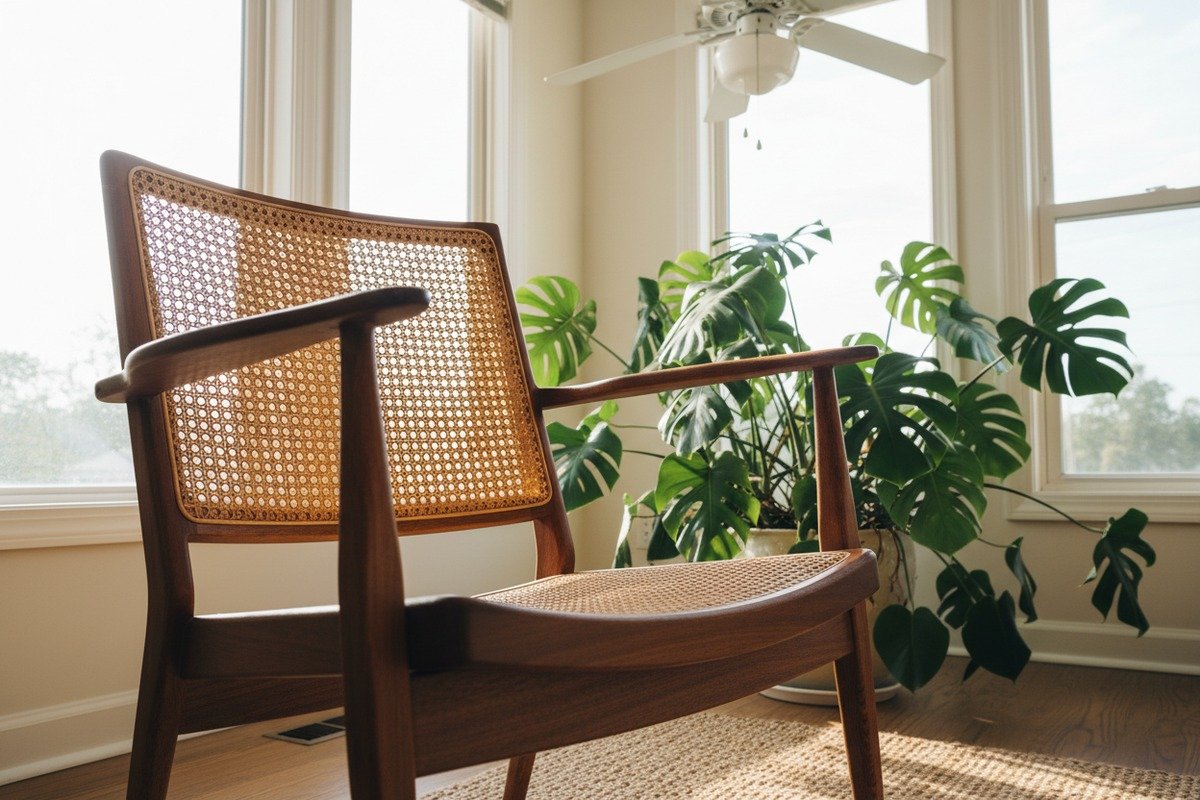
Rattan is a lignocellulosic material 1. That means its fibers are hygroscopic — they actively absorb and release moisture from the surrounding air. In a region with 70% to 90% relative humidity 2, the fibers swell. When the air dries, they shrink. This constant expansion and contraction cycle creates micro-cracks in the cane surface. Over months, those cracks grow. The weave loosens. The webbing sags.
We have seen this firsthand. One of our Australian buyers placed natural rattan webbing on a covered patio in Queensland. Within 18 months, the weave had stretched noticeably. The same product used indoors in Melbourne lasted over eight years without issues.
The Real Enemies: Mold and Mildew
High humidity does not just weaken fibers. It creates a breeding ground for mold and mildew 3. Mold spores land on the rattan surface and thrive when moisture content stays above 60% relative humidity. You will first see small gray or black spots. If left untreated, the mold penetrates the fiber, causing permanent discoloration and decay.
Lifespan Comparison by Environment
| Environment | Humidity Range | Expected Lifespan | Key Risk |
|---|---|---|---|
| Air-conditioned indoor | 40%–55% RH | 10–15+ years | Minimal |
| Indoor, no climate control (tropical) | 60%–80% RH | 5–8 years | Mold, sagging |
| Covered outdoor (tropical) | 70%–90% RH | 2–5 years | Mold, cracking, decay |
| Fully exposed outdoor | 80%–100% RH + rain | 6 months–2 years | Rapid degradation |
What Determines Longevity
Several factors affect how long your rattan webbing will last. The species of rattan palm 4 matters. The processing method matters. Our factory in Indonesia uses a boiling, drying, and fumigation process 5 that removes excess sap and kills fungal spores before weaving. This adds years to the product's useful life. Post-weaving heat curing further stabilizes the fibers.
But even the best processing cannot fully overcome a hostile environment. If you live in a high-humidity region, indoor use with some form of climate control is the safest bet. A simple ceiling fan improves air circulation enough to make a difference. Combine that with periodic maintenance, and your rattan webbing will serve you well for many years.
What are the best ways for me to protect my rattan materials from mold and moisture damage?
Our quality control team regularly advises buyers on aftercare — because even Grade A rattan needs a solid protection plan in damp climates.
The best ways to protect rattan from mold and moisture include regular cleaning with a lightly damp cloth, applying natural oil or sealant every 6 to 12 months, using dehumidifiers to maintain 40%–60% humidity, ensuring good air circulation, and storing rattan away from direct water contact.
Step-by-Step Protection Strategy
Protection starts the moment your rattan webbing arrives. Here is a practical routine that we recommend to all our wholesale clients.
Step 1: Inspect on arrival. Check for any moisture damage from shipping. If the rolls smell musty, air them out in a dry, shaded area for 24 to 48 hours before installation.
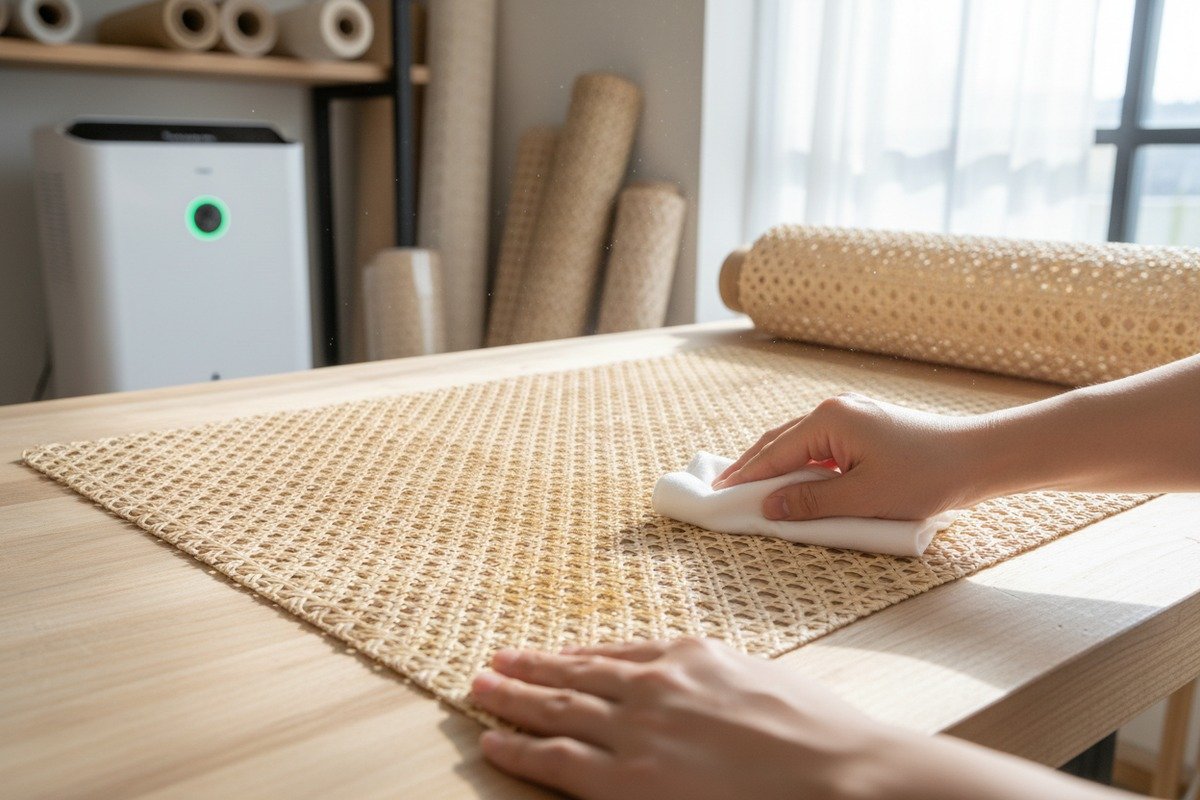
Step 2: Clean regularly. Dust the webbing weekly with a soft brush or vacuum on a low setting. Every two weeks, wipe the surface with a cloth that is barely damp — not wet. Dry it immediately with a clean towel.
Step 3: Apply a protective finish. This is the most important step many people skip. A thin coat of linseed oil, tung oil 6, or a furniture-grade sealant creates a moisture barrier on the cane surface. Reapply every 6 to 12 months depending on your climate.
Recommended Protective Products
| Product Type | Application Frequency | Best For | Notes |
|---|---|---|---|
| Linseed oil | Every 6–12 months | Indoor rattan furniture | Penetrates fibers, adds flexibility |
| Tung oil | Every 6–12 months | Indoor and semi-outdoor | Slightly more water-resistant than linseed |
| Polyurethane sealant | Every 12–18 months | High-humidity indoor areas | Creates a hard surface barrier |
| Murphy's Oil Soap | Monthly (cleaning) | Routine maintenance | Gentle, does not strip natural oils |
| Plant-based wax coating | Every 6 months | Eco-conscious buyers | Emerging option, good water repellency |
Humidity Control Is Non-Negotiable
In tropical climates, a dehumidifier 7 is not a luxury. It is a necessity. Set it to maintain indoor humidity between 40% and 60%. If a dehumidifier is not available, air conditioning achieves a similar effect. Even a well-placed fan helps by keeping air moving around the rattan surface, preventing moisture from settling into the weave.
What to Do If Mold Appears
Act fast. Mix one part white vinegar with one part water. Apply it to the affected area with a soft cloth. Let it sit for five minutes, then wipe clean and dry thoroughly. For stubborn mold, a mild solution of baking soda and water works. Avoid bleach — it damages rattan fibers and strips natural color.
After cleaning, apply a fresh coat of oil to the treated area. Then improve your ventilation setup so it does not happen again. We have seen buyers in Saudi Arabia and the Philippines successfully manage mold this way for years.
Storage Best Practices
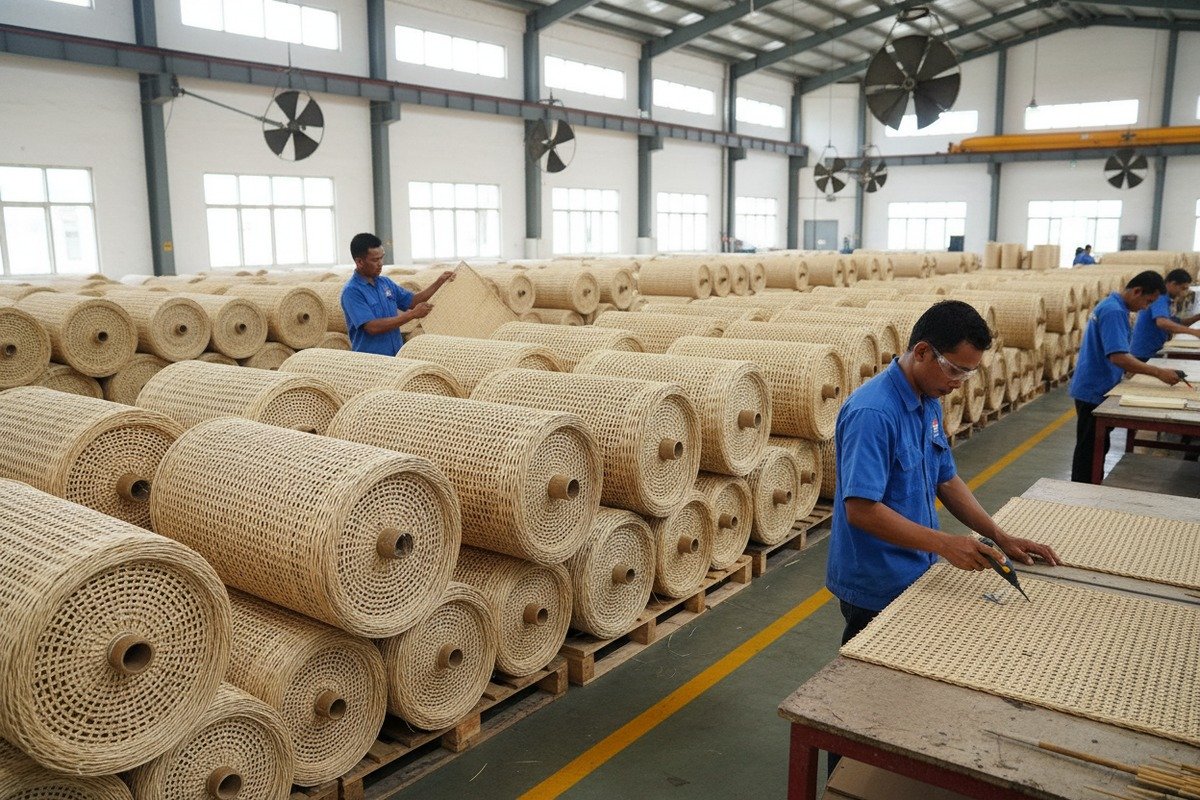
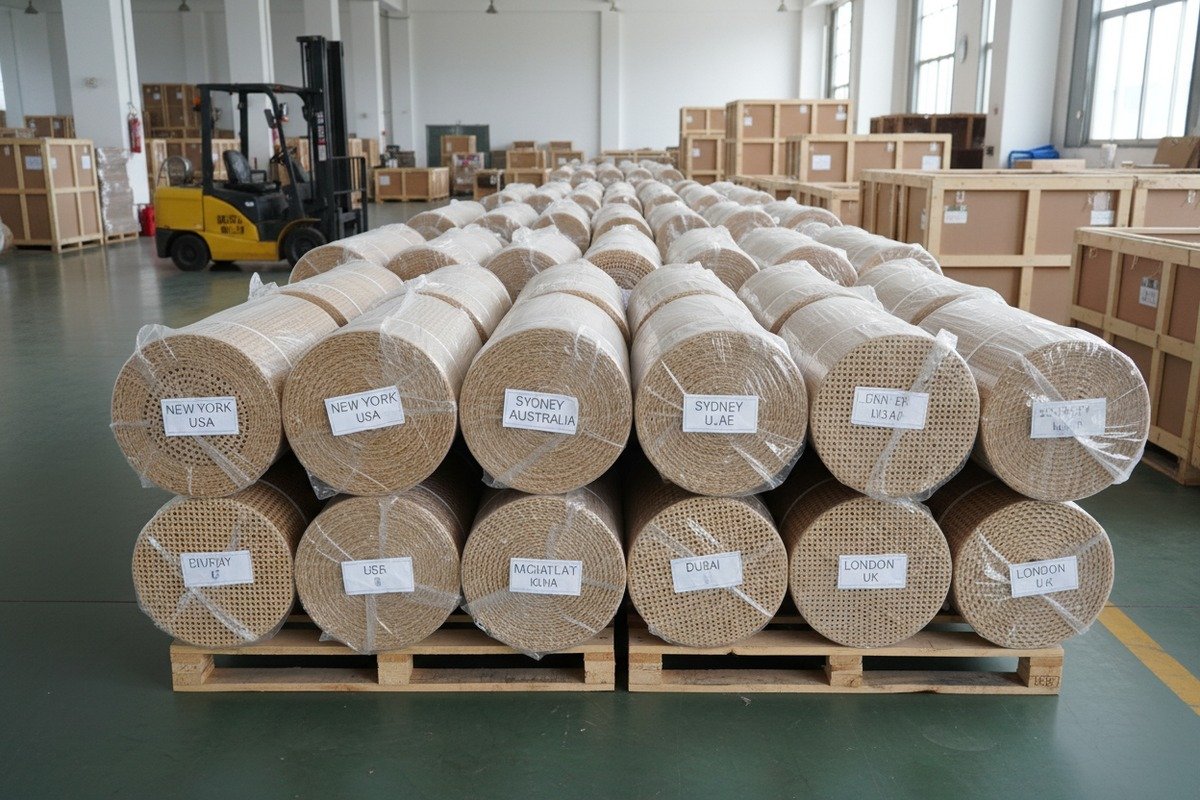
If you are storing rattan webbing rolls before use, keep them in a dry, ventilated space. Never stack rolls directly on a concrete floor — concrete wicks moisture upward. Use wooden pallets or shelving. Wrap rolls loosely in breathable fabric, not plastic. Plastic traps moisture inside and accelerates mold growth.
How can I ensure the rattan webbing I buy maintains its tension and strength in damp environments?
Tension loss is one of the most common complaints we hear from furniture factories working with natural cane webbing in humid production environments.
To maintain rattan webbing tension and strength in damp environments, buy pre-stretched and heat-cured webbing, install it slightly taut, keep indoor humidity below 60%, apply a sealant before installation, and avoid placing rattan furniture near water sources, windows, or exterior walls.
Why Rattan Loses Tension
When rattan fibers absorb moisture, they swell. The weave pattern expands. As it dries, it contracts — but not always back to its original position. Over repeated cycles, the webbing stretches permanently. You see this as a visible sag in chair seats or cabinet panels. The weave looks loose. It loses its crisp, taut appearance.
This is a physics problem, not a quality problem. Even the finest Grade A rattan will stretch if it sits in 80% humidity for months without protection.
Pre-Installation Tips
Before you install rattan webbing, soak it briefly in warm water for about 10 to 15 minutes. This makes it pliable for stretching into frames. Here is the key: install it while it is still slightly damp and stretch it tighter than you think it needs to be. As it dries, it contracts and pulls itself taut. If you install it dry and loose, humidity will only make it looser.
At our factory, we advise clients to cut webbing slightly larger than the frame opening. This gives you the extra material needed for a tight, stapled or splined fit.
Manufacturing Processes That Help
Not all rattan webbing is processed equally. The best products for humid environments 8 go through these steps:
- Boiling — removes sap and sugars that attract mold.
- Sulfur fumigation — kills existing fungal spores and insects.
- Controlled drying — reduces moisture content to 8%–12%.
- Heat curing — stabilizes the fibers and reduces future expansion.
Our Indonesian facility follows all four steps. Skipping any one of them results in a product that is more vulnerable to humidity.
Post-Installation Reinforcement
After installation, apply a thin coat of sealant or oil to the webbing surface. This is especially important for the edges where the webbing meets the frame, as moisture enters most easily at these contact points. For chair seats, consider adding a cushion. The cushion acts as a buffer, reducing direct humidity exposure and also protecting against mechanical wear.
Tension Recovery Methods
If your rattan webbing has already sagged, you can partially restore it. Mist the back side lightly with water using a spray bottle. Then use a hair dryer on medium heat to dry the fibers from the front. The rapid drying causes the fibers to shrink and tighten. This is not a permanent fix, but it buys you time. For severely sagged panels, replacement is the better option.
Frame Material Also Matters
The frame holding your rattan webbing affects tension retention too. Solid hardwood frames (oak, ash, teak) resist warping in humidity and hold staples or splines securely. Softwood or MDF frames can swell and shift, loosening the webbing attachment. If you are building furniture for a humid market, invest in good frame material.
Which grade of rattan should I choose to guarantee the best durability for my furniture projects?
Over the years, we have graded and shipped millions of meters of rattan webbing — and the grade you choose has a direct impact on how well it handles humidity and wear.
For maximum durability in furniture projects, choose Grade A or Grade AA natural rattan cane webbing. These top grades feature uniform fiber thickness, tight weave consistency, minimal surface defects, and come from mature rattan palms that have denser, more moisture-resistant cell structures.
Understanding Rattan Grading
Rattan grading 9 is not standardized globally. Different suppliers use different systems. At our facility, we use a three-tier system that our buyers find clear and reliable. Here is how it breaks down.
| Grade | Fiber Quality | Weave Consistency | Surface Defects | Best Use | Humidity Resistance |
|---|---|---|---|---|---|
| Grade AA (Premium) | Thick, uniform, mature palm | Very tight, even pattern | None to minimal | High-end furniture, visible panels | Highest |
| Grade A (Standard) | Consistent thickness, minor variation | Tight, minor irregularities | Few, cosmetic only | Mid-range furniture, cabinetry | High |
| Grade B (Economy) | Thinner, mixed maturity | Moderate variation | Visible knots, thin spots | Backing material, budget projects | Moderate |
Why Grade Matters for Humidity
Mature rattan palms produce thicker, denser outer bark. This bark — the part used for cane webbing — has a tighter cellular structure. Denser cells absorb less moisture per unit area. That means less swelling, less sagging, and better mold resistance.
Grade B rattan often comes from younger palms or less favorable sections of the stalk. The fibers are thinner and more porous. In a dry climate, Grade B performs adequately. In a humid climate, it degrades noticeably faster.
Species Selection
Not all rattan species are equal. There are over 600 species of rattan palm worldwide. For cane webbing, the most commonly used species include Calamus manan 10, Calamus caesius, and Calamus trachycoleus. Among these, Calamus manan produces the thickest, most durable bark and is our preferred species for Grade AA products.
We source our rattan primarily from Kalimantan and Sulawesi in Indonesia, where harvesting regulations ensure mature palms are selected. This matters because premature harvesting produces thinner, weaker cane — regardless of what grade label a supplier puts on it.
Natural vs. Synthetic: The Honest Comparison
For buyers who need webbing in consistently humid or outdoor environments, we also produce synthetic rattan webbing made from PE (polyethylene) plastic. Here is an honest side-by-side comparison.
| Feature | Natural Rattan (Grade AA) | Synthetic Rattan (PE) |
|---|---|---|
| Humidity resistance | Good with maintenance | Excellent, no maintenance needed |
| UV resistance | Low, fades without protection | High, UV-stabilized |
| Aesthetic | Warm, organic, unique texture | Mimics natural look, less depth |
| Eco-friendliness | Fully biodegradable, renewable | Plastic-based, recyclable but not biodegradable |
| Cost | Moderate | Slightly higher |
| Lifespan (outdoor, tropical) | 2–5 years | 10–20 years |
| Lifespan (indoor, controlled) | 10–15+ years | 15–25 years |
For indoor furniture projects in any climate, we strongly recommend natural Grade AA rattan. The warmth and character of real cane cannot be replicated by plastic. For outdoor patios, poolside furniture, or commercial applications in tropical regions, synthetic is the smarter investment.
Emerging Treatments for Natural Rattan
The industry is not standing still. We are currently testing plant-based wax coatings and nano-level surface treatments that enhance water repellency without sealing the pores completely. This keeps the rattan breathable while blocking liquid water and mold spores. Early results are promising. These treatments could eventually close the gap between natural and synthetic performance in humid climates, while keeping the product fully eco-friendly.
We also see growing demand for bleached rattan webbing. The bleaching process itself does not improve humidity resistance, but it opens the fiber surface for better sealant absorption. When paired with a quality oil treatment, bleached rattan can actually perform slightly better than untreated natural rattan in moderate humidity.
Conclusion
Natural rattan cane webbing can thrive in humid environments — but only with the right grade, proper processing, and consistent care. Choose Grade AA, maintain humidity below 60%, oil regularly, and your rattan will reward you with years of warm, natural beauty.
Footnotes
1. Defines lignocellulosic biomass as plant dry matter composed of cellulose, hemicellulose, and lignin. ↩︎
2. NOAA’s National Weather Service defines relative humidity as a dimensionless ratio of atmospheric moisture. ↩︎
3. The CDC provides comprehensive information on mold, including its growth conditions and prevention. ↩︎
4. Wikipedia article details rattan as climbing palms, including species diversity and distribution. ↩︎
5. Describes the modern processing methods for rattan, including boiling in diesel oil and fumigation. ↩︎
6. Compares tung oil and linseed oil for wood finishing, highlighting their properties and uses. ↩︎
7. The Department of Energy explains how dehumidifiers control moisture and improve home comfort. ↩︎
8. Explains how humidity impacts material properties, including cosmetic, mechanical, and chemical aspects. ↩︎
9. Replaced with an academic resource detailing rattan grading systems, criteria, and stages. ↩︎
10. Wikipedia details Calamus manan, also known as manau rattan, a species used for furniture. ↩︎
 English
  Español de México
  العربية
  Deutsch
  Français
  Русский