

Years on our production floor in Foshan have taught us one painful truth: even the finest natural rattan cane webbing 1 can fall apart in months if buyers don’t know how to care for it. We’ve seen entire shipments of Grade A webbing arrive at a client’s warehouse looking perfect, only to crack, mold, or fade within a single season gentle weekly cleaning 2. The problem is rarely the material itself. It’s what happens after the roll leaves the factory.
Natural rattan cane webbing can last 20 to 30 years when you follow a consistent care routine that includes gentle weekly cleaning, periodic oil conditioning every few months, protection from direct sunlight and excess humidity, and proper breathable storage for unused rolls.
This guide breaks down the exact steps you need porous fibers 3. Whether you run a furniture factory, manage a materials warehouse, or supply building products to retailers, the advice below comes straight from what we’ve learned processing raw rattan in Indonesia and shipping finished webbing to over a dozen countries. Let’s get into it.
How should I clean and maintain my natural rattan cane webbing to prevent cracking?
When we first started exporting rattan webbing to European furniture makers, cracking was the number one complaint we heard back indoor levels between 40% and 60% 4. It took us time to realize that the issue wasn't quality — it was cleaning habits destroying the fibers from the inside out.
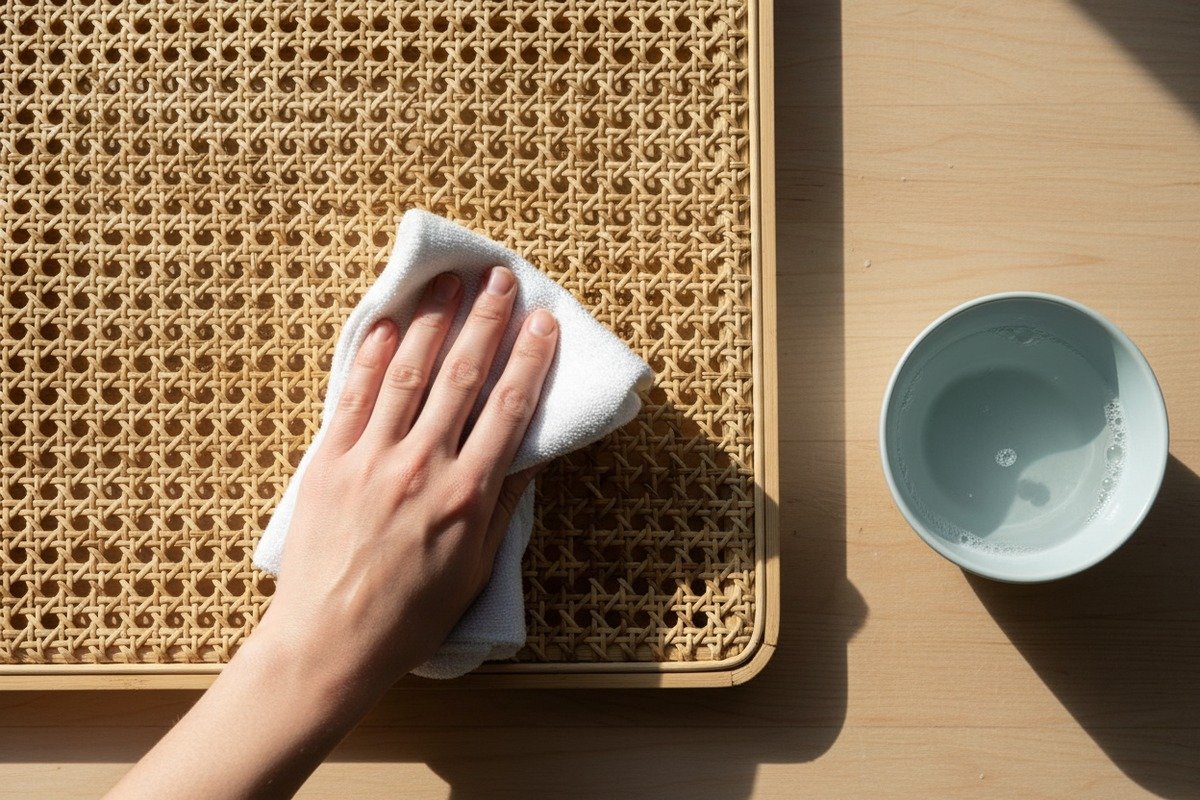
Clean natural rattan cane webbing weekly using a soft brush or vacuum on low suction, and deep-clean monthly with a damp cloth dipped in mild soap and water. Avoid harsh chemicals entirely. Follow each cleaning with thorough air-drying to prevent moisture from settling into the porous fibers.
Why Rattan Cracks in the First Place
Natural rattan is a palm-based vine. Its internal structure is porous. Think of it like a bundle of tiny straws. Those channels absorb and release moisture constantly Linseed oil 5. When cleaning strips away too much natural oil or traps water inside, the fibers dry out unevenly. That's when cracking starts.
Harsh chemicals 6 like bleach, ammonia, or paint thinner dissolve the organic binding agents inside the cane. Even "gentle" all-purpose sprays can leave residues that attract dust and accelerate brittleness Relative humidity 40% – 55% 7. We've tested this in our own facility. A panel cleaned with a commercial spray twice a month showed visible micro-cracks within 90 days. A panel cleaned with plain damp cloth and mild castile soap bend test 8? Still flexible after a year.
A Simple Weekly and Monthly Routine
Here is a practical schedule you can follow or share with your customers:
| Task | Frequency | Tools Needed | Time Required |
|---|---|---|---|
| Dry dusting | Weekly | Soft-bristle brush or microfiber cloth | 2–3 minutes |
| Vacuum crevices | Weekly | Vacuum with brush attachment on low | 3–5 minutes |
| Damp wipe-down | Monthly | Damp cloth + mild soap (1 tsp per liter) | 10–15 minutes |
| Spot treatment for stains | As needed | Soft toothbrush + baking soda paste | 5 minutes per spot |
| Full air-dry after cleaning | After every wet clean | Open window or fan (no direct heat) | 30–60 minutes |
What About Salt Water Cleaning?
Some guides recommend wiping rattan with a light saltwater solution. There is some truth here. A mild salt rinse can help restore flexibility and even repel certain insects. However, we advise caution. If your webbing is mounted on metal frames or stapled to wood with metal fasteners, salt residue will corrode those parts over time. Use salt water sparingly, no more than once every two to three months, and only on fully natural assemblies.
Avoid These Common Mistakes
- Never soak rattan webbing in water. It swells and warps.
- Never use a steam cleaner. The heat weakens the fibers.
- Never scrub with abrasive pads. They tear the outer skin of the cane.
- Never leave rattan wet overnight. Mold begins forming within 24 to 48 hours in warm environments.
The goal is simple. Remove surface dirt. Keep fibers slightly moist, not wet. Let the material breathe. That's it.
How can I protect my rattan furniture materials from humidity and sun damage?
Through years of shipping webbing to climates as different as dry Saudi Arabia and tropical Thailand, our team has learned that environment is the single biggest factor in rattan longevity. The same Grade A webbing can thrive for decades in one location and fail in two years in another.
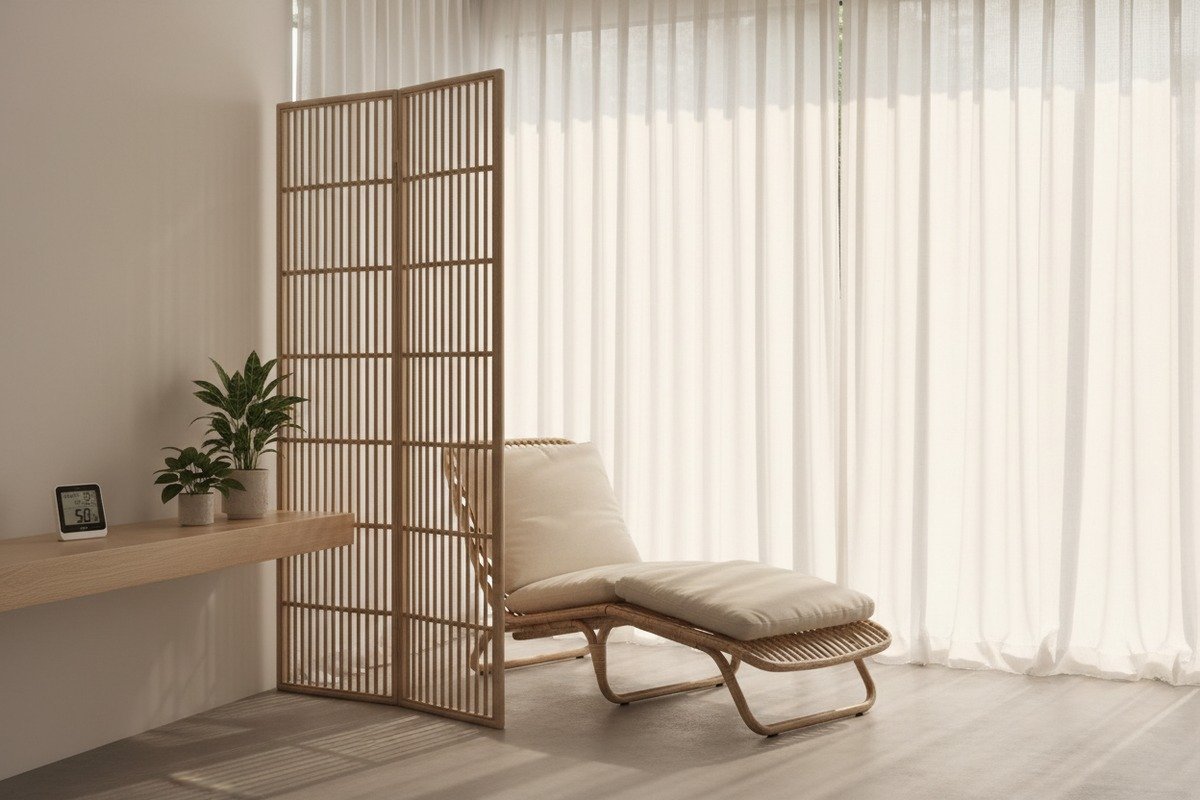
Protect natural rattan from humidity damage by keeping indoor levels between 40% and 60%, and guard against sun damage by avoiding direct UV exposure entirely. Use curtains, UV-protective coatings, or rotate furniture positions seasonally. Condition the fibers with natural oils every two to three months to maintain elasticity.
Understanding the Two Enemies
Rattan has two main environmental enemies. They work in opposite ways but cause similar damage.
Sun and heat pull moisture out of rattan fibers. The cane dries, becomes rigid, and eventually splits. You'll notice the color shifting from warm tan to a pale, washed-out yellow before cracks appear. In desert and Mediterranean climates, this can happen in a single summer if the furniture sits near a south-facing window.
Excess humidity pushes moisture into the fibers. The cane swells, softens, and becomes a breeding ground for mold and mildew. In tropical climates like those in Southeast Asia, the Philippines, or coastal Florida, this is the dominant threat.
Climate-Specific Protection Strategies
| Climate Type | Primary Risk | Key Protection Steps |
|---|---|---|
| Hot and dry (e.g., Saudi Arabia, inland Australia) | Cracking and brittleness | Oil every 6–8 weeks; use a humidifier nearby; keep away from AC vents |
| Tropical and humid (e.g., Thailand, Philippines, Florida) | Mold, swelling, warping | Use dehumidifiers; ensure airflow around furniture; dry immediately after any moisture exposure |
| Temperate with seasons (e.g., Netherlands, Spain) | Both cracking in winter and mold in summer | Adjust care seasonally — oil more in winter, ventilate more in summer |
| Coastal (e.g., Greece, Dubai waterfront) | Salt corrosion + humidity | Wipe down with fresh damp cloth regularly; avoid salt buildup; store unused rolls inland |
Oil Conditioning: Your Best Defense
Periodic oiling is the most effective way to fight both dryness and brittleness. It replaces the natural oils that rattan loses over time. But not all oils are equal.
Linseed oil penetrates deeply and provides long-lasting protection. It darkens the webbing slightly, which many designers actually prefer for a vintage aesthetic. Apply a thin coat every two to three months.
Mineral oil is lighter and less likely to go sticky. It's a good choice if you want to preserve the original pale color. Apply monthly in dry climates.
Tung oil offers the strongest water resistance. It creates a slight surface barrier. We recommend it for webbing installed in kitchens or bathrooms.
One important rule: apply oil lightly. Use a soft cloth and work in thin layers. Over-application traps moisture and can actually promote mold. We usually advise our clients to apply oil on the underside first and check the result before treating the visible face.
A Note on Natural Darkening
Fresh rattan starts as a pale straw color. Over years, it naturally darkens to a richer honey or amber tone. This is normal. Some designers and homeowners value this patina. Direct sunlight, however, causes uneven and rapid fading rather than the gradual, attractive darkening that occurs naturally. The difference is clear: sun-damaged rattan looks bleached and dry, while naturally aged rattan looks warm and rich.
What are the best ways to store my bulk rattan webbing rolls to avoid mold?
One of the most common questions we get from our wholesale buyers — especially from humid regions like Thailand and the Philippines — is about storage. We've had clients lose entire pallets of webbing to mold because of one simple storage mistake. It's a costly lesson we want to help you avoid.
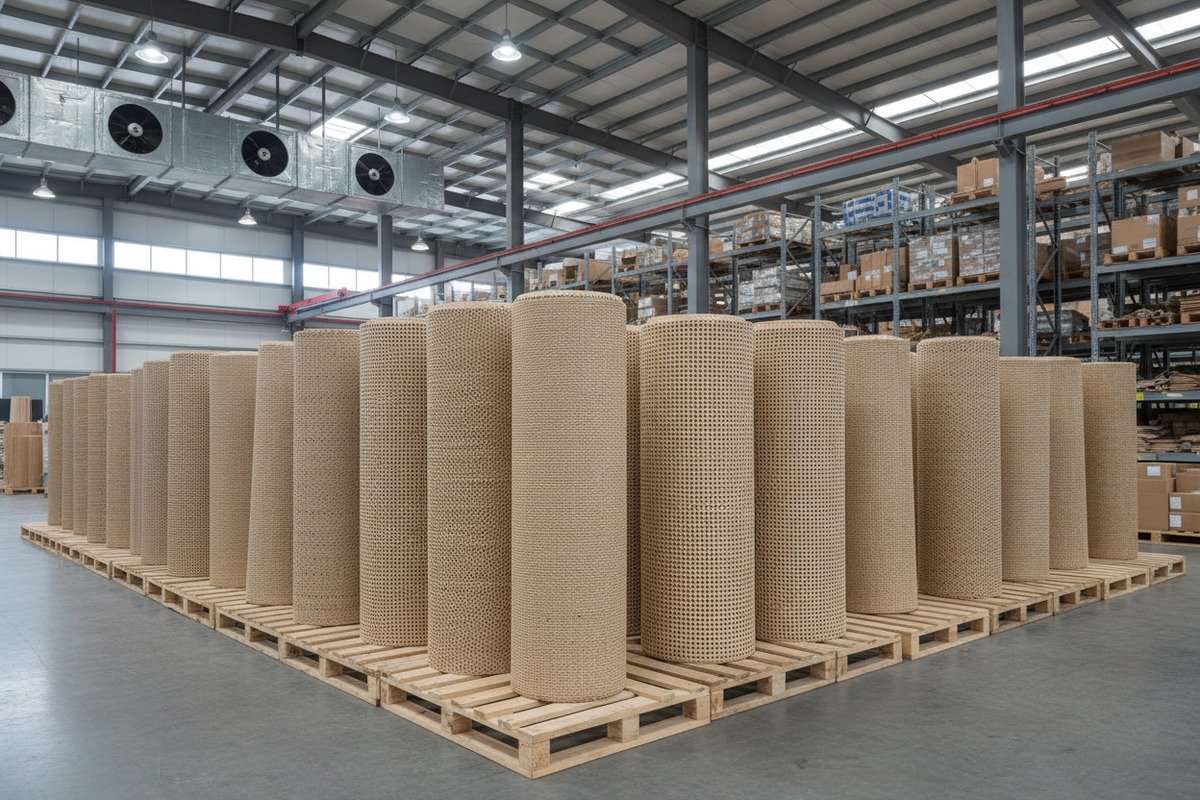
Store bulk rattan webbing rolls in a cool, dry, well-ventilated indoor space with humidity below 60%. Keep rolls off the floor on wooden pallets or shelving. Wrap loosely in breathable cotton or kraft paper — never in sealed plastic. Rotate stock regularly and inspect monthly for early signs of mold or insect activity.
The Plastic Wrap Trap
This is the single biggest mistake we see. Buyers receive their rolls in protective plastic shipping wrap and leave them sealed. Plastic traps residual moisture inside. Within weeks in a warm warehouse, condensation forms. Mold spores that are already present on any natural material find perfect conditions to grow. By the time someone opens the roll, the damage is done.
Our recommendation from day one with every new client: remove all plastic packaging within 48 hours of delivery. Rewrap in breathable material if needed. In our own warehouses in Foshan, we use unbleached kraft paper with perforated sides.
Ideal Storage Conditions
Here are the conditions we maintain in our own storage facility and recommend to all our partners:
| Factor | Ideal Range | Why It Matters |
|---|---|---|
| Temperature | 15°C – 25°C (59°F – 77°F) | Extreme heat accelerates drying; extreme cold can make fibers rigid |
| Relative humidity | 40% – 55% | Below 40% causes cracking; above 60% invites mold |
| Air circulation | Constant gentle airflow | Prevents moisture pockets from forming around rolls |
| Floor contact | None — use pallets or racks | Concrete floors release moisture; direct contact causes bottom-layer damage |
| Light exposure | Minimal | Even warehouse lighting over months can cause slight fading on exposed ends |
Rotation and Inspection Schedule
If you're holding inventory for weeks or months, set up a rotation system. Use older stock first. Every 30 days, do a physical inspection. Pull a few rolls at random. Unroll the first meter and check for:
- White or gray fuzzy patches (early mold)
- Musty smell (mold behind visible surfaces)
- Dark spots or discoloration (moisture damage)
- Brittle or crumbly edges (insect activity or excessive dryness)
If you catch mold early, it's usually treatable. Wipe the affected area with a solution of one part white vinegar to four parts water. Let it air-dry completely in a well-ventilated area. If the mold has penetrated more than the surface layer, the roll is compromised and should not be sold as Grade A.
Insect Prevention
Rattan's natural sugars can attract wood-boring insects 9, especially in tropical warehouses. A few precautions help:
- Keep the storage area clean and free of organic debris.
- Use cedar blocks or natural insect-repellent sachets near your stock.
- Avoid chemical insecticides directly on the webbing. They can stain and leave harmful residues.
- If you process rattan in a facility like ours in Indonesia, kiln-drying before shipment significantly reduces insect risk.
Long-Term Storage Beyond Six Months
For rolls stored longer than six months, apply a very light mist of mineral oil on the outer layer before wrapping. This prevents surface drying. Mark the storage date on each roll. Rattan that has been properly stored can remain in excellent condition for over a year, but regular checks remain essential.
How do I identify high-grade rattan webbing that will stand the test of time?
Running three factories and working with partner facilities across Foshan, we grade thousands of rattan webbing sheets every month. The difference between a 5-year product and a 25-year product often comes down to details that most buyers never learn to spot. We want to change that.
High-grade natural rattan cane webbing features uniform color without dark spots, consistent strand thickness, tight and even weave patterns, smooth surfaces free of splinters, and strong flexibility that allows bending without cracking. Grade A webbing uses mature rattan harvested at optimal growth stages and processed with careful drying and finishing.

The Grading System Explained
Not all rattan webbing is created equal. Most suppliers use a three-tier grading system 10, though the exact criteria can vary. Here's how we define grades at our facilities:
Grade A (Premium): Strands come from the middle section of mature rattan palms. Color is even and warm. No visible knots, dark spots, or thin patches. The weave is tight with no gaps. When you bend a strand, it flexes smoothly without snapping. This grade is for high-end furniture, designer headboards, and architectural applications.
Grade B (Standard): Some color variation is acceptable. Minor knots may be present. Strand thickness is mostly consistent but not perfect. Suitable for mid-range furniture, cabinet inserts, and DIY projects where slight imperfections add character.
Grade C (Economy): Visible color inconsistencies. Thinner strands in places. Occasional loose weave points. Best for budget projects, practice pieces, or applications where the webbing will be painted or stained.
What to Look For When Buying
Here are specific checks you can perform before purchasing or when inspecting incoming inventory:
The bend test. Take a single strand from the edge and bend it gently between your fingers. Grade A rattan bends in a smooth curve. Lower grades snap or show white stress lines at the bend point.
The color test. Unroll at least one meter and look at the overall color. Grade A has a consistent warm beige or pale honey tone. Watch for dark patches (potential moisture damage during processing), gray streaks (mold history), or overly bleached white areas (chemical over-processing).
The weave density test. Hold the webbing up to light. In Grade A, the pattern is uniform with consistent openings. Gaps, loose strands, or uneven spacing indicate lower grades or poor craftsmanship.
The smell test. Fresh, properly dried rattan has a mild, clean, slightly woody scent. A musty or sour smell suggests inadequate drying or early mold. A strong chemical smell indicates over-processing with bleaching agents, which weakens fibers long-term.
Natural vs. Synthetic: Know What You're Buying
With the boho and tropical design trend booming in 2025, the market has been flooded with synthetic alternatives. Some look convincing. Here's a quick comparison:
| Feature | Natural Rattan Cane Webbing | Synthetic (PE/PVC) Rattan |
|---|---|---|
| Lifespan with care | 20–30 years | PE: 5–7 years; PVC: 1–3 years |
| Flexibility | High — bends without breaking | Moderate — can become rigid |
| Breathability | Excellent — natural porous structure | Poor — solid plastic |
| Aging appearance | Develops warm patina over time | Fades and becomes chalky |
| Environmental impact | Biodegradable, renewable | Petroleum-based, not biodegradable |
| Indoor/outdoor suitability | Best indoors; outdoor with precautions | Designed for outdoor use |
| Price range | Mid to high | Low to mid |
For buyers who need outdoor durability, synthetic may have its place. But for longevity, beauty, and sustainability indoors, natural rattan remains unmatched.
Why Source Matters
Where the rattan is grown and how it's processed matters enormously. Rattan harvested from well-managed plantations in Indonesia — where our own processing facility operates — tends to be denser and more flexible than wild-harvested material. Proper kiln-drying eliminates excess moisture without over-drying. Controlled bleaching (when used) is done with food-grade hydrogen peroxide rather than industrial chlorine.
When you're evaluating a supplier, ask about their processing chain. A supplier who can explain their drying times, bleaching methods, and grading criteria is far more likely to deliver consistent quality. This is something we walk every new client through because we know the end result depends on every step from harvest to shipping.
Conclusion
Extending the lifespan of natural rattan cane webbing comes down to consistent care, smart storage, environmental protection, and choosing the right grade from the start. Follow these steps, and your rattan will reward you with decades of beauty.
Footnotes
1. Defines what natural rattan cane webbing is. ↩︎
2. Found a comprehensive guide on cleaning rattan furniture, including weekly dusting and gentle cleaning practices. ↩︎
3. The replacement URL from Loft Home explicitly describes rattan as a ‘naturally porous material’ and discusses its vulnerability to humidity. ↩︎
4. Specifies the ideal indoor humidity range for rattan. ↩︎
5. The replacement URL from Thanhcongcraft, the original domain, is titled ‘The Best Oil for Rattan Furniture’ and extensively discusses boiled linseed oil. ↩︎
6. The replacement URL provides clear guidance on avoiding harsh chemicals and solvents when cleaning rattan furniture. ↩︎
7. Provides an ideal humidity range for rattan preservation. ↩︎
8. Describes flexibility as a key factor in rattan quality grading. ↩︎
9. Discusses how rattan attracts various insects, including wood borers. ↩︎
10. Explains the common three-tier grading system for rattan. ↩︎

 English
  Español de México
  العربية
  Deutsch
  Français
  Русский