
Every rainy season, our production floor sees a spike in calls from buyers dealing with the same frustrating problem — rattan cane webbing 1 that has buckled, sagged, or curled after exposure to humidity.
To fix warped rattan cane webbing caused by moisture, lightly mist the underside with warm water, reshape the material by applying even pressure or weight, and allow it to dry slowly for 24 to 48 hours. For prevention, maintain consistent indoor humidity and apply oil-based conditioning treatments monthly.
Warping is one of the most common issues we hear about from furniture factories and wholesalers across Southeast Asia, Europe, and the Middle East hygroscopic 2. The good news is that most cases are fixable at home or on the shop floor. Below, we break down exact methods for flattening warped webbing, restoring moisture-damaged rattan, preventing warehouse damage, and sourcing warp-resistant materials.
How can I flatten my rattan cane webbing if it has warped from high humidity?
When we ship rattan webbing rolls to tropical markets like Thailand or the Philippines, we always include care instructions because high humidity is the number one cause of warped cane.
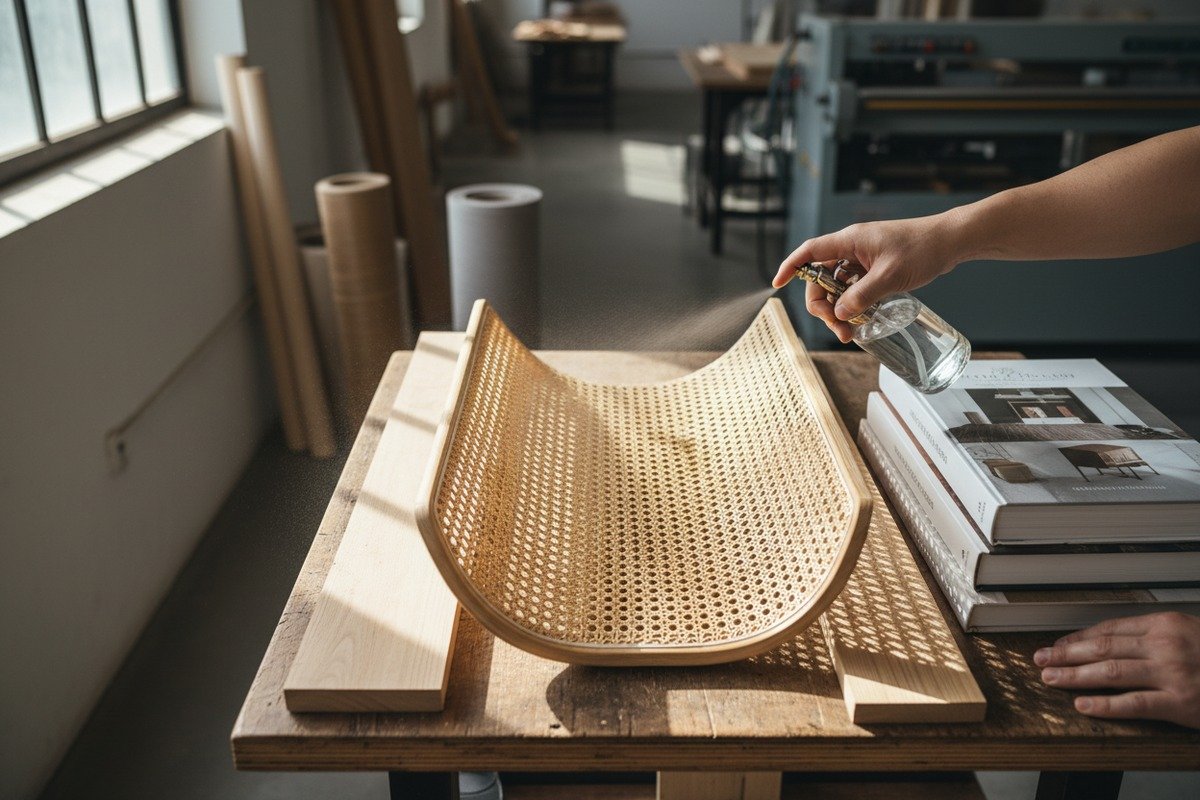
To flatten warped rattan cane webbing, dampen the underside with warm water using a spray bottle, then lay the piece flat and place evenly distributed weight on top. Let it dry completely for 24 to 48 hours in a well-ventilated area away from direct sunlight or heat sources.
Why Does Rattan Warp in High Humidity?
Rattan is a natural plant fiber 3. Like wood, it is hygroscopic. This means it absorbs and releases moisture from the surrounding air. When humidity rises, rattan fibers swell unevenly. Some strands absorb more water than others. This uneven expansion causes the webbing to buckle, cup, or sag.
Pressed cane webbing — the flat sheets you see in chair seats and backrests — is especially vulnerable. It sits in a frame under tension. When moisture enters, the tension loosens. The sheet droops. When dry air returns, the fibers contract and may crack.
Woven rattan used in furniture frames is thicker. It warps less but can still twist over time.
Step-by-Step Flattening Method
Here is a simple process that works for most minor to moderate warps.
- Clean the surface. Wipe the webbing with a dry cloth to remove dust and debris.
- Mist the underside. Use a spray bottle filled with warm water. Mist evenly across the underside of the webbing. Do not soak it.
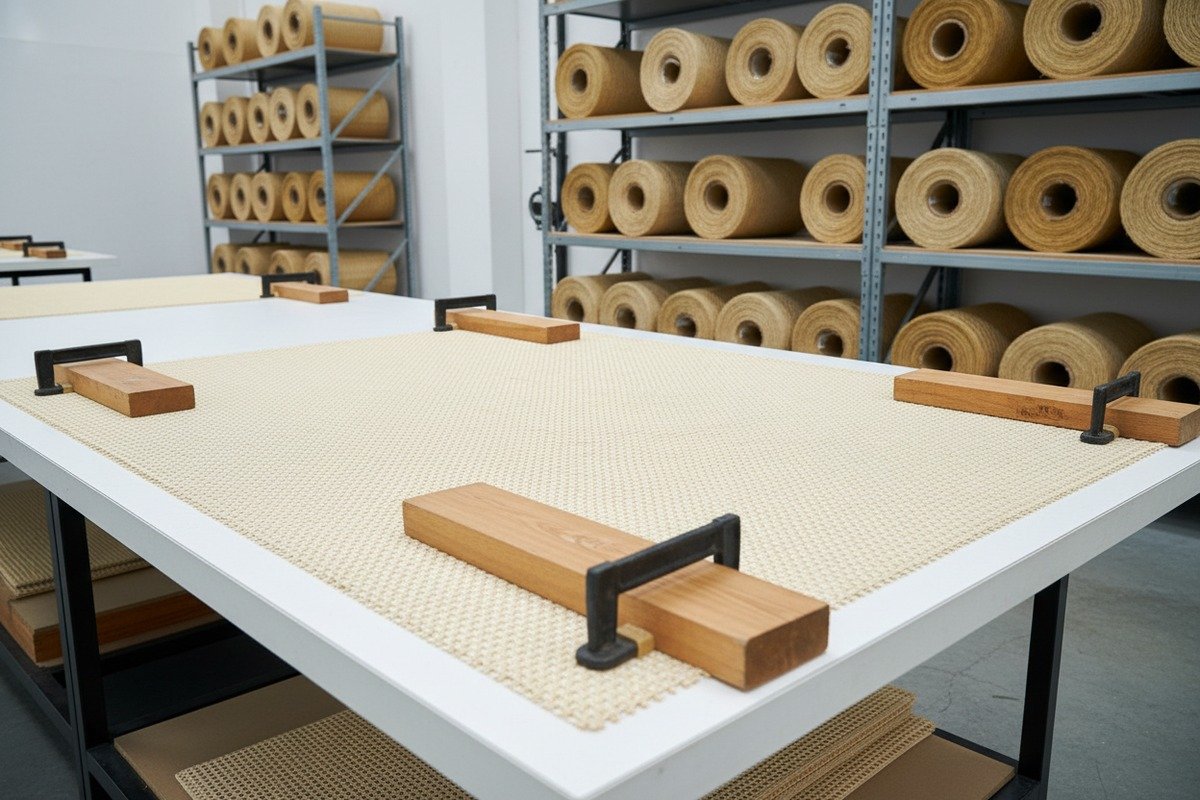
- Lay it flat. Place the webbing on a clean, flat surface. A large table or clean floor works well.
- Apply weight. Set heavy books, boards, or clamps across the surface. Distribute weight evenly.
- Wait 24 to 48 hours. Let it dry completely. Do not sit on it or use it during this time.
- Check the result. If the warp is still visible, repeat the process once more.
When to Use Heat
For small, localized warps, a hairdryer on a low setting can help. Dampen the warped spot first. Then gently warm it while pressing it flat with your hand or a cloth. Be careful. Too much heat will dry out the fibers and make them brittle.
| Warp Severity | Recommended Fix | Drying Time | Notes |
|---|---|---|---|
| Minor sag or ripple | Mist + weight | 24 hours | Safe for DIY |
| Moderate buckling | Warm water mist + clamps | 24–48 hours | May need two rounds |
| Severe cupping or splitting | Professional recaning or full replacement | N/A | DIY risks further damage |
A Common Mistake to Avoid
Many people think soaking the entire webbing will fix a warp faster. It does not. Over-wetting rattan can cause mildew growth 4, especially on indoor furniture. It can also weaken the fibers. Always use a light mist, never a full soak, unless you are installing brand-new webbing into a frame.
What are the best methods I can use to restore the shape of my moisture-damaged rattan?
Over the years, our team has helped dozens of furniture workshop owners across Europe and the Middle East troubleshoot moisture damage that goes beyond simple warping — cracking, splitting, loose joints, and mildew.
The best methods to restore moisture-damaged rattan include cleaning the surface, sanding rough spots, applying oil treatments like boiled linseed or tung oil to rehydrate dried fibers, regluing loose joints with wood or epoxy adhesive, and applying a protective sealant to prevent future moisture damage.
Assess the Damage First
Before you start any repair, you need to know what you are dealing with. Not all moisture damage looks the same. Here is a quick diagnosis guide.
- Sagging webbing: The cane sheet hangs loose in the frame. Usually fixable with moisture and weight.
- Surface mildew: White or gray spots on the fibers. Treatable with a diluted bleach solution.
- Cracking or splitting: Fibers have dried out after being wet. Needs oil treatment.
- Loose weave or joints: Glue has failed. Needs regluing.
- Darkened or stained areas: Could be water stains or mold penetration. May need sanding.
Oil Treatments for Dried-Out Rattan
After rattan absorbs too much moisture and then dries out, the fibers become brittle. Oil restores flexibility. Here are the most common options.
| Oil Type | Best For | Pros | Cons |
|---|---|---|---|
| Boiled linseed 5 oil | Deep cracks, severe dryness | Penetrates deep, long-lasting | Darkens the rattan slightly |
| Tung oil | Splits and structural pieces | Water-resistant finish, natural | Longer drying time |
| Mineral oil | Light conditioning | Easy to apply, does not darken | Less durable, needs reapplication |
| Murphy's Oil Soap (diluted) | Routine maintenance | Cleans and conditions simultaneously | Not a deep repair solution |
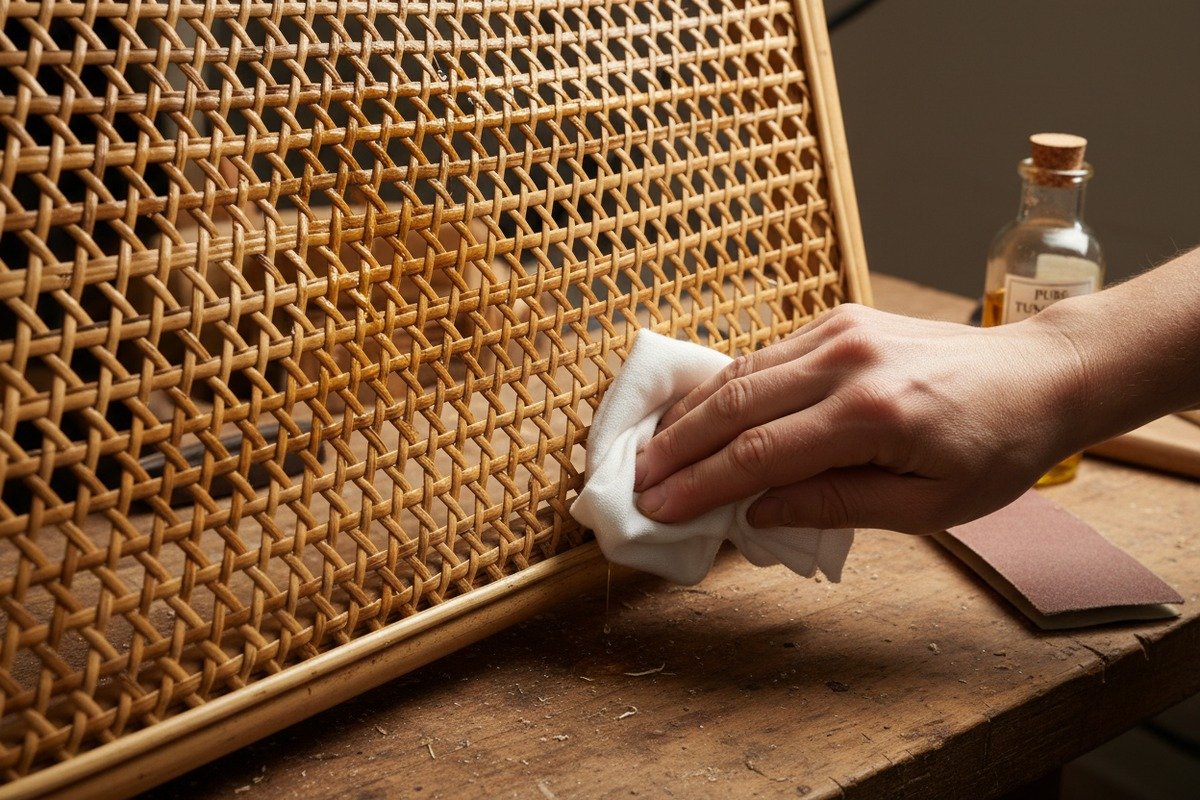
Apply oil with a soft cloth. Work it into the grain of the fibers. Let it absorb for 15 to 20 minutes. Wipe off the excess. Allow the piece to dry for at least 24 hours before use.
Regluing Loose Joints and Weave Ends
Moisture weakens adhesive bonds. If joints are loose or weave ends are poking out, reglue them. For structural joints, use wood glue or two-part epoxy. For cosmetic fixes on loose weave ends, a small dab of clear-drying wood glue works well.
Hot glue is fast but not durable. We do not recommend it for any piece that will bear weight.
Sanding and Finishing
If the surface feels rough or has raised fibers after moisture exposure, lightly sand it with 220-grit sandpaper. Always sand in the direction of the weave. After sanding, wipe away dust with a tack cloth. Then apply your chosen oil or a clear polyurethane sealant.
For rattan that will be used outdoors or in humid climates, a UV-resistant clear sealant adds a valuable layer of protection against both moisture and sunlight degradation 6.
When to Replace Instead of Repair
Honestly, some damage is too severe for DIY fixes. If more than 30% of the webbing is cracked, or if the frame itself has warped, replacement is more cost-effective. In our experience supplying furniture factories, we find that buyers who try to stretch a badly damaged piece often spend more time and money than if they had simply ordered fresh webbing.
How do I store my bulk rattan rolls to prevent warping in my warehouse?
Running three factories and managing shipments to over a dozen countries has taught us that how you store rattan matters just as much as how you source it. We have seen entire container loads ruined by poor warehouse practices.
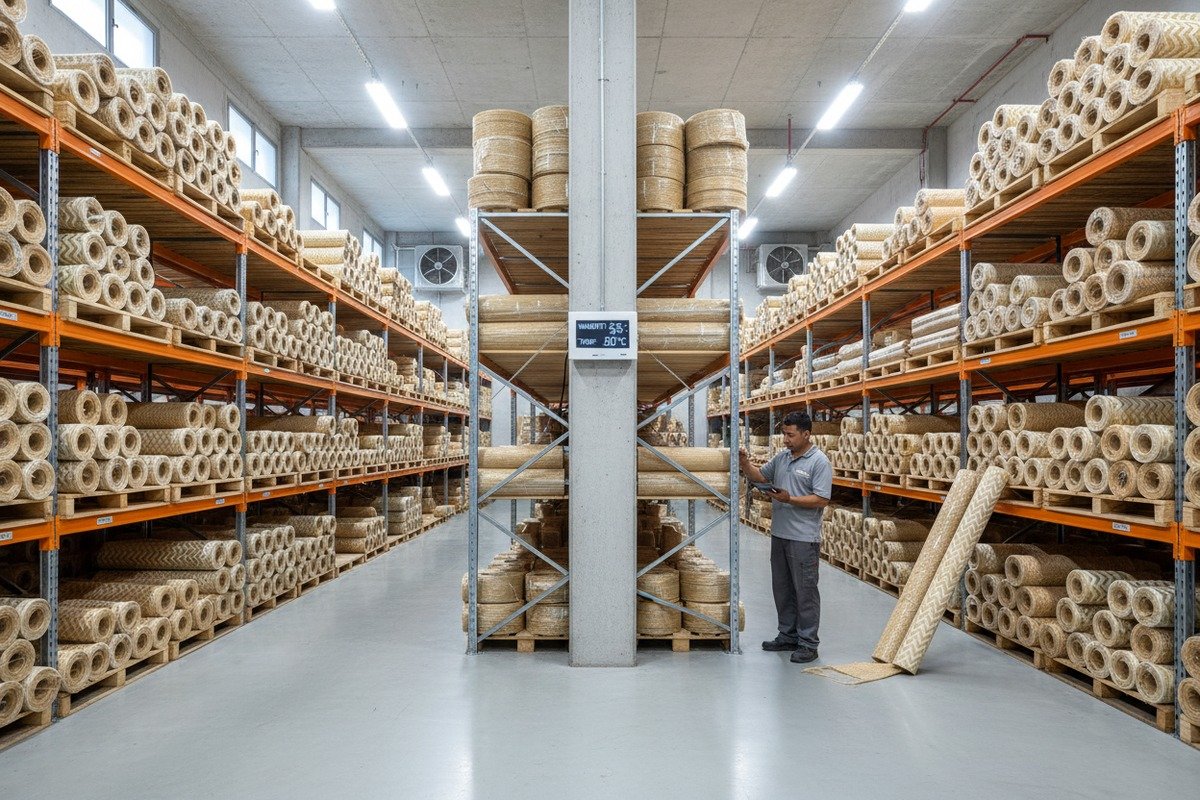
To prevent warping in bulk rattan rolls, store them horizontally on flat racks in a climate-controlled warehouse with 40–60% relative humidity. Keep rolls away from direct sunlight, heating vents, and concrete floors. Use breathable wrapping materials and rotate stock regularly to avoid prolonged compression.
The Science Behind Storage Warping
Rattan fibers reach equilibrium with their surrounding air. If your warehouse is hot and humid in summer but cold and dry in winter, the rattan will swell and shrink with each cycle. Over weeks, this causes permanent deformation.
Concrete floors are another hidden enemy. They wick moisture upward. Rolls stored directly on concrete absorb that moisture from below, causing the bottom layers to warp while the top stays dry.
Ideal Warehouse Conditions
Here are the conditions we maintain in our own storage facilities and recommend to our wholesale partners.
| Factor | Recommended Range | Why It Matters |
|---|---|---|
| Relative humidity 7 | 40–60% | Prevents both swelling and drying |
| Temperature | 15–25°C (59–77°F) | Extreme heat softens fibers; cold makes them brittle |
| Air circulation | Moderate, consistent airflow | Prevents mold pockets and uneven drying |
| Light exposure | Indirect or none | UV degrades and discolors fibers over time |
| Floor contact | None — use pallets or racks | Blocks moisture wicking from concrete |
Wrapping and Packaging Best Practices
When our rattan rolls leave our Indonesian processing facility, they are wrapped in breathable materials — not plastic film. Plastic traps moisture inside and creates a greenhouse effect. If your rolls arrive in plastic, unwrap them and let them acclimate to your warehouse for 48 hours before storing long-term.
Use kraft paper or woven polypropylene bags for long-term storage. These materials allow air exchange while protecting against dust and light.
Rotation and Inspection
Adopt a first-in, first-out system. Rattan that sits for months under heavy rolls on top will compress and deform. Rotate stock so older rolls get used first.
Inspect stored rolls monthly. Look for signs of mildew — white or gray patches, musty smell. If you spot mildew, isolate the affected roll immediately. Clean it with a diluted bleach solution (one part bleach to ten parts water). Dry it thoroughly outdoors or in a well-ventilated area before returning it to storage.
Palletizing for Large Orders
For buyers who purchase full containers from us, we recommend palletizing rolls vertically when possible. Vertical storage reduces compression on the webbing. If horizontal storage is the only option, do not stack more than three rolls high. Place divider boards between layers to distribute weight evenly.
We also advise keeping a hygrometer 8 in your warehouse. These simple, inexpensive devices measure humidity in real time. Many digital models cost under $20 and can alert you when conditions drift outside the safe range.
How can I ensure the rattan I source for my furniture factory is resistant to moisture warping?
This is the question we get most often from purchasing managers — especially those placing their first large order. Having supplied rattan cane webbing to factories in over a dozen countries, we have developed a clear set of criteria that separate warp-resistant material from the cheap stuff that falls apart after one humid season.
To ensure moisture-resistant rattan for your furniture factory, source from suppliers who process and dry rattan to a moisture content of 8–12%, apply anti-fungal and oil treatments during production, and provide quality certifications. Request samples, test them in humid conditions, and prioritize suppliers with controlled drying facilities.
Why Processing Quality Matters More Than Raw Material Origin
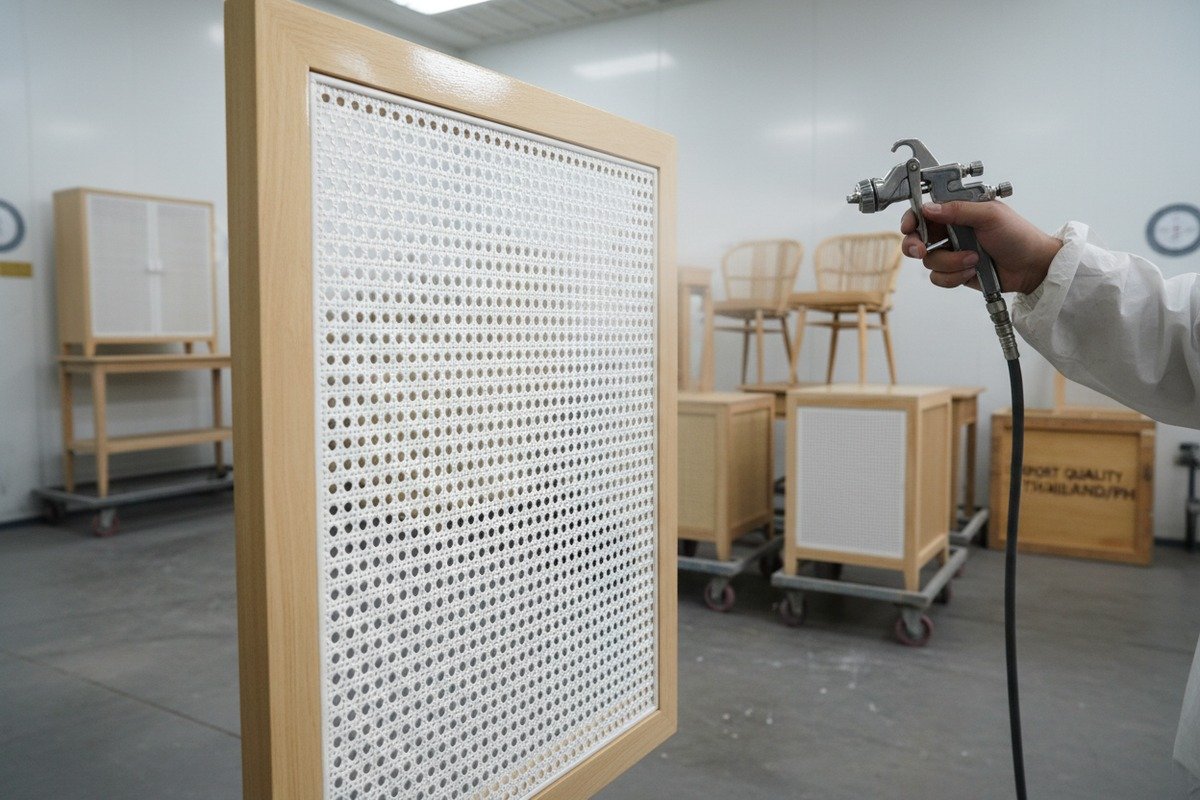
All rattan comes from tropical forests. The raw material starts at a very high moisture content 9 — sometimes above 50%. What matters is how the rattan is processed after harvest. Proper drying, smoking, and treatment determine how the finished webbing responds to moisture in its final environment.
At our processing facility in Indonesia, we use a multi-stage drying process. First, the raw rattan is air-dried. Then it goes through a controlled kiln. The target moisture content is between 8% and 12%. Below 8%, the fibers become too brittle. Above 12%, the risk of warping and mold rises sharply.
What to Ask Your Supplier
Here is a checklist that any furniture factory procurement manager should use when evaluating a rattan supplier.
- What is the final moisture content of the webbing? Look for 8–12%.
- Is the rattan treated with anti-fungal agents? This prevents mold during shipping and storage.
- What drying method is used? Kiln-dried is more consistent than sun-dried alone.
- Can they provide test samples? Always test before committing to a large order.
- Do they offer different grades? Grade A rattan has fewer natural defects and more consistent fiber density, which means better resistance to warping.
- What packaging do they use for shipping? Breathable materials indicate a supplier who understands moisture management.
Natural vs. Synthetic: A Comparison for Moisture Resistance
Some factories now blend natural and synthetic rattan or switch entirely to synthetic options for outdoor furniture lines. Here is a fair comparison.
| Feature | Natural Rattan Webbing | Synthetic Rattan (PE/PVC) |
|---|---|---|
| Moisture resistance | Moderate (needs treatment) | High (waterproof) |
| Aesthetic appeal | Warm, organic, artisanal | Mimics natural look but less authentic |
| Durability outdoors | Low without sealant | High, UV-stabilized options available |
| Eco-friendliness | Renewable, biodegradable 10 | Plastic-based, less sustainable |
| Price point | Mid-range | Varies, often comparable |
| Repair ease | Easy with oil and water | Difficult, usually needs replacement |
For indoor furniture and the boho, coastal, or vintage aesthetics driving today's market trends, natural rattan remains the preferred choice. The key is proper sourcing and treatment — not avoiding natural materials altogether.
Testing Samples Before Ordering
We always encourage new buyers to request sample pieces. When you receive them, run a simple test. Place the sample in a humid environment — a bathroom or a room with a humidifier set to 70% — for 48 hours. Then move it to a dry room for another 48 hours. Check for warping, cracking, or discoloration. Well-processed rattan should show minimal change.
If you are sourcing bleached rattan webbing, pay extra attention. The bleaching process can strip some natural oils from the fibers, making them more susceptible to moisture damage. Ask whether the supplier reapplies a conditioning treatment after bleaching.
Building a Long-Term Supplier Relationship
Quality consistency — one of the top pain points for buyers — comes from working with a supplier who controls the full production chain. When we manage everything from raw rattan processing in Indonesia to weaving and finishing in our Foshan factories, we can guarantee the same moisture content and treatment standards across every batch. Suppliers who simply trade rattan without owning their processing facilities have less control over these critical variables.
Look for suppliers who are transparent about their production process, willing to share facility photos or videos, and responsive to quality complaints. A reliable supplier will replace defective rolls without argument because they have confidence in their own process.
Conclusion
Fixing warped rattan cane webbing comes down to understanding moisture, using the right repair method, and preventing future damage through proper storage and smart sourcing.
Footnotes
1. Defines the primary material discussed in the article. ↩︎
2. Explains the scientific property of rattan absorbing moisture. ↩︎
3. Provides a general overview of natural fibers and their properties. ↩︎
4. Authoritative source on the risks of excess moisture and mold. ↩︎
5. Provides background on the specific oil recommended for treatment. ↩︎
6. Explains the damage mechanism caused by UV exposure. ↩︎
7. Standard guidelines for indoor humidity levels. ↩︎
8. Wikipedia entry defining hygrometers and their function. ↩︎
9. Explains the technical concept of moisture levels in wood/rattan. ↩︎
10. Defines the environmental property of natural rattan. ↩︎

 English
  Español de México
  العربية
  Deutsch
  Français
  Русский