
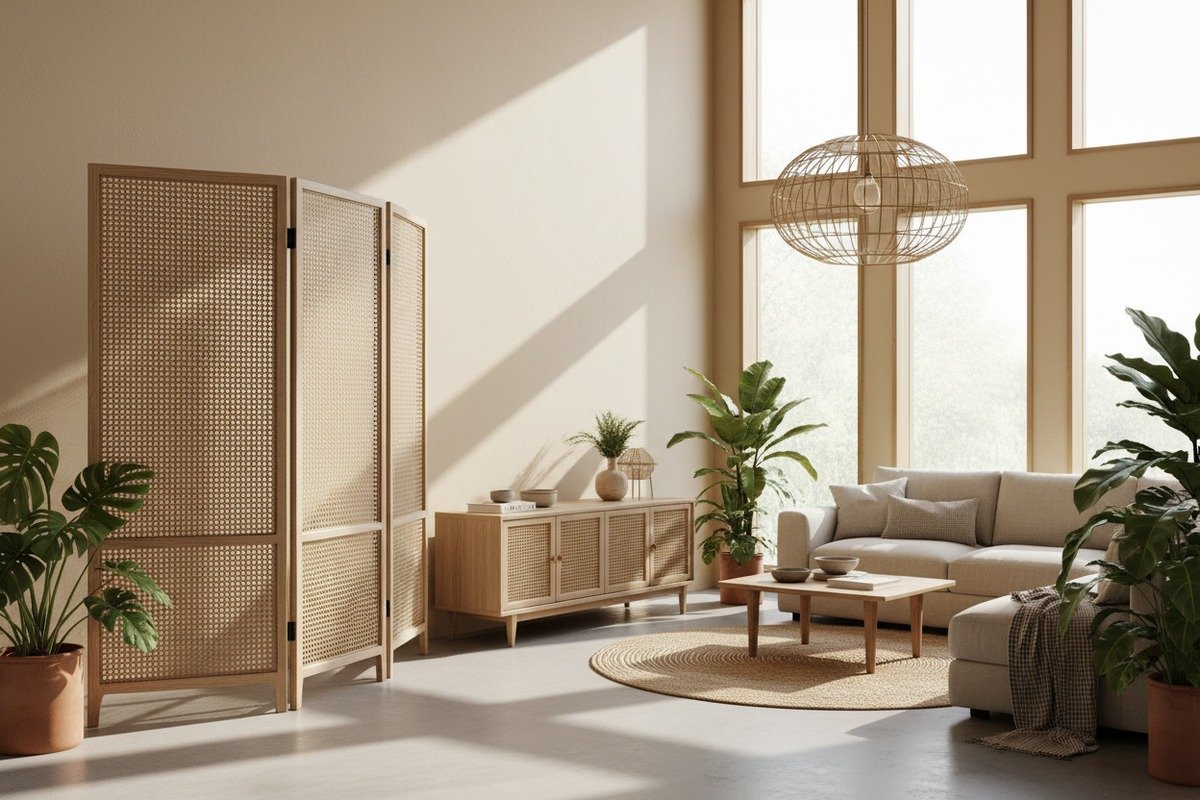
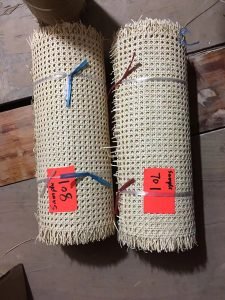
Working across our three factories and over 30 partner workshops in Foshan, we see one material dominating designer requests year after year — natural rattan cane webbing 1.
Interior designers use natural rattan cane webbing to create a natural aesthetic by integrating its organic textures, warm tones, and intricate weave patterns into furniture, wall panels, ceilings, room dividers, and light fixtures. This renewable material adds visual depth, biophilic warmth, and sustainable elegance to modern interiors.
In this guide, I will walk you through exactly how professionals incorporate rattan webbing into their projects, where to find Grade A material, how to keep it looking beautiful, and how to achieve that coveted modern organic look. Let’s get into it.
How can I incorporate natural rattan cane webbing into my custom furniture designs?
Every week, our production team ships rattan cane webbing to furniture factories across the Netherlands, Australia, and the United States — and the requests keep growing more creative.
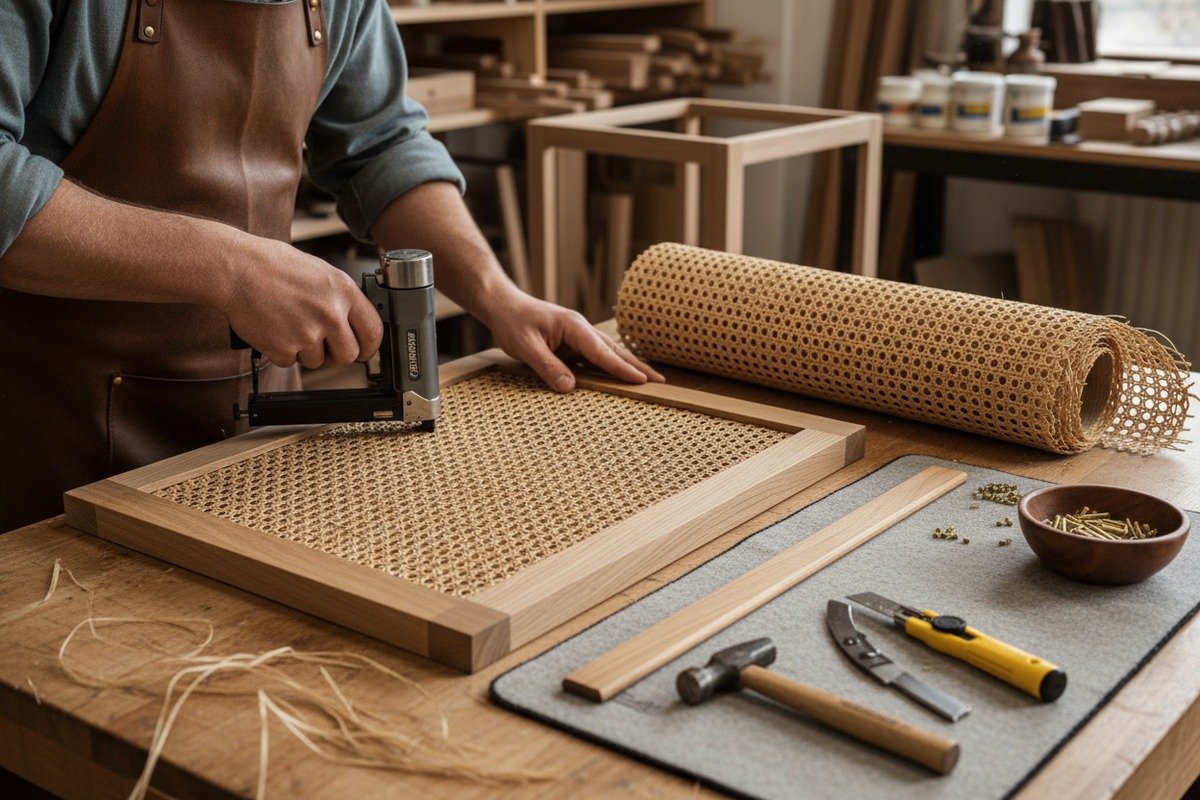
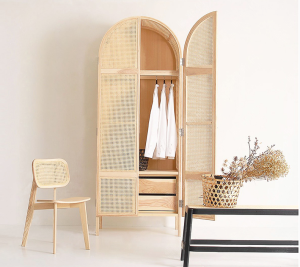
You can incorporate natural rattan cane webbing into custom furniture by applying it to cabinet doors, chair backs and seats, headboards, drawer fronts, and side panels. The webbing attaches to wooden frames using staples, nails, or adhesive, adding breathable texture and organic charm to any piece.
Start With the Most Popular Applications
The most common way designers use rattan webbing is on cabinet doors. This simple swap transforms a plain kitchen pantry or bedroom wardrobe into a statement piece. The webbing allows airflow, which is practical for linen closets and pantry storage. It also creates visual interest through shadow and light play.
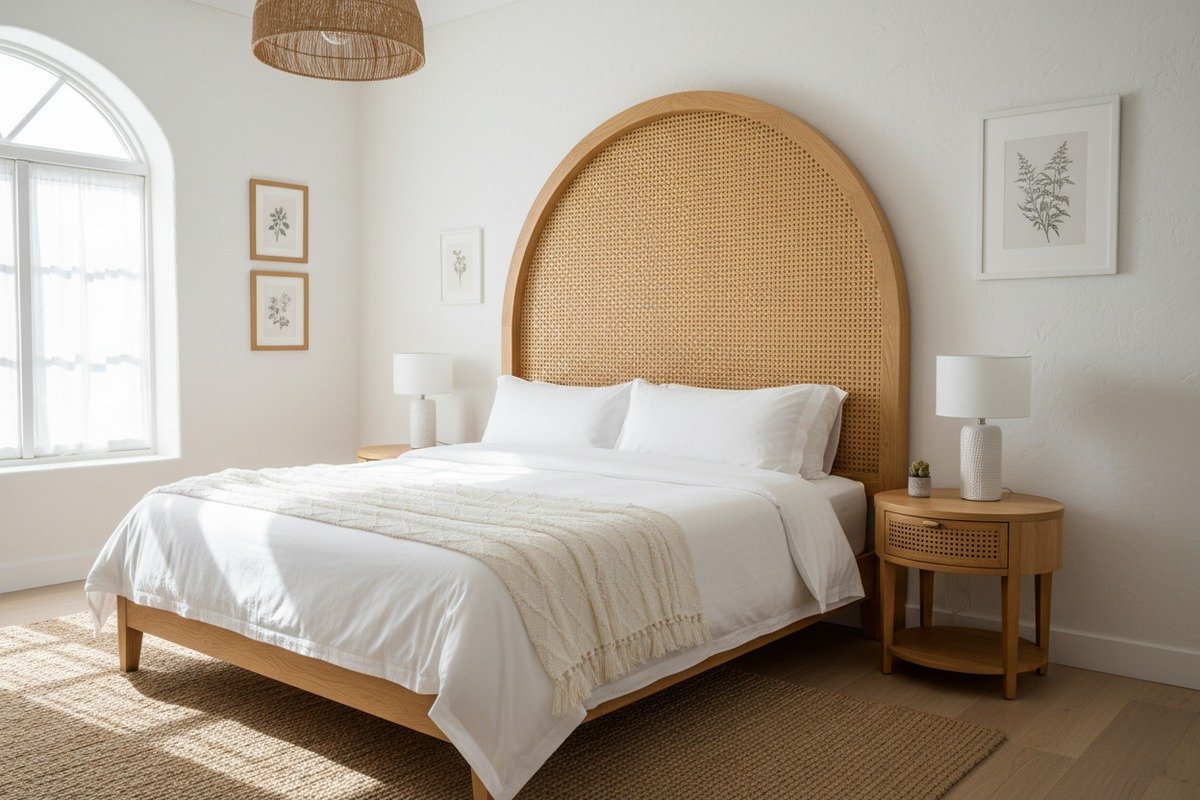
Headboards are another favorite. A wooden frame wrapped with rattan webbing gives a bedroom an instant resort feel. Many boutique hotels now use this approach. We have shipped custom-cut rolls to hospitality projects in Spain, Greece, and Dubai specifically for headboard applications.
Chair backs and seats are the classic use. Whether it is a dining chair, a lounge chair, or a bar stool, rattan webbing gives seating a lightweight, breathable quality. It reduces visual weight in a room and makes furniture feel less bulky.
Choosing the Right Weave Pattern
Not all weave patterns serve the same purpose. Here is a quick comparison to help you decide:
| Weave Pattern | Best For | Visual Effect |
|---|---|---|
| Hexagonal open cane 2 | Chair seats, cabinet doors | Classic, airy, traditional |
| Dense diamond motif | Headboards, wall panels | Bold, textured, modern |
| Tight basketweave | Drawer fronts, side panels | Subtle, refined, minimal |
| Simple open square grid | Room dividers, light fixtures | Light-filtering, geometric |
Practical Attachment Methods
When our factory teams train new partners, we always emphasize proper attachment. The method depends on the furniture type:
- Staple and trim method: Stretch the webbing across the frame opening, staple it to the back, and cover the edges with a decorative trim or spline. This is the most common approach for cabinet doors.
- Groove and spline method: Cut a channel in the wood frame, press the webbing into the groove, and lock it with a wooden or rubber spline. Groove and spline method 3 This gives the cleanest finish.
- Adhesive backing: For flat surface applications like drawer fronts, strong wood glue or contact adhesive works well when combined with edge molding.
One thing I always remind our clients: soak the webbing in warm water 4 for 15 to 30 minutes before stretching it. This makes the rattan pliable and prevents cracking. Once it dries, it tightens naturally for a drum-like finish.
Beyond the Basics
Designers are now pushing rattan webbing into unexpected furniture territory. We have seen it on coffee table shelves, bathroom vanity doors, bedside table panels, and even the arms of sofas. The key is to treat rattan webbing as a material panel — anywhere you would use glass, metal mesh, or plywood, rattan can work as a warmer alternative.
Where should I source Grade A rattan webbing to ensure my projects meet high-quality standards?
Our purchasing managers in Indonesia 5 hand-select raw rattan 6 before it even reaches the processing facility — and this step alone determines whether the final webbing qualifies as Grade A.
To source Grade A rattan webbing, work with established wholesalers who own or directly oversee rattan processing facilities, verify material grading standards, request sample rolls before bulk orders, and confirm that the supplier provides consistent sizing, uniform weave tension, and durable packaging for international shipping.
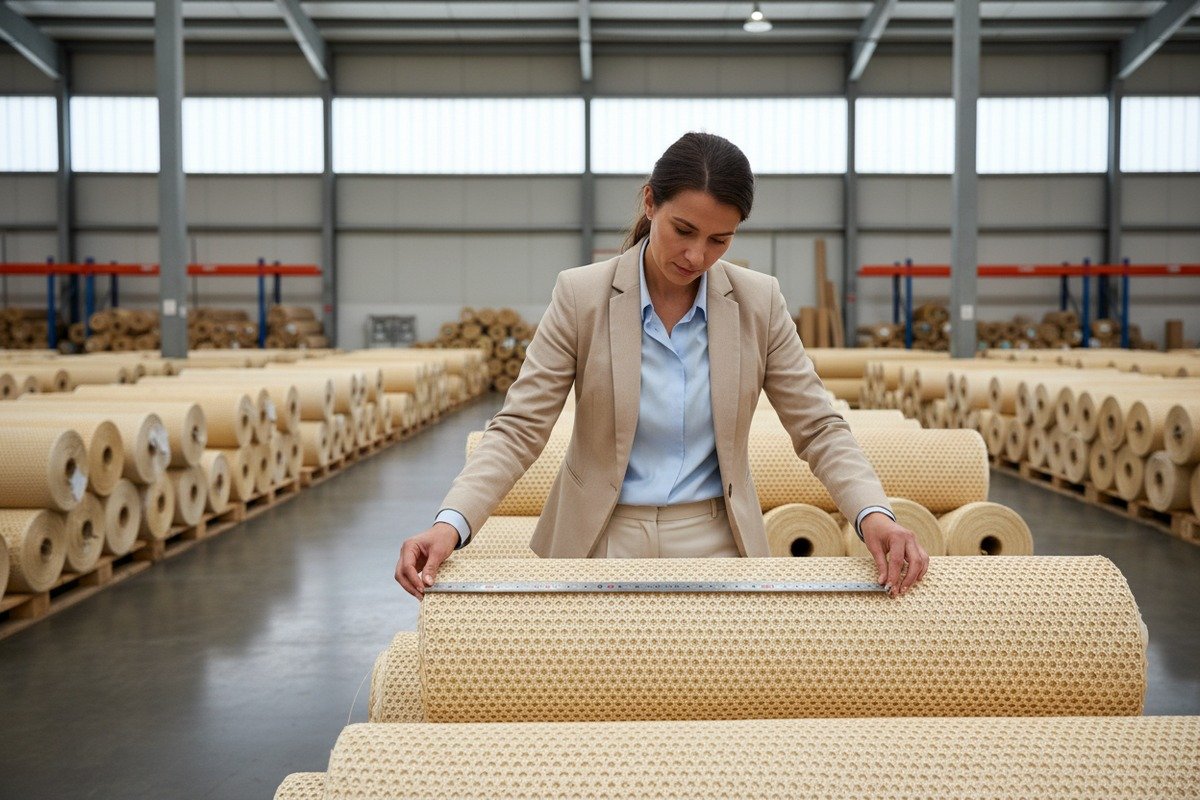
What Makes Rattan Webbing "Grade A"?
Grade A is not just a marketing label. It refers to specific material characteristics that affect both appearance and performance. Here is what separates Grade A from lower grades:
| Quality Factor | Grade A | Grade B / Lower |
|---|---|---|
| Surface finish | Smooth, minimal nodes | Rough, visible knots |
| Color consistency | Uniform light beige to straw yellow | Patchy, uneven tones |
| Fiber thickness | Even throughout the roll | Varies within the same roll |
| Weave tension | Tight, consistent pattern | Loose spots, gaps |
| Flexibility | Supple, does not crack easily | Brittle, prone to snapping |
| Roll edges | Clean cut, minimal fraying | Heavy fraying, uneven edges |
When we grade webbing at our Indonesian facility, we inspect every roll by hand. Rolls with more than two visible defects per running meter get downgraded. This level of quality control matters because furniture factories cannot afford inconsistency in production runs.
Red Flags When Choosing a Supplier
Many of our clients come to us after bad experiences with other suppliers. The most common complaints include:
- Inconsistent roll widths: A roll labeled 60 cm wide arrives at 57 cm. This causes waste and delays in production.
- Hidden moisture damage: Webbing that was stored improperly develops mold spots that only show up after installation.
- Poor packaging: Rattan shipped without proper moisture barriers and rigid tubes arrives crushed or warped.
Questions to Ask Before Ordering
Before you place a bulk order, ask your supplier these questions:
- Do you process the raw rattan yourself or buy pre-made webbing from third parties?
- Can you send a sample roll from the same batch as my order?
- What is your defect tolerance per meter?
- How do you package rolls for ocean freight?
- Can you provide consistent supply for repeat orders over 12 months?
A reliable supplier will answer all five questions with specifics, not vague promises. At our Foshan headquarters, we keep detailed batch records so clients can reorder the exact same material months later.
The Supply Chain Matters
Rattan grows primarily in Southeast Asia. Indonesia is the world's largest source of raw rattan cane. The supply chain typically flows like this: raw rattan is harvested, dried, split, and woven into rolls at processing facilities. These rolls are then exported to wholesalers and furniture factories worldwide.
Having direct access to the processing stage — as we do through our own Indonesian facility — gives us control over fiber selection, weave quality, and drying times. This is why we can guarantee Grade A consistency across large orders. For buyers sourcing through intermediaries, the risk of quality variance increases at each link in the chain.
How do I maintain the natural look and durability of rattan webbing in my interior projects?
One of the most frequent questions we get from our wholesale clients — especially those reselling to end consumers — is how to care for rattan once it is installed.
Maintain rattan webbing's natural look and durability by keeping it indoors away from direct sunlight and high humidity, dusting regularly with a soft brush, wiping with a slightly damp cloth when needed, and applying a light coat of natural oil or clear sealant annually to preserve its flexibility and warm tone.

Understanding Rattan's Natural Vulnerabilities
Rattan is an organic material. It responds to its environment. This is what makes it beautiful — and also what demands proper care. The two biggest enemies of rattan webbing are excessive moisture and prolonged UV exposure.
Moisture causes rattan fibers to swell, which loosens the weave over time. In extreme cases, it leads to mold growth. This is why rattan webbing is best suited for indoor use. Bathrooms with poor ventilation and outdoor patios are not ideal locations.
Direct sunlight causes the fibers to dry out and become brittle. It also bleaches the color unevenly, creating faded patches. If rattan furniture sits near a window, use sheer curtains or UV-filtering glass to protect it.
A Simple Maintenance Routine
Caring for rattan webbing does not require special products or professional help. Here is a simple schedule:
| Task | Frequency | Method |
|---|---|---|
| Dust removal | Weekly | Soft brush or vacuum with brush attachment |
| Surface cleaning | Monthly | Damp cloth with mild soap, then air dry |
| Deep conditioning | Every 6–12 months | Light coat of linseed oil 8 or beeswax |
| Inspection for damage | Every 6 months | Check for loose strands, cracks, or mold |
| Humidity control | Ongoing | Keep indoor humidity between 40–60% |
Dealing With Common Issues
Loose weave: If the webbing sags slightly over time, mist it lightly with water and let it dry naturally. The fibers will contract and tighten again. This works especially well with the groove-and-spline installation method.
Minor cracks: Apply a small amount of linseed oil to the affected area. The oil penetrates the fiber and restores flexibility. For furniture in dry climates like Saudi Arabia or parts of Australia, we recommend oiling every six months instead of annually.
Stains: Blot immediately with a dry cloth. Then clean with a solution of warm water and a few drops of mild dish soap. Avoid soaking the webbing. Never use bleach or harsh chemical cleaners — they break down the natural fibers.
Mold: If mold appears, clean it with a mixture of one part white vinegar to four parts water. Apply with a cloth, let it sit for five minutes, then wipe clean and dry thoroughly. Address the underlying humidity issue to prevent recurrence.
Finishing Options for Extended Life
Some designers prefer to apply a clear matte sealant to rattan webbing before installation. This adds a thin protective layer without changing the natural appearance. Water-based polyurethane 9 works well and does not yellow over time.
For projects that demand a slightly different tone — like a bleached or whitewashed look — we supply bleached rattan cane webbing from our product line. This version has been chemically lightened during processing, which gives it a pale, coastal appearance while maintaining the same structural properties.
The bottom line: rattan webbing is durable when treated with basic respect. It is not a fragile material. But it is a natural one, and natural materials need a little attention to stay at their best.
What are the most effective ways for me to use rattan webbing to achieve a modern organic aesthetic?
When we showcase new weave patterns to our designer clients in Europe and the Middle East, the conversation always circles back to one goal: how to make rattan feel modern, not dated.
The most effective ways to achieve a modern organic aesthetic with rattan webbing include pairing it with contrasting materials like matte black metal or glass, using it as architectural accent panels on walls and ceilings, choosing clean-lined furniture frames, and layering it with neutral textiles and biophilic elements like greenery.
The Material Fusion Principle
The single most important design strategy for making rattan feel contemporary is material contrast. Rattan on its own can lean rustic or traditional. But place it next to matte black steel, polished brass, smoked glass, or concrete — and it instantly reads as modern.
This is why the "rattan plus metal" combination dominates high-end interior projects right now. Think dining chairs with powder-coated black steel legs and rattan cane seats. Or kitchen cabinets with brushed brass handles and rattan-paneled doors. The industrial edge of metal balances the organic softness of rattan.
Leather is another powerful pairing. A mid-century modern armchair with a leather seat cushion and rattan side panels creates a luxury look that works in both residential living rooms and boutique hotel lobbies.
Beyond Furniture: Architectural Rattan
The biggest shift we have seen since 2023 is designers moving rattan webbing off furniture and onto walls and ceilings. This trend transforms rattan from a furniture detail into an architectural element.
Accent walls: A section of wall covered in rattan webbing — framed by wood molding — creates a focal point in bedrooms, living rooms, or restaurant interiors. The woven texture catches light differently throughout the day, adding dynamic visual interest.
Ceiling panels: In resort-style spaces, rattan webbing applied to ceiling insets brings warmth overhead. This technique works especially well in rooms with high ceilings that might otherwise feel cold or cavernous.
Room dividers: Freestanding screens made from rattan webbing stretched across wooden or metal frames offer privacy without blocking light or airflow. They are popular in open-plan apartments and co-working spaces.
Light and Shadow as a Design Tool
One of rattan webbing's most underrated qualities is how it interacts with light. The open weave patterns — especially hexagonal and square grid styles — cast intricate shadows on adjacent surfaces. Designers use this effect intentionally.
A rattan pendant lampshade, for example, projects geometric shadow patterns across the ceiling and walls. A rattan room divider placed near a window creates moving shadow art as the sun shifts. This is biophilic design 10 at its most practical — bringing natural patterns into built spaces without adding clutter.
Styling Combinations That Work
Here are proven pairings that our designer clients use repeatedly:
- Rattan + white linen + light wood = Scandinavian coastal
- Rattan + matte black metal + concrete = modern industrial organic
- Rattan + velvet cushions + brass accents = quiet luxury
- Rattan + terracotta pots + macramé = bohemian layered
- Rattan + marble + glass = contemporary elegance
The key is restraint. Rattan should be one element in a composed palette, not the dominant material in every direction. One rattan headboard, one rattan pendant light, and a set of rattan-paneled cabinets in the same room is usually the maximum before the look tips from curated to overwhelming.
The Sustainability Story Sells
For designers working with eco-conscious clients — and that is a rapidly growing segment — rattan's sustainability credentials are a genuine selling point. It is a rapidly renewable resource. Rattan palms grow back after harvesting. The material is fully biodegradable. Its processing requires minimal energy compared to plastics or metals.
When our rolls ship from Foshan to furniture showrooms in Amsterdam or Melbourne, the buyers often highlight "natural rattan" on their product labels. Consumers respond to it. The material tells a story of craftsmanship, nature, and responsible design. That narrative is as important to the modern organic aesthetic as the visual texture itself.
Conclusion
Natural rattan cane webbing remains one of the most versatile, sustainable, and visually compelling materials available to interior designers and furniture manufacturers today. From custom furniture panels to architectural wall features, its ability to bring organic warmth into modern spaces is unmatched. Whether you are sourcing Grade A rolls for a production run or planning a single statement piece, the principles stay the same: choose quality material, install it properly, maintain it simply, and pair it thoughtfully. If you need a reliable supply of rattan cane webbing for your next project, we are here to help — reach out to our team at www.rattanwholesaler.com to request samples and discuss your requirements.
Footnotes
1. Defines the material, its properties, and common applications. ↩︎
2. Illustrates a specific and classic rattan weave pattern. ↩︎
3. Explains a traditional and effective method for attaching rattan webbing. ↩︎
4. Provides crucial pre-installation steps for pliability and preventing cracks. ↩︎
5. Confirms Indonesia’s significant role as a global supplier of rattan. ↩︎
6. Describes the unprocessed form of rattan and its origins. ↩︎
7. Details the specific characteristics that define high-quality rattan webbing. ↩︎
8. Offers guidance on using natural oil for rattan maintenance and restoration. ↩︎
9. Explains the application and benefits of a common protective finish. ↩︎
10. Provides a comprehensive definition of this nature-integrating design philosophy. ↩︎
 English
  Español de México
  العربية
  Deutsch
  Français
  Русский