
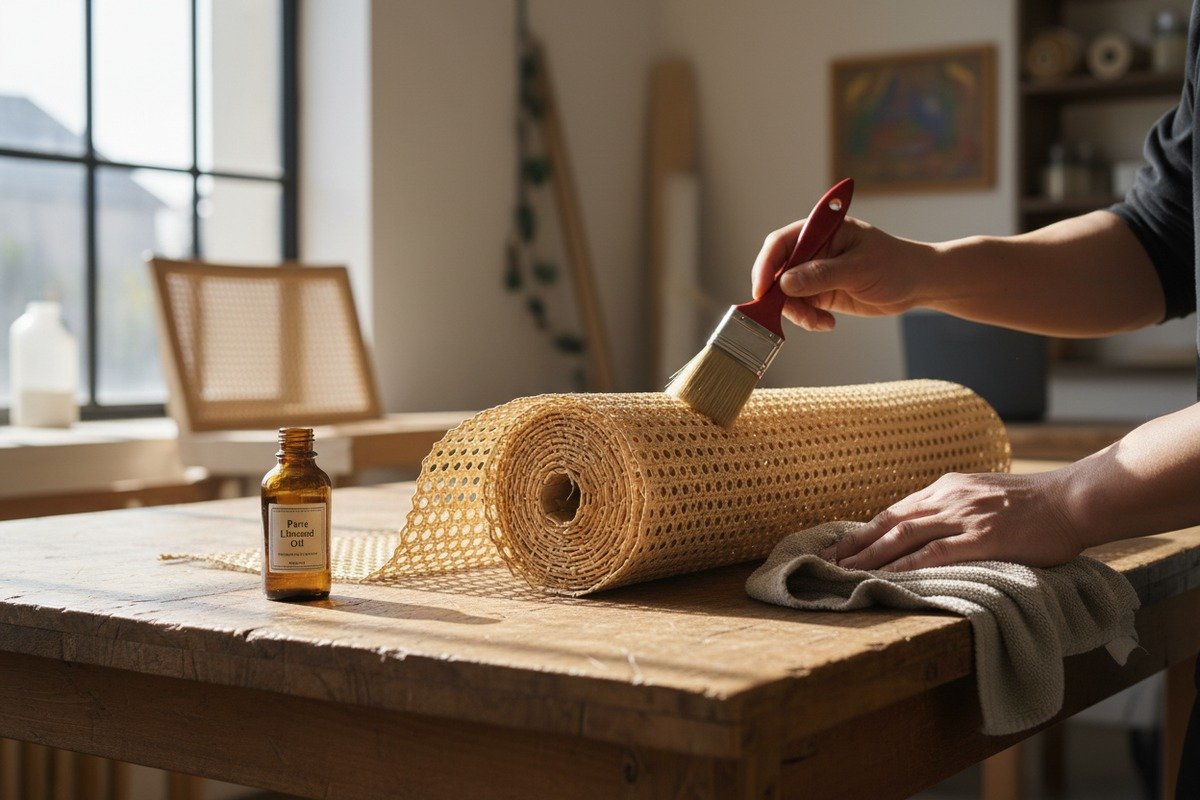
Years on our production floor have taught us one tough lesson: even the finest rattan cane webbing 1 loses its beauty without proper care.
To maintain rattan cane webbing luster and elasticity, dust it weekly with a soft brush, condition it quarterly with natural oils like linseed or mineral oil, control humidity between 40–60%, and keep it away from direct sunlight. These simple routines prevent cracking, sagging, and discoloration over many years.
Below, we break down each step in detail. You will learn how to clean, restore, protect, and condition your rattan webbing. Let’s start with the basics of cleaning.
How do I clean my rattan cane webbing without damaging its natural luster?
From shipping rattan cane webbing to over 30 countries, we hear this question more than any other. Dust and grime sneak into the weave pattern. They dull the surface. If you use the wrong cleaner, you risk cracking or discoloration.
Clean rattan cane webbing by dusting weekly with a soft brush or vacuum attachment, then wiping with a lightly damp cloth and mild soap solution. Avoid soaking, bleach, or ammonia-based cleaners. Always let the webbing air-dry completely to prevent mold growth and fiber damage.
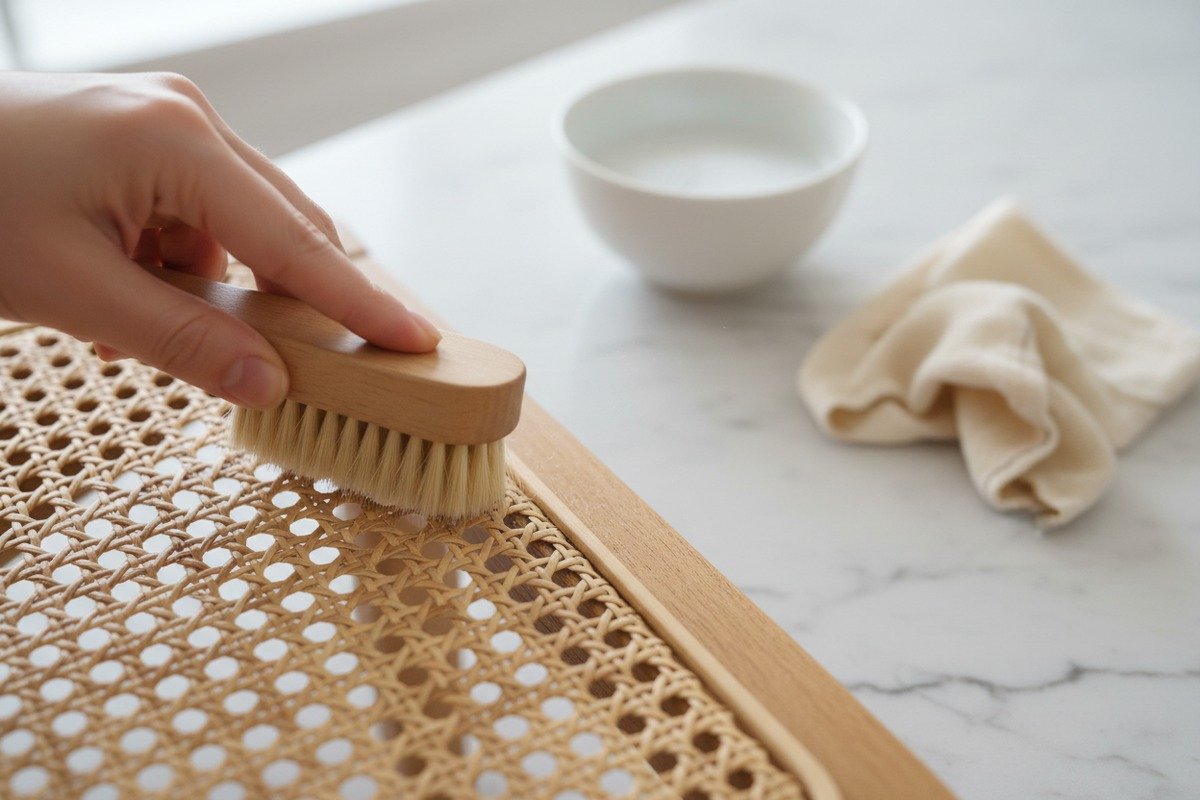
Cleaning rattan cane webbing is not complicated. But it does require patience and the right tools. The weave pattern traps dust, pet hair, and food particles deep inside. If left uncleaned, this buildup attracts moisture and accelerates darkening. Here is a clear routine you can follow.
Weekly Dusting Routine
Start with a soft-bristle brush or a feather duster. Run it along the weave direction. For tighter patterns like the hexagonal open-mesh or dense square basketweave, use a vacuum cleaner with a brush attachment on low suction. This removes fine dust from deep within the pattern without pulling fibers loose.
A microfiber cloth 2 works well for flat surfaces. Wipe gently. Do not press hard. Pressing can flatten the natural texture of the cane.
Monthly Deep Cleaning
Once a month, mix a mild soap—like a few drops of dish soap or Murphy's Oil Soap—into warm water. Dip a soft cloth into the solution. Wring it out thoroughly. The cloth should be damp, not wet.
Wipe each section of the webbing carefully. For stubborn spots, use a soft toothbrush. After cleaning, wipe the surface again with a clean damp cloth to remove soap residue. Then let the piece air-dry in a well-ventilated area.
DIY Cleaning Solutions
| Cleaning Solution | Ingredients | Best For | Caution |
|---|---|---|---|
| Mild soap mix | 1 tsp dish soap + 1 L warm water | General dirt and grime | Wring cloth well; never soak |
| Vinegar solution | 1 part white vinegar + 1 part water | Light mold or mildew spots | Test on a hidden area first |
| Murphy's Oil Soap | Follow bottle directions, dilute | Stubborn stains on natural cane | Wipe off residue completely |
| Plain warm water | Warm water only | Light surface dust and pollen | Let dry fully before use |
What to Avoid
Never use bleach, ammonia, or harsh chemical sprays. These strip the natural oils 3 from rattan fibers. They cause immediate dullness and long-term brittleness. Also, never submerge rattan webbing in water. Soaking swells the fibers, warps the weave, and creates a breeding ground for mold.
We have seen customers in humid regions like Thailand and the Philippines accidentally over-wet their rattan panels during cleaning. The result was warped sheets that could not be reused. A damp cloth is always enough.
What are the best ways to restore elasticity if my rattan webbing begins to sag?
Over the years, our quality control team has inspected thousands of rattan panels returning from long-term use. Sagging is the most common complaint. It happens gradually. The weave loosens. The surface dips. Furniture looks tired.
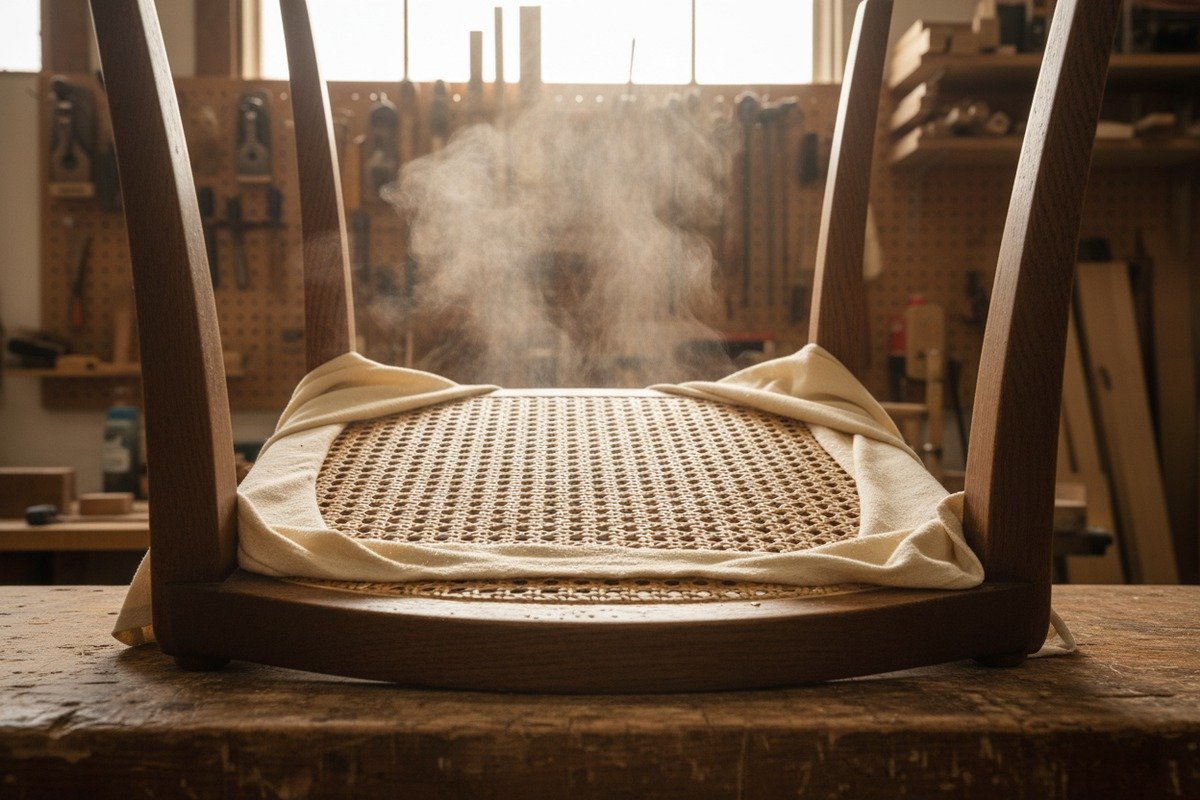
To restore sagging rattan cane webbing, turn the furniture upside down and apply a warm, damp cloth to the underside. Let the moisture absorb for 15–20 minutes, then allow the webbing to dry naturally in open air. As rattan fibers dry, they shrink and tighten, pulling the weave taut again.
Sagging occurs when rattan fibers stretch under continuous weight or when the environment is too dry. The lignocellulose structure 4 of rattan needs a certain moisture content to stay springy. When humidity drops below 40%, fibers become rigid and lose their ability to bounce back. Here is how to fix and prevent sagging.
The Warm Damp Cloth Method
This is the simplest and most effective fix. Flip the furniture over so the underside of the cane webbing faces up. Lay a warm, damp towel across the entire surface. Leave it for 15 to 20 minutes. Remove the towel. Let the webbing dry naturally for at least 24 hours—preferably 48.
As the rattan dries, fibers contract. This contraction pulls the weave tight again. Do not use a hair dryer or heater to speed up drying. Forced heat dries the outer layer too fast, leaving the inner fibers still damp. This uneven drying causes cracks.
When to Use Steam
For webbing that has sagged significantly, light steam can help. Hold a garment steamer about 15 cm from the underside of the webbing. Move it slowly across the surface. Do not focus on one spot too long. Follow with natural air-drying.
Prevention Is Easier Than Repair
| Cause of Sagging | Prevention Tip | Fix |
|---|---|---|
| Prolonged heavy weight | Rotate seating positions; use cushions to distribute weight | Warm damp cloth + air dry |
| Low humidity (below 40%) | Use a room humidifier; mist rattan lightly in dry seasons | Humidify environment; steam underside |
| Age and natural fiber relaxation | Oil quarterly to maintain suppleness | Damp cloth method; re-weave if severe |
| Poor storage (folded or bent) | Store flat or rolled loosely | Dampen, reshape, dry flat |
When Restoration Is Not Enough
If the cane webbing has torn, cracked at intersections, or sagged beyond recovery, replacement is the better option. We supply rattan cane webbing in rolls and sheets for exactly this purpose. Many of our furniture factory clients in Turkey and Australia order replacement panels in bulk. A fresh panel restores the look and function far better than repeated patching.
One important note: always address sagging early. The longer you wait, the harder it is to tighten the weave back. A quick damp cloth treatment once every few months can prevent sagging entirely.
How can I protect my rattan materials from environmental factors like humidity and sun?
When we ship rattan cane webbing from our processing facility in Indonesia to clients in the Netherlands or Saudi Arabia, the climate difference is dramatic. What works in a tropical warehouse fails in a dry desert. Environmental control is the single biggest factor in rattan longevity.
Protect rattan cane webbing by keeping it away from direct sunlight, maintaining indoor humidity between 40–60%, avoiding placement near heaters or air conditioners, and using furniture covers during storage. For outdoor use, apply a UV-resistant varnish and bring pieces indoors during rain or extreme weather.
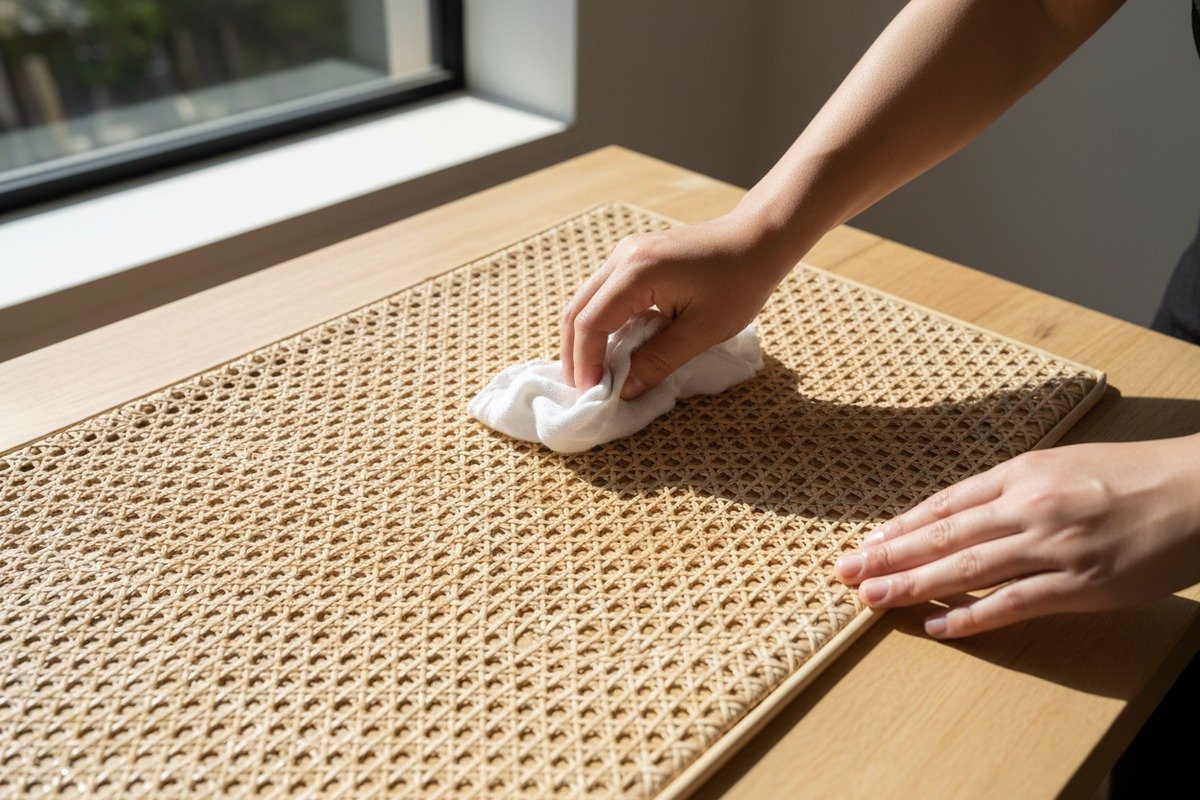
Rattan is a natural plant fiber. It reacts to its surroundings constantly. Too much sun fades and dries it. Too much moisture causes mold. Too little moisture makes it brittle. The key is balance. Here is how to achieve it.
Sunlight Damage
Direct sunlight is rattan's worst enemy. UV rays 5 break down the natural lignin in rattan fibers. This causes the buttery tan color to fade unevenly. More importantly, UV exposure dries out the natural oils in the cane. Within months, unprotected rattan in a sunny window becomes brittle and cracks.
Limit direct sun exposure to under 6 hours per day. Use curtains, blinds, or UV-filtering window film. If you use rattan furniture on a patio, place it under a roof or awning. For decorative wall panels, choose a wall that does not receive afternoon sun.
Humidity Control
Rattan performs best at 40–60% relative humidity 6. Below 40%, fibers lose moisture and become stiff. Above 60%, they absorb too much moisture and swell, which loosens the weave and invites mold.
In dry climates—or during winter heating seasons—use a room humidifier near your rattan pieces. Some of our clients in Iran and Saudi Arabia lightly mist their rattan panels with a spray bottle every two weeks. This simple habit prevents cracking.
In humid climates like Thailand or the Philippines, ensure good air circulation. Do not push rattan furniture against walls. Leave a gap of at least 5 cm for airflow. A small fan nearby helps in very humid rooms.
Coastal and Salt Air Considerations
Salt air accelerates rattan degradation. It draws moisture from fibers and leaves a corrosive residue. If you live near the coast, wipe your rattan pieces with a damp cloth weekly to remove salt deposits. Consider applying a thin coat of marine-grade varnish for added protection.
Seasonal Rotation Strategy
Rotate rattan furniture positions every season. A chair that always faces the window will fade on one side. Moving it ensures even exposure to light and air. This simple trick is often overlooked but makes a noticeable difference over a year.
Indoor vs. Outdoor Use
Most rattan experts recommend keeping natural cane webbing indoors. Our synthetic rattan matting 7—which mimics the organic look of natural cane—is far better suited for permanent outdoor placement. If natural rattan must go outdoors, apply a clear exterior varnish and use a weather-resistant cover when not in use.
Which maintenance products should I apply to keep my rattan cane webbing supple and bright?
Through years of testing in our own rattan processing facility, we have tried nearly every oil and finish on the market. Some work beautifully. Others darken the cane too much or leave a sticky residue. Choosing the right product matters more than most people realize.
Apply boiled linseed oil, mineral oil, or lemon oil quarterly to keep rattan cane webbing supple and bright. Use a soft cloth to rub the oil into the surface and underside, wipe off excess, and allow 48 hours of drying before use. Follow with a rattan wax for added shine and protection.
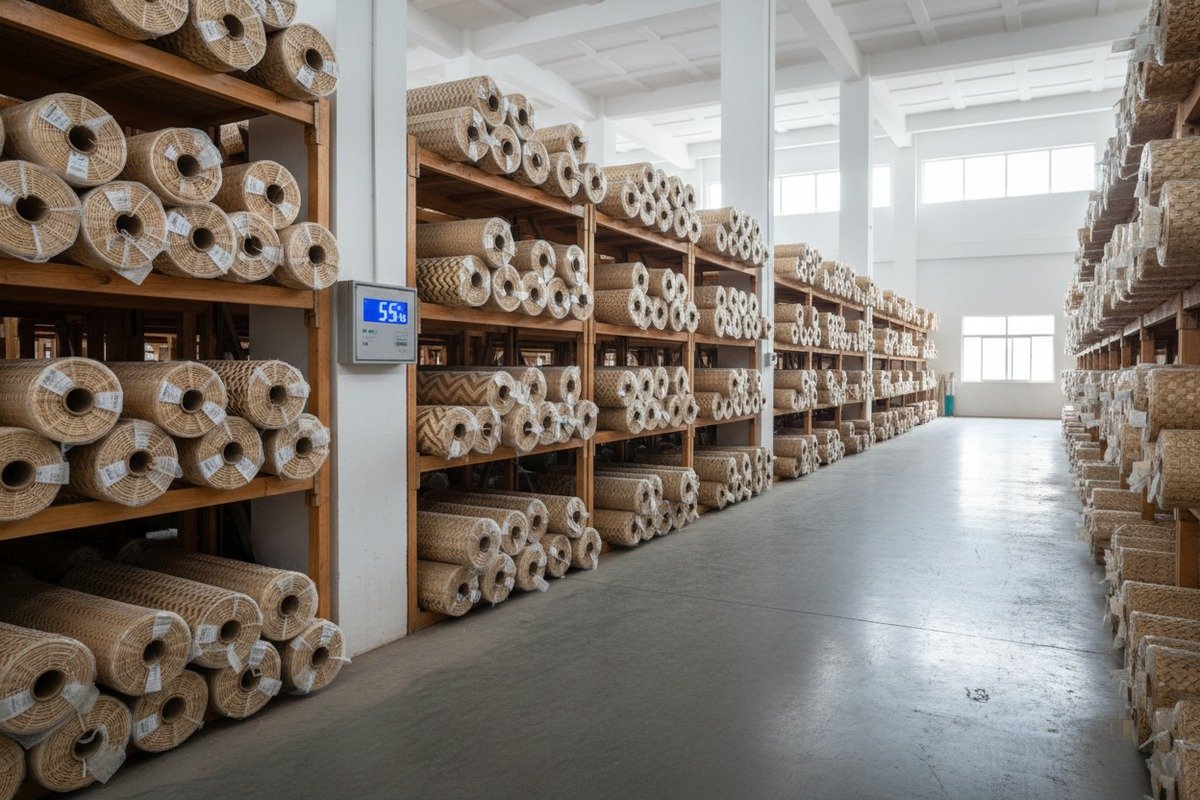
The right maintenance product nourishes rattan fibers from within. It replaces the natural oils that evaporate over time due to air exposure, heating, and cleaning. Let's compare the most common options and discuss how to use them properly.
Oil Comparison Guide
| Product | Benefits | Drawbacks | Best For | Application Frequency |
|---|---|---|---|---|
| Boiled linseed oil 9 | Deep penetration; restores suppleness; natural shine | Slight darkening over time; slow drying | Natural and bleached cane webbing | Every 3 months |
| Mineral oil 10 | Colorless; no darkening; food-safe | Less deep penetration than linseed | Light-colored or bleached rattan | Every 3 months |
| Lemon or orange oil | Pleasant scent; mild cleaning action; adds shine | Lighter conditioning effect | Quick refresh between deep treatments | Monthly or as needed |
| Diluted glycerin solution | Draws atmospheric moisture; excellent humectant | Can feel sticky if over-applied | Extremely dry climates | Every 2–3 months |
| Rattan wax | Protective barrier; high shine; seals in oil | Requires prior oiling for best results | Finishing step after oil treatment | After each oiling |
How to Apply Oil Correctly
Start by cleaning the rattan surface. Remove all dust and debris. Dip a soft, lint-free cloth into the oil. Wring lightly. Apply the oil in the direction of the weave. Work it into the surface and the underside of the webbing. The underside is often neglected, but it dries out just as fast.
After applying, wipe off any excess oil with a clean cloth. Too much oil sitting on the surface attracts dust and can feel tacky. Then let the piece dry for at least 48 hours in a ventilated room before sitting on it or placing objects on it.
Specialized Conditioners with UV Inhibitors
For rattan pieces near windows or in sunrooms, consider a specialized rattan conditioner that includes UV inhibitors. These products add a transparent protective layer that slows UV degradation. They are more expensive than basic oils but worth the investment for high-value or antique pieces.
DIY Conditioning Recipe
Mix two parts boiled linseed oil with one part turpentine. Apply with a soft cloth. This old-fashioned recipe penetrates deeply and dries to a matte finish. It has been used by furniture restorers for decades. Test on a hidden area first, especially on bleached rattan, as linseed oil can add a warm amber tone.
What About Varnish and Paint?
For outdoor rattan or pieces needing heavy-duty protection, a clear satin varnish works well. It seals the surface and blocks moisture. However, varnish changes the matte, natural look of raw cane into a glossy finish. Some customers prefer this. Others do not. Paint is an option for worn rattan frames, but we do not recommend painting the cane webbing itself, as it stiffens the fibers and eliminates natural elasticity.
A Quarterly Maintenance Calendar
For most climates, follow this simple schedule:
- Weekly: Dust with a soft brush or vacuum attachment.
- Monthly: Wipe with a lightly damp cloth. Apply lemon oil for a quick refresh if needed.
- Quarterly: Deep clean with mild soap. Apply boiled linseed oil or mineral oil. Follow with rattan wax. Inspect for sagging or cracks.
- Annually: Assess overall condition. Rotate furniture positions. Reapply varnish if used outdoors. Replace worn panels if necessary.
This routine, based on what we recommend to our wholesale clients across Europe and the Middle East, keeps rattan cane webbing looking fresh and performing well for many years. The first five years after weaving are the most critical. Establish good habits early, and the material rewards you with lasting beauty.
Conclusion
Rattan cane webbing lasts beautifully when you clean it gently, oil it regularly, control its environment, and address sagging early. A few simple habits protect your investment for years.
Footnotes
1. Provides general information about rattan cane webbing as a natural material. ↩︎
2. Highlights the cleaning properties and benefits of using microfiber cloths. ↩︎
3. Explains the importance of natural oils for wood and fiber preservation. ↩︎
4. Provides an academic definition of lignocellulose, its components (cellulose, hemicellulose, lignin), and its structural role in plants. ↩︎
5. Discusses how UV radiation damages natural fibers and causes degradation. ↩︎
6. Provides a definition and explanation of relative humidity. ↩︎
7. Compares synthetic rattan to natural rattan, highlighting its outdoor suitability. ↩︎
8. Explains the effects of humidity on wood furniture and recommends a humidity range of 40-60% for preservation. ↩︎
9. Describes the uses and benefits of boiled linseed oil for wood treatment. ↩︎
10. Explains mineral oil’s role as a non-toxic conditioner for wood surfaces. ↩︎

 English
  Español de México
  العربية
  Deutsch
  Français
  Русский