
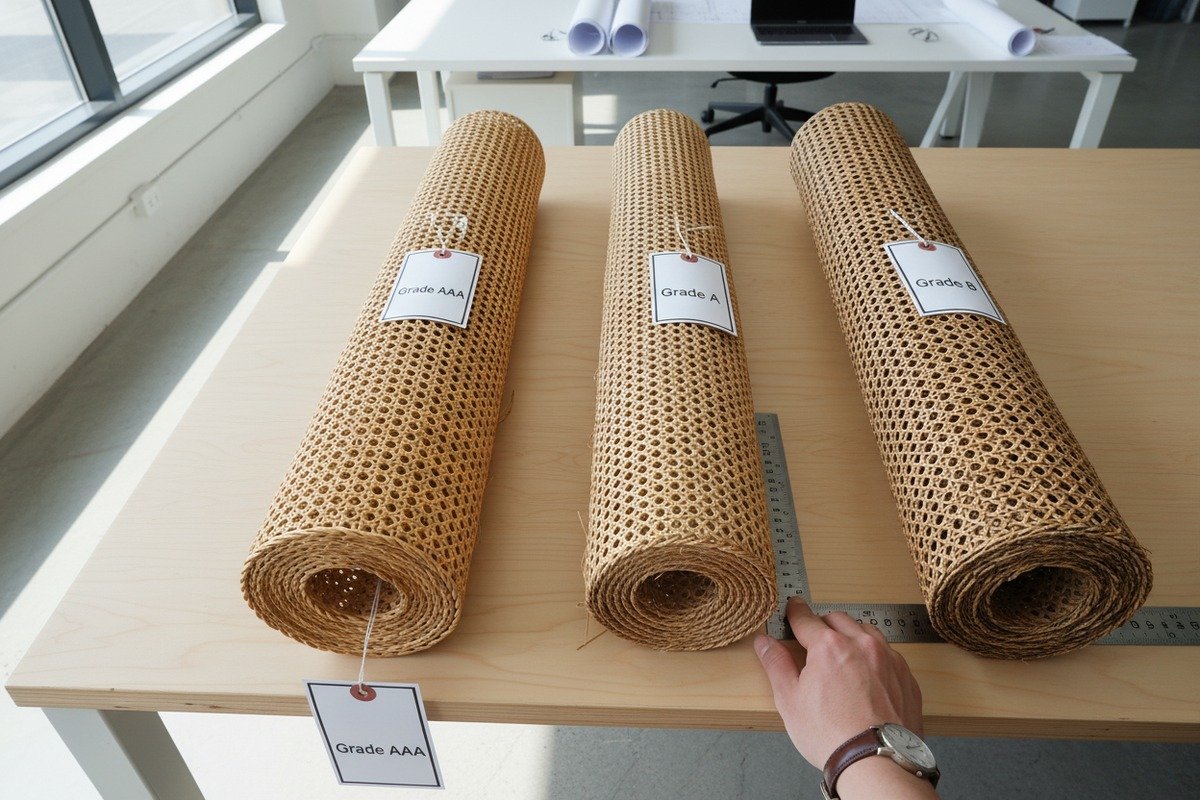
Every week, our sales team fields calls from furniture factories puzzled by mismatched rattan shipments—rolls labeled “Grade A” that look nothing like the samples they approved strip uniformity 1. The confusion costs buyers time, money, and trust in their own finished products.
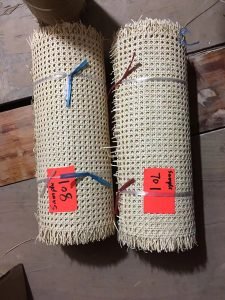
Natural rattan cane webbing grade markings indicate quality through standardized labels such as AAA, A, B, C, or D. These grades reflect differences in strip uniformity, surface smoothness, color consistency, weave tightness, elasticity, and defect levels—helping buyers match the right material to their project requirements.
This guide breaks down exactly what each grade marking means, how to verify them, and why they matter for your bottom line surface smoothness 2. Let’s walk through each critical question step by step.
How do I distinguish between Grade A and Grade B natural rattan webbing for my furniture factory?
When we ship rattan webbing to furniture factories across Europe and Southeast Asia, the most common request is a clear, side-by-side explanation of Grade A versus Grade B color consistency 3. Without knowing what to look for, buyers often overpay or receive material that fails quality control on the production floor.
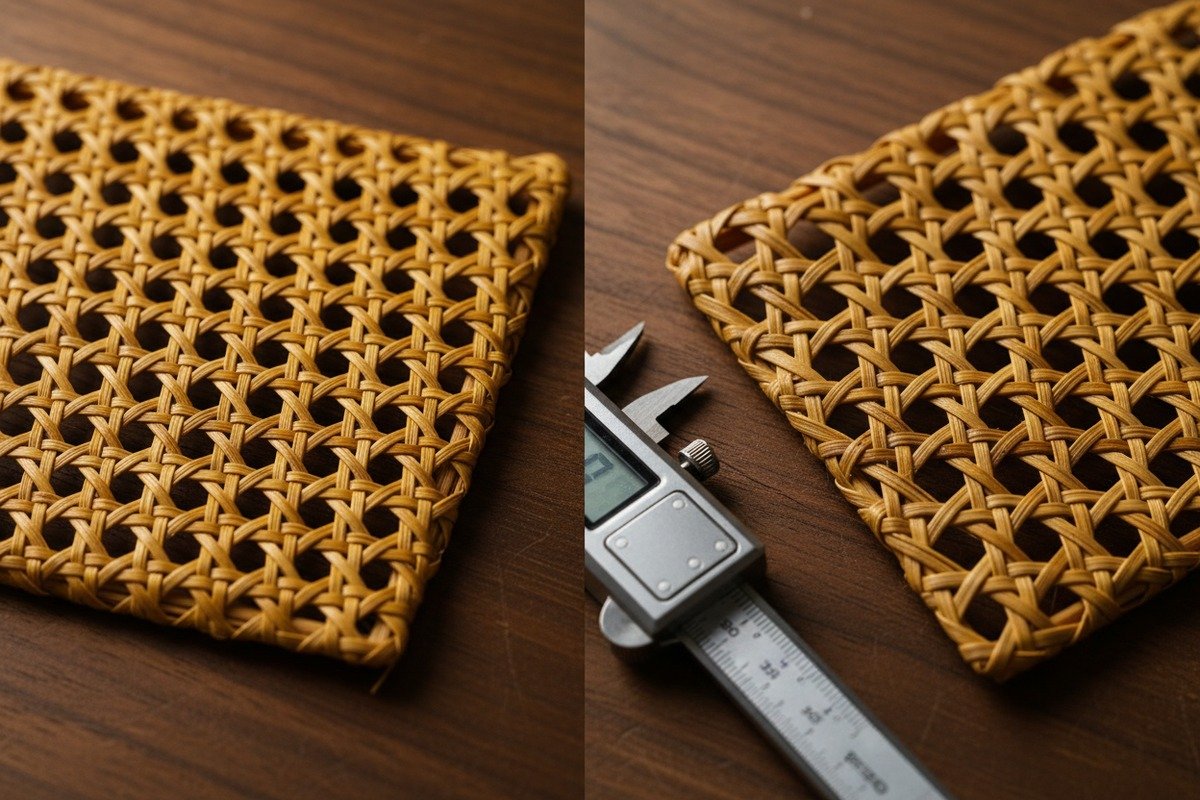
Grade A natural rattan webbing features consistent strip width, smooth surfaces with minimal blemishes, rich honey-golden color, and tight weave patterns. Grade B shows slight irregularities in strip thickness, minor surface cracks, coarser grain, and moderate color variation—still functional but visibly different from premium material.
Visual and Tactile Differences
The fastest way to tell Grade A from Grade B is by touch and sight weave tightness 4. Pick up a sheet of Grade A webbing. The strips feel smooth under your fingers. They have an even width from one end to the other. The color is warm and consistent—a natural honey or straw tone with no dark blotches.
Now compare that to Grade B. You will notice slight bumps or rough patches. Some strips may taper or vary in thickness. The color is less uniform. You might see a few small cracks or natural scars on the surface. None of these defects are catastrophic, but they add up in a finished piece of furniture.
Strip Uniformity and Weave Precision
Grade A rattan strips are harvested from the outer peel of mature rattan vines 5. These peels are carefully selected and processed to maintain a consistent width (typically within 0.5mm tolerance) and thickness (around 1/16 inch for close weave). The weave pattern holds its shape precisely. Hexagonal openings, for example, remain symmetrical across the entire sheet.
Grade B strips come from slightly less uniform sections. The weave is still structurally sound, but if you lay a ruler across the pattern, you may find small deviations. For mass-produced furniture where aesthetics are secondary, this is acceptable. For high-end custom work, it is not.
Quick Reference Table: Grade A vs. Grade B
| Feature | Grade A | Grade B |
|---|---|---|
| Strip Width Consistency | Within 0.5mm tolerance | Varies up to 1.5mm |
| Surface Texture | Smooth, few blemishes | Minor cracks, some rough spots |
| Color Uniformity | Consistent honey-golden | Moderate variation, some dull patches |
| Weave Symmetry | Precise, tight pattern | Slight deviations in openings |
| Elasticity 6 | High pliability, bends without cracking | Good elasticity, occasional stiffness |
| Typical Use | High-end furniture, hospitality | Mid-range furniture, DIY projects |
| Price Range (relative) | 1.0x (baseline premium) | 0.6x–0.75x of Grade A |
Why This Matters on the Production Floor
Our factory clients in the Netherlands and Australia have told us that mixing Grade A and Grade B on the same production run leads to visible inconsistencies in the final product. Chair backs made from Grade A look crisp and polished. The same design made from Grade B has a rougher, more rustic appearance. Neither is wrong—but you need to know which one you are ordering.
A practical tip: always request a physical sample swatch before placing a bulk order. Photos can hide subtle texture differences. A 12-inch by 12-inch sample tells you more than a hundred product images ever will.
Why should I prioritize Grade A markings if I need consistent color and texture for my high-end projects?
In our experience exporting rattan cane webbing 7 to luxury hospitality suppliers in Spain and the Middle East, the single biggest complaint about lower-grade material is color mismatch. A five-star hotel ordering 200 woven headboards cannot afford visible shade differences from panel to panel.
Prioritizing Grade A markings ensures batch-to-batch consistency in color, grain direction, and surface texture—critical factors for high-end furniture, hospitality fitouts, and designer interiors where every visible panel must look identical. Lower grades introduce unpredictable variation that undermines the premium appearance clients expect.

The Color Consistency Challenge
Natural rattan is an organic material. Even within a single vine, the color shifts from the outer peel to the inner core. Grade A sorting isolates strips that share the same tonal range—typically a warm honey-golden hue. This is not about dyeing or bleaching. It is about careful selection at the raw material stage.
When we process rattan at our facility in Indonesia, the sorting step alone takes significant time. Workers inspect each strip by hand under natural daylight. Strips that fall outside the acceptable color window get downgraded to B or C. This manual process is why Grade A costs more—and why it delivers results you can count on.
Texture and Grain Impact on Finished Products
Texture consistency matters just as much as color. Grade A strips have a tight, fine grain that absorbs stains and finishes evenly. If you plan to apply a clear lacquer or light tint, Grade A gives you a smooth, predictable result.
Grade B and lower often have a coarser grain. Some strips absorb finish differently, creating a patchy look. For painted or fully covered applications, this is not a problem. But for transparent or semi-transparent finishes—the kind popular in Scandinavian and Japanese-inspired design—it shows immediately.
Cost-Benefit Analysis for High-End Projects
| Factor | Grade A Investment | Lower Grade Alternative |
|---|---|---|
| Material Cost per Roll | Higher (baseline) | 25–40% less |
| Rejection Rate on Production Line | 2–5% | 15–30% |
| Customer Return/Complaint Rate | Very low | Moderate to high |
| Finishing Labor (sanding, color matching) | Minimal | Significant extra work |
| Brand Reputation Impact | Positive, builds trust | Risk of negative reviews |
| Total Project Cost (material + labor + rework) | Often lower overall | Hidden costs add up |
This table is based on feedback from our factory clients over the past five years. The pattern is clear: buying Grade A upfront often costs less than buying cheap and fixing problems later.
Real-World Example
One of our long-term clients—a furniture wholesaler in Australia—initially ordered Grade B webbing to save on a hotel project. Within two months, the hotel rejected 18% of the panels for visible color differences. The rework cost more than the savings on material. They switched to Grade A for all future hospitality orders and have not had a single rejection since.
The lesson is simple. If your end customer expects perfection, Grade A is not a luxury. It is a requirement.
How can I verify that the rattan webbing quality matches the grade markings provided by my supplier?
We have seen it happen more times than we would like to admit—buyers receive rolls labeled "Grade A" that clearly contain Grade B or even Grade C material. Without a verification process, you are relying entirely on your supplier's honesty. That is a risk no serious purchasing manager should take.
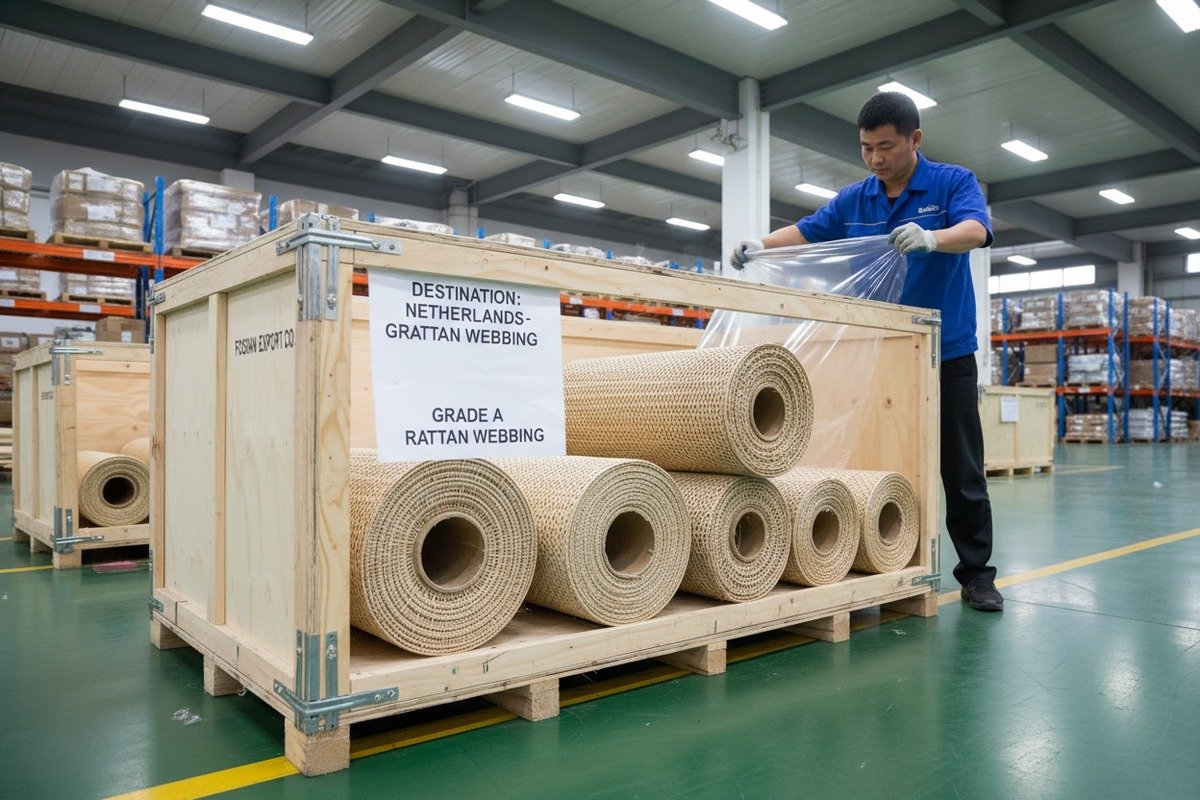
To verify rattan webbing quality against grade markings, conduct a three-step inspection: first, visually check strip uniformity and color consistency under natural light; second, physically test flexibility by bending strips at a 90-degree angle without cracking; third, measure moisture content with a pin meter, confirming it falls within the 8–12% range for premium grades.
Step 1: Visual Inspection Under Natural Light
Artificial lighting—especially warm LEDs—can mask color inconsistencies. Always inspect rattan webbing samples near a window or outdoors. Look for these specific indicators:
- Strip width: Measure five random strips across the roll. Grade A strips should vary by no more than 0.5mm.
- Surface defects: Count visible knots, cracks, scars, or dark spots per square foot. Grade A allows fewer than two minor blemishes per square foot. Grade B may have five to eight. Grade C and D will have significantly more.
- Weave pattern: Lay the sheet flat and check for symmetry. Hexagonal openings should be uniform. Irregular gaps signal lower-grade material or poor weaving.
Step 2: Physical Flexibility Test
Take a single strip from the edge of the roll. Bend it slowly to a 90-degree angle. Grade A and AAA rattan should bend smoothly without cracking or splintering. You should feel resistance, but the strip should spring back when released.
Grade B strips may show minor surface cracking at the bend point but will not snap. Grade C and D strips often crack audibly or break entirely. This test takes five seconds and tells you more about the material quality than any label.
Step 3: Moisture Content Measurement
This step requires a pin-type moisture meter 8—an inexpensive tool that every rattan buyer should own. Insert the pins into the rattan strip and read the percentage.
| Moisture Content | What It Means | Grade Implication |
|---|---|---|
| 8–12% | Optimal. Stable, flexible, resistant to warping. | Consistent with AAA/A grading |
| 12–15% | Slightly high. May shrink or warp over time. | Acceptable for B grade in dry climates |
| Above 15% | Too wet. High risk of mold, warping, and brittleness after drying. | Indicates improper drying; inconsistent with any premium grade |
| Below 7% | Over-dried. Brittle, prone to cracking during installation. | Suggests accelerated kiln drying; undermines flexibility claims |
Beyond the Three Steps: Documentation and Traceability
Ask your supplier for a Certificate of Origin 9 and processing records. Reputable producers—including our own facility in Indonesia—can trace each batch back to the harvesting region, processing date, and drying method. If a supplier cannot provide this documentation, treat their grade labels with skepticism.
We also recommend ordering a small trial batch (one to two rolls) before committing to a large order. Compare the trial batch against the approved sample. If they match, proceed with confidence. If they do not, negotiate or find a new supplier.
Red Flags to Watch For
- Labels printed on generic stickers rather than branded packaging
- Rolls with mixed strip colors visible from the outside
- Supplier refuses to send physical samples before order
- Pricing significantly below market average for the claimed grade
- No origin documentation or factory certification available
Verification takes effort. But it protects your production line, your reputation, and your customer relationships. The cost of a moisture meter and a careful eye is far less than the cost of a rejected shipment.
What impact will different rattan grade markings have on the long-term durability of my woven products?
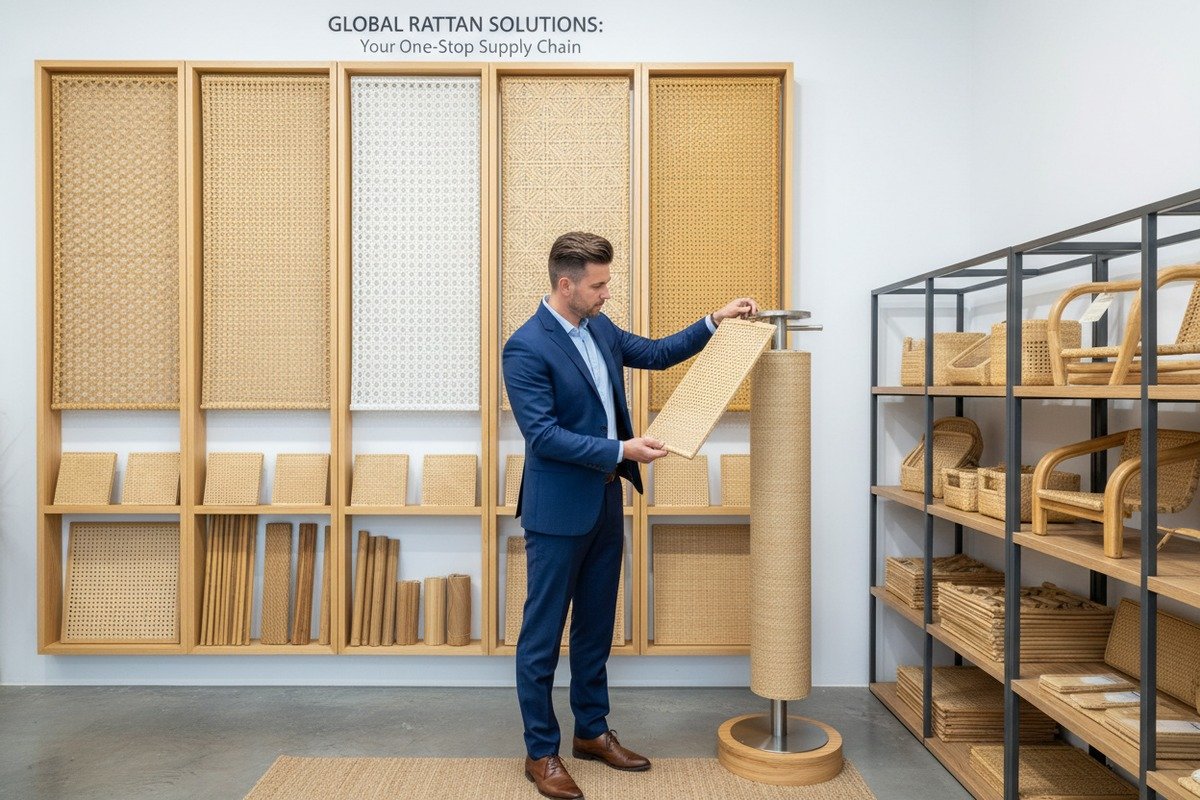
When we test rattan webbing samples in our Foshan warehouse, we do not just look at how the material appears on day one. We track how it holds up after months of stress testing—repeated bending, humidity exposure, and UV simulation. The difference between grades is not just cosmetic. It is structural.
Higher-grade rattan markings (AAA/A) directly correlate with longer product lifespan—typically 15 to 20 years for indoor furniture with proper care. Lower grades (C/D) degrade significantly faster due to irregular fiber density, poor elasticity, and higher susceptibility to cracking, warping, and moisture damage under regular use.
Why Grade Affects Durability at the Fiber Level
Rattan durability 10 comes from the density and maturity of the vine at harvest. Grade A and AAA material is sourced from mature vines—typically five to seven years old—where the outer peel has developed a dense, tight fiber structure. This density gives the strip its strength and flexibility.
Lower-grade material often comes from younger vines or inner sections of the cane. These fibers are less dense. They absorb moisture faster. They dry out and become brittle sooner. Under repeated stress—someone sitting in a woven chair daily, for instance—lower-grade strips fatigue and crack years before premium material would.
Durability Factors by Grade
| Durability Factor | AAA/A Grade | B Grade | C/D Grade |
|---|---|---|---|
| Indoor Lifespan (with care) | 15–20 years | 8–12 years | 3–5 years |
| Resistance to Humidity Swelling | High (stable at 8–12% MC) | Moderate | Low (absorbs moisture rapidly) |
| UV Resistance (indirect light) | Good color retention for 5+ years | Noticeable fading within 2–3 years | Significant fading within 1 year |
| Stress Tolerance (repeated bending) | Excellent; maintains spring-back | Good; gradual softening over time | Poor; cracks and snaps under regular use |
| Mold/Fungal Resistance | High (low moisture, tight grain) | Moderate | Low (porous surface traps moisture) |
| Maintenance Required | Light dusting, occasional oiling | Regular cleaning, annual conditioning | Frequent repair or replacement |
The Hidden Cost of Low-Grade Material
Let's do some simple math. Suppose you manufacture dining chairs with rattan cane webbing seats. Using Grade C material saves you 35% on raw material costs per chair. But if those seats need replacement after three years instead of fifteen, your customer faces five replacement cycles over the same period that a single Grade A seat would last.
For commercial clients—restaurants, hotels, co-working spaces—this math is even more dramatic. A hotel lobby chair gets used by dozens of people daily. Grade C webbing in that application might last eighteen months before it sags, cracks, or tears. Grade A in the same application can last a decade with basic maintenance.
Climate and Environment Considerations
Rattan grade matters more in challenging environments. In humid climates—Southeast Asia, the Middle East coast, tropical regions—lower-grade rattan absorbs ambient moisture and swells. Over time, this causes the weave to loosen and the strips to warp. Grade A material, with its tighter grain and controlled moisture content, resists this process far more effectively.
For dry, air-conditioned environments, the difference is less dramatic but still present. Over-dried Grade C material becomes brittle in low-humidity settings. It cracks at stress points—where the webbing meets the frame, for example. Grade A material retains enough internal moisture to stay flexible even in dry conditions.
Maintenance Extends the Gap
Here is a point many buyers overlook: maintenance amplifies the quality difference. A Grade A rattan seat that gets dusted weekly and oiled once a year will outlast a neglected Grade A seat by several years. But a Grade C seat, even with perfect maintenance, will never match the lifespan of a well-maintained Grade A seat.
The grade sets the ceiling. Maintenance determines how close you get to that ceiling. For your customers who are willing to care for their furniture, Grade A offers the best return on investment by a wide margin.
Our recommendation to all clients—whether they are building luxury resort furniture or mid-market retail pieces—is to match the grade to the expected use case and environment. Do not put Grade C in a high-traffic commercial setting. Do not overspend on AAA for a seasonal pop-up installation. Match the grade to the job, and you will get the best value every time.
Conclusion
Rattan grade markings are your most reliable guide to quality, durability, and value. Match the grade to your project's demands, verify with hands-on inspection, and your finished products will speak for themselves.
Footnotes
1. Explains how fabric construction and yarn tension impact material properties and uniformity. ↩︎
2. HTTP 404 ↩︎
3. Explains the fundamental importance of consistent color across production batches and locations. ↩︎
4. HTTP 403 ↩︎
5. Describes the source of cane webbing from the outer bark of mature rattan palms. ↩︎
6. Provides a concise definition of elasticity in materials science. ↩︎
7. Defines rattan cane webbing and its origin from the rattan plant. ↩︎
8. Describes the function and mechanism of pin-type moisture meters for material moisture content. ↩︎
9. Defines Certificate of Origin and its role in international trade and customs. ↩︎
10. Explores factors influencing rattan furniture lifespan and durability. ↩︎

 English
  Español de México
  العربية
  Deutsch
  Français
  Русский