
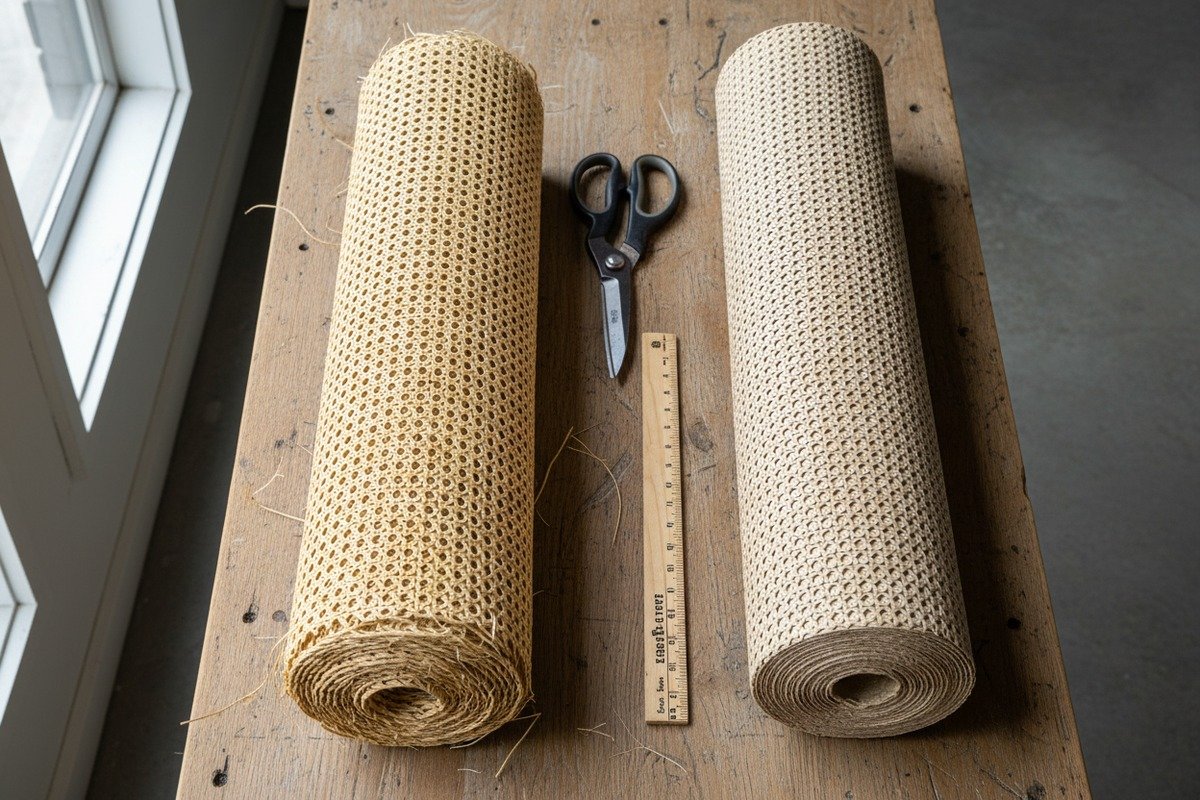
Every week, our sales team fields the same question from furniture factories and wholesalers worldwide: should I source natural or synthetic rattan 1 cane webbing?
Natural rattan cane webbing comes from tropical palm vines and offers authentic aesthetics, breathability, and biodegradability ideal for indoor furniture, while synthetic rattan is extruded from polyethylene for superior weather resistance, uniform quality, and lower cost, making it better suited for outdoor and high-volume applications.
The answer depends on your end use, budget, client expectations, and supply chain tolerance UV rays 2. Below, we break down the key differences across four critical angles so you can make a confident sourcing decision for your next bulk order.
How do I decide if natural or synthetic rattan is better for my furniture factory's needs?
When we sit down with a new client at a trade fair, the first thing we ask is simple: where will your furniture live — indoors or outdoors?
Choose natural rattan for indoor furniture that demands authentic texture, warmth, and eco-credentials; choose synthetic rattan for outdoor pieces, humid environments, or projects requiring high consistency and low maintenance across large production runs.
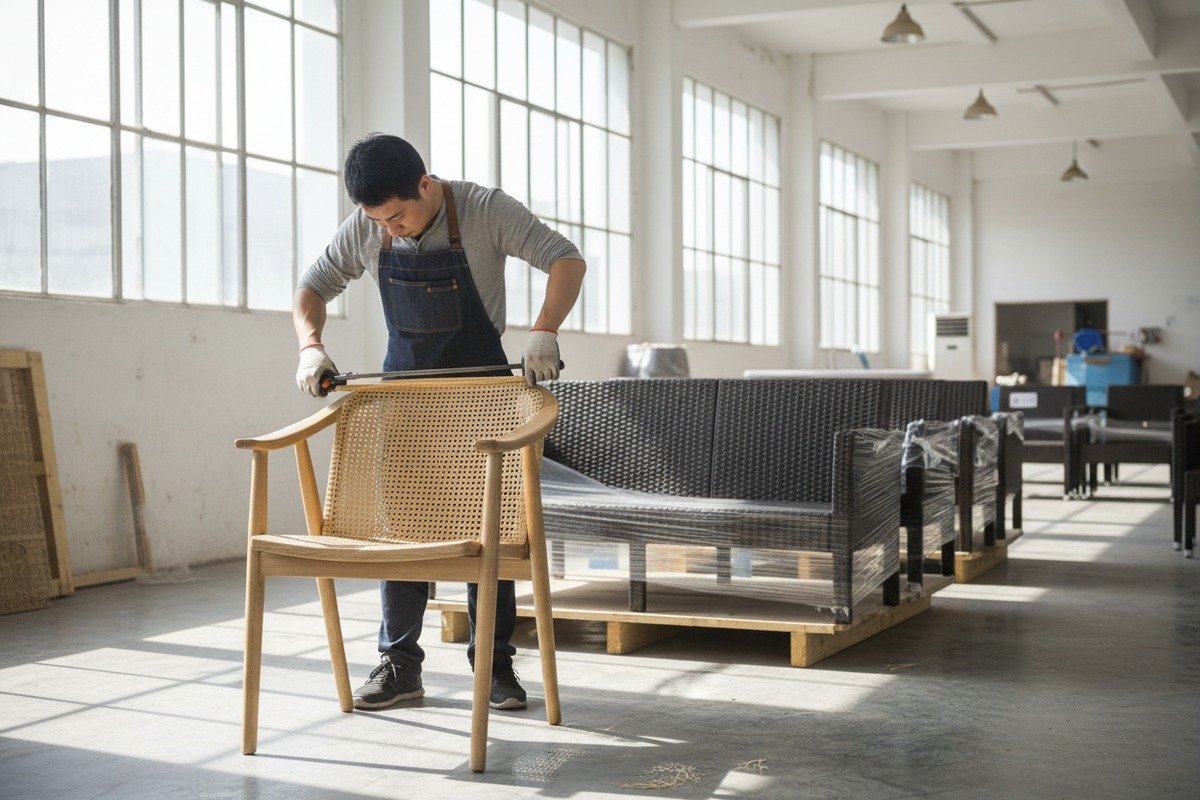
Start With Your End Application
The single biggest factor is environment. Natural rattan cane webbing 3 excels indoors. It breathes well, feels warm to the touch, and develops a rich patina over time. Our clients in the Netherlands and Spain love it for dining chairs, headboards, and cabinet inserts. But natural rattan does not tolerate prolonged moisture or direct sunlight. It can warp, crack, or grow mildew if left unprotected on a patio.
Synthetic rattan, on the other hand, is engineered for the elements. Made from high-density polyethylene (HDPE) 4, it resists UV rays, rain, and temperature swings. Hotels in Dubai and resorts in Thailand order synthetic webbing from us specifically because it holds up in poolside and balcony settings without extra treatment.
Consider Your Production Volume and Tolerance for Variation
Natural rattan is a biological product. No two rolls are identical. Strand width, color tone, and flexibility can shift between batches — even from the same Indonesia 5n harvest region. If your factory runs tight tolerances on a CNC-cut furniture line, this variation can slow production or increase waste.
Synthetic webbing comes off an extrusion line with repeatable specs. Color, width, and tensile strength 6 stay consistent roll after roll. For factories that produce thousands of identical units per month, this predictability saves time and money.
Weigh Aesthetics Against Practicality
Many designers refuse to compromise on the organic look. The subtle imperfections in natural cane — slight color shifts, gentle texture changes — carry a handcrafted story that plastic cannot fully replicate. Premium indoor furniture brands position this as a selling point.
Synthetic versions have improved dramatically. Modern HDPE formulations now include UV stabilizers 7 and anti-aging compounds that mimic the grain and tone of real rattan. Still, side by side, most experienced buyers can spot the difference.
Quick Decision Matrix
| Decision Factor | Natural Rattan | Synthetic Rattan |
|---|---|---|
| Best environment | Indoor, dry climates | Outdoor, humid, coastal |
| Aesthetic feel | Warm, organic, unique | Uniform, modern, clean |
| Production consistency | Variable between batches | Highly consistent |
| Eco-credentials | Renewable, biodegradable | Recyclable (HDPE types) |
| Maintenance level | Moderate (needs protection) | Low (soap and water) |
| Price per square meter | Higher | Lower |
| Fumigation certificate 8 | Required for export | Not required |
Think About Your Brand Story
If your retail clients market sustainability and artisan craftsmanship, natural rattan supports that narrative. If they compete on price, durability, and outdoor versatility, synthetic is the smarter sourcing choice. Many of our wholesale partners actually stock both and let their downstream customers decide.
Will the price gap between natural and synthetic webbing affect my wholesale profit margins?
Pricing conversations come up in nearly every WhatsApp message we receive from purchasing managers. The gap between natural and synthetic is real, and it moves with the market.
Yes, the price gap significantly affects margins. Natural rattan costs more due to limited tropical supply, manual processing, and export restrictions, while synthetic webbing offers lower per-unit costs and stable pricing, giving wholesalers more predictable profit margins on large-scale orders.

Why Natural Rattan Costs More
Natural rattan goes through at least seven production steps before it reaches your factory floor. Vines must grow for five to seven years before harvest. Workers hand-cut, sort, peel, split, splice, weave, dry, and treat each batch. Our own processing facility in Indonesia handles these steps, and we see firsthand how labor-intensive they are.
On top of that, Indonesia — the world's largest rattan producer — banned raw rattan exports in 2011. This policy pushed global prices up and forced buyers to import only processed rattan products. Climate variability also affects yields. A bad rainy season can reduce harvest volumes and push prices even higher the following quarter.
Synthetic Pricing Is More Stable
Synthetic rattan webbing is produced through high-temperature polyethylene extrusion. Raw PE pellets are a global commodity with relatively stable pricing. There are no geographic harvesting restrictions, no seasonal yield swings, and no fumigation requirements. Production scales efficiently — double your order, and the per-meter cost drops.
Cost Comparison Table
| Cost Factor | Natural Rattan | Synthetic Rattan |
|---|---|---|
| Raw material source | Tropical palm vines 9 (limited regions) | PE pellets (global commodity) |
| Processing steps | 7+ manual/mechanical steps | Extrusion and molding |
| Export documentation | Fumigation certificate required | Standard export docs only |
| Price stability | Volatile (seasonal, policy-driven) | Relatively stable |
| Bulk discount potential | Moderate | High |
| Shipping weight | Lighter per roll | Slightly heavier |
| Shelf life in warehouse | Needs climate control | No special storage needed |
How This Hits Your Margins
If you wholesale natural rattan cane webbing, your landed cost is higher, but your selling price can also be higher. Premium furniture factories and interior designers will pay more for authentic cane. The margin per roll can be strong — if your supply chain is reliable.
Synthetic webbing gives you thinner margins per roll but higher volume. Outdoor furniture factories order in bulk and reorder frequently. Predictable costs mean predictable profits. You also save on warehousing because synthetic does not need climate-controlled storage.
A Practical Tip
We advise many of our wholesale partners to carry both product lines. Use natural rattan for premium and boutique accounts. Use synthetic for high-volume outdoor contracts. This dual approach spreads risk and captures both ends of the market.
How can I ensure the quality consistency of natural rattan for my large-scale orders?
Quality complaints are the fastest way to lose a wholesale client. In our experience shipping to over a dozen countries, we have learned that consistency in natural rattan requires deliberate effort at every stage.
Ensure natural rattan quality consistency by specifying grade standards upfront, requesting pre-shipment samples from each batch, partnering with suppliers who control their own Indonesian processing, and requiring documentation of treatment processes including anti-mildew boiling and bleaching.
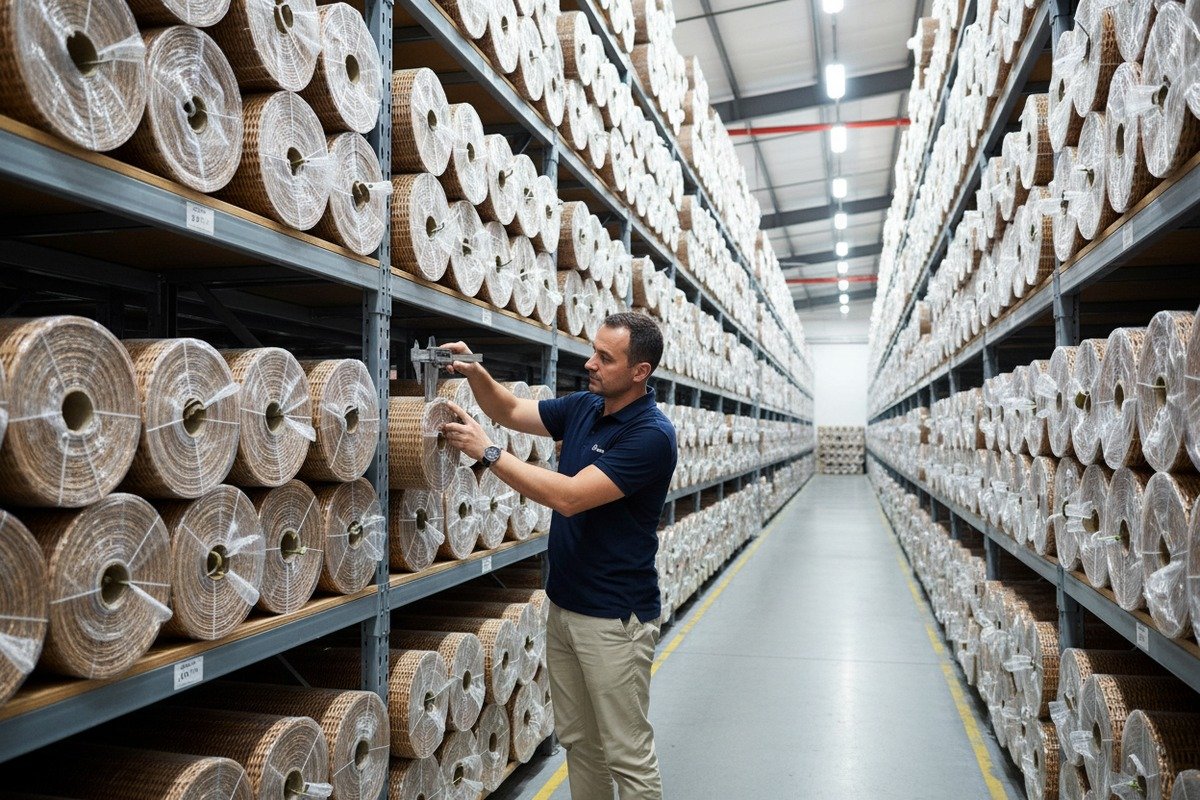
Understand What Creates Variation
Natural rattan is a plant. Its properties change based on the vine's age, the region it grew in, the season it was harvested, and the way it was processed. Indonesian rattan is generally considered superior in color uniformity and tensile strength compared to Vietnamese or Chinese-grown alternatives. But even within Indonesia, quality varies between Kalimantan, Sulawesi, and Sumatra harvests.
Strand width, weave tightness, color uniformity, and surface smoothness are the four areas where variation shows up most. A 24-inch roll from one batch may have slightly wider strands or a warmer tone than the next. For a single chair, this is charming. For a 5,000-unit production run, it is a problem.
Set Clear Grade Specifications
Before placing any order, define your grade requirements in writing. At our facilities, we sort rattan into grades based on strand uniformity, surface defects, color consistency, and weave pattern accuracy. Here is how grading typically works:
| Grade | Strand Uniformity | Color Consistency | Surface Quality | Best Use |
|---|---|---|---|---|
| Grade A (Premium) | Very high — minimal width variation | Uniform light beige to straw | Smooth, no visible knots or splits | High-end furniture, visible panels |
| Grade B (Standard) | Moderate — slight variation allowed | Minor tone shifts between strands | Occasional small knots acceptable | Mid-range furniture, concealed panels |
| Grade C (Economy) | Lower — noticeable variation | Visible color differences | Rougher texture, some imperfections | Budget furniture, backing material |
Work With Vertically Integrated Suppliers
One of the biggest mistakes purchasing managers make is sourcing from middlemen who do not control the processing chain. They buy from one harvester, send to another workshop for peeling, and another for weaving. Each handoff introduces variation.
We invested in our own rattan processing facility in Indonesia precisely to solve this problem. When you control harvesting relationships, sorting standards, treatment protocols, and weaving quality, you reduce the variables that cause batch-to-batch inconsistency.
Require Treatment Documentation
Proper treatment is non-negotiable. Natural rattan must be boiled, bleached, and treated with anti-mildew compounds to ensure durability and prevent pest issues during shipping. Always request documentation of these steps. Untreated or under-treated rattan will develop mold in transit — especially on ocean freight during humid months.
Also remember that natural rattan requires a fumigation certificate for export. Verify that your supplier handles this as part of their standard process. If they treat fumigation as an afterthought, that is a red flag.
Request Batch Samples Before Full Shipment
For any order above 500 square meters, we recommend requesting a sample cut from the actual production batch — not a showroom sample made six months ago. Compare it against your approved reference sample for color, strand width, flexibility, and weave pattern. This adds a few days to lead time but saves weeks of headaches if a problem is caught early.
Build a Supplier Evaluation Checklist
Here is what we recommend evaluating before committing to a long-term natural rattan supplier:
- Do they own or directly manage processing facilities in Indonesia?
- Can they provide batch-specific samples before shipping?
- Do they have documented grading standards?
- What is their standard treatment process (boiling, bleaching, anti-mildew)?
- Do they handle fumigation certificates in-house?
- What is their typical lead time for orders of 1,000+ square meters?
- Can they provide references from other furniture factories or wholesalers?
What are the specific maintenance differences I should explain to my retail clients?
When our wholesale partners sell rattan webbing to retail clients and furniture shops, maintenance questions always follow. Giving clear guidance upfront reduces returns and builds trust in your brand.
Tell retail clients that natural rattan needs regular dusting, occasional damp wiping, humidity control, and protection from direct sunlight and water, while synthetic rattan only requires simple cleaning with soap and water and handles sun, rain, and humidity without special care.

Natural Rattan Maintenance: Educate Your Clients Early
Natural rattan is beautiful but demands respect. It is a natural fiber that reacts to its environment. Here are the key points your retail clients need to know:
Humidity control matters. Natural rattan absorbs moisture from the air. In very humid environments, it can swell and develop mildew. In very dry environments, it can become brittle and crack. The ideal range is 40–60% relative humidity 10. Clients in tropical climates should ensure good ventilation around rattan furniture. Clients in dry, heated interiors may want to use a humidifier during winter months.
Keep it out of direct sunlight. Prolonged UV exposure bleaches natural rattan and weakens its fibers. Position rattan furniture away from south-facing windows or use curtains to filter harsh light.
Clean gently. Dust with a soft brush or vacuum with a brush attachment. For deeper cleaning, use a damp cloth — never soaking wet. Avoid harsh chemical cleaners. A mild soap solution works for stubborn spots. Let the piece dry completely before use.
Treat periodically. A light coat of furniture oil or beeswax once or twice a year keeps natural rattan supple and prevents drying. This is especially important in air-conditioned rooms where humidity drops.
Synthetic Rattan Maintenance: Keep It Simple
Synthetic rattan is low-effort by design. This is one of its biggest selling points for outdoor and commercial applications. Here is what your clients need to know:
Clean with soap and water. A mild detergent and a soft brush handle most dirt. Rinse with a hose and let it air-dry. That is it for routine cleaning.
No special treatments needed. Synthetic rattan does not need oiling, waxing, or humidity control. Quality HDPE formulations include built-in UV stabilizers that prevent fading and cracking for years.
Pest-proof. Unlike natural rattan, synthetic webbing is immune to insects and rodents. This is a significant advantage in tropical and coastal locations.
Side-by-Side Maintenance Guide for Your Clients
We recommend giving your retail clients a simple printed or digital card with this information. Here is a table you can adapt:
| Maintenance Task | Natural Rattan | Synthetic Rattan |
|---|---|---|
| Dusting | Weekly with soft brush | As needed |
| Deep cleaning | Damp cloth, mild soap | Soap, water, soft brush, hose rinse |
| UV protection | Keep away from direct sun | Built-in UV resistance |
| Moisture protection | Avoid water exposure; control humidity | Waterproof — no restrictions |
| Conditioning | Oil or wax 1–2 times per year | Not needed |
| Pest prevention | Store properly; ensure fumigation treatment | Not needed — pest-proof |
| Ideal environment | Indoor, 40–60% humidity | Indoor or outdoor, any climate |
Turn Maintenance Into a Sales Advantage
Here is a tip from our experience working with wholesale partners around the world. Do not treat maintenance as a burden — frame it as a story. Natural rattan requires care because it is a living material with character. That care ritual is part of the premium experience. Luxury buyers appreciate this.
For synthetic rattan clients, the pitch is different. Emphasize freedom. No worrying about rain. No seasonal oiling. Just enjoy the furniture. This resonates strongly with hospitality buyers, outdoor restaurant owners, and busy homeowners who want style without upkeep.
The hybrid trend is also worth mentioning to forward-thinking clients. Some manufacturers are now combining natural rattan fibers with synthetic binders or protective coatings. These hybrid materials aim to deliver the authentic look of natural cane with enhanced resistance to moisture and UV. It is still an emerging category, but it signals where the market is heading.
Conclusion
Natural and synthetic rattan cane webbing each serve distinct sourcing needs. Understand your application, budget, and client expectations — then choose accordingly or stock both for maximum market coverage.
Footnotes
1. Explains the materials and manufacturing process of synthetic rattan. ↩︎
2. Explains UV degradation and its impact on material properties. ↩︎
3. Provides a comprehensive overview of natural rattan, its origin, and uses. ↩︎
4. Describes the properties, uses, and applications of HDPE. ↩︎
5. Replaced with the authoritative Wikipedia page for Indonesia. ↩︎
6. Provides a clear definition of tensile strength and its importance in materials science. ↩︎
7. Found a clear explanation of UV stabilizers and their function. ↩︎
8. Outlines international standards (ISPM 15) for wood packaging material fumigation. ↩︎
9. Details the botanical origin of rattan from climbing palm vines. ↩︎
10. Replaced with a definition from NOAA’s National Weather Service glossary. ↩︎


 English
  Español de México
  العربية
  Deutsch
  Français
  Русский