
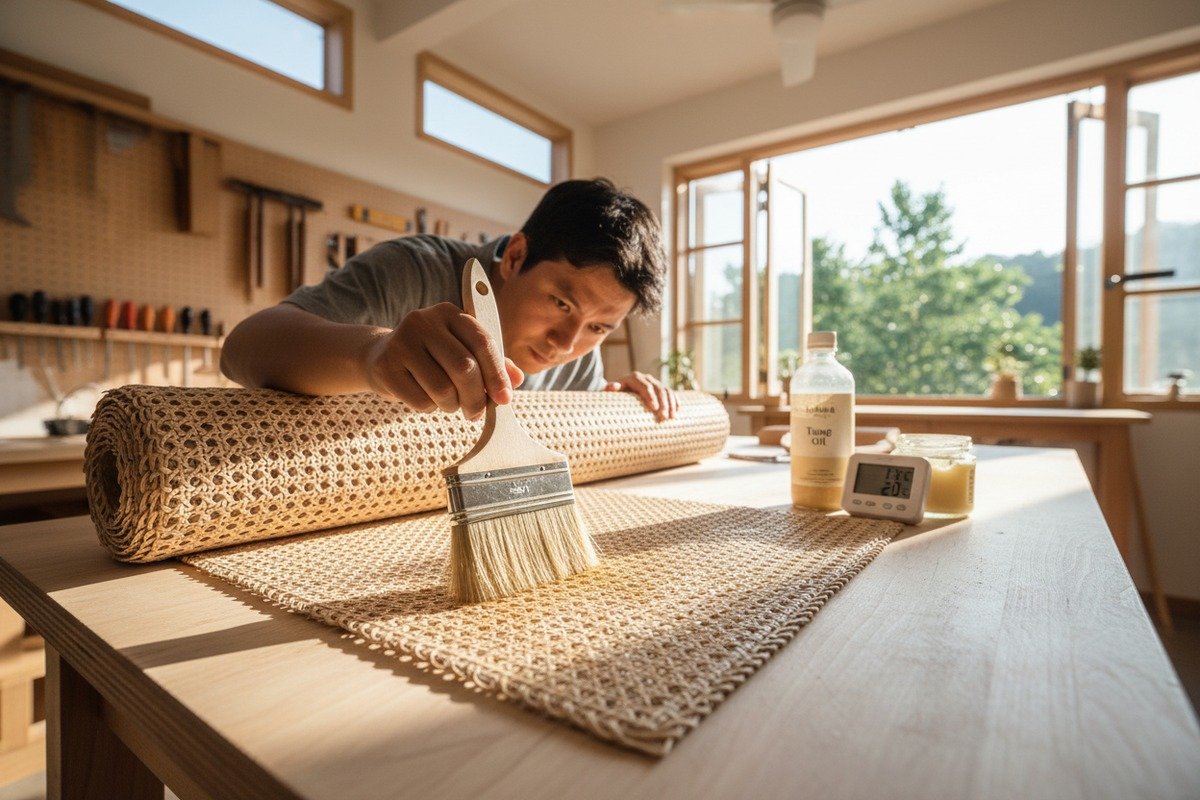
Every year, our production team in Indonesia deals with the same frustrating problem during the rainy season—mold creeping onto rattan cane webbing 1 before it even leaves the warehouse. We’ve lost batches, fielded complaints from buyers, and spent years refining how we handle this natural material. If you work with rattan, you know the pain: one wrong move in storage or shipping, and beautiful webbing turns into a fuzzy, discolored mess.
To prevent mold on rattan cane webbing, you must control humidity below 60%, ensure good airflow around stored materials, clean webbing regularly with a soft brush, dry it thoroughly after any moisture contact, and apply protective treatments like linseed oil or tung oil at least two to four times per year.
Mold on rattan is not just a cosmetic issue. It weakens fibers, causes foul odors, and can ruin an entire shipment palm family 2. Whether you are a furniture factory owner, a material wholesaler, or a procurement manager sourcing bulk orders, this guide covers every angle. Let’s walk through warehouse storage, cleaning techniques, supplier verification, and shipping protection step by step.
How can I store my rattan cane webbing to prevent mold growth in my warehouse?
We've shipped rattan cane webbing to over a dozen countries, from the Netherlands to Saudi Arabia tung oil 3. The number one complaint we hear? Mold after arrival. Nine times out of ten, the root cause traces back to how buyers store the material once it reaches their warehouse Sulfur fumigation 4.
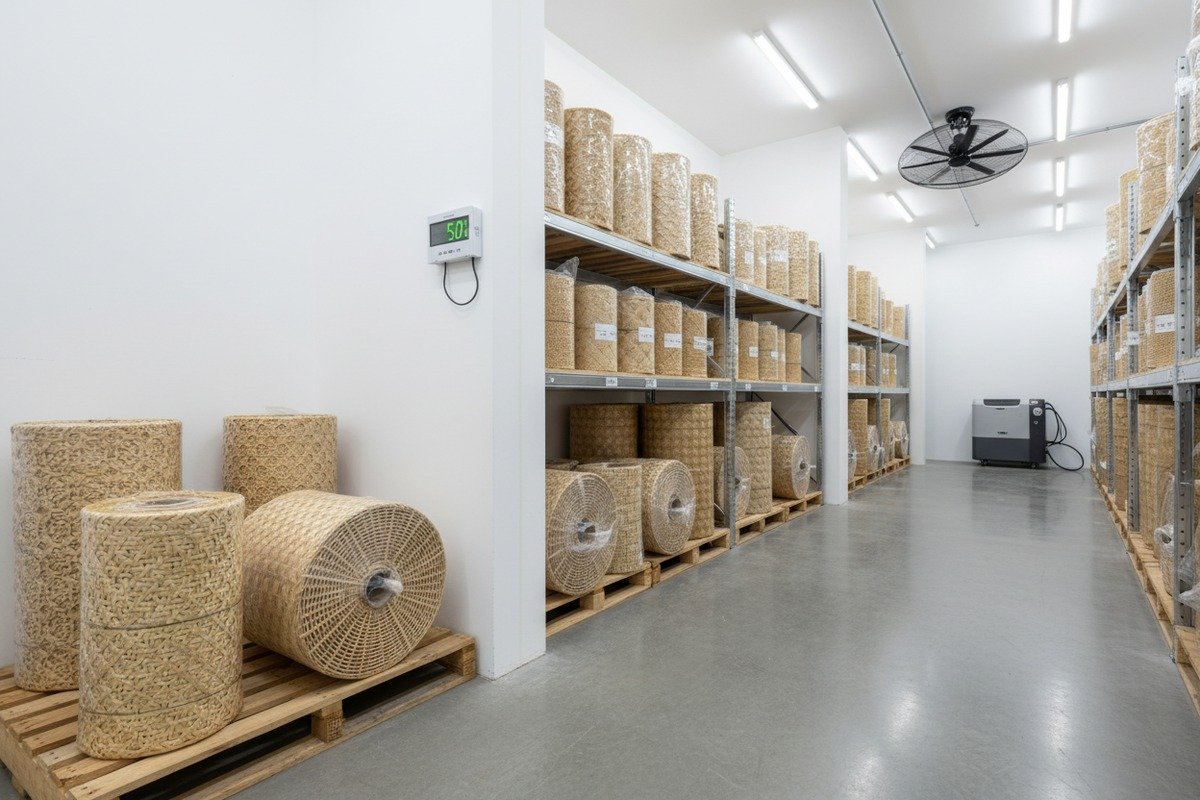
Store rattan cane webbing in a dry, well-ventilated warehouse with humidity between 40–60%. Keep rolls elevated off the floor on pallets or shelving, away from walls, and never in basements or bathrooms. Use dehumidifiers, silica gel packs, and fans to maintain consistent airflow.
Why Rattan Absorbs Moisture So Easily
Rattan cane webbing comes from the outer skin of the rattan vine 5, a member of the palm family. Its natural fibers are porous. They absorb water quickly—this is actually useful during installation, since soaking webbing for about three hours makes it pliable enough to stretch across frames. But that same absorbency becomes a liability in storage.
When humidity exceeds 60% 6, rattan fibers soak up ambient moisture. Dust and debris on the surface trap that moisture further. Without airflow, mold spores 7 find a perfect breeding ground. The result? White or green fuzzy patches, musty smells, and weakened material.
Key Storage Practices
Here are the rules we follow in our own Foshan warehouses and recommend to every buyer:
- Elevate stock off the ground. Use wooden pallets or metal shelving. Concrete floors transfer moisture.
- Leave space between rolls. Never stack rolls tightly together. Air needs room to circulate.
- Keep distance from walls. At least 15 cm gap. Walls collect condensation, especially in climates with large day-night temperature swings.
- Use dehumidifiers. In humid regions like Southeast Asia or the Gulf states, a commercial dehumidifier 8 is not optional—it's essential.
- Add silica gel or bamboo charcoal bags. Place these inside wrapped rolls or near stored stock. They absorb excess humidity passively.
- Install fans. Even a simple ceiling fan improves airflow dramatically.
- Avoid direct sunlight exposure. UV rays dry rattan too fast, causing brittleness and cracking. Indirect ventilation is better.
Storage Environment Comparison
| Storage Factor | Ideal Condition | Risk Zone |
|---|---|---|
| Relative Humidity | 40–60% | Above 60% (mold) / Below 30% (brittleness) |
| Temperature | 18–25°C (64–77°F) | Above 35°C or rapid fluctuations |
| Airflow | Consistent, gentle circulation | Stagnant, sealed rooms |
| Floor Contact | Elevated on pallets/shelves | Directly on concrete or damp floor |
| Light Exposure | Indirect, diffused light | Direct sunlight or total darkness |
| Proximity to Walls | 15 cm+ gap | Flush against wall |
Seasonal Considerations
In winter, dry heat from radiators or heaters can crack rattan. Consider a humidifier to keep levels above 30%. In summer or monsoon seasons, run dehumidifiers aggressively. We advise our buyers in tropical countries to inspect stock weekly during peak humidity months.
One of our Thai clients, a purchasing manager sourcing cane webbing in bulk, started placing bamboo charcoal bags inside each roll after receiving our recommendation. His mold complaints dropped to nearly zero within one season. Small changes, big results.
What is the best way to clean my rattan cane to stop mold from coming back?
When our quality control team inspects returned goods or receives photos from concerned buyers, the first question we ask is: "How are you cleaning it?" The answer usually reveals the problem. Harsh chemicals, soaking in water, or simply ignoring dirt buildup—all of these invite mold to return.
The best way to clean rattan cane webbing is to dust it weekly with a soft brush, wipe it monthly with a damp cloth and mild soap like Murphy's Oil Soap, dry it immediately and thoroughly, and apply a natural oil such as linseed or tung oil every three months to create a protective moisture barrier.
Step-by-Step Cleaning Routine
Follow this simple schedule. It works for both raw webbing rolls in storage and installed webbing on furniture.
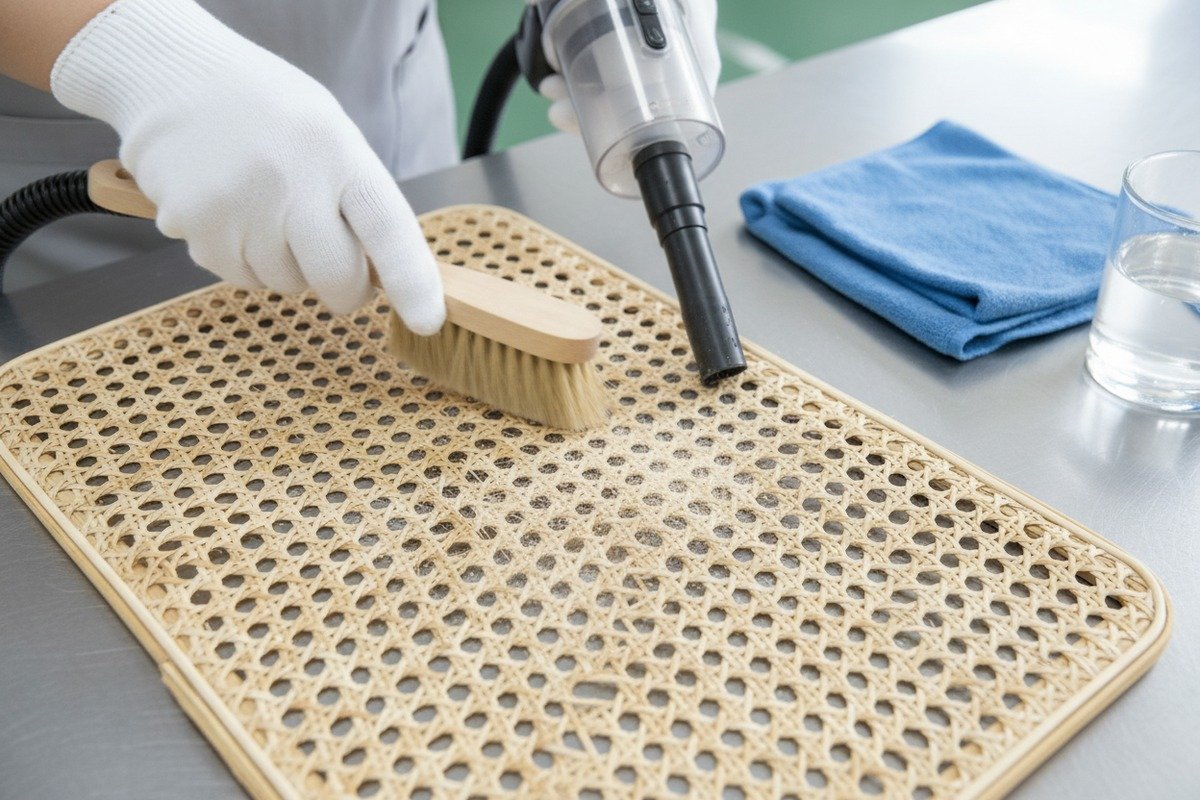
Weekly: Use a soft-bristle brush or a vacuum with a brush attachment. Remove dust, pet hair, food crumbs, and debris from the weave. Dust traps moisture. Remove the dust, and you remove a major mold trigger.
Monthly: Mix a few drops of mild soap (Murphy's Oil Soap works well) into warm water. Dampen a soft cloth—not soaking wet, just damp. Wipe down both sides of the webbing. Follow immediately with a dry cloth. Let it air dry completely in a well-ventilated area. Never leave rattan damp.
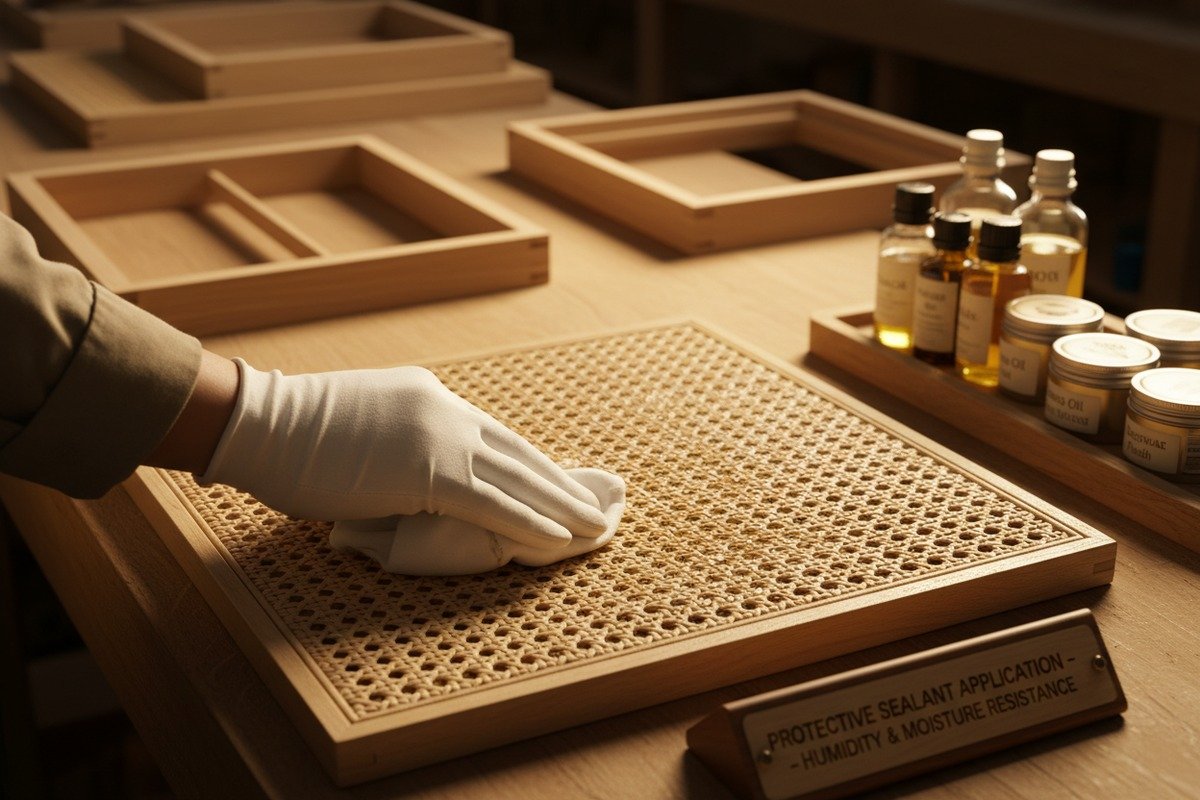
Quarterly: Apply a thin coat of natural oil. Linseed oil 9 and tung oil offer the best moisture barriers. Lemon oil and mineral oil are easier to apply but provide lighter protection. Use a clean rag, apply evenly, and let it absorb for 15–20 minutes. Wipe off excess. Oil both the top and bottom surfaces.
Natural vs. Chemical Cleaning Solutions
This debate comes up constantly among our buyers. Here is our honest take, based on years of dealing with both approaches.
| Method | Pros | Cons | Best For |
|---|---|---|---|
| White vinegar + water (1:1) | Natural, safe around kids/pets, kills surface mold | Mild smell, may need multiple applications | Light mold, routine maintenance |
| Baking soda paste | Gentle abrasive, lifts stains, deodorizes | Requires thorough rinsing, can leave residue in weave | Surface stains, musty odors |
| Hydrogen peroxide (3%) | Stronger mold killer, bleaches stains | Can lighten natural rattan color | Moderate mold on light-colored webbing |
| Diluted bleach (10:1 water to bleach) | Kills severe mold fast | Damages fibers over time, fades color, harsh fumes | Last resort for heavy infestation |
| Murphy's Oil Soap | Gentle, cleans and conditions | Not a mold killer on its own | Regular cleaning, grime removal |
The Oil Debate: Which One Works Best?
We have tested multiple oils on our production samples. Here is what we found:
- Linseed oil penetrates deeply and creates a strong moisture barrier. It takes longer to dry (up to 24 hours). Best for webbing that faces humid conditions.
- Tung oil is similar to linseed but dries slightly faster and leaves a harder finish. Excellent for furniture-grade webbing.
- Mineral oil is easy to apply, dries quickly, and keeps webbing supple. However, its moisture protection is lighter and needs more frequent reapplication.
- Lemon oil smells pleasant and is good for quick conditioning. It does not penetrate as deeply as linseed or tung.
A common mistake: over-oiling. Too much oil makes the surface sticky and attracts dust, which defeats the purpose. Apply thin, even coats. Less is more.
Removing Existing Mold
If mold has already appeared, act fast. Take the webbing outside if possible. Brush off loose mold with a dry brush. Then wipe with a vinegar-water solution. For stubborn spots, make a paste of baking soda and water, scrub gently with a soft brush, and rinse with a damp cloth. Dry completely in a well-ventilated area with indirect airflow. Avoid drying in direct sunlight—UV kills mold, yes, but it also fades and dries out rattan fibers, making them brittle. Once dry, apply a light coat of oil to restore the moisture barrier.
How do I know if my rattan supplier has pre-treated my materials against mold?
Over the years, we have seen buyers receive rattan cane webbing that looked perfect on arrival but developed mold within weeks. They assumed their supplier had treated the material. In most cases, no one had asked, and no treatment had been applied. This is a critical blind spot in the rattan supply chain.
Ask your rattan supplier directly for documentation of anti-mold treatment, including the type of treatment used, the date of application, and any certificates or test reports. Reputable suppliers will provide fumigation records, sulfur treatment details, or anti-fungal coating specifications as standard practice for export-grade materials.
What Pre-Treatments Should You Expect?
Not all suppliers treat their rattan the same way. Some don't treat it at all. Here is what to look for and ask about.
Sulfur fumigation is common in Indonesian and Chinese rattan processing. It whitens the rattan (producing bleached cane webbing) and inhibits mold and insect activity. However, sulfur treatment has limits—its protection fades over time, especially in humid storage conditions.
Anti-fungal chemical dips involve soaking rattan in a fungicidal solution before drying. This offers longer-lasting protection but adds cost. Some buyers prefer this for shipments heading to tropical climates.
Heat treatment / kiln drying reduces moisture content in the fibers before packaging. Lower moisture content at the point of shipping means less risk during transit. At our own processing facility in Indonesia, we kiln-dry webbing to below 12% moisture content before packing.
Oil or wax coating applied at the factory provides a surface barrier. This is less common for raw webbing rolls but is standard for finished rattan furniture components.
Questions to Ask Your Supplier
Here is a checklist we recommend every procurement manager use when evaluating a new rattan supplier:
- Has this webbing been treated against mold? If yes, what method was used?
- What is the moisture content at the time of packing?
- Can you provide a fumigation certificate or treatment report?
- What packaging do you use to protect against moisture during shipping?
- Do you offer different grades of treatment for different climates?
- What is your return or replacement policy if mold is found on arrival?
Red Flags and Green Flags
| Green Flags (Trustworthy Supplier) | Red Flags (Proceed with Caution) |
|---|---|
| Provides fumigation or treatment certificates | Cannot explain what treatment was applied |
| Specifies moisture content at packing | No mention of moisture control |
| Uses moisture-barrier packaging (PE film, silica packs) | Ships in open bundles or thin plastic only |
| Offers different treatment levels for different markets | One-size-fits-all approach for all climates |
| Has own processing facility or strong factory relationships | Sources from unknown or rotating subcontractors |
| Welcomes factory audits or video inspections | Avoids questions about production process |
Our Approach at Seafan Rattan
At our Foshan headquarters and our Indonesian processing facility, we maintain a transparent quality chain. Every batch of rattan cane webbing goes through moisture testing before packing. We record the treatment method, date, and moisture reading. When clients like Ranoo—our purchasing manager client in Thailand—ask for documentation, we provide it as part of the standard export package. We believe this should be industry standard, not a special request.
If your current supplier cannot answer basic questions about mold treatment, it may be time to look for a more transparent partner. The cost of replacing moldy stock far exceeds the cost of proper pre-treatment.
How can I protect my bulk rattan webbing orders from moisture during long-distance shipping?
Shipping rattan from our factories in Foshan and Indonesia to destinations like the Netherlands, Australia, or the USA means weeks on the ocean. Container conditions fluctuate wildly—temperatures swing, humidity spikes, and condensation forms on container walls. We call it "container rain." It's the silent killer of rattan shipments.
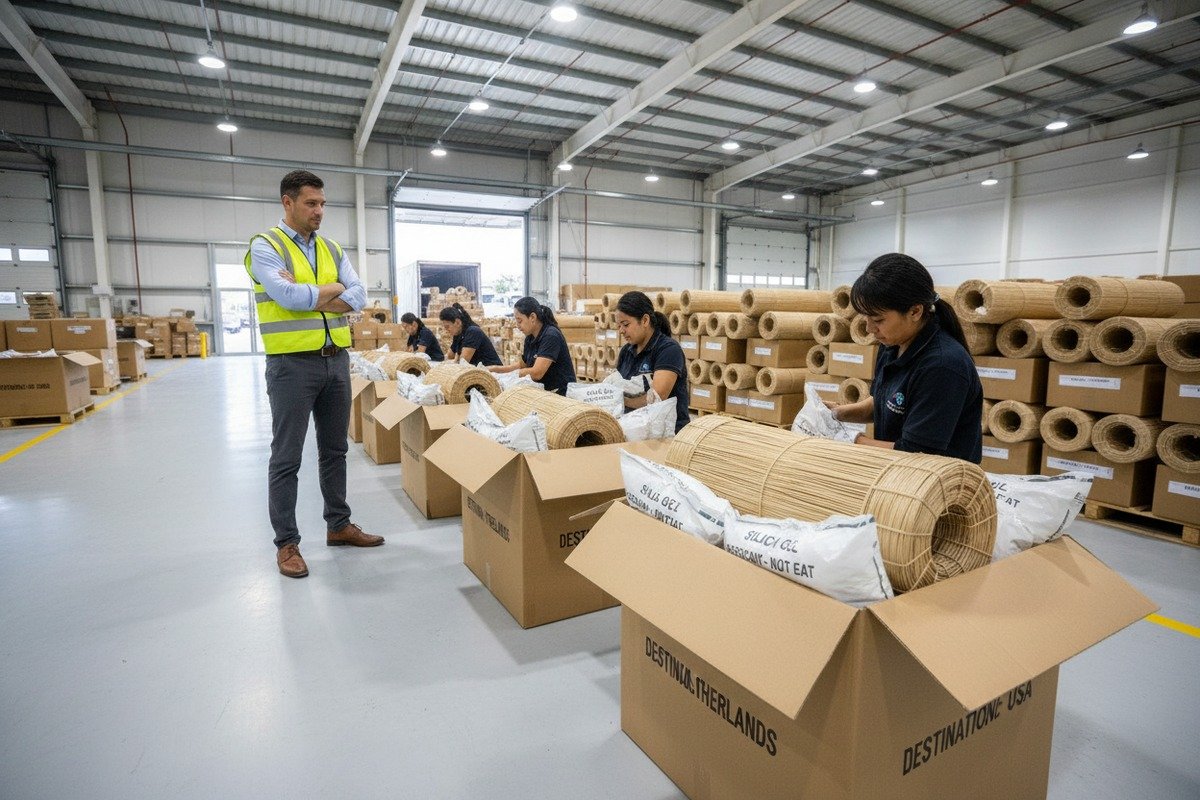
Protect bulk rattan webbing during long-distance shipping by using moisture-barrier packaging such as PE-lined cartons or vacuum-sealed bags, placing desiccant packs (calcium chloride or silica gel) inside each carton, loading containers with proper airflow gaps, and ensuring the rattan's moisture content is below 12% before sealing.
Understanding "Container Rain"
Ocean freight containers are metal boxes. During transit, the temperature outside changes as the ship passes through different climate zones. When warm, moist air inside the container meets the cooler metal walls, condensation forms. Water droplets fall onto cargo. This is container rain, and it can soak rattan even if the material was perfectly dry when packed.
Packaging Best Practices
Based on our export experience to over a dozen countries, here is what works:
Inner packaging: Each roll or sheet of rattan cane webbing should be wrapped in PE (polyethylene) film or placed in a sealed poly bag. This creates an immediate moisture barrier around the material.
Desiccant packs: Place calcium chloride desiccant bags (also called container desiccants) inside each carton and also hanging from the container ceiling or walls. Calcium chloride absorbs far more moisture than standard silica gel 10—up to 300% of its own weight.
Carton quality: Use double-wall corrugated cartons. Single-wall cartons soften quickly when humidity rises and offer almost no protection.
Pallet loading: Leave gaps between carton stacks inside the container. Do not push cargo flush against container walls. Use kraft paper or cardboard dividers between the cargo and the container walls to buffer against condensation drip.
Shipping Protection Comparison
| Protection Method | Moisture Absorption Capacity | Cost Level | Best For |
|---|---|---|---|
| Silica gel packs | Moderate (30–40% of its weight) | Low | Short transit times, dry routes |
| Calcium chloride desiccant | High (200–300% of its weight) | Medium | Long ocean freight, humid routes |
| PE film wrapping | Barrier (blocks moisture contact) | Low | All shipments, inner layer |
| Vacuum-sealed bags | Excellent barrier | Medium-High | High-value or bleached webbing |
| Container liner (foil) | Full container barrier | High | Large bulk orders, sensitive materials |
Pre-Shipping Moisture Check
Before any shipment leaves our facility, we check the moisture content of the rattan with a pin-type moisture meter. The target is below 12%. If the reading is higher, the batch goes back for additional drying. This one step prevents the vast majority of transit mold issues.
We also document the packing date, moisture reading, and desiccant quantity in each container on the packing list. This gives the buyer a clear record. If any issue arises on arrival, both parties can trace the root cause.
What to Do on Arrival
When your container arrives, open it promptly. Do not leave sealed containers sitting in the sun for days. Inspect a sample of cartons immediately. Check for condensation inside the PE wrapping. If any moisture is found, unpack and air-dry the webbing in a ventilated space before moving to warehouse storage.
We advise our clients to photograph the container condition, desiccant packs, and any visible moisture upon opening. This documentation is invaluable for insurance claims or supplier negotiations if problems occur.
Protecting rattan during shipping is a shared responsibility. The supplier must pack correctly. The buyer must receive correctly. When both sides do their part, mold during transit becomes a rare exception rather than a recurring headache.
Conclusion
Mold on rattan cane webbing is preventable. Control humidity, clean regularly, verify supplier treatments, and protect shipments with proper packaging. These steps save material, money, and trust in your supply chain.
Footnotes
1. Authoritative Wikipedia page explaining caning in furniture, which is synonymous with rattan cane webbing. ↩︎
2. Provides detailed information on the Arecaceae family, commonly known as palms. ↩︎
3. Authoritative Wikipedia page explaining tung oil, its source, characteristics, and uses. ↩︎
4. Authoritative Wikipedia page on fumigation, which includes sulfur dioxide as a fumigant, providing context for the term. ↩︎
5. Authoritative Wikipedia page providing a comprehensive overview of rattan, which is a climbing palm vine. ↩︎
6. Explains mold growth conditions and health risks associated with high humidity. ↩︎
7. Explains what mold spores are and how they contribute to mold growth. ↩︎
8. Provides a general overview of dehumidifiers, their function, and types. ↩︎
9. Authoritative Wikipedia page detailing linseed oil, its origin, properties, and applications. ↩︎
10. Authoritative Wikipedia page defining and describing silica gel, its properties, and uses. ↩︎


 English
  Español de México
  العربية
  Deutsch
  Français
  Русский