
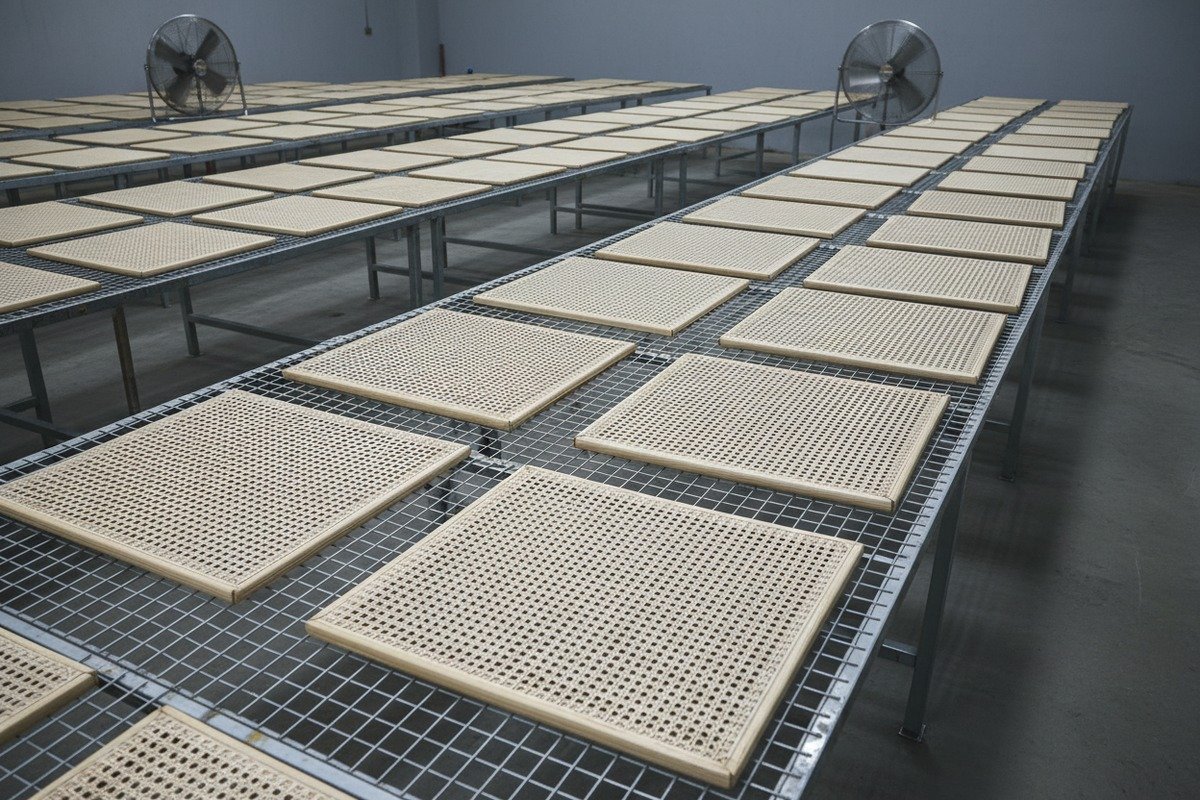
Every rainy season, our warehouse teams deal with the same recurring challenge that every rattan buyer dreads — moisture getting into cane webbing shipments before they reach the end customer.
To properly handle and restore damp rattan cane webbing, you should air-dry it slowly in a well-ventilated area away from direct heat, treat any mold with diluted vinegar or mild bleach solution, and apply a breathable finish afterward. Never use intense heat or seal the cane with impermeable coatings, as rattan must breathe to stay flexible and avoid cracking.
Whether you received a bulk shipment with moisture damage or noticed mold growing on stored rolls, this guide walks you through every step mild bleach solution 1. We will cover safe drying methods, mold removal, color restoration, and long-term storage strategies to keep your rattan inventory in top condition.
How can I safely dry my damp rattan cane webbing without causing it to warp?
When we ship rattan rolls across oceans to buyers in the Netherlands, the US, or Australia, transit humidity can sometimes leave the material damper than expected. The panic of seeing wet cane webbing is real, but the wrong reaction — blasting it with heat — can cause far more damage than the moisture itself.
To safely dry damp rattan cane webbing, place it flat in a shaded, well-ventilated area and use fans to circulate air gently. Avoid direct sunlight, hair dryers on high heat, or industrial heaters. Rattan should dry gradually over 24 to 48 hours to prevent warping, cracking, and fiber distortion.
Why Rattan Reacts Differently to Moisture
Rattan is not like hardwood lumber. It is a vine-based natural material 2 that needs ambient moisture to maintain its flexibility. When rattan cane webbing 3 gets too wet, its fibers swell. When it dries too fast, those fibers shrink unevenly. This uneven shrinkage 4 is what causes warping, curling, and sometimes permanent distortion in the weave pattern.
Think of it this way: rattan wants to breathe. It absorbs and releases moisture naturally throughout its lifespan. The goal of drying is not to remove all moisture. The goal is to bring the material back to a balanced state — roughly matching the humidity of the environment where it will be used.
Step-by-Step Safe Drying Process
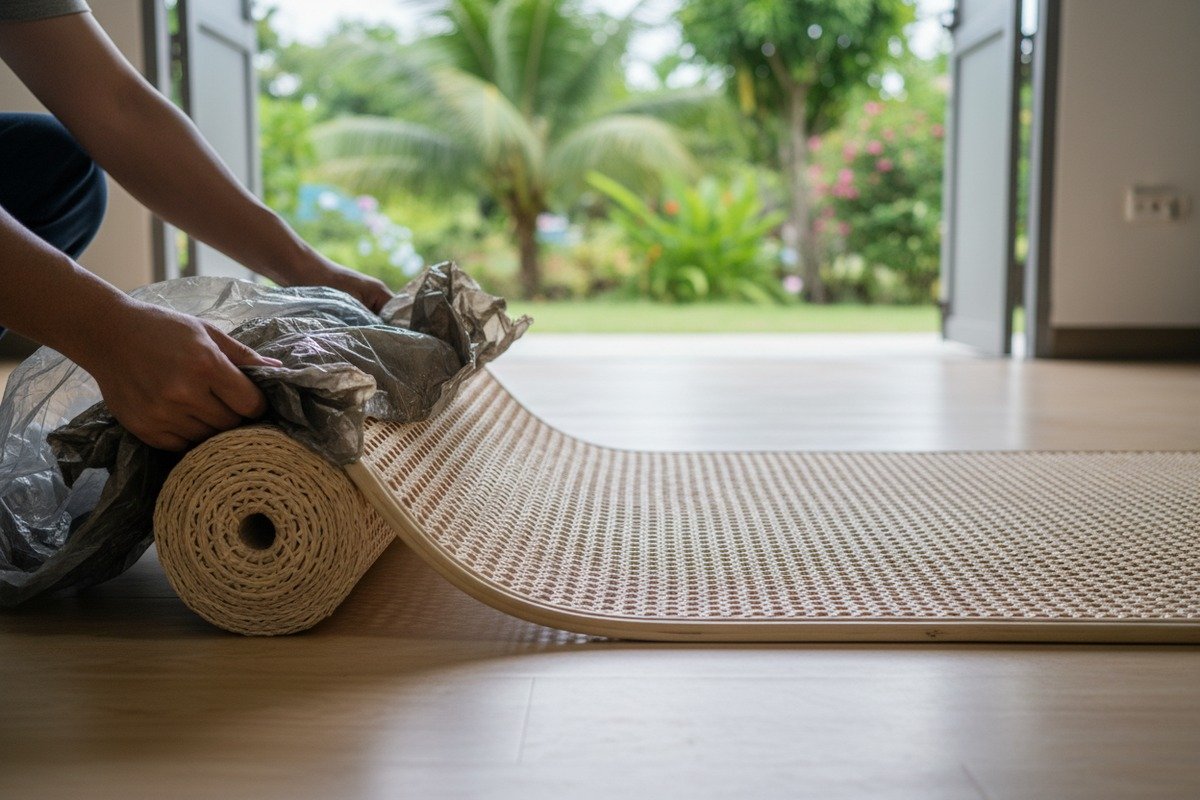
- Remove wet packaging immediately. Cardboard, plastic wrap, and kraft paper trap moisture against the rattan surface. Strip all packaging as soon as you notice dampness.
- Unroll the webbing. Leaving damp cane in a tight roll creates uneven drying. Lay it flat on a clean, dry surface or hang it loosely.
- Position fans for air circulation. Do not point the fan directly at the rattan. Instead, aim it to move air around the room. Cross-ventilation works best.
- Check every 6 to 8 hours. Feel the cane. It should gradually become less cool and clammy to the touch. Flip the webbing once halfway through drying.
- Allow 24 to 48 hours. Do not rush. Even if the surface feels dry, the inner fibers may still hold moisture.
Drying Methods Compared
| Drying Method | Risk Level | Drying Time | Recommended? |
|---|---|---|---|
| Gentle air circulation with fans | Low | 24–48 hours | Yes |
| Shaded outdoor area with breeze | Low | 18–36 hours | Yes, if weather is dry |
| Direct sunlight | Medium-High | 6–12 hours | No — causes discoloration and brittleness |
| Hair dryer on low setting | Medium | Variable | Only for small spot-drying |
| Industrial heater or heat gun | High | 1–4 hours | No — causes warping and cracking |
What About Slightly Damp Cane During Installation?
Here is something many buyers do not realize: rattan cane webbing is actually meant to be installed while slightly damp. Standard practice involves soaking cane webbing in room-temperature water for 20 to 30 minutes before installation. The damp cane is flexible and easy to press into grooves. As it dries over the next 24 hours, it shrinks and tightens, creating a taut surface.
So if your rattan arrives slightly damp from transit, it may actually be closer to an ideal working state than bone-dry material. The key distinction is between "workably damp" and "soaking wet with standing water." The first is fine. The second needs controlled drying before use.
Temperature Matters More Than You Think
Never soak or dry rattan using hot water or hot air. High temperatures raise the fine hairs on the underside of cane strands. This gives the surface a fuzzy, rough texture and turns the color from warm honey to dull gray. Room-temperature water and ambient-temperature air are always the safest choices.
What should I do if my bulk rattan shipment arrives with moisture damage?
Over the years, our logistics team has handled thousands of container shipments from our Indonesia processing facility to clients across Europe, the Middle East, and Southeast Asia. Occasionally, despite careful packing, condensation inside shipping containers causes moisture issues. Here is what we recommend when that happens.
If your bulk rattan shipment arrives with moisture damage, immediately unpack all rolls, inspect each one for mold or discoloration, separate affected pieces from dry stock, and begin gentle air drying in a ventilated space. Document the damage with photos for insurance or supplier claims, and never stack wet rolls together.

First Response: The Critical First Two Hours
The clock starts ticking the moment you open that container. Moisture-damaged rattan left in sealed packaging will develop mold within 48 to 72 hours in warm climates. Your priority is to get air to the material as fast as possible.
Open all boxes and remove plastic wrapping. If rolls are bound with ties, cut them so the cane can relax and breathe. Do not stack wet rolls on top of each other — the weight compresses damp fibers and creates permanent flat spots in the weave.
Sorting and Grading Damaged Stock
Not all moisture damage is equal. Some rolls may have light surface dampness that dries within hours. Others may show early mold spots, water stains, or significant discoloration. Sort your shipment into categories so you can prioritize treatment.
| Damage Level | Signs to Look For | Action Required |
|---|---|---|
| Light dampness | Cool to touch, no visible spots, normal color | Air dry 24 hours, then inspect |
| Moderate moisture | Slight musty smell, minor dark spots on edges | Air dry, treat spots with diluted vinegar, monitor |
| Heavy moisture | Visible mold, strong odor, gray or green discoloration | Isolate immediately, full mold treatment, assess usability |
| Structural damage | Soft or mushy fibers, weave pulling apart | Likely unsalvageable for premium use, document for claims |
Documenting for Claims
If you are a purchasing manager receiving a large order, proper documentation protects your business. Take timestamped photos of the sealed container before unloading. Photograph the packaging condition, the moisture on the surface of rolls, and any visible mold. Measure the moisture content if you have a moisture meter — readings above 18% for rattan indicate excessive moisture.
Keep a sample of the damaged packaging. Note the container number, bill of lading details, and shipping dates. This documentation is essential whether you are filing an insurance claim or working with your supplier on a replacement or credit.
Preventing Future Shipping Moisture Issues
In our experience exporting to tropical and temperate climates alike, we have found that moisture barriers inside shipping containers make a significant difference. Desiccant packs placed between rolls absorb excess humidity during transit. Kraft paper wrapping with ventilation holes works better than sealed plastic, which traps condensation.
When placing orders, communicate with your supplier about the destination climate. A shipment heading to humid Bangkok requires different packing than one going to dry Riyadh. Good suppliers adjust their moisture protection strategy based on the route and season.
Inspecting the Wooden Frame
For rattan webbing already installed on furniture frames, check the wood beneath the cane. Prolonged moisture can cause the wooden frame to swell, weaken at joints, or begin to rot. If the frame is compromised, repairing the webbing alone will not solve the problem. You will need to address the structural integrity of the frame first.
How do I remove mold and restore the original color of my damp rattan?
When clients contact us about mold-stained rattan, the first thing we ask is how long the mold has been present. Early-stage surface mold is relatively simple to treat. Deep, embedded mold that has been growing for weeks requires more aggressive intervention and sometimes cannot be fully reversed.
To remove mold from rattan cane webbing, scrub the affected area with a soft brush dipped in a solution of one part white vinegar to four parts water or a mild bleach solution of one tablespoon bleach per quart of water. Rinse thoroughly, then air dry completely. For color restoration, lightly sand discolored areas and apply a breathable oil finish.
Understanding Mold on Natural Rattan
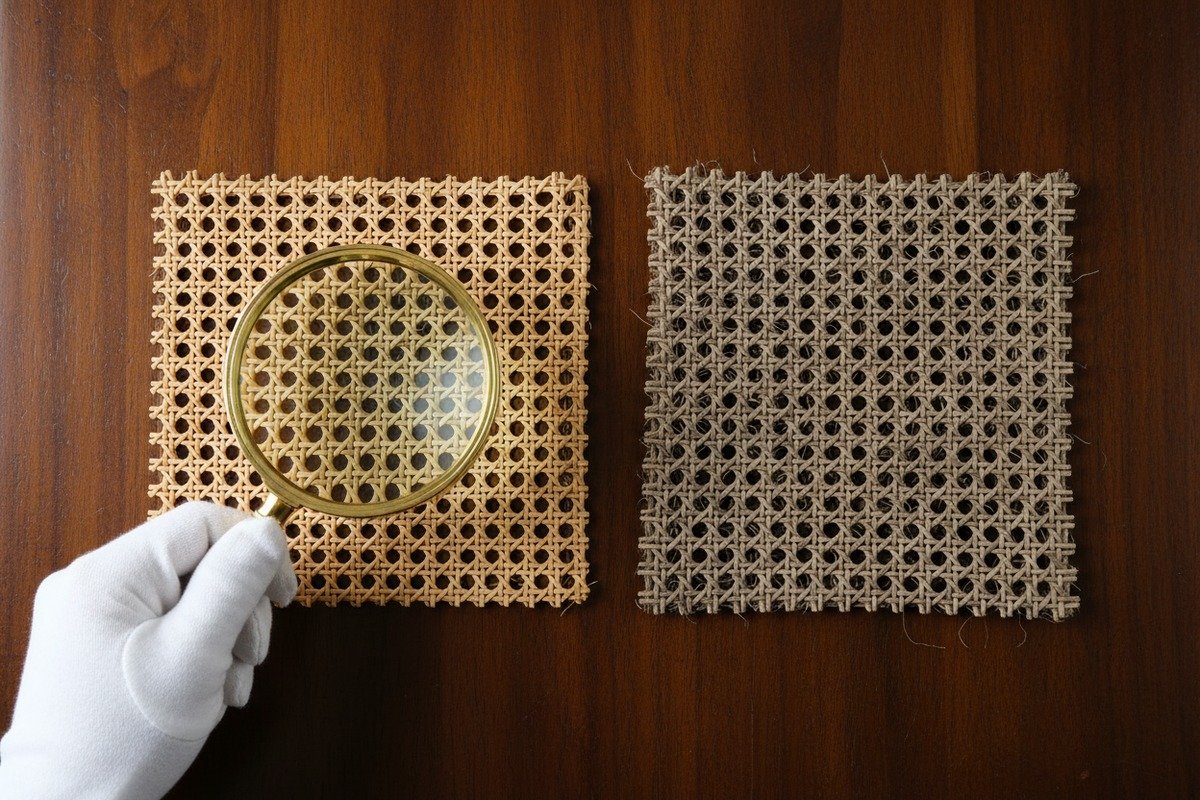
Mold feeds on organic materials in humid conditions. Rattan, being a natural plant fiber 5, is a perfect host. The most common types you will encounter are white surface mold, which looks powdery, and green or black mold, which penetrates deeper into the fiber.
White surface mold is usually cosmetic. It sits on top of the cane and can be removed with minimal effort. Green and black molds are more stubborn. They send root-like structures into the material, making complete removal more difficult.
Cleaning Solution Options
You have two primary options for mold removal. Each has trade-offs.
Vinegar solution — Mix one part white vinegar with four parts warm water. This is safer for the rattan fibers and less likely to cause bleaching or discoloration. It works well for light to moderate surface mold. The acidity of vinegar kills most mold species and inhibits regrowth.
Mild bleach solution — Mix one tablespoon of household bleach per quart of water. This is stronger and more effective against deep mold, but it carries a risk of lightening the rattan's natural color if left on too long. Always test on a small, hidden area first.
Step-by-Step Mold Removal Process
- Take the rattan outdoors or to a well-ventilated area. Mold spores become airborne during cleaning.
- Wear gloves and a dust mask.
- Use a soft-bristle brush — an old toothbrush works for small areas — and dip it in your chosen cleaning solution.
- Scrub the moldy areas gently, following the direction of the weave.
- Wipe with a clean, damp cloth to remove loosened mold and cleaning solution.
- Rinse the treated area with clean water. Do not soak the rattan.
- Dry the rattan completely using the gentle air-drying methods described above.
- Once dry, inspect the treated areas. Repeat if mold traces remain.
Restoring Color After Mold Removal
Mold stains can leave dark patches even after the mold itself is gone. Restoring the original warm, honey-toned color of natural rattan requires a careful approach.
| Color Issue | Cause | Restoration Method |
|---|---|---|
| Gray or dull patches | Hot water exposure or prolonged dampness | Light sanding with 220-grit sandpaper, then oil treatment |
| Dark brown stains | Deep mold penetration | Oxalic acid wood bleach, rinse, dry, then oil |
| Yellowing or uneven tone | UV exposure combined with moisture | Light sanding, followed by breathable tung oil or linseed oil |
| White haze or residue | Bleach solution left on too long | Rinse with clean water, dry, apply mineral oil |
The Critical Rule About Finishes
This is where many people make a costly mistake. After cleaning and restoring rattan, the instinct is to seal it with varnish, shellac, or polyurethane — just like you would with a wooden tabletop. Do not do this.
Rattan cane webbing must breathe. It needs to absorb and release ambient moisture 6 to stay flexible. An impermeable finish traps the cane in whatever moisture state it was in when sealed. Over time, the fibers become brittle underneath the coating. The cane cracks and breaks, and the damage is hidden until it is too late.
Instead, use breathable finishes 7. Mineral oil, linseed oil, or tung oil penetrate the fibers without forming a hard surface film. They enhance the natural color and provide mild moisture resistance while still letting the cane breathe.
Anti-Fungal Prevention for Humid Climates
If you operate in a consistently humid environment — say, coastal Thailand, the Philippines, or Indonesia — a one-time mold cleaning is not enough. Apply a specialized breathable anti-fungal treatment 8 designed for natural fibers. These products inhibit mold regrowth without sealing the surface. Reapply every 6 to 12 months depending on conditions.
How can I store my rattan rolls to prevent humidity issues in my warehouse?
Running three factories and managing inventory across multiple climate zones has taught our team that proper storage is far cheaper than damage repair. Most moisture problems with rattan cane webbing are preventable with the right warehouse setup and handling protocols.
To prevent humidity issues, store rattan rolls in a dry, well-ventilated warehouse with relative humidity between 40% and 60%. Keep rolls elevated off the floor on pallets or racks, avoid stacking more than three rolls high, and use desiccant packs between layers. Never store rattan near exterior walls where condensation collects.

The Ideal Storage Environment
Rattan does not need a climate-controlled clean room. But it does need consistent conditions. The biggest enemy is not humidity itself — it is dramatic swings between wet and dry. A warehouse that stays at 55% relative humidity 10 year-round is far better than one that cycles between 30% in winter and 80% in summer.
If you operate in a region with extreme seasonal changes, consider these measures:
- Install a hygrometer in your storage area and monitor it weekly.
- Use dehumidifiers during wet seasons.
- Ensure the roof has no leaks. Even a small drip onto a stack of rattan rolls can ruin hundreds of dollars of inventory overnight.
- Keep rattan away from loading dock doors that open frequently, exposing stock to outdoor humidity.
Physical Storage Best Practices
How you physically arrange the rattan in your space matters as much as the climate control.
Elevation — Always store rattan off the ground. Concrete warehouse floors collect condensation, especially in the early morning. Pallets, shelving racks, or even simple wooden battens create the air gap needed to prevent moisture transfer from the floor.
Spacing — Leave gaps between rolls and stacks. Air needs to circulate around each unit. Packing rattan tightly against walls or in corners restricts airflow and creates micro-climates where humidity concentrates.
Wrapping — Use breathable wrapping materials. Kraft paper is better than plastic film. If you must use plastic for dust protection, perforate it to allow air exchange. Never seal rattan in airtight packaging for long-term storage.
Storage Configuration Guide
| Storage Factor | Recommended | Avoid |
|---|---|---|
| Floor contact | Elevated on pallets or racks (min. 10 cm off floor) | Directly on concrete or dirt floors |
| Stacking height | Maximum 3 rolls high | Tall, heavy stacks that compress bottom rolls |
| Wall proximity | At least 30 cm from exterior walls | Pressed against cold exterior walls |
| Wrapping material | Breathable kraft paper, perforated plastic | Sealed polyethylene shrink wrap |
| Humidity range | 40%–60% relative humidity | Below 30% (too dry) or above 70% (too humid) |
| Light exposure | Indirect or artificial lighting | Direct sunlight from windows or skylights |
Rotation and Inspection Schedules
Implement a first-in, first-out inventory rotation system. Rattan that sits in storage for months without movement is more likely to develop moisture problems than stock that turns over regularly.
Schedule visual inspections at least once per month. Look for early signs of trouble: musty smells, condensation on packaging, soft spots in the rolls, or any visible mold. Catching a problem early — when it is just a damp patch on one roll — prevents it from spreading to your entire inventory.
Seasonal Adjustments
In our experience shipping to buyers in climates ranging from the dry deserts of Saudi Arabia to the tropical humidity of the Philippines, we have learned that storage protocols need seasonal adjustment. During monsoon season or summer humidity peaks, increase your dehumidifier usage and inspection frequency. During dry winters, the opposite risk emerges — rattan can become too dry and brittle. A simple room humidifier or occasional light misting can maintain the balance.
The key principle remains consistent: rattan is a living material that interacts with its environment. Respect that relationship, and your inventory will stay in sellable condition for months or even years.
Conclusion
Handling damp rattan properly comes down to patience, airflow, and respect for the material's natural need to breathe. Dry slowly, treat mold early, use breathable finishes, and store smartly.
Footnotes
1. Details the application and considerations of using a mild bleach solution for mold. ↩︎
2. Wikipedia is an authoritative source that lists rattan as a natural material. ↩︎
3. Provides a comprehensive overview of rattan as a material. ↩︎
4. This academic review explains how the anisotropy of wood and uneven moisture distribution cause uneven shrinkage and deformation, which is relevant to rattan. ↩︎
5. Provides scientific information on rattan as a natural plant fiber. ↩︎
6. Explains the necessity of ambient moisture for rattan’s flexibility. ↩︎
7. Explains the concept and types of breathable finishes for wood and natural materials. ↩︎
8. Discusses methods and biocides for anti-fungal treatment of natural fibers. ↩︎
9. Explains the effectiveness and safety of diluted vinegar for mold removal. ↩︎
10. Provides guidelines for ideal relative humidity for natural material preservation. ↩︎

 English
  Español de México
  العربية
  Deutsch
  Français
  Русский