
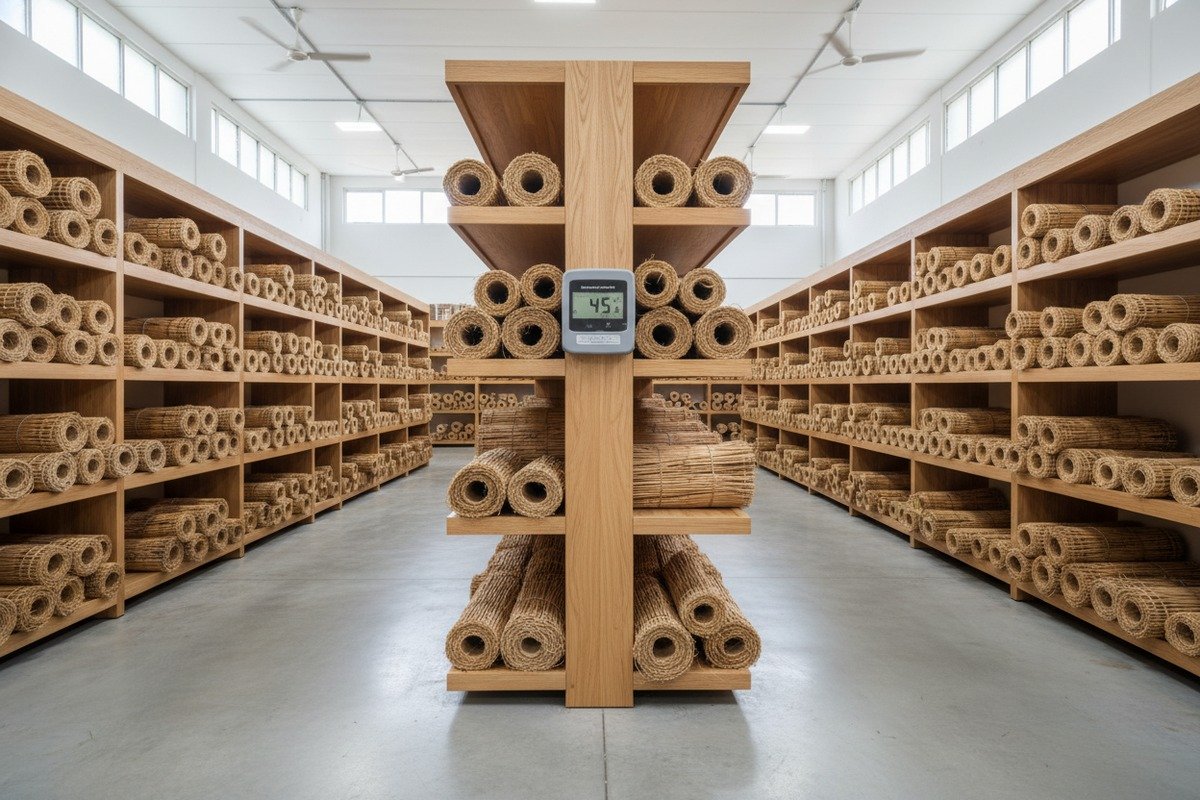
Every year, we see customers open rattan webbing rolls only to find mold, cracks, or permanent creases that make the material unusable. Working across our three factories and shipping to over a dozen countries, we know this pain firsthand.
To properly store rattan cane webbing rolls, keep them loosely rolled in a cool, dry, well-ventilated space at 40–50% humidity and below 70°F. Avoid direct sunlight, use breathable covers, and add silica gel packs to prevent mold, brittleness, and deformation over time.
Rattan is a living, breathing material. It reacts to every shift in temperature and moisture. The good news is that proper storage is simple once you know the rules. Let’s walk through each critical factor step by step so your rolls stay flexible, clean, and ready for any project.
How can I maintain the ideal humidity level to prevent mold on my rattan cane webbing?
Mold is the number one enemy we battle in our Indonesian processing facility. The tropical climate there taught us hard lessons about humidity control that we now pass on to every wholesale buyer.
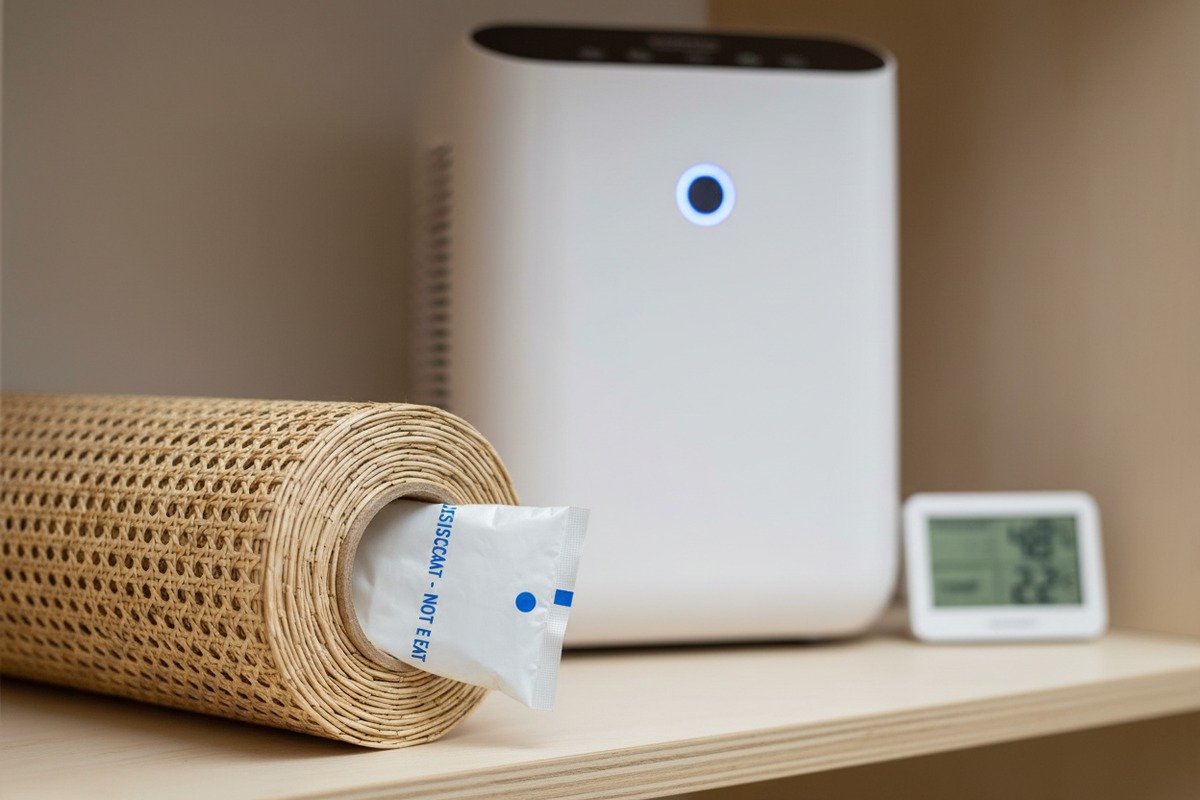
To prevent mold on rattan cane webbing, maintain ambient humidity between 40% and 50% using dehumidifiers, silica gel packs, or climate-controlled storage. Humidity above 70% creates conditions for mold and rot, while proper air circulation keeps moisture from settling on natural fibers.
Why Rattan Absorbs Moisture So Easily
Rattan cane webbing 1 is made from the peeled bark of rattan vines. These vines grow in the humid rainforests of Southeast Asia, Africa, and the Pacific. The fibers are hygroscopic 2. That means they actively pull moisture from the surrounding air. This is actually useful during installation — you soak webbing in warm water for 10 to 30 minutes so it softens and expands, then it contracts tight as it dries. But in storage, this same property works against you.
When humidity rises above 60%, the fibers absorb too much water. They swell. They stay damp. And damp organic material grows mold fast — sometimes within 48 hours in tropical conditions. We have seen entire pallets ruined during monsoon season at our warehouse in Indonesia before we installed proper ventilation.
Practical Humidity Control Methods
You don't need expensive equipment. Here are the most effective options ranked by cost and effectiveness:
| Method | Cost | Best For | Effectiveness |
|---|---|---|---|
| Silica gel packs 3 (reusable) | Low | Small batches, individual rolls | Good for short-term |
| Portable dehumidifier | Medium | Workshop or storage room | Very good year-round |
| Climate-controlled storage | High | Large inventory, warehouses | Excellent long-term |
| Natural ventilation + fans | Low | Dry climates only | Moderate |
Monitoring Is Key
Buy a simple digital hygrometer 4. Place it near your rattan rolls. Check it weekly. If humidity creeps above 55%, act immediately. Open windows if outdoor air is drier. Run a dehumidifier. Add more silica packs. The goal is consistency. Sudden swings between humid and dry conditions cause just as much damage as sustained high humidity, because repeated expansion and contraction weakens the fiber structure over time.
What About Basements and Garages?
Avoid them. Basements trap moisture. Garages experience extreme temperature swings. Both are terrible for rattan. A bedroom closet, a climate-controlled office, or a dedicated storage shelf in your workshop — these are far better choices. When we advise our buyers in the Netherlands and Spain, we always stress this point. European homes with central heating can get very dry in winter, which brings its own problems. But for mold prevention, dryness is the lesser evil. You can always rehydrate rattan. You cannot undo mold damage.
Should I store my rattan webbing rolls vertically or horizontally to avoid deformation?
This is one of the most common questions our export team receives from furniture factory buyers. The answer depends on roll size, storage duration, and available space.
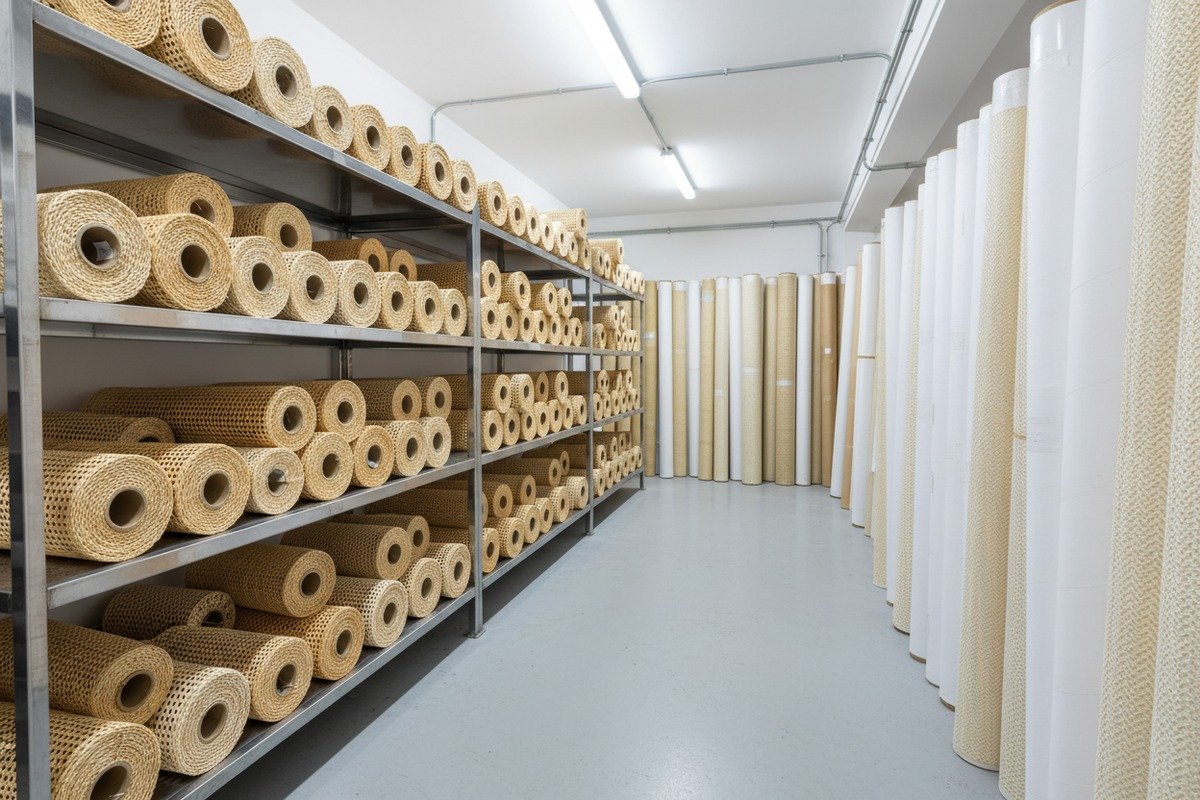
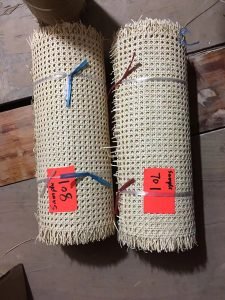
For rolls under 3 feet wide, store them horizontally on flat shelves with nothing stacked on top. For larger or longer rolls, store them vertically inside sturdy cylindrical tubes. Both methods work if you avoid tight rolling, heavy stacking, and direct pressure that causes permanent creases or flattening.
The Problem With Tight Rolling
When rattan webbing is rolled too tightly, the inner layers compress. Over weeks, this compression becomes permanent. The fibers develop creases that won't smooth out, even after soaking. We have tested this in our Foshan facility. Rolls stored tightly for more than 30 days showed visible curl memory that reduced usability by roughly 20 to 30 percent. Loose rolling — with a cardboard core of at least 3 inches in diameter — solves this problem.
Vertical vs. Horizontal: A Direct Comparison
| Factor | Vertical Storage | Horizontal Storage |
|---|---|---|
| Space efficiency | High — uses floor-to-wall height | Moderate — needs shelf width |
| Risk of crushing | Low | High if stacked |
| Risk of edge deformation | Moderate — bottom edge bears weight | Low if placed on flat surface |
| Best roll size | Over 3 feet wide or long rolls | Under 3 feet wide |
| Recommended support | Cylindrical tube or PVC pipe | Flat shelf or padded surface |
| Ease of access | Easy — pull out from rack | Easy — slide off shelf |
Our Recommended Approach
For our wholesale clients who store bulk quantities, we suggest a hybrid system. Place shorter rolls horizontally on slatted shelves. This allows air to circulate underneath. Stand taller rolls vertically in divided rack sections, each roll inside a breathable fabric sleeve. Rotate your stock on a first-in, first-out basis. This prevents any single roll from sitting too long in one position.
Periodic Unrolling
Every 4 to 6 weeks, unroll stored webbing briefly. Let it rest flat for a few hours. This resets any curl memory and lets you inspect for early signs of mold, pest damage, or brittleness. It takes just a few minutes per roll and can save you from discovering damage only when a customer order is due.
What is the best way to protect my bulk rattan inventory from dust and pests in the warehouse?
Running a rattan processing operation with partner factories across Foshan, we learned early that dust accumulation and insect infestations can destroy stock value faster than any market downturn.
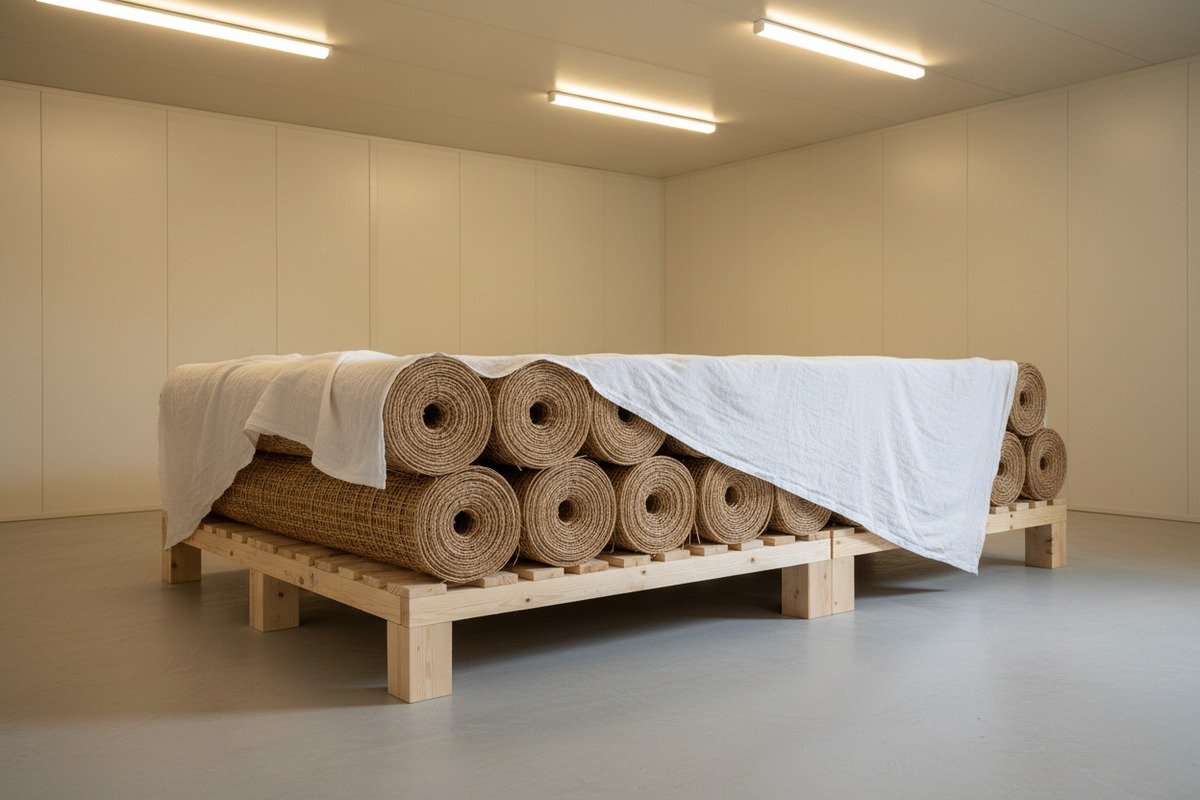
Protect bulk rattan inventory by wrapping each roll in breathable fabric or acid-free tissue, storing on elevated shelving away from walls, and using natural pest deterrents like cedar blocks or neem oil. Regular cleaning, inspection schedules, and sealed entry points keep dust and insects from reaching your stock.

Dust: More Than a Cosmetic Problem
Dust looks minor. It's not. Dust particles trap moisture against rattan fibers. This creates micro-environments where mold spores thrive. Dust also contains organic matter that attracts insects. A dusty roll of rattan webbing is an invitation for problems.
Clean each roll before storage. Use a soft-bristle brush or a low-powered vacuum with a brush attachment. Wipe down gently. Never use water to clean rolls before storage — that adds moisture you'll then need to remove.
Covering Options
Not all covers work equally well. Here's what we've tested:
| Cover Type | Breathability | Dust Protection | Pest Protection | Cost |
|---|---|---|---|---|
| Breathable cotton fabric bags | Excellent | Very good | Moderate | Low |
| Acid-free tissue paper wrapping | Good | Good | Low | Low |
| Ventilated plastic bins (with holes) | Moderate | Excellent | Good | Medium |
| Sealed plastic wrap | None | Excellent | Excellent | Low |
| Unbleached muslin cloth | Excellent | Good | Moderate | Low |
Sealed plastic wrap scores high on dust and pest protection but fails on breathability. We do not recommend it. Trapped moisture leads to mold within weeks, especially during shipping or in warehouses without climate control. Breathable cotton bags strike the best balance.
Pest Prevention Strategies
The most common pests that attack stored rattan are powder post beetles 5, termites, and carpet beetle larvae. These insects eat through natural fibers and leave behind fine powder and tunnels.
Prevention steps:
- Elevate all storage at least 6 inches off the floor on metal or treated wood shelving.
- Keep a 4-inch gap between rolls and walls.
- Place cedar blocks, lavender sachets, or neem oil 6 cotton balls near storage areas. These natural repellents deter many common pests without chemical residue.
- Inspect rolls monthly. Look for fine dust trails, small holes, or weakened spots.
- If you detect pests, isolate affected rolls immediately. Freeze small rolls at -4°F (-20°C) for 72 hours to kill larvae.
Labeling for Efficient Inventory Management
When you store dozens or hundreds of rolls, labeling saves time and prevents waste. Each roll should have a tag noting the width, length, weave pattern, material type (natural or synthetic), and the date of acquisition. Use the oldest stock first. This rotation ensures nothing sits forgotten in a corner long enough to degrade.
How do I ensure my stored rattan rolls stay flexible and don't become brittle before use?
We test flexibility on every batch that leaves our production lines. A brittle roll is a useless roll — it cracks during installation, frays at the edges, and wastes both material and labor.
To keep stored rattan rolls flexible, maintain consistent humidity between 40% and 50%, avoid direct sunlight and heat sources, and store rolls in a cool space below 70°F. Periodically mist rolls lightly with distilled water if stored in very dry climates, and always allow air circulation to prevent both over-drying and moisture buildup.
Why Rattan Becomes Brittle
Rattan fibers contain natural oils and moisture. These keep the material pliable. When you store rattan in an environment that is too dry — below 30% humidity — those oils and moisture evaporate. The fibers stiffen. They lose their ability to bend without cracking. This happens gradually. You might not notice it until you try to wrap a cabinet door and the webbing snaps along a fold line.
Direct sunlight accelerates this process. UV rays break down the lignin in rattan fibers 7, causing them to become weak and pale. Even indirect heat from radiators, heating vents, or south-facing windows can dry out rolls over weeks.
The Flexibility Test
Before using any stored roll, do a simple bend test. Take a small edge section and gently fold it 90 degrees. If it bends smoothly with no cracking sounds, it's good. If you hear or feel fibers snapping, the roll needs rehydration before use. Soak it in warm water for 15 to 30 minutes. It should regain most of its flexibility.
Natural vs. Artificial: Storage Differences
This is where natural and synthetic rattan webbing 8 diverge significantly. Our factories produce both. Here's how their storage needs compare:
| Property | Natural Rattan Webbing | Synthetic (Plastic-Based) Webbing |
|---|---|---|
| Moisture sensitivity | High — absorbs and releases water | Very low — waterproof |
| Brittleness risk | High in dry conditions | Low — stays flexible |
| Mold risk | High in humid conditions | None |
| UV sensitivity | High — fades and weakens | Moderate — some fading |
| Soaking required before use | Yes — 10 to 30 minutes | No |
| Storage complexity | High — needs climate control | Low — stores like fabric |
| Authentic look and feel | Excellent — warm, organic texture | Good — improving with new blends |
For buyers who want low-maintenance storage, synthetic webbing is a practical alternative. But for those who want the real deal — the natural warmth, the authentic texture, the way it tightens perfectly after soaking — natural rattan is worth the extra care.
Long-Term Flexibility Maintenance
If you plan to store rolls for more than 6 months, consider these steps:
- Apply a very light coat of food-grade mineral oil 9 to the surface every 3 to 4 months using a soft cloth. This replaces some of the natural oils that evaporate over time.
- Keep rolls away from concrete floors and walls. Concrete absorbs heat in summer and radiates cold in winter, creating micro-climates around your stock.
- In extremely dry climates (like parts of Saudi Arabia or Australia where we export), use a room humidifier set to 45%. This single step can extend roll usability from a few months to over two years.
How Long Does Properly Stored Rattan Last?
Based on our experience supplying clients across the US, Europe, and the Middle East, properly stored natural rattan webbing remains fully usable for 1 to 2 years. Some rolls have lasted even longer in ideal conditions. Poor storage, on the other hand, can render a roll useless within a few months. We have seen anecdotal reports from DIY communities suggesting a 20 to 50 percent usability loss from improper storage — warping, cracking, and mold making large sections unusable. That's a significant financial loss, especially for furniture factories processing hundreds of rolls per month.
Conclusion
Storing rattan cane webbing properly comes down to controlling humidity, choosing the right orientation, blocking pests and dust, and maintaining fiber flexibility. These simple steps protect your investment and keep every roll project-ready.
`
Footnotes
1. Explains what rattan cane webbing is, its origin, and manufacturing process. ↩︎
2. Provides a comprehensive definition and examples of hygroscopic materials. ↩︎
3. Explains how silica gel desiccants work and their high moisture adsorption capacity. ↩︎
4. Describes how a digital hygrometer works and how to use it for measuring humidity. ↩︎
5. Provides detailed information on powderpost beetles, their types, habits, and damage. ↩︎
6. Explains what neem oil is, how it works as a pesticide, and its environmental fate. ↩︎
7. Discusses lignin biosynthesis pathways and its importance in rattan wood properties. ↩︎
8. Compares tensile properties and discusses manufacturing of synthetic rattan strips. ↩︎
9. Replaced with a Wikipedia entry providing comprehensive information on food-grade mineral oil. ↩︎

 English
  Español de México
  العربية
  Deutsch
  Français
  Русский