

Every year, we see returns and complaints from furniture makers who picked the wrong webbing thickness furniture load-bearing capacity 1. A sagging chair seat or a cracked cabinet panel often traces back to one simple mistake: choosing rattan cane webbing based on looks alone.
Rattan cane webbing thickness directly determines furniture load-bearing capacity. Thicker fibers, such as 5mm-wide outer-shell rattan, offer significantly greater structural strength than thinner 3mm alternatives. Proper thickness selection depends on the furniture’s intended use, weave pattern, and frame support design.
In this guide, we break down exactly how thickness impacts strength, safety, and long-term durability 2 structural strength 3. Whether you build chairs, cabinets, or commercial seating, the details below will help you make smarter sourcing decisions.
How do I choose the right rattan thickness to ensure my furniture can handle heavy loads?
One question we hear constantly from our B2B buyers — especially furniture factories in the US and Europe — is which thickness grade to order for structural seating. Picking the wrong one wastes money and risks product recalls 4.
To handle heavy loads, choose 5mm-wide outer-shell rattan webbing (RA-5) with 1.5mm material thickness. This grade provides the widest fiber structure and highest tensile strength. For lighter applications like cabinet inserts, 3mm-wide webbing (RA-3) is sufficient, but it should never be used as the primary load-bearing surface in seating.
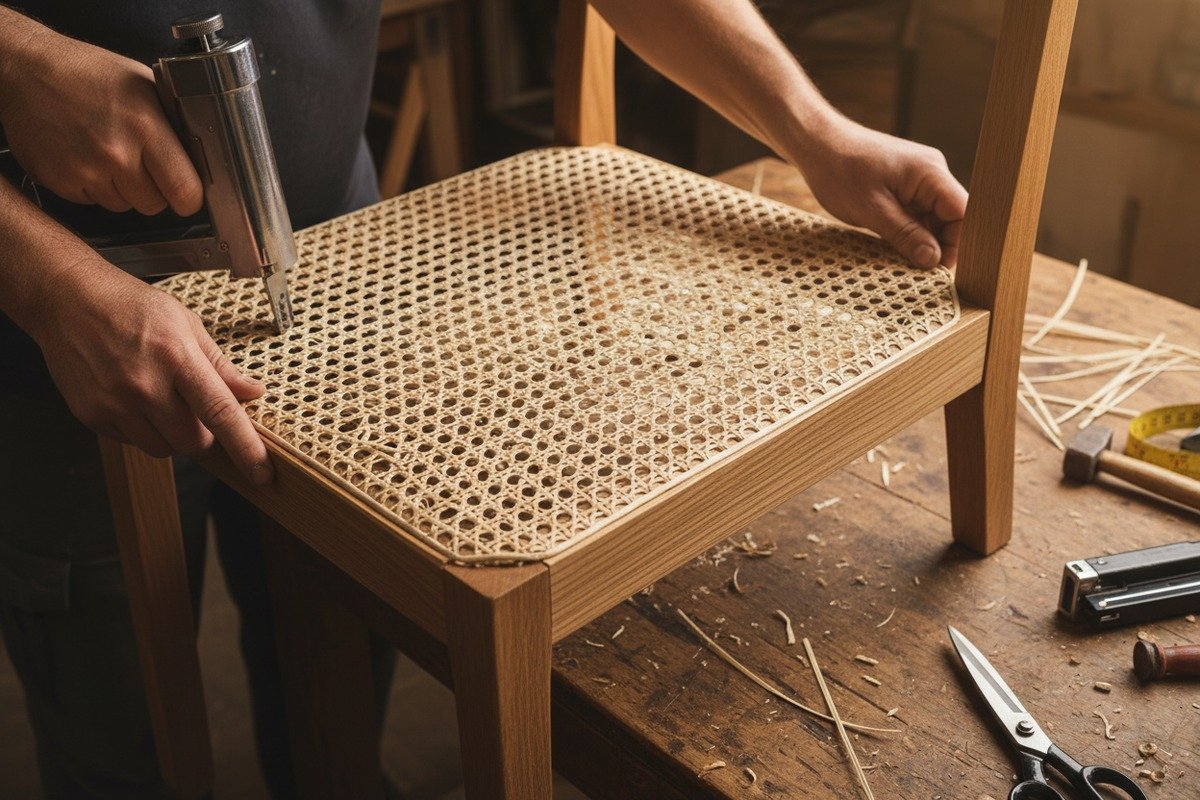
Understanding the Two Main Thickness Grades
At our processing facility in Indonesia, we produce two standard commercial grades of rattan webbing. The difference between them is not just visual. It is structural.
The RA-5 grade uses 5mm-wide fibers. Each strand is cut from the outer shell of the rattan palm. This outer layer is naturally denser and harder than the inner core. It resists bending and distributes weight across a wider surface area. The RA-3 grade uses 3mm-wide fibers. It is lighter, more flexible, and better suited for decorative or semi-structural roles.
Both grades share a consistent 1.5mm material thickness. But the fiber width changes how forces travel through the weave. A wider fiber means more contact area at each intersection point. More contact area means less stress concentration. Less stress concentration means longer life under load.
Matching Thickness to Furniture Type
Not every furniture piece needs the thickest webbing. Here is a simple guide we share with our wholesale clients:
| Furniture Type | Recommended Grade | Fiber Width | Typical Use Case |
|---|---|---|---|
| Dining chairs | RA-5 | 5mm | Daily seating, moderate to heavy loads |
| Lounge chairs | RA-5 | 5mm | Extended sitting, body-weight support |
| Cabinet door inserts | RA-3 | 3mm | Decorative panel, minimal load |
| Headboards | RA-3 | 3mm | Visual accent, no direct load |
| Bar stools | RA-5 | 5mm | Frequent use, shifting body weight |
| Room dividers | RA-3 | 3mm | Freestanding screen, no sitting load |
The Role of the Rattan Source Layer
This is a detail many buyers overlook. The rattan plant has two usable layers. The outer shell — called "cane" — is thin, hard, and dense. The inner core — called "rattan reed" — is softer and more porous.
Webbing made from the outer shell costs more. But it carries more weight. In our quality control tests, outer-shell webbing consistently outperforms inner-layer reed fabric in tension and compression. Inner-layer material is easier to paint and finish, but it is explicitly weaker. We always recommend outer-shell webbing for any application where the panel must support human weight.
Species and Origin Matter
The specific rattan species also affects strength. Indonesian rattan, particularly from Kalimantan and Sulawesi, is known for being tough yet flexible with excellent bearing capacity. The plants grow in tropical conditions that produce plump, well-proportioned fibers. At our own rattan processing facility in Indonesia, we select only Grade A raw material for our load-bearing webbing lines. This is why buyers like Ranoo in Thailand consistently specify Indonesian-origin material for their orders.
Will a thicker rattan webbing prevent my chair seats from sagging over time?
Sagging is the number one complaint we receive from furniture factories after their products hit the retail market. Our engineering team has spent years studying why some webbing panels hold their shape and others do not.
Thicker rattan webbing resists sagging better than thinner alternatives, but thickness alone does not guarantee a sag-free seat. Long-term performance depends on three combined factors: fiber width, weave pattern tightness, and proper frame support. Even thick webbing will sag if installed without adequate tensioning or if the frame span is too wide.
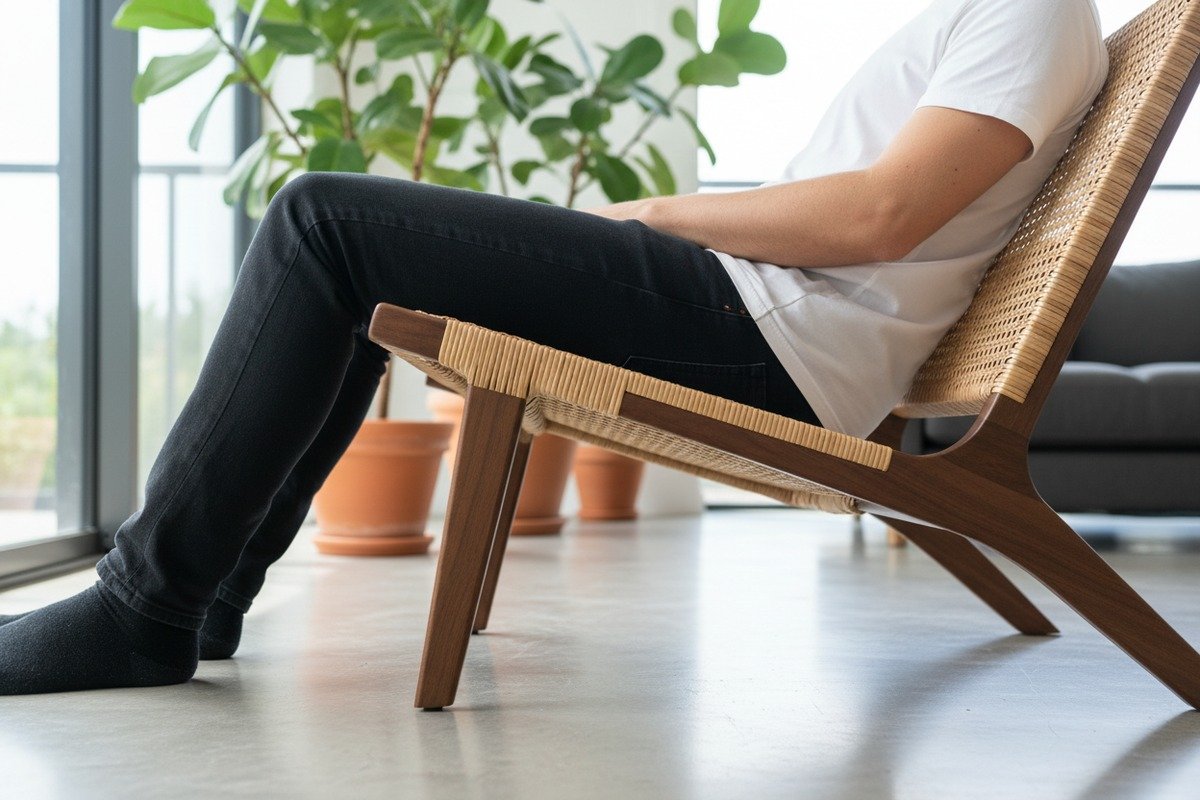
What Causes Rattan Webbing to Sag?
Sagging happens through a process called creep deformation 7. When rattan sits under a constant load — like a person sitting for hours — the fibers slowly stretch. Over weeks and months, this stretching becomes permanent. The webbing loses its original tension and begins to droop.
Thicker fibers resist creep better because they have more material cross-section to absorb and distribute the load. But creep still happens. It is a natural property of all organic materials. The goal is not to eliminate creep entirely. The goal is to slow it down enough that the furniture lasts years, not months.
How Weave Pattern Affects Sagging
The weave pattern matters as much as the fiber thickness. Here is what we have learned from testing different patterns in our Foshan facilities:
| Weave Pattern | Sag Resistance | Best Use | Why |
|---|---|---|---|
| Radio weave (hexagonal open mesh) | Moderate | Chair backs, decorative panels | Open structure allows some flex |
| Square basketweave (dense) | High | Chair seats, heavy-use surfaces | Tight intersections lock fibers in place |
| Diamond motif | Moderate to High | Accent panels, headboards | Complex geometry distributes force |
| Octagon weave | Moderate | Cabinet inserts, light seating | Balanced between aesthetics and strength |
A dense square basketweave with 5mm fibers is the most sag-resistant combination we offer. The tight weave creates more friction at each crossing point. This friction acts like a series of tiny locks that hold the fibers in position under load.
The Frame Factor
Here is something many designers miss. The frame span — the open distance between support rails — determines how much the webbing must carry on its own. A chair seat with a 35cm span puts far less stress on the webbing than one with a 45cm span. When our wholesale clients report sagging issues, we often find the problem is an oversized frame opening, not the webbing itself.
We recommend a maximum unsupported span of 40cm for RA-5 webbing on seating applications. For RA-3 webbing, keep the span under 30cm. If your design requires a wider opening, add a center support rail or use a solid rattan panel backed with a support structure.
Pre-Installation Preparation
Soaking rattan webbing in water before installation temporarily softens the fibers. This makes it easier to stretch and staple into place. Once the material dries, it contracts slightly and tightens across the frame. This natural tightening helps resist early sagging. We always include soaking instructions with our shipments because proper preparation directly affects how long the webbing holds its shape.
Moisture content also affects long-term performance. Natural rattan absorbs and releases moisture with changes in humidity. In dry climates, the fibers can become brittle and lose flexibility. In humid climates, they can soften and stretch more easily. Controlling the indoor environment — or choosing synthetic rattan 8 for outdoor use — helps maintain consistent tension over time.
How does the thickness of the cane webbing impact the overall safety of my commercial furniture designs?
When we supply rattan webbing to commercial furniture factories — hotels, restaurants, co-working spaces — the safety conversation always comes first. A residential chair might seat one person gently. A commercial dining chair endures hundreds of different users with varying body weights.
Thicker cane webbing improves commercial furniture safety by reducing the risk of sudden material failure under heavy or repeated loads. However, the webbing is only one component. True safety depends on the combined integrity of the frame structure, attachment method, and webbing grade. For commercial applications, 5mm outer-shell rattan with dense weave patterns provides the highest safety margin.
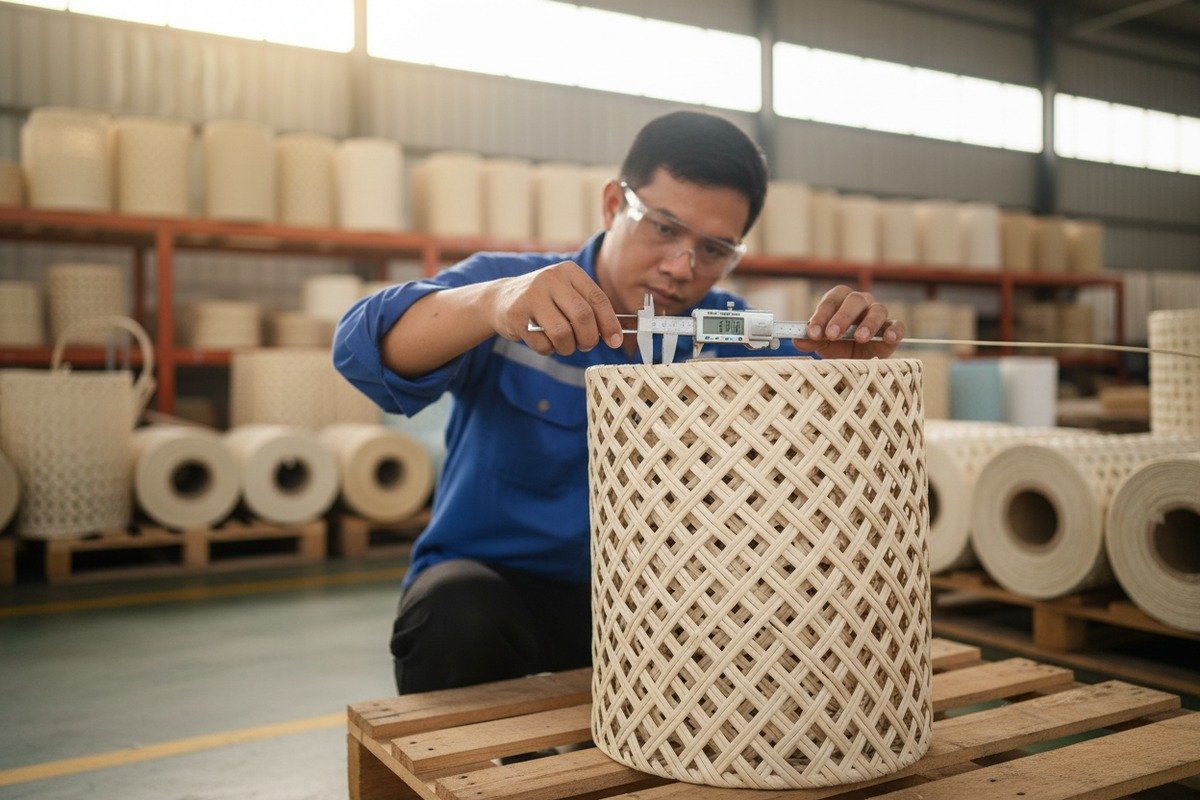
Why Commercial Applications Demand Higher Standards
Commercial furniture faces abuse that residential pieces never see. People drop into chairs. They lean back aggressively. They sit on armrests. Children stand on seats. Over the course of a year, a restaurant chair might experience 1,000 or more seating cycles. Each cycle applies stress to the webbing.
Thinner webbing — like 3mm RA-3 grade — was not designed for this level of use. Its fibers fatigue faster. The weave loosens sooner. Small tears can develop at the staple points where the webbing attaches to the frame. Once a tear starts, it spreads quickly. A sudden failure during use creates a real liability risk.
Safety Margin by Application
From our experience exporting to hotels in Spain, restaurants in the Netherlands, and commercial spaces in Australia, here is how we categorize safety requirements:
| Commercial Setting | Minimum Webbing Grade | Weave Pattern | Additional Safety Measures |
|---|---|---|---|
| Hotel lobby seating | RA-5 (5mm) | Dense basketweave | Center support rail, reinforced stapling |
| Restaurant dining chairs | RA-5 (5mm) | Square or octagon weave | Frame cross-bracing, periodic inspection |
| Cafe outdoor seating | Synthetic 5mm | Any commercial pattern | UV-stabilized material, waterproof frame |
| Office reception chairs | RA-5 (5mm) | Dense basketweave | Padded cushion to distribute load |
| Retail display seating | RA-3 (3mm) | Open hexagonal | "Display only" signage if decorative |
Attachment Method and Failure Points
The most common point of failure is not the webbing itself. It is where the webbing meets the frame. In our factories, we use a combination of spline grooves and industrial-grade staples to secure the webbing. Spline grooves create a continuous mechanical lock along the entire edge. Staples alone can pull through under heavy load.
For commercial projects, we always recommend spline-groove installation over staple-only attachment. The groove distributes the pulling force across the full perimeter of the webbing panel. This prevents the concentrated stress points that cause tearing.
Testing and Compliance
Furniture designers are increasingly using digital stress analysis and finite element modeling (FEM) 9 to predict how cane webbing will perform under various loads. These tools allow engineers to simulate thousands of seating cycles before building a single prototype. While we do not perform FEM analysis ourselves, we provide material specifications and sample panels (10x10cm test pieces) that engineering teams can use for their own testing.
We also recommend that commercial furniture makers establish inspection schedules. Even the best webbing degrades over time. A quarterly visual check for loosening, fraying, or discoloration at attachment points can catch problems before they become safety hazards.
Emerging Materials for Enhanced Safety
Advanced composite rattan webbings are entering the market. These integrate bio-resins or reinforced natural fibers into the weave. The result is a thinner panel with a higher strength-to-weight ratio. We are currently testing some of these hybrid materials at our Foshan partner factories. Early results are promising, but natural rattan with proper thickness selection remains the proven standard for commercial safety.
Can I rely on thinner rattan materials for high-traffic seating without compromising strength?
This is a question our sales team fields weekly, usually from buyers trying to balance cost with performance. Thinner rattan webbing costs less per roll. The temptation to use it everywhere is understandable, especially when margins are tight.
Thinner rattan materials — such as 3mm RA-3 webbing — are not recommended for high-traffic seating as the primary load-bearing surface. They lack the fiber width needed to distribute repeated loads safely. However, thinner materials can work in high-traffic settings when combined with proper structural support, such as a solid plywood substrate beneath the webbing or a reinforced frame with narrow span openings.
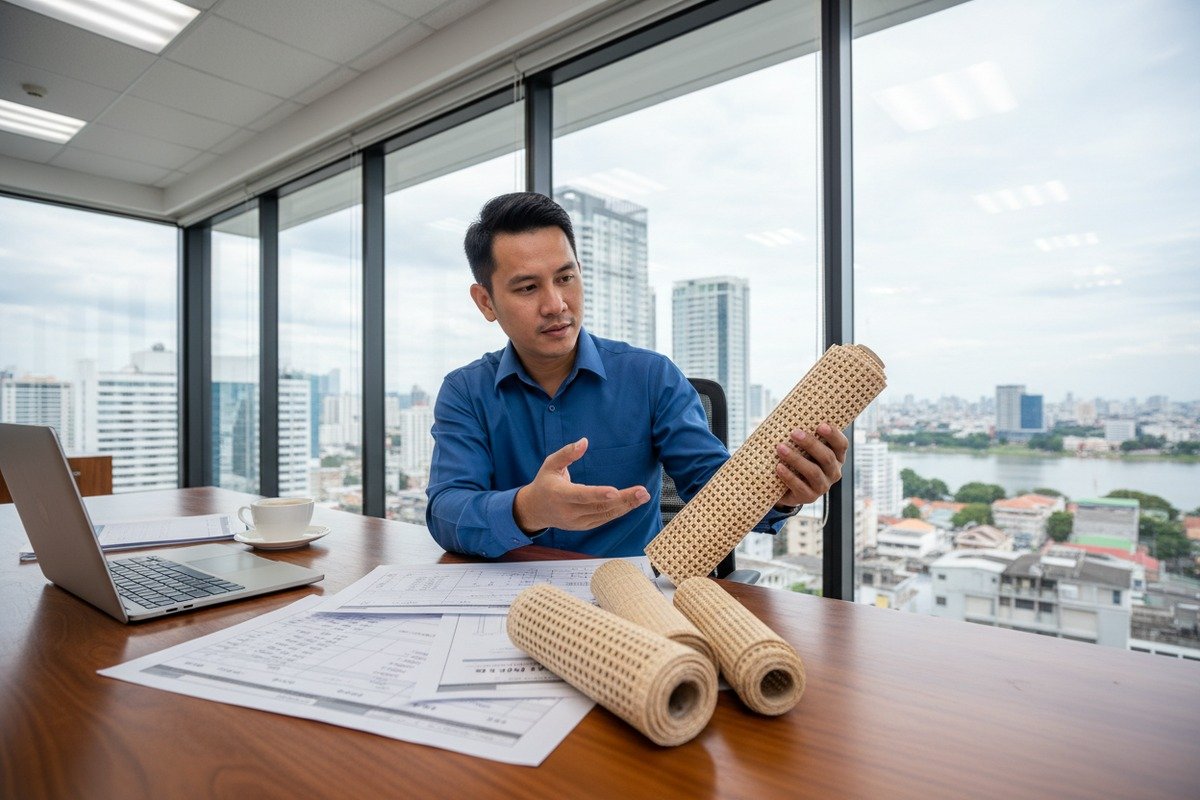
When Thin Rattan Works
Thin rattan is not inherently weak. It is simply designed for different jobs. A 3mm webbing panel on a cabinet door can last decades because it never bears human weight. The same panel on a busy cafe chair will fail within months.
But there are creative ways to use thinner materials in high-traffic environments. The key is to separate the load-bearing function from the aesthetic function. Here is what we mean:
Some designers place a thin rattan webbing panel over a plywood base. The plywood carries the load. The webbing provides the visual texture. This approach gives you the natural rattan look without asking a thin material to do a thick material's job.
The Cost-Strength Tradeoff
Let us be direct about numbers. RA-3 webbing typically costs 20–30% less than RA-5 per square meter. For a large commercial order — say 500 chairs for a hotel chain — that savings adds up fast. But so do warranty claims and replacements.
Here is a simplified comparison:
| Factor | RA-3 (3mm) Thin Webbing | RA-5 (5mm) Thick Webbing |
|---|---|---|
| Cost per square meter | Lower (20–30% less) | Higher |
| Load-bearing capacity | Lower | Higher |
| Sag resistance | Moderate | High |
| Recommended max span | 30cm | 40cm |
| Ideal high-traffic use | Over plywood substrate | Direct seating surface |
| Typical lifespan (high traffic) | 1–2 years | 3–5 years |
| Replacement frequency | Higher | Lower |
| Total cost of ownership (5 years) | Often higher due to replacements | Often lower |
Synthetic Alternatives for High-Traffic Use
When buyers need thin material for high-traffic seating, we often recommend synthetic rattan. Our synthetic rattan matting comes in 5mm thickness with UV stabilization and weather resistance. It mimics the chevron wave and basketweave patterns of natural rattan but handles abuse much better.
Synthetic rattan does not absorb moisture. It does not experience creep deformation at the same rate as natural fibers. And it comes in longer roll lengths — 30 meters versus 10–15 meters for natural — which reduces waste during production.
The tradeoff is feel. Natural rattan has a warmth and organic variation that synthetic cannot fully replicate. For indoor high-traffic settings where aesthetics matter most, we recommend natural RA-5. For outdoor or semi-outdoor high-traffic settings, synthetic is the smarter choice.
Quality Indicators to Watch
If you must use thinner rattan for budget reasons, look for these quality markers:
- Consistent strand diameter. Uneven strands create weak points in the weave.
- Tight, uniform weave pattern. Loose weaving allows fibers to shift under load.
- Outer-shell sourcing. Even thin webbing performs better when made from the outer rattan layer.
- Indonesian origin. Indonesian rattan species like Calamus manan offer higher density than alternatives from other regions.
At our facilities, every roll undergoes visual inspection before shipping. We check for strand consistency, weave tightness, and surface integrity. For our premium clients, we also provide tensile strength reports on request.
The Bottom Line on Thin Rattan
Thin rattan is a tool with a specific purpose. It excels in decorative panels, cabinet inserts, headboards, and low-load applications. It struggles under repeated heavy loads on unsupported spans. If your project demands both thin aesthetics and high-traffic durability, use a hybrid approach: thin webbing for looks, solid substrate for strength.
Conclusion
Rattan cane webbing thickness 10 is not just a specification on a product sheet. It is the foundation of furniture strength, safety, and longevity. Choose the right grade for the right job, and your furniture will perform for years.
Footnotes
1. BIFMA sets industry standards for furniture performance. ↩︎
2. ASTM provides standards for material testing and durability. ↩︎
3. Provides an authoritative overview of the strength of materials in engineering. ↩︎
4. The CPSC is a primary source for product recall information and safety. ↩︎
5. Explains the botanical structure and layers of the rattan plant. ↩︎
6. Explains the mechanical property of tensile strength. ↩︎
7. Describes the phenomenon of creep in materials under constant stress. ↩︎
8. Provides scientific information on polyethylene, a common material for synthetic rattan. ↩︎
9. Explains the principles and applications of finite element modeling in engineering. ↩︎
10. Provides general information on rattan properties and uses. ↩︎


 English
  Español de México
  العربية
  Deutsch
  Français
  Русский