

Every week, our sales team fields the same question from furniture factories and wholesalers worldwide: “Which webbing width should I order?” It sounds simple, but picking the wrong width leads to wasted material, ugly seams, and delayed production furniture manufacturing needs 1. The truth is, there is no one-size-fits-all answer. Width affects roll length, cost per square meter, weave pattern options 2, and even how you package and ship your order.
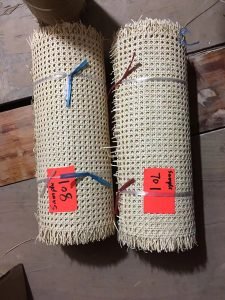
Rattan cane webbing widths from 16 to 40 inches differ in standard roll lengths, material availability, weave pattern suitability, price per unit area, and shipping requirements. Narrower rolls offer longer lengths and easier handling, while wider rolls reduce seams and suit large furniture panels like headboards and room dividers.
Below, we break down the key differences across this full width range. Whether you purchase 16-inch rolls for chair seats or 40-inch rolls for architectural panels, this guide will help you make a smarter buying decision.
How do I determine which rattan webbing width is best for my furniture manufacturing needs?
Choosing the wrong webbing width can slow down a production line fast. Our factory floor managers in Foshan have seen clients order 24-inch rolls for projects that clearly needed 36-inch material, then struggle with unnecessary seaming and labor costs.
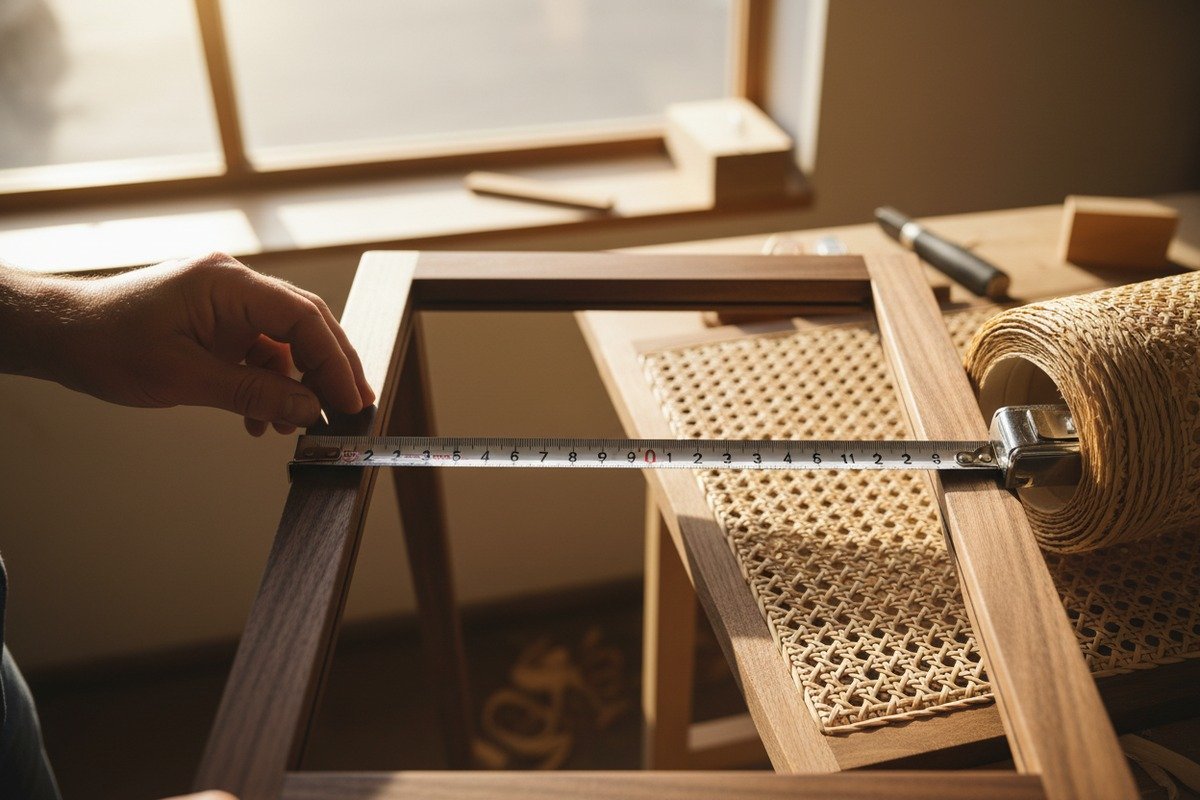
To determine the best rattan webbing width, measure your furniture frame's panel opening and add 2–3 inches on each side for tucking or groove insertion. Match this total to the closest standard width — 16, 20, 24, 28, 30, 32, 36, or 40 inches — to minimize waste and avoid seams.
Start with Your Panel Dimensions
The most reliable method is simple. Measure the opening of your furniture frame where the webbing will sit. Add allowance for overlap, trimming, or groove insertion. Most press-in cane installations 3 need 1.5 to 3 inches of extra material on each side. So a chair seat opening of 14 inches across would need at least an 18-inch piece, making a 20-inch roll ideal.
For larger projects like headboards or cabinet doors, the math changes. A headboard panel that measures 35 inches wide needs a 40-inch roll to leave enough trimming margin. Trying to join two narrower pieces will create a visible seam line that looks unprofessional.
Match Width to Application Type
Different furniture types call for different widths. Here is a quick reference we share with our wholesale clients:
| Application | Recommended Width Range | Why |
|---|---|---|
| Dining chair seats | 16"–20" (40–50 cm) | Small openings, easy to handle |
| Cabinet door panels | 20"–24" (50–60 cm) | Medium panels, minimal waste |
| Rocking chair backs | 24"–28" (60–70 cm) | Taller panels need wider stock |
| Headboards | 32"–40" (80–100 cm) | Large panels, seamless finish |
| Room dividers | 36"–40" (90–100 cm) | Maximum coverage, fewer joints |
| Decorative wall panels | 36"–40" (90–100 cm) | Architectural scale demands wide rolls |
Consider the Weave Pattern
Not every weave pattern works well at every width. Hexagonal (open mesh) weave 4 requires precise strand alignment. At wider widths like 36 or 40 inches, hexagonal patterns demand more skilled weaving and careful tension control. This is one reason hexagonal webbing costs more than square or radio weave at the same width.
Square weave 5 and close-woven patterns are more forgiving across all widths. They maintain structural integrity even in 40-inch rolls. If you are new to working with wide rattan webbing, start with a square weave pattern. It is easier to cut, stretch, and install without distortion.
Factor in Production Volume
For high-volume furniture factories 6, choosing a width that matches your most common panel size reduces cutting waste. When we work with clients producing 500+ chairs per month, we often recommend stocking two standard widths — one narrow and one wide — rather than trying to use a single width for everything. This approach cuts material waste by 10–15% on average across a production run.
Can I maintain consistent quality standards when switching between narrow and wide rattan rolls?
Quality consistency is the number one concern we hear from purchasing managers. When our clients in the Netherlands or Australia switch from 24-inch to 36-inch rolls for a new furniture line, they worry about whether the weave density, color uniformity, and strand thickness will stay the same.
Yes, you can maintain consistent quality when switching between narrow and wide rattan rolls, but it requires working with a supplier who sources from the same raw material batch, uses identical weave specifications, and applies uniform grading standards across all widths.
Why Width Can Affect Quality
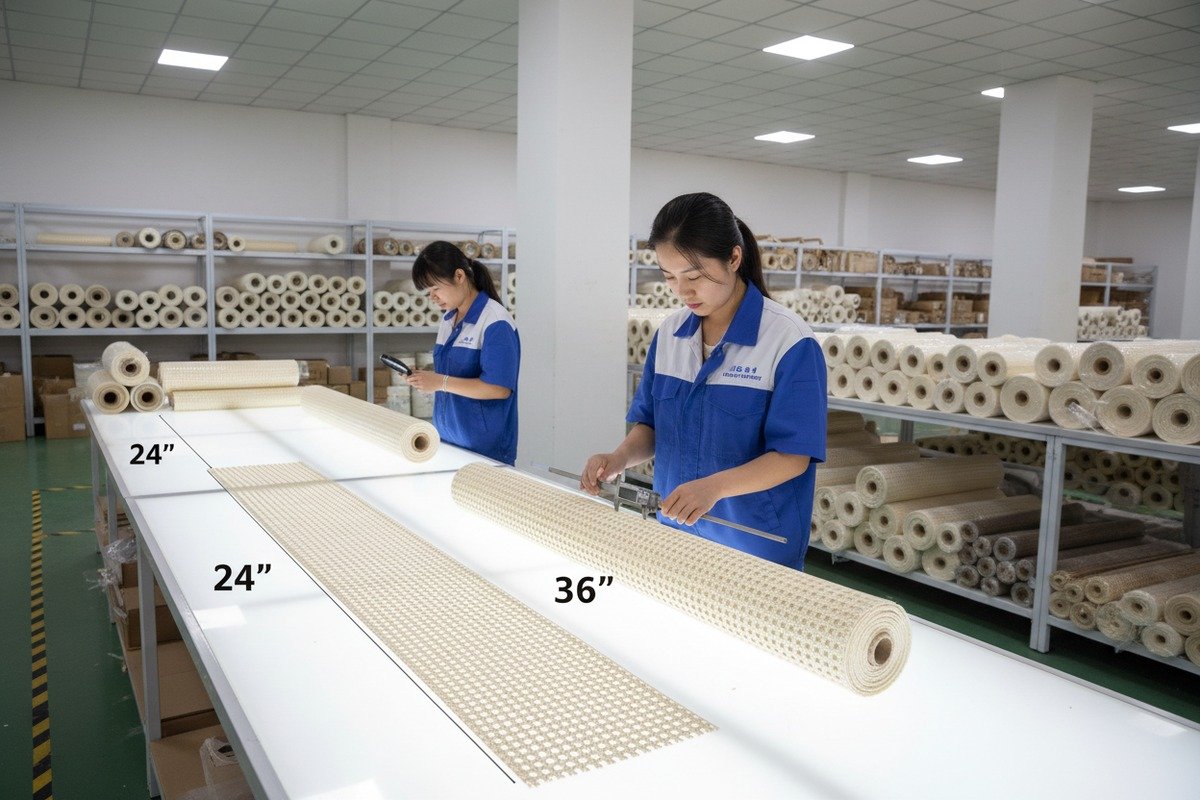
Wider rattan webbing is physically harder to produce. The loom must be wider, and strand tension must be more uniform across a greater surface area. In our Indonesian processing facility, we use dedicated looms for rolls above 30 inches. These wider looms require more skilled operators and tighter quality checks.
Natural rattan strands also vary in diameter. A single roll of 40-inch webbing uses more individual strands than a 16-inch roll. The probability of encountering color variation, knots, or thin spots increases simply because more material is involved.
Grading Standards Matter More Than Width
The real key to consistency is grading. At our facilities, we sort rattan cane into Grade A, Grade B, and utility grades before weaving begins. Grade A strands have uniform thickness, consistent color, and no visible knots. When we weave Grade A material into a 40-inch roll, the quality matches our 16-inch Grade A rolls because the input material is identical.
Problems arise when suppliers mix grades to fill wide-roll orders. A 40-inch roll needs roughly 2.5 times more cane than a 16-inch roll. Suppliers with limited Grade A stock may blend in lower-grade strands to complete wide rolls. This is why you should always request a sample before placing a bulk order in a new width.
Natural vs. Synthetic Consistency
Synthetic PE rattan webbing 7 offers more uniform quality across all widths. The plastic strands are extruded to exact specifications. Color, thickness, and flexibility stay constant whether the roll is 16 or 40 inches wide.
Natural rattan will always have some organic variation. This is part of its charm, but it can frustrate factory managers who need pixel-perfect consistency. Here is how the two compare:
| Quality Factor | Natural Rattan | Synthetic PE Rattan |
|---|---|---|
| Color uniformity | Slight variation (natural) | Highly uniform |
| Strand thickness | ±0.3 mm variation typical | ±0.05 mm variation |
| Knots or defects | Possible in Grade B/C | None |
| Consistency across widths | Requires careful grading | Inherently consistent |
| Pre-treatment needed | Water soaking before install | None |
| Weather resistance | Low (indoor use preferred) | High (indoor/outdoor) |
Practical Tips for Maintaining Quality
When switching widths, request a production sample in the new width before committing to a full container order. Compare it side by side with your existing stock. Check the strand count per inch — it should match across widths if the weave pattern is the same. Also verify the roll weight. A 40-inch roll should weigh proportionally more than a 16-inch roll of the same length. If it weighs significantly less, the weave may be looser or the strands thinner.
Our quality control team photographs every roll before export and provides inspection reports that include strand diameter measurements, weave density counts, and color reference photos. This documentation helps our clients verify consistency regardless of width.
How does the price of 40-inch wide rattan compare to standard 16-inch or 24-inch options?
Pricing conversations with our clients always get interesting when wider rolls enter the picture. Many buyers assume that a 40-inch roll simply costs 2.5 times more than a 16-inch roll. The reality is more nuanced, and understanding the true cost structure can save your business real money.
A 40-inch wide rattan roll typically costs 15–30% more per square meter than a standard 16-inch or 24-inch roll due to higher production complexity, wider loom requirements, increased material waste during weaving, and lower production volumes. However, the total project cost may be lower because wider rolls reduce seaming labor and material waste during installation.
Breaking Down the Cost Factors
The price difference between narrow and wide rattan webbing comes from several sources. Wider looms are more expensive to operate and maintain. They require more skilled workers. Wider rolls also have higher reject rates during quality inspection — a single defective strand in a 40-inch roll ruins a larger area of material than the same defect in a 16-inch roll.
Natural rattan pricing is also influenced by roll length. Both 16-inch and 40-inch natural rattan rolls typically come in 15-meter lengths. But wider rolls use more raw material per meter of length. Synthetic PE rolls benefit from economies of scale and come in 30-meter lengths regardless of width.
Price Comparison by Width
Here is a general pricing framework based on our current export pricing. Exact figures vary by order volume, weave pattern, and material grade.
| Width | Natural Rattan (per linear meter) | Synthetic PE (per linear meter) | Roll Length |
|---|---|---|---|
| 16" / 40 cm | Base price | 70–80% of natural | 15m natural / 30m synthetic |
| 20" / 50 cm | Base + 10–15% | 70–80% of natural equivalent | 15m / 30m |
| 24" / 60 cm | Base + 25–35% | 70–80% of natural equivalent | 15m / 30m |
| 28" / 70 cm | Base + 40–50% | 70–80% of natural equivalent | 15m / 30m |
| 32" / 80 cm | Base + 65–80% | 70–80% of natural equivalent | 15m / 30m |
| 36" / 90 cm | Base + 90–110% | 70–80% of natural equivalent | 15m / 30m |
| 40" / 100 cm | Base + 120–150% | 70–80% of natural equivalent | 15m / 30m |
Note that the per-linear-meter price rises steeply, but the per-square-meter price increases more moderately — typically 15–30% from narrowest to widest. This is because each linear meter of a wider roll covers more area.
The Hidden Savings of Wider Rolls
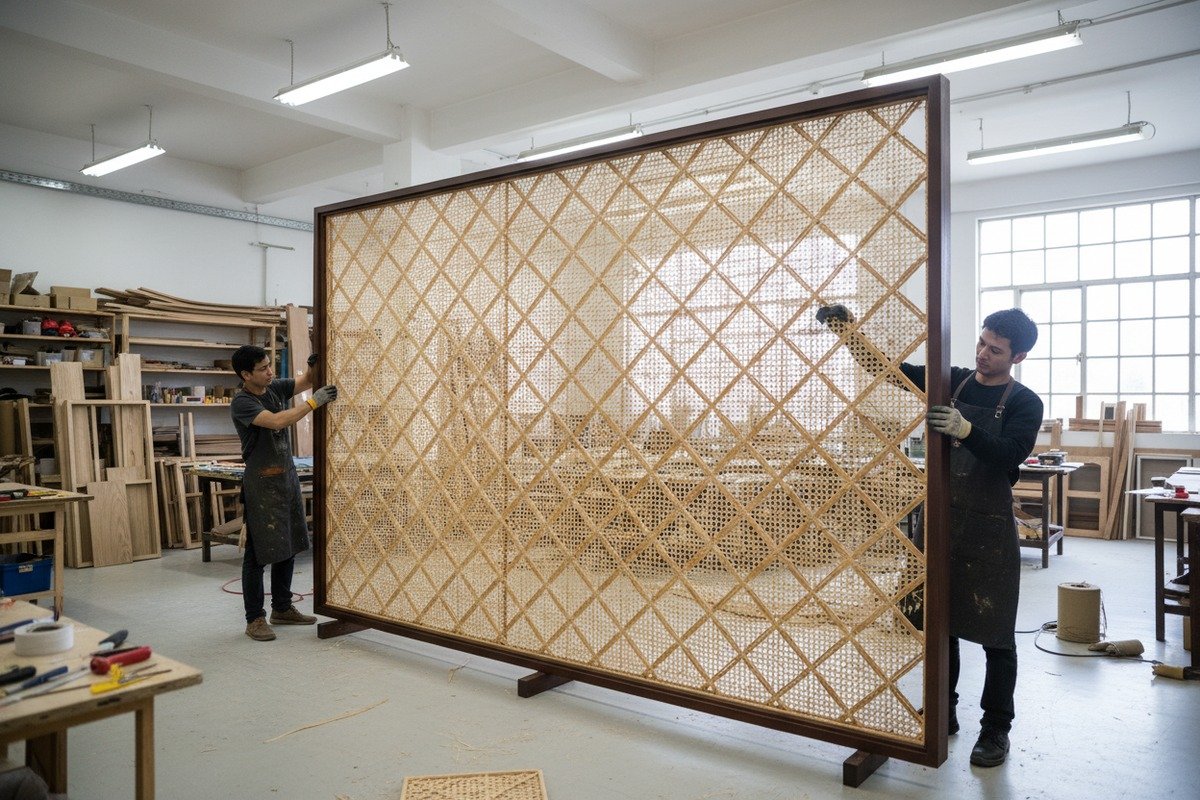
When calculating total project cost, narrow rolls can actually end up more expensive. Consider a headboard project with a 36-inch panel. Using 24-inch webbing means you need to seam two pieces. The seaming process requires extra material for overlap, additional adhesive or spline, and significantly more labor time. In a factory producing 200 headboards per month, that extra labor adds up quickly.
Our clients in Turkey and Spain who switched from 24-inch to 36-inch rolls for their headboard lines reported a 12–18% reduction in total material-plus-labor cost per unit, even though the raw material price per meter was higher.
Hexagonal vs. Square Weave Pricing
Weave pattern also influences pricing at every width. Hexagonal (open mesh) webbing costs more than square or radio weave across all widths. The hexagonal pattern requires manual strand insertion for the open holes, which adds labor. At 40 inches, the premium for hexagonal over square weave can reach 20–30%.
If budget is a concern and your design allows it, consider square weave for wider panels. The visual difference is primarily aesthetic, and square weave is structurally stronger at wide widths.
Will the packaging and shipping safety change if I order the maximum 40-inch width?
Packaging durability is one of the top pain points our clients mention. We have learned this lesson through years of shipping rattan webbing to over a dozen countries. A beautiful 40-inch roll that arrives crushed or bent at the edges is worthless to a furniture factory waiting on materials.
Yes, packaging and shipping requirements change significantly for 40-inch wide rattan rolls. Wider rolls need reinforced cardboard cores, edge protectors, stretch wrapping, and custom-sized cartons. Standard packaging designed for 16-inch or 24-inch rolls cannot safely protect 40-inch material during transit, and freight costs increase due to larger box dimensions and higher volumetric weight.
Why Wider Rolls Face More Shipping Risks
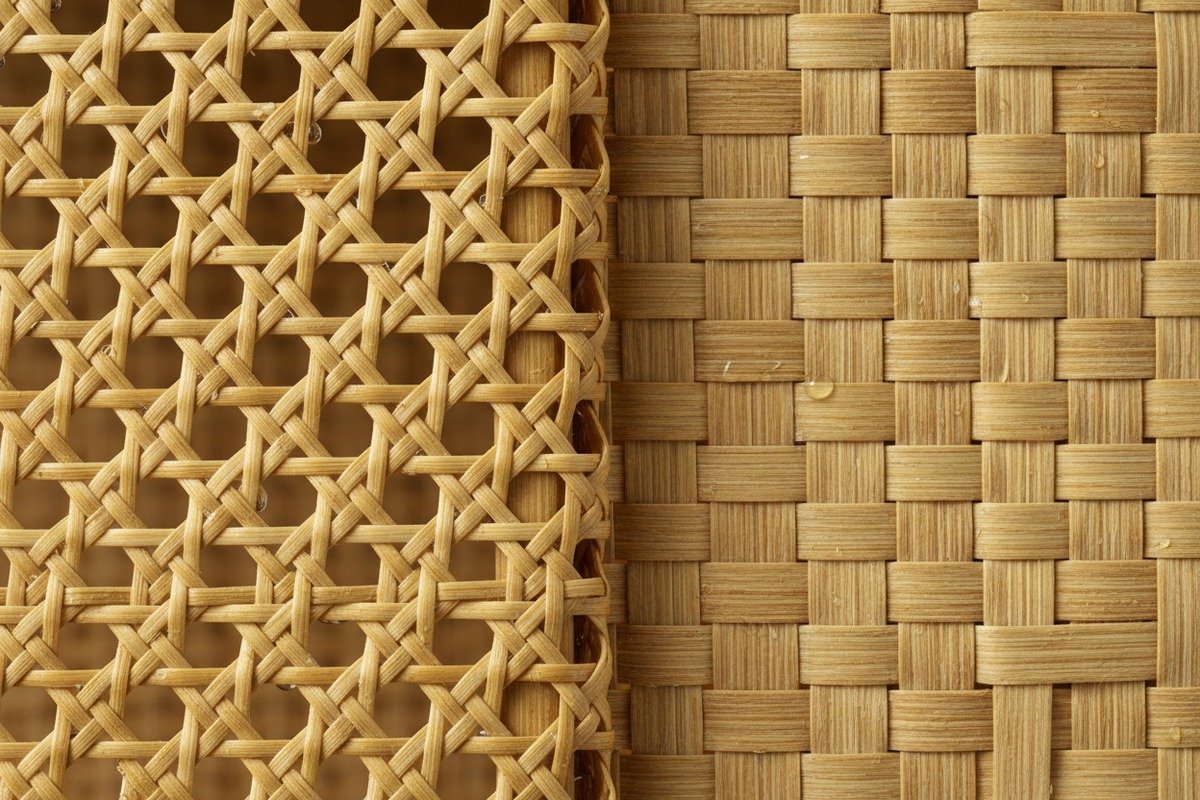
A 16-inch roll of rattan webbing fits neatly into a compact carton. It is lightweight, easy to stack, and resistant to damage because the short width means less surface area exposed to compression. A 40-inch roll is a different story entirely. The wider the roll, the more vulnerable the edges become to crushing during handling and container loading.
Natural rattan is particularly fragile at wider widths. The cane strands along the edges can crack or split if the roll is compressed against other cargo. Synthetic PE webbing is more forgiving, but even synthetic rolls can deform permanently if stored improperly during a long sea voyage.
Our Packaging Approach for Wide Rolls
Through trial and error — and some costly claims from damaged shipments early in our history — we developed a specific packaging protocol for rolls 30 inches and wider:
First, every wide roll is wound around a reinforced cardboard core 8 with a minimum 3-inch diameter. Thin cores allow the roll to collapse inward, which creases the webbing. Second, we wrap each roll in bubble wrap and then shrink-wrap it in heavy-duty polyethylene film. Third, we add cardboard edge protectors on both ends of the roll. Finally, the wrapped roll goes into a custom carton with foam padding.
Freight Cost Implications
Wider rolls mean bigger boxes. Bigger boxes mean higher volumetric weight 9, which directly affects your shipping costs. Sea freight is usually calculated by volume (CBM) rather than actual weight for lightweight materials like rattan webbing. A container of 40-inch rolls will hold fewer linear meters of webbing than the same container filled with 16-inch rolls, simply because each box takes up more space.
For air freight or express courier shipments — common for sample orders — the dimensional weight of a 40-inch roll box can be three to four times higher than a 16-inch roll box, tripling the shipping cost per meter.
Practical Recommendations
If you are ordering 40-inch rolls for the first time, request that your supplier send a sample roll first. Inspect the packaging when it arrives. Check for edge damage, flattening, or crease marks. If the sample arrives in good condition, the supplier's packaging method is adequate for a full order.
Also consider ordering a mix of widths. Not every panel in your furniture line needs 40-inch material. Using 24-inch rolls where possible and reserving 40-inch rolls only for large panels keeps your freight costs manageable and reduces packaging waste.
Our warehouse team in Foshan can customize packaging configurations for mixed-width orders. We label each roll clearly with width, length, weave pattern, and grade so your receiving team can sort inventory quickly upon arrival.
Conclusion
Rattan cane webbing widths 10 from 16 to 40 inches serve different needs. Choose based on your panel dimensions, quality requirements, budget, and shipping logistics. For expert guidance on any width, reach out to our team at www.rattanwholesaler.com.
Footnotes
1. Discusses rattan as a material and its use in furniture production. ↩︎
2. Illustrates and describes various weave patterns for rattan cane webbing. ↩︎
3. Provides a detailed guide on the process of press-in cane webbing installation. ↩︎
4. Describes the characteristics and uses of hexagonal open mesh cane webbing. ↩︎
5. Explains the features and applications of square weave rattan webbing. ↩︎
6. Discusses trends and challenges relevant to high-volume furniture manufacturing. ↩︎
7. Compares synthetic PE rattan with natural materials, highlighting its properties and benefits. ↩︎
8. Explains the function and importance of reinforced cardboard cores in packaging industrial rolls. ↩︎
9. Defines volumetric weight and explains its importance in shipping calculations. ↩︎
10. Provides information on standard rattan cane webbing widths and their availability. ↩︎

 English
  Español de México
  العربية
  Deutsch
  Français
  Русский