
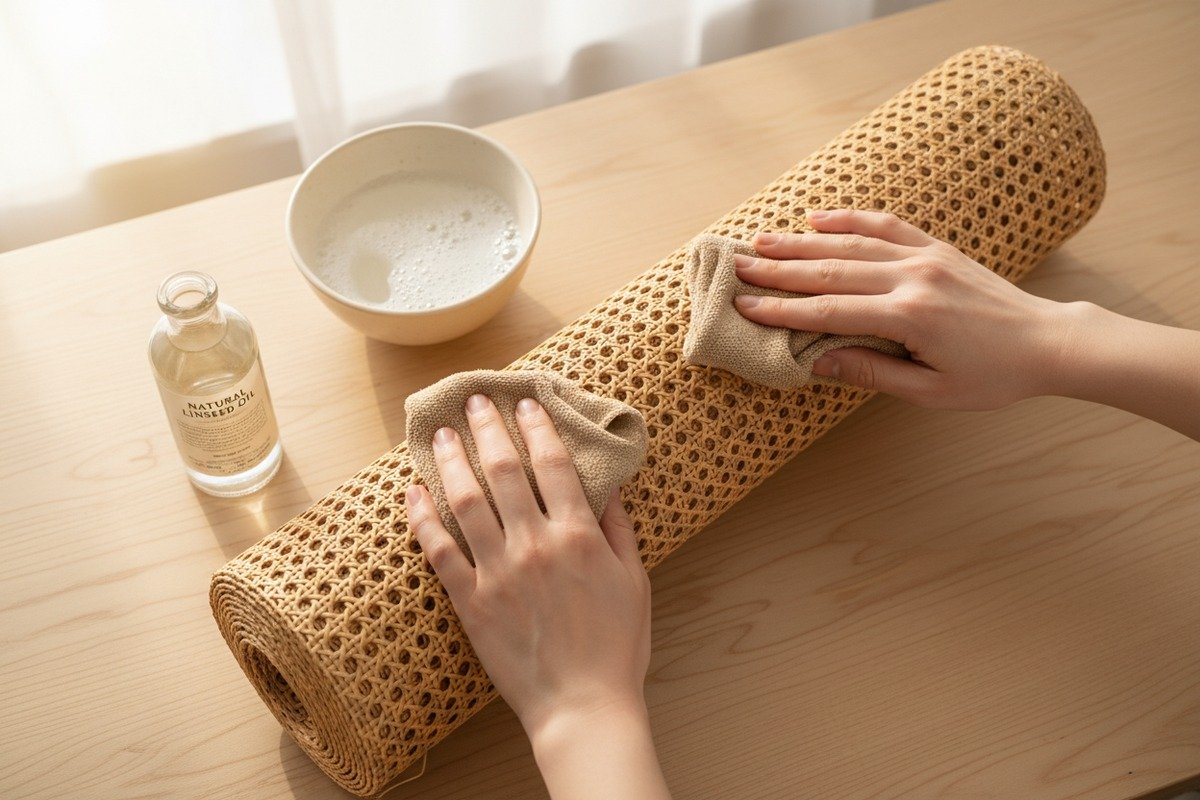
Every week, our production team inspects thousands of meters of natural rattan cane webbing 1 before shipping to furniture factories worldwide. We see firsthand how beautiful this material is—and how quickly stains can ruin it if handled incorrectly.
To safely remove stains from natural rattan cane webbing, use a damp cloth with mild dish soap for everyday dirt, a vinegar-water solution for mold, and always dry thoroughly afterward. Never soak rattan, always test cleaners on hidden areas first, and condition the fibers with light oil monthly to prevent cracking.
In this guide, we will walk you through step-by-step methods for every common stain type household cleaning agents 2. You will learn which cleaners are safe, which ones can cause damage, and how to keep your rattan looking fresh for years. Let’s start with the basics.
How do I safely clean everyday dirt from my natural rattan cane webbing?
Dust, crumbs, and surface grime are the most common issues we hear about from our wholesale clients and their end customers. Left alone, this everyday dirt works its way deep into the weave and becomes much harder to remove later.
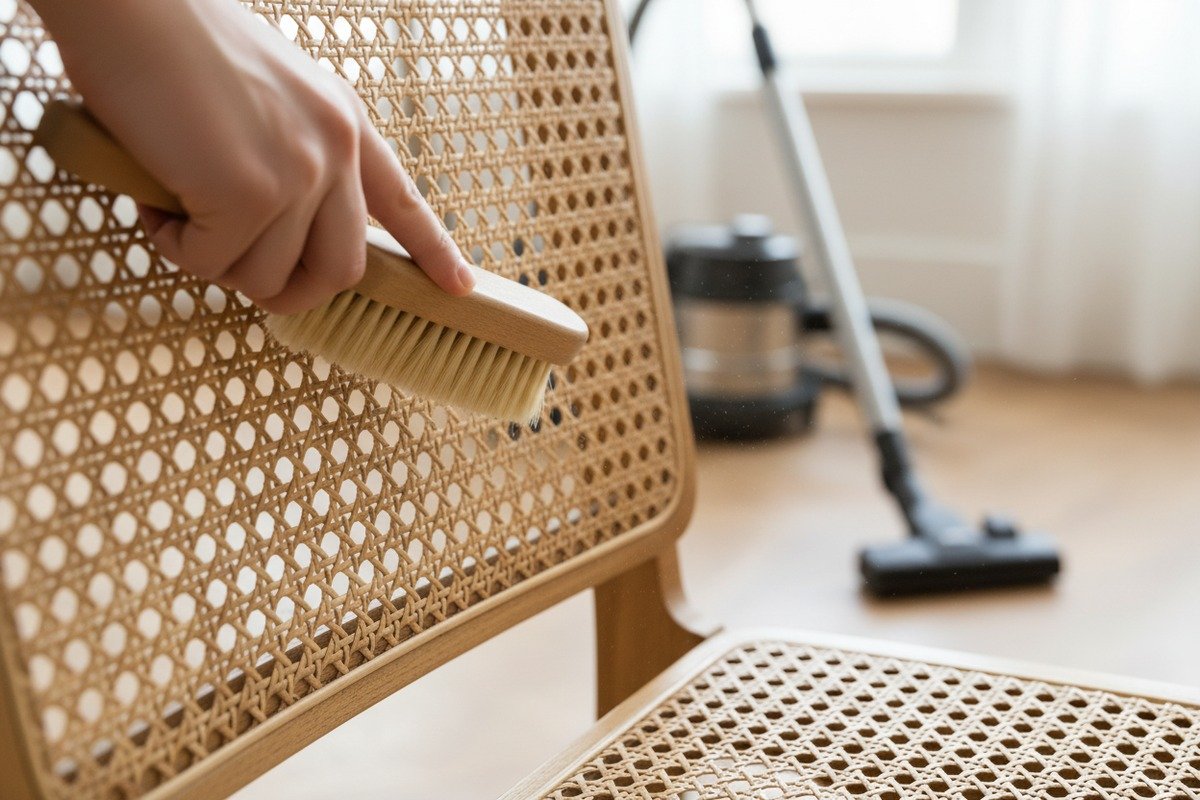
Safely clean everyday dirt from natural rattan cane webbing by first vacuuming or dusting with a soft brush, then wiping gently with a well-wrung damp cloth dipped in warm water with a few drops of mild dish soap. Always dry completely afterward to prevent warping or mold.
Why Everyday Dirt Matters More Than You Think
Natural rattan is a porous material 3. Its fibers absorb moisture and trap tiny particles easily. When dust and debris sit on the surface for weeks, they mix with ambient humidity and form a grimy film. This film dulls the natural golden tone of the cane and can even weaken the fibers over time. Regular cleaning prevents this buildup from becoming a stubborn stain.
The Right Tools for the Job
You do not need expensive products. Simple tools work best. Here is a quick reference:
| Tool | Purpose | Frequency |
|---|---|---|
| Soft-bristle brush or feather duster | Remove loose dust and crumbs from surface and crevices | Weekly |
| Vacuum with brush attachment (gentle setting) | Pull out debris trapped deep in the weave pattern | Weekly |
| Microfiber cloth 4 (damp, well-wrung) | Wipe away surface grime and light dirt | Weekly or as needed |
| Old toothbrush | Gently scrub tight crevices and corners of the weave | Monthly or as needed |
| Clean dry towel | Absorb remaining moisture after cleaning | After every damp cleaning |
Step-by-Step Cleaning Process
Start by removing cushions or any fabric covers. Use the soft brush or vacuum to go over the entire surface. Work in the direction of the weave. Pay extra attention to corners and joints where dust collects.
Next, prepare a simple solution. Add two to three drops of mild dish soap 5 to two cups of warm water. Dip your microfiber cloth in, then wring it out very thoroughly. The cloth should be damp, not wet. Wipe the rattan surface in smooth, even strokes.
For crevices, use the toothbrush. Dip it lightly in the solution and gently scrub. Do not press hard. Rattan fibers can fray or splinter under aggressive scrubbing.
After cleaning, wipe with a clean damp cloth to remove soap residue. Then immediately dry with a towel. If possible, let the piece air dry near an open window or fan. Avoid placing it in direct sunlight, as UV rays can cause the rattan to become brittle and discolored.
A Note from Our Production Floor
When we prepare rattan cane webbing rolls for shipment, we always ensure they are clean and dry. We have seen cases where clients store their rattan stock in humid warehouses without regular dusting. Within months, the surface develops a dull gray film that is much harder to clean than fresh dust. Prevention is always easier than restoration.
What is the best way to remove stubborn liquid stains from my rattan furniture?
Through years of supplying rattan cane webbing to furniture makers across the US, Europe, and the Middle East, we have collected detailed feedback on which cleaning methods actually work for tough stains—and which ones cause more harm than good.
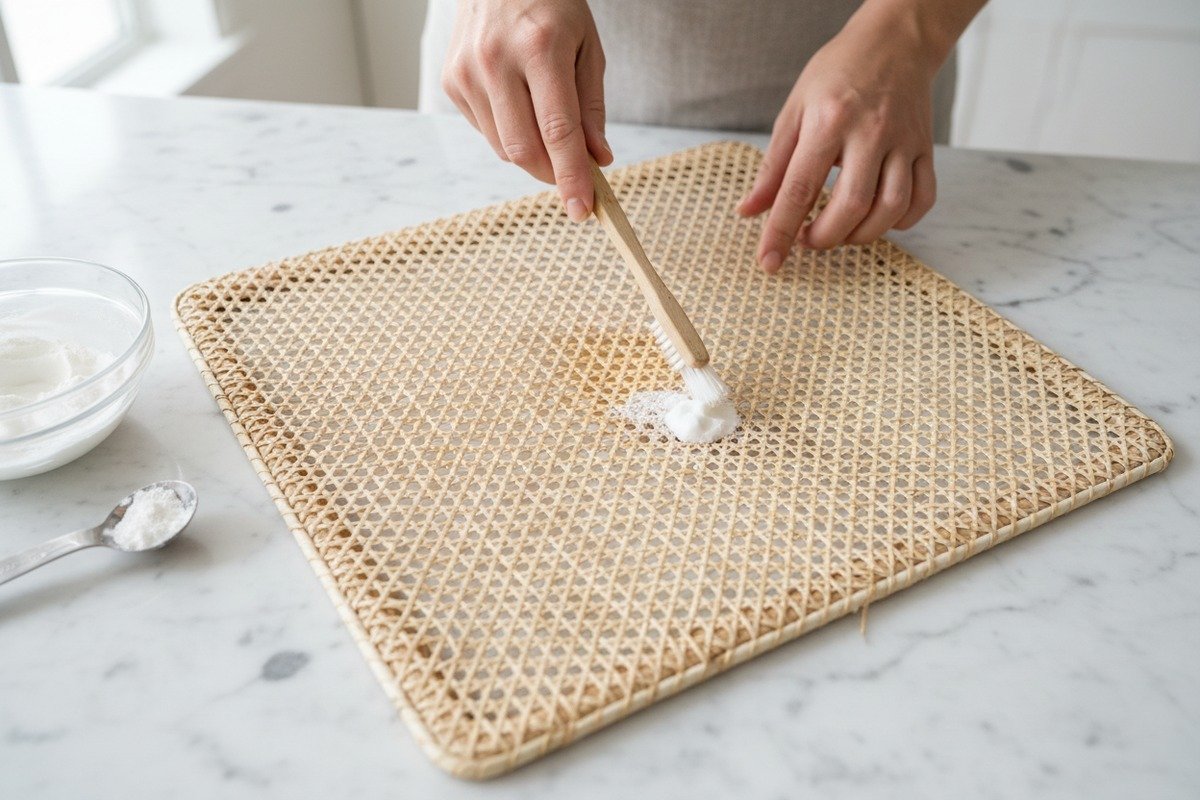
For stubborn liquid stains on rattan furniture, make a paste of baking soda and water, apply it to the stain, let it sit for fifteen minutes, then gently scrub with a soft brush and wipe clean. For tougher organic stains, use a one-to-one vinegar-water solution or an enzyme-based cleaner designed for natural fibers.
Understanding Why Liquid Stains Are Tricky
When coffee, wine, juice, or any colored liquid spills on rattan, it seeps into the porous fibers almost immediately. The natural cane acts like a sponge. The longer the liquid sits, the deeper it penetrates. That is why speed matters. If you catch a spill within the first few minutes, a simple damp cloth may be enough. But once the stain sets, you need a more targeted approach.
Stain-Specific Methods
Different stains respond to different treatments. Here is a practical guide:
| Stain Type | Recommended Solution | Application Method | Important Notes |
|---|---|---|---|
| Coffee or tea | Baking soda paste 6 (3:1 baking soda to water) | Apply paste, wait 15 min, scrub gently with soft brush, wipe clean | Rinse residue with damp cloth, dry immediately |
| Red wine or juice | White vinegar 7 and warm water (1:1 ratio) | Dab with soaked cloth, blot (do not rub), repeat | Test on hidden area first; vinegar smell fades as it dries |
| Oil or grease | Cornstarch or baking soda sprinkle | Sprinkle on stain, let absorb for 30 min, brush away | May need two applications for heavy grease |
| Pet accidents | Enzyme-based cleaner 8 for natural fibers | Spray on, let sit per product instructions, blot dry | Avoid ammonia-based cleaners; they can discolor rattan |
| Ink | Rubbing alcohol 9 on cotton swab | Dab carefully on stain only, blot with clean cloth | Use sparingly; alcohol can dry out fibers |
The Baking Soda Method in Detail
This is our most recommended method for general stubborn stains. Mix three parts baking soda with one part water to form a thick paste. Spread it over the stain with your fingers or a soft cloth. Let it sit for about fifteen minutes. The baking soda draws moisture and discoloration out of the fibers.
After fifteen minutes, use a soft-bristle brush to gently scrub the area. Work in small circles. Wipe away the paste with a clean, damp cloth. Dry the area thoroughly with a towel, then allow it to air dry completely.
When to Use Vinegar
A one-to-one mixture of white vinegar and warm water is excellent for organic stains like food, beverages, and mild discoloration. Vinegar is mildly acidic, which helps break down organic compounds without damaging the natural rattan fibers. Always test on an inconspicuous spot first. Some rattan finishes may react to the acidity.
Steam: A Cautious Option
For deeply embedded, dried-on grime that resists all gentle methods, a handheld steamer held at a safe distance can help loosen the dirt. But be very careful. Hold the steamer at least eight to ten inches from the surface. Apply steam for only a few seconds at a time. Immediately blot with a dry towel. Excessive steam can warp the cane webbing. We only recommend this as a last resort before professional intervention.
Can I use household cleaning agents on my natural rattan materials without causing damage?
This is one of the most common questions we receive from our furniture factory clients and their downstream buyers. The answer is not a simple yes or no. It depends entirely on which cleaning agent you choose and how you apply it.
You can use mild household cleaning agents like diluted dish soap, white vinegar, and baking soda on natural rattan without causing damage. However, avoid harsh chemicals such as undiluted bleach, ammonia, or abrasive powdered detergents, as these can weaken, discolor, or dry out the natural cane fibers permanently.
The Golden Rule: Always Test First
Before applying any cleaner to your rattan cane webbing, test it on a hidden area. The underside of a chair seat or the back of a panel works well. Apply a small amount, wait ten minutes, and check for discoloration, softening, or any adverse reaction. This simple step can save you from ruining an entire piece.
Safe vs. Unsafe Cleaning Agents
The cleaning product aisle can be overwhelming. Here is a clear breakdown:
| Cleaning Agent | Safe for Rattan? | Notes |
|---|---|---|
| Mild dish soap (few drops in water) | Yes | Most recommended daily cleaner; rinse residue well |
| White vinegar (diluted 1:1 with water) | Yes | Great for organic stains and mild mildew; test first |
| Baking soda paste | Yes | Effective stain lifter; gentle on fibers |
| Murphy's Oil Soap (diluted) | Yes | Cleans and lightly conditions; popular among restorers |
| Hydrogen peroxide (3%, applied with Q-tip) | Yes, with caution | Spot treatment for mold; can lighten color if overused |
| Lemon oil or mineral oil | Yes | For conditioning, not cleaning; apply thinly |
| Undiluted bleach | No | Weakens fibers, causes discoloration, damages wood frames |
| Ammonia-based cleaners | No | Too harsh; can yellow or dry out natural cane |
| Powdered Tide or abrasive detergents | No | Abrasive particles scratch and damage the weave surface |
| Furniture polish with silicone | No | Creates a sticky film that attracts more dust and grime |
The Bleach Debate
This is a topic where opinions clash. Some cleaning guides recommend a diluted bleach solution—one cup of bleach per gallon of water—for severe mildew on rattan. And it is true that bleach kills mold effectively. However, from our experience processing and finishing thousands of rattan pieces, we strongly advise caution.
Bleach is a powerful oxidizer. Even diluted, it can weaken the cellulose structure 10 of natural rattan fibers. Over time, this leads to brittleness and cracking. It can also cause uneven discoloration, especially on pieces with a lacquer or varnish finish. If the bleach solution drips onto a wooden frame, it can leave permanent white marks.
We recommend trying vinegar or hydrogen peroxide first. These are milder alternatives that handle most mildew cases effectively. Reserve bleach only for severe, widespread mold—and if you must use it, wear gloves, ensure good ventilation, apply with a cotton swab or small brush to the affected area only, and rinse thoroughly.
Eco-Friendly Trends in Rattan Care
There is a clear shift among our clients toward natural, plant-based cleaners. Vinegar-water solutions, baking soda, and plant-derived oils like lemon oil have become the standard recommendations. This aligns with broader sustainability trends in home furnishing. Many end consumers, especially in Europe and the US, actively seek non-toxic cleaning methods that are safe around children and pets. We support this direction. Natural cleaners are not only safer for rattan—they are safer for everyone in the home.
What About Murphy's Oil Soap?
Murphy's Oil Soap, diluted according to package instructions, is an excellent multifunctional product for rattan. It cleans and lightly conditions in one step. Many professional furniture restorers use it as their go-to cleaner. Just make sure to wring your cloth well and dry the rattan afterward. It is a good option for quarterly deep cleaning sessions.
How do I treat mold or mildew spots on my rattan cane webbing?
Mold and mildew are issues we take seriously at our factories. With production facilities in both Foshan, China, and Indonesia—two regions with high humidity—our team has developed practical, proven methods for preventing and treating mold on natural rattan.
Treat mold or mildew on rattan cane webbing by applying a solution of equal parts white vinegar and warm water with a soft brush, scrubbing gently, then wiping clean and drying thoroughly in a well-ventilated area. For severe cases, use diluted hydrogen peroxide or, as a last resort, a very diluted bleach solution with protective gloves.
Why Mold Grows on Rattan
Natural rattan is an organic material made from palm fibers. It contains cellulose, which is a food source for mold spores. When rattan is exposed to high humidity—above 60%—and poor air circulation, mold can colonize the surface within days. The tight weave pattern of cane webbing makes it especially vulnerable because moisture gets trapped between the interlocking fibers.
We have seen this happen during shipping containers that sit in tropical ports for extended periods. We have also seen it in storage rooms without proper ventilation. Understanding the cause helps you prevent it.
Step-by-Step Mold Removal
Here is the process we recommend, in order of gentleness:
Step 1: Move the piece outdoors or to a well-ventilated area. Mold spores become airborne during cleaning. Work outside or near an open window. Wear a basic dust mask if you are sensitive.
Step 2: Brush off loose mold. Use a dry, soft-bristle brush. Work gently. Dispose of the brushed-off material immediately to avoid spreading spores.
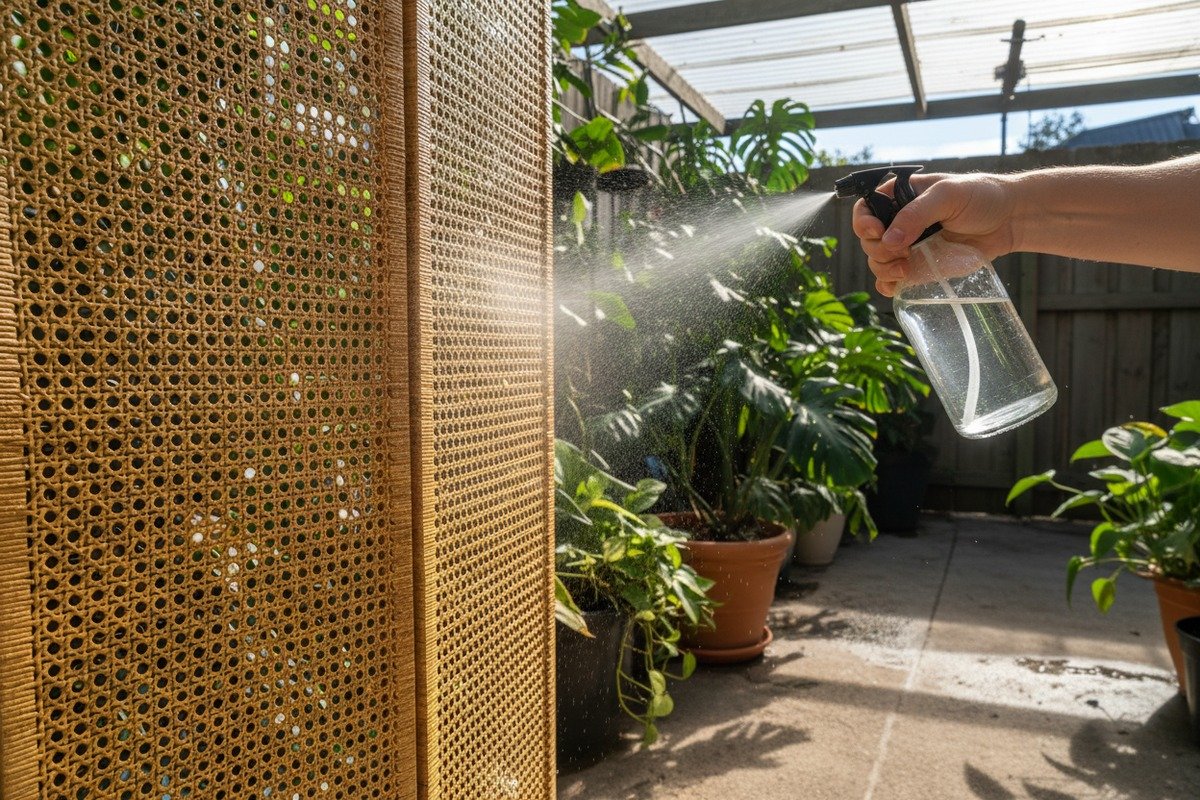
Step 3: Apply the vinegar solution. Mix equal parts white vinegar and warm water in a spray bottle or bowl. Dip a soft brush or cloth into the solution. Apply it to the affected areas. Scrub gently in the direction of the weave.
Step 4: Wipe and rinse. Use a clean, damp cloth to wipe away the vinegar solution and loosened mold. Repeat if needed.
Step 5: Dry completely. This is the most critical step. Use a clean dry towel to absorb as much moisture as possible. Then let the piece air dry in a warm, well-ventilated spot. A fan speeds this up. Some guides recommend brief sunlight exposure to kill remaining spores—thirty minutes in indirect sunlight is sufficient. Avoid prolonged direct sun.
For Severe Mold: The Stronger Options
If vinegar alone does not work, try hydrogen peroxide (3% concentration). Dip a cotton swab or Q-tip in it and apply directly to the mold spots. Let it bubble for five minutes, then wipe clean. This is effective for localized patches.
For widespread, deeply embedded mold, a diluted bleach solution may be necessary. Use one cup of bleach per gallon of water. Apply with a small brush to affected areas only. Wear rubber gloves and ensure the room is well ventilated. Rinse thoroughly with a damp cloth and dry immediately. As we discussed earlier, bleach should be your last resort because of its potential to weaken rattan fibers.
Prevention Is the Best Strategy
After treating mold, focus on prevention. Here are practical steps:
- Keep indoor humidity below 55% using a dehumidifier if you live in a humid climate.
- Ensure good air circulation around rattan furniture. Do not push it directly against walls.
- Condition the rattan monthly with a thin coat of lemon oil or mineral oil. This creates a light barrier against moisture absorption.
- Dust weekly. Mold feeds on dust and organic debris on the surface.
- Store unused rattan webbing rolls in a dry, cool space with silica gel packets to absorb excess moisture.
Conditioning After Mold Treatment
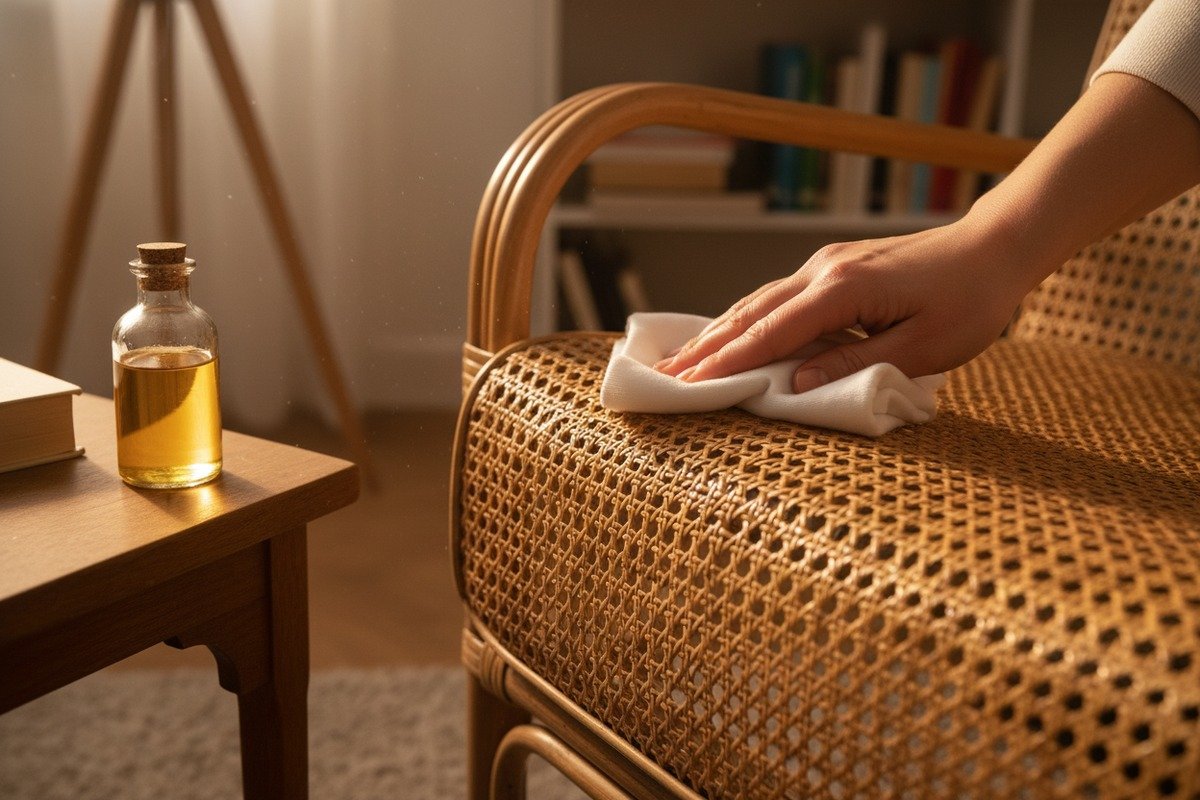
Cleaning mold strips natural oils from the rattan fibers. After the piece is fully dry, apply a thin layer of mineral oil or lemon oil with a soft cloth. Wipe in the direction of the weave. Let the oil absorb for fifteen minutes to a few hours, then buff off any excess with a clean, dry cloth. This restores flexibility and helps prevent future cracking or brittleness.
Some of our clients prefer boiled linseed oil for its warm, rich sheen. It works well, but apply very sparingly. Excess linseed oil can darken the rattan over time and feel greasy if not properly wiped away. We suggest applying linseed oil only to the underside or less visible areas until you are comfortable with the results.
A Maintenance Calendar
Consistency is key. Here is a simple schedule we share with our wholesale partners:
| Task | Frequency | Purpose |
|---|---|---|
| Dusting or vacuuming | Weekly | Prevents dirt and spore buildup |
| Spot cleaning stains | As needed | Stops stains from setting |
| Deep cleaning (mild soap or Murphy's Oil Soap) | Quarterly | Removes embedded grime |
| Oil conditioning (lemon, mineral, or linseed oil) | Monthly | Keeps fibers supple, prevents cracking |
| Mold inspection | Monthly (more often in humid climates) | Catches mold early before it spreads |
| Humidity check (room level) | Ongoing | Maintain below 55% for optimal rattan health |
Following this schedule will dramatically extend the life and appearance of your natural rattan cane webbing.
Conclusion
Natural rattan cane webbing is a beautiful, timeless material that rewards gentle, consistent care. Clean with mild solutions, dry thoroughly every time, condition monthly, and address mold early. Your rattan will stay gorgeous for years to come.
Footnotes
1. Provides a general overview of rattan cane webbing as a material. ↩︎
2. Replaced HTTP 404 with an authoritative guide from the Environmental Working Group (EWG) on healthy cleaning products, which is highly relevant to household cleaning agents. ↩︎
3. Explains the definition and characteristics of porous materials. ↩︎
4. Describes how microfiber cloths effectively clean surfaces. ↩︎
5. Replaced HTTP 404 with an authoritative Wikipedia page section on dishwashing agents, which covers the broader category of dish soaps and detergents. ↩︎
6. Explains the cleaning properties and uses of baking soda. ↩︎
7. Details the acidic properties and various cleaning applications of white vinegar. ↩︎
8. Explains the biological mechanism of enzyme cleaners in breaking down organic stains. ↩︎
9. Describes the solvent properties of rubbing alcohol for ink removal. ↩︎
10. Describes the fundamental chemical structure of cellulose in plant fibers. ↩︎


 English
  Español de México
  العربية
  Deutsch
  Français
  Русский