

Every year, our production lines process thousands of rolls of rattan cane webbing for furniture factories across the globe tensile strength 1. Yet one concern keeps coming up from buyers: will this natural material actually hold up under real-world use? When a single batch of weak webbing leads to product returns, sagging seats, or warranty claims, the financial and reputational damage can be severe.
Rattan cane webbing is remarkably strong and durable for furniture manufacturing when properly sourced, treated, and installed. Its natural fiber structure provides excellent tensile strength and flexibility, resisting sagging and wear over years of daily use, especially when supported by a solid frame and protected with appropriate finishes.
In this article, we break down the real-world strength of rattan cane webbing, what affects its durability, how to prevent common failures, and how to choose and verify the right grade for your furniture line protective finish 2. Let’s get into the details.
How much weight can my rattan cane webbing realistically support in furniture production?
This is the question we hear most often from furniture factory procurement managers placing their first rattan webbing orders. They need hard numbers before committing to a material, and rightfully so—guesswork leads to product failures and costly recalls.
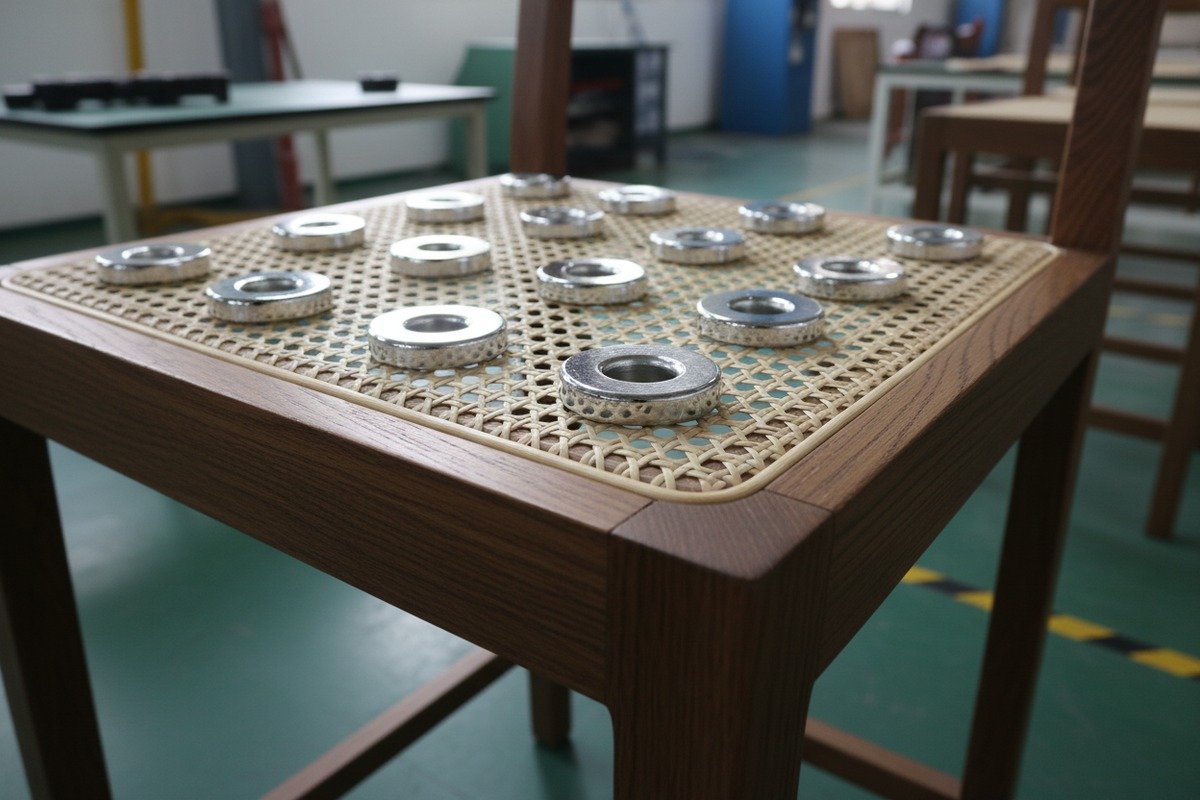
Quality rattan cane webbing, properly installed over a grooved frame, can realistically support 100 to 150 kilograms of evenly distributed weight on a standard chair seat. Load capacity depends on mesh density, frame support design, webbing thickness, and the treatment process applied to the fibers.
Understanding the Load-Bearing Mechanics
Rattan cane webbing does not carry weight the same way a solid wood panel does. Instead, it distributes force across a network of interwoven fibers. Each strand shares the load with its neighbors. This is why the weave pattern matters so much.
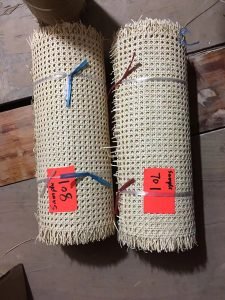
A tighter weave, like the fine 1/2-inch octagonal mesh 3, spreads weight more evenly and handles localized pressure better. A looser, open hexagonal "radio weave" looks beautiful but is better suited for chair backs and decorative panels rather than seat surfaces that bear full body weight.
The frame plays a critical role too. Rattan webbing is always installed into a groove on a wooden or metal frame. The frame absorbs most of the structural stress. The webbing itself provides the seating surface and comfort. Think of it this way: the frame is the skeleton, and the webbing is the skin. Both must work together.
Key Factors That Determine Weight Capacity
| Factor | Impact on Load Capacity | Recommendation |
|---|---|---|
| Weave density (mesh size) | Tighter weave = higher capacity | Use 1/2" fine mesh for seats |
| Strand thickness | Thicker strands resist more force | Choose strands ≥ 1/16" for seating |
| Frame material | Hardwood/metal frames support more load | Avoid softwood for high-use chairs |
| Installation method | Proper spline fit prevents pull-out | Use correct spline diameter for groove |
| Treatment process | Treated fibers resist stretching | Ensure boiling and drying treatment |
Real-World Performance in Our Testing
From our experience supplying rattan webbing to furniture factories in the Netherlands and Australia, we have found that chairs using our Grade A 1/2-inch fine open mesh webbing consistently pass standard loading tests 4. These tests simulate repeated sitting and standing—typically 50,000 cycles with a 75 kg load. The webbing does not tear or detach when the spline is correctly fitted.
However, problems arise when factories use the wrong mesh for the wrong application. We once had a buyer in Turkey who used a decorative radio weave for dining chair seats. Within months, customers reported sagging. The issue was not material quality—it was application mismatch. After switching to a denser weave, the problem disappeared entirely.
It is also important to note that rattan webbing is not designed for extreme point loads. A person standing on one foot in the center of a cane seat will stress the fibers far beyond their intended use. Evenly distributed weight across the seat surface is the design assumption.
How do I prevent my rattan webbing from sagging or breaking after long-term use?
Over the years, our technical support team has fielded hundreds of calls about rattan webbing that sagged, cracked, or broke prematurely. In nearly every case, the root cause was preventable—it came down to installation errors, environmental neglect, or choosing the wrong product for the application.
To prevent rattan webbing from sagging or breaking, soak it before installation for flexibility, use the correct spline size for a snug fit, avoid prolonged exposure to direct sunlight and excessive moisture, and apply a light protective finish periodically. Proper frame support is equally essential for long-term performance.
Proper Installation Is the First Defense
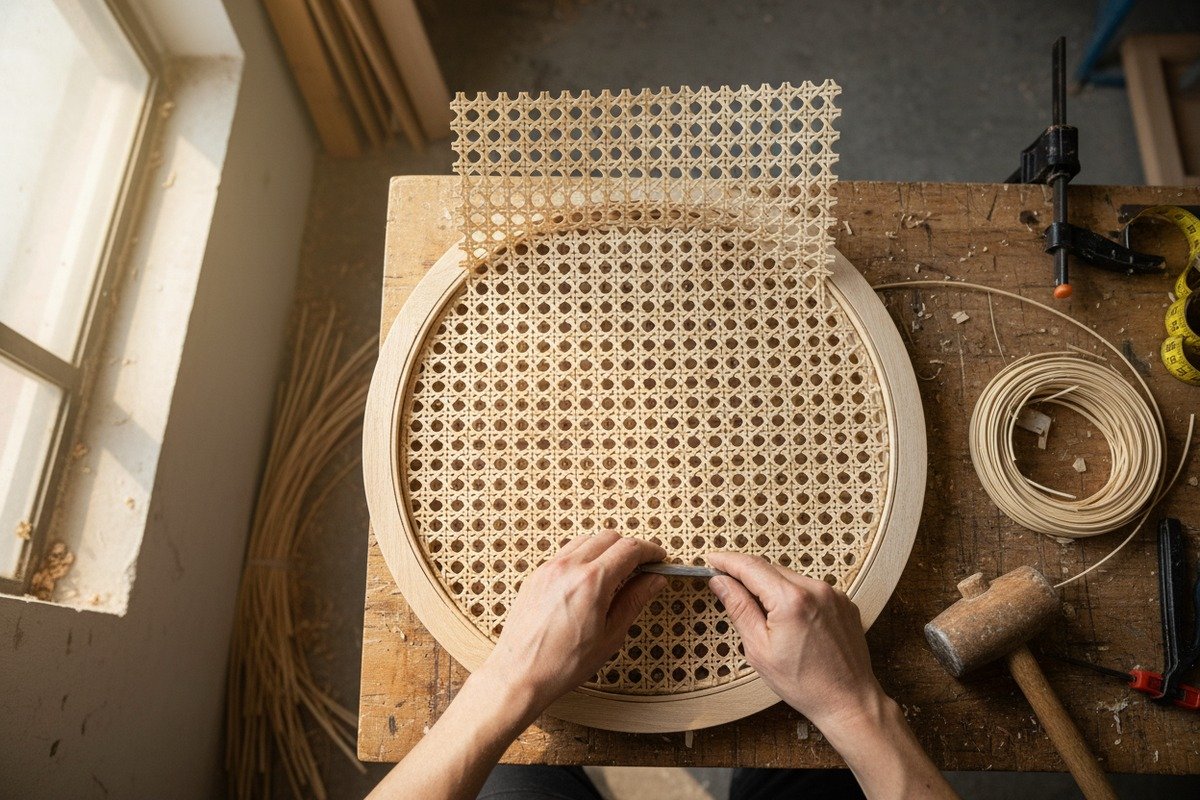
The most common cause of premature sagging is improper installation. Pre-woven cane webbing must be soaked in warm water for about 30 minutes before fitting. This makes the fibers pliable and allows the material to stretch slightly into the groove. Once installed with a spline and dried, the webbing tightens like a drum skin.
If you skip the soaking step, the webbing goes in too tight and has no room to adjust. Over time, it cracks at stress points. If you over-soak it, the fibers become too loose and never achieve proper tension. Getting the soak time right is a simple but critical step.
The spline—the thin reed that locks the webbing into the frame groove—must match the groove diameter exactly. A spline that is too thin will allow the webbing to pull free under load. A spline that is too thick will split the groove or damage the webbing fibers at the edge.
Environmental Threats and How to Counter Them
| Environmental Factor | Risk to Rattan Webbing | Prevention Method |
|---|---|---|
| Direct sunlight (UV) | Fading, fiber brittleness | Use UV-inhibitor finish 5 or place furniture away from windows |
| High humidity | Mold growth, fiber swelling | Ensure ventilation; apply anti-mold treatment |
| Extreme dryness | Cracking, splitting | Lightly mist underside periodically; avoid heat vents |
| Temperature swings | Expansion/contraction stress | Maintain stable indoor climate |
| Spills and moisture | Staining, localized weakening | Wipe immediately; do not saturate |
Maintenance Best Practices
Maintaining rattan webbing is straightforward. A light dusting with a soft brush or vacuum with a brush attachment once a week keeps debris from grinding into the fibers. For deeper cleaning, use a damp cloth—not a soaking wet one.
We recommend applying a diluted linseed oil 6 or specialized rattan oil to the underside of the webbing once or twice a year. Apply it lightly. Too much oil attracts dust and can darken the fibers unevenly. After application, wipe off excess with a lint-free towel and let it dry for several hours.
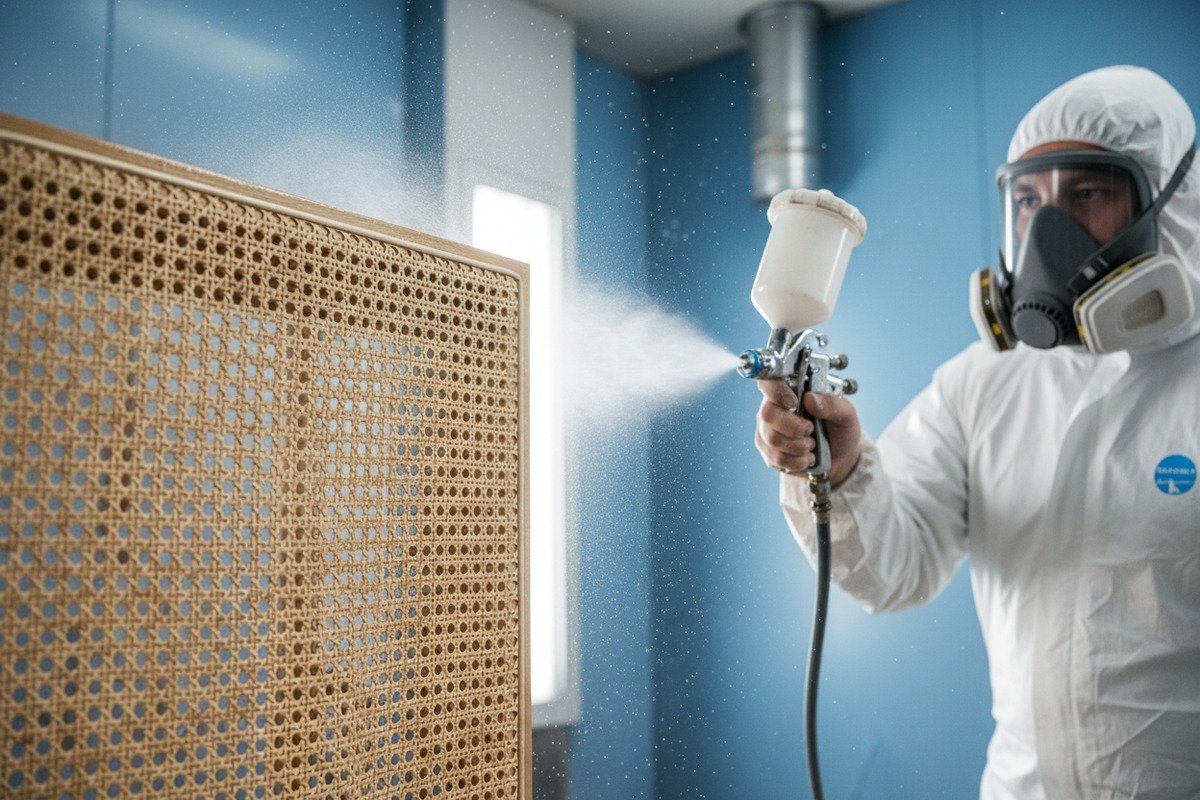
For furniture makers using our webbing in commercial settings—restaurants, hotel lobbies, waiting rooms—we suggest applying a clear lacquer or polyurethane sealant during production. This adds a protective layer that resists spills, UV damage, and abrasion. Some of our clients in Spain and Greece have reported their lacquered rattan chairs lasting over a decade in outdoor café settings with minimal fading.
What About Nanotechnology Sealants?
Emerging nanotechnology-based sealants 7 are gaining traction in the furniture industry. These ultra-thin coatings penetrate the fiber surface and provide water resistance, UV protection, and anti-microbial properties without changing the look or feel of the rattan. We have begun testing these with select clients and the early results are promising—especially for moderate outdoor exposure where traditional finishes degrade faster.
Which grade of rattan should I choose to ensure my furniture meets high durability standards?
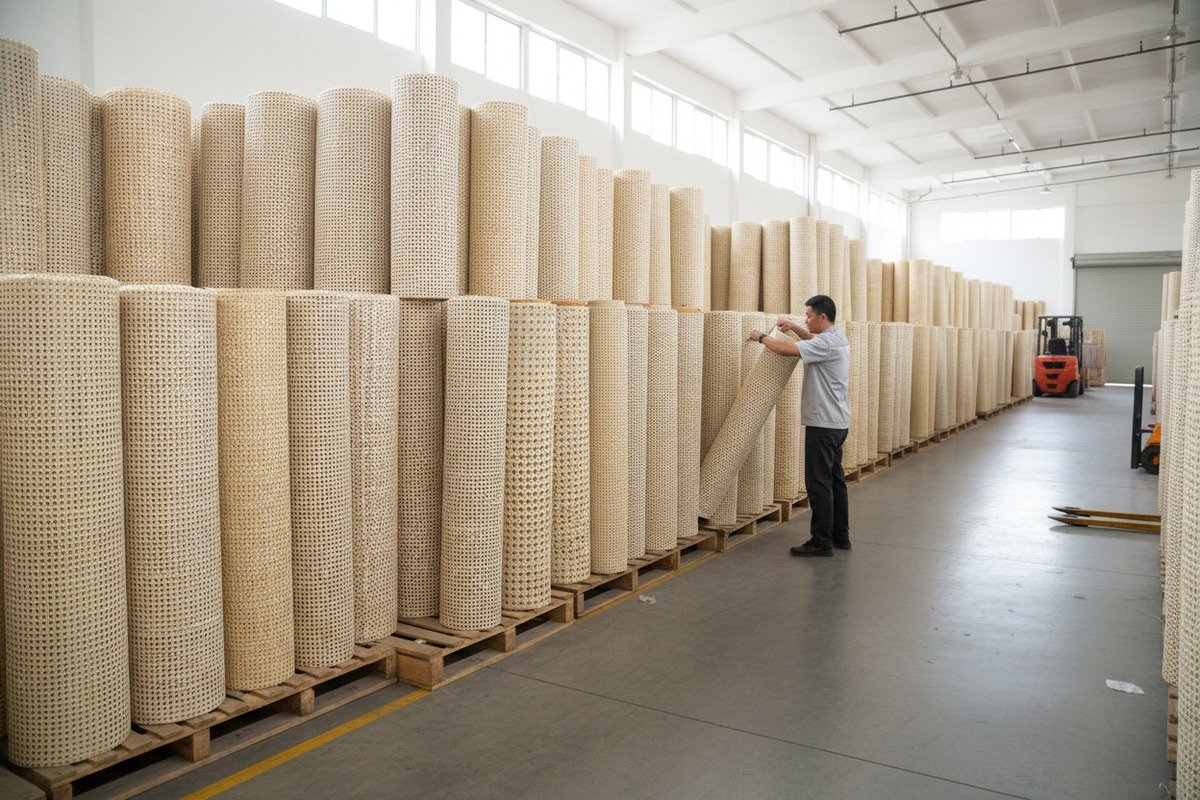
When buyers contact us for the first time, many assume all rattan cane webbing is the same. Our warehouses in Foshan hold multiple grades side by side, and the difference in fiber consistency, color uniformity, and flexibility is immediately visible—even to someone unfamiliar with the material.
For furniture that must meet high durability standards, choose Grade A rattan cane webbing, which features uniform strand thickness, consistent color, no cracks or knots, and strong flexibility. Manau rattan offers premium structural strength for demanding applications, while Grade B or C materials suit budget or decorative uses only.
How Rattan Grades Are Classified
Rattan grading is not governed by a single global standard. However, the industry generally follows a three-tier system based on visual and structural characteristics. At our processing facility in Indonesia, we grade every batch before shipping.
| Grade | Characteristics | Best Use | Durability Rating |
|---|---|---|---|
| Grade A | Uniform color, consistent thickness, no knots, high flexibility, smooth surface | High-end furniture seats, commercial applications | Excellent |
| Grade B | Minor color variation, occasional thin spots, slight surface roughness | Mid-range furniture, residential use | Good |
| Grade C | Noticeable color inconsistency, visible knots, uneven thickness | Decorative panels, non-load-bearing elements | Fair |
Choosing by Application
Not every piece of furniture needs Grade A material. Here is a practical guide based on how we advise our factory clients:
Chair seats and backs that bear body weight should always use Grade A. The fiber consistency ensures even load distribution, and the absence of knots eliminates weak points where cracks start.
Cabinet door panels and headboards can use Grade B. These components are primarily decorative and do not bear significant loads. The minor color variation in Grade B actually adds a natural, artisanal look that many designers prefer.
Decorative screens, room dividers, and wall accents can use Grade C. These items are not touched or stressed regularly. Using Grade C here keeps production costs down without sacrificing visual appeal at a distance.
Premium Rattan Varieties for Demanding Applications
For clients producing high-end furniture or pieces intended for commercial environments, we often recommend Manau rattan 8. Manau is the strongest rattan variety available, with stems reaching up to four inches in diameter. Its wide-spaced nodes and uniform structure make it ideal for frames and structural elements.
For intricate woven designs and joint wrapping, Rotan Sego is the preferred choice. Its smaller diameter—under one inch—makes it perfect for binding, wrapping, and fine detail work. It does not replace cane webbing for flat panel applications, but it complements it beautifully in handcrafted pieces.
Natural vs. Synthetic: When Does Synthetic Make Sense?
Some buyers ask us whether synthetic cane webbing is a better option. The honest answer depends on the use case. Synthetic PE webbing 9 is genuinely superior for fully outdoor furniture exposed to rain, snow, and freezing temperatures. Natural rattan, no matter how well treated, will eventually degrade under constant weather exposure.
However, for indoor furniture and covered outdoor spaces, natural rattan outperforms synthetic in comfort, breathability, aesthetics, and environmental impact. Synthetic webbing can crack in cold temperatures and lacks the organic texture that consumers increasingly demand. Our export data confirms this—over 80% of our orders for European and North American markets specify natural rattan.
How can I verify the quality consistency of my rattan supply to avoid manufacturing defects?
Running three factories and managing over 30 partner facilities has taught us something fundamental: quality problems in rattan webbing almost always trace back to inconsistency in raw material supply. A single substandard roll mixed into a production batch can cause defects that only show up months later—after the furniture reaches the end customer.
To verify rattan supply quality consistency, implement incoming inspection protocols that check fiber thickness, flexibility, color uniformity, moisture content, and mold treatment. Request sample rolls before bulk orders, establish written specifications with your supplier, and conduct periodic bend and stress tests on random samples from each shipment.
Building a Quality Verification System
Quality verification starts before you place an order. Ask your supplier for sample rolls from the exact batch they plan to ship. Do not accept catalog samples that may have been cherry-picked. At our facilities, we encourage buyers to visit and inspect production lines. For those who cannot travel, we send video inspections and detailed photos of each batch.
Once material arrives at your factory, a systematic incoming inspection process is essential. Here is the protocol we recommend to our clients:
Incoming Inspection Checklist
Visual inspection: Unroll at least 10% of each shipment. Check for consistent color across the roll. Look for knots, dark spots, thin strands, or visible mold. Grade A material should appear uniformly light buttery tan.
Flexibility test: Take a strand from the edge of the roll and bend it 90 degrees. It should flex smoothly without cracking or splintering. If it snaps, the material is either too dry or was not properly treated during processing.
Thickness measurement: Use a caliper to measure strand thickness at multiple points. For standard pre-woven cane webbing, thickness should be approximately 1/16 inch with no more than 10% variance across a roll.
Moisture content check: Use a pin-type moisture meter. Ideal moisture content 10 for rattan webbing is between 8% and 12%. Material below 8% is over-dried and brittle. Material above 12% is prone to mold growth and warping.
Odor check: Properly treated rattan has a mild, natural woody scent. A strong chemical smell indicates over-bleaching. A musty smell suggests inadequate mold treatment or improper storage.
Documenting Specifications With Your Supplier
Verbal agreements lead to quality disputes. We always recommend that buyers establish a written quality specification document that covers:
- Rattan grade (A, B, or C)
- Weave pattern and mesh size
- Roll dimensions (width, length)
- Acceptable color range (with photo references)
- Maximum number of knots per square meter
- Required treatments (boiling, drying, bleaching, anti-mold)
- Packaging requirements (moisture barrier, edge protection)
This document becomes your reference for every shipment. If a delivery does not meet the agreed specifications, you have a clear basis for rejection or negotiation.
Common Defects and Their Root Causes
| Defect | Typical Root Cause | How to Prevent |
|---|---|---|
| Inconsistent color | Mixed batches or uneven bleaching | Specify single-batch sourcing per order |
| Brittle strands | Over-drying or insufficient treatment | Verify moisture content on arrival |
| Mold or mildew spots | Poor storage or inadequate anti-mold treatment | Inspect packaging; check for moisture barriers |
| Uneven weave tension | Machine calibration issues at factory | Request quality control reports per roll |
| Strand breakage during installation | Raw material grade too low for application | Specify Grade A for load-bearing uses |
The Value of Long-Term Supplier Relationships
Quality consistency improves dramatically when you build a long-term relationship with your supplier. We have clients who have been ordering from us for over a decade. Over that time, we have calibrated our production to their exact specifications. We know their preferred color range, mesh tension, and packaging requirements. This kind of alignment does not happen with one-off transactional purchasing.
If you are evaluating a new rattan supplier, start with a small trial order. Test the material in your production line before committing to large volumes. Pay attention to how the supplier handles your feedback. A good supplier will adjust their process based on your input. A supplier who dismisses quality concerns is not a partner—they are a risk.
Controlled climate conditions during manufacturing and storage are also vital. At our Indonesia facility, we maintain specific humidity and temperature ranges throughout the curing process. This prevents internal stresses and moisture imbalances in the fibers that can compromise long-term stability. Ask your supplier what environmental controls they have in place—it is a telling indicator of their commitment to quality.
Conclusion
Rattan cane webbing delivers proven strength and durability for furniture manufacturing when you choose the right grade, install it correctly, maintain it properly, and verify supply quality consistently.
Footnotes
1. Replaced with a Wikipedia page providing a comprehensive definition of ultimate tensile strength, an authoritative source. ↩︎
2. Discusses protective coatings like polyurethane varnish for wicker furniture. ↩︎
3. Provides details on superfine octagonal mesh cane webbing for furniture. ↩︎
4. Explains various strength and load-bearing tests for furniture durability. ↩︎
5. Explains how UV-inhibiting finishes protect wood from sun damage. ↩︎
6. Details the use of boiled linseed oil for restoring and protecting rattan furniture. ↩︎
7. Describes how nano-coating technology provides invisible protection for furniture surfaces. ↩︎
8. Highlights Manau rattan as a strong and durable material for high-quality furniture. ↩︎
9. Explains the durability and applications of synthetic PE rattan webbing. ↩︎
10. Replaced with a Wikipedia page defining water content (moisture content), an authoritative source. ↩︎

 English
  Español de México
  العربية
  Deutsch
  Français
  Русский