
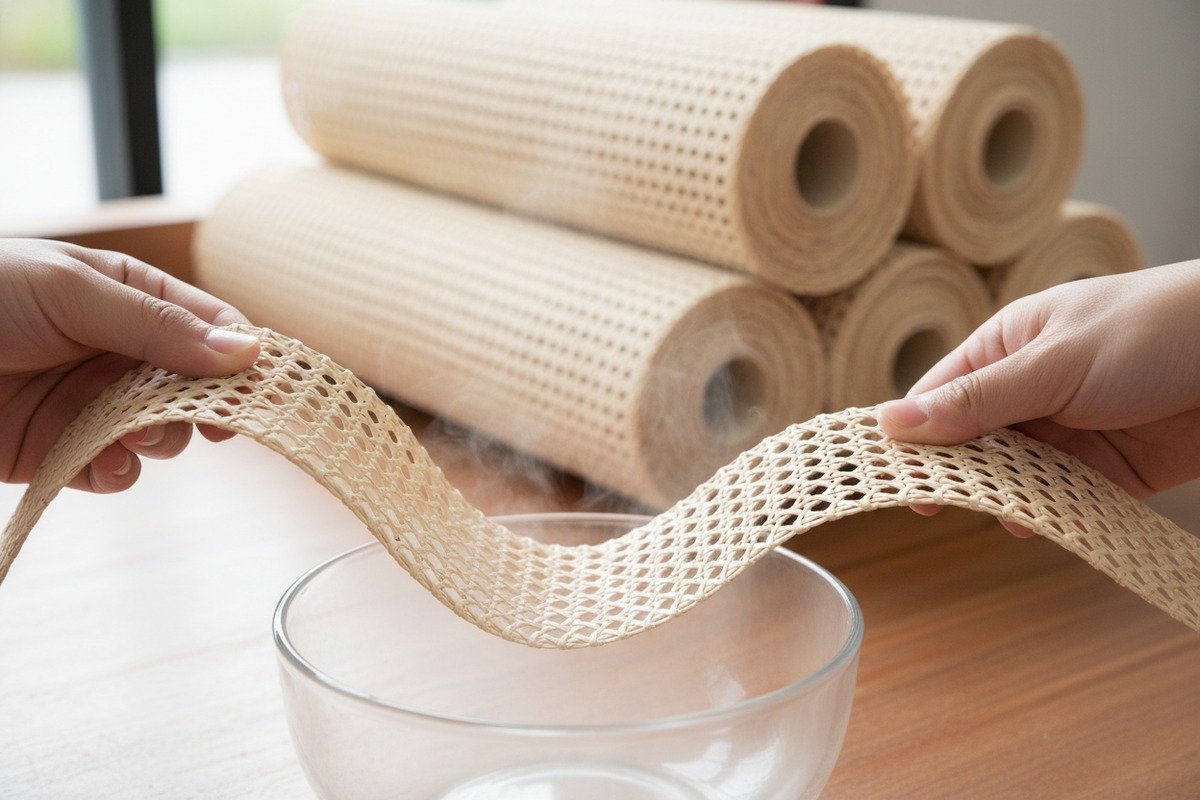
Every year, we ship hundreds of rattan cane webbing 1 rolls from our factories in Foshan and Indonesia to furniture makers worldwide. The number one complaint we hear from new buyers? Webbing that cracks and splits after installation rattan material 2. It is a frustrating problem, and it damages both furniture and business reputations. But the good news is you can catch brittle rattan before it ever reaches your production line.
To test if rattan cane webbing is prone to breaking, soak a small sample strip in warm water for 30 minutes, then bend it sharply and pull it firmly. Quality rattan will flex and rebound without cracking. Brittle, breakage-prone webbing will crack, split, or snap under this simple stress test.
This article walks you through practical tests, quality indicators, and processing knowledge that will help you avoid costly rattan failures. Whether you buy in bulk or source single rolls, these checks will save you time and money. Let’s start with the most accessible test you can do right now.
How can I perform a simple bend test to check if my rattan cane webbing is too brittle?
We have tested thousands of rattan samples across our three factories, and one truth holds firm: a two-minute bend test reveals more about webbing quality than any product photo ever will. If you skip this step, you risk installing material that cracks on the first humid day or snaps when a customer sits down.
Soak a 5–10 cm strip of rattan cane webbing in warm water for 30 minutes, then bend it at a sharp 90-degree angle and tug firmly. Quality webbing flexes smoothly, holds shape, and rebounds. Brittle webbing cracks audibly, splits along the grain, or breaks apart with minimal force.
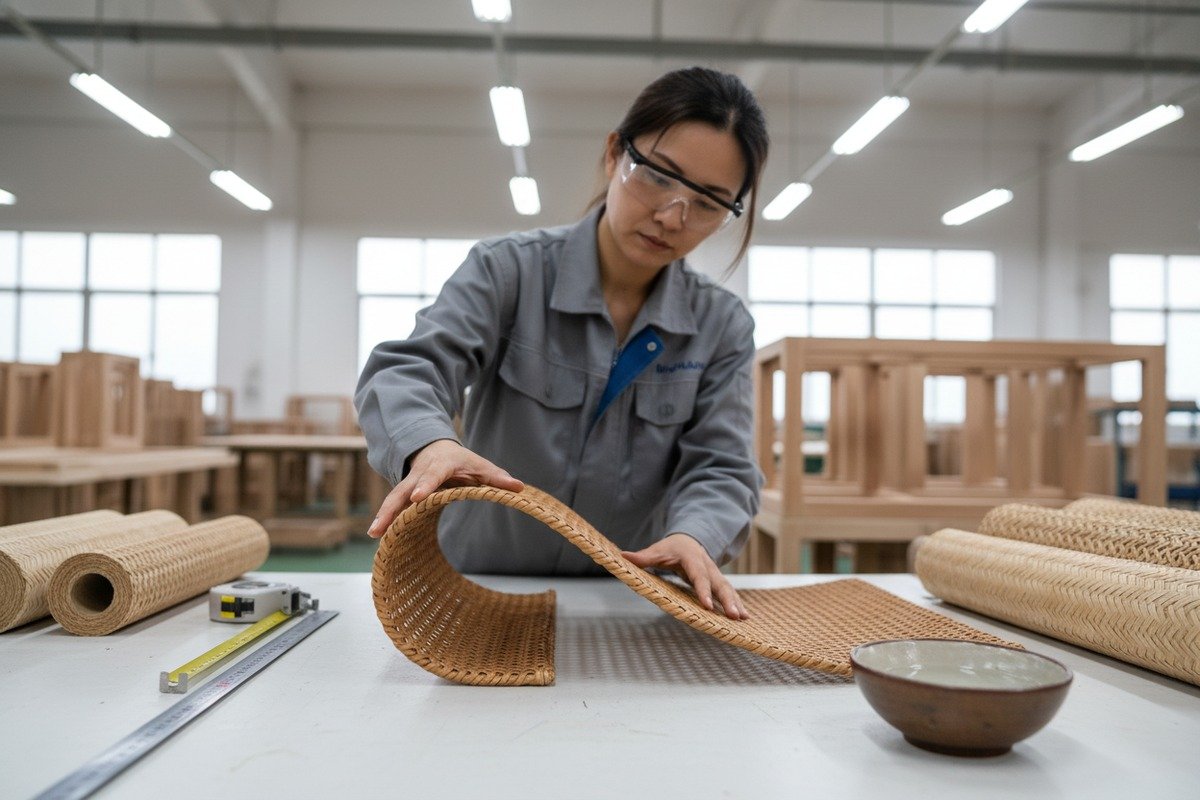
The Wet Bend Test: Step by Step
This is the primary test we recommend to every buyer who visits our Nanhai showroom. It simulates real-world stress that rattan faces during weaving, installation, and daily use.
Step 1: Cut a small sample strip, roughly 5 to 10 cm long. Choose a piece from the middle of the roll, not the edge. Edge pieces can be misleading because they dry faster and may not represent the full roll's quality.
Step 2: Place the strip in a bowl of warm water. Not boiling. Not cold. Warm water around 35–40°C works best. Soak it for exactly 30 minutes. This mimics the soaking process used before installation.
Step 3: Remove the strip and immediately bend it to a 90-degree angle. Hold it for 5 seconds. Does it hold shape without cracking? Good sign. Does it crack or produce a tiny ping sound? That signals brittleness.
Step 4: Now pull both ends of the strip firmly in opposite directions. Apply steady tension for about 10 seconds. Quality rattan resists the pull and stretches slightly. Brittle rattan splits along its length or snaps entirely.
Secondary Quick Tests
Beyond the wet bend test, you can use these additional checks right at your workbench or receiving dock.
| Test Name | How to Perform | Pass Result | Fail Result |
|---|---|---|---|
| Dry Bend Test | Bend a dry strip gently at 45° | Slight flex, no cracking | Immediate snap or crack |
| Pinch Test | Pinch a small area between fingers | Fibers feel firm but slightly pliable | Fibers feel crispy, rough, or crumble |
| Sound Test | Pull a woven section taut | Silent or soft stretch sound | Tiny ping or popping sounds |
| Weight Load Test | Hang 2 kg from a small woven piece | Webbing holds shape, no tearing | Strands tear or separate from weave |
| Visual Scan | Inspect surface under bright light | Smooth, even color, no cracks | Visible cracks, burrs, or uneven thickness |
What Does Failure Look Like?
When a rattan sample fails the bend test, you will see one or more of these signs. The fibers separate along the grain, creating a split that runs lengthwise. The outer skin peels away from the inner core. Small fragments break off at the bend point. In severe cases, the strip snaps completely in two with almost no effort.
We once received a complaint from a furniture maker in Australia who installed an entire batch of webbing on dining chairs. Within three weeks, the cane cracked across multiple seats. When we tested a retained sample from that batch, it failed the wet bend test at just 45 degrees. The lesson? Always test before you commit to a full production run.
Why Warm Water Matters
Cold water does not penetrate rattan fibers effectively in 30 minutes. Hot water can damage the fibers and give false flexibility. Warm water strikes the right balance. It softens the natural lignin and cellulose 3 in the cane, allowing you to assess its true flexibility without causing thermal damage.
Why does the grade of rattan material matter for the long-term durability of my furniture?
When we sort raw rattan at our processing facility 4 in Indonesia, we separate it into distinct grades before a single strip gets woven. This grading step might seem like extra work, but it is the single biggest factor that determines whether your finished furniture lasts 2 years or 20.
The grade of rattan material directly determines fiber density, tensile strength, and resistance to environmental stress. Higher-grade rattan comes from carefully selected stems with uniform thickness and no natural defects. Lower grades contain irregularities that become weak points, leading to premature cracking and breakage in finished furniture.
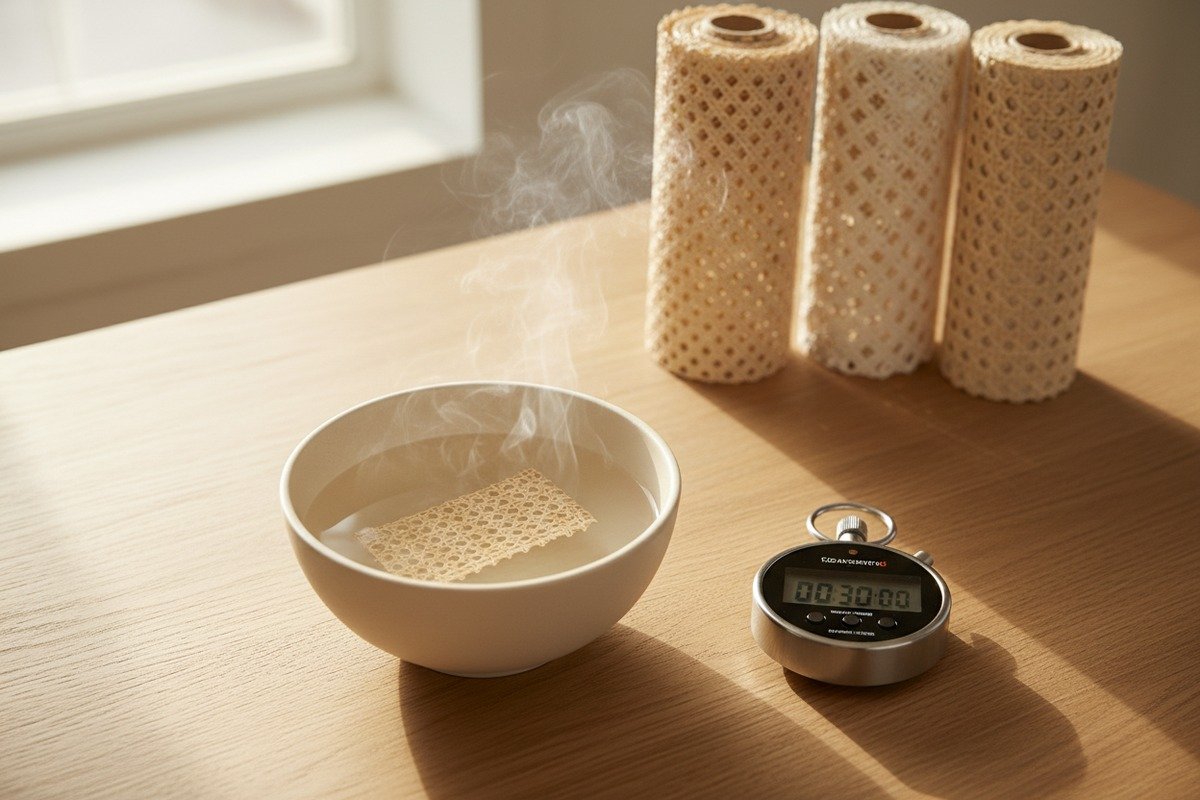
Understanding Rattan Grades
Not all rattan is equal. The outer skin of the rattan palm 5, called cane, is what gets processed into webbing. But even within the same harvest, stems vary dramatically in quality. Some stems grow straight and uniform. Others develop knots, thin spots, or internal damage from insects.
At our Foshan headquarters, we classify rattan cane webbing into three primary grades. Grade A represents the top tier: uniform width, consistent color, no visible cracks, and smooth surface texture. Grade B has minor surface imperfections but maintains structural integrity. Grade C contains noticeable irregularities and is suitable only for low-stress decorative applications.
Grade Comparison Table
| Quality Factor | Grade A | Grade B | Grade C |
|---|---|---|---|
| Surface Smoothness | Excellent, no burrs | Minor rough patches | Visible burrs and roughness |
| Width Uniformity | ±0.2 mm tolerance | ±0.5 mm tolerance | ±1.0 mm or more |
| Color Consistency | Even pale straw tone | Slight tonal variation | Noticeable dark spots or streaks |
| Tensile Strength 6 | High — holds firm under load | Moderate — adequate for most use | Low — prone to splitting |
| Recommended Use | Seating, high-stress weaving | Cabinet panels, headboards | Decorative accents only |
| Price Range | Premium | Mid-range | Budget |
How Grade Affects Long-Term Performance
A Grade A rattan strip can withstand repeated bending cycles without losing structural integrity. In our internal testing, Grade A samples sustained over 500 bend cycles at 90 degrees before showing any fiber fatigue. Grade C samples often failed within 50 cycles.
This matters because furniture endures constant stress. Every time someone sits in a rattan chair, the webbing flexes. Every temperature shift causes the fibers to expand and contract. Over months and years, low-grade material accumulates micro-fractures that eventually lead to visible cracking and failure.
Species Variation Is Real
Research on Chinese rattan species 7 shows that tensile and flexural strength vary significantly depending on the species and even the position on the stem. Bast rattan — the outer layer — is consistently stronger than core rattan for weaving applications. When suppliers mix species or use core material in webbing, durability drops sharply.
We work with specific rattan species selected for their density and fiber alignment. This is not something most buyers think to ask about, but it directly impacts whether your webbing survives real-world use. If your supplier cannot tell you what species they source, consider that a red flag.
The Cost of Choosing Wrong
A purchasing manager we work with in Thailand — similar to many of our regular clients — once switched to a cheaper Grade C supplier to reduce costs by 15%. Within six months, his furniture factory faced a wave of warranty claims. The rattan webbing on over 200 chairs had cracked. The replacement cost far exceeded what he saved. He returned to Grade A sourcing and has not looked back.
What are the visual signs of poor quality I should look for when inspecting my bulk rattan order?
On our production floor, quality inspectors 8 check every roll before it gets packed for export. But we also train our buyers to do their own visual inspections on arrival. Why? Because shipping and storage conditions can introduce new issues, and catching problems early saves everyone time and disputes.
When inspecting a bulk rattan order, look for uneven strip width, visible surface cracks, dark discoloration spots, rough burrs along the edges, inconsistent mesh spacing, and fibers that appear dry or flaky. These visual defects indicate poor raw material sorting, incorrect processing, or storage damage that will lead to premature breakage.
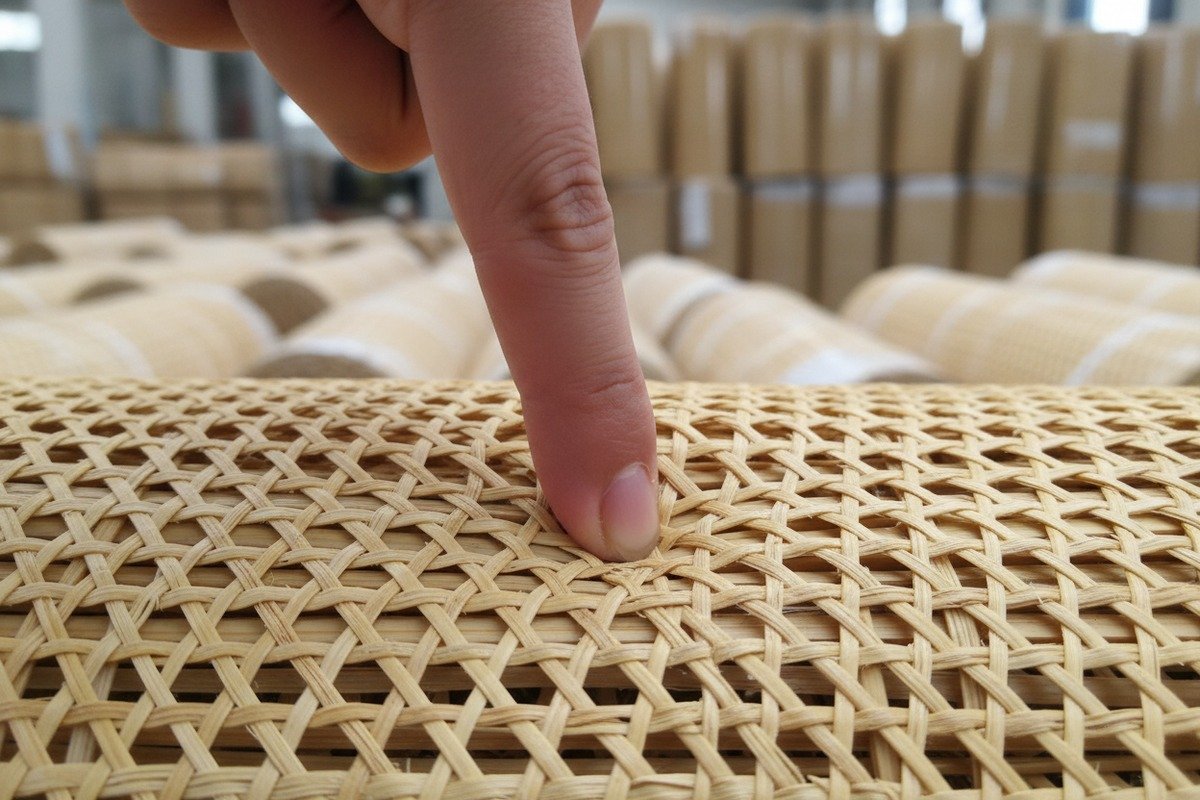
The 6-Point Visual Inspection Checklist
You do not need laboratory equipment for this. A well-lit workspace and a careful eye are enough to catch the most common quality problems. Here is our recommended inspection sequence.
1. Surface Cracks. Hold the webbing up to bright light at a low angle. Cracks appear as thin lines running along the grain. Even hairline cracks indicate that the material has already started to degrade. These cracks will widen under tension or moisture cycling.
2. Edge Burrs. Run your finger gently along the edge of individual strips within the weave. Quality rattan feels smooth after proper processing. Rough, splintery edges mean the singeing step was skipped or done poorly. Burrs also indicate that the material may not have been boiled or bleached correctly.
3. Color Consistency. Lay out a section of webbing flat. The color should be even across the entire surface. Dark spots or streaks often indicate mold exposure, uneven drying, or mixed batches of different quality raw materials.
4. Width Uniformity. Measure the width of individual strips at multiple points. For half-inch mesh, the tolerance should be within ±0.5 mm for Grade A material. Significant width variation means the thinning process was poorly controlled, creating weak points where thinner sections meet thicker ones.
5. Mesh Spacing. Check that the openings in the weave pattern are uniform. Irregular spacing suggests the material was woven under inconsistent tension, which leads to uneven stress distribution in the finished product.
6. Fiber Texture. Touch the surface. Quality rattan feels firm and slightly waxy. Poor quality material feels dry, rough, and almost papery. If individual fibers lift or peel when you lightly scratch the surface, the material has been over-dried or is aging prematurely.
Visual Defect Impact Table
| Visual Defect | What It Indicates | Risk Level | Action Required |
|---|---|---|---|
| Hairline surface cracks | Fiber degradation or over-drying | High | Reject batch or request replacement |
| Edge burrs and splinters | Incomplete singeing or poor processing | Medium | Negotiate price reduction or reprocess |
| Dark spots or streaks | Mold, uneven drying, or mixed quality | Medium-High | Isolate affected rolls, test remaining |
| Uneven strip width | Poor thinning process control | High | Reject — indicates systemic factory issue |
| Irregular mesh spacing | Inconsistent weaving tension | Medium | Acceptable for decorative use only |
| Dry, flaky fiber texture | Over-processing or aging | High | Reject — material will crack under use |
What Good Quality Looks Like
For comparison, high-quality rattan cane webbing has a smooth, almost satiny surface. The color is a consistent warm beige or pale straw. When you run your hand across the weave, it feels even and slightly cool. The mesh pattern is geometric and regular, with clean intersections where strips overlap.
Our bleached rattan goes through a careful multi-step process: boiling, chemical treatment 9 for color consistency, controlled drying, and singeing with a blowtorch for burr removal. Each step matters. Skip one, and the visual quality drops noticeably.
Red Flags in Packaging
Also inspect the packaging itself. Webbing that arrives with crushed edges or moisture stains inside the wrapping may have been damaged in transit. We use reinforced roll cores and moisture-barrier wrapping for all our export shipments because we have seen what poor packaging does to even the best material.
How do I know if my rattan webbing has been processed correctly to prevent future breakage?
Our rattan processing facility in Indonesia handles every step from raw stem to finished webbing roll. Through years of refining our process, we have learned exactly where things go wrong — and what correct processing looks like from the buyer's perspective.
Correctly processed rattan webbing shows smooth edges from proper singeing, consistent flexibility from controlled boiling and drying, uniform color from even bleaching, and no residual brittleness. You can verify proper processing by combining a wet bend test with visual inspection for burrs, cracks, and texture irregularities that signal skipped or rushed production steps.
The Processing Chain and Where It Breaks Down
Rattan processing involves a specific sequence of steps. Each step has a purpose, and each step can be done poorly. Understanding this chain gives you the knowledge to spot incorrectly processed webbing before it becomes a problem.
Harvesting and Sorting. Raw rattan stems are harvested, stripped of outer thorns, and sorted by diameter and quality. Poor sorting at this stage mixes weak, thin stems with strong ones. The result is inconsistent webbing quality within the same roll.
Thinning and Splitting. Stems are split into thin strips for weaving. This step requires precise blade calibration. If the blades are dull or the operator rushes, strips come out with uneven thickness. We calibrate our thinning machines twice per shift to maintain consistency.
Boiling. Strips are boiled to soften the fibers and kill any insects or mold. Under-boiling leaves the material stiff and brittle. Over-boiling can break down the natural oils that give rattan its flexibility. The optimal boiling time depends on the strip thickness and species.
Bleaching. Chemical bleaching evens out the color and removes surface impurities. Inconsistent bleaching creates blotchy, uneven coloring. More importantly, harsh bleaching chemicals can strip the fiber's natural binders, making it more prone to cracking.
Drying. Controlled drying is critical. Rattan that dries too fast becomes brittle. Rattan that dries too slowly can develop mold. We use temperature-controlled drying rooms with humidity monitoring. Many smaller factories dry rattan in open sun, which leads to inconsistent results.
Singeing. The final step involves passing strips over an open flame or blowtorch to burn off surface burrs and loose fibers. This also slightly heat-treats the outer layer, improving its resistance to moisture. Skipping this step is one of the most common shortcuts in low-cost production.
Natural vs. Synthetic: Processing and Durability Comparison
Many buyers ask us whether they should switch to synthetic rattan, especially for outdoor furniture. Here is an honest comparison based on our experience producing both.
| Factor | Natural Rattan Webbing | Synthetic (HDPE) Rattan Webbing |
|---|---|---|
| Raw Material | Palm stems, organic fibers | High-density polyethylene 10 with BASF antioxidants |
| Processing Complexity | High — boiling, bleaching, drying, singeing | Moderate — extrusion, weaving, UV stabilization |
| Tensile Strength | Moderate — varies by grade and species | High — consistent across production |
| UV Resistance | Low — degrades under prolonged sunlight | High — withstands 3,000+ hours simulated sunlight |
| Moisture Sensitivity | High — requires soaking before use, susceptible to mold | None — fully waterproof |
| Flexibility After Aging | Decreases over time without maintenance | Maintains shape recovery throughout lifespan |
| Aesthetic Appeal | Warm, natural texture highly valued | Good imitation but lacks authentic feel |
| Eco-Friendliness | Biodegradable, renewable resource | Recyclable but petroleum-based |
| Factory QC Pass Rate | 85–92% for Grade A | 98% with standardized testing |
| Best Application | Indoor furniture, decorative panels | Outdoor furniture, high-humidity environments |
How to Verify Processing Quality as a Buyer
You cannot watch every step in your supplier's factory. But you can ask the right questions and perform the right tests.
Ask for processing documentation. A reliable factory can describe their boiling time, drying temperature, and bleaching method. If they cannot, that is a concern. Request a sample before committing to a bulk order, and run the wet bend test we described earlier.
Check if the edges are singed. Smooth, slightly glossy edges indicate proper singeing. Rough, fibrous edges mean this step was skipped. Feel the surface texture. It should be smooth and slightly waxy, not dry or rough.
Look at color uniformity across the entire roll. Uneven color means uneven processing. And finally, ask about the species used. Reputable suppliers know their source material. If your supplier cannot answer basic questions about species and origin, consider sourcing elsewhere.
Maintenance Prevents Future Breakage
Even perfectly processed rattan needs care. Avoid placing natural rattan furniture in direct sunlight for extended periods. UV exposure breaks down the fiber structure over time. Keep humidity levels moderate — both extreme dryness and excessive moisture cause problems. If you notice the webbing feeling stiff, a light misting with water followed by gentle air drying can restore flexibility.
For our wholesale clients, we provide a maintenance guide with every shipment. It covers seasonal care, cleaning methods, and repair techniques. Proper care extends the life of quality rattan by years.
Conclusion
Testing rattan cane webbing before you buy or install it protects your investment and your reputation. Use the simple soak-and-bend test, inspect visually for defects, understand grading, and verify that processing was done right. These steps take minutes but prevent costly failures that last for years.
Footnotes
1. Provides a general overview of rattan cane webbing, its characteristics, and uses. ↩︎
2. Details the grading process for rattan, explaining how different grades impact quality and durability. ↩︎
3. Explains the chemical composition of rattan, including lignin and cellulose, and their role in strength. ↩︎
4. Replaced with a Wikipedia article defining ‘factory,’ which is a type of processing facility. ↩︎
5. Provides a comprehensive overview of rattan as a climbing palm, its species, and uses. ↩︎
6. Replaced with an authoritative definition of tensile strength from Britannica. ↩︎
7. Discusses various rattan species, their characteristics, and suitability for furniture making. ↩︎
8. Replaced with an authoritative government source (Bureau of Labor Statistics) detailing the role of quality control inspectors. ↩︎
9. Mentions bleaching as a chemical treatment for rattan to achieve uniform color and superior finish. ↩︎
10. Replaced with an authoritative Wikipedia article defining High-density polyethylene (HDPE). ↩︎

 English
  Español de México
  العربية
  Deutsch
  Français
  Русский