
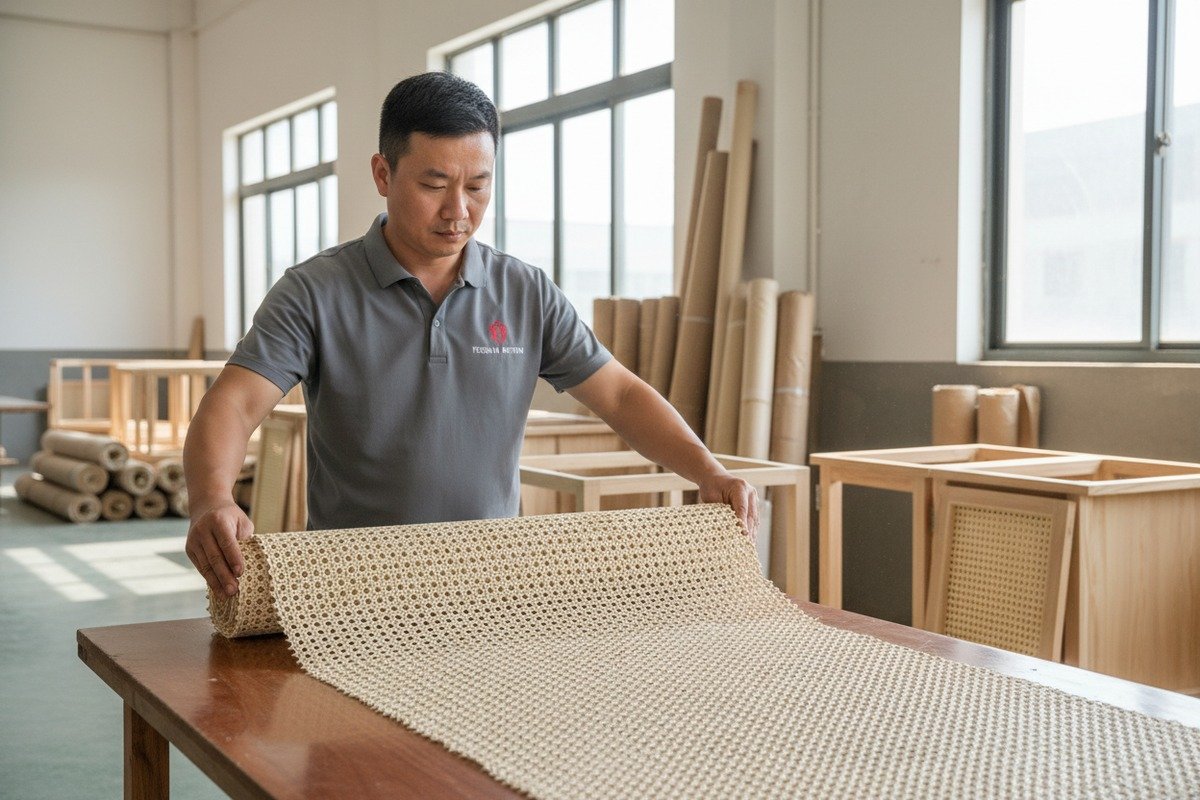
Every year, our production floor receives complaints from buyers who trusted the wrong supplier tensile strength assessments 1. Cracked cane webbing, brittle strands, and inconsistent weave tension — these problems cost furniture factories thousands in wasted material and lost time. The pain is real, and the solution starts before the rattan ever reaches your workshop.
To test rattan cane webbing toughness when sourcing, combine hands-on methods like visual inspection, soak-and-bend flexibility checks, and manual pull tests with lab-verified tensile strength assessments. These steps reveal cracking risks, grade inconsistencies, and load-bearing capacity before you commit to a bulk order.
This guide walks you through every practical test, from quick field checks to advanced lab methods rattan cane webbing quality 2. Whether you run a furniture factory or wholesale rattan materials, these steps will protect your investment and your reputation. Let’s start with the basics.
How can I perform a simple manual test to check the flexibility of my rattan cane webbing?
When we ship rattan webbing to buyers in the Netherlands or Australia, the first thing they check is flexibility. A stiff or cracking strand means trouble during installation. So testing flexibility early saves everyone headaches down the line.
To manually test rattan cane webbing flexibility, soak a sample in warm water for 20–30 minutes, then bend it around a cylinder the diameter of a broomstick. Quality cane should bend smoothly without cracking, splintering, or showing white stress lines on the surface.
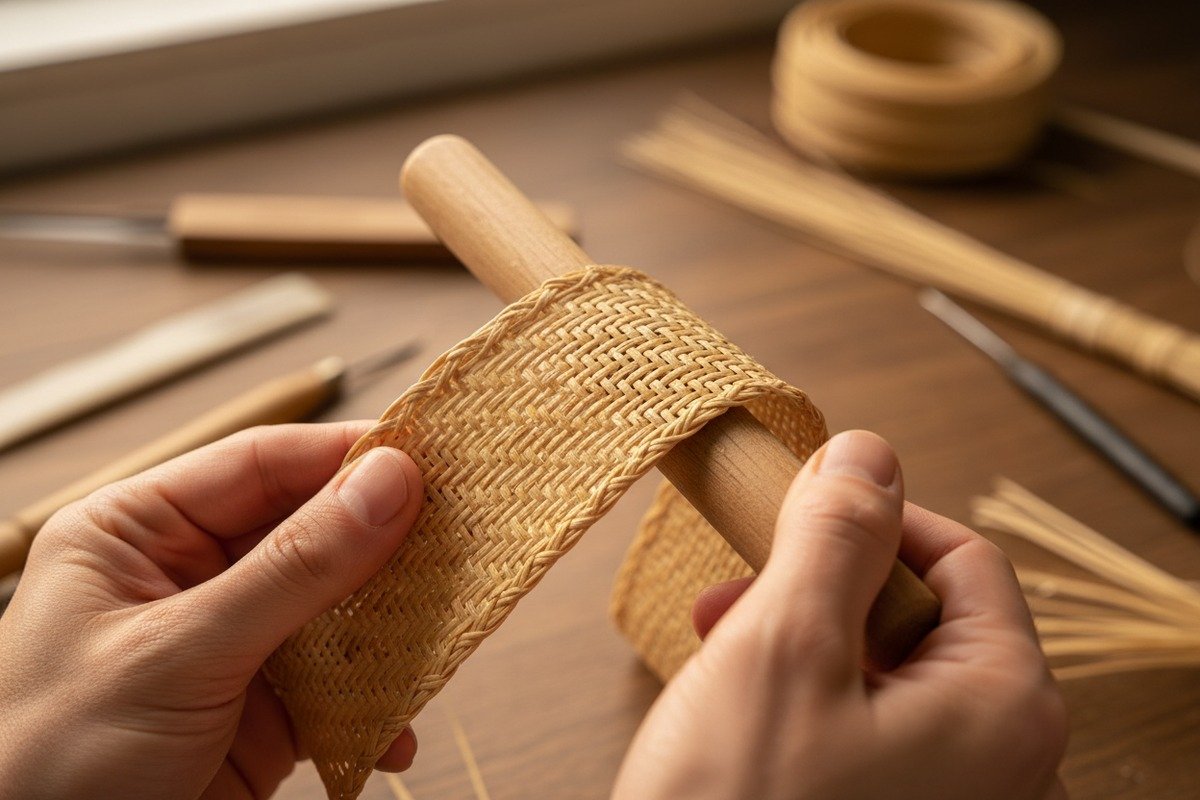
Flexibility is the foundation of rattan cane webbing 3 quality. If the material cracks during a simple bend, it will definitely fail during weaving, stretching over a frame, or bearing weight in a finished chair. Here is a step-by-step breakdown of the tests you can do right at the supplier's warehouse or your own receiving dock.
The Soak-and-Bend Test
This is the most common field test. Fill a basin with warm water — around 40°C to 50°C. Submerge a 30 cm strip of the webbing for 20 to 30 minutes. Remove it and immediately wrap it around a round object like a pipe or broomstick (roughly 3 cm diameter). Good rattan will curve smoothly. Bad rattan will crack, splinter, or show white stress marks.
Why warm water? It mimics the real production process. Furniture makers soak cane webbing before installation to make it pliable. If the material cannot handle this basic step, it is not fit for purpose.
The Dry Bend Test
Before soaking, try bending a dry sample gently between your fingers. You are not looking for it to be perfectly flexible — dry rattan is naturally stiffer. But it should not snap immediately. A clean break on a dry sample suggests the rattan was over-dried during processing or harvested from an immature plant.
The Twist Test
Hold a single strand at both ends. Twist it slowly, about 90 degrees. Quality cane will resist the twist but stay intact. Low-quality cane will split along the grain. This test is especially useful for checking individual strands within a woven sheet.
What to Record
Keep a simple log for each sample batch you test. Here is a template:
| Test | Pass Criteria | Fail Indicators |
|---|---|---|
| Soak-and-Bend | Smooth curve, no cracks | Cracking, splintering, white stress lines |
| Dry Bend | Slight resistance, no snap | Immediate snap or clean break |
| Twist (90°) | Holds shape, no splitting | Splits along grain, fibers separate |
| Visual Surface | Even color, smooth outer skin | Dark spots, rough patches, mold |
Common Mistakes
Many buyers skip the soaking step and test only dry samples. This gives a false picture. Rattan is meant to be worked wet. Another mistake is using boiling water instead of warm water. Boiling can over-soften the fibers temporarily, hiding brittleness that shows up later when the material dries out in a finished product.
At our processing facility in Indonesia, we run these exact tests on every incoming batch of raw cane before it enters the weaving line. It takes less than an hour and prevents days of production delays.
How do I distinguish between Grade A and lower-quality rattan to ensure my furniture stays durable?
Our warehouse team in Foshan sorts thousands of rolls every month. The difference between Grade A and Grade B is not always obvious at first glance — but it has a massive impact on how your finished furniture holds up over time.
Grade A rattan cane webbing features a smooth, glossy outer skin with uniform color, tight node spacing, and no visible cracks or dark spots. Lower grades show rough textures, uneven strand thickness, discoloration, and surface imperfections that weaken toughness and reduce furniture lifespan.
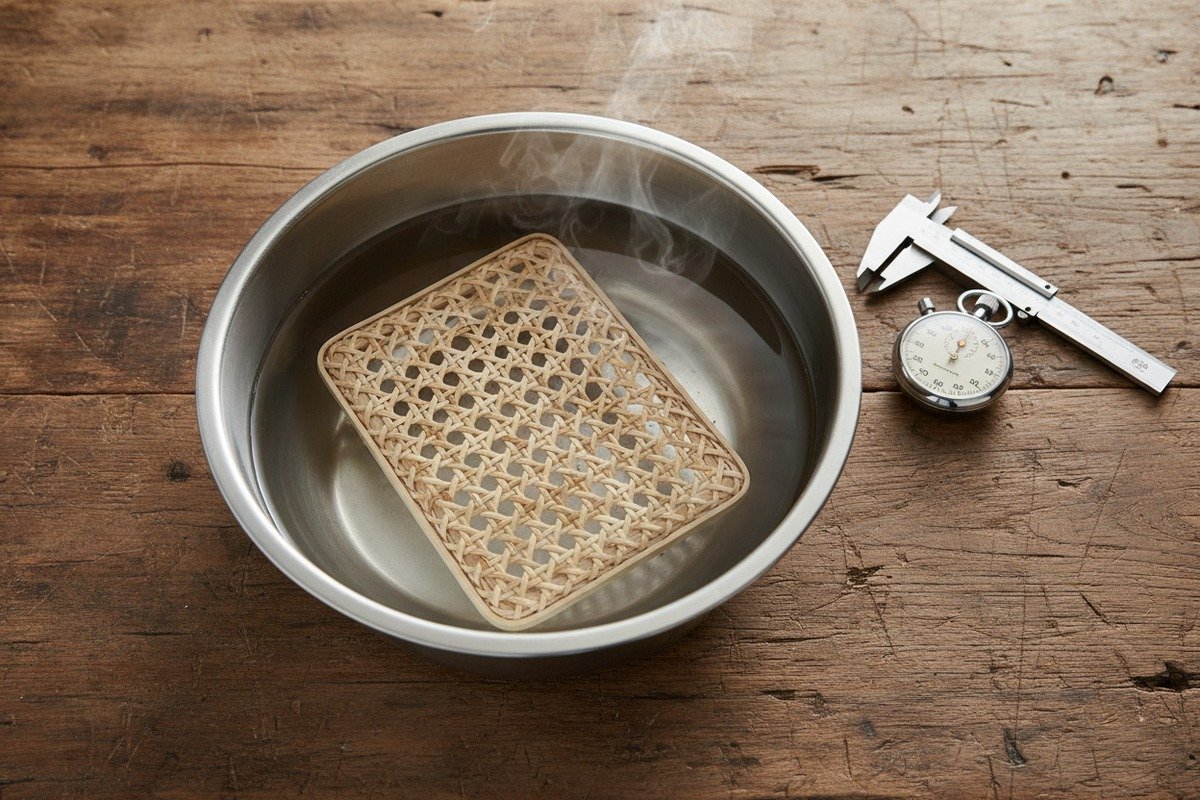
Grading rattan is part art, part science. Understanding what separates a premium roll from a mediocre one will save you money and protect your brand. Here is how to evaluate quality like a seasoned sourcer.
Visual Grading Criteria
The outer bark of the rattan palm 4 is where the strength lives. Grade A cane is peeled from the outermost layer. It has a natural sheen, feels smooth to the touch, and shows consistent straw-yellow to light beige color across the entire roll. Lower grades come from inner layers. They are rougher, more porous, and absorb moisture unevenly — which leads to warping and brittleness.
The Key Indicators
| Feature | Grade A | Grade B/C |
|---|---|---|
| Surface Texture | Smooth, glossy outer skin | Rough, matte, porous |
| Color Uniformity | Consistent straw-yellow/cream | Blotchy, dark spots, uneven tone |
| Strand Thickness | Even across the roll | Varies noticeably |
| Node Spacing | Tight, regular intervals | Irregular, sometimes too close |
| Flexibility (post-soak) | Bends without cracking | May crack or splinter |
| Odor | Mild, natural wood scent | Musty, chemical, or moldy smell |
Species Matters
Not all rattan species are equal. Research on four Chinese rattan species shows irregular variations in physical and mechanical properties depending on the plant's height and age. For example, cane harvested from the lower portion of the stem tends to be denser and tougher. When sourcing, always ask your supplier which species they are selling and where in the stem the cane was harvested.
At our Indonesian processing facility, we work primarily with Calamus species 5 known for consistent outer-bark quality. We tag each batch with harvest location and stem section data so our buyers know exactly what they are getting.
Processing Defects to Watch For
Even Grade A raw material can be ruined by poor processing. Watch for these red flags:
- Over-bleaching: Some processors bleach rattan to achieve a uniform white appearance. This strips natural oils and weakens the fibers. Bleached rattan cane webbing should still feel slightly oily, not papery.
- Insufficient drying: If the webbing feels damp or has a moisture content 6 above 12–14%, it was not dried properly. This leads to mold growth and warping after shipping.
- Chemical residue: Run your finger along a strand. If it feels sticky or has an unusual chemical smell, harsh processing agents may have been used. This accelerates breakdown over time.
Ask for Documentation
Reputable suppliers provide grading certificates and can tell you the species, origin, processing method, and moisture content. If a supplier cannot answer these questions, consider it a warning sign. At Seafan Rattan, we include processing data sheets with every bulk shipment because our buyers — from Turkey to the USA — demand transparency.
What are the best ways to verify if the rattan webbing can handle the weight requirements for my chair production?
We once had a buyer in Spain return an entire container because the webbing sagged after just two months in dining chairs. The rattan looked perfect. It passed the bend test. But nobody checked its load-bearing capacity. That was an expensive lesson — for everyone.
To verify rattan webbing load capacity, perform a static weight test by stretching a framed sample and placing incremental weights (up to 100 kg) on its center for 24 hours. For precise data, request tensile strength lab reports showing axial force measurements on dumbbell-shaped specimens at 160 mm length.
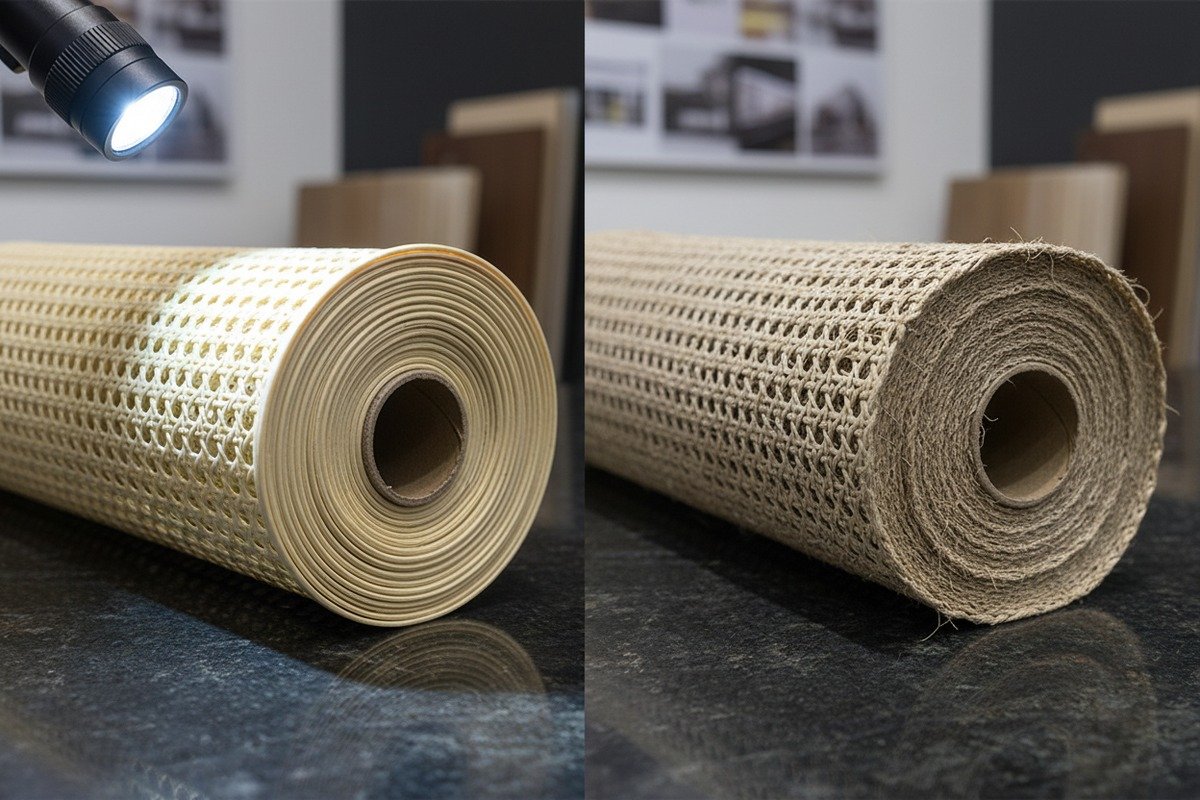
Weight-bearing is where beauty meets engineering. A gorgeous hexagonal open-weave pattern means nothing if it cannot support a person sitting down for dinner every night. Here is how to test for real-world performance.
DIY Static Load Test
This is the simplest way to simulate chair use. You need a small wooden frame (roughly 40 cm × 40 cm), the webbing sample, a staple gun, and a set of known weights.
- Stretch the soaked webbing tightly across the frame and staple it securely on all four sides.
- Let it dry completely — at least 24 hours.
- Place the frame on two supports so the center hangs freely.
- Add weight to the center in 10 kg increments.
- At each increment, measure the deflection (sag) in millimeters.
- Leave the maximum target weight (e.g., 80–100 kg for a dining chair seat) in place for 24 hours.
- Remove the weight and measure if the webbing returns to its original position.
If the webbing sags more than 15 mm under 80 kg or does not bounce back after weight removal, it is not suitable for seating applications.
Understanding Tensile Strength Data
For buyers placing large wholesale orders, lab data is non-negotiable. Tensile strength testing uses standardized specimens — typically dumbbell-shaped pieces cut to 160 mm length — and measures the force required to pull them apart.
Key metrics to request from your supplier:
| Metric | What It Measures | Acceptable Range (Natural Cane) |
|---|---|---|
| Ultimate Tensile Strength 7 | Maximum force before breaking | 40–80 MPa |
| Fracture Toughness 8 (SENB) | Resistance to crack propagation | ~0.476 MPa·m^1/2 |
| Elastic Modulus 9 | Stiffness under load | 1,500–5,000 MPa |
| Elongation at Break 10 | How much it stretches before failing | 2–8% |
Research on Plectocomia kerrana rattan core shows a fracture toughness of approximately 0.476 MPa·m^1/2 using the Single Edge Notch Bend (SENB) method. This is a useful benchmark for structural cane applications. However, webbing made from peeled outer cane typically performs better than core material.
Natural vs. Synthetic: The Strength Trade-Off
Synthetic rattan strips — made from HDPE or PVC — often outperform natural cane in raw tensile strength and consistency. But they lack the natural aesthetic that premium furniture demands. Here is a quick comparison:
- Natural cane: Variable strength (depends on species, harvest, processing), superior look and feel, eco-friendly.
- Synthetic rattan: Uniform strength, UV-resistant, waterproof, but plastic appearance.
For indoor furniture, natural cane webbing is the preferred choice among our buyers in Europe and the Middle East. For outdoor furniture exposed to sun and rain, some buyers opt for synthetic or request UV-treated natural cane.
Weave Pattern and Load Distribution
The weave pattern also affects weight capacity. A close basketweave distributes force more evenly across the frame than an open hexagonal "radio weave." If you are producing heavy-use seating, choose a tighter weave and test it specifically for your application.
Our engineering team at Seafan Rattan can provide weave-specific load data for our standard patterns. We run periodic in-house tests on production batches to ensure consistency. If your supplier does not do this, ask why.
How do I ensure the toughness of the rattan remains consistent across my entire wholesale order?
Consistency is the number one pain point we hear from purchasing managers. A sample roll looks perfect. The first 200 rolls are fine. Then roll 201 starts cracking during installation. Our quality control team has spent years building systems to prevent exactly this scenario.
To ensure consistent toughness across a wholesale rattan order, implement a statistical sampling plan — test at least 5% of rolls from each production batch using the soak-bend, pull, and visual tests. Require batch-level tensile certificates, verify species and harvest traceability, and inspect packaging integrity upon arrival.

Bulk sourcing is a different challenge from evaluating a single sample. You are dealing with natural material that varies by plant, harvest season, stem section, and processing batch. Here is how to lock in quality across thousands of rolls.
Statistical Sampling: How Much to Test
You cannot test every roll. But you need to test enough to catch problems before they reach your production line. Industry best practice is a sampling rate based on order size:
| Order Size (Rolls) | Minimum Sample Size | Test Frequency |
|---|---|---|
| 1–50 | 5 rolls (10%) | Every roll visually, 5 mechanically |
| 51–200 | 10 rolls (5–10%) | Random selection per batch |
| 201–500 | 20 rolls (4–5%) | Stratified by batch/production date |
| 500+ | 30+ rolls (3–5%) | Stratified + third-party lab verification |
For each sampled roll, run the full suite: visual inspection, soak-and-bend, dry bend, twist test, and — for critical orders — a tensile pull test on individual strands.
Batch Traceability
Every production batch at our factories is tagged with a batch number that links back to the raw material source, harvest date, processing date, and quality control results. We recommend you demand the same from any supplier. If a problem shows up in roll 201, traceability lets you identify whether the issue is isolated to a specific batch or systemic.
Moisture Content Monitoring
Moisture content is a silent killer of consistency. Properly dried rattan cane webbing should have a moisture content between 10% and 14%. Too dry and it becomes brittle. Too wet and it invites mold, warping, and dimensional instability.
You can check moisture with a pin-type wood moisture meter — they cost under $50 and work perfectly on rattan. Test at least three points on each sampled roll: near the outer edge, in the middle, and near the core of the roll.
Packaging and Shipping Integrity
Even perfectly produced rattan can be ruined by poor packaging. Rolls should be wrapped in protective plastic, placed upright (not stacked horizontally under heavy loads), and shipped in ventilated containers to prevent condensation. We have seen entire shipments develop mold spots because the container was sealed too tightly during a hot-weather transit.
When your order arrives, inspect the outermost layer of each roll for moisture damage, compression marks, or discoloration before accepting the shipment.
Building a Long-Term Supplier Relationship
The most reliable path to consistency is a stable supplier relationship. When we work with the same buyers over multiple orders — like our long-standing partners in the USA and Australia — we calibrate our quality control to their specific tolerances. We know that Ranoo in Thailand wants tight strand uniformity for his premium chair line, so we sort his orders more aggressively than a buyer who needs budget-grade material for decorative panels.
Ask your supplier: Do you keep retention samples from each batch? Can I request a re-test if I find issues? Will you replace defective rolls at your cost? A supplier who says yes to all three is worth a premium.
Third-Party Inspection
For high-value orders, consider hiring a third-party inspection company to visit the factory before shipment. They can run standardized tests, verify batch documentation, and photograph any concerns. This is standard practice for our buyers ordering full containers, and it gives everyone peace of mind.
Conclusion
Testing rattan cane webbing toughness is not optional — it is the foundation of reliable sourcing. Use hands-on tests, demand lab data, verify consistency across batches, and build strong supplier relationships to protect your furniture production.
Footnotes
1. Explains the purpose and methods of tensile strength testing in materials science. ↩︎
2. Details the criteria and process for grading rattan cane to ensure quality. ↩︎
3. Provides a general overview of rattan cane webbing, its origin, and uses. ↩︎
4. Wikipedia provides an authoritative overview of rattan palms. ↩︎
5. Wikipedia offers a detailed description of the Calamus genus, which includes rattan palms. ↩︎
6. Wikipedia provides a general and authoritative definition of moisture content (water content) in materials. ↩︎
7. Defines ultimate tensile strength as a key material property for resisting breaking under tension. ↩︎
8. Explains fracture toughness as a material’s resistance to crack propagation under stress. ↩︎
9. Defines elastic modulus as a measure of a material’s stiffness and resistance to deformation. ↩︎
10. Describes elongation at break as a measure of a material’s ability to stretch before fracturing. ↩︎


 English
  Español de México
  العربية
  Deutsch
  Français
  Русский