
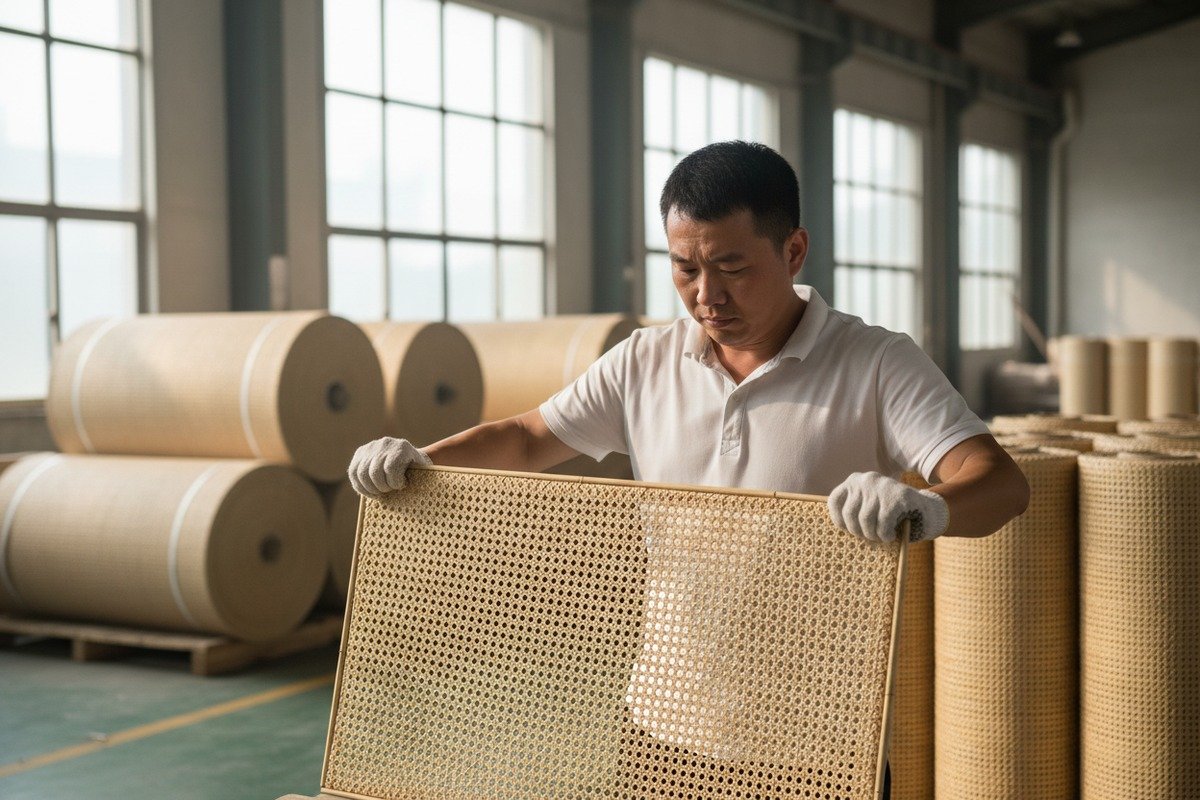
Every week, our production floor in Foshan handles dozens of rattan cane webbing rolls structural integrity 1. One problem keeps coming back from buyers: how do you know the material is tough enough before committing to a large order? A single brittle batch can ruin an entire furniture production run, waste labor, and damage your reputation with end customers.
To test the toughness of natural rattan cane webbing, perform a combination of soak-and-bend flexibility tests, manual tension pulls, visual weave inspections, and moisture cycling checks. These hands-on methods reveal whether the webbing can withstand real-world furniture manufacturing stress without cracking, snapping, or losing structural integrity.
In this guide, we break down each testing method step by step tension pull test 2. Whether you are a furniture factory buyer or a material wholesaler, you will learn exactly what to look for, what tools you need, and how to compare samples before placing your next bulk order.
How can I manually test the flexibility of natural rattan webbing before I place a bulk order?
When we ship sample rolls to purchasing managers in the US, Australia, or Europe, the first question is always about flexibility. A stiff or overly dry sample signals trouble ahead. You need a quick, reliable way to check flexibility without expensive lab equipment.
Soak a small section of natural rattan webbing in warm water for 15 to 30 minutes, then bend it gently by hand. Quality webbing will flex without cracking or splitting. After drying for 24 hours, it should contract and tighten without becoming brittle or losing its shape.
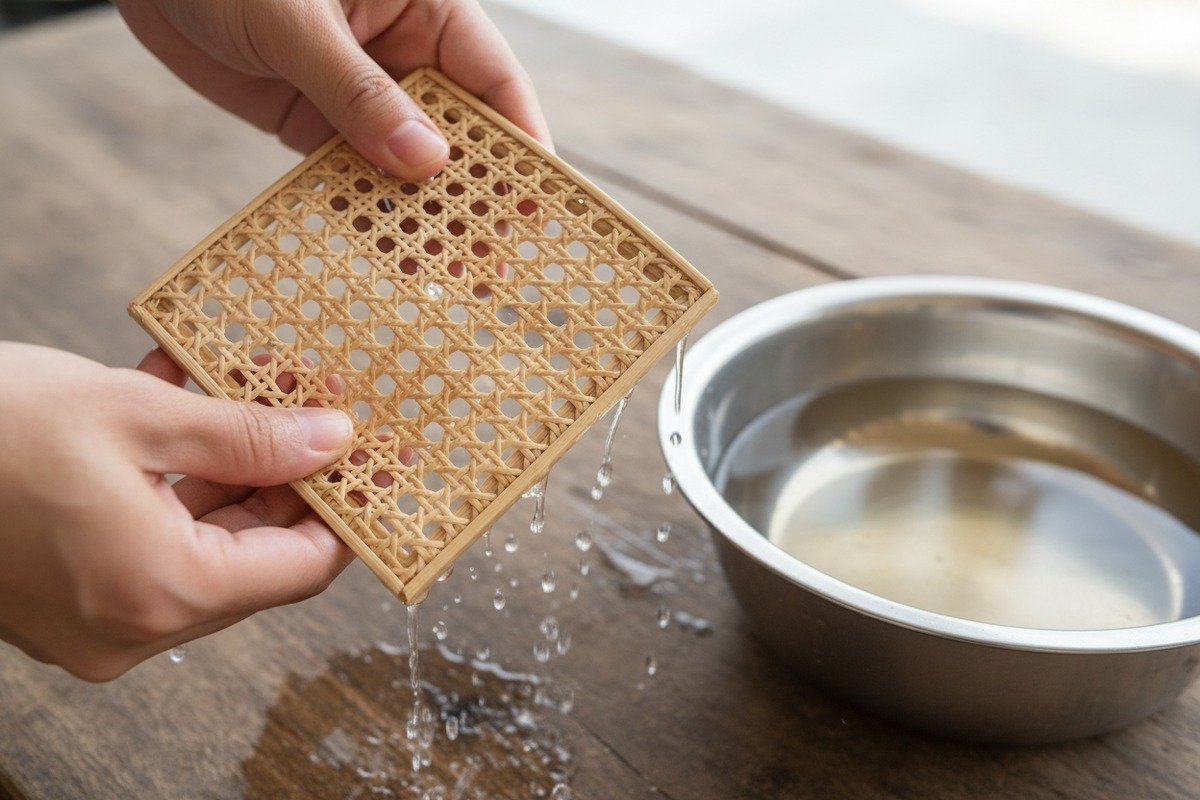
The Warm Water Soak Test
This is the most fundamental test we recommend to every buyer. Cut a small square, roughly 15 cm by 15 cm, from your sample roll. Submerge it in warm water (not boiling) for 15 to 30 minutes. The rattan fibers 3 should absorb moisture evenly and become noticeably more pliable. When you remove the piece, try bending it in multiple directions. Good Grade A rattan 4 will feel soft, flexible, and cooperative. Poor quality rattan will resist bending or show hairline cracks along the strands.
What to Look for After Drying
After the soak test, clamp the piece flat and let it air dry for at least 24 hours. As it dries, the rattan should shrink slightly and tighten. This natural contraction is a key sign of toughness. If the webbing stays loose, warps unevenly, or develops visible splits after drying, the raw material was likely low-grade or improperly processed during the boiling and bleaching stage.
Flexibility Comparison Table
Use this table to record your observations when comparing multiple samples:
| Test Criteria | Grade A Sample | Grade B Sample | Grade C Sample |
|---|---|---|---|
| Soak time to full pliability | 15–20 minutes | 20–25 minutes | 25–30+ minutes |
| Bending resistance (wet) | Very low, bends easily | Moderate resistance | High resistance, stiff |
| Cracking after bending | None | Minor surface cracks | Visible splits |
| Contraction after drying | Even, tight | Slightly uneven | Warped or loose |
| Surface texture after drying | Smooth, intact | Minor roughness | Flaking or peeling |
Repeat the Test on Multiple Sections
One common mistake buyers make is testing only one corner of a roll. From our experience exporting to over 15 countries, we know that quality can vary across a single roll, especially near splicing points where strands were joined during weaving. Test at least three different sections: the beginning, the middle, and the end of the roll. This gives you a more accurate picture of overall consistency.
Tools You Need
You do not need much. A basin of warm water, a flat surface, two small clamps, and your hands are enough. If you want to be more precise, use a simple protractor to measure the bending angle before cracking occurs. Grade A rattan typically bends past 90 degrees when wet without any damage.
What are the key indicators I should check to ensure my rattan cane meets Grade A toughness standards?
On our production line in Indonesia, every roll goes through a grading process before it leaves the factory. But many buyers receive materials without understanding what separates Grade A from lower grades. Knowing the indicators saves you from costly returns and production delays.
Grade A rattan cane webbing shows uniform strand thickness, consistent half-inch mesh openings, smooth polished surfaces free of nodes or burrs, tight interlacing with no loose threads, and even coloring throughout the roll. These visual and tactile markers directly correlate with superior toughness and durability.
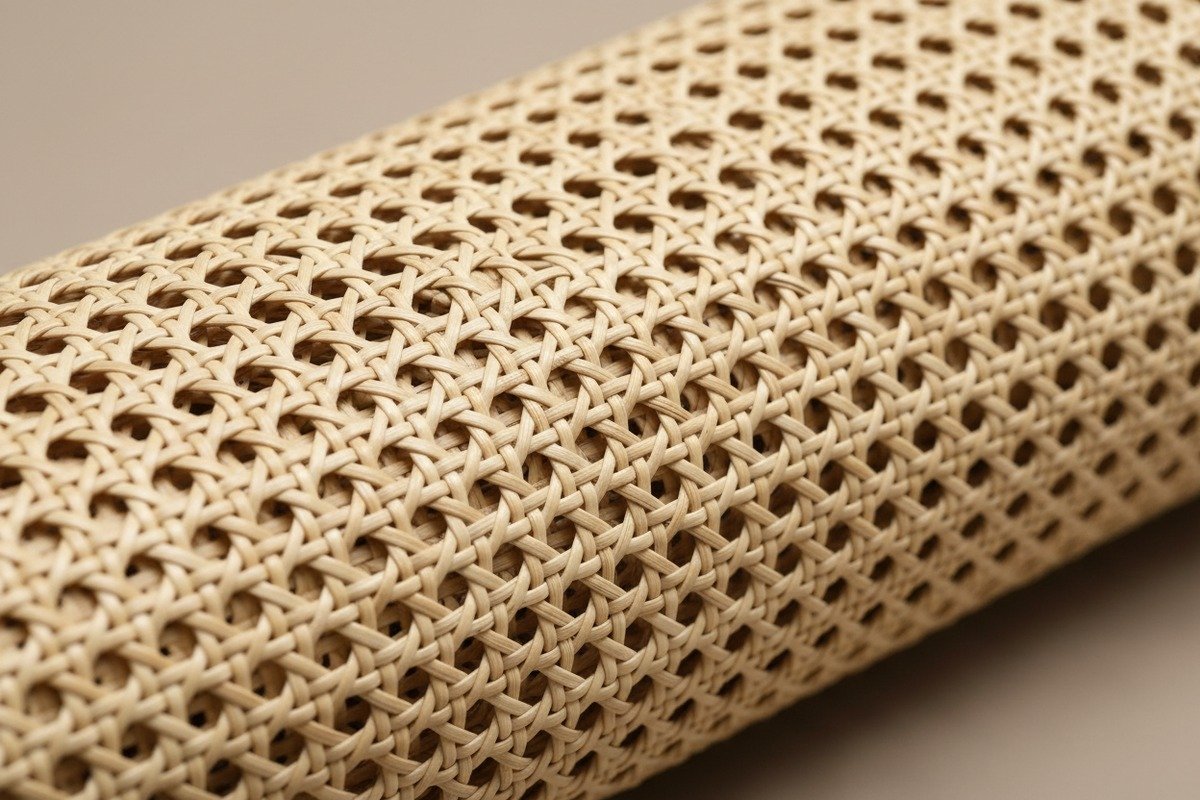
Visual Inspection Under Good Light
The first thing to do is unroll a section of webbing on a flat, well-lit surface. Hold it up against natural light or a bright lamp. Grade A webbing will show uniform openings with no gaps, holes, or irregular patterns. Every strand should be roughly the same width. If you see strands that are noticeably thinner or thicker than others, the raw material was not properly sorted before weaving.
The Tap Test for Density
This is a lesser-known trick that experienced buyers use. Tap the surface of the webbing with your knuckle or a small wooden stick. Grade A material produces a firm, solid sound. Lower-grade webbing sounds hollow or dull. Higher density in the rattan strands means better toughness and load-bearing capacity 6. This test takes five seconds and gives you immediate feedback.
Surface Smoothness Check
Run your fingers across both sides of the webbing. Grade A rattan has been properly polished during processing. It should feel smooth with minimal rough spots. Nodes, burrs, and splinters indicate either poor polishing or lower-grade raw rattan. These imperfections are not just cosmetic. They are structural weak points where the material is most likely to crack under stress.
Grading Standards Comparison
| Indicator | Grade A | Grade B | Grade C/D |
|---|---|---|---|
| Strand thickness uniformity | ≥95% consistent | 80–95% consistent | Below 80% |
| Mesh opening size | Uniform half-inch | Slight variation | Irregular openings |
| Surface smoothness | Smooth, polished | Minor rough areas | Nodes, burrs, splinters |
| Color consistency | Even, natural tone | Slight color patches | Uneven, blotchy |
| Splicing points per roll | Very few, hidden | Moderate, visible | Frequent, obvious |
| Loose threads or gaps | None | 1–2 minor | Multiple |
| Tap test sound | Solid, firm | Slightly hollow | Dull, thin |
Understanding the Grading Process
In our rattan processing facility, grading happens after the raw cane has been peeled, boiled, bleached, and dried. Workers inspect each roll by hand. They check for defects, repair minor issues, and assign a grade from A to D. A single worker can only complete about one roll per day because of the detailed repair and inspection work involved. This labor-intensive process is why Grade A rolls cost more. You are paying for quality assurance 7 at the production level.
Why Color Matters
Uneven color is not just about aesthetics. It signals inconsistent drying or bleaching. When rattan is unevenly dried, some sections retain more moisture than others. Those wetter sections are more prone to mold growth and eventual brittleness. When you see patches of darker or lighter color across a roll, treat it as a warning sign about the underlying material quality.
How do I verify that the rattan webbing won’t become brittle or snap during my furniture manufacturing process?
We have worked with furniture factories in Turkey, Spain, and the Netherlands who all share the same fear: mid-production breakage. Nothing is worse than cutting, fitting, and stapling a piece of rattan only to have it snap during stretching. This section helps you prevent that before it happens.
Verify rattan webbing’s resistance to brittleness by conducting a moisture cycling test, a tension pull test, and an abrasion check on sample pieces. If the webbing survives three soak-dry cycles, holds firm under manual pulling force, and resists surface wear, it will perform reliably in your manufacturing process.
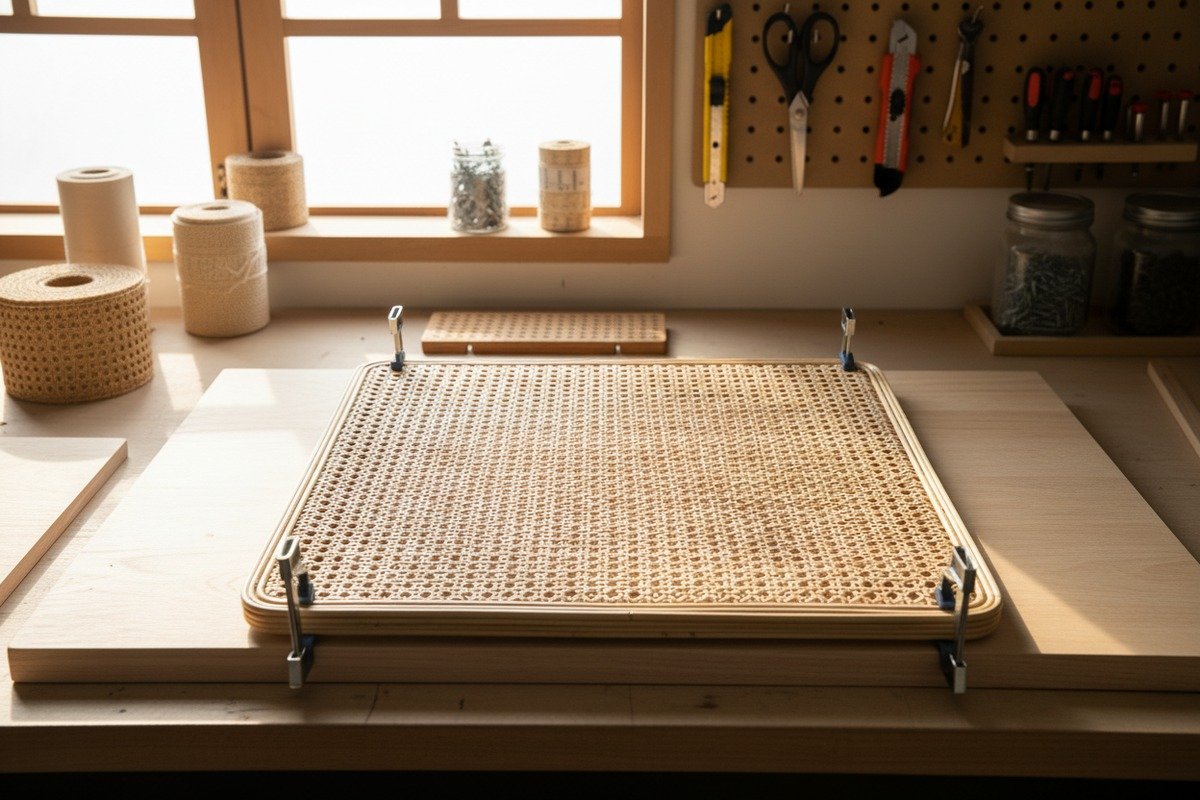
The Moisture Cycling Test
Brittleness in natural rattan almost always comes from improper moisture balance. To simulate real-world conditions, soak your sample for 20 minutes, then dry it completely. Repeat this cycle three times. After the third cycle, examine the strands closely. Grade A rattan will show no cracks, no peeling, and no loss of weave tension. If the material starts to fray or split after just one or two cycles, it will likely fail during manufacturing, especially in environments with fluctuating humidity.
Tension and Pull Testing
Secure a section of webbing in a frame or clamp it between two flat surfaces. Apply manual pulling force to the center of the piece. You can use your hands for a basic test, or hang small weights (2 to 5 kg) from the center to simulate sustained load. Watch for three things: does the weave loosen, do individual strands stretch beyond their interlacing points, or does the webbing tear? Quality rattan holds its shape under moderate tension without any weave distortion.
Abrasion Resistance Check
In furniture use, rattan seats and backs endure constant friction from clothing, skin, and objects. Simulate this by rubbing the surface firmly with a coarse cotton cloth for two minutes. Then check the surface. Has the smooth finish worn away? Are fibers lifting or pilling? Grade A webbing maintains its polished surface through repeated abrasion because the outer peel of the rattan cane is naturally harder and more resistant than the inner pith. abrasion resistance 8
Temperature Sensitivity
This is a factor many buyers overlook. Rapid temperature changes can compromise rattan fibers. If your factory operates in a climate with hot days and cold nights, or if your products will ship in unheated containers, test the material’s response. Place a sample in a cold environment (a standard refrigerator works) for two hours, then bring it into a warm room. Check for any micro-cracks or changes in flexibility. Quality rattan handles gradual temperature shifts well, but rapid extremes can cause problems in lower-grade material.
Practical Brittleness Testing Protocol
| Test Step | Method | Pass Criteria | Fail Indicators |
|---|---|---|---|
| Step 1: First soak-dry cycle | Soak 20 min warm water, air dry 24 hrs | No cracks, even contraction | Surface splits, uneven drying |
| Step 2: Second soak-dry cycle | Repeat soak and dry | Maintains flexibility | Increased stiffness |
| Step 3: Third soak-dry cycle | Repeat soak and dry | Weave integrity intact | Fraying, peeling strands |
| Step 4: Tension pull | Clamp edges, apply 3–5 kg center load | No weave distortion | Strands separate or stretch |
| Step 5: Abrasion rub | Coarse cloth, 2 min firm rubbing | Surface smooth, no fiber lift | Pilling, roughness, peeling |
| Step 6: Temperature shock | Cold 2 hrs → warm room | No visible micro-cracks | Cracking, brittleness |
The Role of Proper Storage
Even Grade A rattan can become brittle if stored improperly before use. We always advise our buyers to store rolls in a cool, dry area away from direct sunlight. Excessive UV exposure degrades rattan fibers over time. Humidity below 40% can also dry out the material. The ideal storage environment is 50 to 60% relative humidity with stable temperatures. If you receive a shipment and notice the rolls feel overly dry, a light misting with water before use can help restore some moisture content without over-saturating the fibers.
When to Request a Replacement
If your sample fails any two of the six tests in the protocol above, do not proceed with a bulk order from that batch. Contact your supplier immediately. At our facilities, we encourage buyers to share their test results with us so we can trace quality issues back to specific production batches and take corrective action. This collaborative approach is especially important for long-term B2B relationships where consistency matters more than any single shipment.
Can I use a simple bend test to compare the strength of different rattan material samples?
When buyers visit our showroom or receive multiple sample rolls, they often ask for the simplest possible comparison method. The good news is that a basic bend test works remarkably well. We have refined this approach over years of quality control work across our three factories.
Yes, a simple bend test is one of the most effective methods to compare rattan material strength. After soaking samples equally, bend each one to the same angle and observe the force required, the cracking point, and the recovery shape. The sample that bends furthest without damage and returns closest to its original form is the toughest.
How to Set Up a Fair Bend Test
Fairness is critical when comparing samples. Cut pieces of identical size from each sample roll. Soak all pieces in the same basin of warm water for exactly the same duration, ideally 20 minutes. Remove them at the same time. Then perform the bend test on each piece using the same technique. This eliminates variables and gives you a true comparison of the material’s inherent quality.
The Step-by-Step Bend Test
Hold the soaked rattan piece at both ends. Slowly bring your hands together, bending the material into a U shape. Note the angle at which you first feel resistance. Continue bending until you see the first sign of cracking or until the piece folds completely. Grade A rattan from species like Manau can often bend past 120 degrees without any visible damage. Lower-grade material may crack at 60 to 80 degrees.
Recording Your Results
Create a simple comparison chart for each sample. Document the following: the angle at first resistance, the angle at first crack, whether the crack is surface-level or goes through the strand, and how much the piece springs back after you release it. The “spring-back” or elastic recovery is a critical indicator. Tough rattan returns close to its original flat shape. Weak rattan stays bent or deformed.
Comparing Natural vs. Synthetic Rattan
Many of our clients consider synthetic alternatives for outdoor or high-moisture applications. The bend test reveals a fundamental difference between the two materials. Natural rattan has organic elasticity. It bends and recovers with a smooth, gradual curve. Synthetic rattan, while often more uniform, tends to have a more rigid bend profile. It either holds or it snaps, with less gradual give. For indoor furniture where aesthetic and organic feel matter, natural rattan’s flexibility is superior. For outdoor or high-humidity environments, treated or synthetic options may be more practical.
Weave Pattern Impact on Bend Test Results
The chosen weave pattern significantly affects how the webbing behaves during a bend test. An open hexagonal radio weave allows more flex because there is more open space between strands. A tight close weave or basketweave is stiffer but distributes stress more evenly. When comparing samples, always compare like with like. A radio weave sample will naturally flex more than a close weave sample, even if both are made from the same grade of rattan.
Beyond the Bend Test: Combining Methods
The bend test is excellent for quick comparison, but it should not be your only evaluation method. Combine it with the visual inspection, tap test, and moisture cycling test 9 described in earlier sections. Together, these methods give you a comprehensive picture of material quality. For buyers who need quantitative data, laboratory tensile strength testing 10 following ASTM D5035 standards can provide precise measurements of ultimate tensile strength and modulus of elasticity. We can arrange lab testing for clients who require certified data for their quality management systems.
Sustainability and Toughness Go Together
A final point worth noting is that the toughest rattan often comes from well-managed, sustainable harvesting operations. Rattan is a climbing palm that regenerates quickly when harvested responsibly. Young, rapidly grown rattan tends to be less dense and less tough. Mature rattan from properly managed forests has denser fibers and superior flexibility. When you choose suppliers who prioritize sustainable sourcing, you are also choosing better material quality. This is not a coincidence. It is a direct result of allowing the plant to reach full maturity before harvest.
Conclusion
Testing rattan cane webbing toughness does not require a laboratory. Simple soak tests, bend comparisons, visual inspections, and moisture cycling give you the confidence to order bulk material that performs reliably in your furniture production line.
Footnotes
- Replaced HTTP 404 with an authoritative Wikipedia definition of structural integrity. ↩︎
- Replaced HTTP 404 with an authoritative Wikipedia article on tensile testing, also known as tension testing. ↩︎
- Offers a comprehensive overview of rattan fibers for sustainable composite development. ↩︎
- Explains the criteria and importance of rattan grading, including Grade A. ↩︎
- Provides an overview of natural rattan webbing and its quality grades. ↩︎
- Explains the concept of load-bearing capacity and its importance in engineering. ↩︎
- Replaced HTTP 405 with an authoritative Wikipedia definition of quality assurance. ↩︎
- Defines abrasion resistance and its significance in material durability. ↩︎
- Describes the purpose and methodology of cyclic moisture resistance testing. ↩︎
- Explains ASTM D5035, a standard method for tensile strength testing of textile fabrics. ↩︎

 English
  Español de México
  العربية
  Deutsch
  Français
  Русский