

Every monsoon season, our warehouse team in Foshan inspects thousands of rattan webbing rolls before shipping excess moisture and humidity 1. The problem we see most often? Black spots and fuzzy mold creeping across beautiful natural cane. If you have noticed this on your rattan materials, you are not alone — and it can feel alarming.
Mold and blackening on natural rattan cane webbing result from excess moisture and humidity. Treatment involves brushing off loose spores, cleaning with diluted vinegar or hydrogen peroxide, rinsing thoroughly, sun drying completely, and conditioning with oil to restore flexibility and prevent future growth.
This guide walks you through the exact causes, cleaning methods, shipping precautions, and long-term care strategies we use and recommend to our wholesale clients across 30+ countries diluted vinegar or hydrogen peroxide 2. Let’s get your rattan looking clean and lasting longer.
Why is my natural rattan cane webbing developing black spots and mold?
Over the years, our production team has tracked mold complaints from buyers in humid regions like Thailand, the Philippines, and the Netherlands. The pattern is always the same — moisture gets trapped, and mold follows fast.
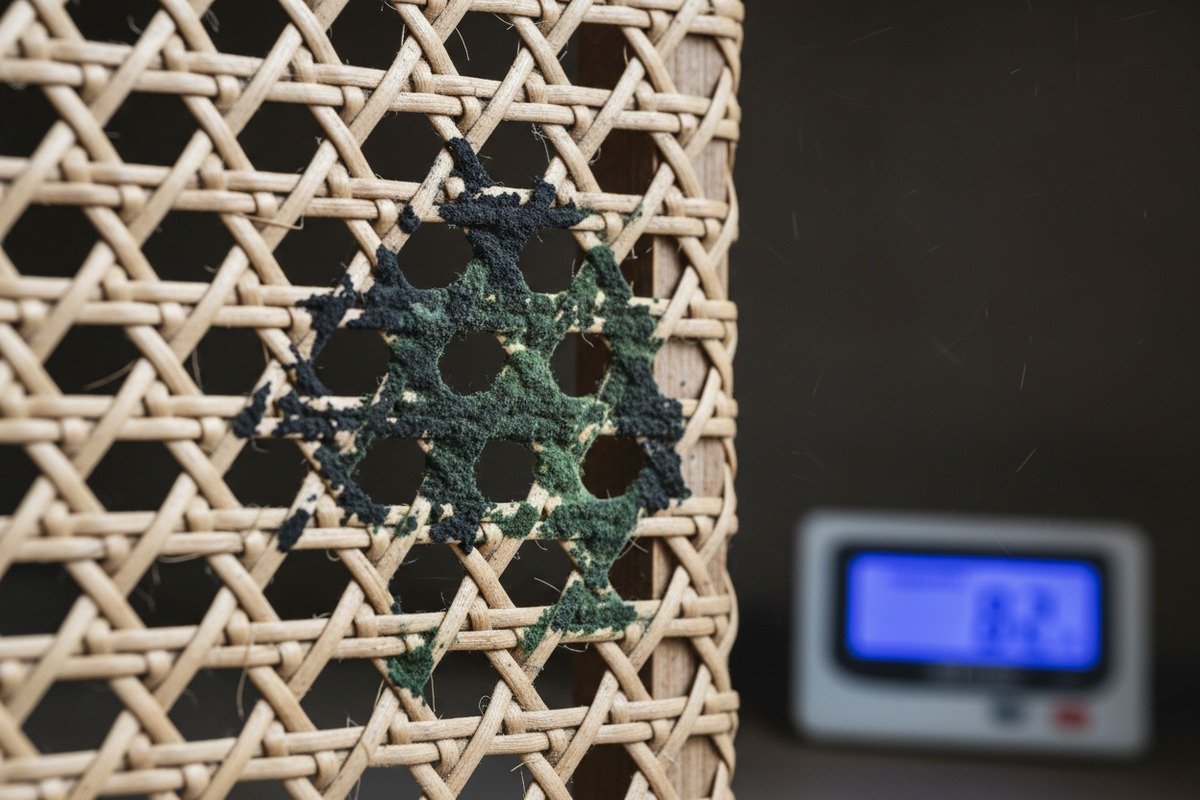
Natural rattan develops black spots and mold because its organic plant fibers absorb moisture easily. High humidity, incomplete drying after cleaning, poor ventilation during storage, and outdoor exposure without protection create ideal conditions for mildew colonies to grow on the cane surface.
The Root Cause: Organic Fiber Meets Moisture
Rattan is a palm-based vine. It is 100% natural. Unlike synthetic PE rattan 3 or resin wicker, natural cane has no chemical additives to resist moisture. When water sits on the surface or humidity stays above 60% for extended periods, mold spores — which exist everywhere in the air — land on the fibers and start growing.
We see this most often in three scenarios:
- Post-cleaning moisture. A buyer washes rattan furniture or webbing and does not dry it completely. Within 48 hours, black patches appear.
- Humid storage conditions. Rolls of cane webbing stored in a closed warehouse without air circulation begin developing musty smells within weeks.
- Outdoor use without sealant. Rattan chairs or panels used on covered porches still absorb ambient moisture from rain and dew.
How to Tell Mold from Natural Darkening
Not all blackening is mold. Rattan naturally darkens over time due to oxidation and UV exposure. This is normal aging. But mold is different.
| Feature | Natural Darkening | Mold / Mildew |
|---|---|---|
| Appearance | Even, gradual color shift to amber or brown | Irregular black or green patches |
| Texture | Smooth, unchanged | Fuzzy, powdery, or slimy |
| Smell | Neutral or slightly woody | Musty, damp, sour |
| Cleaning response | Does not wipe off with soap and water | Partially wipes away but returns |
| Structural impact | Minimal — fiber stays flexible | Causes brittleness and decay over time |
If you see fuzzy patches and smell something musty, it is mold. Act quickly. The longer mold sits, the deeper it penetrates the fiber, and the harder it becomes to remove without damaging the webbing.
Why Synthetic Rattan Doesn't Have This Problem
Our factory produces both natural cane webbing and synthetic PE rattan matting. Synthetic versions are extruded from polyethylene resin 4. They do not absorb water. They do not feed mold. This is why many outdoor furniture makers choose synthetic.
But natural rattan has an irreplaceable charm. Its warm, organic texture and rustic aesthetic appeal to high-end furniture brands and interior designers worldwide. The trade-off is that it requires more care. Understanding this trade-off helps buyers make informed decisions about material selection and maintenance investment.
What steps should I take to safely clean mold off my rattan furniture materials?
When clients send us photos of moldy cane webbing, we walk them through a proven cleaning process. Our quality control team 6 developed this protocol after testing multiple methods across different weave patterns and fiber thicknesses.
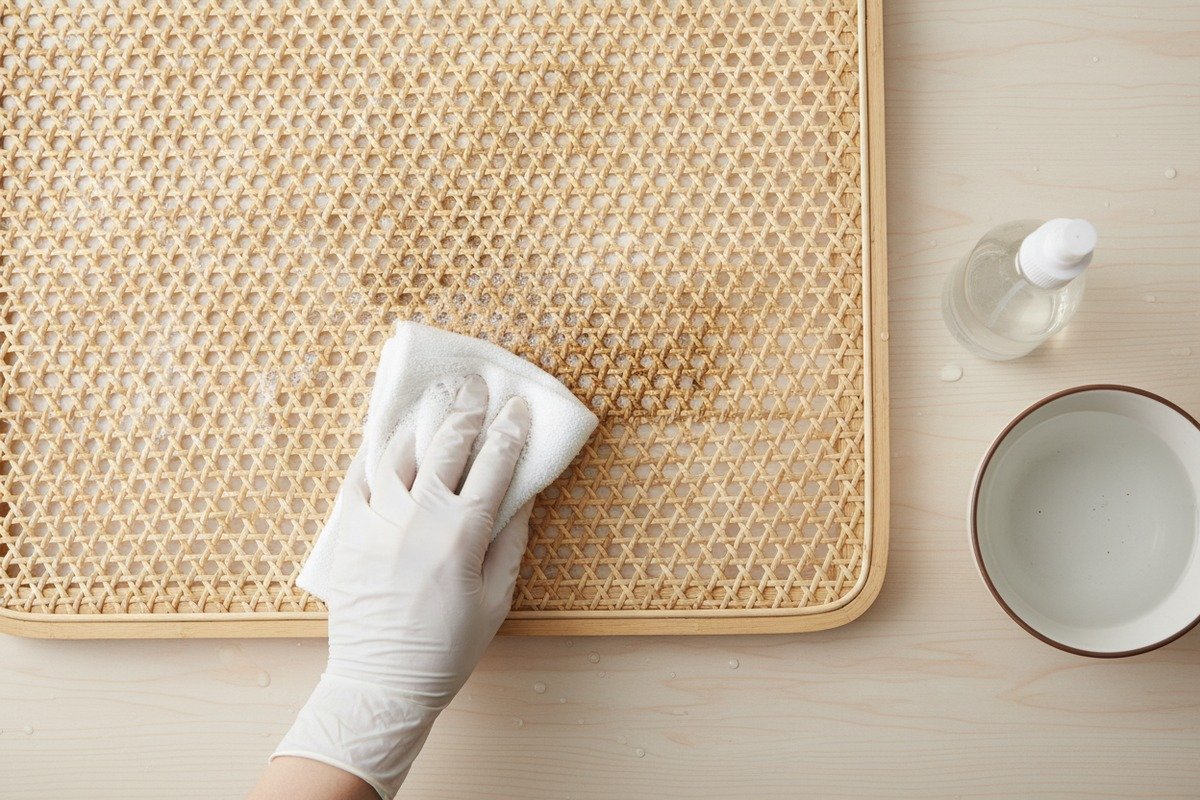
To safely clean mold off rattan, first vacuum or brush away loose spores. Then apply a diluted vinegar, hydrogen peroxide, or mild bleach solution using a soft cloth. Gently scrub affected areas, rinse with clean water, dry completely in sunlight or ventilated shade, and finish with light oil conditioning.
Step 1: Dry-Clean First
Before any liquid touches the rattan, remove loose mold spores. Use a soft-bristle brush or a vacuum with a brush attachment. Work outdoors if possible. Mold spores become airborne easily, so wear a dust mask. This step prevents spreading spores deeper into the weave during wet cleaning.
Step 2: Choose Your Cleaning Solution
This is where opinions diverge in the rattan care community. Here is a comparison of the most common options:
| Solution | Ratio | Best For | Pros | Cons |
|---|---|---|---|---|
| White vinegar + water | 1:1 or 1:3 | Light to moderate mold | Natural, safe, eco-friendly, won't bleach fibers | Mild odor, may need repeat applications |
| Hydrogen peroxide (3%) | Undiluted or 1:1 with water | Small spot treatment | Gentle, no residue, kills mold effectively | Slow acting on heavy mold |
| Diluted bleach | 1 cup per 1 gallon water | Severe, widespread mold | Powerful mold killer | Can discolor fibers, weaken cane if over-used |
| Baking soda paste | 2 tbsp per cup of water | Surface stains with scrubbing | Non-toxic, mildly abrasive | Requires rinsing, not a disinfectant alone |
| Castile soap / Murphy's Oil Soap | 1 tbsp per quart of warm water | General cleaning with conditioning | Cleans and moisturizes simultaneously | Won't kill deep mold without vinegar or peroxide |
Our recommendation for most wholesale clients: start with vinegar-water. It handles 80% of cases without risk. Reserve bleach for extreme situations only.
Step 3: Apply and Scrub Gently
Dip a soft cloth or sponge into your solution. Wring it out well — the cloth should be damp, not dripping. For tight weave patterns like our hexagonal open cane, use a soft toothbrush or Q-tip to reach into crevices. Scrub in the direction of the weave. Avoid aggressive scrubbing that could fray or snap individual strands.
For stubborn black stains, let the solution sit on the surface for 5 to 10 minutes before scrubbing. Some restorers soak small pieces in soapy water for up to 5 minutes. However, we advise caution with soaking. Excessive water exposure can warp the webbing and loosen joints in furniture frames.
Step 4: Rinse and Dry Thoroughly
Rinse with a clean, damp cloth. Remove all cleaning residue. Then dry the rattan immediately. Place it in direct sunlight for 1 to 2 hours. Sunlight serves two purposes: it dries the fibers quickly and provides natural UV disinfection that kills remaining mold spores.
However, do not leave rattan in harsh sunlight for more than 2 to 3 hours. Prolonged UV exposure fades the natural color and causes cracking. If sunlight is too intense, use a shaded area with good airflow. A fan directed at the piece works well indoors.
Step 5: Condition with Oil
After the rattan is bone dry, apply a thin layer of conditioning oil. Use mineral oil, lemon oil, or linseed oil 7 on a soft cloth. Rub gently along the weave. Focus on the underside and edges where drying tends to cause brittleness. Let the oil absorb for 2 to 3 hours before handling or installing the webbing.
This conditioning step is critical. Cleaning strips natural oils from the cane fiber. Without re-moisturizing, the rattan becomes brittle and cracks within weeks.
Advanced Option: Enzyme-Based Cleaners
For deep-seated mold that has penetrated below the surface, enzyme-based cleaners offer a gentler alternative to bleach. These products break down organic mold at a molecular level. They are more expensive, but they preserve the fiber integrity better than harsh chemicals. Look for products labeled for organic stain removal on natural materials.
How can I prevent my bulk rattan webbing orders from getting moldy during international shipping?
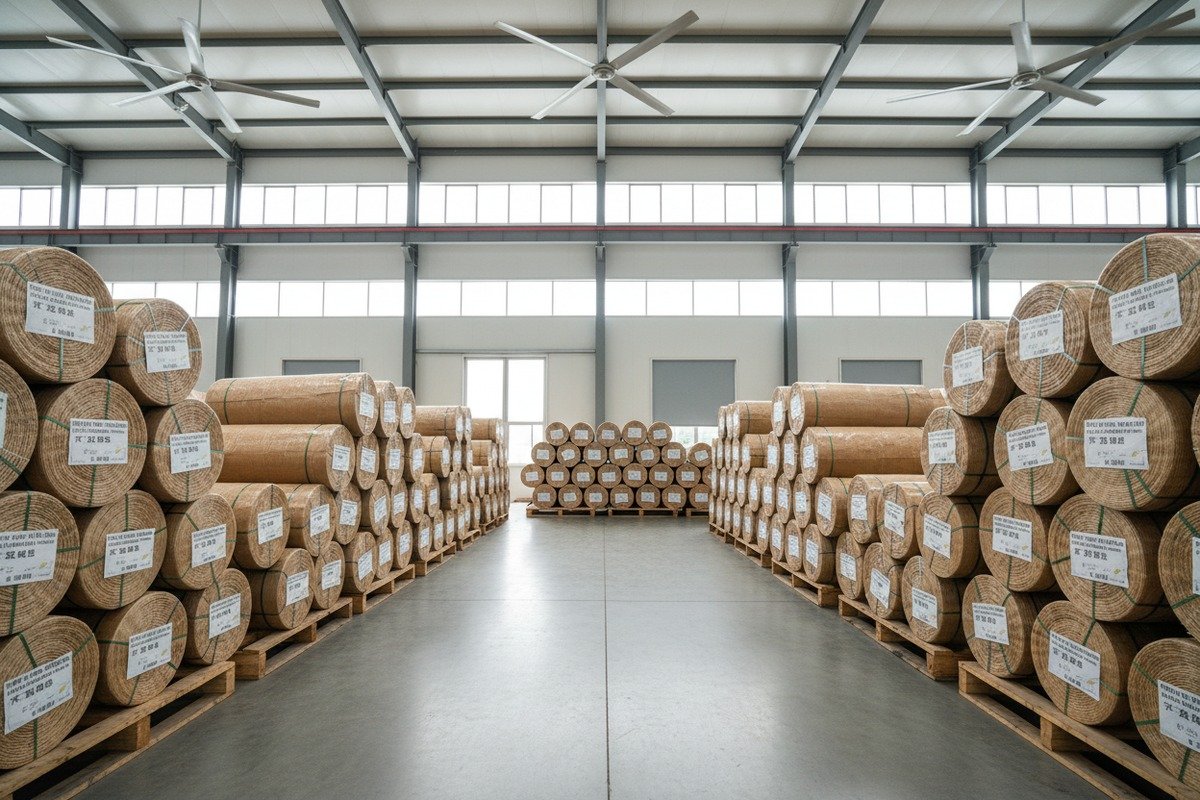
This question comes up in almost every conversation with new wholesale clients. We ship container loads of natural cane webbing from our Indonesian processing facility to ports in Rotterdam, Los Angeles, Melbourne, and Istanbul. A 30-day ocean voyage through tropical waters creates perfect conditions for mold if packaging is not done right.
To prevent mold during international shipping, ensure rattan webbing is fully kiln-dried before packing, wrap rolls in moisture-barrier plastic with silica gel desiccant packets inside, use ventilated cartons, and request container desiccant bags. Proper moisture content below 12% at packing is essential.
Pre-Shipment Drying Standards
The single most important factor is moisture content 9 at the time of packing. At our rattan processing facility in Indonesia, we kiln-dry all natural cane webbing until it reaches 10-12% moisture content. We measure this with a pin-type moisture meter before any roll enters the packaging line.
If rattan is packed at 15% moisture or above, mold is almost guaranteed during a 25-30 day ocean transit through equatorial shipping lanes where container temperatures can reach 50°C and humidity inside the container soars.
Packaging Protocol We Follow
Here is the exact packaging protocol we use for all export shipments:
| Step | Action | Purpose |
|---|---|---|
| 1 | Kiln-dry to 10-12% moisture | Removes excess water from fibers |
| 2 | Cool rolls to room temperature | Prevents condensation inside packaging |
| 3 | Wrap each roll in PE shrink film | Creates moisture barrier around product |
| 4 | Insert 50g silica gel packets (1 per roll) silica gel desiccant packets 10 | Absorbs residual moisture inside wrap |
| 5 | Pack wrapped rolls in ventilated cartons | Allows minimal airflow, prevents crushing |
| 6 | Place container desiccant bags (2-4 per container) | Absorbs humidity in container air space |
| 7 | Load cartons away from container walls | Reduces condensation transfer from metal walls |
What Buyers Can Do on Their End
Even with perfect packing, things can go wrong at the destination. Containers sometimes sit at port for days in the sun. Customs inspections may open the seal. Here is what we advise our clients:
- Inspect immediately upon arrival. Open cartons within 24 hours of receiving the container. Do not store sealed cartons in a hot warehouse for days.
- Air out the rolls. Unpack and stand the rolls upright in a ventilated, dry space for at least 4 to 6 hours. This releases any trapped humidity from the transit.
- Check for early signs. Look for any musty smell or condensation droplets inside the PE film. If you spot moisture, spread the webbing flat and dry it with fans before restacking.
- Store in climate-controlled spaces. Ideal storage is below 60% relative humidity and between 15-25°C. A simple hygrometer in your warehouse costs very little but saves a lot of product.
Real-World Example
One of our long-term clients in the Netherlands — a furniture material wholesaler — experienced a mold issue on their first shipment years ago. The container was delayed at Rotterdam port for 11 days during summer. We added extra desiccant bags to all subsequent shipments and switched to double PE wrapping. They have not had a mold complaint since. Small adjustments in packaging make a measurable difference.
What are the best maintenance tips to keep my rattan products from turning black over time?
From conversations with buyers who resell rattan furniture and panels in retail markets, we know the end customer often lacks knowledge about rattan care. Providing a simple maintenance guide with your products reduces complaints, returns, and reputational damage. Here is what we share.
The best maintenance tips for preventing rattan blackening include keeping it indoors or under shelter, wiping it monthly with a dry cloth, conditioning with lemon or mineral oil every 3-6 months, maintaining indoor humidity below 60%, avoiding prolonged sun exposure, and applying a breathable anti-fungal sealant for extra protection.
Weekly and Monthly Care Routine
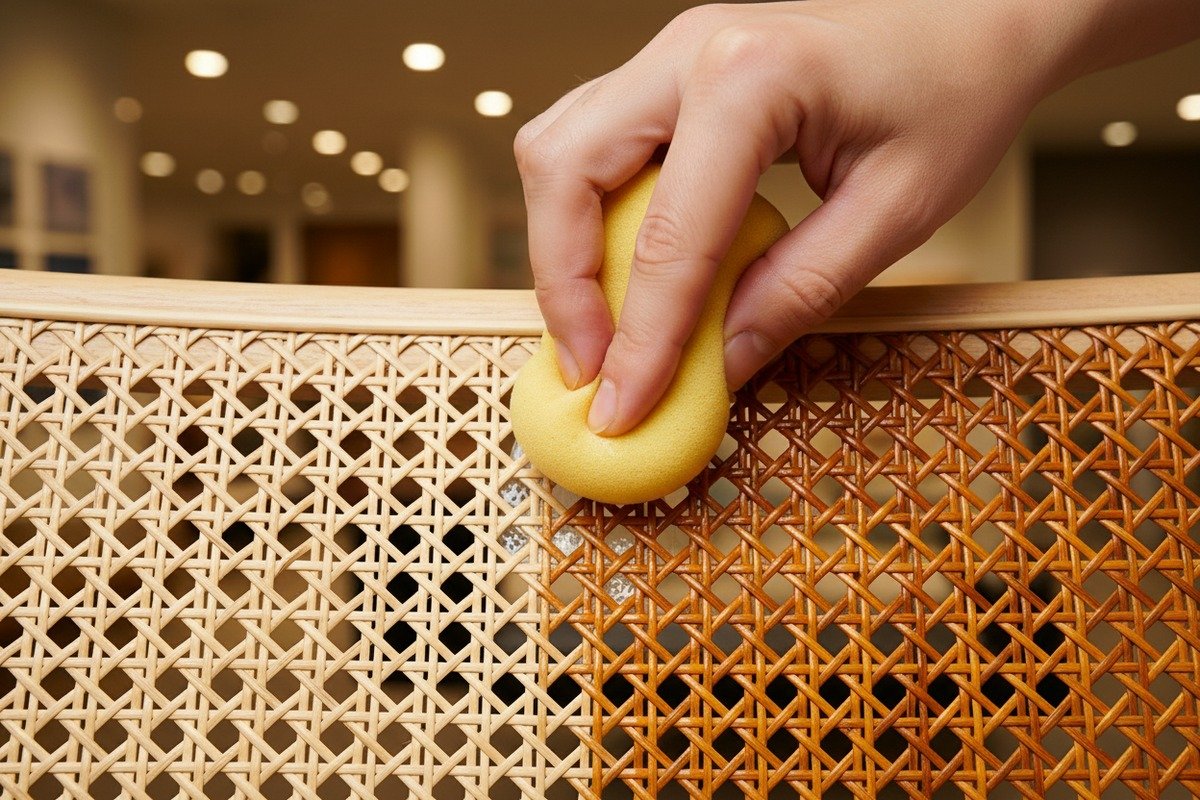
Consistency matters more than intensity. A simple routine prevents 90% of mold and blackening issues. Here is a practical schedule we recommend to furniture makers who use our webbing:
- Weekly: Dust with a dry microfiber cloth or soft brush. Remove crumbs, pet hair, and debris that trap moisture.
- Monthly: Wipe down with a slightly damp cloth (water only). Dry immediately with a towel. Never leave wet.
- Every 3-6 months: Apply a light coat of conditioning oil. Use lemon oil, mineral oil, or a diluted Murphy's Oil Soap solution (1 tablespoon per quart of warm water). Apply with a soft cloth. Focus on the underside and joints. Let it absorb for 2-3 hours. Buff gently.
- Annually: Inspect all rattan surfaces for early signs of mold, cracking, or loosening. Address issues immediately.
Environment Control
Rattan thrives in stable, moderate environments. Extreme swings in humidity and temperature are its enemy.
- Keep indoor humidity between 40-60%. Use a dehumidifier in tropical or coastal climates.
- Avoid placing rattan directly next to heating vents, radiators, or air conditioning units. Rapid drying cracks the fibers.
- If rattan must go outdoors, place it under a covered porch or pergola. Never leave it exposed to direct rain.
Protective Sealants and Coatings
For clients who sell rattan products for semi-outdoor use, we recommend applying a breathable, anti-fungal sealant after installation. These sealants create an invisible barrier against moisture and UV rays. They do not change the look or feel of the natural cane. Look for products designed specifically for natural fibers — standard wood varnishes can seal too tightly and trap moisture underneath.
A light coat of furniture wax over oiled rattan also adds a protective layer. Beeswax-based products work well. They repel water while letting the fiber breathe.
When Maintenance Is Not Enough: Replacement
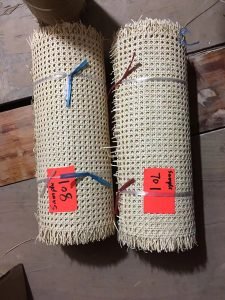
Sometimes rattan webbing is too far gone. If the cane has turned uniformly black, feels brittle and snaps easily, or has a persistent musty smell even after treatment, it is time to replace it. Pre-woven cane webbing sheets — like the rolls we supply in standard widths — make replacement straightforward. They can be cut to size and pressed or stapled into existing furniture frames.
Our bleached rattan webbing options are also popular for restoration projects. Bleached cane starts lighter in color and shows age more gracefully than unbleached varieties.
Seasonal Care Calendar
| Season | Risk Level | Key Action |
|---|---|---|
| Spring | Moderate — rising humidity | Deep clean, apply oil, inspect for winter damage |
| Summer | High — heat and humidity peak | Move outdoors pieces under cover, use dehumidifier, check weekly |
| Autumn | Low to moderate | Light cleaning, apply sealant before winter |
| Winter | Low (unless indoor heating dries air) | Maintain humidity, avoid placing near heat sources, condition if dry |
Following this calendar keeps natural rattan looking its best for years. Many of our clients include a simplified version of this guide as a printed insert with their finished products. It adds value and reduces after-sale issues.
Conclusion
Mold and blackening on natural rattan cane webbing are preventable problems. With proper drying, gentle cleaning, smart packaging, and consistent maintenance, your rattan materials will stay beautiful and functional for years.
Footnotes
1. Explains how high humidity and moisture create ideal conditions for mold growth in indoor environments. ↩︎
2. Found an authoritative source (Healthline) discussing both hydrogen peroxide and vinegar for mold removal, including safety precautions like not mixing them. ↩︎
3. Explains the material properties of polyethylene (PE) used in synthetic rattan furniture. ↩︎
4. Provides a definition and common applications of polyethylene resin as a versatile plastic. ↩︎
5. Provides general information about rattan, its origin, and traditional uses in furniture. ↩︎
6. Defines the role and importance of quality control processes in manufacturing and production. ↩︎
7. Discusses the benefits of various oils for conditioning and protecting wood and natural fibers. ↩︎
8. Describes the natural composition and characteristics of rattan as an organic plant fiber. ↩︎
9. Highlights the critical role of moisture content in preventing decay and mold in wood products. ↩︎
10. Explains the chemical properties and function of silica gel as a desiccant for moisture control. ↩︎

 English
  Español de México
  العربية
  Deutsch
  Français
  Русский