
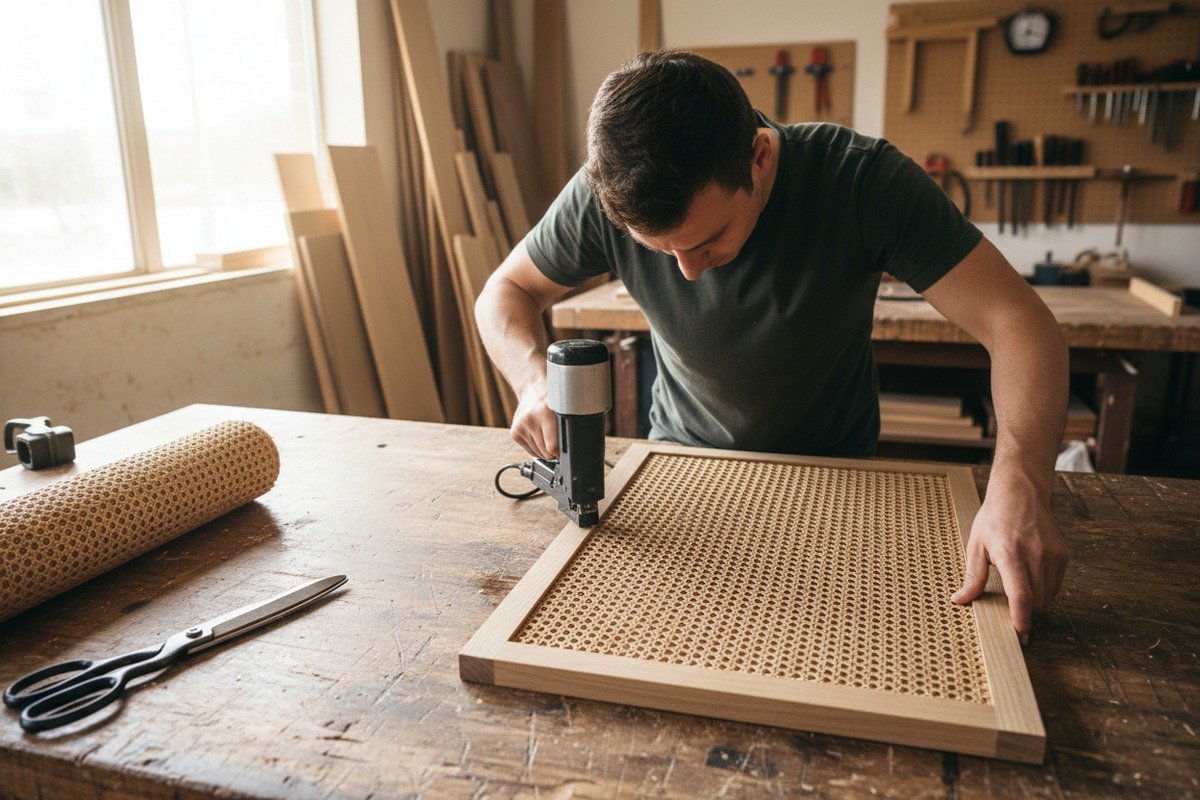
Countless furniture makers reach out to us each month asking the same thing — their clients love the rattan look, but they struggle with wavy panels, cracked cane, and inconsistent weave quality that ruins the final product.
To use natural rattan cane webbing for cabinet door decoration, soak the webbing for pliability, cut it slightly oversized, staple or spline it into your door frame while wet, let it dry to tighten naturally, then finish edges with trim or paint for a clean, professional look.
This guide walks you through every step. We cover how to pick the right grade, install it properly, keep it looking great for years, and where to find reliable bulk supply consistent strand thickness 1. Let’s get into it.
How do I choose the right grade of natural rattan webbing for my cabinet doors?
Over the years, our production team has graded and shipped thousands of rolls to furniture factories across Europe, the Middle East, and Southeast Asia. The number one complaint we hear from new buyers? They picked the wrong grade and ended up with webbing that was either too brittle or too loose for cabinet work.
Choose Grade A or Grade AA natural rattan webbing for cabinet doors — these grades offer consistent strand thickness, tight weave tension, minimal knots, and a uniform color that ensures your finished doors look clean and professional without extra sorting or waste.
What Do Rattan Grades Actually Mean?
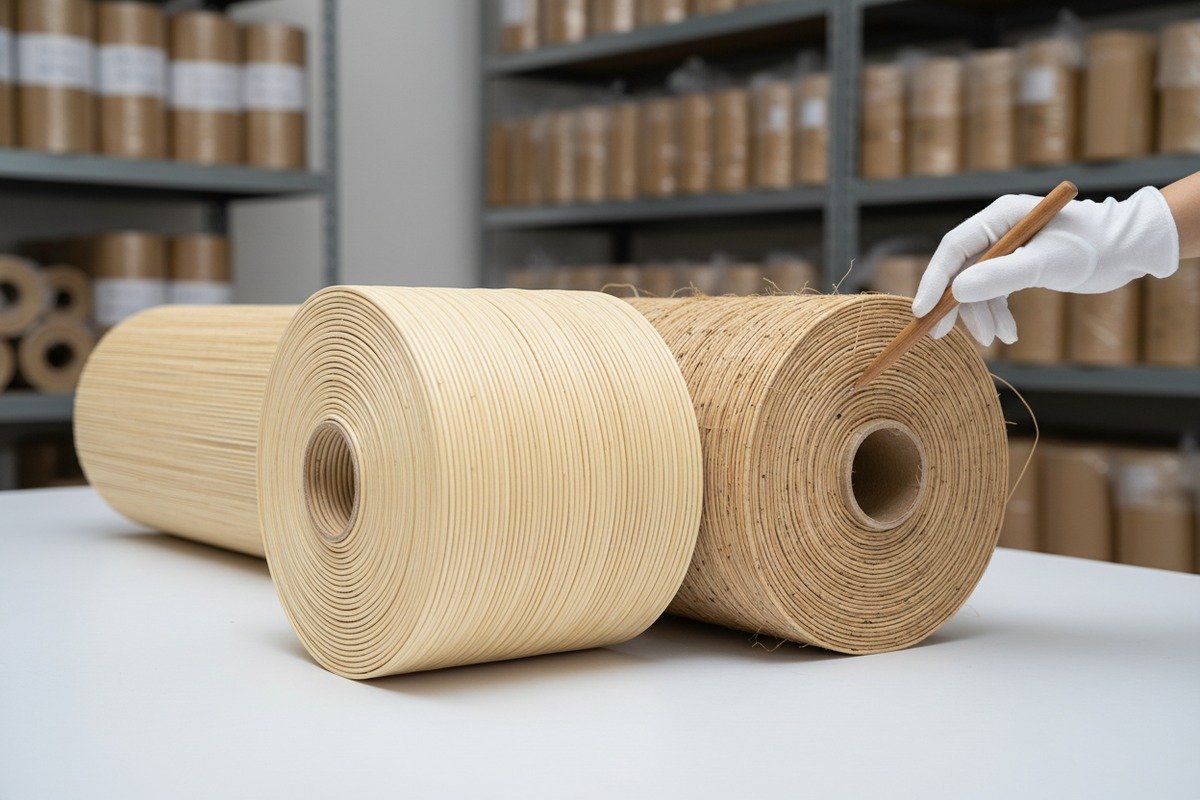
Rattan grading 2 is not standardized globally. But in the trade, grades reflect strand quality, color uniformity, and weave tightness. Here is a simple breakdown.
- Grade AA (Premium): Very few knots. Even color. Tight, consistent weave. Best for visible, high-end furniture.
- Grade A (Standard): Minor color variation. Occasional small knots. Great for most cabinet doors.
- Grade B (Economy): Noticeable knots and color shifts. Works for hidden panels or budget projects.
- Grade C (Utility): Irregular strands. Suitable only for backing or practice pieces.
When we process rattan at our facility in Indonesia, every roll goes through visual inspection before packing. Grade A and above means fewer rejects on your factory floor.
Weave Pattern Selection
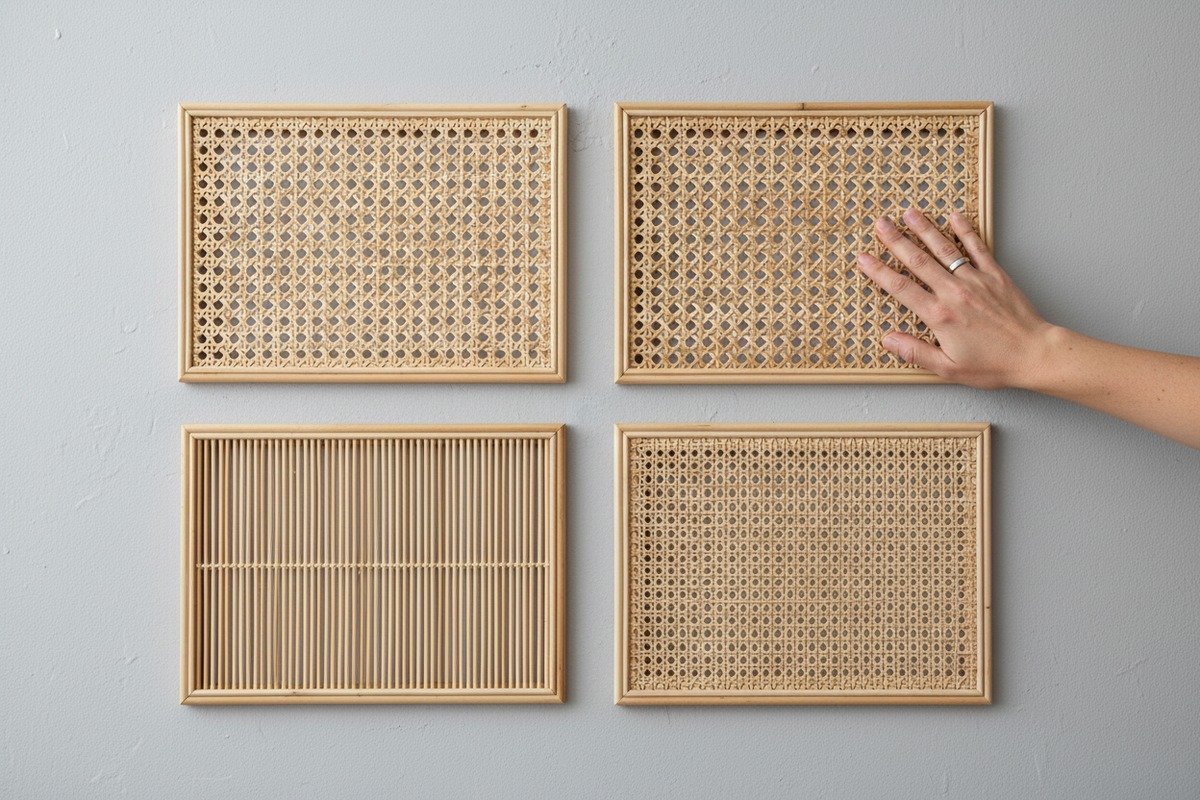
The weave pattern you choose affects both the look and the function of your cabinet doors. Open weaves allow more airflow — ideal for linen closets or bathroom vanities. Closed weaves provide more privacy and a denser visual texture.
| Weave Pattern | Airflow Level | Visual Privacy | Best Use Case |
|---|---|---|---|
| Open Hexagonal 3 (Classic Cane) | High | Low | Kitchen cabinets, linen closets |
| Radio Weave (Square Grid) | Medium | Medium | Living room sideboards, bar carts |
| Dense Diamond Weave | Low | High | Bedroom wardrobes, bathroom vanities |
| Tight Basketweave | Very Low | Very High | Accent panels, decorative screens |
Color and Width Considerations
Natural rattan comes in shades from pale straw to warm honey. Bleached options offer a brighter, whiter look. For cabinet doors, widths of 18 to 25.5 inches cover most standard openings.
A quick tip from our warehouse team: always order 10–15% more than your measured need. Cutting waste, test pieces, and occasional defects eat into your supply faster than you expect.
Real Rattan vs. Synthetic
Some buyers ask about synthetic alternatives. Synthetic rattan matting 4 is cheaper and moisture-proof. But it lacks the organic texture, natural scent, and breathability that make real rattan special. For premium cabinet doors, genuine rattan wins every time. It ages beautifully and adds warmth that plastic simply cannot replicate.
If your end customers value an authentic, eco-friendly product, stick with natural cane. If you need extreme humidity resistance — say, for outdoor cabinets — then synthetic may be a practical fallback.
What is the best way to install rattan cane webbing on my furniture projects?
When we ship rattan webbing to furniture factories in the Netherlands and Spain, we always include a handling guide. Why? Because even the best material can look terrible if installed incorrectly. Dry installation, uneven stapling, or skipping the soaking step leads to sagging, buckling, and wasted material.
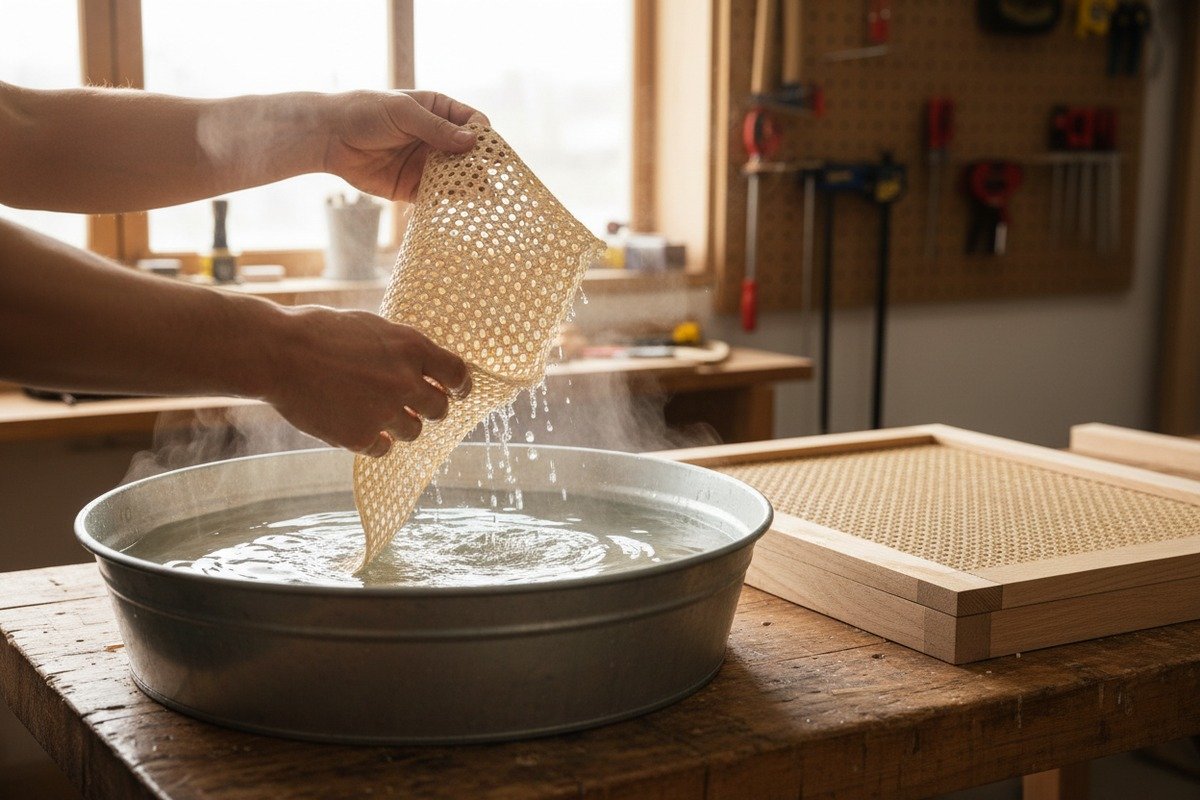
The best installation method is to soak the rattan webbing in warm water for 30 minutes to 3 hours, staple it firmly to the inside of the cabinet door frame while still damp, then allow it to air-dry completely — it will tighten like a drum for a smooth, professional finish.
Tools and Materials You Need
Before you start, gather everything. Stopping mid-install to find a tool lets the webbing dry unevenly.
| Tool / Material | Purpose | Notes |
|---|---|---|
| Measuring tape | Measure door opening | Measure twice, cut once |
| Sharp scissors or utility knife | Cut webbing to size | Cut 1–2 inches larger than the opening |
| Warm water basin or bathtub | Soak webbing | Large enough to submerge the full piece |
| Staple gun (manual or pneumatic) | Attach webbing to frame | Use 1/4-inch staples |
| Needle-nose pliers | Remove misplaced staples | Handy for corrections |
| Painter's tape | Mark positions | Keeps alignment neat |
| Thin wood trim or binding tape | Cover raw edges | For a polished finished look |
| Wood glue (optional) | Reinforce edges | Recommended for high-use doors |
| Primer and paint | Finish the frame | Apply before installing webbing |
Step-by-Step Installation Process
Step 1: Remove existing panels. Take out glass, plywood, or any old panel from your cabinet door. Clean the frame. Sand any rough spots.
Step 2: Paint or stain the frame first. Always finish the frame before attaching the webbing. Paint splatter on cane is nearly impossible to clean. We recommend one coat of primer and two topcoats. Let each coat dry for at least 30 minutes.
Step 3: Measure and cut the webbing. Measure the interior opening of the door frame. Add 1 to 2 inches on each side. Cut the webbing with sharp scissors to avoid fraying.
Step 4: Soak the webbing. Submerge the cut piece in warm water for at least 30 minutes. For thicker weaves, up to 3 hours works better. The water makes the rattan soft and flexible. This is the most important step. Skip it, and you will fight the material.
Step 5: Staple while wet. Place the damp webbing over the back side of the frame opening. Start at one corner. Pull it taut. Staple. Move to the opposite corner. Staple. Then do the remaining two corners. Now work your way along each side, stapling every inch or so. Keep even tension.
Step 6: Trim excess. Once fully stapled, use scissors to trim the extra webbing close to the staple line.
Step 7: Let it dry completely. Do not rush this. The webbing will appear wavy at first. As it dries over several hours, it shrinks and tightens. By the next morning, it should be smooth and drum-tight.
Step 8: Finish the edges. Glue and nail thin wood trim strips over the stapled edges for a clean look. Alternatively, use binding tape or decorative molding.
Step 9: Reattach hardware and hang. Mount your hinges and handles. Rehang the door. Step back and admire your work.
Beginner vs. Advanced Methods
Beginners do well with the staple method 7 described above. No special joinery needed. Advanced woodworkers can build custom frames using 1×3 pine boards, pocket hole screws, or even finger tenon joints. Some professionals route a groove into the frame and press the webbing in with a spline and glue — similar to how window screens are installed. This method is more durable but requires a router and spline material.
For production environments, we have seen factories use pneumatic staple guns and jigs to speed up the process. Consistency matters when you are making 200 doors a week.
How can I maintain the quality and durability of my rattan cabinet inserts?
We have had long-term clients in Australia and Saudi Arabia — two very different climates — ask us the same question. How do we keep our rattan looking good after a year? After five years? The answer is simple maintenance habits. Rattan is naturally durable, but neglect shortens its life.
Maintain rattan cabinet inserts by dusting regularly with a dry soft cloth, avoiding direct exposure to excessive moisture or harsh chemicals, occasionally misting lightly in dry climates to prevent brittleness, and sealing with a clear finish in humid environments to prevent mildew.
Daily and Weekly Care
Dust is the number one enemy of woven materials. It settles into the weave gaps and builds up over time. A quick wipe with a dry microfiber cloth once a week keeps the surface clean. For deeper cleaning, use a soft brush attachment on your vacuum at low suction.
Never spray water directly onto installed rattan panels. A light mist from a plant sprayer — held about 12 inches away — is enough to rehydrate the fibers in very dry environments. Do this once a month at most.
Dealing with Humidity
High humidity can cause natural rattan to absorb moisture and eventually develop mildew 8. In bathrooms or tropical climates, apply a thin coat of clear polyurethane or lacquer 9 before installation. This seals the fibers without hiding the natural texture.
Good ventilation helps too. If your cabinet sits in a humid room, leave the doors slightly open occasionally to allow airflow.
Repair and Replacement
One big advantage of rattan webbing inserts: they are replaceable. If a panel gets damaged — say, a pet claws through it or something heavy punctures it — you can remove the trim, pull out the old webbing, and install a fresh piece. The frame stays intact.
For small tears, a dab of wood glue on the broken strand can hold things together temporarily. But for visible damage, full replacement looks better and takes under an hour per door.
What to Avoid
| Avoid This | Why | What to Do Instead |
|---|---|---|
| Harsh chemical cleaners | Strips natural oils, causes brittleness | Use a damp cloth with mild soap if needed |
| Direct sunlight for prolonged periods | Fades color and dries fibers | Position cabinets away from windows or use curtains |
| Soaking installed panels | Loosens staples, risks mildew | Light misting only |
| Hanging heavy items on cane panels | Stretches and tears the weave | Use frame-mounted hooks instead |
| Ignoring dust buildup | Clogs weave, attracts insects | Weekly dusting routine |
Longevity Expectations
Well-maintained natural rattan webbing lasts 5 to 10 years on indoor cabinet doors. In our experience supplying to European furniture makers, the pieces that last longest are the ones installed with proper soaking, sealed lightly, and kept in climate-controlled rooms. Rattan is a natural material. Treat it with a little respect, and it rewards you with years of warm, beautiful texture.
Where can I source high-quality rattan webbing in bulk for my production needs?
Running three factories and coordinating with over 30 partner workshops in Foshan has taught us something valuable — supply chain reliability matters more than the lowest price. A missed shipment or an inconsistent batch can shut down a production line. We have helped furniture material wholesalers and factory procurement managers across more than a dozen countries solve exactly this problem.
Source high-quality rattan webbing in bulk from established wholesalers with their own processing facilities, verified export track records, and the ability to supply multiple weave patterns, grades, and widths consistently — prioritize suppliers who offer quality inspection, custom sizing, and reliable packaging for international shipping.

Where Buyers Typically Search
Most B2B buyers find rattan webbing suppliers through a few main channels:
- Google search — Keywords like "rattan webbing wholesale" or "bulk rattan cane supplier" lead to manufacturer websites and directories.
- Alibaba and trade platforms — Useful for comparing prices, but quality verification requires samples.
- Trade shows — Events like CIFF (China International Furniture Fair) in Guangzhou let you see and feel the material in person.
- Referrals — Word of mouth from other factory owners remains the most trusted source.
What to Look for in a Supplier
Not all rattan suppliers are equal. Here is what separates a reliable partner from a risky one.
Own processing facility. Suppliers who process their own rattan — from raw cane to finished webbing — control quality at every step. We operate our own rattan processing facility in Indonesia, which means we manage strand selection, weaving, grading, and packing under one roof.
Full product range. A one-stop supplier saves you time. Look for a partner who offers open hexagonal, radio weave, basketweave, diamond weave, bleached options, and various widths. This way, you do not need multiple vendors for one project.
Consistent grading. Ask for grade definitions. Request samples of Grade A and Grade B so you can see the difference. A good supplier will be transparent about what each grade includes.
Export experience. Shipping rattan internationally requires proper packaging to prevent moisture damage, crushing, and insect contamination. Experienced exporters know how to roll, wrap, and palletize for safe transit to the Netherlands, the USA, Thailand, or anywhere else.
Custom sizing. Standard widths like 25.5 inches work for many projects. But if your cabinet doors need 18-inch or 30-inch widths, your supplier should accommodate custom cuts without enormous minimum orders.
Pricing Realities
Rattan webbing pricing depends on grade, weave complexity, width, and order volume. Here is a general reference.
| Factor | Impact on Price | Notes |
|---|---|---|
| Grade (AA vs. B) | Higher grade = higher price | Grade AA can cost 30–50% more than Grade B |
| Weave pattern | Complex patterns cost more | Dense diamond weave is pricier than open hexagonal |
| Width | Wider rolls cost more per meter | 25.5-inch rolls are the most common and cost-effective |
| Order volume | Larger orders reduce per-unit cost | MOQ discounts typically start at 500+ meters |
| Bleaching or dyeing | Adds processing cost | Bleached rattan runs 10–20% above natural |
| Packaging specification | Export-grade packing costs more | But it prevents damage claims and returns |
For production buyers, the key is total cost of ownership — not just the roll price. Cheap webbing with 15% waste from defects costs more than premium webbing with 2% waste. We have seen this play out with dozens of clients.
Packaging and Shipping Tips
Rattan is organic. It can absorb moisture in transit and develop mold if packed poorly. We always recommend:
- Plastic wrap around each roll to seal out humidity.
- Cardboard tubes inside rolls to prevent crushing.
- Palletized shipment with fumigation certificates 10 for customs clearance.
- Silica gel packets inside cartons for long ocean voyages.
Ask your supplier about their packaging process. If they cannot explain it clearly, that is a red flag.
Building a Long-Term Supply Relationship
The best procurement managers we work with do not jump between suppliers for a few cents per meter. They invest in a relationship. They visit the factory. They agree on quality standards upfront. They order samples before committing to bulk. And they communicate consistently — often through WhatsApp, which is the fastest way to resolve issues across time zones.
If you are sourcing rattan webbing for furniture production, building material distribution, or private-label resale, find a supplier who understands your end product and your customer expectations. That alignment makes everything smoother.
Conclusion
Natural rattan cane webbing transforms ordinary cabinet doors into stunning design features. Choose the right grade, install it wet, maintain it simply, and source from a reliable partner for the best results every time.
Footnotes
1. Explains how strand thickness and uniformity contribute to rattan quality. ↩︎
2. Provides a comprehensive overview of rattan grading systems and key evaluation factors. ↩︎
3. Describes the classic open hexagonal weave pattern and its applications. ↩︎
4. Explains the composition and properties of synthetic rattan as an alternative material. ↩︎
5. Details the criteria and characteristics of different rattan quality grades. ↩︎
6. Explains the material and its common uses in furniture making. ↩︎
7. Found a comprehensive guide on installing cane webbing using a staple method from a reputable supplier. ↩︎
8. Explains what causes mold and mildew, and offers prevention and control tips. ↩︎
9. Compares the durability, application, and uses of lacquer versus polyurethane finishes. ↩︎
10. Defines fumigation certificates and their importance for international shipping compliance. ↩︎


 English
  Español de México
  العربية
  Deutsch
  Français
  Русский