
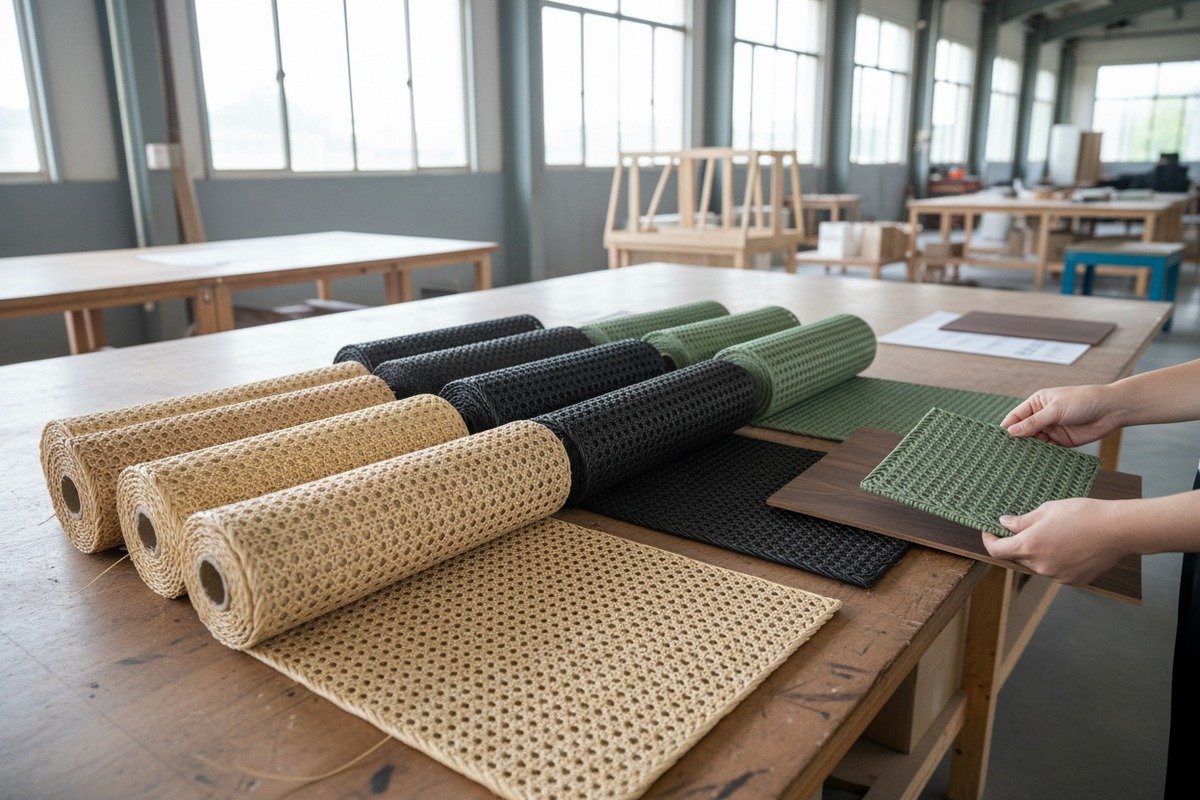
Every week, our sales team fields dozens of inquiries from furniture makers and wholesalers asking the same question: can we get this rattan webbing in a color that matches our brand clear polyurethane topcoat 1? porous, fibrous structure 2 It’s a real pain point. You find the perfect weave pattern, the right width, the ideal texture—but the color just doesn’t fit your project. Walking away from a great material because of color limitations feels like a missed opportunity.
Yes, natural rattan cane webbing can be custom dyed. Its porous, fibrous structure absorbs stains, paints, and dyes effectively. Oil-based stains offer the most consistent results, while spray paints and washes provide creative flexibility. Proper preparation and sealing are essential for lasting, even color.
Whether you plan to dye rattan yourself or source pre-colored webbing from a supplier, this guide covers everything you need to know. We’ll walk through techniques, durability concerns, supplier options, and how to maintain color consistency across bulk orders. Let’s get into it.
How can I successfully dye natural rattan cane webbing for my custom furniture designs?
When we first started helping clients customize rattan colors at our Foshan facility, the learning curve was steep. Clients would send us Pinterest boards with gorgeous stained cane chairs, then get frustrated when their DIY results looked blotchy or uneven. The problem is rarely the rattan itself—it's the process.
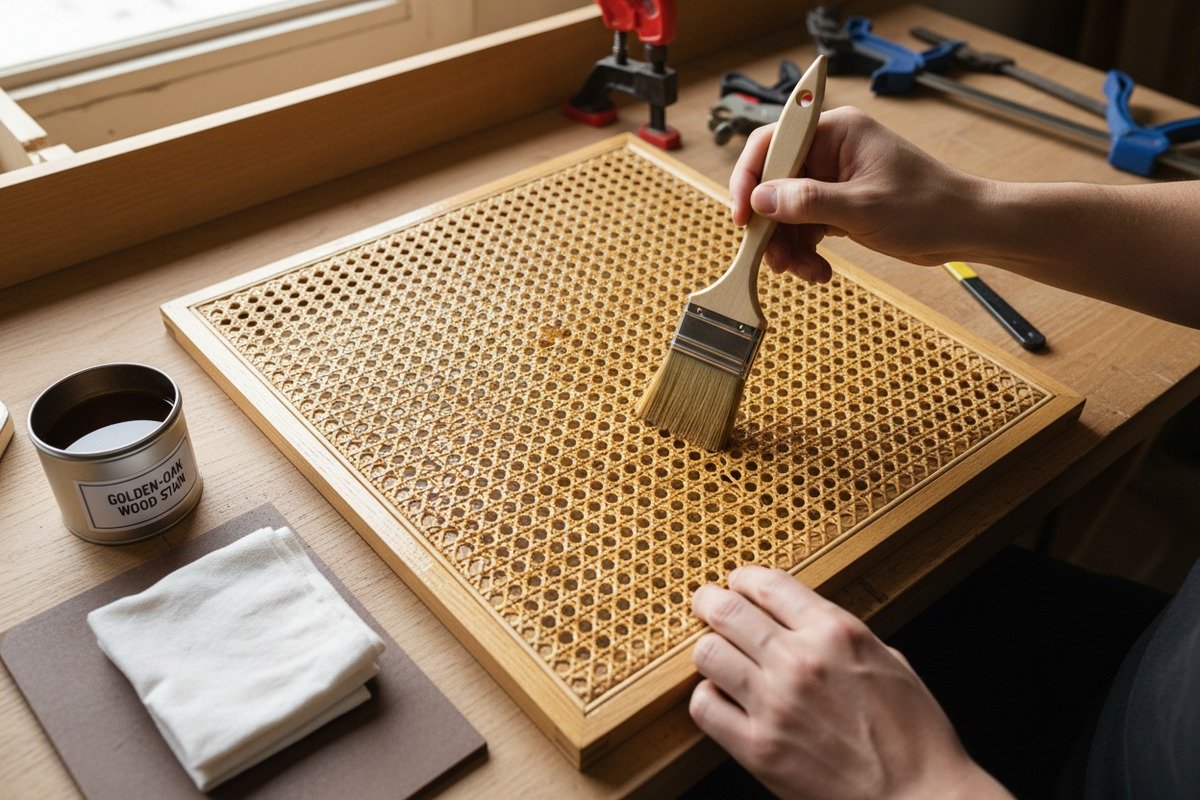
To successfully dye natural rattan cane webbing, clean the surface first, test your chosen stain or dye on a scrap piece, apply thin and even coats using a brush or cloth, allow at least four hours of drying between coats, and seal with a clear polyurethane topcoat for durability.
Start with Proper Preparation
Preparation makes or breaks your dyeing project. Natural rattan cane webbing has a smooth outer skin and a porous inner core. If the surface is dusty, oily, or has any old finish on it, the dye won't penetrate evenly.
Here's what to do before you apply anything:
- Clean thoroughly. Wipe the webbing down with a damp cloth. Let it dry completely.
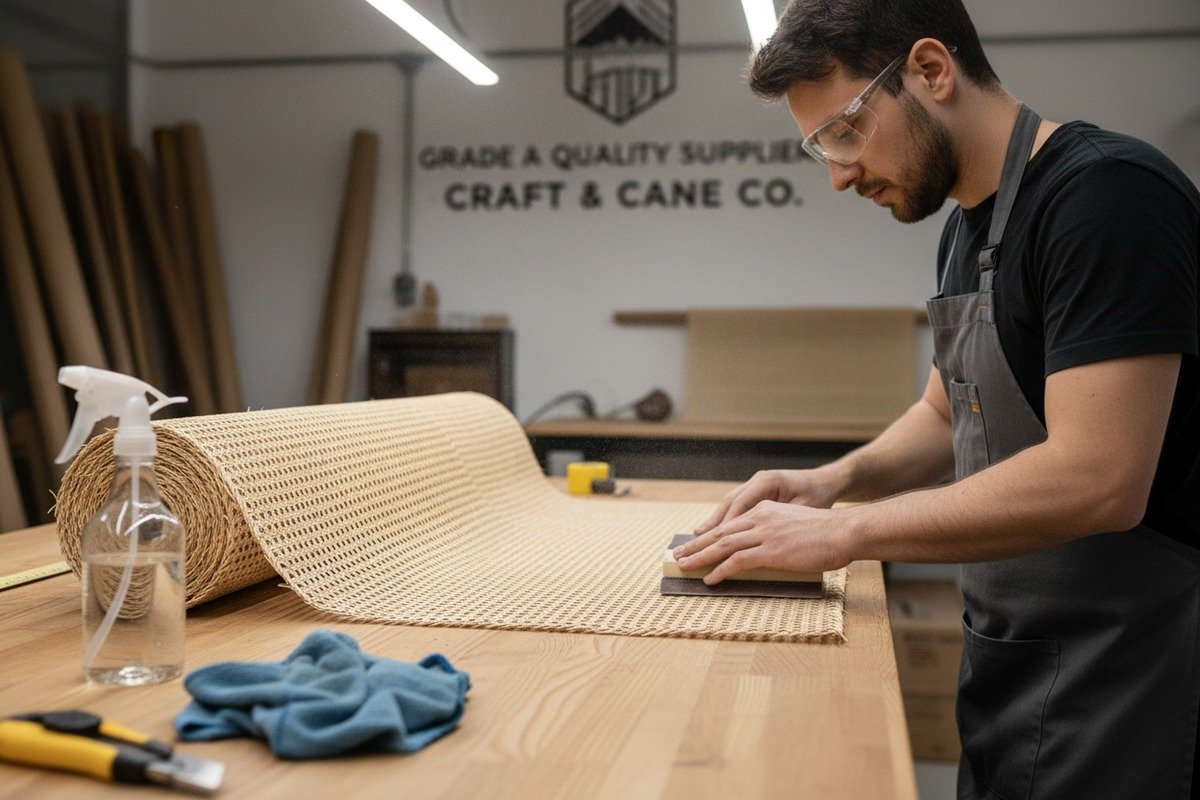
- Lightly sand if needed. Use 220-grit sandpaper 3. This opens up the fiber just enough for better absorption. Don't overdo it—rattan is delicate.
- Moisten dry or brittle cane. If the webbing feels stiff and cracks when you flex it, lightly mist it with warm water. This prevents breakage during handling.
- Mask off surrounding areas. If the webbing is already installed on furniture, tape off the wood frame to keep it clean.
- Always test first. Cut a small scrap from the edge of your roll and test your dye. This one step saves you from expensive mistakes.
Choose the Right Dyeing Technique
Not all methods work equally well on rattan. The weave pattern, the tightness of the strands, and your desired finish all matter. Here's a comparison of the most common approaches.
| Technique | Best For | Pros | Cons |
|---|---|---|---|
| Oil-based stain | Even, natural-looking darkening | Penetrates fibers deeply; consistent color | Longer dry time; strong fumes |
| Latex paint wash | Whitewash or light color refresh | Easy to control opacity; water cleanup | Can clog tight weaves if too thick |
| Spray paint | Bold, modern custom colors | Fast application; wide color range | Risk of drips; uneven on intricate weaves |
| Linseed oil | Natural refresh without color change | Nourishes fibers; enhances grain | Minimal color shift; not a true dye |
| Gel stain | Controlled, rich tones | Stays on surface; less dripping | Doesn't penetrate as deeply |
Application Tips from the Workshop Floor
Our finishing team in Indonesia has stained thousands of rattan panels over the years. Here are the practical tips they swear by:
- Use soft bristle brushes for stains. Foam brushes leave bubbles. Stiff brushes can snap rattan strands.
- Work in one direction. Follow the grain of the weave. This prevents streaks.
- Apply thin coats. Two thin coats always look better than one thick coat. Heavy application pools in the weave intersections and creates dark spots.
- Use artist brushes for crevices. The junctions where strands cross need extra attention. A small detail brush helps you get even coverage without oversaturation.
- Dry time matters. Give each coat at least four hours. In humid conditions, wait even longer. Rushing this step causes tackiness and uneven absorption.
- Seal it. A clear polyurethane or lacquer topcoat protects your color from rubbing off, moisture damage, and UV fading. This step is non-negotiable for furniture that will see daily use.
What About Immersion Dyeing?
Some crafters dip entire rattan panels in a dye bath. This works well for loose, uninstalled webbing. Pre-soaking the rattan in warm water for 15–20 minutes before immersion enhances fiber receptivity, leading to deeper and more even absorption. However, immersion dyeing is impractical for large rolls or webbing already mounted on frames. For bulk orders, brush-on or spray methods are far more scalable.
The key takeaway is this: rattan is forgiving. Its natural porosity means it wants to absorb color. You just need to respect the material—prepare it well, apply carefully, and protect the finish.
Will custom dyeing impact the long-term durability and quality of my rattan material?
This is the question that keeps purchasing managers up at night. When we ship Grade A rattan webbing to clients in the Netherlands or Australia, they trust that the material will last for years. So when someone asks about dyeing it, the immediate concern is: will I ruin the material?
Custom dyeing does not inherently damage rattan cane webbing when done correctly. The key risks are oversaturation, which can weaken fibers, and improper drying, which may cause brittleness or mold. A sealed, properly dyed rattan panel retains its flexibility and structural integrity for years.
Understanding How Dye Interacts with Rattan Fibers
Rattan is a natural palm fiber. It's tough, flexible, and breathable. These qualities are what make it ideal for furniture. When you apply a stain or dye, the liquid enters the porous outer layer and bonds with the cellulose structure 5 of the fiber.
Done right, this is a surface-level process. The core of the rattan strand stays intact. The structural integrity remains. The flexibility is preserved.
Problems arise when:
- Too much liquid is applied. Oversaturation swells the fibers. When they dry, they shrink unevenly, leading to cracks and brittleness.
- Harsh chemicals are used. Industrial-strength chemical dyes not designed for natural fibers can break down cellulose bonds over time.
- Drying is rushed or skipped. Rattan that isn't fully dried before sealing traps moisture inside. This leads to mold growth 6 and fiber degradation.
- No sealant is applied. Without a protective topcoat, the dye rubs off with use and exposes the underlying fiber to wear and UV damage.
The Sealant Factor
A clear protective coat is the single most important step for durability. Think of it as insurance for your dyeing work.
| Sealant Type | Protection Level | Best Application | Drying Time |
|---|---|---|---|
| Polyurethane (oil-based) | High | Indoor furniture, high-touch surfaces | 6–8 hours per coat |
| Polyurethane (water-based) | Medium-High | Indoor furniture, faster turnaround | 2–4 hours per coat |
| Lacquer spray | Medium | Decorative panels, wall accents | 30–60 minutes |
| Tung oil | Low-Medium | Natural look, minimal sheen | 24 hours |
For furniture pieces that will be sat on, leaned against, or touched daily, we recommend at least two coats of oil-based polyurethane. For decorative panels like cabinet inserts, a lacquer spray may be sufficient.
UV Stability and Fading
One concern that rarely gets discussed is sunlight exposure. Natural rattan already yellows and darkens with UV exposure over time. When you add dye, the UV question becomes more complex.
Not all dyes have the same UV resistance. Cheap craft paints fade quickly in direct sunlight. Oil-based wood stains with UV inhibitors 7 hold up much better. If your rattan furniture will sit near windows or in outdoor-adjacent spaces, selecting a UV-stable dye is critical.
From what we've observed across hundreds of client projects, properly stained and sealed rattan webbing holds its color well for 3–5 years indoors with moderate sunlight exposure. Outdoor use shortens this significantly unless marine-grade sealants are used.
The "Natural vs. Modified" Debate
There's a real divide in the design community. Purists argue that rattan should be left natural, refreshed only with linseed oil or tung oil to preserve its organic texture and breathability. They point out that heavy stains or paints can clog the weave, reducing airflow through open patterns like hexagonal or square radio weave 8.
On the other side, designers working on branded furniture lines need color control. A natural beige tone doesn't always fit a dark walnut or matte black furniture collection. For these professionals, dyeing is not optional—it's essential.
The truth lies in balance. Light stains and washes preserve most of the rattan's natural qualities. Heavy paints do reduce breathability but provide the boldest color options. Your choice should match the application.
Can my supplier provide custom-colored rattan webbing to match my specific brand requirements?
Over the years, our team at Seafan Rattan has watched client requests evolve from "just send me natural" to "I need Pantone 7532 C on a half-inch octagonal weave, packed in branded boxes." The market has changed. Buyers want turnkey solutions. The question is whether your supplier can deliver.
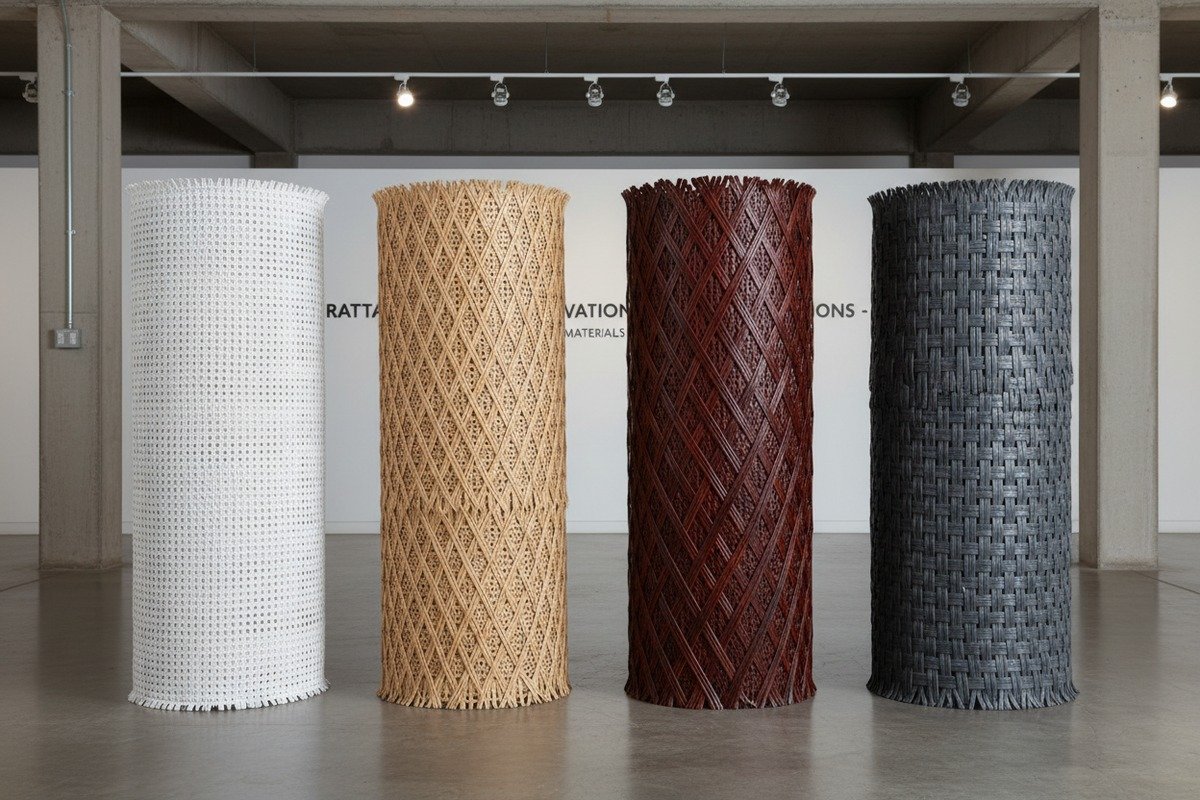
Most rattan webbing suppliers offer natural, bleached, cream, white, and dark brown as standard color options. Custom dyeing at the factory level is possible but limited—it depends on order volume, supplier capability, and your willingness to invest in samples and development. Not all suppliers have in-house dyeing facilities.
What Standard Colors Are Available?
Before pursuing custom dyeing, it's worth knowing what your supplier already stocks. This can save time and money.
Most wholesale rattan webbing suppliers, including our operation, offer these standard options:
- Natural (unbleached): The raw color of rattan—a warm, golden tan.
- Bleached: A lighter, cream-white tone achieved through a chemical bleaching process.
- White: Fully bleached or lightly painted for a clean, bright finish.
- Dark brown: Stained or smoked to achieve a rich, warm tone.
These cover roughly 80% of what furniture factories need. If your project falls outside these options, custom color development enters the picture.
How Factory-Level Custom Dyeing Works
Factory dyeing is different from DIY staining. It involves controlled processes, batch consistency checks, and often specialized equipment. Here's what a typical custom color development process looks like at our facilities:
- Client submits a color reference. This could be a Pantone code 9, a physical sample, a photo, or a competitor's product.
- We produce lab samples. Our finishing team creates 3–5 test panels using different dye formulations.
- Client approves a sample. Feedback usually takes 1–2 rounds.
- Minimum order quantity is confirmed. Custom colors typically require higher MOQs than standard colors because of setup and material costs. Minimum order quantity 10
- Production run begins. Batch dyeing or spray-line application ensures consistency across the entire order.
- Quality inspection. Color is checked against the approved sample at multiple points during production.
MOQ and Cost Implications
Custom color work isn't free. It requires setup time, dye formulation, and dedicated production runs. Here's a general framework:
| Factor | Standard Colors | Custom Colors |
|---|---|---|
| MOQ | 50–100 sqm | 200–500 sqm (typical) |
| Lead time | 7–15 days | 15–30 days |
| Sample cost | Free or minimal | $20–$100 per color trial |
| Price per sqm | Standard pricing | 10–25% premium |
| Color matching | N/A | 1–2 revision rounds |
These numbers vary by supplier. Some smaller workshops won't do custom colors at all. Larger operations like ours can handle it because we have the finishing infrastructure and experienced workers.
OEM and ODM Options for Branded Lines
If you're building a private-label product line, custom color is just one piece of the puzzle. Many of our clients in the US, Australia, and Europe also need:
- Custom roll widths and lengths
- Specific weave patterns (hexagonal, octagonal, square radio, diamond)
- Branded packaging with their company logo
- Certificates of origin and sustainability documentation
A strong supplier bundles all of this into an OEM/ODM service. When evaluating suppliers, ask directly: "Do you have your own dyeing or finishing workshop?" If the answer is no, your custom color order will be outsourced, which introduces quality risk and longer lead times.
When DIY Makes More Sense
For small orders—say, under 50 square meters—factory custom dyeing may not be cost-effective. The setup costs get spread across too few units. In these cases, buying natural or bleached webbing and dyeing it yourself (or hiring a local finisher) is often the smarter move.
This is also a good approach for prototyping. Buy a sample roll, test your color in-house, confirm the look, and then approach your supplier with a proven formula for bulk production.
What should I look for to ensure color consistency across my bulk rattan orders?
Nothing damages a client relationship faster than shipping 500 chairs where the seat panels are three different shades of walnut. We've seen it happen—not with our products, but with buyers who sourced from inconsistent suppliers. Color variation in bulk rattan orders is a real and common problem.
To ensure color consistency in bulk rattan orders, request production samples from each batch, establish a signed color standard with your supplier, specify acceptable tolerance ranges, and insist on quality inspection photos before shipment. Natural rattan inherently varies in tone, so some variation is normal—but it should be controlled.
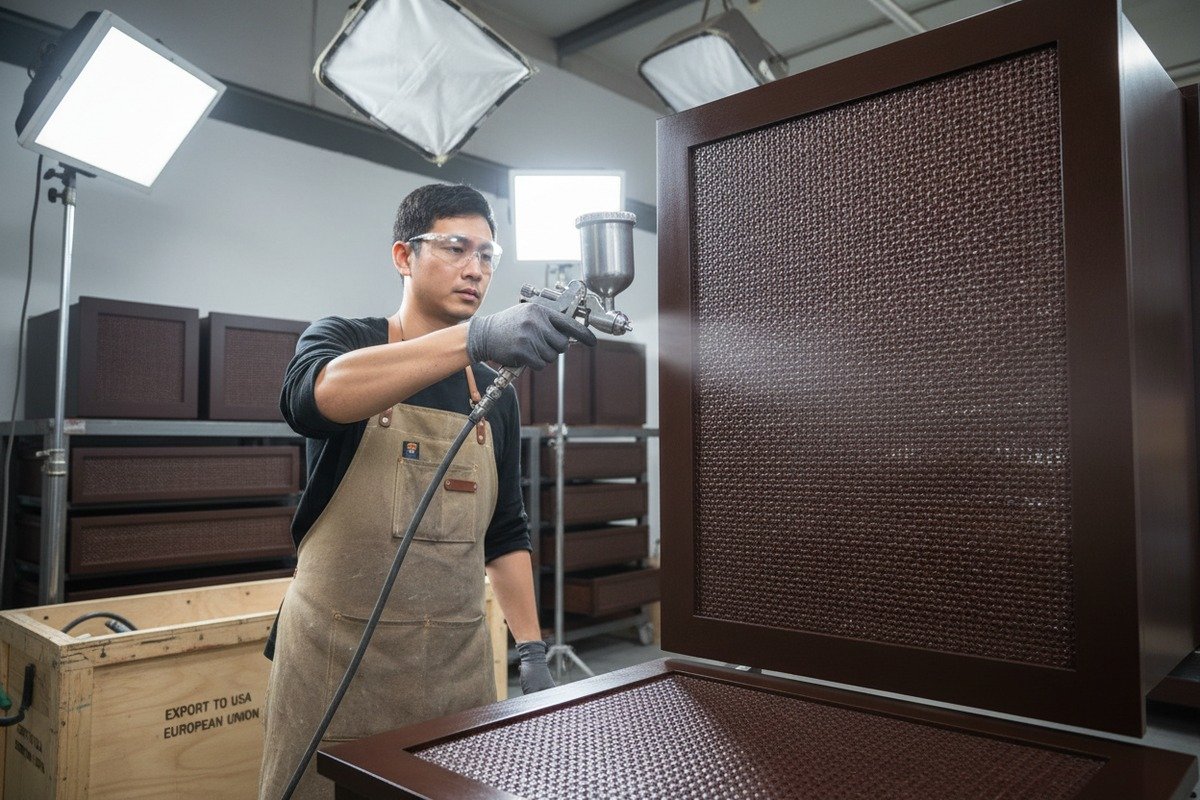
Why Color Variation Happens
Natural rattan is a plant product. Like wood, it has inherent variation. Two rattan poles harvested from the same forest can differ in base color depending on age, sun exposure during growth, and processing method.
When you dye or stain this already-variable base material, the differences can amplify. A lighter strand absorbs more dye and appears darker. A denser strand resists penetration and stays lighter. The result is visible inconsistency—especially noticeable on large, flat surfaces like cabinet panels or headboards.
Other factors that contribute to batch-to-batch variation include:
- Different rattan harvests. Raw material sourced months apart may differ in base color.
- Dye batch differences. Even small changes in dye concentration, temperature, or application time shift the final color.
- Drying conditions. Humidity and temperature during drying affect how the final color settles.
- Weave pattern differences. Tighter weaves appear darker because more material is packed per square inch.
How to Control It
At our facilities, we use a multi-step quality control process for color consistency. Here's what we recommend you ask your supplier to implement—or verify that they already do:
Establish a Color Standard
Before production begins, both you and your supplier should sign off on a physical color sample. This becomes the reference point for every batch. Digital photos are helpful but unreliable—screen calibration varies, and lighting changes perception. A physical swatch, stored by both parties, is the gold standard.
Define Tolerance Ranges
Perfect color matching across natural materials is impossible. What you can do is define acceptable tolerance. In the furniture industry, a common standard is Delta E ≤ 3 (a color science measurement where differences below 3 are barely perceptible to the human eye). If your supplier uses spectrophotometer readings, even better.
For suppliers without lab equipment, a simpler approach works: provide a "lightest acceptable" and "darkest acceptable" sample. Any production panel that falls outside this range gets rejected.
Request Batch Inspection Photos
Before any shipment leaves the factory, ask for high-resolution photos of the finished panels laid side by side under consistent lighting. This is standard practice for reputable suppliers. If your supplier resists this request, consider it a red flag.
Order from a Single Harvest When Possible
For large projects—hotel fitouts, restaurant chains, or branded furniture lines—try to secure all your rattan from a single harvest batch. This minimizes base color variation before any dyeing even begins. Our team in Indonesia can reserve specific harvest lots for clients who order in advance.
Sorting and Grading
Good suppliers sort their rattan webbing by color tone before shipping. This means grouping lighter panels together and darker panels together. Even if there's slight variation across the entire order, each group of panels going to the same project will match closely.
| Quality Control Step | Purpose | Who Does It |
|---|---|---|
| Signed color standard | Reference benchmark | Buyer + Supplier |
| Tolerance range definition | Acceptable variation limits | Buyer specifies |
| Pre-shipment photos | Visual batch verification | Supplier provides |
| Single harvest sourcing | Minimize raw material variation | Supplier manages |
| Color sorting/grading | Group similar tones together | Supplier's QC team |
| Third-party inspection | Independent verification | Buyer arranges (optional) |
When to Bring in Third-Party Inspection
For orders above $10,000 or for first-time supplier relationships, hiring a third-party inspection company is worth the investment. Companies like SGS, Bureau Veritas, or local inspection firms in China can verify color consistency, material quality, and packing standards before your goods leave the factory. This costs a few hundred dollars but can prevent thousands in losses from rejected or returned shipments.
The bottom line: color consistency is achievable, but it requires communication, documentation, and a supplier who takes quality control seriously. Don't assume it will happen automatically. Build it into your purchase agreement.
Conclusion
Custom dyeing natural rattan cane webbing is absolutely feasible—and increasingly popular. Success depends on proper preparation, the right technique, protective sealing, and strong supplier communication. Whether you dye it yourself or source custom colors at scale, rattan's natural porosity makes it a remarkably adaptable material for any design vision.
Footnotes
1. Highlights polyurethane’s superior durability, water resistance, and aesthetic enhancement for wood. ↩︎
2. Explains rattan’s material composition and fibrous nature. ↩︎
3. Explains 220-grit sandpaper’s role in preparing wood for even stain absorption. ↩︎
4. Explains the deep penetration, rich color, and durability of oil-based stains. ↩︎
5. Explains cellulose as the primary structural component of plant cell walls. ↩︎
6. HTTP 404 ↩︎
7. HTTP unknown ↩︎
8. Lists and describes different types of cane weaving patterns, including hexagonal and radio weave. ↩︎
9. Official site for the Pantone Matching System, a global standard for color communication. ↩︎
10. Explains MOQ as a critical inventory tool for profitability and efficiency. ↩︎

 English
  Español de México
  العربية
  Deutsch
  Français
  Русский