
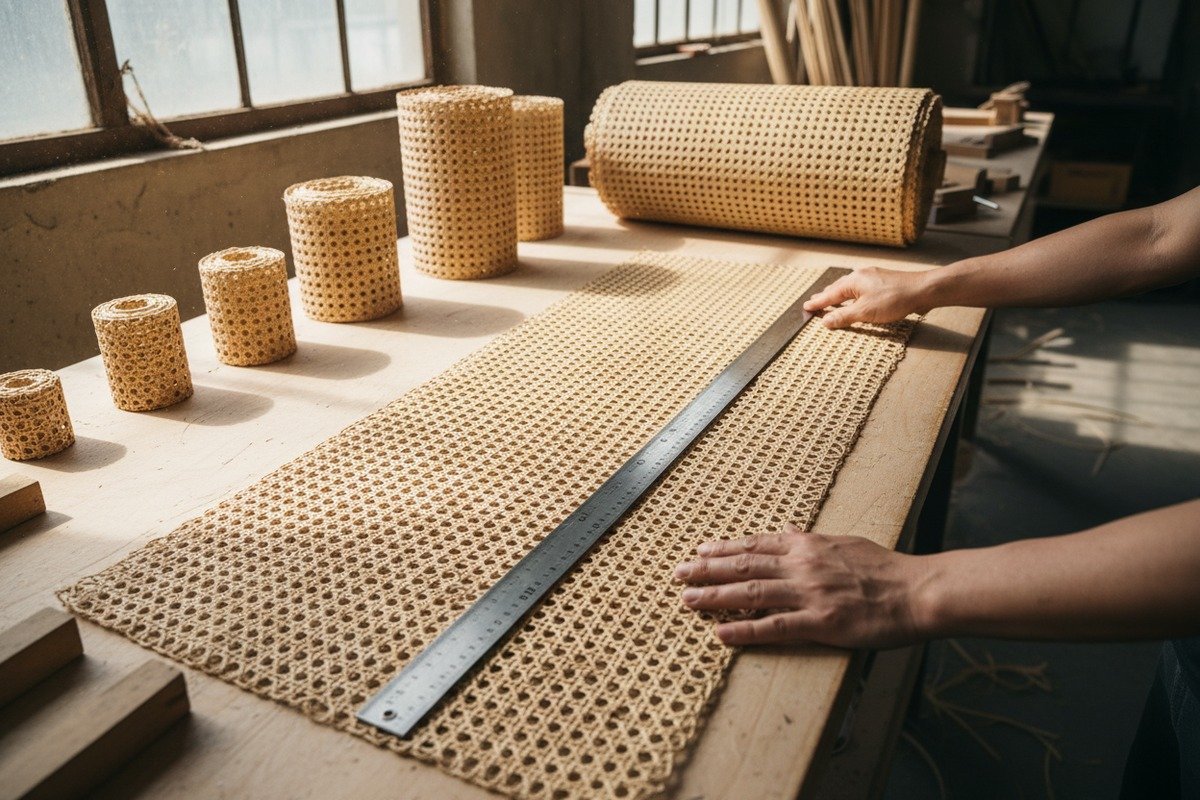
Every week, our sales team fields dozens of inquiries from furniture factories 1 and wholesalers who need rattan cane webbing 2 in widths that simply don’t exist in standard catalogs. The frustration is real — you find the perfect weave pattern 3, the right color, and the ideal texture, only to discover it comes in 24 inches when you need 30. That mismatch leads to wasted material, extra cutting labor, and razor-thin margins that make your product less competitive.
Yes, natural rattan cane webbing can be customized to specific widths. Professional manufacturers like our Seafan Rattan facility produce bespoke rolls tailored to your exact width requirements, weave pattern, and material grade. This eliminates excess waste, simplifies your production workflow, and ensures every roll fits your project perfectly.
But how does the customization process actually work production workflow 4? What are the real cost implications? And how do you make sure quality doesn’t slip when you move away from standard sizes? Let’s walk through everything you need to know, step by step.
How can I request custom widths for my natural rattan cane webbing orders?
Ordering custom-width rattan webbing used to mean long wait times and confusing back-and-forth emails. Over the years, we've streamlined our consultation process at Seafan Rattan so buyers can specify exact dimensions from the very first inquiry.
To request custom widths, contact your rattan supplier with your desired width in centimeters or inches, preferred weave pattern, material grade, and order quantity. A reliable manufacturer will then provide samples, confirm pricing, and schedule production after your approval.

Understanding Standard vs. Custom Width Options
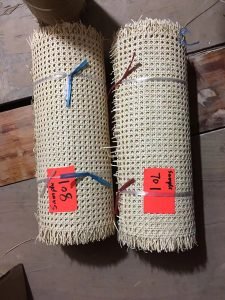
Before requesting a custom width, it helps to know what's already available. Standard rattan cane webbing rolls typically come in a set range of widths. Here's a quick overview:
| Standard Width (Inches) | Standard Width (CM) | Common Use |
|---|---|---|
| 15.5" | 39 cm | Small cabinet doors, decorative panels |
| 18" | 46 cm | Chair seats, narrow panels |
| 24" | 61 cm | Chair backs, headboard inserts |
| 36" | 91 cm | Large panels, room dividers |
| 39.5" | 100 cm | Wide furniture surfaces |
| 48" | 122 cm | Full headboards, large screens |
If your project falls between these sizes, that's where custom widths come in. Many furniture factories need widths like 28 inches or 42 inches that simply aren't part of the standard lineup. Retailers on platforms like Etsy may offer a handful of width options, but they rarely cover the full range that commercial production demands.
The Step-by-Step Custom Order Process
Here's exactly how we handle custom-width requests at our facility:
- Initial Consultation. You send us your specifications — width, length, weave pattern, and quantity. WhatsApp, email, or our website contact form all work.
- Design and Sampling. Our team selects the appropriate rattan material and weaves a sample at your requested width. This sample ships to you for inspection.
- Feedback and Revisions. You check the sample for weave density, edge quality, and overall finish. If adjustments are needed, we make them before production starts.
- Mass Production. Once you approve the sample, we schedule production. Lead times depend on order complexity and quantity.
- Quality Control and Inspection. Every roll is inspected for consistent width, weave uniformity, and material grade 5 before packaging.
- Shipping. The finished rolls are packaged and shipped to your location.
Key Details to Include in Your Request
When you reach out to a supplier, be specific. Vague requests lead to delays. Include these details:
- Exact width in centimeters or inches
- Weave pattern (hexagonal, close weave, radio weave, herringbone, etc.)
- Reed size (3mm, 5mm, or other)
- Material grade (Grade A, Grade B)
- Roll length needed
- Quantity of rolls
- Intended use (this helps the manufacturer recommend the best material)
One thing worth noting: custom-width orders are typically non-returnable because they're made to your unique specifications. So getting the sample stage right is critical. Don't rush it. Measure twice, order once.
DIY Cutting vs. Factory Customization
Some buyers try to save money by purchasing standard-width rolls and cutting them down. This can work for small projects, but it comes with risks. Cutting too close to a weave element can fray the edge or compromise the structural integrity 6 of the pattern. For clean results, you'd need sharp scissors or a utility knife, and ideally a clear sealant or fray-stop product on the cut edges. For large-scale production, factory customization is almost always more efficient and produces cleaner, more consistent results.
Will choosing specific widths help me lower my production costs and material waste?
Our production data from the past three years shows a clear pattern: buyers who switch to custom-width rolls consistently report less trim waste and faster assembly times on their furniture lines. production costs 7
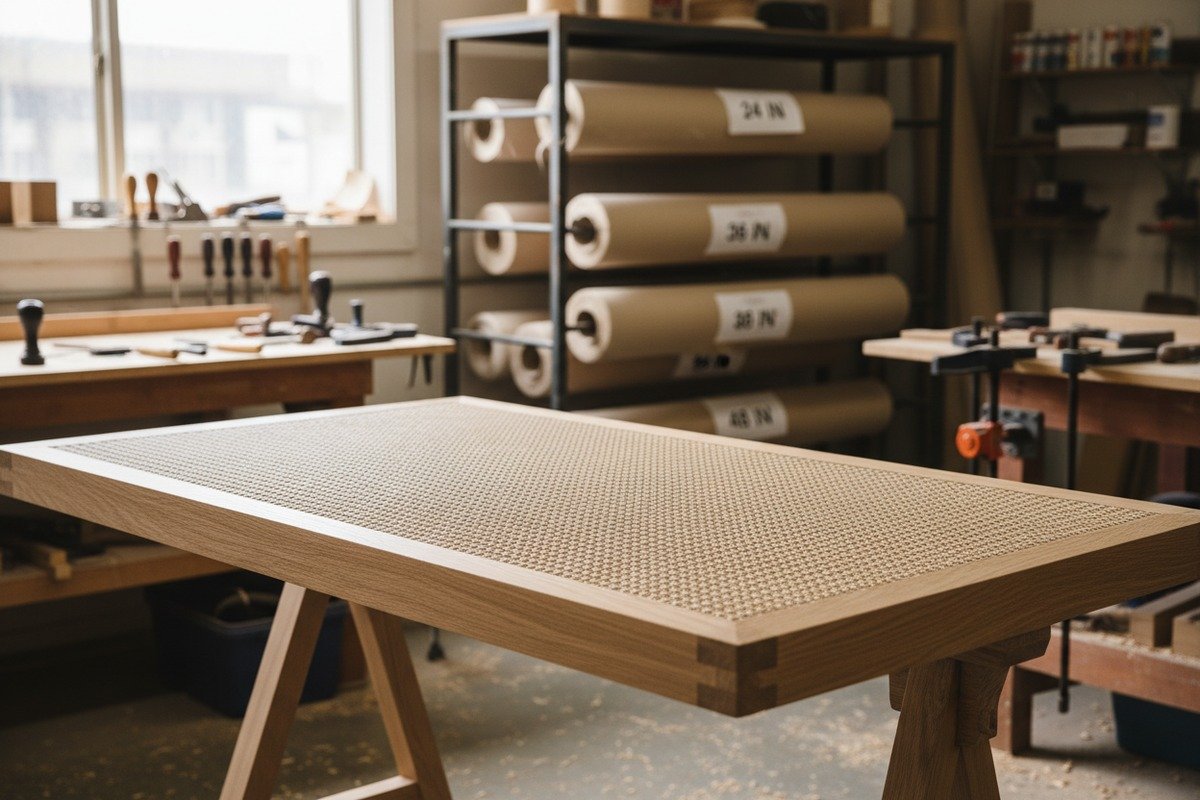
Yes, ordering rattan cane webbing in specific widths directly reduces material waste, cutting labor, and overall production costs. When each roll matches your frame dimensions precisely, you eliminate offcuts, minimize rework, and improve your cost-per-unit ratio significantly.
The Hidden Cost of Standard-Width Rolls
Let's say your chair back panel requires a 22-inch-wide piece of rattan webbing. If you buy standard 24-inch rolls, you trim 2 inches off every piece. That doesn't sound like much — until you multiply it across thousands of units.
Here's a simple cost comparison:
| Factor | Standard 24" Roll (Trimmed to 22") | Custom 22" Roll |
|---|---|---|
| Material waste per piece | 2 inches (~8.3%) | Near zero |
| Cutting labor per piece | 1–2 minutes | 0 minutes |
| Edge finishing needed | Yes (fray prevention) | No (factory-finished edge) |
| Risk of weave damage | Moderate | None |
| Cost per usable sq. ft. | Higher | Lower |
Over a production run of 5,000 chairs, that 8.3% waste adds up to a significant pile of unusable rattan. And the labor cost of trimming and finishing those edges? It compounds fast.
How Custom Widths Improve Production Efficiency
Beyond waste reduction, custom-width rolls speed up your production line. Workers don't need to measure and cut each piece individually. They simply unroll, cut to length, soak, and install. This streamlined workflow means:
- Fewer production errors. No accidental mis-cuts or wasted panels.
- Faster throughput. Assembly workers spend time building, not trimming.
- Consistent quality. Every piece is identical, which matters for brand reputation.
Calculating Your Break-Even Point
Custom-width orders sometimes carry a slightly higher per-roll price than standard widths. But the break-even point comes quickly when you factor in saved materials and labor. For most of our clients, orders above 200 rolls hit that break-even point easily. Smaller orders may still benefit if the alternative is excessive waste or if the product sells at a premium price point.
Minimum Order Quantities
One honest consideration: not every supplier offers custom widths for small orders. At our factories, we work with clients to find practical minimum order quantities that make customization feasible for both sides. If you're ordering a small batch for a prototype or limited run, it may make sense to start with a standard width and cut to size, then switch to custom widths once your production scales up.
How do I maintain Grade A quality standards when customizing my rattan roll sizes?
Quality concerns keep many purchasing managers up at night — especially when moving from a proven standard product to something custom. In our experience shipping to markets across the Netherlands, Australia, and the USA, we've learned that maintaining Grade A quality 8 during customization comes down to three things: material selection, weave control, and inspection rigor.
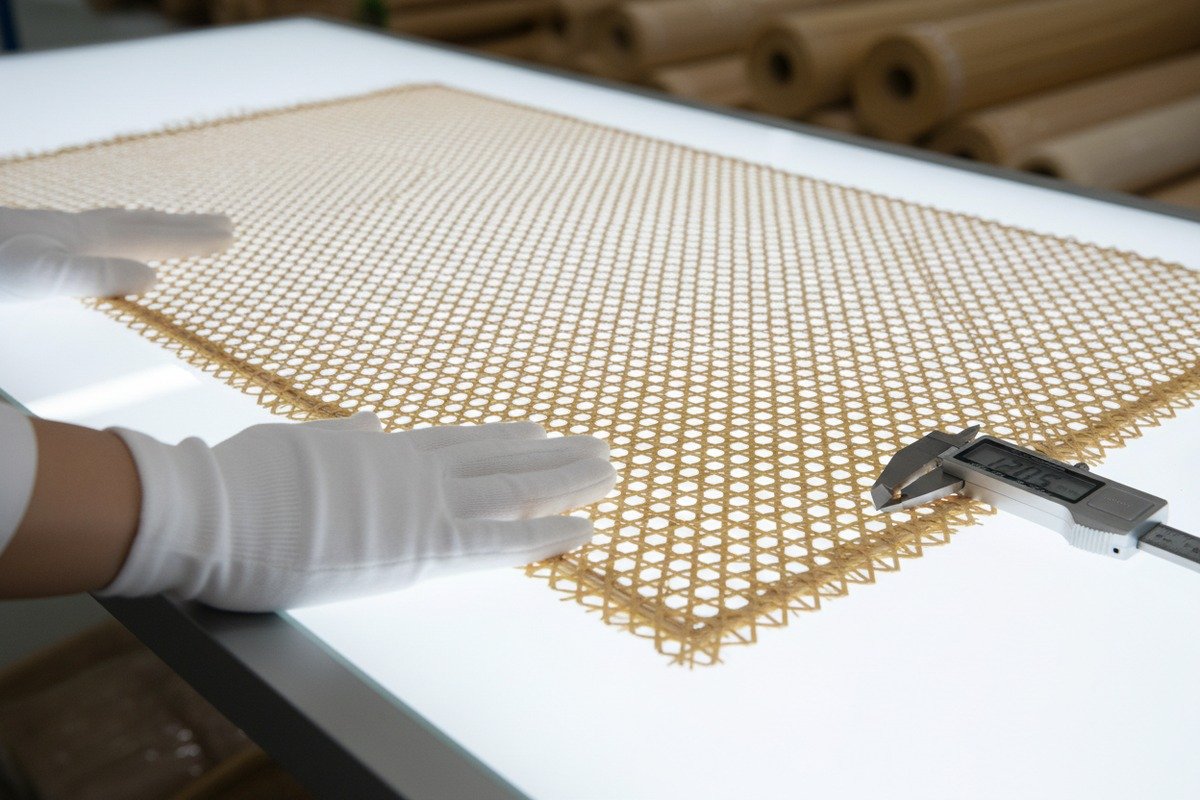
To maintain Grade A quality in custom-width rattan webbing, insist on certified raw materials, request pre-production samples, define clear quality benchmarks (weave density, color uniformity, edge finish), and require third-party or in-house inspection at every production stage before shipment.
What Defines Grade A Rattan Cane Webbing?
Not all rattan is equal. Grade A webbing meets strict criteria that separate it from lower grades. Here's what to look for:
| Quality Factor | Grade A Standard | Lower Grade |
|---|---|---|
| Reed surface | Smooth, no cracks or splits | Rough spots, visible flaws |
| Color uniformity | Consistent natural tone across the roll | Patchy, uneven coloring |
| Weave tightness | Even tension, no gaps or loose strands | Irregular spacing, loose ends |
| Edge finish | Clean, factory-sealed edges | Frayed or unfinished edges |
| Flexibility after soaking | Pliable, no snapping or cracking | Brittle, prone to breakage |
| Moisture content | Properly dried (12–15%) | Too dry or too damp |
When you customize the width, each of these factors still needs to meet the same benchmark. The risk is that changing the roll width can alter weave tension dynamics. A wider roll may stretch differently than a narrow one if the loom isn't properly adjusted. A good manufacturer anticipates this and calibrates accordingly.
Material Sourcing Matters
High-quality rattan cane webbing starts at the source. We source our rattan from our own processing facility in Indonesia, where the raw material is harvested, cleaned, and graded before it ever reaches the weaving loom. Vietnamese and Indonesian rattan are widely considered the best for quality and flexibility. If your supplier can't tell you where their rattan comes from, that's a red flag.
Controlling Quality During Custom Production
Here are practical steps you can take — and request from your supplier — to ensure Grade A standards hold during custom production:
- Define specifications in writing. Put your width, weave pattern, reed size, color, and grade requirements in a formal purchase order or specification sheet. Leave nothing to assumption.
- Request and approve samples. Never skip the sample stage. Check the sample under good lighting. Bend it. Soak it. See how it behaves when wet and when dry. Does it tighten uniformly? Are the edges clean?
- Ask about loom calibration. When a manufacturer adjusts their loom for a non-standard width, they need to re-calibrate tension settings. Ask if this is part of their standard process.
- Require in-process inspection. Don't wait until the entire order is finished. Ask for photos or video of rolls coming off the production line during the run. This catches problems early.
- Consider third-party inspection. For large orders, hiring a third-party quality inspector in the production country is a worthwhile investment. They check everything from weave consistency to roll dimensions before the goods ship.
Soaking and Installation Testing
One step many buyers overlook: test the custom-width webbing through your actual installation process. Soak a sample in warm water for the recommended time (usually 15 to 30 minutes), stretch it into a frame, secure it with spline or staples, and let it dry. Monitor how it tightens. If the width was poorly calibrated, you'll see uneven stretching or sagging at this stage. Better to catch it on a sample than on a production run.
Post-Installation Finishing
After installation, Grade A rattan webbing can be stained, painted, or sealed for enhanced durability and aesthetics. The key is to use finishes that are compatible with natural fibers 9. Water-based polyurethane and clear lacquer work well. Avoid heavy oil-based stains that can discolor or weaken the cane over time.
Can my supplier provide specialized packaging for my custom-width rattan webbing to prevent shipping damage?
Packaging complaints are one of the top three pain points we hear from buyers, right alongside quality consistency and pricing. When we first started exporting rattan cane webbing to the Middle East and Europe, we learned the hard way that good rattan in bad packaging equals damaged rattan at the destination.
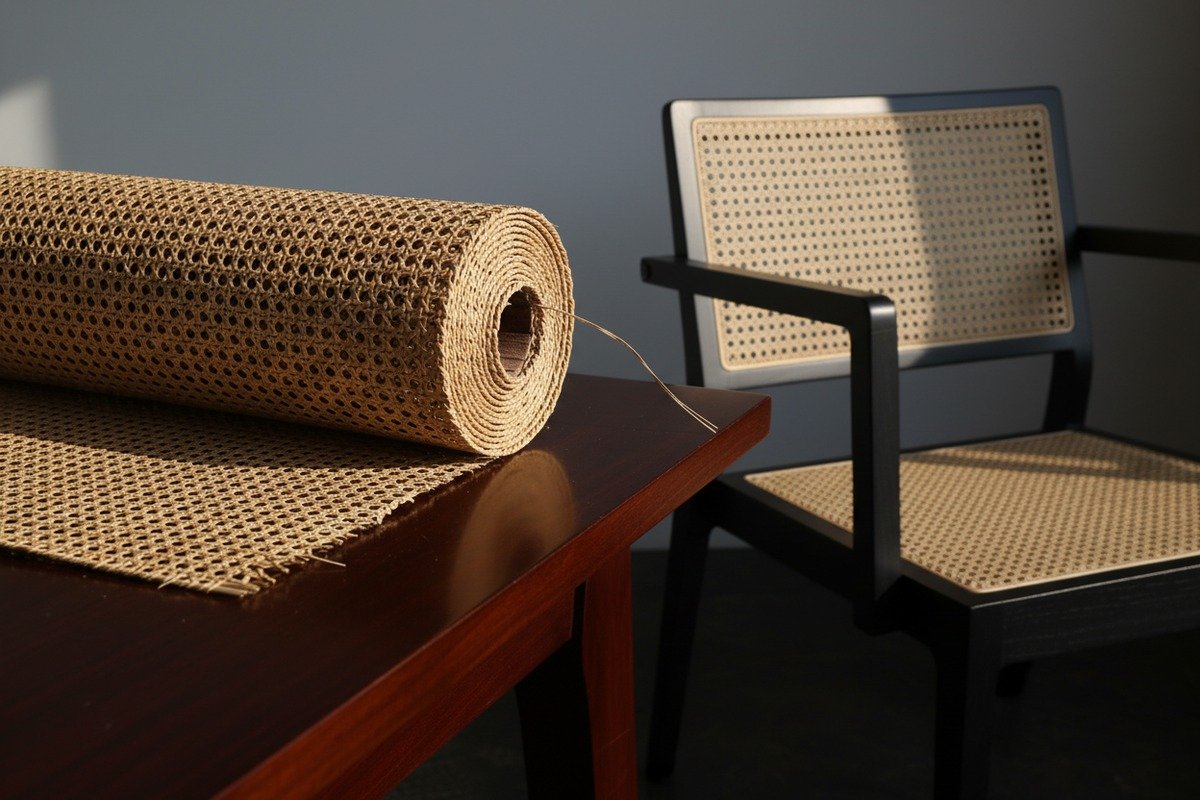
Yes, reputable suppliers can provide specialized packaging for custom-width rattan webbing. Options include reinforced cardboard tubes, moisture-barrier wrapping, foam padding, custom-sized cartons, and wooden crate packing — all designed to protect your specific roll dimensions from crushing, moisture, and transit damage.
Why Standard Packaging Often Fails
Standard packaging is designed for standard-width rolls. When you order a custom width — say 28 inches instead of 24 — the roll may not fit snugly in a standard box. That means it shifts during transit. Shifting causes edge damage, weave distortion, and sometimes moisture exposure if the outer wrapping tears. International shipping is rough. Containers get stacked. Humidity changes from port to port. Your packaging needs to account for all of this.
Packaging Options for Custom-Width Rolls
Here's a breakdown of packaging solutions that work well for custom-width rattan webbing:
Inner wrapping. Each roll should be individually wrapped in moisture-barrier plastic film. This protects against humidity, which is critical because rattan is moisture-sensitive. Excess moisture can cause mold growth during long ocean freight 10 journeys.
Core support. Rolls should be wound around a rigid cardboard or PVC tube. This prevents the center from collapsing and keeps the roll's shape intact. For custom widths, these tubes need to be cut to match — another reason to work with a supplier who handles customization end to end.
Outer protection. Reinforced cardboard cartons or wooden crates provide the structural shell. For high-value or large orders, wooden crates offer the best crush resistance. Some buyers prefer pallet wrapping with corner protectors for containerized shipments.
Cushioning. Foam pads, bubble wrap, or corrugated cardboard inserts between rolls prevent them from rubbing against each other. Edge damage is the most common complaint, and proper cushioning solves it.
Communicating Your Packaging Requirements
Don't assume your supplier will choose the right packaging. Be explicit. When you place your order, specify:
- Whether you need individual roll wrapping
- Your preferred outer packaging (carton vs. crate)
- Any labeling or branding requirements on the packaging
- Whether the shipment will travel by sea, air, or land (this affects humidity exposure)
- The destination climate (hot and humid destinations need extra moisture protection)
At our Seafan Rattan facility, we discuss packaging during the initial consultation phase. We've developed packaging configurations for different regions — heavier protection for long sea routes to Europe and the Americas, lighter packaging for shorter routes within Asia.
The Cost of Getting Packaging Wrong
Damaged goods mean more than just replacement costs. They cause production delays for your factory, strained relationships with your own customers, and potential disputes over liability. Investing an extra few cents per roll in proper packaging is always cheaper than dealing with a damaged shipment. We've seen buyers lose thousands of dollars — and weeks of production time — because they tried to save on packaging.
Moisture and Temperature Considerations
Natural rattan is sensitive to environmental changes. During ocean freight, container temperatures can swing dramatically, and condensation can form inside the container. This is sometimes called "container rain." Moisture-barrier wrapping and desiccant packets inside cartons go a long way toward preventing this. If your supplier doesn't mention this, ask about it. It's a basic precaution that protects your investment.
Conclusion
Custom-width natural rattan cane webbing is not just possible — it's a smart business decision that reduces waste, improves quality, and protects your bottom line. Work with a capable supplier, define your specifications clearly, and don't overlook packaging.
Footnotes
1. Replaced HTTP 404 link with an authoritative government source on furniture manufacturing. ↩︎
2. Provides general information on rattan and cane webbing. ↩︎
3. Explains the concept of weaving and different types of weave patterns. ↩︎
4. Defines and explains the concept of a production workflow. ↩︎
5. Provides information on international standards for material quality. ↩︎
6. Explains the engineering concept of structural integrity and its importance. ↩︎
7. Defines production costs and factors influencing them in manufacturing. ↩︎
8. Provides context on ISO 9001, a key quality management standard. ↩︎
9. Defines natural fibers and lists various types and properties. ↩︎
10. Provides information about the International Maritime Organization and shipping. ↩︎

 English
  Español de México
  العربية
  Deutsch
  Français
  Русский