
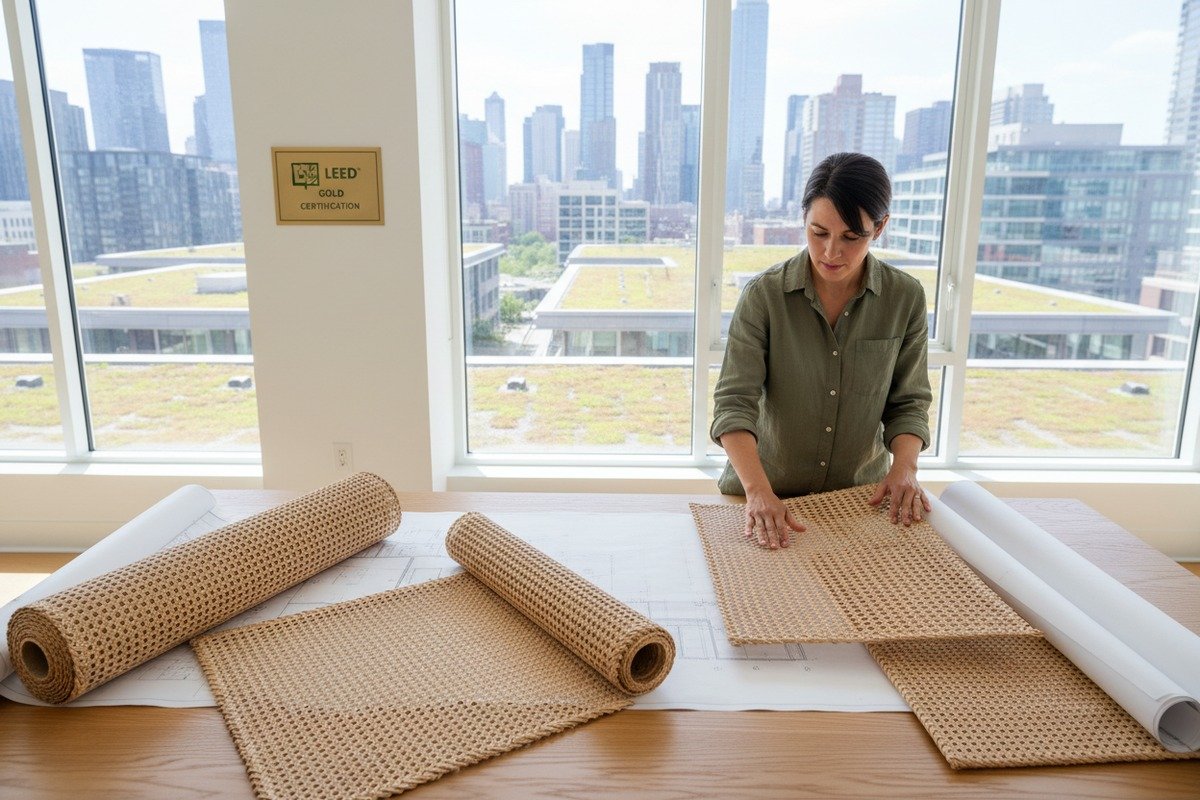
Every year, we ship hundreds of containers of natural rattan cane webbing from our Indonesian processing facility, and a question keeps coming up from architects and procurement managers alike: can this material actually help earn green building credits low embodied energy 1? It is a fair question. The sustainability claims around building materials can feel murky, and nobody wants to invest in a product only to find it does not move the needle on certification. The gap between “natural” and “certified green” is real, and it frustrates project teams worldwide.
Yes, natural rattan cane webbing can meaningfully support green building certification efforts such as LEED and BREEAM. Its rapid renewability, zero-VOC composition, low embodied energy, and biodegradability align with multiple credit categories, though verified sustainable sourcing and proper documentation remain essential for earning specific points.
Below, we break down exactly how natural rattan contributes to green building ratings, which credits it can target, where the gaps still exist, and what you need from your supplier to make the case on paper. Let us dig in.
Can I earn LEED credits by using natural rattan cane webbing in my interior design projects?
When we prepare material documentation packages for our B2B clients in the US and Europe, the first system they ask about is LEED. They want to know if specifying rattan webbing for cabinetry panels, ceiling treatments, or furniture components will translate into actual points on the scorecard.
Natural rattan cane webbing can contribute to LEED credits under Materials & Resources (rapidly renewable materials, low embodied carbon) and Indoor Environmental Quality (low-VOC emissions), but earning points requires FSC-equivalent sourcing documentation and project-specific compliance proof from your supplier.
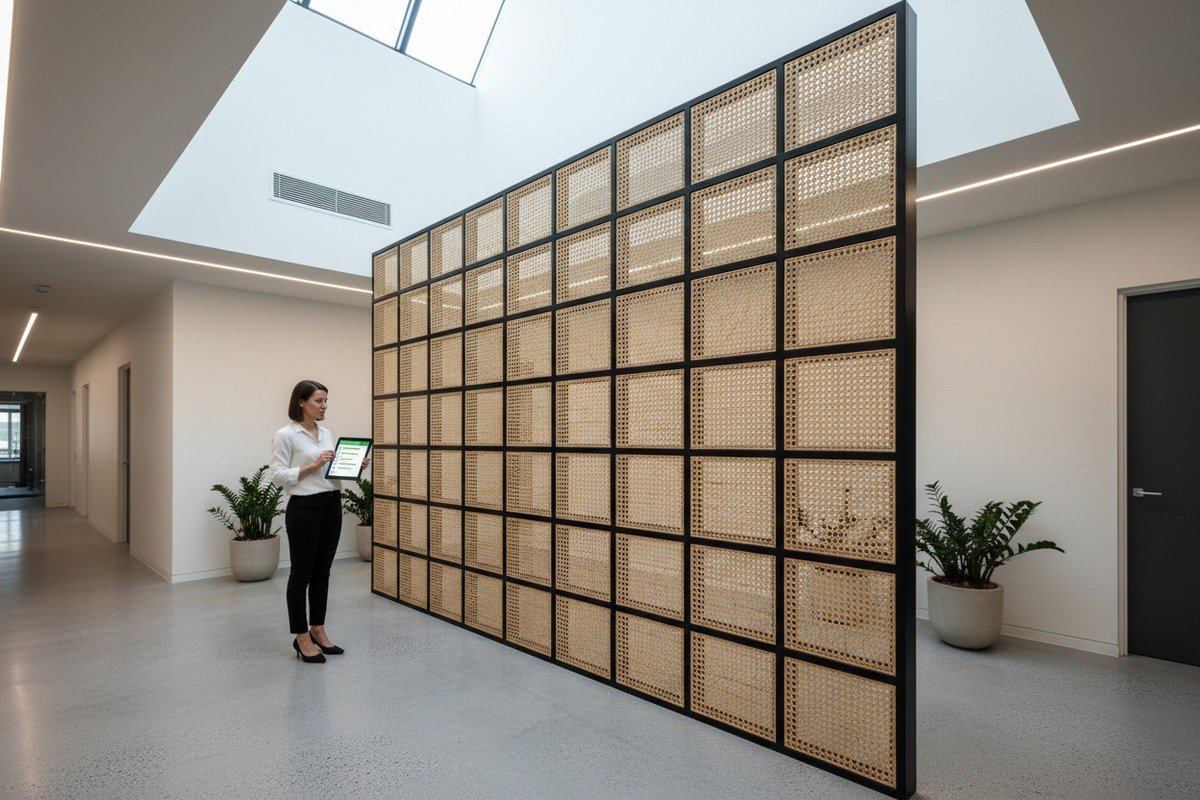
Understanding LEED Credit Categories for Rattan
LEED v4.1, the current dominant framework, organizes credits into categories. Natural rattan does not have a single dedicated credit line. Instead, it can score across several categories when properly documented. The key categories are Materials & Resources 2 (MR) and Indoor Environmental Quality (EQ).
Under MR Credit: Building Product Disclosure and Optimization, rattan can earn points if the supplier provides Environmental Product Declarations 3 (EPDs) or demonstrates responsible sourcing. Under EQ Credit: Low-Emitting Materials, natural rattan's inherent zero-VOC properties give it a clear advantage over engineered wood panels or plastic alternatives.
Where Rattan Fits in the LEED Points Table
| LEED v4.1 Credit Category | Relevant Credit | How Rattan Qualifies | Max Points Available |
|---|---|---|---|
| Materials & Resources | Sourcing of Raw Materials | FSC or equivalent chain-of-custody certification for rattan | 2 |
| Materials & Resources | Building Product Disclosure | EPD or manufacturer transparency report | 2 |
| Indoor Environmental Quality 4 | Low-Emitting Materials | Zero inherent VOCs; no off-gassing | 3 |
| Innovation | Innovation Credit | Biophilic design 5 integration using natural rattan | 1 |
The Documentation Gap
Here is the honest truth from our side. We work directly with rattan harvesters in Kalimantan and Sulawesi. We can trace our material back to specific forest communities. But rattan does not yet have a universally recognized certification label the way FSC certifies timber. This means your LEED reviewer may need additional evidence.
What works in practice is providing a supplier letter detailing the harvest location, growth cycle data (our rattan matures in 5–7 years), processing methods (hand-woven or machine-assisted, no chemical treatments), and transport logistics. Some of our clients in the Netherlands and Australia have successfully used this documentation package to satisfy MR credit requirements.
Real-World Application
Consider a LEED Platinum office fit-out. The USGBC's own headquarters used FSC-certified oak flooring to earn MR credits. Rattan webbing applied to partition panels or ceiling screens could follow the same logic. The material is rapidly renewable, lightweight (reducing transport emissions), and requires no chemical finishing. These are measurable, documentable advantages.
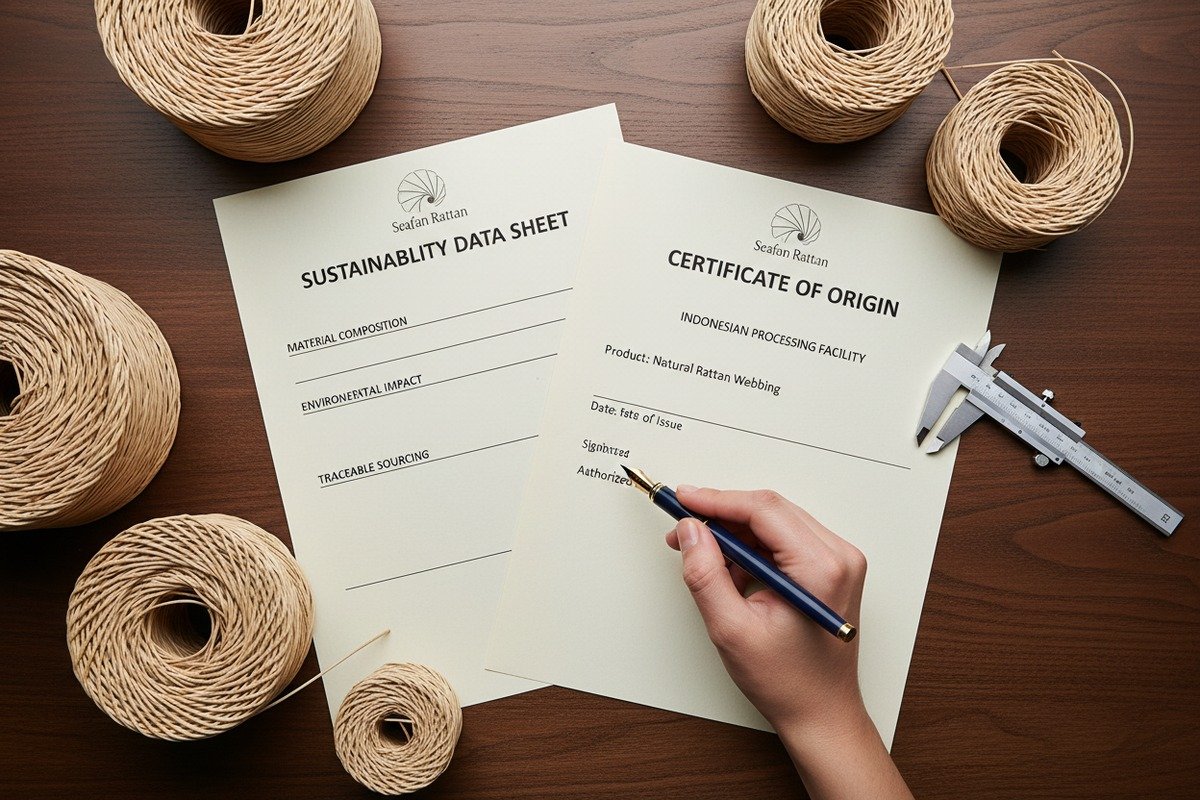
The key takeaway is this: rattan can earn LEED credits, but you cannot just install it and assume points will follow. You need a supplier who provides the paperwork. From our factory, we now include a sustainability data sheet with every wholesale order specifically for this reason.
How does the renewable nature of my rattan source contribute to my green building rating?
From our rattan processing facility in Indonesia, we see the full growth cycle firsthand. Rattan vines climb through the tropical forest canopy, reaching harvestable maturity far faster than any timber species. This speed matters enormously for green building ratings.
Rattan's 5–7 year growth cycle classifies it as a rapidly renewable resource, a critical factor in green building systems like LEED, BREEAM, and WELL. Unlike hardwoods that need 20–30 years, rattan regenerates quickly without deforestation, directly supporting renewability and responsible sourcing credits.
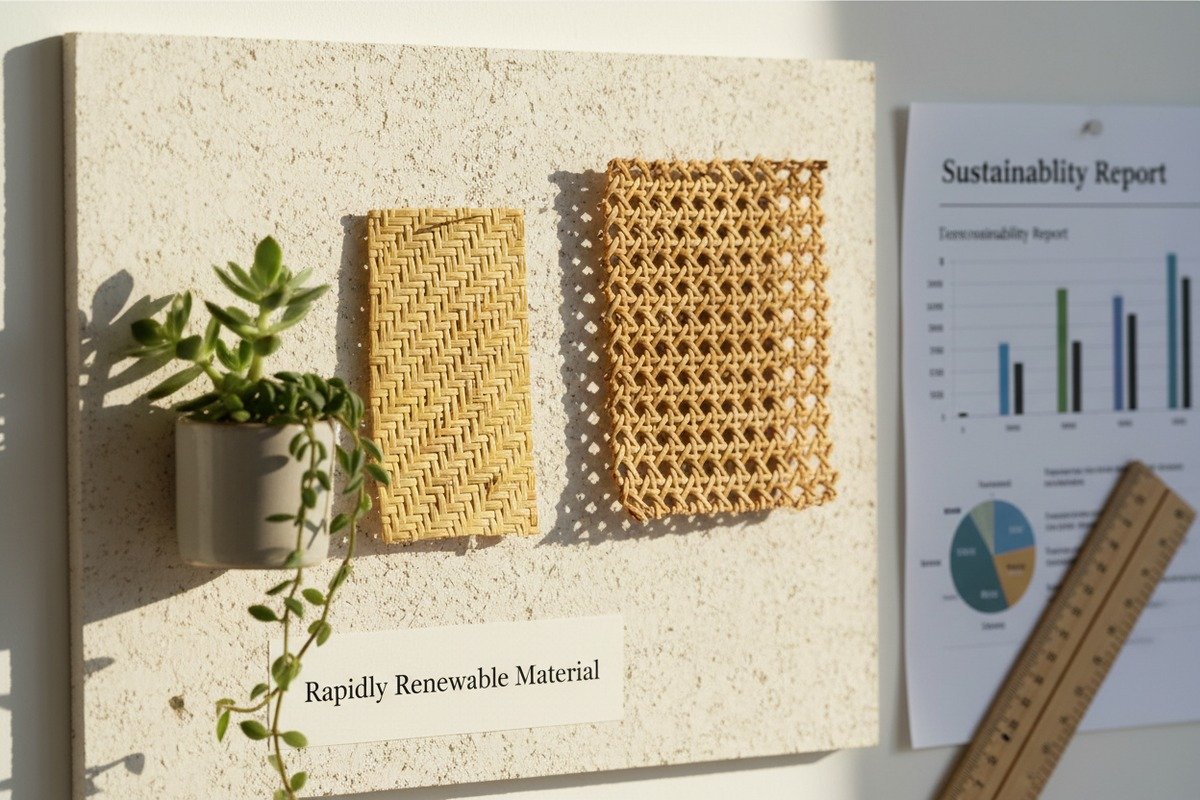
What Makes Rattan "Rapidly Renewable"?
Green building rating systems define rapidly renewable materials 7 as those harvested within a 10-year or shorter cycle. Rattan comfortably fits this definition. Most commercial rattan species mature in 5–7 years. Compare that to oak (60–80 years), teak (25–40 years), or even bamboo (3–5 years for some species, but requiring different processing).
The important distinction is how rattan is harvested. It is a climbing palm, not a tree. Harvesters cut the vine and the root system remains alive. The forest canopy stays intact. No clear-cutting. No replanting needed. This is fundamentally different from timber harvesting, and green building assessors recognize this difference.
Growth Cycle Comparison Table
| Material | Growth to Harvest | Harvesting Impact on Forest | Replanting Required | Rapidly Renewable Status |
|---|---|---|---|---|
| Natural Rattan | 5–7 years | None (vine cutting only) | No (regrows from root) | Yes |
| Bamboo | 3–5 years | Minimal (clump harvesting) | No (rhizome regrows) | Yes |
| Oak Hardwood | 60–80 years | High (tree felling) | Yes | No |
| Teak | 25–40 years | Moderate to High | Yes | No |
| Plantation Pine | 15–25 years | Moderate | Yes | No |
Carbon Sequestration and Forest Preservation
There is a secondary benefit that project teams often overlook. Rattan cultivation actually incentivizes forest preservation. Rattan cannot grow without a host tree canopy. Communities that harvest rattan have a direct economic reason to keep forests standing. This creates a positive feedback loop: the more demand there is for rattan, the more forests are protected.
For advanced carbon accounting in green building projects, the biogenic carbon stored within natural rattan webbing is quantifiable. The material absorbs CO2 during its growth phase and locks it into the building component for the duration of its use. When the building is eventually decommissioned, rattan is biodegradable and can return to the biological cycle without releasing synthetic pollutants.
How This Translates to Rating Points
In BREEAM, the Materials category (Mat 01) assesses lifecycle environmental impacts including resource depletion. A rapidly renewable material like rattan scores well here. In LEED, MR Credit: Sourcing of Raw Materials rewards projects that use bio-based materials with short harvest cycles.
We have seen procurement managers from furniture factories in Turkey and Spain begin requesting our renewability documentation specifically for BREEAM-assessed commercial interiors. The trend is clear: rating assessors want hard data on growth cycles, harvest methods, and supply chain transparency. Our team now includes a renewability fact sheet with growth cycle timelines and harvest practice descriptions as standard.
The bottom line is that rattan's renewability is not just a marketing claim. It is a measurable, documentable attribute that directly feeds into green building scoring algorithms. But you must pair the material with verified sourcing data. A roll of rattan webbing without provenance is just a roll of webbing. A roll with documented origin, harvest cycle, and chain-of-custody information is a green building asset.
Will the low-VOC properties of natural rattan help me meet my project's environmental standards?
On our production line in Foshan, we process rattan webbing without chemical adhesives, synthetic coatings, or formaldehyde-based treatments. This is not a special eco-friendly upgrade. It is simply how natural rattan webbing is made. And it turns out, this matters a great deal for indoor air quality standards.
Natural rattan cane webbing emits zero volatile organic compounds (VOCs) because it undergoes no chemical treatment during processing. This inherent property directly supports Indoor Environmental Quality credits in LEED, BREEAM, and WELL Building Standard, helping projects meet strict low-emitting material thresholds without additional testing or treatment.
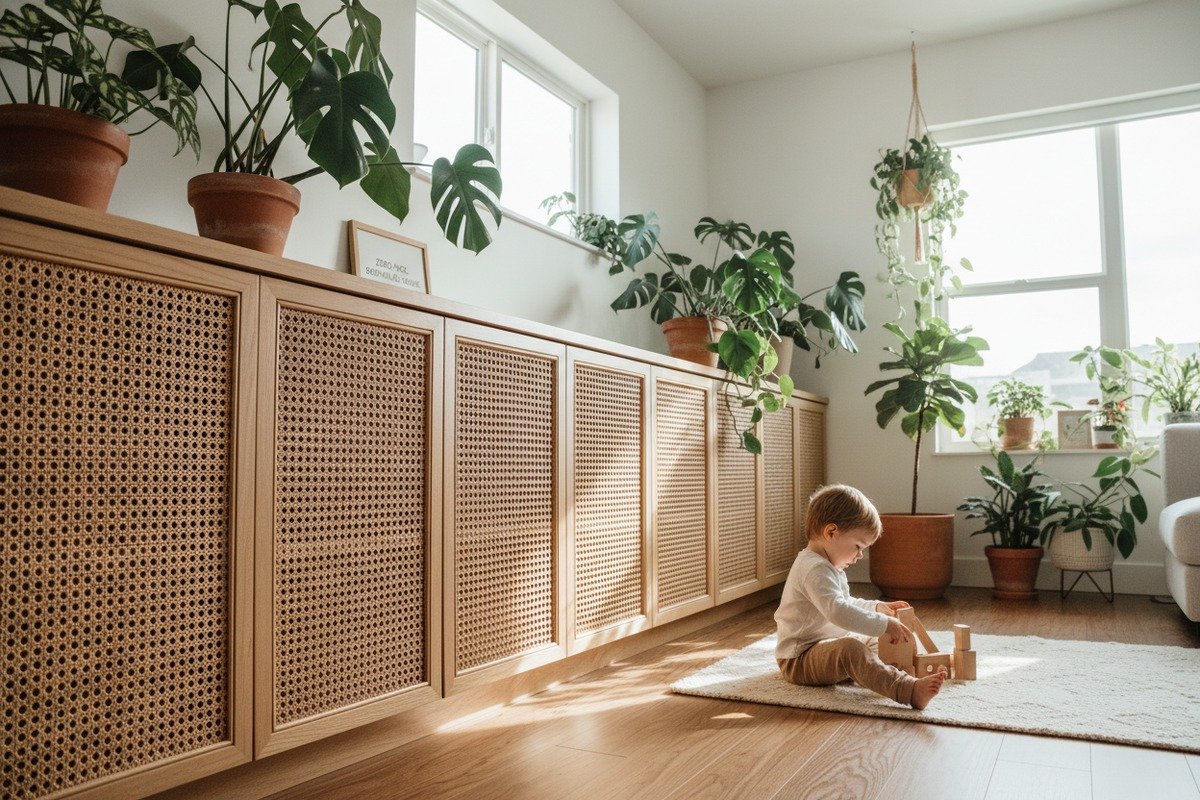
Why VOCs Matter in Green Buildings
Volatile organic compounds are chemicals that off-gas from building materials at room temperature. They cause headaches, respiratory irritation, and long-term health problems. Common sources include paints, adhesives, engineered wood products (MDF, plywood with urea-formaldehyde binders), vinyl flooring, and plastic-based materials.
Green building standards set strict limits on VOC emissions. LEED v4.1 EQ Credit: Low-Emitting Materials requires that a percentage of all interior products fall below specific VOC thresholds. The WELL Building Standard 8 goes further, requiring ongoing air quality monitoring and material testing.
Natural Rattan vs. Common Alternatives
Here is where natural rattan has a clear, measurable advantage. It is not that rattan has been treated to reduce VOCs. It simply never had them. The material is the outer skin of the rattan palm, split, dried, and woven. No resins. No binders. No synthetic coatings.
| Material | Typical VOC Emissions | Chemical Treatments | Impact on Indoor Air Quality |
|---|---|---|---|
| Natural Rattan Cane Webbing | Zero | None required | Positive (no off-gassing) |
| MDF / Particle Board | High (formaldehyde) | Urea-formaldehyde binders | Negative (continuous off-gassing) |
| Plastic Rattan (PVC/PE) | Moderate | Plasticizers, UV stabilizers | Moderate concern |
| Plywood (interior grade) | Moderate | Phenol-formaldehyde glue | Moderate concern |
| Solid Hardwood (untreated) | Very Low | Optional finishes may add VOCs | Generally positive |
Humidity Regulation: An Overlooked Benefit
Natural rattan is hygroscopic. It absorbs and releases moisture passively. In practical terms, this means rattan webbing panels installed in interior spaces help buffer humidity fluctuations. This is not a dramatic effect, but it is measurable and contributes to occupant comfort metrics.
The WELL Building Standard v2 includes a Thermal Comfort feature and a Humidity feature. Rattan's passive moisture regulation supports both. We have had architects in Australia and the UAE specify our webbing for ceiling panels partly for this reason. The material breathes. Plastic rattan does not.
Breathability and Biophilic Design
There is also an aesthetic and psychological dimension. Biophilic design—the practice of incorporating natural elements into built environments—is increasingly recognized in green building systems. LEED Innovation credits can be earned for biophilic design strategies. Natural rattan, with its visible organic texture and warm tones, is a textbook biophilic material.
From a practical standpoint, specifying natural rattan for cabinetry inserts, room dividers, or decorative wall panels achieves two goals simultaneously. It satisfies the low-emitting material requirement and it contributes to biophilic design strategies. That is a rare two-for-one in the green building world.
What to Watch Out For
One caution: if you apply a synthetic finish, stain, or sealant to natural rattan, you may introduce VOCs and negate this advantage. We recommend that clients who need color options consider our semi-bleached or naturally tinted rattan variants rather than applying chemical stains post-installation. This preserves the zero-VOC integrity of the material while still offering aesthetic flexibility.
Can I rely on the lifecycle assessment of natural rattan to improve my building's sustainability score?
When we run our own internal comparisons between natural rattan and the synthetic alternatives we also supply, the lifecycle numbers tell a compelling story. From raw material extraction to end-of-life disposal, natural rattan consistently outperforms synthetic options on environmental impact metrics. But the question is whether green building assessors will accept that story.
A lifecycle assessment (LCA) of natural rattan cane webbing reveals low embodied energy, minimal processing emissions, long service life, and full biodegradability at end-of-life. These attributes can improve sustainability scores in LEED, BREEAM, and other systems, provided the data is documented through Environmental Product Declarations or equivalent third-party assessments.
The Four Stages of Rattan's Lifecycle
Understanding the full lifecycle helps clarify where rattan earns its environmental advantages.
Stage 1: Raw Material Extraction. Rattan is harvested from tropical forests in Indonesia, primarily Kalimantan and Sulawesi. The harvesting is manual. Workers cut the mature vines with hand tools. There is no heavy machinery, no clear-cutting, and no soil disruption. The energy input at this stage is essentially zero fossil fuel.
Stage 2: Processing and Manufacturing. At our Indonesian facility, harvested rattan is cleaned, dried (sun-drying is standard), and the outer skin is split for webbing. Weaving is done by hand or with low-energy machine assistance. No chemical treatments are applied. The entire process generates minimal waste, as offcuts are used for smaller products or composted.
Stage 3: Use Phase. Natural rattan webbing, when properly installed indoors, lasts 10–20 years or more. It requires no maintenance chemicals. It does not degrade indoor air quality. It provides passive humidity regulation. During this phase, the biogenic carbon stored in the rattan remains sequestered.
Stage 4: End-of-Life. Natural rattan is 100% biodegradable. It can be composted, repurposed, or burned for energy recovery without releasing toxic emissions. It can also be disassembled from furniture or panels and reused in new projects, supporting circular economy models.
Lifecycle Comparison: Natural Rattan vs. Alternatives
| Lifecycle Stage | Natural Rattan Webbing | Plastic Rattan (PE/PVC) | MDF Panel |
|---|---|---|---|
| Raw Material | Renewable vine, manual harvest | Petroleum-derived | Wood chips + formaldehyde resin |
| Energy in Processing | Very Low (sun-dry, hand-weave) | High (extrusion, molding) | High (pressing, chemical bonding) |
| VOC Emissions in Use | Zero | Low to Moderate | High (formaldehyde off-gassing) |
| Service Life (indoor) | 10–20+ years | 15–25 years | 10–15 years |
| End-of-Life | Biodegradable, compostable | Landfill or recycling (limited) | Landfill (non-recyclable due to resins) |
| Carbon Profile | Carbon-negative (biogenic storage) | Carbon-positive (fossil emissions) | Carbon-positive (processing + transport) |
The EPD Challenge
Here is where we need to be transparent. As of 2025, there is no widely available, third-party-verified Environmental Product Declaration specifically for natural rattan cane webbing. EPDs are the gold standard for LCA documentation in green building systems. Without one, project teams must rely on manufacturer-provided data, which carries less weight with assessors.
We are currently working with sustainability consultants to develop EPD-ready data for our core rattan webbing products. This is an industry-wide gap. Rattan lacks the institutional certification infrastructure that timber has built over decades through FSC and PEFC. But the underlying environmental performance data is strong. The material simply needs better documentation frameworks.
Practical Steps for Project Teams
If you are specifying natural rattan for a green-rated project, here is what we recommend:
- Request a sustainability data sheet from your supplier that includes growth cycle, harvest method, processing energy, and transport distance.
- Ask whether the supplier has FSC chain-of-custody certification or equivalent ethical sourcing verification.
- Document the material's zero-VOC status and biodegradability for EQ and MR credit submissions.
- If pursuing BREEAM Mat 01, use the supplier data to complete the lifecycle impact assessment module.
- Consider the material's biogenic carbon content for advanced carbon accounting in net-zero projects.
The lifecycle story of natural rattan is genuinely strong. The challenge is not the performance—it is the paperwork. As the industry matures and demand from green building projects grows, we expect dedicated rattan certifications and EPDs to emerge. Until then, proactive supplier-client collaboration is the best path forward.
Conclusion
Natural rattan cane webbing is a genuinely strong material for green building certification 9, but it needs proper documentation and verified sourcing to unlock its full potential in systems like LEED and BREEAM 10. Work with a supplier who provides the data, and the credits will follow.
Footnotes
1. Defines and discusses low embodied energy materials in construction. ↩︎
2. Official LEED credit category page for Materials & Resources. ↩︎
3. Official site for Environmental Product Declarations (EPDs), explaining their purpose and standards. ↩︎
4. Official LEED credit category page for Indoor Environmental Quality. ↩︎
5. A well-known resource detailing patterns of biophilic design. ↩︎
6. EPA provides information on VOCs and their impact on indoor air quality. ↩︎
7. Explains rapidly renewable materials in the context of green building, including harvest cycles. ↩︎
8. Official website for the WELL Building Standard, focusing on human health and well-being. ↩︎
9. Official site for LEED, a major green building certification system. ↩︎
10. Official website for BREEAM, a leading sustainability assessment method for buildings. ↩︎
 English
  Español de México
  العربية
  Deutsch
  Français
  Русский