
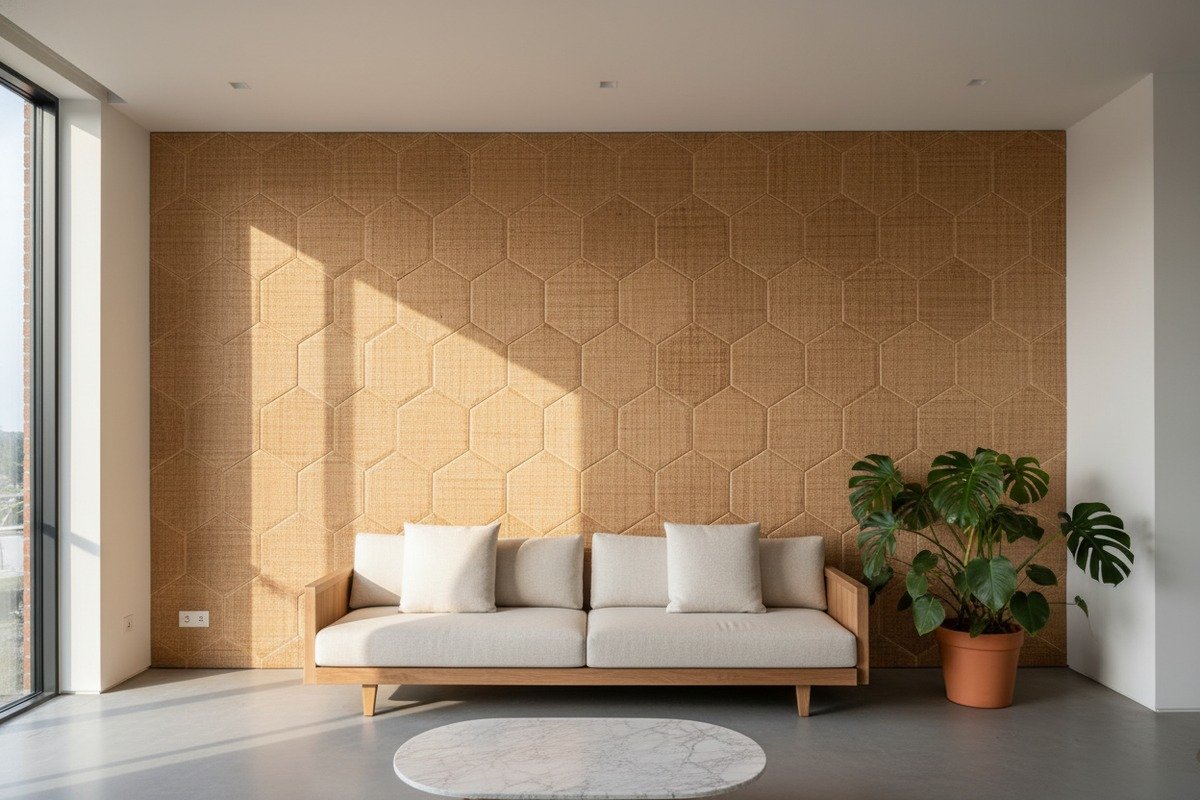
Walking through our production floor in Foshan, we see rattan cane webbing 1 shipped daily for furniture, cabinetry, and increasingly, wall decoration projects worldwide.
Yes, natural rattan cane webbing is an excellent material for wall decoration. It is lightweight, flexible, and available in rolls, pre-woven panels, and peel-and-stick formats. Rattan webbing adds organic texture, warmth, and a high-end aesthetic to interior walls across bohemian, modern, and rustic design styles.
Below, we break down how to install rattan webbing on walls, how to verify Grade A quality, where to source bulk materials for commercial projects, and whether this material truly delivers a premium look minimum order quantities 2. Let’s get into it.
How do I properly install natural rattan cane webbing on my interior walls?
One question we hear constantly from our wholesale buyers in the US and Australia is how their end customers should attach rattan webbing to walls without damaging the material B2B platforms 3.
To install natural rattan cane webbing on interior walls, first soak the webbing in warm water for 15–30 minutes to make it pliable. Then stretch it onto a wooden frame or directly onto the wall surface, securing it with staples, a spline, or adhesive strips. The webbing tightens as it dries, creating a taut, smooth finish.

Installing rattan cane webbing on walls is simpler than most people think. But there are a few critical steps you should not skip. Let's walk through each one.
Step 1: Choose Your Installation Method
There are three main ways to mount rattan webbing on a wall. Each method suits a different project type.
| Installation Method | Best For | Tools Needed | Difficulty Level |
|---|---|---|---|
| Wooden frame mount | Statement wall panels, framed art | Staple gun, wood frame, spline 4 | Easy |
| Direct wall adhesive | Full wall coverings, rentals | Peel-and-stick adhesive or double-sided tape | Very Easy |
| Screw-mounted panels | Commercial spaces, room dividers | Screws, drill, pre-fabricated panels | Moderate |
The wooden frame method is the most popular for DIY wall projects. You build or buy a simple wooden frame. Then you stretch the soaked webbing across it and staple it from behind. The frame then hangs on the wall like a picture.
For peel-and-stick options, premium wallpapers that mimic or use real cane webbing texture require zero tools. They go up fast. They come down clean. This works great for renters or temporary installations.
Step 2: Prepare the Webbing
Soaking is non-negotiable. Dry rattan cane webbing is stiff and brittle. Warm water softens the fibers. This makes the material easy to stretch and shape. Soak it for 15 to 30 minutes. No longer. Over-soaking weakens the fibers.
After soaking, lay the webbing flat on a clean surface. Pat it dry with a towel. Cut it to your desired size with sharp scissors. Leave an extra inch on each side for stretching and securing.
Step 3: Secure and Let It Dry
Stretch the damp webbing over your frame or wall surface. Pull it tight from the center outward. Staple or pin along the edges. Work in opposite pairs—top then bottom, left then right. This prevents uneven tension.
As the rattan dries, it shrinks slightly. This natural shrinkage pulls the webbing tight like a drum skin. The result is a smooth, professional-looking surface with no sags or wrinkles.
Common Mistakes to Avoid
Do not install rattan webbing in humid bathrooms without a sealant 5. Moisture causes warping over time. Also, softer weave styles (like our Style A soft rattan) need plywood backing 6 for structural support. Without it, the webbing can deform under its own weight on larger panels.
From our experience shipping to over a dozen countries, we always advise buyers to test stains or paints on a small sample piece first. Natural rattan absorbs finishes unevenly depending on the weave density 7 and the age of the cane.
How can I ensure the rattan webbing I buy for my wall project is Grade A quality?
When our team inspects raw rattan 8 at our processing facility in Indonesia, we grade every batch before it reaches our Foshan warehouse. Quality inconsistency is the number one pain point our buyers report.
Grade A natural rattan cane webbing features uniform strand thickness, consistent weave tension, no broken or missing strands, and an even natural color with minimal dark spots. Always request a sample before placing a bulk order, and check for flexibility, strand diameter consistency, and weave pattern regularity.
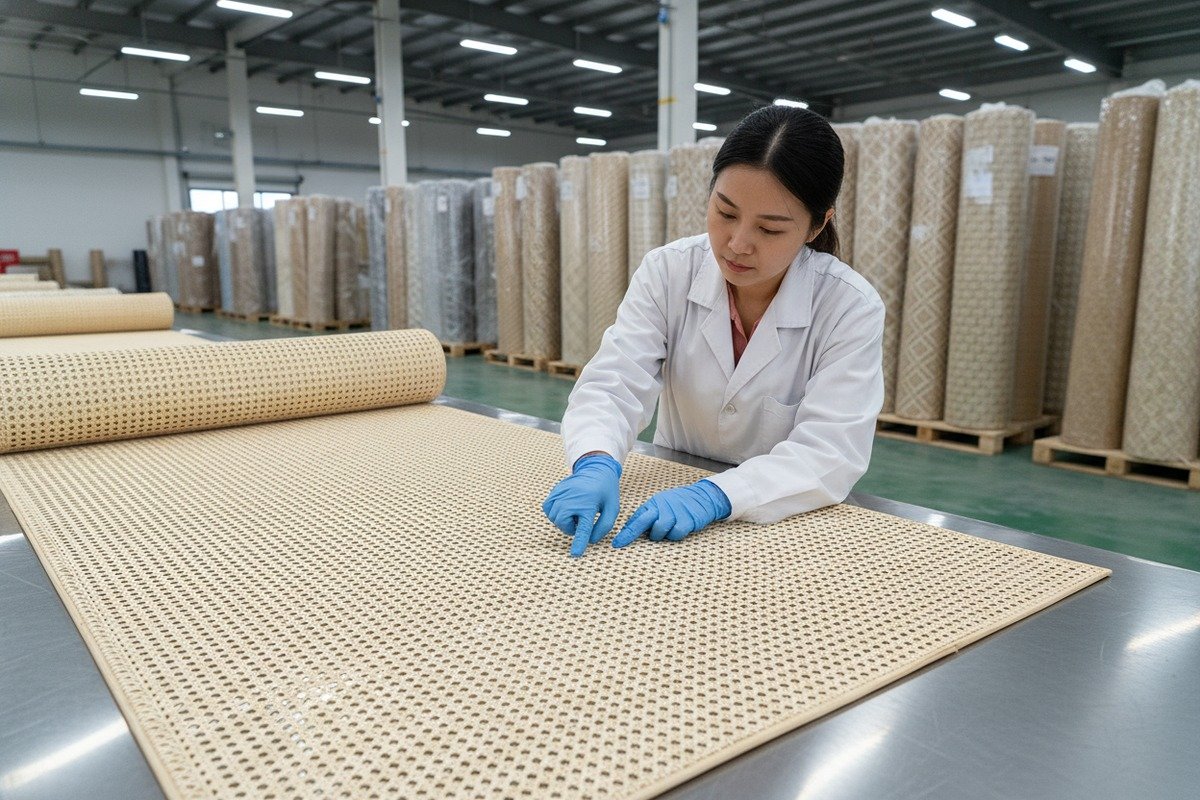
Quality grading in rattan is not standardized across the entire industry. Different suppliers use different criteria. But there are universal markers that separate Grade A from lower grades. Here is what to look for.
Visual Inspection Checklist
Start with your eyes. Hold the webbing up to natural light. Grade A material should look clean and even. Here is a quick reference table.
| Quality Indicator | Grade A | Grade B or Lower |
|---|---|---|
| Strand thickness | Uniform across the sheet | Varies noticeably |
| Weave pattern | Tight, consistent gaps | Irregular spacing, loose strands |
| Color | Even light beige to straw yellow | Dark spots, uneven tones |
| Surface texture | Smooth, minimal splinters | Rough, visible fiber splitting |
| Broken strands | None or very few | Multiple per square foot |
| Flexibility | Bends without cracking | Stiff, cracks easily |
The Touch Test
Run your hand across the surface. Grade A rattan feels smooth. You should not catch splinters. The strands should feel round and consistent, not flat or crushed. Flat strands indicate over-processing or poor-quality raw material.
Ask for Certifications and Samples
Any reputable supplier should provide samples before you commit to a large order. At our facilities, we send sample swatches in every weave pattern we carry. We also provide close-up photos of the current production batch.
Look for suppliers who can tell you the origin of the rattan. Indonesian rattan 9 is widely considered the global standard. Our own processing facility sources cane from sustainable plantations 10, and we can trace each batch back to its harvest region.
Why Color Variation Is Normal
One thing that surprises first-time buyers is natural color variation. Even within a Grade A batch, slight differences in tone exist. This happens because rattan grows in the wild. Tree age, sun exposure, and soil conditions affect the color of the outer bark.
This is not a defect. It is a feature of natural material. But if your wall project requires an exact color match across multiple panels, we recommend ordering all your material from a single production batch. We help our wholesale clients coordinate this to avoid mismatches.
Packaging Matters Too
Grade A quality means nothing if the webbing arrives damaged. Proper packaging includes cardboard tube cores for rolls, moisture-resistant wrapping, and rigid outer cartons. We have invested heavily in our packaging process because this was a recurring complaint from early customers. Crushed or bent webbing during transit leads to permanent crease marks that ruin wall panels.
Where can I source bulk rattan webbing in custom sizes for my commercial wall projects?
Over the past five years, our order volume for wall-specific rattan projects has tripled. Commercial interior designers, hotel chains, and restaurant groups now contact us directly for custom sizing.
For bulk rattan webbing in custom sizes, source directly from established manufacturers or wholesalers with their own production facilities. Look for suppliers who offer cut-to-size rolls, custom weave patterns, and minimum order quantities suited for commercial projects. Suppliers based in China and Indonesia typically offer the best combination of quality, customization, and competitive pricing.
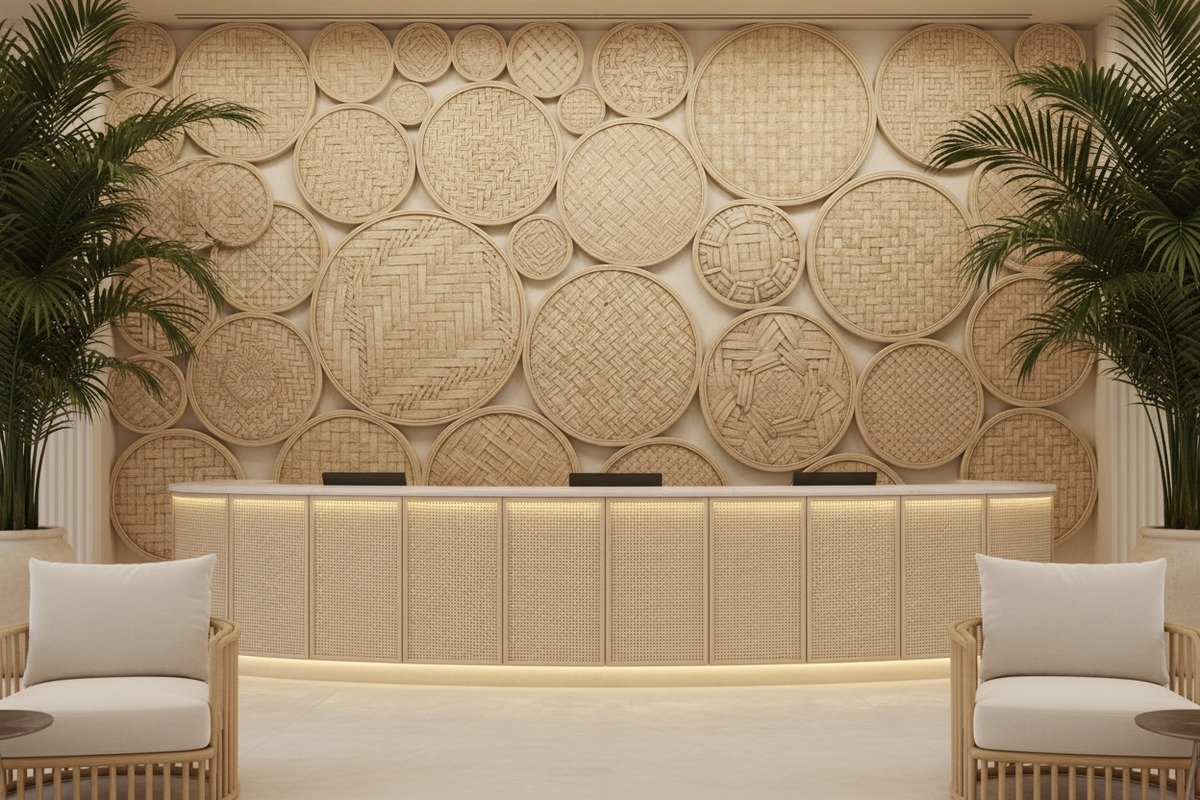
Sourcing bulk rattan webbing for commercial walls is different from buying a single roll for a DIY accent piece. The stakes are higher. You need consistency across large quantities. You need reliable delivery timelines. And you often need sizes that are not standard off-the-shelf.
Where to Find Suppliers
There are three main sourcing channels for bulk rattan webbing.
Google and supplier websites. Search for terms like "rattan cane webbing wholesaler" or "bulk rattan webbing supplier." Look for companies with their own websites, product catalogs, and clear contact information. Our website, for example, lists every weave pattern, material type, and available size we produce.
B2B platforms. Alibaba and Global Sources connect buyers with manufacturers. Filter by verified suppliers and trade assurance. But always request samples before committing.
Trade shows. Events like the Canton Fair in Guangzhou let you inspect materials in person. Many of our long-term relationships with buyers in the Netherlands, Spain, and Turkey started at trade shows.
What to Look for in a Bulk Supplier
Not every rattan supplier can handle commercial wall projects. Here is what separates a capable supplier from an average one.
| Capability | Why It Matters for Wall Projects |
|---|---|
| Custom sizing | Commercial walls rarely match standard roll widths. You need cut-to-size options. |
| Multiple weave patterns | Different wall sections may need different textures: hexagonal open cane, tight basketweave, or diamond motifs. |
| Consistent batch quality | A 500-square-meter hotel lobby cannot have visible quality differences between panels. |
| Strong packaging | Bulk shipments travel far. Poor packaging means damaged goods on arrival. |
| Reasonable MOQ | Some factories require huge minimums. Look for suppliers flexible with commercial but not industrial quantities. |
| Clear lead times | Pre-fabricated panels may take 7–8 weeks from production. Plan your project timeline accordingly. |
Custom Sizes and Weave Options
At our three factories, we produce rattan webbing in standard widths of 45 cm, 60 cm, and 90 cm. But for wall projects, we regularly cut to custom dimensions. One recent project for a boutique hotel in Dubai required panels exactly 120 cm wide by 240 cm tall. We produced those on a dedicated run.
We carry over a dozen weave patterns, from classic hexagonal open-work cane to dense diamond-motif weaves, tight basketweave, and simple open square grids. We also offer bleached rattan for lighter aesthetics and synthetic rattan matting for outdoor or high-humidity applications.
Pricing and Lead Times
Pricing depends on weave pattern, material grade, and order volume. Natural rattan cane webbing generally costs less per square meter when ordered in bulk. Custom weave patterns or non-standard sizes may carry a small premium.
Lead times vary. Standard rolls from existing stock ship within 5–7 business days. Custom orders require 3–8 weeks depending on complexity. We always confirm the exact timeline before production begins so our clients can plan their construction schedules.
Communication and Support
The best supplier relationship is one with clear communication. We use WhatsApp, email, and video calls to stay connected with our buyers. Our purchasing manager clients, like Ranoo in Thailand, appreciate quick responses and photo updates during production. Look for a supplier who treats you like a partner, not just an order number.
Will using natural rattan webbing on my walls help me achieve a high-end aesthetic?
When we first started supplying rattan webbing for wall projects, some designers were skeptical. They associated rattan with casual beach furniture, not luxury interiors. That perception has changed dramatically.
Yes, natural rattan webbing delivers a high-end aesthetic on walls when installed properly. Its organic texture, warm tones, and handcrafted appearance create a sophisticated look that complements modern, mid-century, Scandinavian, and bohemian interiors. Many luxury hotels, upscale restaurants, and high-end residential projects now feature rattan wall treatments as signature design elements.

The question of whether rattan looks "expensive" on walls comes down to three things: material quality, installation execution, and design context. Let's examine each one.
Why Rattan Reads as Luxury
Natural materials have inherent warmth that synthetic alternatives cannot replicate. When you see a wall covered in real rattan cane webbing, your eye picks up on the subtle irregularities. The slight color variations. The handwoven texture. These details signal craftsmanship and authenticity.
This is the same reason solid wood floors feel more luxurious than vinyl plank. The imperfections are the point. They tell a story that mass-produced materials cannot.
Design Styles That Benefit Most
Rattan webbing on walls works across a wide range of aesthetics. But it shines brightest in specific design contexts.
Bohemian and coastal. This is the most natural fit. Rattan adds warmth and casual elegance. Pair it with plants, linen textiles, and natural wood.
Mid-century modern. Rattan was a staple of mid-century design. Using it on walls references that era while keeping the space current.
Scandinavian minimalism. The clean lines and natural palette of Scandinavian design benefit from the subtle texture rattan introduces. It prevents spaces from feeling cold or sterile.
Contemporary luxury. This is where rattan surprises people. When framed in dark wood or matte black metal, rattan panels take on a gallery-quality look. Backlighting through the open weave creates dramatic shadow patterns that transform walls into dynamic focal points.
Backlighting and Shadow Play
One technique that elevates rattan wall panels from simple to stunning is backlighting. Install LED strip lights behind a rattan panel. The woven pattern casts intricate shadows across the surrounding wall. The effect is architectural and refined. It works beautifully in hotel lobbies, restaurant feature walls, and residential living rooms.
Acoustic Benefits
An unexpected bonus of rattan wall panels is their acoustic performance. The open weave structure absorbs sound reflections. In large, open spaces with hard floors and minimal soft furnishings, rattan wall treatments can reduce echo noticeably. This makes them both decorative and functional, a combination that justifies the investment for commercial clients.
Sustainability as a Selling Point
For high-end projects, sustainability is no longer optional. It is expected. Natural rattan cane webbing is renewable, biodegradable, and free of plastics or chemicals. Using it signals environmental responsibility. Many of our clients in Europe and Australia specifically request natural rattan because it helps them meet green building certifications and brand sustainability goals.
Real vs. Synthetic: The Aesthetic Gap
Synthetic rattan matting exists. It is cheaper. It is more moisture-resistant. But side by side, the difference is obvious. Synthetic rattan has a uniform, almost plastic sheen. Natural rattan has depth. It catches light differently depending on the angle. For a truly high-end result, natural material wins every time.
That said, synthetic options have their place. For outdoor walls, high-humidity environments, or budget-constrained projects, synthetic rattan delivers a similar look at a lower cost. We supply both, and we help our clients choose the right material for each application.
Staining and Customization
Natural rattan can be stained or painted to match any color palette. Want a dark walnut tone for a moody bar interior? Possible. Want a bright white for a beachy spa? Also possible. The ability to customize the finish means rattan webbing adapts to virtually any design vision.
We always recommend testing the stain or paint on a sample piece first. Rattan absorbs finishes differently than wood. The weave pattern creates light and dark zones that can look beautiful or messy depending on the application technique.
Conclusion
Natural rattan cane webbing is a versatile, sustainable, and beautiful option for wall decoration across residential and commercial interiors alike.
Footnotes
1. Provides a general definition and overview of rattan, the base material for cane webbing. ↩︎
2. Defines Minimum Order Quantity (MOQ) as a business concept for bulk purchasing. ↩︎
3. Replaced with an article from KIBO, a company specializing in e-commerce platforms, providing a detailed explanation of B2B platforms. ↩︎
4. Defines ‘spline’ in a woodworking context as a strip inserted into grooves for joining. ↩︎
5. Explains wood finishes, including sealants, for protecting natural materials like rattan. ↩︎
6. Found a direct and authoritative article on ‘Backing Board for Furniture: Best Materials & Uses’. ↩︎
7. Explains textile weaving and related concepts like weave patterns and characteristics. ↩︎
8. Provides authoritative information on rattan as a non-wood forest product and raw material. ↩︎
9. Highlights Indonesia’s role and government support in the global rattan industry. ↩︎
10. Replaced with an article from Rainforest Alliance, a highly authoritative source on sustainable forestry and plantations. ↩︎


 English
  Español de México
  العربية
  Deutsch
  Français
  Русский