

Every week, our sales team fields the same question from furniture factories and wholesalers across Europe, the Middle East, and Southeast Asia — can rattan cane webbing 1 truly deliver on its eco-friendly promises?
Yes, rattan cane webbing is an eco-friendly material. Rattan is a rapidly renewable palm that reaches maturity in 5–7 years, is fully biodegradable, requires low-energy processing, and supports tropical forest preservation. However, true sustainability depends on verified responsible harvesting, ethical labor practices, and traceable supply chains from source to finished product.
That answer sounds simple, but the details matter US EPA standards 2. Below, we break down how to verify sustainability claims, compare natural rattan against synthetic alternatives, examine the carbon footprint of sourcing from Indonesia and China, and explore how durability ties into long-term green goals. Let’s dig in.
How can I verify that the rattan cane webbing I source is truly sustainable?
Over the past decade, our procurement teams in Indonesia and Foshan have learned that "sustainable" is an easy word to print on a product label — but a hard standard to actually meet.
You can verify sustainable rattan cane webbing by requesting origin documentation, checking for forest management certifications like FSC or PEFC, auditing supplier harvesting practices, visiting processing facilities, and demanding full supply chain traceability from the raw rattan vine in the forest to the finished roll in your warehouse.

Why Verification Matters More Than Marketing Claims
Many suppliers label their rattan as "natural" or "eco-friendly" without any third-party validation. This creates a trust gap. As buyers, you need concrete proof — not just promises. In our own supply chain, we implemented traceability systems at our Indonesian processing facility specifically because clients in the Netherlands and Australia demanded it. They wanted to know exactly which forests the rattan came from and whether harvesting followed local regulations.
Key Steps to Verify Sustainability
Here is a practical checklist for purchasing managers and wholesalers:
- Ask for origin certificates. Legitimate suppliers can tell you which province or region the rattan was harvested from. If a supplier cannot answer this, that is a red flag.
- Check for certifications. Look for FSC (Forest Stewardship Council 3), PEFC, or equivalent local certifications. These confirm that harvesting did not damage surrounding ecosystems.
- Request factory audit reports. Third-party audits from organizations like SGS or Bureau Veritas verify labor conditions, chemical usage, and waste management.
- Examine chemical treatments. Some rattan undergoes bleaching or fumigation. Ask your supplier what chemicals are used and whether they meet EU REACH 4 or US EPA standards.
- Visit the source. If your order volume justifies it, visit the harvesting area and processing facility. We regularly host buyer visits at our Indonesian rattan processing plant for this exact reason.
Certification Comparison Table
| Certification | What It Covers | Relevance to Rattan | Availability |
|---|---|---|---|
| FSC (Forest Stewardship Council) | Responsible forest management | Confirms rattan harvested from well-managed forests | Available but not universal for rattan |
| PEFC 5 | Sustainable forest management endorsement | Recognizes national certification schemes | Growing in Southeast Asia |
| CITES | Trade in endangered species | Ensures rattan species are not over-exploited | Applies to specific species only |
| ISO 14001 | Environmental management systems | Covers factory-level environmental practices | Common among larger suppliers |
| SVLK (Indonesia) | Timber/forest product legality | Verifies legal harvesting in Indonesia | Mandatory for Indonesian exports |
The Gap Between Claims and Reality
Here is the honest truth: the rattan industry still lacks a single, universally adopted sustainability certification. Most eco-friendly claims on supplier websites are self-reported. That does not mean rattan is not sustainable — it often is. But it means you, as the buyer, must do your homework. Ask direct questions. Demand documentation. Compare suppliers. The best suppliers welcome scrutiny because they have nothing to hide.
At our Foshan headquarters, we maintain records that trace each batch of rattan webbing back to its Indonesian harvest site. This kind of traceability is what separates genuine sustainable sourcing from greenwashing.
Why should I choose natural rattan webbing over synthetic alternatives for my eco-conscious projects?
When we first started offering both natural and synthetic rattan webbing from our Foshan partner factories, we assumed clients would simply pick based on price. We were wrong — environmental performance has become a decisive factor.
Natural rattan webbing is the superior choice for eco-conscious projects because it is biodegradable, renewable within 5–7 years, non-toxic, and produces no microplastic pollution. Synthetic alternatives made from plastic mimic rattan's appearance but contribute to landfill waste, release VOCs, and depend on petroleum-based raw materials that harm the environment.
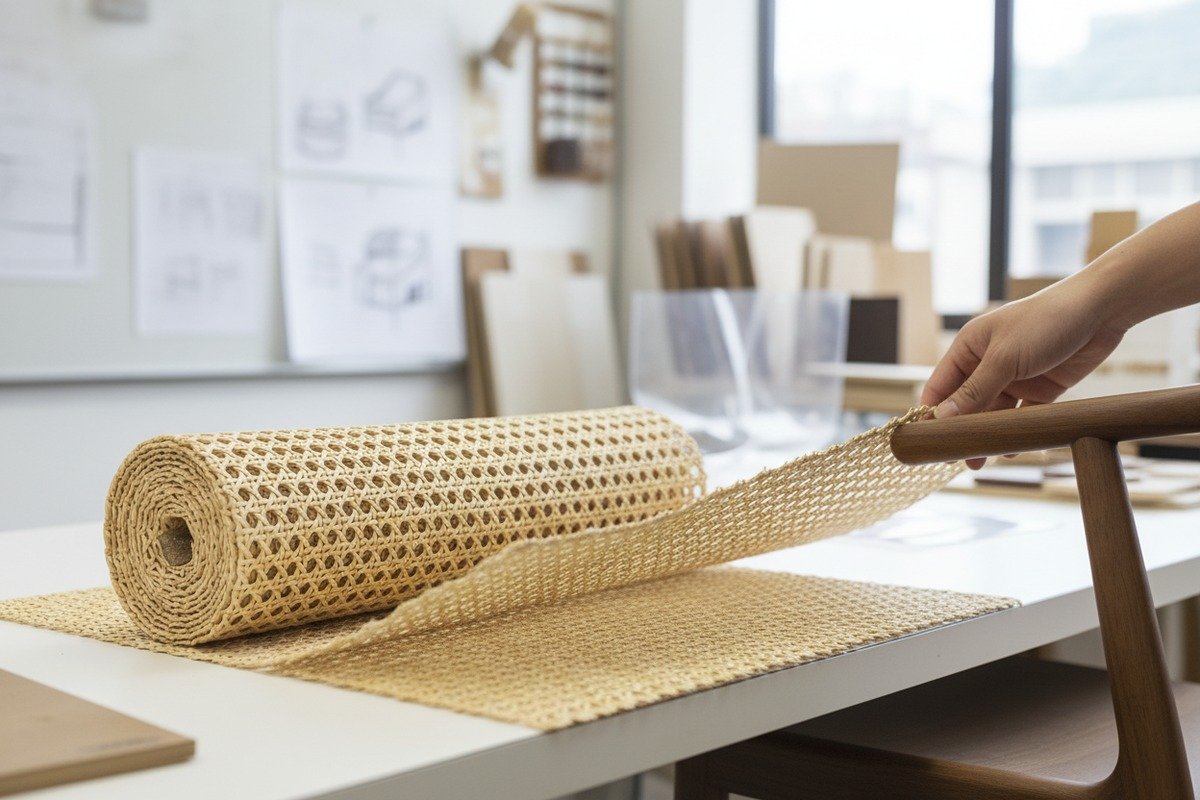
Head-to-Head: Natural Rattan vs. Synthetic Alternatives
Let's look at the facts side by side. This comparison covers the most common materials buyers consider when sourcing webbing for furniture and decor projects.
| Feature | Natural Rattan Webbing | Plastic (PE/PP) Webbing | Paper Cord Webbing |
|---|---|---|---|
| Raw Material | Rattan palm (renewable) | Petroleum-based (non-renewable) | Wood pulp (renewable) |
| Biodegradability | Fully biodegradable | Not biodegradable (500+ years) | Biodegradable but less durable |
| VOC Emissions | None (untreated) | Can off-gas VOCs | Minimal |
| Durability | High (10–15+ years indoors) | High (UV-resistant outdoors) | Low to moderate (3–5 years) |
| Water Resistance | Moderate (needs care) | Excellent | Poor |
| Aesthetic Quality | Warm, organic, unique grain | Uniform, less character | Soft, matte finish |
| Cost (Bulk) | Moderate | Low to moderate | Low |
| Carbon Footprint | Low (manual harvest, low-energy processing) | High (factory extrusion, petroleum) | Moderate |
| End-of-Life Impact | Returns to soil naturally | Landfill or incineration | Compostable |
The Microplastic Problem with Synthetic Webbing
Synthetic rattan webbing, typically made from polyethylene or polypropylene, sheds microplastic particles over its lifetime. These particles enter soil, waterways, and eventually the food chain. For brands marketing to environmentally aware consumers in Europe, the US, and Australia, this is a growing liability. Natural rattan simply does not have this problem. When a piece of rattan furniture reaches the end of its life, it decomposes. No microplastics. No centuries-long landfill burden.
When Synthetic Makes Sense — And When It Doesn't
We are honest with our clients: synthetic webbing has its place. For purely outdoor furniture exposed to constant rain and UV, plastic webbing resists moisture better. But for indoor furniture, wall panels, cabinet doors, headboards, and decorative screens, natural rattan outperforms synthetic on every environmental metric. If your end customers care about sustainability — and market research says they increasingly do — natural rattan sends a stronger message.
Indoor Air Quality Advantage
Untreated natural rattan does not emit volatile organic compounds 6. This matters for residential furniture, hospitality interiors, and healthcare environments. Our clients in the Netherlands and Spain specifically request untreated rattan webbing for projects where indoor air quality standards are strict. Synthetic materials, by contrast, can off-gas chemicals for months after installation.
The bottom line is straightforward. If your project claims to be eco-conscious, synthetic alternatives undermine that claim. Natural rattan backs it up.
Does sourcing rattan from Indonesia and China impact my business's carbon footprint?
Running three factories and coordinating shipments across continents has taught us that transportation emissions are real — but they are only one part of the carbon equation.
Sourcing rattan from Indonesia and China does add transportation-related carbon emissions to your supply chain. However, rattan's extremely low-energy harvesting, minimal chemical processing, and renewable growth cycle mean its total lifecycle carbon footprint remains significantly smaller than synthetic alternatives manufactured from fossil fuels, even after accounting for international shipping.
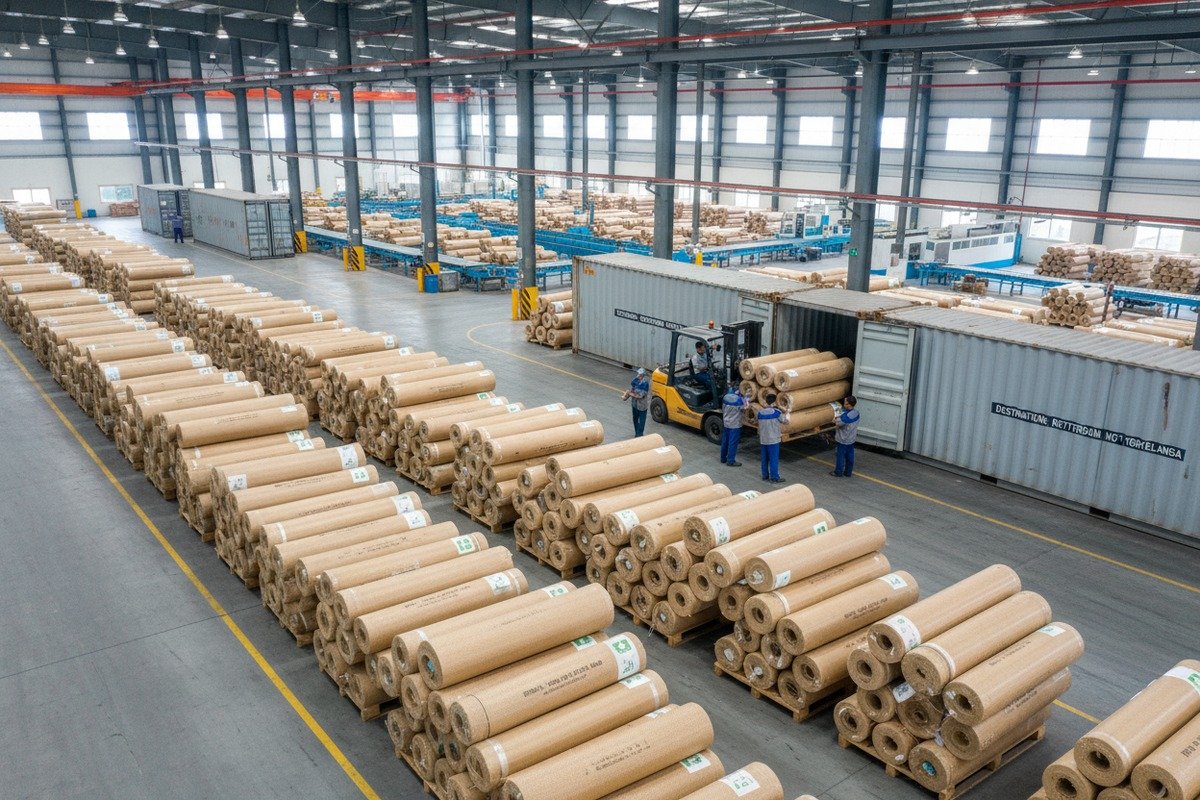
Breaking Down the Carbon Footprint
To understand the real impact, you need to look at the full lifecycle — not just the shipping leg. Most buyers fixate on transport emissions. But raw material extraction and manufacturing account for a much larger share of total carbon output in most product categories.
Rattan harvesting is done largely by hand. Workers cut mature vines from tropical forests using simple tools. There are no heavy machines, no diesel-powered harvesters, and no clear-cutting. The rattan palm continues to grow after harvesting. Compare this to petroleum extraction for plastic webbing, and the difference is enormous.
Lifecycle Carbon Comparison
| Stage | Natural Rattan Webbing | Synthetic (Plastic) Webbing |
|---|---|---|
| Raw Material Extraction | Very low (manual harvest) | Very high (oil drilling, refining) |
| Processing/Manufacturing | Low (stripping, weaving, minimal chemicals) | High (extrusion, chemical additives) |
| International Shipping | Moderate (sea freight from Indonesia/China) | Moderate (often also shipped internationally) |
| In-Use Phase | Zero emissions | Potential VOC off-gassing |
| End of Life | Biodegrades naturally | Landfill for 500+ years or incineration |
| Total Lifecycle Impact | Low | High |
How We Minimize Transport Emissions
At Seafan Rattan, we consolidate shipments to reduce the number of containers moving across oceans. Our Indonesian processing facility handles initial rattan preparation — stripping, sorting, and initial quality inspection — so that only processed, ready-to-weave material ships to our Foshan facilities. This cuts weight and volume, reducing per-unit shipping emissions.
We also advise clients to order in bulk. A full container load (FCL) has a dramatically lower per-kilogram carbon footprint than less-than-container-load (LCL) shipments. Many of our clients in the US, Turkey, and Australia already consolidate quarterly orders for this reason.
The Forest Preservation Factor
Here is something most carbon footprint analyses overlook: rattan grows inside existing tropical forests. It is a climbing palm that needs the forest canopy to thrive. This means rattan cultivation gives local communities an economic reason to protect forests rather than clear them for agriculture. Protected forests absorb carbon dioxide. So the rattan industry, when managed responsibly, actively contributes to carbon sequestration. This is a net positive that no synthetic material can claim.
Addressing the Shipping Concern Directly
Yes, shipping containers from Southeast Asia to Europe or North America burns fuel. That is undeniable. But consider that most synthetic webbing is also manufactured in Asia — often in the same Chinese industrial zones. The shipping distance is comparable. The difference is what happens before the product reaches the port. Rattan's low-energy, low-chemical production process gives it a clear advantage over energy-intensive plastic manufacturing.
For purchasing managers tracking Scope 3 emissions 8, natural rattan sourced from responsible suppliers in Indonesia and processed in China offers a defensible, lower-carbon option compared to petroleum-based alternatives.
How does the durability of high-grade rattan webbing contribute to my long-term sustainability goals?
In over 20 years of processing and exporting rattan products, we have seen firsthand how material quality determines whether a product lasts 3 years or 15 years — and that difference is the backbone of sustainable design.
High-grade rattan webbing directly supports long-term sustainability by extending product lifespans to 10–15 years or more with proper care, drastically reducing replacement frequency, material consumption, and waste generation. Its natural tensile strength and resistance to wear mean fewer resources are consumed over time compared to lower-grade or synthetic alternatives that degrade and require frequent replacement.
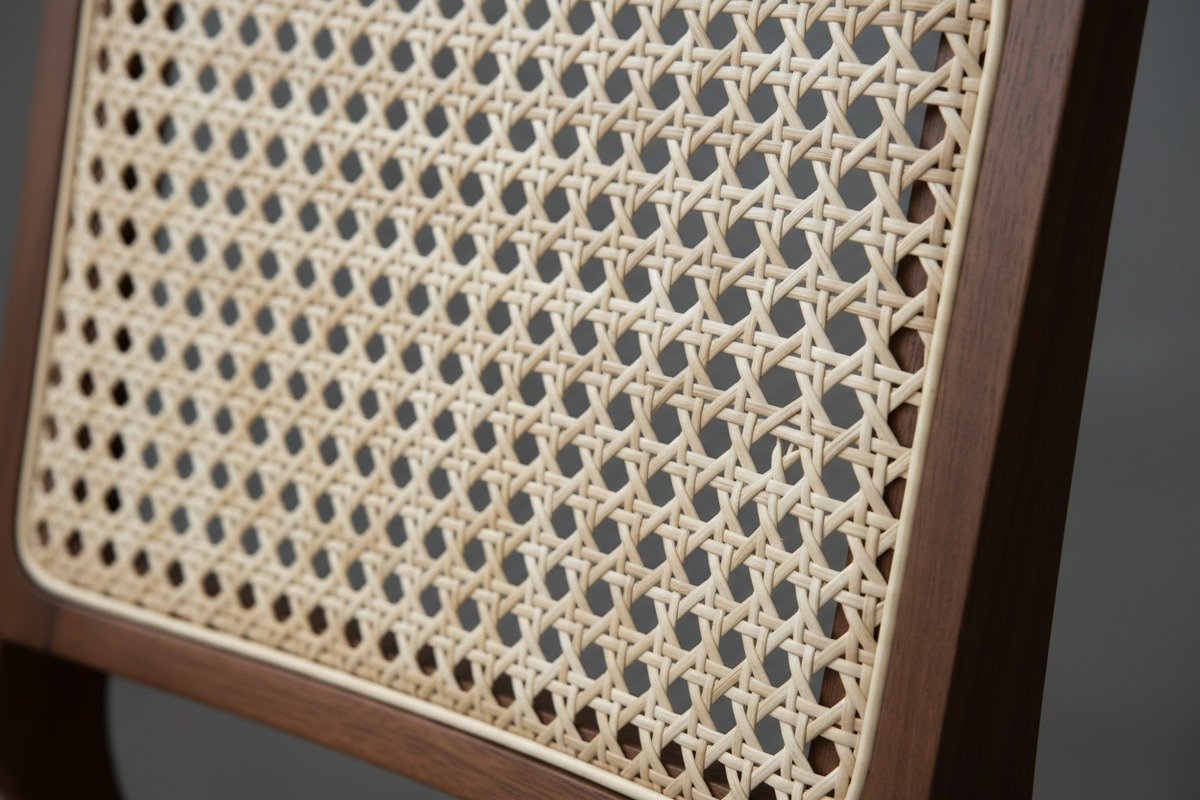
Why Durability Is a Sustainability Metric
Sustainability is not just about what a material is made from. It is also about how long it lasts. A cheap, "eco-friendly" material that breaks down in two years and needs replacing is not truly sustainable. It doubles the resource consumption, the manufacturing energy, and the shipping emissions. High-grade rattan webbing avoids this trap.
Rattan has one of the highest tensile strengths among natural fibers. Premium canes — the type we source from specific Indonesian growing regions — resist cracking, splitting, and sagging far better than budget alternatives. This structural integrity means furniture made with Grade A rattan webbing stays functional and beautiful for well over a decade.
Grade Matters: Not All Rattan Is Equal
Many buyers learn this the hard way. They source cheap rattan webbing, and within a year, it sags, cracks, or discolors unevenly. Then they replace it. That replacement cycle erases any sustainability benefit. This is why we always advise clients — especially furniture factories serving European and North American markets — to invest in higher-grade material from the start.
What Makes Rattan Webbing "High-Grade"?
Several factors determine grade:
- Cane diameter consistency. Uniform strands weave tighter and distribute stress evenly.
- Moisture content. Properly dried rattan (typically 8–12% moisture) resists mold and maintains shape.
- Harvest maturity. Rattan harvested at 5–7 years of age has optimal fiber density.
- Weave tightness. Tighter weaves in patterns like close-cane or dense basketweave resist deformation better than loose open-mesh styles under heavy use.
- Surface treatment. A light lacquer or oil finish protects against humidity without compromising biodegradability at end of life.
The Replacement Cost Equation
Consider a furniture factory producing dining chairs with rattan webbing seats. If they use low-grade webbing, end consumers may need replacement panels within 3–5 years. If they use high-grade webbing, those same chairs can last 15 years. Here is what that means for sustainability:
- 3x fewer raw materials consumed over a 15-year period.
- 3x fewer shipments from supplier to factory to end market.
- 3x less waste entering landfills or recycling streams.
- Higher customer satisfaction, reducing warranty claims and product returns.
Maintenance Extends Lifespan Even Further
We always tell our clients to pass along basic care instructions to their end customers. Rattan webbing lasts longest when kept away from direct sunlight and extreme humidity. Occasional dusting and a light wipe with a damp cloth are usually all that is needed. For furniture in hospitality settings — hotels, restaurants, cafés — a thin protective coating applied during manufacturing adds years of service life without meaningfully affecting biodegradability.
Circular Economy Potential
An emerging trend worth watching is rattan waste upcycling. Offcuts from our weaving process — strips that are too short or irregular for standard webbing sheets — can be ground into fibers for composite materials or used as biomass fuel. This moves rattan closer to a true circular economy model 10 where nothing is wasted. Several of our partner factories in Foshan are already experimenting with rattan fiber composites for non-structural furniture components.
The message for purchasing managers is clear: investing in high-grade rattan webbing is not just a quality decision. It is a sustainability decision. The longer your products last, the fewer resources the entire supply chain consumes. That is sustainability you can measure.
Conclusion
Rattan cane webbing earns its eco-friendly reputation — but only when sourced responsibly, verified through certifications, and chosen in high-grade quality that maximizes product lifespan and minimizes waste.
Footnotes
1. Provides comprehensive information on rattan as a natural resource. ↩︎
2. Provides information on the U.S. Environmental Protection Agency’s laws and regulations. ↩︎
3. Official website for the Forest Stewardship Council, a key certification body. ↩︎
4. Official European Commission page providing an overview and objectives of the REACH regulation, an authoritative source. ↩︎
5. Official website for the Programme for the Endorsement of Forest Certification. ↩︎
6. Provides information on VOCs and their impact on indoor air quality and health. ↩︎
7. Explains the environmental impact and sources of microplastic pollution. ↩︎
8. Defines and explains Scope 3 greenhouse gas emissions in the context of corporate reporting. ↩︎
9. Explains the ecological benefits and importance of preserving tropical forests. ↩︎
10. Introduces the concept and principles of a circular economy. ↩︎

 English
  Español de México
  العربية
  Deutsch
  Français
  Русский