
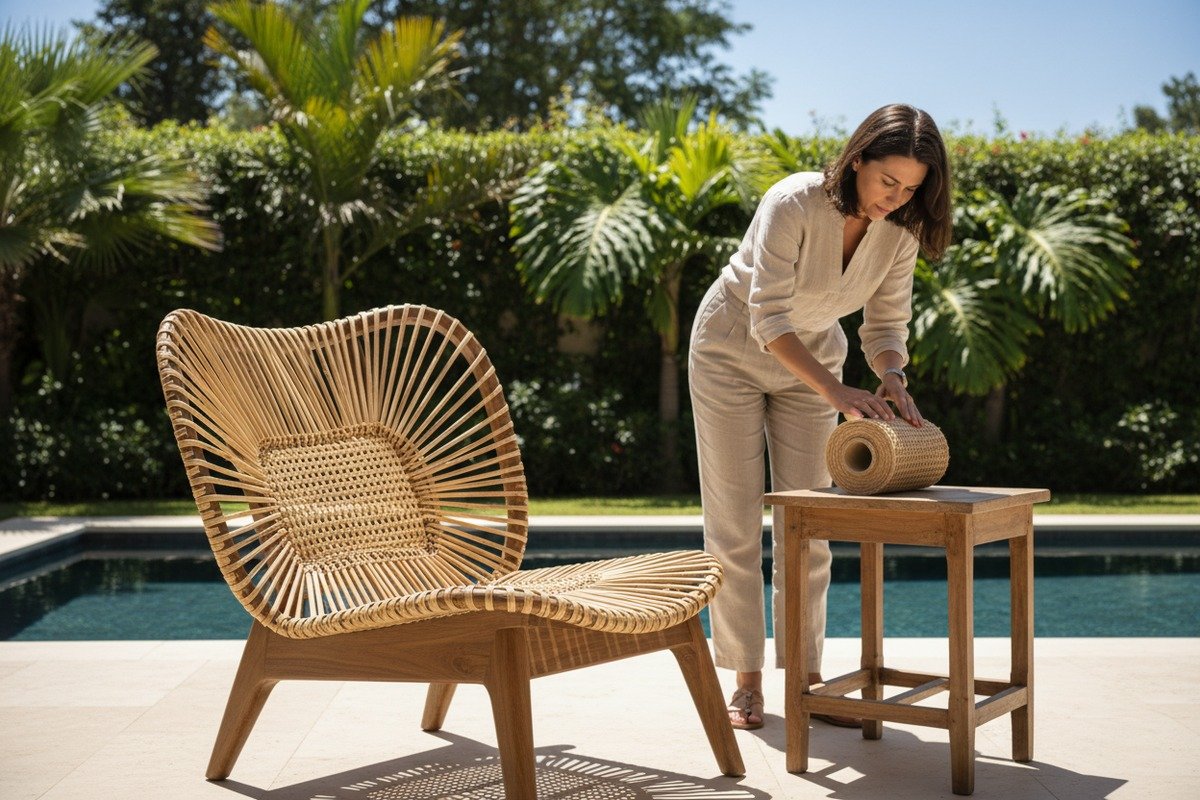
Every year, our production team fields dozens of inquiries from furniture factories wanting to use natural rattan cane webbing on patio chairs, garden screens, and poolside loungers UV-resistant sealant 1. The appeal is obvious — rattan’s warm, organic texture looks stunning. But then the complaints roll in: peeling strands after one rainy season, brittle fibers from sun exposure, and mold creeping through the weave environmental compliance certifications 2. The gap between expectation and reality is frustrating for buyers and manufacturers alike.
Natural rattan cane webbing is not suitable for outdoor furniture decoration without treatment, as it degrades quickly from UV rays, moisture, and temperature swings. However, synthetic PE rattan webbing is specifically engineered for outdoor use, offering weather resistance while closely mimicking the natural cane aesthetic.
This article breaks down exactly what happens to natural rattan outdoors, compares it to synthetic alternatives, and gives you practical guidance on protection, material selection, maintenance, and sourcing. Whether you run a furniture factory or wholesale operation, you will find clear answers below.
How can I protect my natural rattan cane webbing from sun and rain damage?
We have shipped natural rattan cane webbing to clients in over 20 countries, from the dry heat of Saudi Arabia to the humid tropics of Thailand. One lesson comes up again and again: unprotected natural cane does not survive outdoor exposure for long. Clients who skip surface treatment often see damage within months.
To protect natural rattan cane webbing from sun and rain, apply UV-resistant sealant or marine-grade varnish, keep pieces under covered areas, use furniture covers during storms, and regularly oil the fibers with linseed or mineral oil to prevent drying, cracking, and mold growth.
Understanding Why Natural Rattan Fails Outdoors
Natural rattan cane webbing comes from the outer bark of the rattan palm 3. It is thin, lightweight, and flexible. These qualities make it perfect for indoor furniture — chair seats, cabinet panels, headboards. But those same qualities make it vulnerable outside.
UV rays 4 break down the organic fibers over time. The cane becomes brittle and loses its flexibility. Direct sunlight also darkens the color unevenly, leaving blotchy patches that ruin the look.
Moisture is the bigger enemy. Rain soaks into the natural fibers and causes swelling. When the cane dries, it shrinks. This repeated cycle of swelling and shrinking loosens the weave and cracks individual strands. Humidity also invites mold and mildew, which stain the webbing and weaken its structure.
Step-by-Step Protection Methods
Here is a practical approach our team recommends to clients who insist on using natural cane in semi-outdoor settings like covered porches or sunrooms:
- Pre-treat before installation. Apply a thin coat of marine-grade polyurethane or spar varnish. Let it dry fully. Apply a second coat. This creates a moisture barrier.
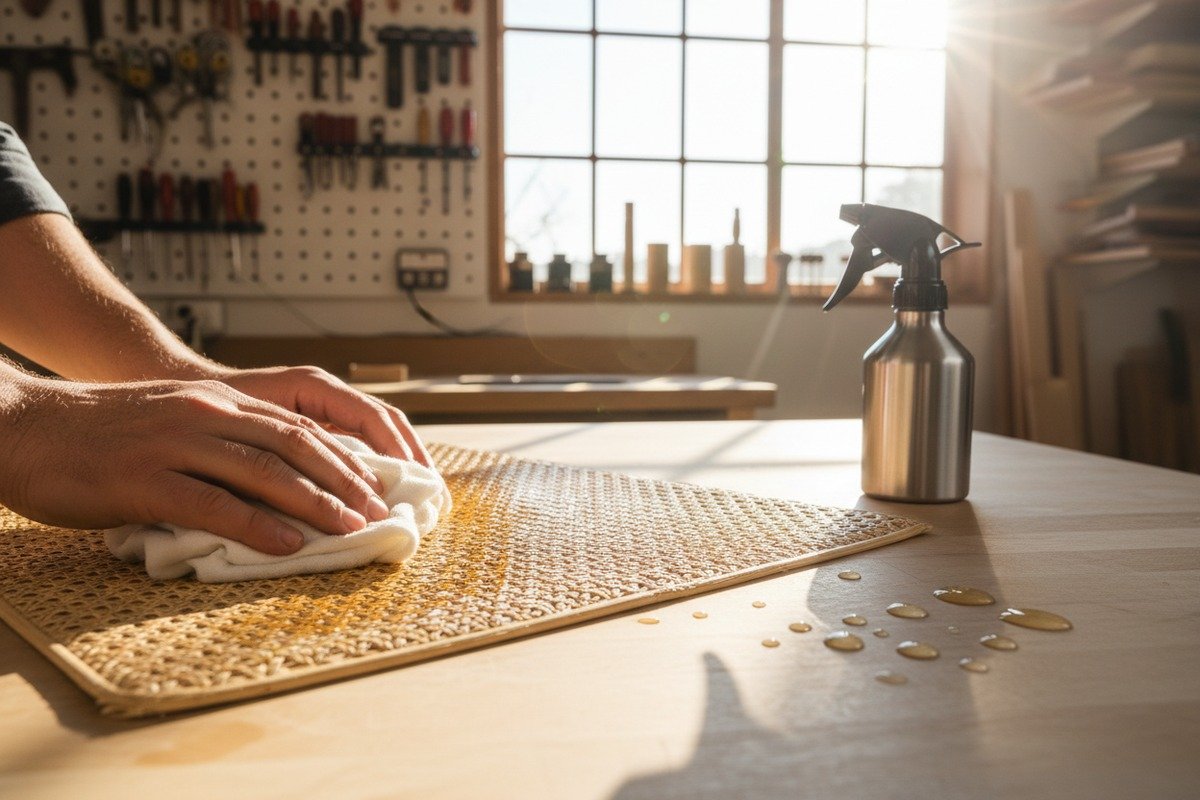
- Oil the fibers regularly. Every 2–3 months, wipe down the webbing with linseed oil 5 or mineral oil diluted with a small amount of Murphy's soap. This keeps the fibers supple.
- Use furniture covers. During heavy rain or storms, cover the piece completely. Waterproof covers cost very little but extend the life of the cane dramatically.
- Place under shelter. A covered patio or pergola reduces direct sun exposure by 60–80%. Never leave natural cane furniture in open sunlight all day.
- Dry immediately after contact with water. If the cane gets wet, wipe it dry with a soft cloth. Do not let water sit on the surface.
Protection Methods Comparison
| Protection Method | UV Protection | Moisture Protection | Reapplication Frequency | Cost Level |
|---|---|---|---|---|
| Marine-grade varnish 6 | High | High | Every 12 months | Medium |
| Linseed oil treatment | Low | Medium | Every 2–3 months | Low |
| Furniture covers | High | High | N/A (replace when worn) | Low |
| Covered patio placement | Medium | Medium | N/A | One-time setup |
| UV-resistant spray sealant | High | Low | Every 6 months | Low |
The Honest Truth
Even with all these steps, natural rattan cane webbing in outdoor settings will not last as long as it does indoors. Indoors, well-maintained cane can last hundreds of years. Outdoors, even with treatment, expect 2–5 years before visible degradation begins. If your project demands true outdoor durability, consider the synthetic alternatives discussed in the next section.
Should I use natural cane or synthetic PE webbing for my outdoor furniture production?
When we consult with furniture factories on new outdoor product lines, this is the question that comes up most. Our factories in Foshan and Indonesia produce both natural and synthetic options, so we see the strengths and weaknesses of each material every day on the production floor.
For outdoor furniture production, synthetic PE rattan webbing is the better choice. It resists UV rays, moisture, mold, and temperature changes without fading or cracking. Natural cane offers superior organic aesthetics but degrades quickly outdoors, making it ideal only for indoor or covered settings.
Natural Cane: What It Does Well
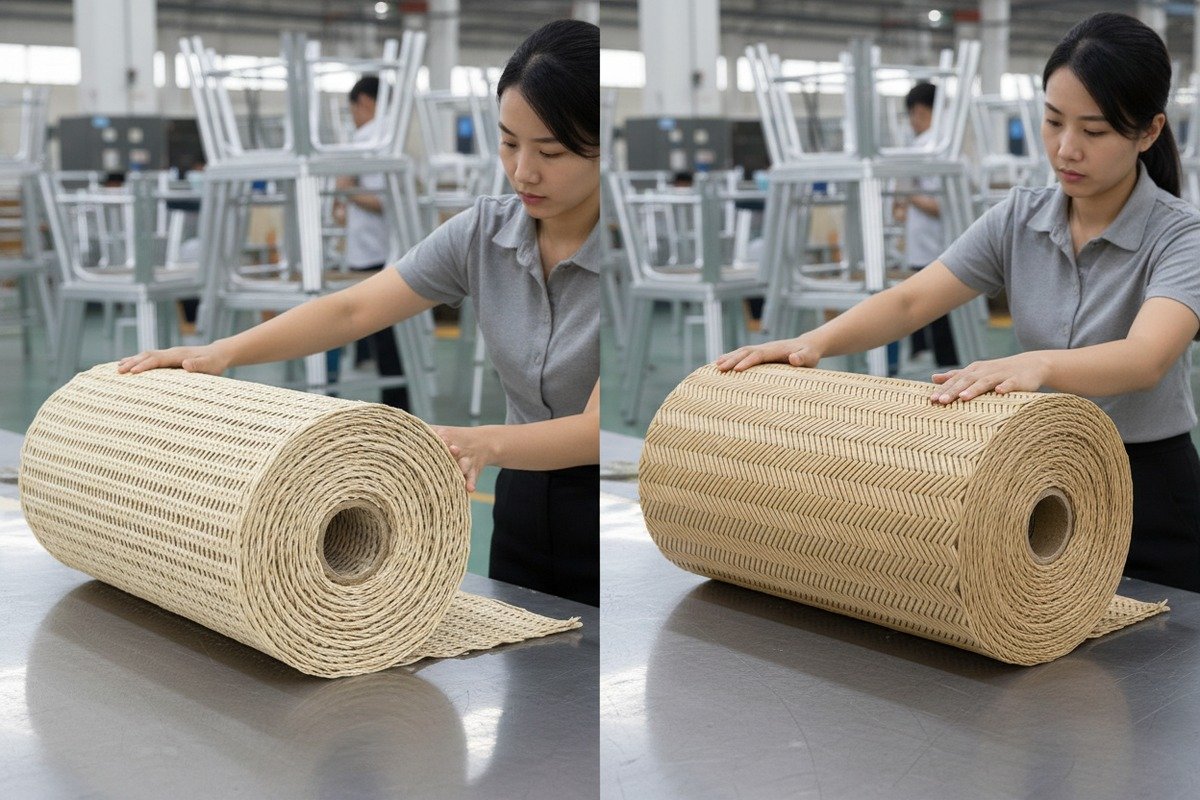
Natural rattan cane webbing has an authentic, handcrafted look that synthetic materials still struggle to perfectly replicate. The slight variations in strand thickness, the warm straw-yellow color, and the matte fibrous texture create a feeling of organic luxury. For high-end indoor furniture, natural cane remains the top choice.
It is also eco-friendly. Rattan is a renewable resource — it grows quickly in tropical forests without requiring replanting. This appeals to eco-conscious brands and their customers.
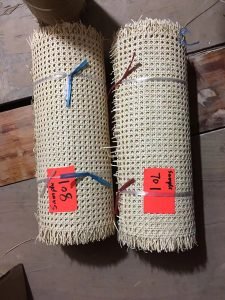
Common patterns include hexagonal open-mesh 7 (radio weave), dense square basketweave, and diamond geometric motifs. These come in rolls or flat sheets, typically in 18-inch or 24-inch widths.
Synthetic PE Webbing: Built for the Elements
Synthetic PE rattan webbing is made from polyethylene plastic 8, engineered to look and feel like natural cane. Modern manufacturing has improved dramatically — high-quality synthetic cane now closely mimics the texture and color of real rattan.
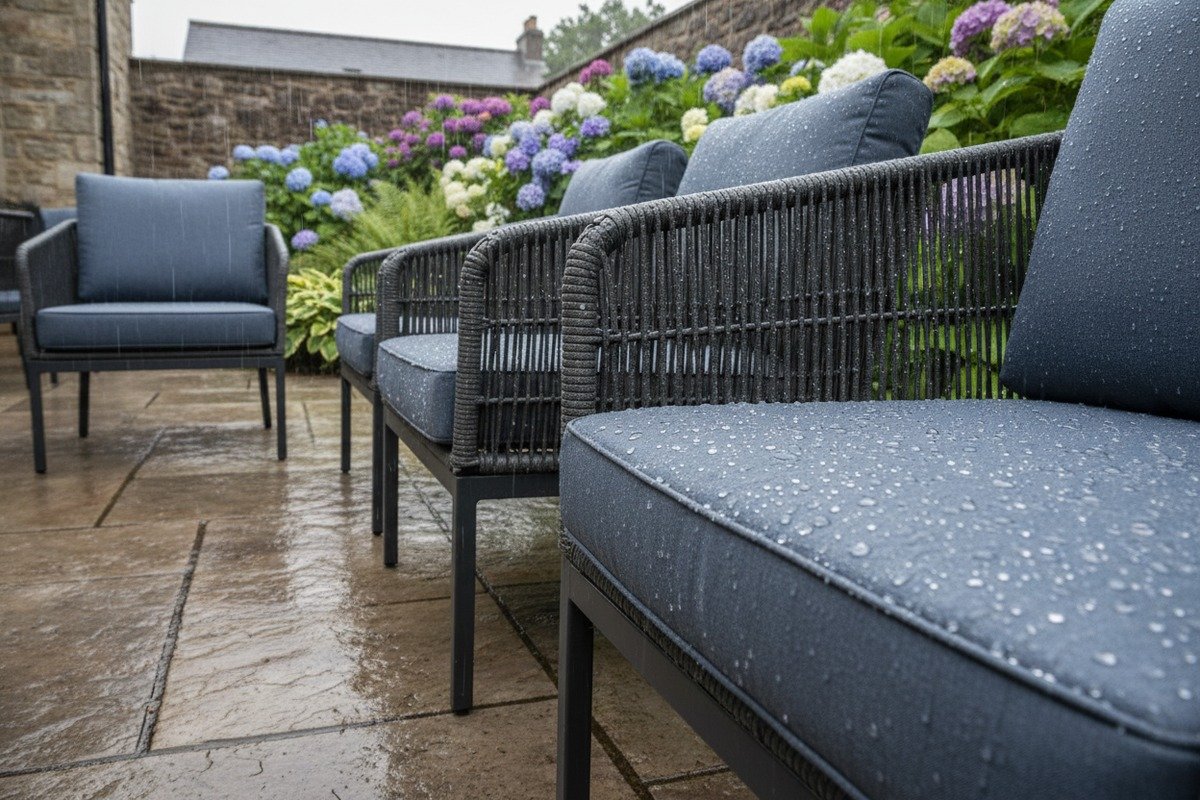
The key advantage is weather resistance. PE rattan does not absorb water, does not crack under UV exposure, and does not grow mold. It handles temperature swings from freezing winters to scorching summers without warping.
Maintenance is minimal. A damp cloth or a quick rinse with a garden hose is enough. No oiling, no varnishing, no seasonal treatments required.
Head-to-Head Comparison
| Feature | Natural Rattan Cane Webbing | Synthetic PE Rattan Webbing |
|---|---|---|
| Aesthetic quality | Superior — organic, warm, artisanal | Good — closely mimics natural look |
| UV resistance | Low — fades and becomes brittle | High — UV-stabilized |
| Moisture resistance | Low — swells, cracks, molds | High — waterproof |
| Maintenance effort | High — regular oiling and sealing | Low — wipe or hose down |
| Eco-friendliness | High — renewable, biodegradable | Moderate — PE is recyclable |
| Lifespan outdoors | 1–3 years unprotected; 2–5 years treated | 5–10+ years |
| Lifespan indoors | Decades to centuries | Decades |
| Cost per unit | Lower raw material cost | Slightly higher |
| Best application | Indoor furniture, covered spaces | Outdoor furniture, patios, gardens |
The Hybrid Approach
Some of our clients use a mixed-material strategy. They pair synthetic PE webbing with powder-coated aluminum frames or marine-grade teak 9 for the outdoor pieces in their catalog. Then they use natural cane on their indoor lines. This way, they serve both markets without compromising on quality or durability.
This approach is especially popular among European and Australian buyers, where outdoor living spaces are a major market segment. The key is communicating clearly to end customers which material is used and why.
Cost Considerations for Production
Natural cane webbing starts at roughly $1.05 per inch for premium jumbo sizes (1-inch mesh), with volume discounts kicking in at 120 inches (10 feet). Custom 50-foot rolls are available for larger production runs. Synthetic PE webbing costs more per unit but saves money on returns, warranty claims, and customer complaints when used in outdoor applications.
For a purchasing manager evaluating total cost of ownership, synthetic PE wins for outdoor projects. The upfront material cost is offset by longer product lifespan and lower after-sales costs.
What are the best ways to maintain the quality of my rattan-decorated outdoor pieces?
Through years of working with furniture makers across the US, Europe, and the Middle East, our team has compiled practical maintenance advice based on real feedback from the field. Many quality issues that buyers blame on material defects are actually caused by poor maintenance practices downstream.
To maintain rattan-decorated outdoor furniture quality, clean regularly with mild soap and water, apply UV-protective spray seasonally for natural cane, store or cover pieces during extreme weather, avoid pressure washing, and inspect the weave quarterly for loose strands or early signs of mold and mildew.
Routine Cleaning Practices
The simplest maintenance step is regular cleaning. Dust, pollen, bird droppings, and food spills all accelerate degradation if left on the surface. For synthetic PE webbing, a damp cloth and mild dish soap handle most cleaning tasks. For natural cane, use a soft brush to remove debris, then wipe with a lightly dampened cloth. Avoid soaking.
A garden hose on a gentle setting works well for synthetic rattan. Never use a pressure washer on either material — the concentrated water stream can break strands and damage the weave pattern.
Seasonal Maintenance Schedule
| Season | Natural Rattan Cane | Synthetic PE Rattan |
|---|---|---|
| Spring | Inspect for winter damage; oil fibers; reapply varnish if needed | Inspect for cracks; clean with soap and water |
| Summer | Apply UV spray every 6 weeks; keep under shade | Wipe down monthly; no special treatment |
| Autumn | Deep clean; apply moisture sealant before wet season | Deep clean; check frame connections |
| Winter | Store indoors or cover completely; avoid freezing moisture | Cover or store; check for ice damage in spring |
Addressing Common Problems
Mold and mildew. If you spot mold on natural rattan, mix one part white vinegar with one part water. Apply with a soft cloth. Let it sit for 10 minutes, then wipe dry. For stubborn mold, add a small amount of baking soda to the mixture. On synthetic rattan, mold sits on the surface and wipes off easily since the material does not absorb moisture.
Loose or broken strands. For natural cane, soak the damaged area with warm water for 15 minutes to soften the fiber, then gently press it back into place. Apply a small amount of wood glue if needed. For synthetic webbing, individual strands can often be replaced by threading new material through the existing weave.
Fading. Natural cane darkens with age and UV exposure. This is mostly cosmetic, but if it bothers your customers, a light application of bleached rattan treatment can restore some of the original color. Synthetic PE rattan with quality UV stabilizers should not fade noticeably within the first 5–7 years.
Extending Product Lifespan for Your Customers
As a wholesaler or factory, your reputation depends on how long your products last in the hands of end users. Include a maintenance card with every piece of outdoor rattan furniture you sell. This small investment reduces returns and builds trust.
We provide our B2B clients with printable care guides in multiple languages. These cover basic cleaning, seasonal storage, and common mistake warnings. It is a simple step that makes a measurable difference in customer satisfaction.
How do I find a reliable supplier for durable rattan webbing that fits my outdoor project budget?
Our sales team works with purchasing managers from furniture factories and material wholesalers every day. The most common frustration we hear is not about price — it is about inconsistency. One shipment arrives in perfect Grade A quality. The next batch has uneven weaving, color mismatches, or packaging that falls apart during shipping.
To find a reliable rattan webbing supplier, request product samples before ordering, verify factory certifications and production capacity, compare pricing across at least three suppliers, check for consistent quality grading standards, and prioritize suppliers offering full-category coverage for both natural and synthetic rattan options.
What to Look for in a Supplier
Not all rattan webbing suppliers are equal. Some are trading companies with no direct factory access. Others operate their own production facilities but only cover one or two product types. The ideal supplier for a serious B2B buyer offers several key advantages.
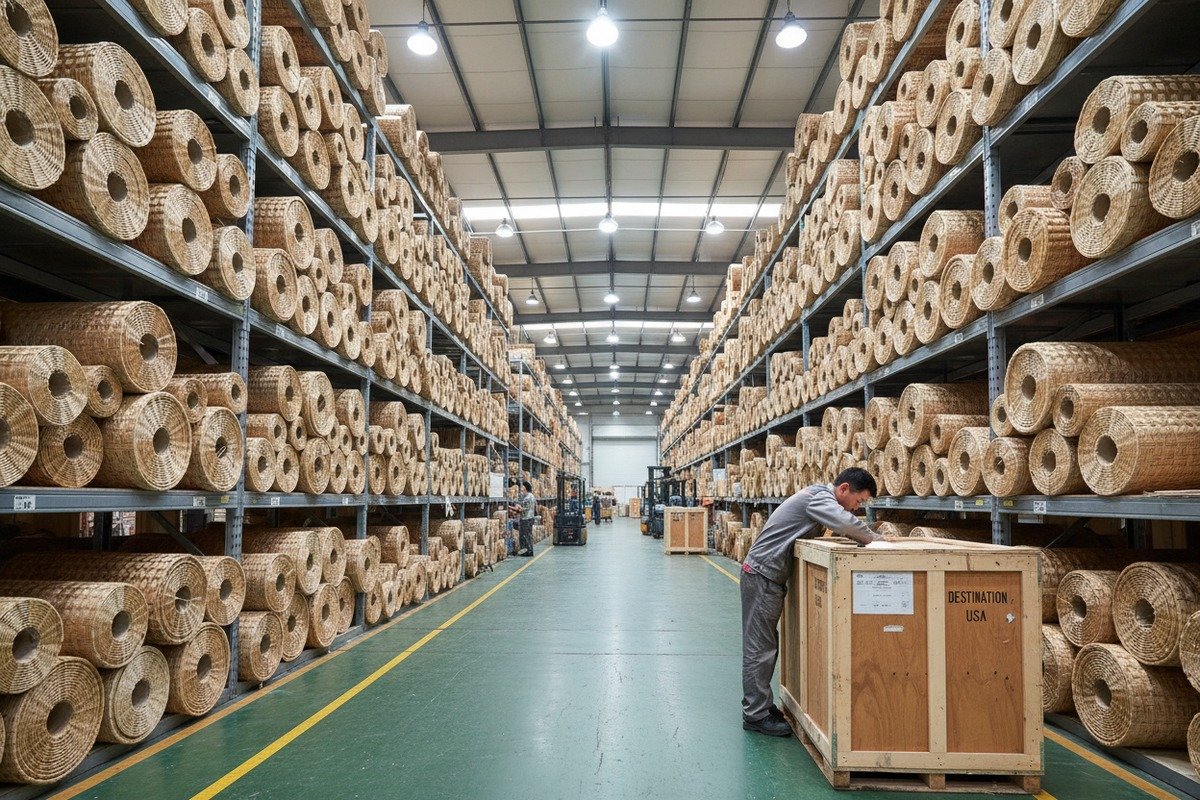
Factory ownership or direct partnerships. A supplier that owns or directly invests in factories has more control over quality. For example, our operation includes three self-invested factories, including a rattan processing facility in Indonesia where the raw material is sourced and initially processed. This vertical integration reduces quality variability.
Full product range. Your outdoor furniture project might need synthetic PE webbing for the patio line and natural cane for the indoor collection. Working with a single supplier who covers both saves you time, shipping costs, and coordination headaches.
Transparent grading. Ask potential suppliers how they grade their materials. Grade A natural cane should have uniform color, consistent strand thickness, and no visible defects. If a supplier cannot clearly explain their grading system, that is a red flag.
Evaluating Pricing and Value
Price is important, but the cheapest option is rarely the best value in the rattan webbing business. Here is a framework for evaluating supplier pricing:
| Pricing Factor | Questions to Ask | Why It Matters |
|---|---|---|
| Unit price per inch/meter | What is the price at my target volume? | Establishes baseline cost |
| Volume discounts | What thresholds trigger discounts? (e.g., 120 inches, 50-foot rolls) | Affects total project cost |
| Shipping and packaging | Is packaging reinforced for international transit? | Poor packaging causes damage, waste, and returns |
| MOQ (Minimum Order Quantity) | What is the smallest order accepted? | Impacts cash flow for smaller buyers |
| Sample availability | Can I get samples before committing? | Prevents costly quality surprises |
| Payment terms | Net 30? T/T deposit? L/C accepted? | Affects cash flow and risk |
| Customization fees | Extra cost for custom widths, colors, or patterns? | Relevant for private-label buyers |
How to Vet a Supplier Before Your First Order
Start with samples. Any reputable supplier will send product samples — often for free or at minimal cost. Compare samples from at least three suppliers side by side. Look at color consistency, strand thickness, flexibility, and pattern accuracy.
Next, ask for references. A supplier with experience exporting to markets like the Netherlands, Spain, Australia, and the US should be able to share case studies or client testimonials.
Check certifications. Look for ISO quality management certification 10, environmental compliance certifications, and any industry-specific standards relevant to your market.
Finally, test communication. Send a detailed inquiry and see how quickly and thoroughly the supplier responds. A responsive supplier who answers technical questions accurately is worth more than one who offers the lowest price but disappears when problems arise.
Building a Long-Term Supplier Relationship
The best supplier relationships are partnerships, not transactions. Share your production forecasts so the supplier can plan inventory. Provide feedback on every shipment — positive and negative. Negotiate annual contracts for better pricing stability.
From our side, we invest in understanding each client's specific needs. A Thai purchasing manager ordering rattan cane webbing for private-label resale has different requirements than a Dutch furniture factory producing high-end dining chairs. We adjust our quality checks, packaging, and logistics accordingly.
Conclusion
Natural rattan cane webbing belongs indoors. For outdoor furniture decoration, synthetic PE webbing delivers the durability, weather resistance, and low maintenance your projects demand. Choose the right material, protect it properly, and partner with a reliable supplier to build products that last.
Footnotes
1. Discusses various finishes and sealants designed to protect outdoor wood from UV damage and weathering. ↩︎
2. Explains various environmental certifications managed by the EPA and their role in sustainability. ↩︎
3. Details the botanical origin, characteristics, and uses of the rattan palm species. ↩︎
4. Explains how light, including UV radiation, alters and degrades materials over time. ↩︎
5. Explains the characteristics and application of linseed oil as a natural wood finish and protector. ↩︎
6. Replaced 403 link with an authoritative Wikipedia page explaining spar varnish, which is a type of marine-grade varnish. ↩︎
7. Illustrates and describes traditional cane weaving patterns, including hexagonal designs, in furniture. ↩︎
8. Replaced 404 link with an authoritative Wikipedia page on polyethylene plastic. ↩︎
9. Provides detailed technical specifications and characteristics of teak wood, suitable for marine and outdoor use. ↩︎
10. Provides official information on ISO 9001 and the principles of quality management systems. ↩︎
 English
  Español de México
  العربية
  Deutsch
  Français
  Русский