
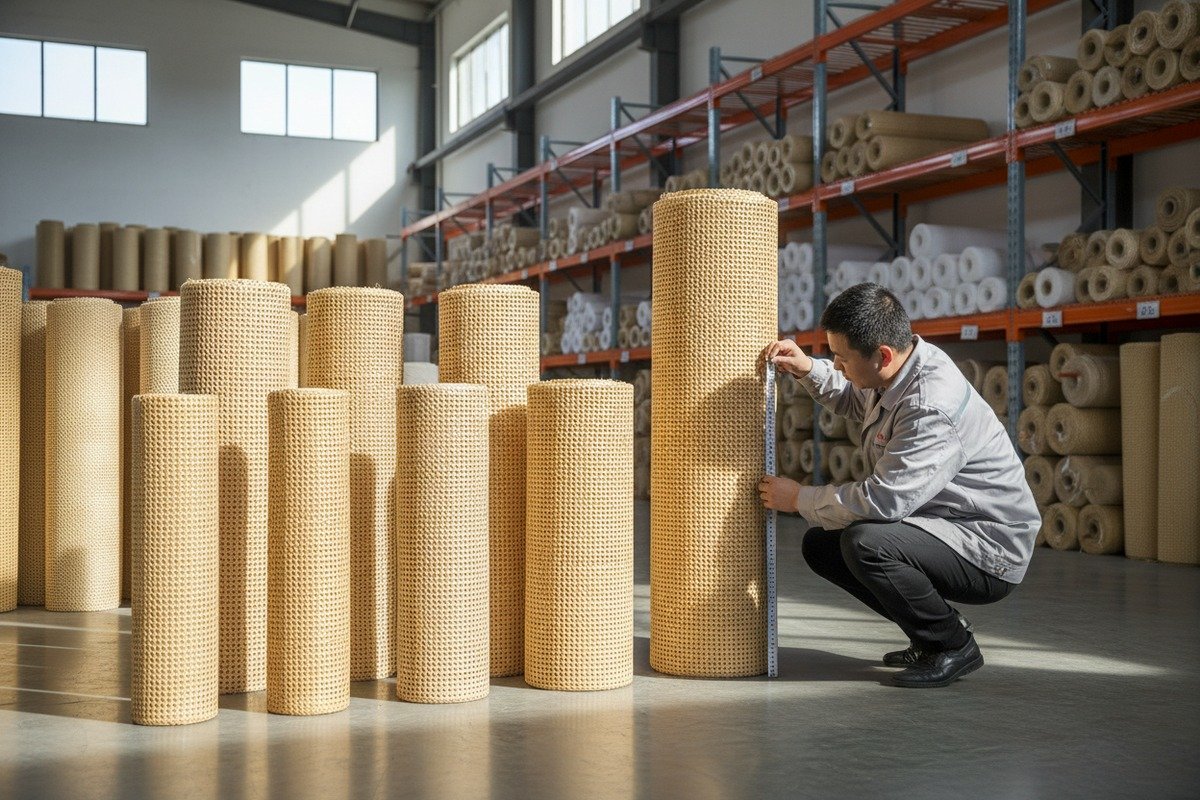
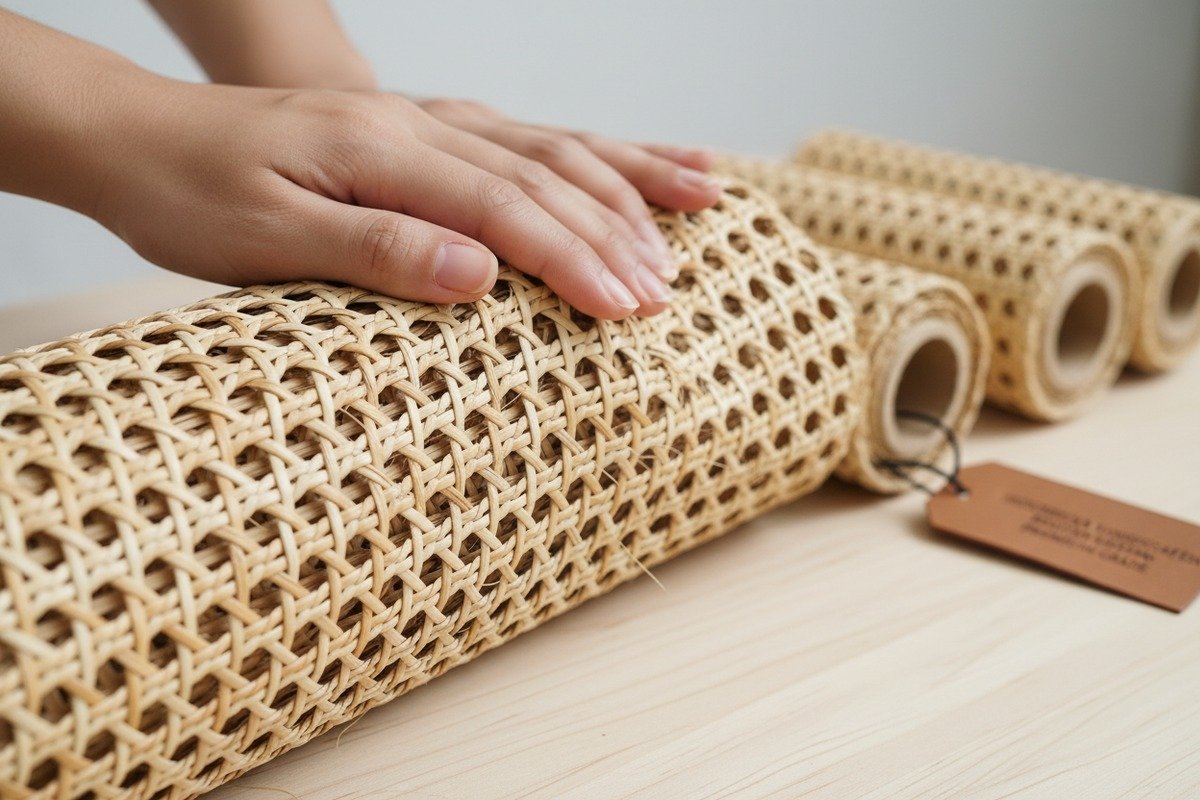
Every week, our sales team fields the same question from furniture makers and wholesalers across the globe synthetic (PE) rattan 1. They need rattan cane webbing 2 in dimensions that don’t match the standard rolls sitting on warehouse shelves. It’s a real pain point. Standard widths of 24 to 48 inches simply don’t fit every cabinet door, headboard, or architectural screen. Designers end up wasting material, cutting awkward seams, or abandoning rattan altogether. That frustration is what drove our Foshan production team to build a custom-sizing workflow years ago.
Yes, rattan cane webbing is available in custom non-standard sizes. Suppliers can produce tailored widths from 35 cm to 180 cm and adjusted lengths in both natural and synthetic materials. Options include custom patterns, colors, and finishes, though minimum order quantities and lead times vary by specification.
This guide walks you through exactly how to order custom sizes, what happens to quality when you go off-standard, the MOQ realities for wholesale buyers, and realistic timelines from factory floor to your doorstep. Let’s break it down section by section.
How can I order custom widths of rattan cane webbing for my specific furniture designs?
When our team in Nanhai works with a new furniture factory client, the first conversation is almost always about sizing. Standard rolls rarely match the exact panel dimensions a designer has in mind. The mismatch wastes material and adds labor cost. So the question isn't whether custom widths exist. It's how to order them properly.
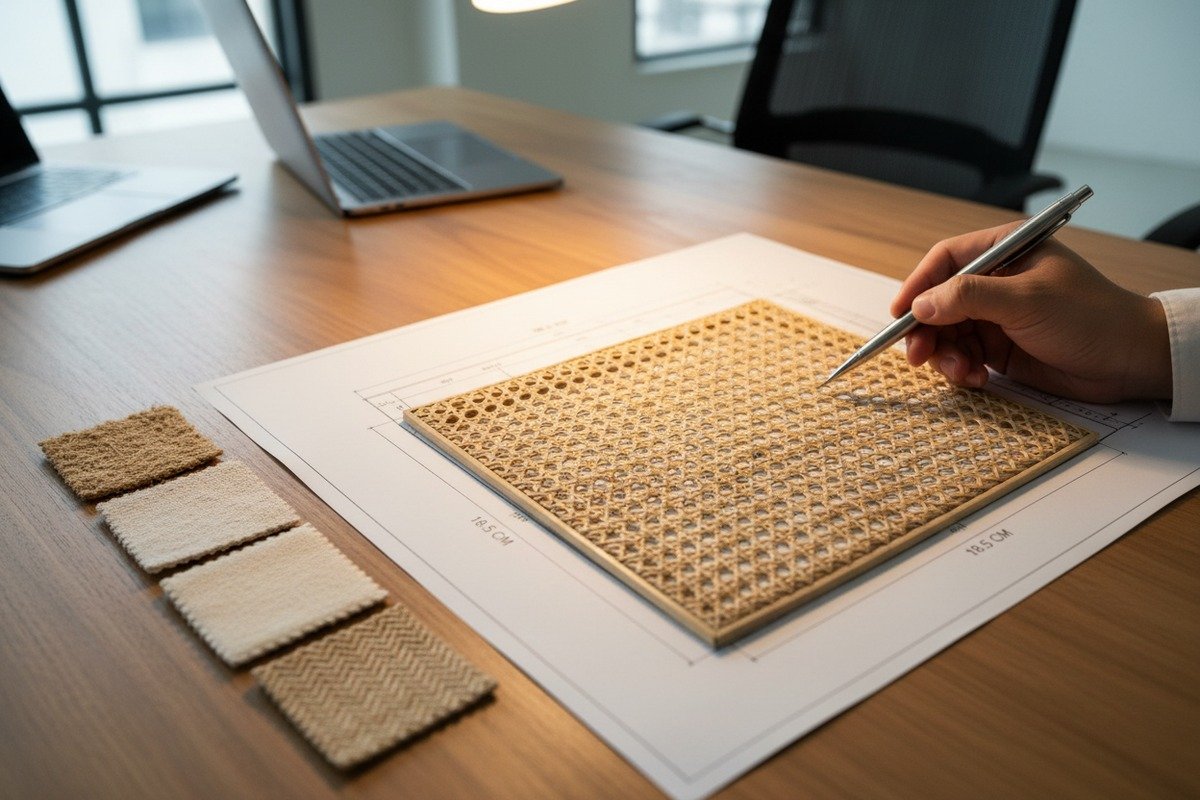
To order custom widths, contact a B2B rattan supplier directly with your exact dimensions, preferred weave pattern, and material type. Most manufacturers offer widths from 35 cm to 180 cm. Provide a technical drawing or spec sheet for accurate quoting, and confirm the minimum order quantity before placing your order.
Step-by-Step Ordering Process
The process is straightforward once you know what to prepare. Here is a typical workflow we follow with our clients:
-
Define your dimensions. Measure the exact width and length you need. Add at least 5 cm (about 2 inches) on each side for installation margins. This extra material lets you press the webbing into grooves or wrap it around frames without coming up short.
-
Choose your material. Natural rattan 3 and synthetic (PE) rattan behave differently. Natural rattan is handwoven from dried cane harvested in Southeast Asia. It gives that authentic, rustic look. Synthetic rattan is extruded plastic that mimics the look of natural cane but lasts longer outdoors and comes in longer rolls.
-
Select a weave pattern. Patterns affect both aesthetics and structural integrity. A hexagonal open-mesh radio weave looks airy and light. A dense square basketweave feels more solid. Some patterns are easier to produce in wider dimensions than others.
-
Send your spec sheet. Email or WhatsApp your supplier with all details: width, length, pattern, material, color, and quantity. A simple sketch or CAD drawing 4 helps avoid miscommunication. Some advanced manufacturers even accept digital templates for machine-cut precision.
-
Confirm pricing and MOQ. Custom sizes often carry a different price per square meter than standard rolls. Your supplier should provide a clear quote within 2–3 business days.
Standard vs. Custom Size Comparison
The table below shows how standard and custom sizes differ across natural and synthetic rattan:
| Parameter | Natural Rattan (Standard) | Natural Rattan (Custom) | Synthetic Rattan (Standard) | Synthetic Rattan (Custom) |
|---|---|---|---|---|
| Width Range | 40–100 cm | 35–180 cm | 40–100 cm | 40–120 cm |
| Roll Length | 10–15 m | 10 m (wider = shorter) | 30 m | 30 m |
| Common Patterns | Radio weave, hexagonal | Any available pattern | Chevron, basketweave | Any available pattern |
| Lead Time | In stock | 7–20 days production | In stock | 10–25 days production |
| MOQ | 1 roll | Typically 10+ rolls | 1 roll | Typically 5+ rolls |
Key Tips for a Smooth Order
Keep a few things in mind. First, wider natural rattan rolls mean shorter lengths. A 120 cm wide natural roll will typically max out at 10 meters. This is a physical limitation of the raw material—not a supplier shortcut. Second, always request a sample swatch before committing to a large order. Colors and textures vary between batches. Third, communicate through a single channel. Switching between email, WhatsApp, and phone creates confusion. Pick one and stick with it.
Our factory in Indonesia processes the raw rattan, and our Foshan facility handles weaving and quality checks. When a client sends us a clear spec sheet, we can match almost any dimension within the material's physical limits. The key is preparation on your end.
Will requesting non-standard sizes affect the Grade A quality of my rattan material?
Quality concerns keep many purchasing managers up at night. When we talk with wholesale buyers in countries like the Netherlands, Turkey, or Australia, this question comes up constantly. They worry that going custom means accepting lower-grade material. It's a fair concern, but the answer is more nuanced than a simple yes or no.
Requesting non-standard sizes does not inherently reduce Grade A quality. Quality depends on raw material selection, weaving technique, and quality control—not on dimensions. However, extremely wide or unusual sizes may introduce higher risk of inconsistencies if the supplier lacks proper equipment or skilled weavers for those specifications.
What Defines Grade A Rattan?
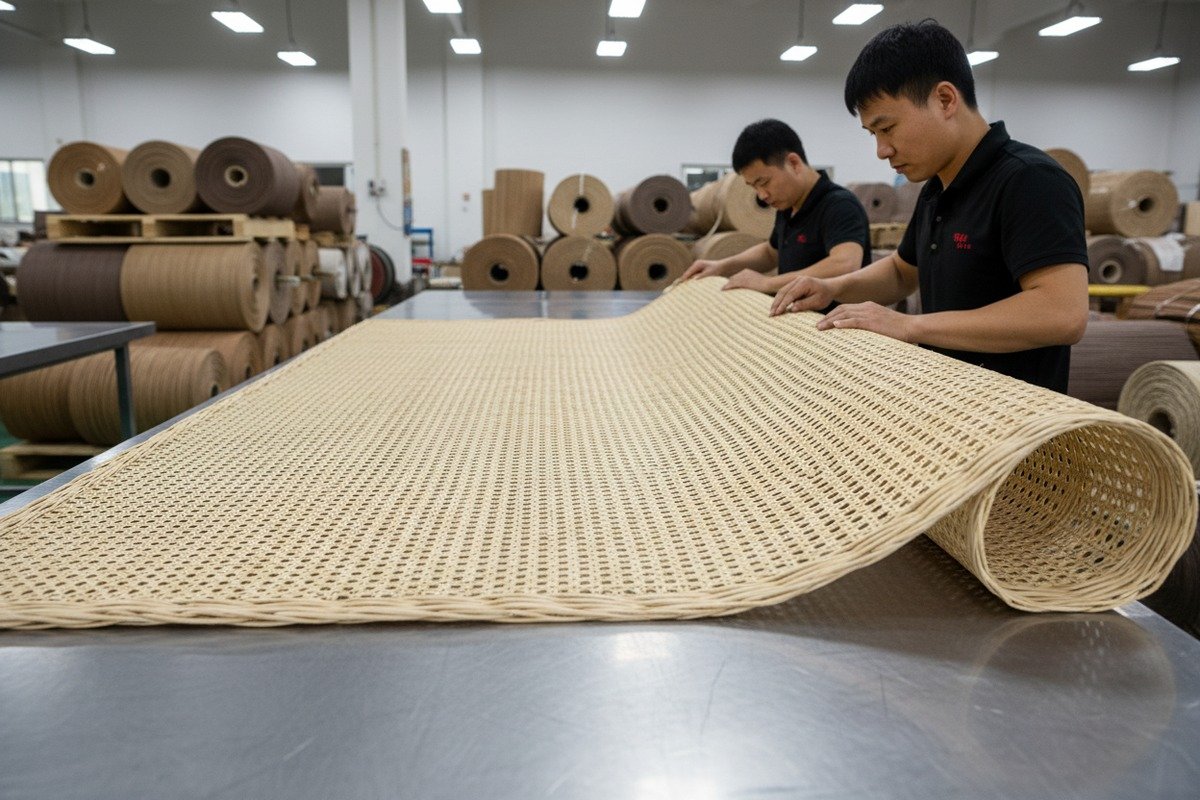
Grade A rattan 5 cane webbing meets several criteria. The strands are uniform in color and thickness. There are no cracks, splits, or dark spots. The weave is tight and consistent with no loose or missing strands. The material is properly dried to prevent mold during shipping. These standards apply whether the roll is 40 cm wide or 150 cm wide.
At our rattan processing facility in Indonesia, we sort raw cane into grades before weaving begins. Grade A material goes through a machine-drying process that brings moisture content 6 to the right level. Only the best strands get selected. This grading happens at the raw material stage, long before any weaving or sizing decisions are made.
Where Quality Risks Actually Come From
The risk isn't in the size itself. It's in the production process. Here's where things can go wrong:
- Wider rolls need wider looms. Not every factory has looms that handle 150 cm or 180 cm widths. If a factory tries to stitch two narrower pieces together to fake a wider roll, you'll see a visible seam. That's not Grade A.
- Pattern complexity at scale. Intricate patterns like twilled close weave are harder to maintain across wider dimensions. A small error compounds over 150 cm of width. Skilled weavers matter here.
- Drying inconsistencies. Larger rolls need more careful drying. If the center of a wide roll retains moisture while the edges dry, you get warping or mold. Proper drying tunnels solve this.
- Cutting and finishing. Custom cuts require sharp, calibrated tools. Rough edges lead to unraveling. A good factory trims and inspects every edge.
Quality Control Checklist for Custom Orders
Use this table to verify Grade A quality on any custom-sized rattan webbing you receive:
| Quality Criterion | Grade A Standard | Red Flag |
|---|---|---|
| Strand Color | Uniform beige/straw yellow | Dark spots, uneven bleaching |
| Strand Thickness | Consistent across entire roll | Thin spots, thick clumps |
| Weave Tightness | Even spacing, no gaps | Loose strands, visible holes |
| Moisture Content | 8–12% (machine dried) | Damp smell, visible mold |
| Edge Finish | Clean cut, no fraying | Rough edges, unraveling strands |
| Roll Shape | Tightly wound, cylindrical | Crushed, bent, or flattened |
| Seams | None (single continuous weave) | Visible stitching or joins |
Natural vs. Synthetic Quality Considerations
Natural rattan has organic variations. Slight color differences between strands are normal and even desirable for that artisanal look. But large inconsistencies—like strands that are clearly different species or thicknesses—indicate poor sorting.
Synthetic rattan is more uniform by nature. It's extruded from plastic pellets, so color and thickness are machine-controlled. Custom sizing with synthetics carries lower quality risk because the manufacturing process is more standardized. However, synthetic rattan lacks the warmth and texture that make natural cane so appealing for high-end furniture.
The bottom line: custom sizing and Grade A quality are not mutually exclusive. But you must work with a supplier who has the equipment and expertise to deliver both. Ask for photos of their looms, their drying setup, and their QC process. A factory that's transparent about its capabilities is a factory you can trust.
What are the minimum order quantities if I need non-standard dimensions for my wholesale business?
Running a wholesale business 7 means every order needs to make financial sense. When our sales team discusses custom sizing with distributors in Spain, Saudi Arabia, or the USA, the MOQ conversation is always front and center. Buyers want to know: how much do I need to commit before a factory will fire up the looms for my specs?
Minimum order quantities for custom-sized rattan cane webbing typically range from 5 to 50 rolls, depending on the supplier, material type, and degree of customization. Standard custom widths may start at 10 rolls, while highly specialized dimensions, patterns, or colors can require 30–50 rolls or more per specification.
Why MOQs Exist for Custom Orders
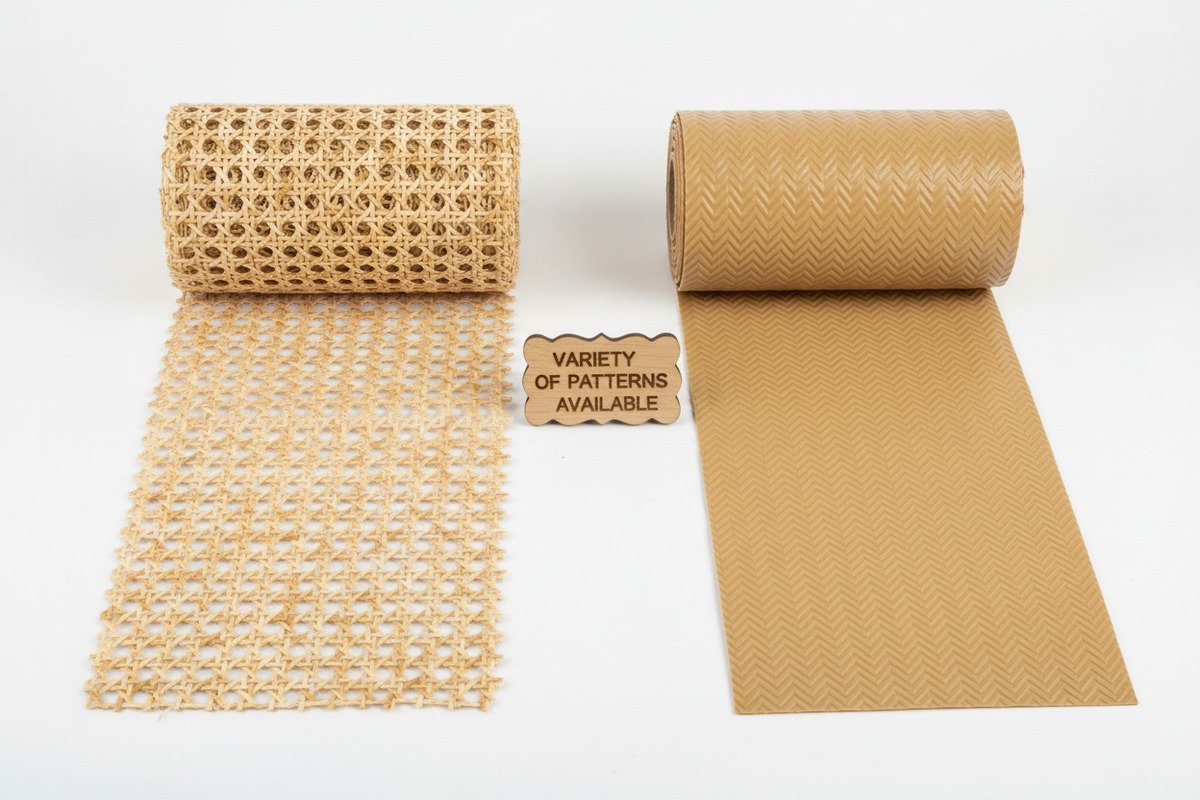
Every custom order requires setup. For natural rattan, the loom needs to be adjusted for the new width. For synthetic rattan, the extrusion 8 and weaving machines need recalibration. Dyeing equipment must be cleaned and refilled for custom colors. These setup costs are fixed. The supplier spreads them across the order quantity. Smaller orders mean higher per-unit cost, which makes the product uncompetitive for wholesale resale.
Our three factories operate with lean production schedules 9. When a custom order comes in, it takes a production slot that could otherwise run standard inventory. That's why we need a reasonable MOQ to justify the changeover.
MOQ Breakdown by Customization Level
Not all custom orders are equally complex. The table below shows typical MOQ ranges based on what you're customizing:
| Customization Level | What's Changed | Typical MOQ (Rolls) | Example |
|---|---|---|---|
| Width only | Adjusting loom width | 10–20 rolls | 65 cm wide instead of standard 60 cm |
| Width + length | Adjusting loom + cutting | 10–20 rolls | 65 cm × 12 m instead of 60 cm × 15 m |
| Width + pattern | Different weave on adjusted loom | 20–30 rolls | 80 cm wide in twilled close weave |
| Width + color | Custom dye or bleach process | 20–30 rolls | 100 cm wide, bleached white |
| Full custom (width + pattern + color) | Complete setup change | 30–50 rolls | 150 cm wide, black-dyed, hexagonal weave |
| Synthetic custom | Machine recalibration | 5–15 rolls | 90 cm wide, coffee-colored PE rattan |
Strategies to Meet MOQs
If your project doesn't need 30 rolls of one custom spec, here are some practical approaches:
Combine with partners. If you know other wholesalers who need similar specs, pool your orders. We've seen buyers in the same region coordinate purchases to hit MOQs together.
Mix sizes within one production run. Some factories allow you to order multiple custom widths in the same weave and color within a single MOQ. For example, 10 rolls at 70 cm and 10 rolls at 90 cm in the same radio weave pattern 10. The loom adjustment between similar widths is minimal.
Start with a sample order. Many suppliers, including our own team, offer small sample quantities at a higher per-unit price. This lets you test the product with your clients before committing to a full MOQ. Once demand is proven, the larger order makes business sense.
Choose a supplier with inventory flexibility. B2B suppliers like us maintain stock of popular semi-custom sizes. If your desired width is close to something already in production, the MOQ might be lower or even waived.
Small-Batch Options for DIY and Retail
Not every buyer is a large-scale wholesaler. DIY enthusiasts and small furniture studios also need custom sizes. For these buyers, platforms like Etsy offer cut-to-size sheets in widths from 15.5 to 36 inches, sold by the foot. Pre-cut kits—like 18×18 inch or 24×24 inch sheets with spline and wedges—are another option. These don't require any MOQ but come at a retail premium.
The trade-off is clear. Lower MOQ means higher price per unit. Higher MOQ means lower price but more capital commitment. Your sourcing strategy should match your business model.
How long will it take for my custom-sized rattan order to be manufactured and shipped to my country?
Timing can make or break a project. When our logistics coordinator maps out delivery schedules for clients in the Philippines, India, or Russia, the variables multiply fast. Production time, quality inspection, packing, customs clearance, ocean freight—each step adds days. Knowing the realistic timeline prevents missed deadlines and costly delays.
A custom-sized rattan cane webbing order typically takes 3 to 6 weeks from confirmation to delivery. Production requires 7 to 20 days depending on complexity, followed by 2 to 5 days for quality inspection and packing, plus 10 to 30 days for international shipping based on destination country and freight method.
Breaking Down the Timeline
Let's look at each phase in detail. Understanding where time is spent helps you plan backwards from your project deadline.
Phase 1: Order Confirmation (1–3 days). After you send your spec sheet, the supplier reviews feasibility, checks raw material availability, and issues a quote. Once you approve the quote and make payment (or deposit), production begins. Delays here usually come from unclear specifications or slow payment processing.
Phase 2: Raw Material Preparation (3–5 days). For natural rattan, this means selecting and grading the cane, machine-drying it, and cutting strands to the appropriate length. Our Indonesian facility handles this stage. For synthetic rattan, pellets are prepared for extrusion. If custom dyeing or bleaching is needed, add 2–3 days.
Phase 3: Weaving and Production (5–15 days). This is the core manufacturing stage. Simple width adjustments on existing patterns take 5–7 days. Complex custom weaves or very wide rolls (150 cm+) take 10–15 days. Skilled weavers work in shifts to maintain consistent quality. Rushing this step risks quality defects.
Phase 4: Quality Inspection and Packing (2–5 days). Every roll is inspected against the spec sheet. Strand uniformity, weave tightness, moisture content, and edge finish are all checked. Approved rolls are tightly wound around cardboard cores and wrapped in protective plastic. For export, rolls are packed in corrugated cardboard boxes or wooden crates to prevent crushing during transit.
Phase 5: International Shipping (10–30 days). Shipping time depends on your location and chosen method:
Shipping Timeline by Region
| Destination | Sea Freight | Air Freight | Express Courier |
|---|---|---|---|
| Southeast Asia (Thailand, Philippines) | 7–12 days | 3–5 days | 5–7 days |
| Middle East (Dubai, Saudi Arabia) | 15–20 days | 4–6 days | 7–10 days |
| Europe (Netherlands, Spain, Greece) | 20–30 days | 5–7 days | 7–12 days |
| USA / Australia | 20–30 days | 5–8 days | 8–14 days |
| Russia / Turkey | 18–25 days | 5–7 days | 8–12 days |
Sea freight is the most common and cost-effective method for wholesale rattan orders. Rolls are always shipped in their cylindrical form—never folded—to prevent crease damage. Air freight makes sense for urgent small orders or sample shipments. Express couriers like DHL or FedEx work for sample swatches but are too expensive for full container loads.
Factors That Can Delay Your Order
Several things can push your timeline beyond the standard window:
- Rainy season in Indonesia. Heavy rains slow rattan harvesting and drying. Orders placed during November through February may face 5–10 extra days in raw material preparation.
- Chinese holidays. Chinese New Year (January/February) and National Day (October) shut down factories for 1–2 weeks. Plan your orders around these dates.
- Port congestion. Major shipping ports occasionally experience backlogs. This is outside anyone's control but can add 3–7 days to sea freight.
- Customs clearance. Some countries require fumigation certificates, phytosanitary inspection, or specific import documentation for natural rattan products. Ensure your supplier provides all required paperwork upfront.
How to Speed Things Up
Start by having your spec sheet ready before you contact the supplier. Clear, complete specifications eliminate back-and-forth. Pay deposits promptly. Confirm shipping details—port, address, contact person—at the time of order, not after production. And always ask your supplier for a production timeline in writing. This creates accountability on both sides.
From our Foshan headquarters, we coordinate between our Indonesian processing facility and our network of over 30 partner factories. This integrated supply chain lets us overlap certain production stages and shave days off the total lead time for repeat clients with established specifications.
Conclusion
Custom non-standard rattan cane webbing is not only possible—it's a well-established service offered by experienced suppliers worldwide. From tailored widths and specialized weave patterns to realistic MOQs and manageable lead times, the path to sourcing exactly what your project demands is clear. Work with a transparent supplier, prepare detailed specifications, and plan your timeline around production and shipping realities. Your perfect rattan solution is one well-prepared inquiry away.
Footnotes
1. Describes synthetic rattan, its composition, and uses. ↩︎
2. Explains what cane webbing is in the context of furniture. ↩︎
3. Provides a definition and description of natural rattan. ↩︎
4. Defines CAD drawings and their application in design and engineering. ↩︎
5. Details the criteria and characteristics of Grade A rattan quality. ↩︎
6. Provides a definition of moisture content in materials. ↩︎
7. Defines wholesale trade and its role in the supply chain. ↩︎
8. Replaced HTTP 404 with an authoritative Wikipedia page on extrusion. ↩︎
9. Describes lean manufacturing as a method to reduce waste and improve efficiency. ↩︎
10. Explains the general concept of a weave pattern in textiles. ↩︎

 English
  Español de México
  العربية
  Deutsch
  Français
  Русский